When to Replace Primary School Tables and Chairs: A Guide
🎯 Key Takeaway
Knowing when to replace school tables and chairs requires a proactive assessment based on five key triggers: visible damage, non-compliance with UK safety standards, poor ergonomics, changing classroom needs, and worn aesthetics. Safety and compliance are paramount; damaged or non-compliant furniture, especially regarding BS EN 1729 (the European standard for educational furniture dimensions and safety), presents a significant liability and must be prioritised for replacement. Furthermore, mismatched furniture heights can hinder concentration and physical development, signalling an urgent need for an upgrade. A typical school furniture replacement cycle is 8-12 years, but our experience shows an annual audit is essential for effective budgeting and planning.
For School Business Managers and Headteachers, balancing tight budgets with the need for a safe, effective learning environment is a constant challenge. For deciding when to replace primary school tables and chairs, a proactive approach is not just best practice-it’s essential for avoiding safety risks, promoting pupil well-being, and preventing scrutiny from Ofsted (the UK’s Office for Standards in Education, Children’s Services and Skills). As of September 2026, the focus on physical learning environments has rarely been greater.
This guide provides a clear, actionable framework for making that decision. We’ll explore the five key triggers that signal it’s time for an upgrade, moving you from reactive spending to strategic asset management. For a high-level overview, you can also explore The Complete Guide to Primary School Tables and Chairs for UK Schools.
Written by: Cost Cutters UK Content Team | Reviewed by: Editorial Team, 35+ Years Experience; Rated Excellent On Trustpilot
ℹ️ Transparency Disclosure: This article explores when to replace school furniture based on an analysis of UK government guidelines, industry best practices, and our 35+ years of experience. Some links may connect to our services, which helps us continue to provide valuable content. All information is verified by our editorial team for accuracy and relevance.
When Does Visible Damage Mandate Furniture Replacement?
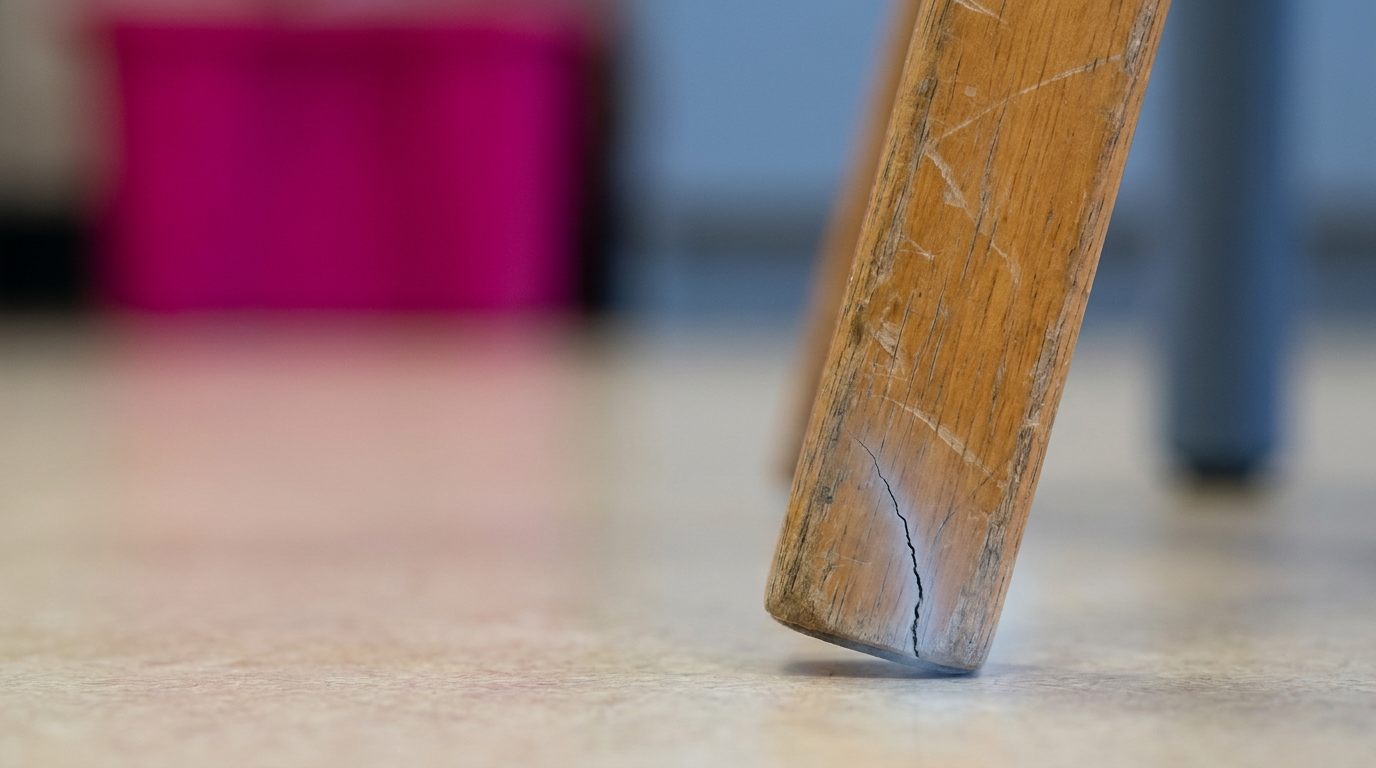
Yes, visible damage is the most urgent trigger for replacement. Furniture with splintered wood, sharp metal edges, cracked plastic, or unstable frames poses an immediate safety hazard and constitutes a breach of your school’s duty of care. These are not merely cosmetic issues; they are liabilities waiting to happen.
Regular visual inspections are a fundamental requirement under UK health and safety law. The Health and Safety Executive (HSE), the UK’s national regulator for workplace health and safety, provides guidance that underscores the need for equipment to be maintained in a safe condition. According to the HSE, risk assessments are mandatory to identify and mitigate hazards, and broken furniture falls squarely into this category.
A formal risk assessment process should include a regular check for these specific signs of wear on school chairs and tables:
- Structural Instability: Wobbly legs, loose joints, or flexing frames that could collapse under weight.
- Surface Hazards: Splintering wood, peeling laminate with sharp edges, or cracked plastic that can pinch or cut.
- Exposed Fixings: Protruding screws, nails, or bolts that can snag clothing or cause injury.
- Failed Mechanisms: Seized or broken height-adjustment features on chairs.
- Irreparable Cracks: Deep cracks in plastic shells or wooden frames that compromise the item’s integrity.
If your inspections reveal any of these issues, a simple repair may not be sufficient. In our experience, once the core structure is compromised, replacement is the only responsible option.
How Does BS EN 1729 Compliance Affect Replacement Decisions?
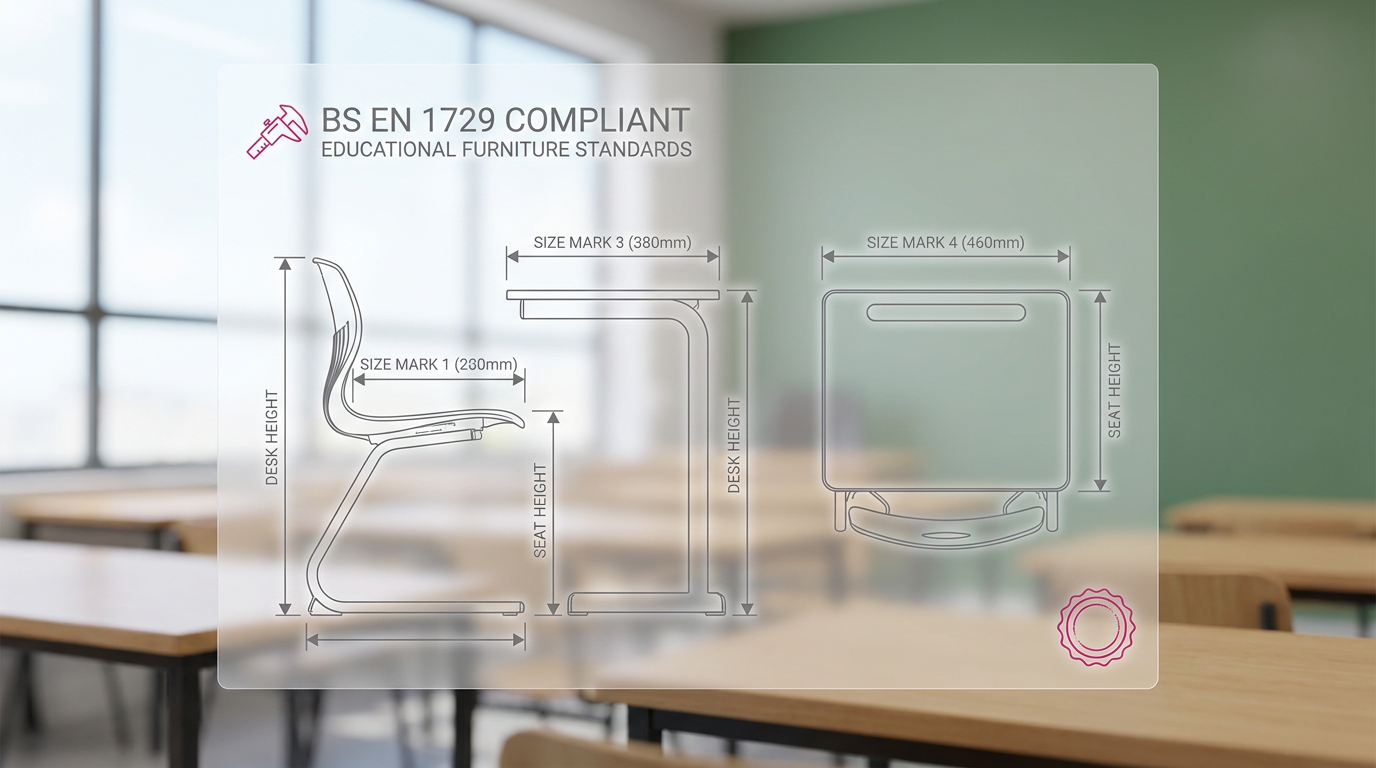
Furniture that fails to meet current UK standards must be scheduled for replacement, even if it appears superficially safe. The primary standard governing this is BS EN 1729, which covers both ergonomic dimensions and safety requirements. Using non-compliant furniture for new purchases or major refurbishments opens the school to significant liability and can be flagged by the HSE or Ofsted.
BS EN 1729 is divided into two critical parts:
- Part 1: Functional Dimensions. This part dictates the correct height and size specifications for tables and chairs to suit different age groups, ensuring proper posture.
- Part 2: Safety Requirements and Test Methods. This part ensures furniture is strong, stable, and durable enough to withstand the rigours of a school environment.
While the law isn’t retrospective (you don’t have to throw out all older furniture immediately), any new education furniture procurement must meet these classroom furniture safety standards uk. The British Educational Suppliers Association (BESA) requires its members to supply products that are fit for purpose, which in education, means adhering to standards like BS EN 1729 compliance. Furthermore, the Department for Education (DfE) statutory framework for early years mandates that all equipment must be safe and suitable.
How do you check for compliance? Reputable suppliers will clearly state if their products are BS EN 1729 compliant in their documentation. If you can’t verify the compliance of your existing furniture, it should be marked as a high-priority candidate for replacement during your next budget cycle.
Why Do Poor Ergonomics Signal a Need to Replace Furniture?
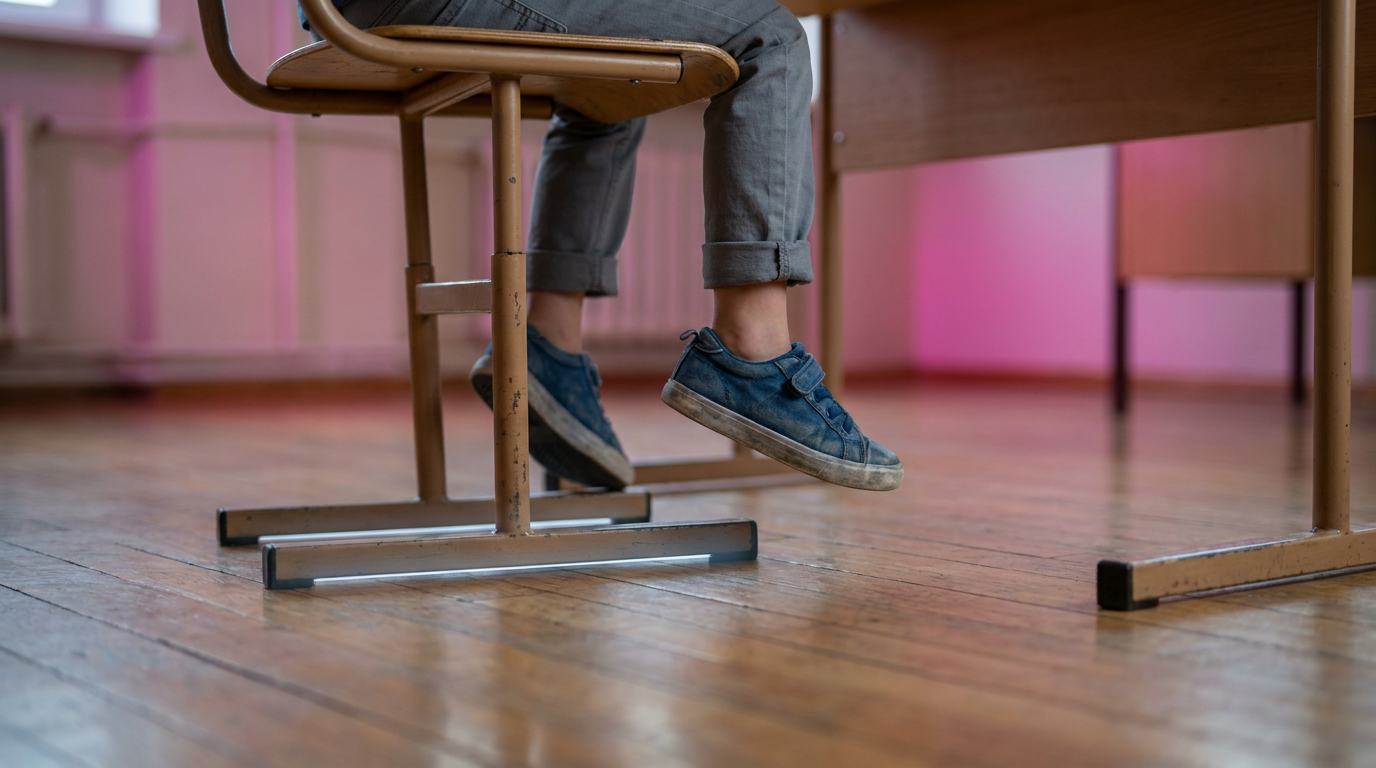
Yes, if pupils’ feet don’t touch the floor or their knees are pushed against the underside of a table, the furniture is the wrong size and must be replaced. Poor ergonomics are a direct threat to a child’s ability to concentrate and can contribute to poor posture and long-term musculoskeletal disorders (MSDs). Research from the European Agency for Safety and Health at Work (EU-OSHA) consistently highlights that poor workstation design is a key risk factor for MSDs, a principle that applies as much to classrooms as it does to offices.
BS EN 1729 establishes a system of ‘Size Marks’ to help schools match furniture to pupils. This system uses a simple colour code to identify the appropriate chair and table heights for different age groups. It’s a common mistake to have a single size of furniture in a classroom where children’s heights can vary significantly.
The following primary school chair height guide uk is based on the BS EN 1729 standard and illustrates the required variety.
| Size Mark | Colour Code | Recommended Pupil Age | Chair Seat Height (mm) | Table Height (mm) |
|---|---|---|---|---|
| 1 | Orange | 3 – 4 Years | 260 | 460 |
| 2 | Violet | 4 – 6 Years | 310 | 530 |
| 3 | Yellow | 6 – 8 Years | 350 | 590 |
| 4 | Red | 8 – 11 Years | 380 | 640 |
| 5 | Green | 11 – 14 Years | 430 | 710 |
| 6 | Blue | 14+ Years | 460 | 760 |
If an audit reveals a significant mismatch between your pupils’ needs and the furniture sizes in your classroom, it’s a clear trigger to replace the ill-fitting items.
Case Study: A Primary School’s Ergonomic Overhaul
- Challenge: A Year 4 classroom in a typical UK primary school reported issues with pupil restlessness and poor concentration. An audit revealed that all 30 pupils were using single-size chairs (Size Mark 3), despite a wide range of heights in the cohort. This was causing discomfort and fidgeting.
- Solution: We conducted a free site survey and recommended a mix of Size Mark 3 and Size Mark 4 chairs to match the pupils’ ergonomic needs, as defined by BS EN 1729. The school replaced the full set of 30 chairs with 15 of each new size.
- Results: Within one term, teachers reported a noticeable improvement in classroom focus and a reduction in disruptive behaviour. The cost of replacement (£1,800) was justified by the direct impact on learning outcomes.
- Key Insight: A “one size fits all” approach to classroom furniture is ineffective and can hinder learning. A small investment in correctly sized furniture delivers a significant return in pupil engagement.
Is Outdated Function or Appearance a Reason for Replacement?
Yes, furniture should be replaced when it no longer supports modern teaching methods or when its poor appearance undermines the school’s reputation. These triggers, while less urgent than safety, are crucial for creating a positive and effective learning environment.
First, consider functional obsolescence. Has your school’s pedagogy shifted towards more collaborative, group-based learning? If so, traditional rows of individual desks may be hindering this approach. Flexible tables that can be easily rearranged into different configurations may be required. Likewise, the introduction of new IT, such as tablets or interactive whiteboards, might make old, bulky computer desks redundant.
Second, don’t underestimate aesthetics. Heavily worn, stained, or graffiti-covered furniture creates a negative impression on prospective parents, visitors, and pupils themselves. The World Health Organization (WHO), in its guidelines on sedentary behaviour, indirectly supports flexible learning spaces that encourage movement, which often aligns with more modern aesthetics. More directly, Ofsted inspectors assess the overall quality of the school environment. An uninspiring, dilapidated setting can contribute to a negative judgement and shows a lack of investment in the pupils’ experience. Taking steps to meet Ofsted’s expectations for an enabling learning environment often starts with the basics, like tables and chairs.
How Should You Budget and Plan to Replace School Tables and Chairs?
A proactive budget to replace school tables and chairs should be based on an annual audit and a planned 8-12 year school furniture replacement cycle. We’ll be honest – this part can be tedious, but creating a structured plan avoids emergency spending and allows you to secure better value through planned education furniture procurement.
Our recommendation is to follow a timeline aligned with the UK school financial year:
- Autumn Term (September – December): Conduct your annual furniture audit. Use a simple spreadsheet to log the condition, compliance, and ergonomic suitability of furniture in each classroom. Identify and prioritise items for replacement.
- Spring Term (January – April): Finalise your budget requirements based on the audit. This is the time to research suppliers and get quotes. Factoring in the total cost of replacing classroom furniture allows you to build a strong business case for your capital expenditure request. Explore options like our Bulk Buy Discounts.
- Summer Term (May – July): Place your orders. Lead times for furniture can be several weeks, especially for large orders. Ordering in this term ensures your items will be delivered and installed during the summer holidays, Saving Time & Stress for your site team. For a detailed guide, use our comprehensive furniture procurement checklist.
Funding can come from capital expenditure budgets, school reserves, or Condition Improvement Funding (CIF) for academies. For larger projects, flexible payment options such as operating leases can spread the cost. We offer Credit Accounts Or Pay Flexibly to help schools manage their budgets effectively.
Frequently Asked Questions
What is replace school tables and chairs?
Replacing school tables and chairs is the strategic process of auditing, planning, and procuring new furniture to ensure a safe, compliant, and effective learning environment. It moves beyond ad-hoc fixes to a planned cycle of asset management based on safety, ergonomics, and educational needs. This process is a key responsibility for school leadership.
How often should you replace school tables and chairs?
Contract-grade school furniture typically has a lifecycle of 8-12 years, but replacement should be dictated by condition, not just age. An annual audit is far more effective than a fixed timeline. High-traffic areas or furniture subjected to heavy use may need replacing sooner, while items in less-used rooms might last longer.
What is BS EN 1729 and why is it important?
BS EN 1729 is the definitive British and European standard for the strength, stability, and ergonomic sizing of educational furniture. It is critically important because it ensures that chairs and tables are physically safe for use in a school environment and are sized correctly to support pupils’ posture, comfort, and concentration, which directly impacts their health and learning.
How does school furniture affect Ofsted ratings?
Ofsted does not inspect furniture directly, but inspectors do assess the overall quality of the learning environment and safeguarding. Worn, broken, or unsafe furniture can be cited as evidence of a poorly managed or uninspiring environment, negatively impacting judgements on ‘Leadership and Management’ and ‘Behaviour and Attitudes’. A well-maintained school shows pride and care.
What is the average cost to refurnish a primary school classroom?
The average cost to refurnish a standard primary classroom for 30 pupils typically ranges from £2,500 to £5,000. This cost varies significantly based on the quality of materials, supplier, and specific furniture chosen. We offer Bulk Buy Discounts which can substantially reduce the per-classroom cost for larger school-wide projects.
Can we repair furniture instead of replacing it?
Minor cosmetic repairs are acceptable, but you must be cautious with structural damage. While tightening a loose screw is fine, attempting to repair a cracked frame or splintered leg often creates a false sense of security. If a repair cannot restore the item to its original safety standard, replacement is the only responsible choice.
How do I measure pupils for the right size chair?
The simplest method is to have the child sit with their feet flat on the floor and their back against the chair. There should be a small, fist-sized gap between the back of their knees and the front edge of the seat. This ensures good circulation and support. This practical test corresponds to the ergonomic principles behind the BS EN 1729 standard.
Are there grants available for school furniture in the UK?
Specific ‘furniture grants’ are rare, but funding is often available through broader capital funding streams. Academies and sixth-form colleges can apply for Condition Improvement Funding (CIF) for building and equipment upgrades. Maintained schools should check with their Local Authority or Multi-Academy Trust for available capital pots for school improvement projects.
What should I look for in durable school tables?
Look for tables with a high-pressure laminate (HPL) top, a fully-welded steel frame, and a tough, tamper-proof edge. The edging is crucial; we recommend a cast Polyurethane (PU) edge as it’s incredibly resilient and bonded smoothly to the tabletop. Avoid self-assembly frames, as they are less durable than fully-welded alternatives. Typically check for a long guarantee.
How long does the education furniture procurement process take?
We strongly advise planning at least 6-9 months ahead of your desired installation date. This provides ample time for auditing your needs, securing the budget, obtaining quotes, and placing the order. Placing orders in the spring or early summer is essential to secure stock and a delivery slot for the summer holidays, avoiding last-minute supply issues.
Important Considerations: Repair, Phasing, and Professional Advice
This guide provides a framework based on common UK school experiences and regulations. However, the exact lifecycle of your furniture will depend on its original quality, the intensity of use, and your school’s specific maintenance programme. An annual physical audit is the only way to get a truly accurate picture of your school’s unique needs.
A full, school-wide replacement is not typically feasible or necessary. We often recommend a phased approach, prioritising classrooms or year groups with the most urgent safety or ergonomic issues first. For minor cosmetic damage, repair may be a viable short-term solution, but you must ensure any repair fully restores the item’s structural integrity. When in doubt, consult our guide on troubleshooting common school furniture issues.
Making the right decision involves balancing budget, compliance, and educational needs. It’s a complex task. Before committing to a large-scale purchase, we recommend seeking professional guidance. As part of our “Design To Install We Do It All!” service, our specialist team can provide a free site survey, space planning, and a tailored quote to ensure you achieve an effective value and outcome for your pupils and your budget.
Conclusion: Partner with the Experts for a smooth Upgrade
Deciding when to replace your school’s tables and chairs is a critical responsibility that impacts pupil safety, learning, and your school’s budget. By using the five-trigger framework – damage, compliance, ergonomics, function, and aesthetics – you can move from reactive fixes to a proactive, strategic asset management plan. This approach not only ensures a safe and inspiring learning environment but also makes budget allocation justifiable, predictable, and far more effective.
At Cost Cutters UK, we have partnered with hundreds of UK primary schools to manage their furniture projects from audit to installation. Our deep understanding of BS EN 1729, Ofsted expectations, and school procurement cycles means we can help you handle the process smoothly. Being Rated Excellent On Trustpilot reflects our commitment to customer success. Contact our team today for a no-obligation chat or to request a free space plan and quote.
References
- Health and Safety Executive (HSE) – UK Government Guidance. This source provides the legal framework and practical advice for risk assessments of workstations, including seating, to comply with UK Health and Safety regulations.
- European Agency for Safety and Health at Work (EU-OSHA) – EU Agency Research. This agency highlights poor workstation design and prolonged sitting as key risk factors for musculoskeletal disorders (MSDs), underpinning the need for ergonomic furniture in all settings.
- Department for Education (EYFS Framework) – UK Government Statutory Framework. Section 3 of this framework mandates that premises, environment, and equipment in early years settings must be safe, suitable for their purpose, and properly maintained.
- British Educational Suppliers Association (BESA) – Industry Body Code of Practice. The BESA code requires members to ensure products are safe and ‘fit for their intended purpose’ in an educational setting, reinforcing quality and compliance with standards like BS EN 1729.
- World Health Organization (WHO) – Global Health Guidelines (2020). The WHO’s recommendations to limit sedentary time support the use of ergonomic and flexible furniture in schools to encourage movement and better health outcomes.
- Statista – Market Research Data (2024). Analysis of the UK furniture market provides valuable context for understanding cost trends and revenue projections within the broader contract furniture sector.