7 Common Mistakes in Primary School Furniture Procurement (and How to Avoid Them)
🎯 Key Takeaway
Successful school furniture procurement involves a strategic process that prioritises lifecycle value, compliance, and user needs over initial cost. The most common mistakes stem from poor budgeting, ignoring safety standards, and logistical oversights. To avoid these, you should focus on Total Cost of Ownership (TCO), not just the ticket price, to prevent expensive replacements. It’s also vital to ensure all items strictly adhere to BS EN 1729 standards to guarantee pupil safety and legal compliance. Lastly, plan logistics meticulously, from classroom measurements to supplier vetting and installation scheduling during school holidays.
For school furniture procurement, the stakes are surprisingly high. Getting it wrong leads to wasted budgets, potential safety hazards, and a compromised learning environment. This is why viewing it as a strategic task, not just a shopping trip, is essential for any School Business Manager. As of September 2026, avoiding common education procurement pitfalls is more critical than ever. We’ve seen firsthand how simple oversights can become costly problems. This guide covers seven of the most frequent primary school furniture mistakes and provides a practical playbook for turning them into strategic wins, ensuring your next project is a resounding success. For a complete overview, you can explore The Ultimate Guide to School Furniture Procurement.
Written by: Content Team | Reviewed by: Editorial Team, Industry Specialists with 35+ Years Experience; Rated Excellent On Trustpilot
ℹ️ Transparency Disclosure: This article explores common mistakes in school furniture procurement based on over 35 years of industry experience and analysis of UK safety standards. Our goal is to provide clear, actionable advice. Some links may connect to our services. All information is verified for accuracy by our editorial team. Cost Cutters UK is a trading name of Seated Furniture Ltd.
Mistake 1: The Budget Trap – Focusing on Price Over Lifecycle Value
The single biggest budget mistake is choosing the cheapest available option without considering its long-term performance. This approach ignores a crucial metric: Total Cost of Ownership (TCO), which is a calculation that includes the initial purchase price plus all associated costs over the asset’s lifespan, such as repairs, maintenance, and eventual replacement. Many school furniture budget mistakes stem from this narrow focus on the upfront ticket price.
Cheap, non-specialist furniture often comes with significant hidden costs. These include frequent repairs for wobbly legs or broken parts, higher replacement frequency, and the administrative burden of managing constant issues. In our experience, this is a classic case of ‘buy cheap, buy twice’. We recently helped a multi-academy trust that had to replace 100 ‘bargain’ classroom chairs after just 18 months because the frames had bent and were no longer safe. This unplanned expense far outweighed the initial savings.
Investing in durable, likely to support furniture with a higher initial cost typically results in a lower TCO. For a detailed breakdown, see our guide to Primary School Furniture Cost Analysis. The table below illustrates the financial impact of this choice over a five-year period.
| Factor | Low-Cost Option (Non-Compliant) | Lifecycle-Value Option (BS EN 1729 Compliant) | 5-Year Implication |
|---|---|---|---|
| Initial Cost (per chair) | £20 | £35 | The compliant option is 75% more expensive upfront. |
| likely to support Lifespan | 1 Year | 5-10 Years | Low-cost items may need replacing 5x in the same period. |
| Anticipated Repair Costs | £5 per chair/year | £0.50 per chair/year | High repair needs disrupt classes and add hidden labour costs. |
| Replacement Cycle | Every 1-2 years | Every 5-10 years | Results in significant budget and procurement strain. |
| 5-Year TCO (per chair) | £45 – £65 (incl. One replacement) | £37.50 | The “cheaper” option can cost up to 73% more over time. |
Mistake 2: The Compliance Gamble – Ignoring Critical UK Safety Standards
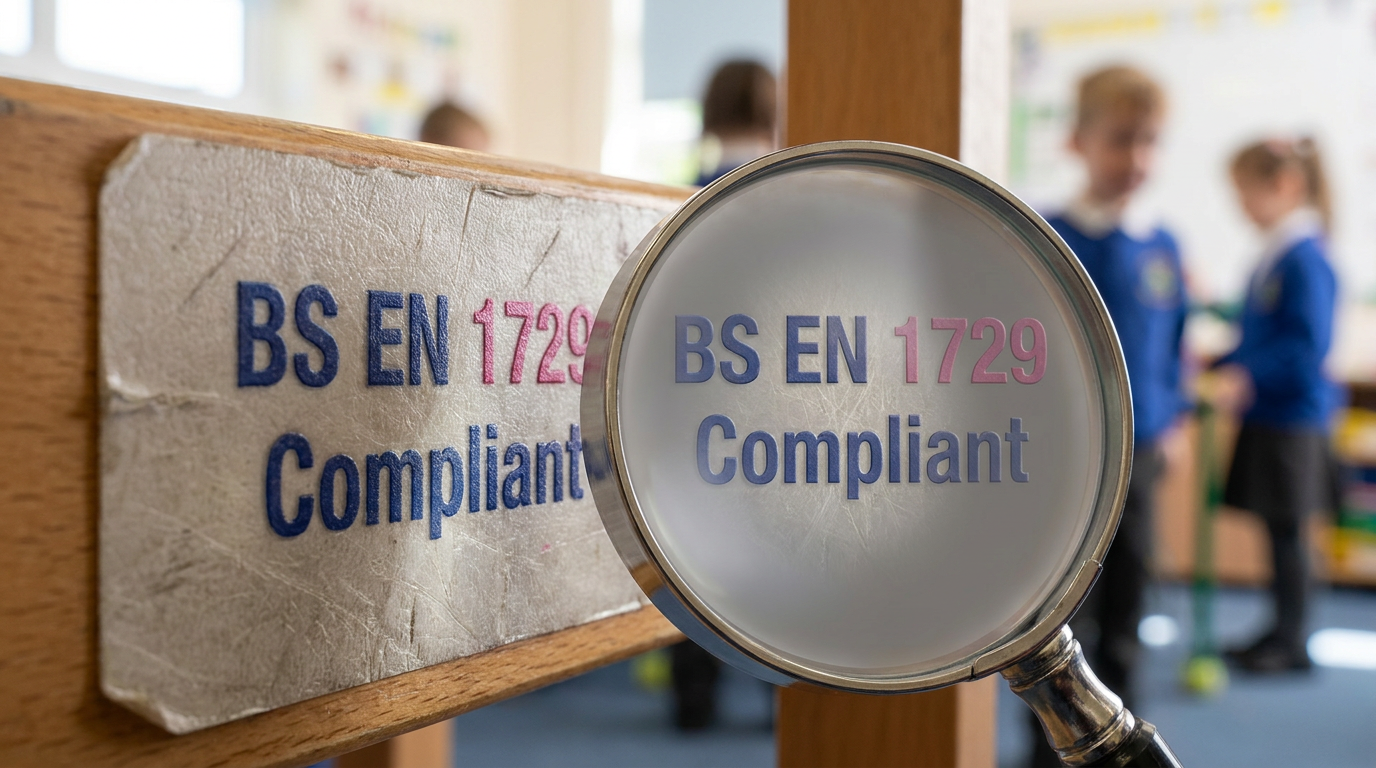
Yes, ignoring safety standards is one of the most serious primary school furniture mistakes a school can make. In the UK, all furniture intended for use in educational institutions must comply with BS EN 1729. This is not a recommendation; it’s a fundamental requirement for ensuring pupil safety and meeting your duty of care.
BS EN 1729 is the British and European standard for educational furniture, and it’s split into two key parts:
- Part 1: Functional Dimensions. This part specifies the correct size, height, and ergonomic dimensions for chairs and tables based on the age and stature of the pupils using them. This ensures proper posture and comfort.
- Part 2: Safety Requirements and Test Methods. This part details rigorous testing for strength, stability, and durability to ensure the furniture can withstand the demanding environment of a school without tipping, breaking, or creating a hazard.
The consequences of using non-compliant furniture are severe. Firstly, it may invalidate your school’s insurance policy, leaving you exposed in the event of an accident. Secondly, it can lead to scrutiny from the Health and Safety Executive (HSE), which, as the national regulator for workplace health and safety, expects all provided equipment to be safe. According to guidance from the Health and Safety Executive (HSE), employers have a clear duty to provide safe equipment. Furthermore, the Department for Education (DfE) statutory framework for early years mandates that equipment must be safe and suitable. Finally, and most importantly, it puts pupils at risk of injury. For a deeper dive, our UK School Furniture Safety Standards: The Definitive BS EN 1729 Guide is an essential resource.
Mistake 3: The One-Size-Fits-None Fallacy – Neglecting Ergonomics
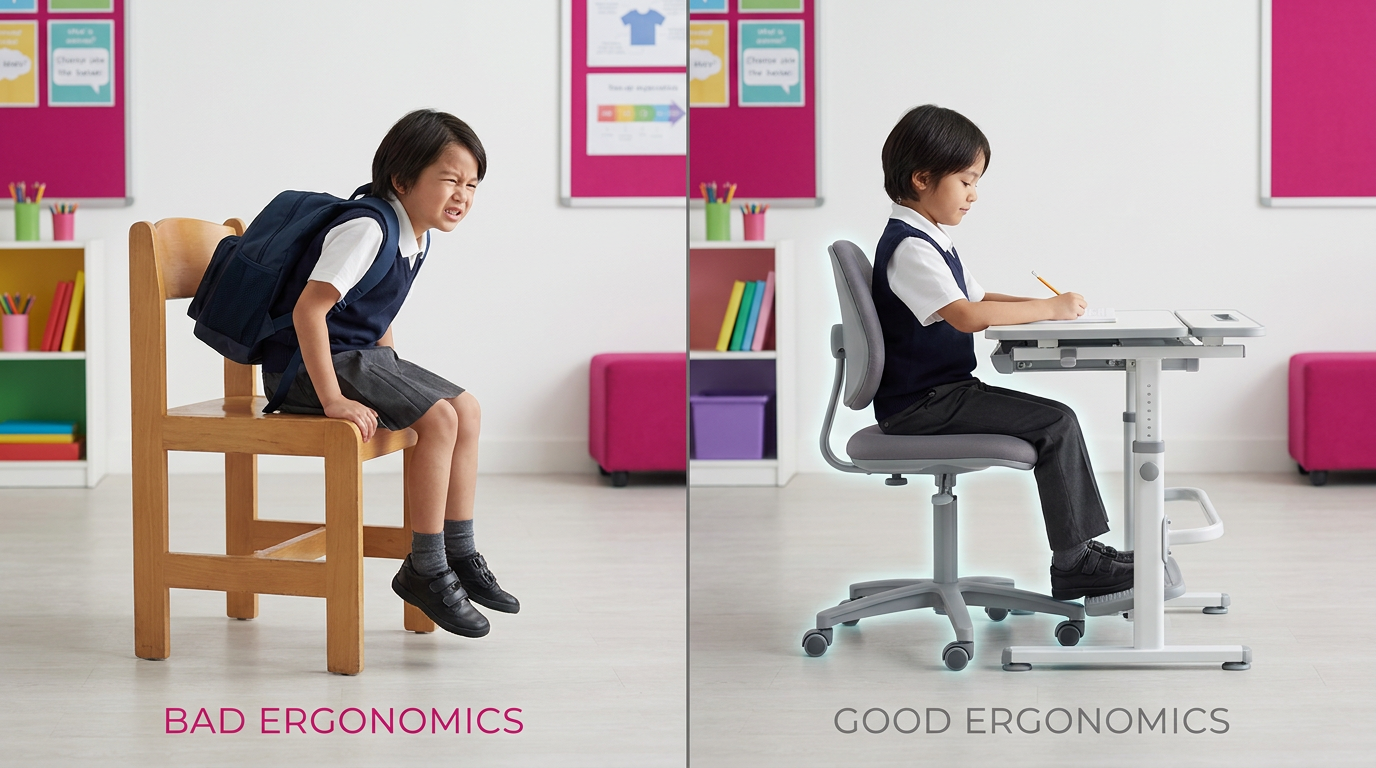
A common error in school procurement is buying one size of furniture to serve multiple year groups. This ‘one-size-fits-all’ approach is a fallacy that negatively impacts pupil posture, comfort, and concentration. Ergonomics, the science of designing products to fit the people who use them, is especially important for growing children.
Poorly fitting furniture can contribute to musculoskeletal issues. Research from the European Agency for Safety and Health at Work (EU-OSHA) consistently highlights poor workstation design as a key risk factor for such disorders. When a child’s feet don’t touch the floor or a desk is too high, it forces them into unnatural postures that can cause discomfort and distraction. This is one of the most preventable primary school furniture mistakes.
The BS EN 1729 standard directly addresses this by defining specific ‘size marks’ – often indicated by colour codes – that match furniture dimensions to different age groups (e.g., Key Stage 1 vs. Key Stage 2). Using the correct size ensures pupils can sit comfortably with proper back support, promoting better focus in the classroom. Moreover, as guidelines from the World Health Organization (WHO) (2020) recommend limiting sedentary time, providing comfortable and ergonomic furniture becomes even more crucial to support healthy habits during periods of seated learning.
Mistake 4: The Design Oversight – Forgetting Flexibility and Pedagogy
A frequent oversight is purchasing static, traditional furniture that fails to support modern teaching methods. The 21st-century classroom is no longer just rows of desks facing a board; it’s a dynamic environment that needs to adapt to different activities throughout the day. This is a subtle but significant one of the school furniture buying errors.
Modern pedagogy emphasises flexible learning spaces that facilitate collaborative group work, project-based learning, individual study, and technology integration. Static, heavy furniture actively works against this, making it difficult for teachers to reconfigure a room quickly. In our view, future-proofing the classroom means choosing furniture that is as agile as the curriculum.
Consider these examples of flexible furniture:
- Lightweight, stackable chairs that can be easily moved and stored.
- Modular tables (e.g., trapezoidal or semi-circular) that can be arranged in various configurations.
- Furniture with integrated storage or castors for mobility.
- Tiered seating or soft furnishings to create informal reading nooks.
Choosing adaptable furniture is not just about aesthetics; it’s a strategic decision that empowers teachers and supports a more engaging and effective learning environment. For more ideas, explore our guide on Primary School Classroom Layouts.
Mistake 5: The Supplier Shortcut – Choosing a Partner Without Due Diligence
Choosing an unvetted supplier based solely on a low quote is a high-risk shortcut and a classic education procurement pitfall. The supplier you choose is more than just a vendor; they are a project partner whose expertise (or lack thereof) will directly impact the outcome. A ‘box shifter’ simply delivers products, whereas a specialist partner helps manage the entire process, “Saving Time & Stress”.
We firmly believe that thorough due diligence is non-negotiable. Before committing, you should have a clear checklist to vet potential suppliers.
- Accreditation: Are they a member of the British Educational Suppliers Association (BESA)? BESA members are bound by a code of practice that, according to the British Educational Suppliers Association (BESA), ensures goods are fit for purpose and meet high safety standards.
- Experience: Do they have a well-supported by research track record with UK schools? Ask for case studies or testimonials from other School Business Managers. A great example is this UK Primary School’s Transformation.
- Expertise: Do they demonstrate a deep understanding of BS EN 1729 and other relevant regulations? Can they advise on compliance?
- Services: Do they offer a complete service, including free space planning, project management, delivery, and installation?
- may help: What warranties do they offer on their products? A lengthy guarantee (5+ years) signals confidence in product durability.
Choosing a reputable partner “Rated Excellent On Trustpilot” ensures you receive not just furniture, but also expert guidance and peace of mind.
Mistake 6: The Logistical Nightmare – Poor Delivery and Installation Planning
One of the most stressful school furniture buying errors is failing to plan logistics well in advance. Unlike other sectors, schools operate within a very tight installation window: the school holidays. A failure to plan meticulously for this period can result in chaos, delays, and a classroom that isn’t ready for the new term.
Common logistical classroom layout planning errors we’ve seen include:
- Inaccurate Measurements: Relying on old building plans instead of taking fresh measurements, especially in older buildings with uneven walls or floors.
- Ignoring Access Routes: Failing to check if furniture can fit through narrow corridors, doorways, or up stairwells.
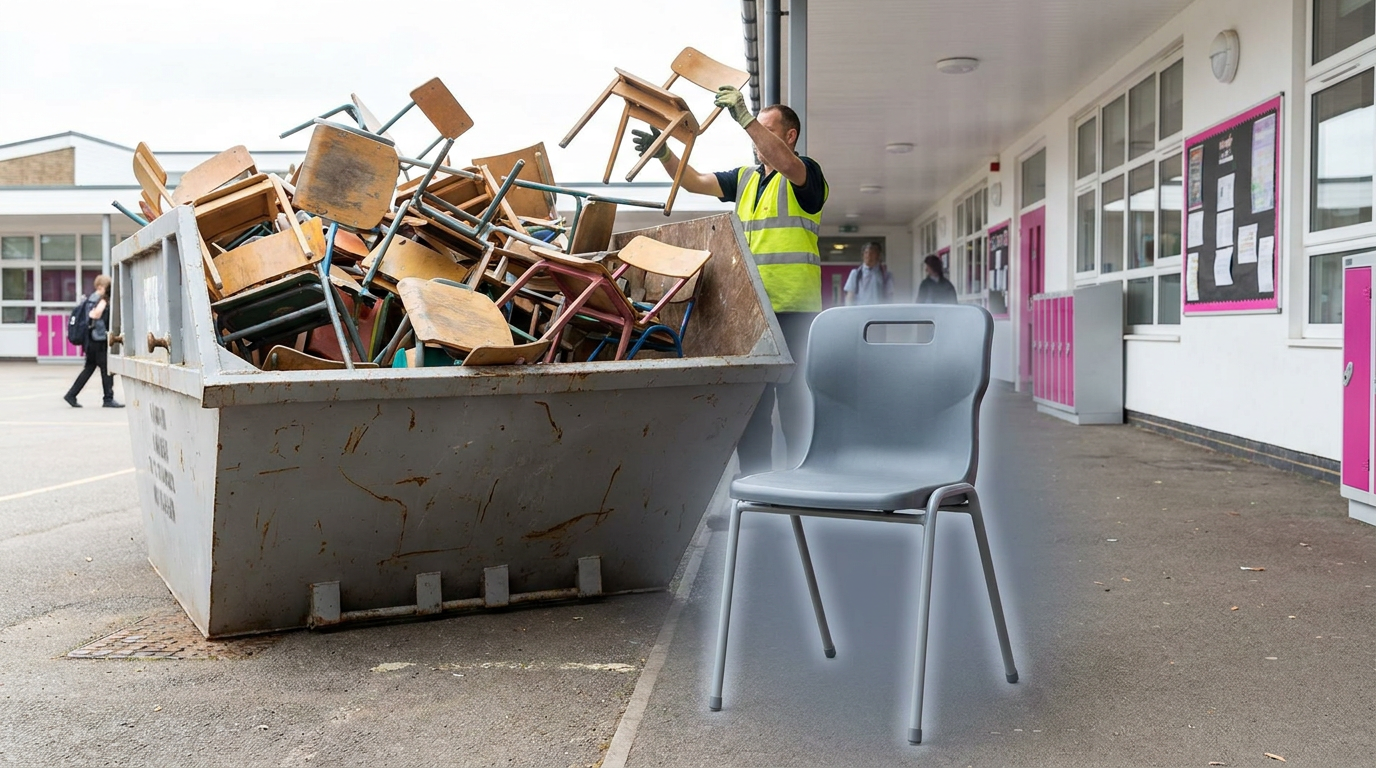
- No Plan for Old Furniture: Not arranging for the removal and ethical disposal of existing furniture before the new delivery arrives.
- Late Scheduling: Trying to book a school holiday furniture installation slot at the last minute when all reputable installers are fully booked.
We’ll be honest – this part can be tedious, but it’s crucial. Our recommendation is a ‘3-Month Countdown’ for any summer holiday project:
- 3 Months Out: Finalise furniture selection and place your order. Book your installation slot.
- 1 Month Out: Confirm delivery dates and access arrangements with the supplier. Arrange for the removal of old furniture.
- 1 Week Out: Ensure the rooms are clear and ready for the installation team.
Proper planning is the difference between a smooth transition and a logistical nightmare.
Mistake 7: The Durability Blind Spot – Underestimating Wear and Tear
A frequent buying error is underestimating the intense daily wear and tear that furniture endures in a primary school. A chair that looks fine in a catalogue may not be designed to withstand being scraped across the floor, rocked on, or stacked carelessly hundreds of times a year. This is where material choice and construction quality become paramount.
When assessing durability, look beyond the surface. Key features to look for include:
- Frames: Heavy-duty, fully welded steel frames are significantly more reliable than frames that are bolted together.
- Fixings: Tamper-proof fixings prevent pupils from dismantling parts.
- Surfaces: High-pressure laminate (HPL) tops are far more resistant to scratching, heat, and impact than cheaper melamine or vinyl-wrapped alternatives.
BS EN 1729 Part 2 includes specific tests for these factors, simulating years of use in a short period. For example, a chair might undergo 100,000 cycles of pressure on its seat and back to test its strength. In our work, we’ve seen cheap school furniture problems where chairs failed because their plastic shells were too thin or the welds on the metal frames were incomplete. Investing in furniture well-supported by research to pass these tests is an investment in longevity.
Strategic School Furniture Procurement: Turning Pitfalls into Wins with a Partner
Ultimately, avoiding these seven mistakes transforms procurement from a reactive task into a strategic function. A strategic approach to school furniture procurement considers budget, safety, pedagogy, and logistics as interconnected parts of a whole. It prioritises long-term value for the school and creates learning environments that are safe, comfortable, and inspiring for pupils.
This is where a specialist partner becomes invaluable. At Cost Cutters UK, this is our core expertise. Our comprehensive “Design To Install We Do It All!” service is built to guide School Business Managers through this exact process. We offer services like free space planning to visualise your new classroom, compliance checks to guarantee every item meets UK standards, and dedicated project management to handle all the logistical details.
By leveraging our 35+ years of experience and access to public sector frameworks, we help you make confident, informed decisions. We also offer “Bulk Buy Discounts” and flexible payment options like “Credit Accounts Or Pay Flexibly” to make your budget work harder.
Frequently Asked Questions About School Furniture Procurement
What is school furniture procurement?
School furniture procurement is the complete strategic process of planning, sourcing, purchasing, and installing furniture for an educational setting. It extends beyond simple ordering to include needs analysis, budget management, compliance with safety standards like BS EN 1729, and full project management. A well-executed procurement process ensures a successful, long-lasting investment.
Why is BS EN 1729 compliance so important for UK schools?
It is a critical legal and safety requirement that demonstrates a school’s duty of care. Non-compliance can invalidate your insurance, expose the school to liability in the event of an accident, and lead to failure in health and safety audits. The standard ensures that furniture is durable, stable, and ergonomically sized for pupils, directly impacting their safety and wellbeing.
How can I calculate the total cost of ownership for school furniture?
You can calculate TCO by adding the initial purchase price to all anticipated maintenance, repair, and replacement costs over the furniture’s expected lifespan (e.g., 10 years). From this total, you would subtract any potential residual or disposal value. A quality supplier can often provide these projections based on product may help and durability data, giving a truer financial picture than the ticket price alone.
What’s the difference between furniture for Key Stage 1 and Key Stage 2?
The primary difference is the size, which is specified by BS EN 1729 to ensure correct ergonomic support for different age groups. KS1 furniture is smaller to suit children aged 5-7, while KS2 furniture is larger for pupils aged 7-11. Using the wrong size can force children into poor postures, negatively affecting their comfort, health, and ability to concentrate in class.
How do I vet a potential school furniture supplier?
A thorough vetting process should include checking for BESA membership, a portfolio of successful UK school projects, and positive testimonials. You should also verify they offer comprehensive services like space planning and installation, provide reliable may help (5+ years), and can prove their products are fully compliant with BS EN 1729. A good partner will act as an expert advisor.
What are the risks of buying cheap school furniture?
The main risks are higher long-term costs due to frequent replacements, significant safety hazards from poor construction, and non-compliance with mandatory UK standards. Cheap furniture often comes with minimal may help and fails quickly under the strain of daily school use, leading to disruption and unforeseen expenditure. This is a classic school furniture budget mistake that ends up costing more.
How far in advance should I plan for a summer holiday installation?
For any significant project, you should begin detailed planning at least 3-6 months in advance. This timeframe allows for proper needs analysis, supplier selection, space planning, and placing orders to guarantee stock availability. Crucially, it lets you secure an installation slot during the extremely busy six-week summer holiday period, as last-minute planning often leads to costly compromises or delays.
Can flexible furniture really improve learning outcomes?
Yes, it can by directly supporting modern, dynamic teaching methods. Flexible furniture like modular tables and lightweight chairs enables teachers to quickly reconfigure a classroom for group work, individual study, or direct instruction. This adaptability helps increase pupil engagement, caters to diverse learning styles, and allows the physical environment to become an effective teaching tool itself.
What are common classroom furniture compliance issues in the UK?
The most common issue is furniture that fails to meet the BS EN 1729 standard for strength, stability, or dimensional accuracy. Other frequent classroom furniture compliance issues UK schools face include incorrect chair and table height pairings for the designated age group, the use of flammable materials, and designs with sharp edges or potential entrapment points. These all pose serious safety risks.
What guarantees or warranties should I look for?
You should look for a minimum 5-year guarantee covering structural components like frames and welds. Reputable suppliers who are confident in their product’s durability for the demanding education sector will offer this as standard. A short warranty of only one or two years is often a red flag, suggesting the product is not built to last under heavy daily use.
Important Considerations and Next Steps
This guide provides a comprehensive overview of common procurement mistakes. However, every school’s needs, building constraints, and budget are unique. The advice here should be adapted to your specific context, and detailed analysis should be conducted for your individual project.
While procuring new, compliant furniture is often an effective solution, it’s not the only one. For schools with extremely tight budgets, a phased approach – replacing the highest-risk items first – or professional refurbishment of existing high-quality stock could be considered. However, any refurbishment must still bring items up to current safety standards to be a viable option.
Navigating the complexities of compliance, logistics, and lifecycle costing can be challenging. For large or critical projects, we recommend consulting with a specialist educational furniture supplier. Their expertise can prevent costly errors and ensure a successful, long-lasting investment in your learning environment.
Procure with Confidence: From Common Mistakes to Strategic Wins
A successful school furniture procurement process is a cornerstone of a safe and effective learning environment. By avoiding the common pitfalls of chasing low prices, ignoring compliance, and poor planning, you transform a simple purchase into a strategic investment. This approach not only saves money in the long term but also directly contributes to pupil wellbeing and educational success.
At Cost Cutters UK, we’ve spent over 35 years helping School Business Managers navigate these challenges. We act as your partner, providing the expertise to ensure your next project is a smooth success, from initial space planning to final installation. If you’re ready to procure with confidence, our team is here to help. Get a Free Space Plan & Quote today.
References
- Health and Safety Executive (HSE) – UK Government Guidance. Provides the legal framework and practical advice for workstation safety, forming the basis of an employer’s duty of care.
- European Agency for Safety and Health at Work (EU-OSHA) – EU Agency Research. Highlights poor workstation design as a primary risk factor for musculoskeletal disorders, reinforcing the need for ergonomic furniture.
- Department for Education (EYFS Framework) – UK Government Statutory Framework. Mandates that premises, environment, and equipment in early years settings must be safe and suitable for their purpose.
- British Educational Suppliers Association (BESA) – Industry Body Code of Practice. Requires members to supply goods that are fit for purpose in an educational context and adhere to high safety and quality standards.
- World Health Organization (WHO) – Global Health Guidelines (2020). Recommends limiting sedentary time, which can be supported by flexible and ergonomic classroom design.
- Statista – Market Data (2024). Projects UK office furniture market revenue at US$2.28bn in 2024, indicating the significant scale of furniture procurement.
Conclusion
Procure with Confidence: From Common Mistakes to Strategic Wins
In summary, school furniture procurement is a strategic process where avoiding common pitfalls transforms a simple purchase into a long-term investment. By moving beyond initial price to focus on lifecycle value, compliance, and thoughtful planning, you create a safe and effective learning environment. This approach not only prevents budget waste but also directly contributes to pupil wellbeing and educational success.
At Cost Cutters UK, we’ve spent over 35 years helping School Business Managers navigate these challenges. We act as your partner, providing the expertise to ensure your next project is a smooth success, from initial space planning to final installation. If you’re ready to procure with confidence, our team is here to help. Get a Free Space Plan & Quote