School Table Procurement Myths vs. Facts and a Fact: A UK Guide
🎯 Key Takeaway
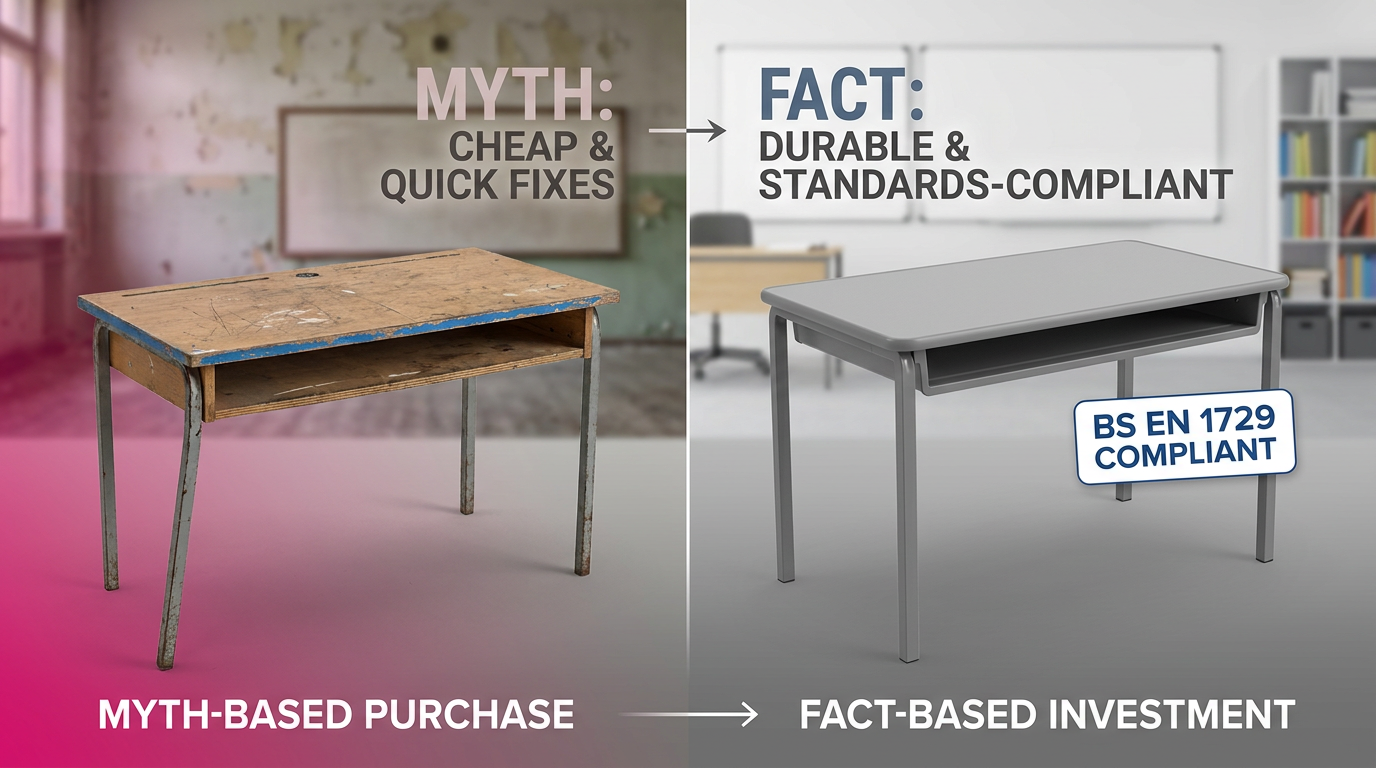
Separating school table myths vs. Facts and a fact is the most critical step in making sound procurement decisions that deliver long-term value. Basing choices on verifiable data, such as compliance with BS EN 1729 standards and Total Cost of Ownership (TCO), ensures pupil safety, enhances learning environments, and protects school budgets from unforeseen expenses. In contrast, decisions driven by common myths often lead to higher replacement costs, compliance risks, and a compromised educational experience. This guide will help you distinguish between the two.
When procuring new classroom furniture, school business managers are often faced with a barrage of conflicting information. Understanding the difference between common myths vs. Facts and a fact can save your budget, safeguard your pupils, and significantly improve the learning environment. As of September 2026, the pressure on school finances has rarely been greater, making it essential to invest wisely.
This guide is designed to cut through the noise. We will compare the consequences of decisions based on myths against those based on verifiable facts. We’ll provide a clear framework to help you assess your options, ensuring every pound spent on furniture is a genuine investment in your school’s future. With our 35+ years of experience, we’ve seen firsthand how fact-based choices lead to safer, more effective, and more durable classrooms.
Written by: Gareth Jones | Reviewed by: Editorial Team, 35+ Years Experience; Rated Excellent On Trustpilot
ℹ️ Transparency Disclosure: This article is produced by Cost Cutters UK, a leading supplier of commercial and educational furniture. Our analysis is based on over three decades of industry experience, customer feedback, and adherence to UK and European standards. This content aims to provide objective guidance, and for full transparency, we disclose that we supply products that meet the factual standards discussed.
Quick Verdict: Choosing School Tables Based on Facts, Not Fiction
⚡ Quick Verdict
Overall pick: Facts – Basing procurement decisions on verifiable facts and standards like BS EN 1729 ensures long-term value, safety, and better learning outcomes for pupils.
- Best for Short-Term Thinking: Myths – Following myths may offer a lower initial price but typically results in higher lifetime costs, potential safety issues, and frequent replacements.
- Best for Strategic Procurement: Facts – Adhering to facts may help compliance, supports pupil wellbeing through correct ergonomics, and delivers a superior return on investment over the furniture’s lifespan.
School Table Myths vs. Facts and a Fact: A Side-by-Side Comparison
The table below starkly contrasts the outcomes of procurement strategies. On one side, we have decisions driven by common industry myths; on the other, choices grounded in verifiable facts and official standards. This comparison highlights why a fact-based approach is the only responsible choice for educational establishments.
| Dimension | Following Myths (Common Beliefs) | Following Facts (Verified Information) |
|---|---|---|
| Cost Implication | Focus on low initial price leads to high Total Cost of Ownership (TCO) due to frequent repairs and replacements. | Focus on TCO and durability leads to a higher initial outlay but a significantly lower lifetime cost per unit. |
| Safety & Compliance | High risk of non-compliance with UK school furniture regulations. Potential for accidents from unstable or poorly made tables. | likely to support compliance with standards like BS EN 1729. Reduced risk of accidents and liability. |
| Pupil Wellbeing & Ergonomics | Disregards ergonomic sizing, leading to poor posture, discomfort, and reduced concentration for pupils. | Prioritises correct sizing and design, promoting good posture and improving pupil focus and engagement. |
| Durability & Lifespan | Lifespan often under 3-5 years. Prone to chipping, wobbling, and structural failure. | Lifespan of 10+ years is common. Features reliable materials like fully-welded frames and resilient edging. |
| Decision-Making Basis | Based on anecdotal advice, supplier sales talk, and the lowest price on a spreadsheet. | Based on certified data, supplier transparency, product may help, and a clear understanding of material specifications. |
As the data shows, a decision that seems fiscally prudent initially (choosing the cheapest option) often becomes a costly liability. A fact-based approach, while requiring more initial research, aligns with the safeguarding duties outlined in the Department for Education’s EYFS Framework (2024), which mandates safe and suitable equipment.
Common School Table Myths & Their Consequences
Best for: Short-term thinking, leading to budget overruns and potential safety issues.
Relying on myths is a common pitfall, often driven by tight budgets and time pressures. However, these seemingly sensible shortcuts almost invariably lead to greater expense and disruption down the line. We’ll be honest – it’s tempting to go for the quick, cheap win, but our experience shows it’s a false economy.
Perceived Pros:
- Lower initial purchase price.
- Faster procurement process (less research required).
- Appears as an immediate saving on budget reports.
Cons (The Reality):
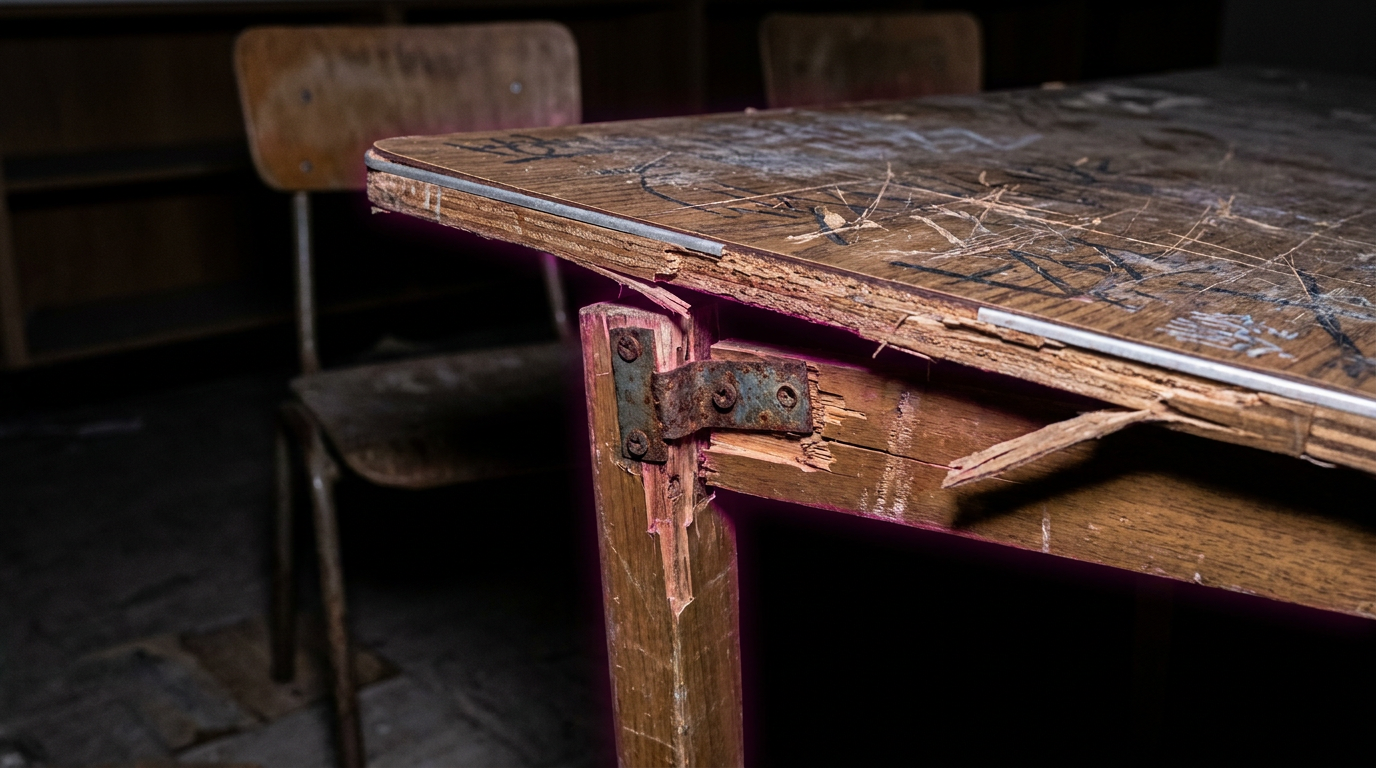
- High Replacement Costs: Tables often need replacing within 3-5 years, negating any initial savings.
- Safety Risks: Poorly constructed tables can wobble or collapse, posing a direct risk to pupils and staff, a concern highlighted by the Health and Safety Executive (HSE).
- Disrupted Learning: Wobbly, noisy, or damaged tables are a constant distraction in the classroom.
- Poor Ergonomics: Incorrect sizing contributes to musculoskeletal issues and poor posture, affecting pupil health and concentration.
- Hidden Costs: Time spent on maintenance, repairs, and sourcing replacements adds significant administrative overhead, Saving Time & Stress is not part of this approach.
Essential School Table Facts & Their Benefits
Best for: Informed, long-term strategic procurement that ensures value, safety, and pupil wellbeing.
A fact-based approach requires a shift in perspective from initial cost to lifetime value. This means prioritising material quality, certified safety standards, and well-supported by research durability. It’s the approach we champion because it aligns with creating optimal learning environments.
Pros:
- Lower Total Cost of Ownership (TCO): Although the initial cost may be higher, durable tables that last 10+ years offer far better value.
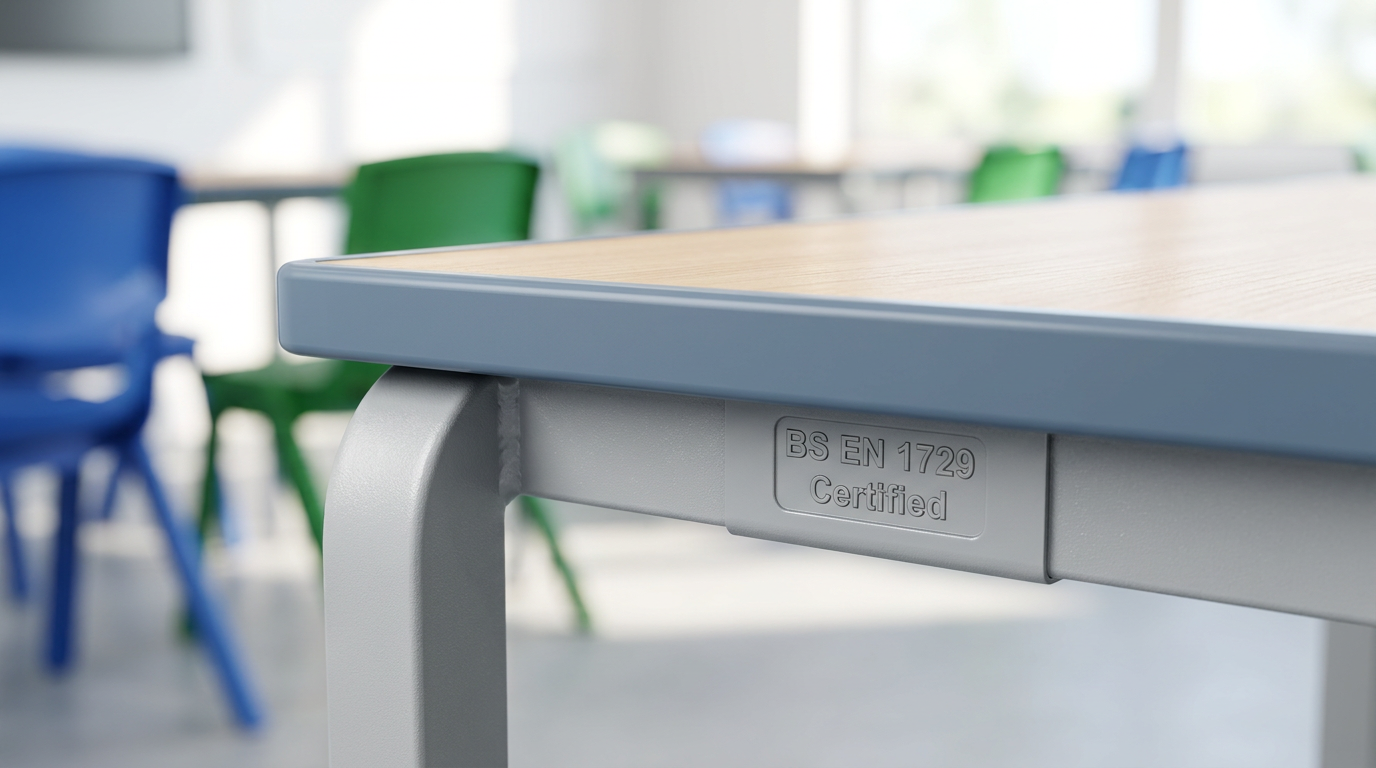
- likely to support Safety & Compliance: Certified BS EN 1729 tables meet strict UK and European standards for strength, stability, and ergonomic sizing.
- Improved Pupil Outcomes: Correctly sized, ergonomic furniture supports better posture and focus, directly contributing to a more effective learning environment. This aligns with our guide on ergonomics and correct posture.
- Enhanced Durability: Features like fully-welded steel frames and tough, polyurethane (PU) edging resist wear and tear, even in the busiest classrooms.
- Long-Term Peace of Mind: Longer may help (often 5-10 years) and the backing of reputable suppliers mean you can fit and forget.
Cons:
- Higher initial investment required.
- Longer decision-making process to verify specifications and supplier credentials.
Hypothetical Case Study: A Tale of Two Academies
- Challenge: Two similar primary academies needed to furnish six new classrooms each. Academy ‘A’ opted for the cheapest tables available, saving an initial £4,000. Academy ‘B’ invested that extra £4,000 in BS EN 1729 certified tables with fully-welded frames and 10-year may help.
- Solution: Academy ‘B’ worked with our “Design To Install We Do It All!” service to ensure correct sizing and layout for each year group. Academy ‘A’ ordered a single, cheaper model for all rooms.
- Results: Within three years, Academy ‘A’ had replaced 30% of its tables due to breakages and excessive wear, at a cost of £5,500. Academy ‘B’ had zero replacements. By year five, Academy ‘A’s total spend was £7,000 higher than Academy ‘B’s.
- Key Insight: Prioritising certified quality and TCO over initial price delivered substantial long-term savings and avoided classroom disruption.
Decision Framework: How to Separate Fact from Fiction
To make a sound investment, you need a clear, fact-based process. What does this mean for you? It means asking the right questions before you commit your budget. Use this checklist to guide your decision-making.
Choose a supplier if they can:
- Certify Compliance: Can they provide documentation proving their tables meet BS EN 1729 Parts 1 & 2? This is non-negotiable for ensuring safety and correct ergonomic sizing.
- Explain the Materials: A good supplier will confidently explain the difference between a high-pressure laminate (HPL) top and a melamine-faced chipboard (MFC) one, and why a cast PU edge is superior to a simple PVC band.
- Offer a Substantial Guarantee: Look for a minimum 5-year guarantee. A 10-year guarantee is a strong indicator of a manufacturer’s confidence in their product’s durability.
- Provide Case Studies or References: Reputable suppliers, often recognised by organisations like the British Educational Suppliers Association (BESA), will happily share success stories from other schools.
Choose a table if it has:
- A Fully-Welded Frame: This is significantly stronger and more durable than weaker crush-bent or bolt-on leg frames.
- A Resilient Edge: Look for tables with a tough, tamper-proof PU edge that pupils can’t pick at and that protects the table core from moisture and impact.
- The Correct Size Mark: BS EN 1729 tables are marked with a size code corresponding to specific age groups, crucial for choosing the right school tables for different age groups.
When in doubt, typically prioritise certified safety and a longer guarantee over a lower initial price.
Important Considerations
While this guide strongly advocates for a fact-based approach, it’s useful to understand the context and limitations. The research cited primarily focuses on formal educational and workplace settings. The specific needs of specialist SEN (Special Educational Needs) environments or outdoor learning spaces might require additional or different criteria beyond the scope of this general comparison.
Alternative approaches exist, such as considering new versus refurbished furniture. High-quality refurbished items from a reputable source can sometimes offer a good balance of cost and quality. However, this requires careful inspection and verification of the refurbishment process to ensure safety standards are still met. This path may be suitable for schools with extremely limited budgets but carries its own set of risks.
If you are undertaking a large-scale project, such as a new build or a whole-school refurbishment, we recommend seeking professional guidance. Our “Design To Install We Do It All!” service provides expert space planning and product specification to ensure every element of your project is optimised for safety, ergonomics, and long-term value, Saving Time & Stress for your team.
Conclusion: Making Fact-Based Decisions for Your School’s Future
navigating the school table market requires a clear understanding of myths vs. Facts and a fact. The evidence is clear: a procurement strategy based on verifiable facts, certified standards, and long-term value is the only sustainable path for modern schools. By prioritising pupil safety, ergonomic wellbeing, and product durability over a tempting initial price tag, you make a sound financial decision that pays dividends for years to come. This strategic approach protects your budget and, more importantly, invests directly in a better learning environment for your pupils.
At Cost Cutters UK, we are committed to helping schools make these informed choices. With over 35+ years of experience and a service that is Rated Excellent On Trustpilot, we provide furniture that meets the highest standards of safety and durability. Whether you need a full classroom fit-out or are looking to take advantage of our Bulk Buy Discounts, our team is here to help. We also offer flexible payment options, including Credit Accounts Or Pay Flexibly, to support your school’s budget.
Frequently Asked Questions About School Tables
What is the best approach to school table myths vs. Facts and a fact?
an effective approach is to base all procurement decisions on verifiable facts, not myths. This means prioritising certified safety standards like BS EN 1729, assessing the Total Cost of Ownership (TCO), and evaluating material durability. A fact-based strategy ensures long-term value, pupil safety, and a better learning environment, avoiding the hidden costs associated with seemingly cheaper, myth-based choices.
What is the difference between a myth and a fact For school furniture?
A myth is a common but unproven belief, whereas a fact is a verifiable piece of information. For example, the myth is ‘the cheaper, the better’. The corresponding fact, supported by data, is that higher-quality tables have a lower Total Cost of Ownership. Facts are based on standards and evidence; myths are often based on anecdotal advice or an oversimplified focus on initial price.
What does BS EN 1729 actually mean for a school table?
BS EN 1729 is the European and UK standard for educational furniture that may help correct sizing and safety. Part 1 specifies ergonomic dimensions (height, depth, and space) to promote good posture for different age groups. Part 2 sets out stringent safety requirements for strength and stability. A compliant table is certified to be both safe and ergonomically suitable for pupils.
Is it really cheaper to buy higher quality tables in the long run?
Yes, it is almost typically cheaper to buy higher quality tables over their full lifecycle. While the initial purchase price is higher, durable tables with 10+ year lifespans avoid the repeated replacement costs of cheaper alternatives that may only last 2-3 years. This calculation, known as Total Cost of Ownership (TCO), research suggests the long-term financial benefit of investing in quality.
What are the most durable materials for a classroom table top and edge?
For table tops, a high-pressure laminate (HPL) surface is exceptionally durable and resistant to scratches and heat. For the edge, a cast polyurethane (PU) edge is the most reliable option. It is bonded smoothly to the core, making it tamper-proof, water-resistant, and far more resilient to impact and daily wear than a simple glued-on PVC or ABS plastic edge.
Why can’t I just use the same size table for all my primary school classes?
Using one size table for all ages compromises pupil health and concentration. The BS EN 1729 standard exists because children require different table and chair heights as they grow to maintain a healthy posture. Using the wrong size furniture can lead to discomfort, fidgeting, and long-term musculoskeletal issues. It’s crucial to match the furniture size mark to the age group using it.
Are fully-welded frames better than crush-bent frames?
Yes, fully-welded frames are significantly stronger and more durable than crush-bent or flat-pack frames. The welding process creates a single, rigid structure that can withstand the heavy demands of a classroom environment without loosening over time. Crush-bent frames are a good mid-range option, but fully-welded frames offer the ultimate in strength and longevity, reducing wobble and maintenance needs.
What are the benefits of flexible furniture like shaped or height-adjustable tables?
Flexible furniture promotes collaborative learning, adaptability, and inclusivity in the classroom. Shaped tables (like trapezoidal or semi-circular ones) can be easily reconfigured for group work or individual study. Height-adjustable tables can accommodate pupils of different sizes or those with specific postural needs, ensuring everyone can work comfortably and effectively. They are a key component of modern, agile learning environments.
How important is the guarantee on school furniture?
A guarantee is a critical indicator of a product’s quality and the manufacturer’s confidence in its durability. A short 1-year guarantee on a cheap table suggests it is not built to last. In contrast, a 5, 10, or even 15-year guarantee on a higher-quality table provides you with long-term peace of mind and protects your investment against premature failure.
Can a myth about furniture ever be a fact?
No, by definition a myth is a false belief, but it can sometimes stem from a misinterpretation of a fact. For instance, the myth ‘all plastic chairs are the same’ is false. However, it might originate from the fact that many chairs use polypropylene shells. The crucial difference lies in the quality, thickness, and design of that plastic, which a fact-based assessment would reveal.
References
- Health and Safety Executive (HSE) (2024). Official guidance on workplace health, safety, and ergonomics, including standards for display screen equipment and seating which inform best practice in educational settings.
- European Agency for Safety and Health at Work (EU-OSHA) (2023). Pan-European research on musculoskeletal disorders, highlighting risk factors like poor workstation design relevant to both adults and children in prolonged sitting environments.
- Department for Education (EYFS Framework) (2024). The statutory framework for the Early Years Foundation Stage, which details safeguarding and welfare requirements, including the provision of safe and suitable equipment.
- British Educational Suppliers Association (BESA) (2024). BESA’s Code of Practice, which sets standards for members to ensure products are of good quality and fit for purpose in an educational context.
- World Health Organization (WHO) (2020). Global guidelines on physical activity and sedentary behaviour, providing the public health rationale for ergonomic furniture that supports movement and good posture.
- Statista (2024). Market research providing data on the UK office furniture market, with revenue projected at US$2.28bn for 2024, indicating the scale of commercial furniture procurement.
- Studocu (Undated). Educational guide on critical thinking, outlining methodologies for distinguishing between factual claims and myths.
- Vocal.media (Undated). Article discussing the fundamental differences between facts and myths and their importance in decision-making processes.
- YPO (2024). As a major public sector buying organisation, YPO provides frameworks and guidance on strategic procurement for schools, including furniture, which reinforces the importance of a fact-based approach to achieve value.