Ergonomics & Posture: The Definitive UK Guide to School Table Design
🎯 Key Takeaway
Correct ergonomics & posture in UK schools is achieved by selecting furniture, particularly tables and chairs, that conforms to the size and height requirements of the BS EN 1729 standard for each specific age group. This standard, not generic office advice, is the definitive guide for sizing school furniture. Ergonomic needs evolve significantly from Early Years (EYFS) to Secondary, requiring different table heights and features. Investing in compliant, durable ergonomic furniture delivers better long-term value and student outcomes than focusing solely on the lowest initial cost.
For ergonomics & posture, many schools inadvertently apply principles from adult office environments, which is a fundamental mistake. Children aren’t miniature adults; their bodies are growing and developing at a rapid pace. The dynamic and varied nature of a classroom, from focused writing to collaborative play, presents unique ergonomic challenges. As of September 2026, the key to supporting student health and concentration is a thorough understanding and application of UK-specific standards. The most important of these is BS EN 1729, a standard designed specifically for educational furniture.
This guide provides school business managers, headteachers, and procurement officers with a practical framework. We’ll explore the science behind why this matters, decode the critical BS EN 1729 standard, break down requirements by Key Stage (KS), and offer expert advice on specifying tables that offer true long-term value.
Written by: The Cost Cutters UK Content Team
Reviewed by: Editorial Team, Industry Specialists with 35+ Years Experience; Rated Excellent On Trustpilot
Last updated: 15 September 2026
ℹ️ Transparency Disclosure
This article provides expert guidance on school furniture ergonomics based on UK government standards, international health guidelines, and our extensive industry experience. For transparency, some links may connect to our services, such as our free space planning and quoting. Our editorial team has verified all information for accuracy and to ensure it reflects current best practice.
Why Ergonomics & Posture Matter in a UK School Setting
Proper ergonomics & posture in a classroom directly improve student concentration, behaviour, and long-term physical health. Poorly sized furniture is a significant contributor to musculoskeletal issues, with research from bodies like the European Agency for Safety and Health at Work (EU-OSHA) (2022) highlighting that musculoskeletal disorders (MSDs) are increasingly reported in younger populations. For a child, sitting at a desk that is too high or low forces their body into unnatural positions, leading to fidgeting, distraction, and physical strain on their neck, back, and shoulders.
The core goal is to facilitate neutral posture ergonomics, a state where the body is held in a balanced position that minimises stress on muscles and joints. This means feet flat on the floor, knees at a comfortable angle, a straight back, and relaxed shoulders. Achieving this correct ergonomics sitting posture is nearly impossible if the chair and table are not sized correctly for the child. The World Health Organization (WHO) (2020) guidelines on sedentary behaviour stress the health risks of prolonged sitting for all ages. While schools can’t eliminate sitting, they can ensure that the time students spend at their desks is as healthy as possible. By providing furniture that fits, schools can create a foundational layer of support for both educational attainment and student wellbeing, ultimately Saving Time & Stress by reducing classroom disruption.
Decoding BS EN 1729: The UK Standard for School Furniture
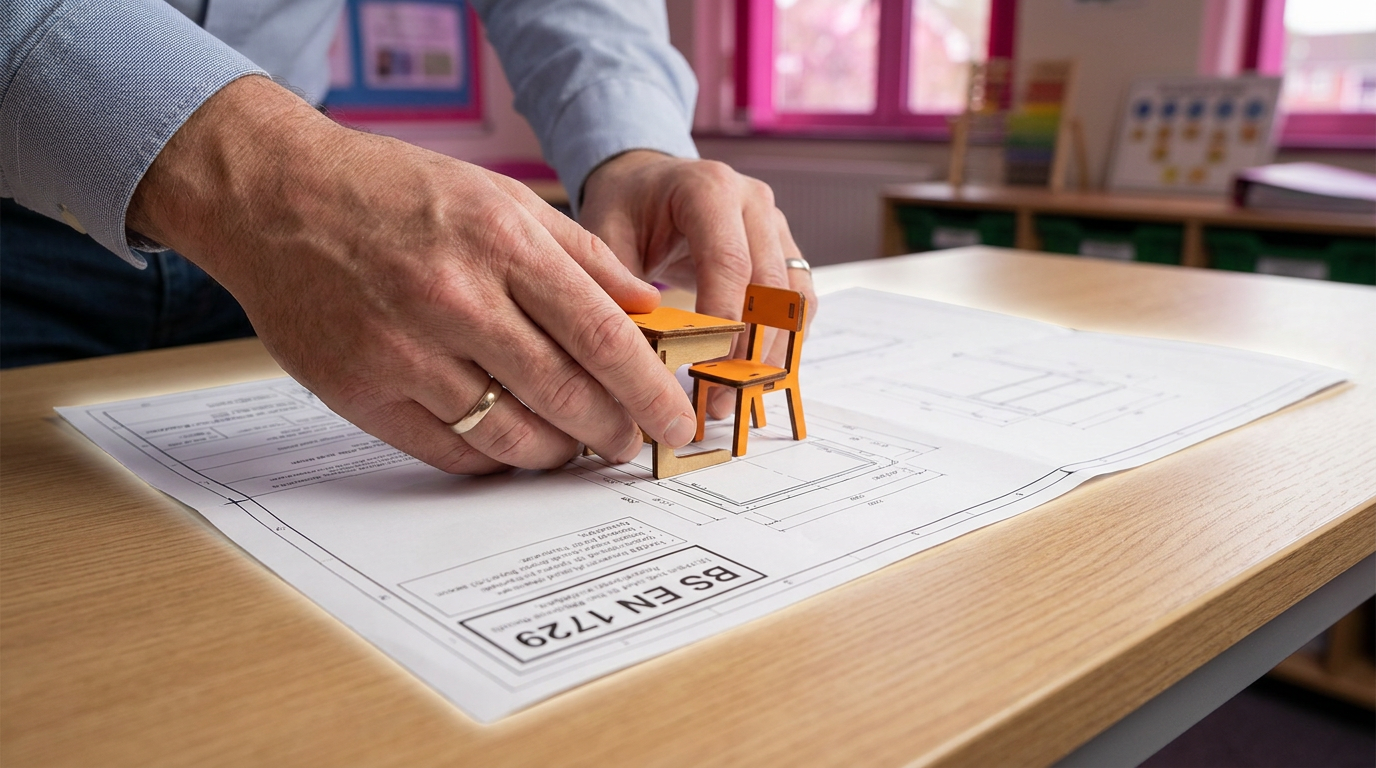
BS EN 1729 is the definitive British and European standard that links a pupil’s height to the specific dimensions of chairs and tables, ensuring ergonomic support and safety. For any UK school procurer, a working knowledge of this standard isn’t just useful; it’s a core responsibility. The standard is a key part of your bs en 1729 guide to compliant procurement.
The standard is split into two main parts:
- BS EN 1729-1: Functional dimensions. This part is crucial for ergonomics. It specifies the required height, depth, and angle for chairs and tables based on pupil stature.
- BS EN 1729-2: Safety requirements. This part covers strength, stability, and durability, ensuring furniture can withstand the rigours of a school environment.
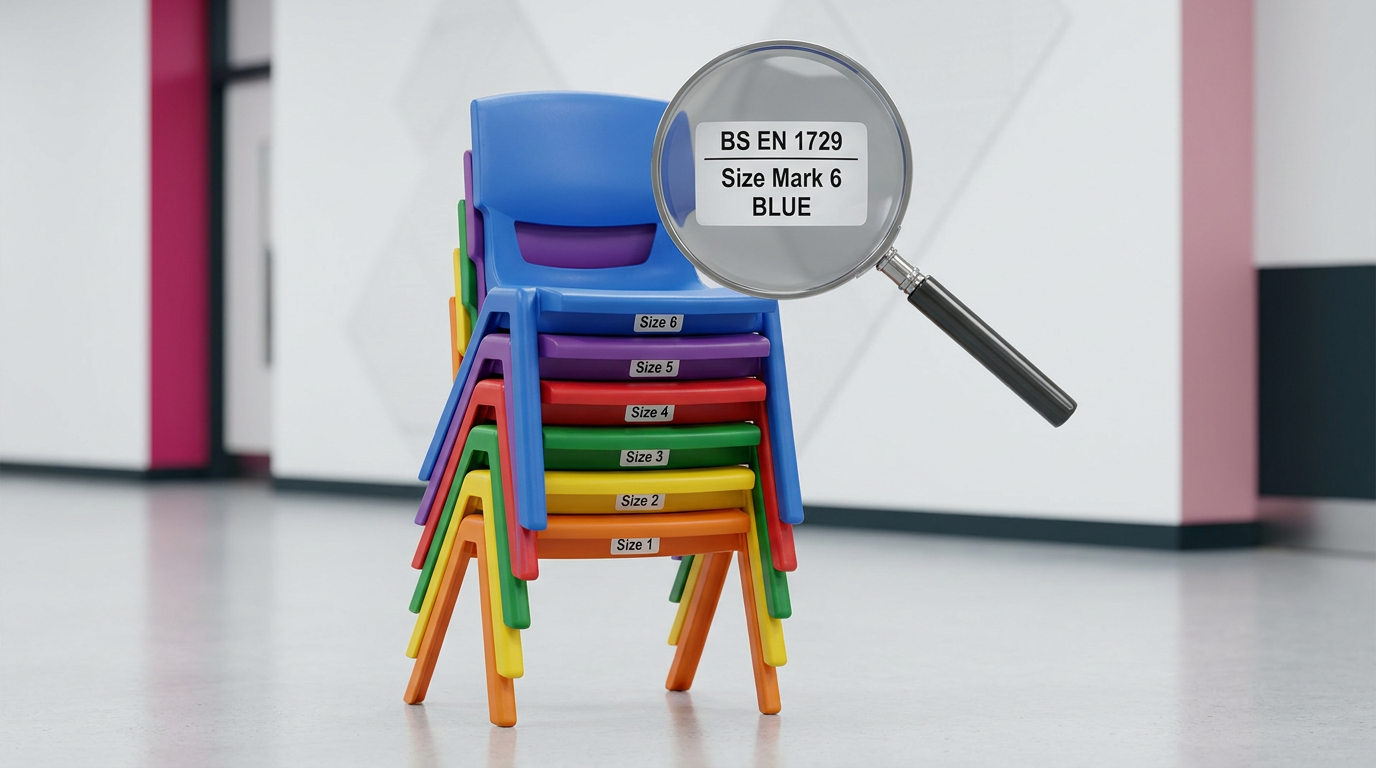
A key concept within the standard is the Size Mark. This is a number, from 1 to 7, that corresponds to a specific size of furniture designed for a particular age and height range. When procuring furniture, you should be specifying the required Size Mark, not just a generic description. This ensures you receive furniture that meets the correct school furniture height standards uk. As the British Educational Suppliers Association (BESA) mandates that its members supply goods fit for purpose, referencing BS EN 1729 is the clearest way to define that purpose.
The table below provides a clear breakdown of the Size Marks and their corresponding measurements.
| Size Mark | Colour Code | Pupil Stature (mm) | Age Guide (UK) | Chair Seat Height (mm) | Table Height (mm) |
|---|---|---|---|---|---|
| 1 | Orange | 800 – 950 | 2 – 3 yrs | 210 | 400 |
| 2 | Violet | 930 – 1160 | 3 – 5 yrs | 260 | 460 |
| 3 | Yellow | 1080 – 1210 | 5 – 7 yrs | 310 | 530 |
| 4 | Red | 1190 – 1420 | 7 – 9 yrs | 350 | 590 |
| 5 | Green | 1330 – 1590 | 9 – 13 yrs | 380 | 640 |
| 6 | Blue | 1460 – 1765 | 13 – 18+ yrs | 430 | 710 |
| 7 | Brown | 1590 – 1880 | 18+ / Adult | 460 | 760 |
Source: BS EN 1729-1 Data
Ergonomic Table Design by UK Key Stage
Achieving good posture ergonomics isn’t a one-size-fits-all solution; the demands on school tables evolve as students grow.
Early Years (EYFS) and Key Stage 1
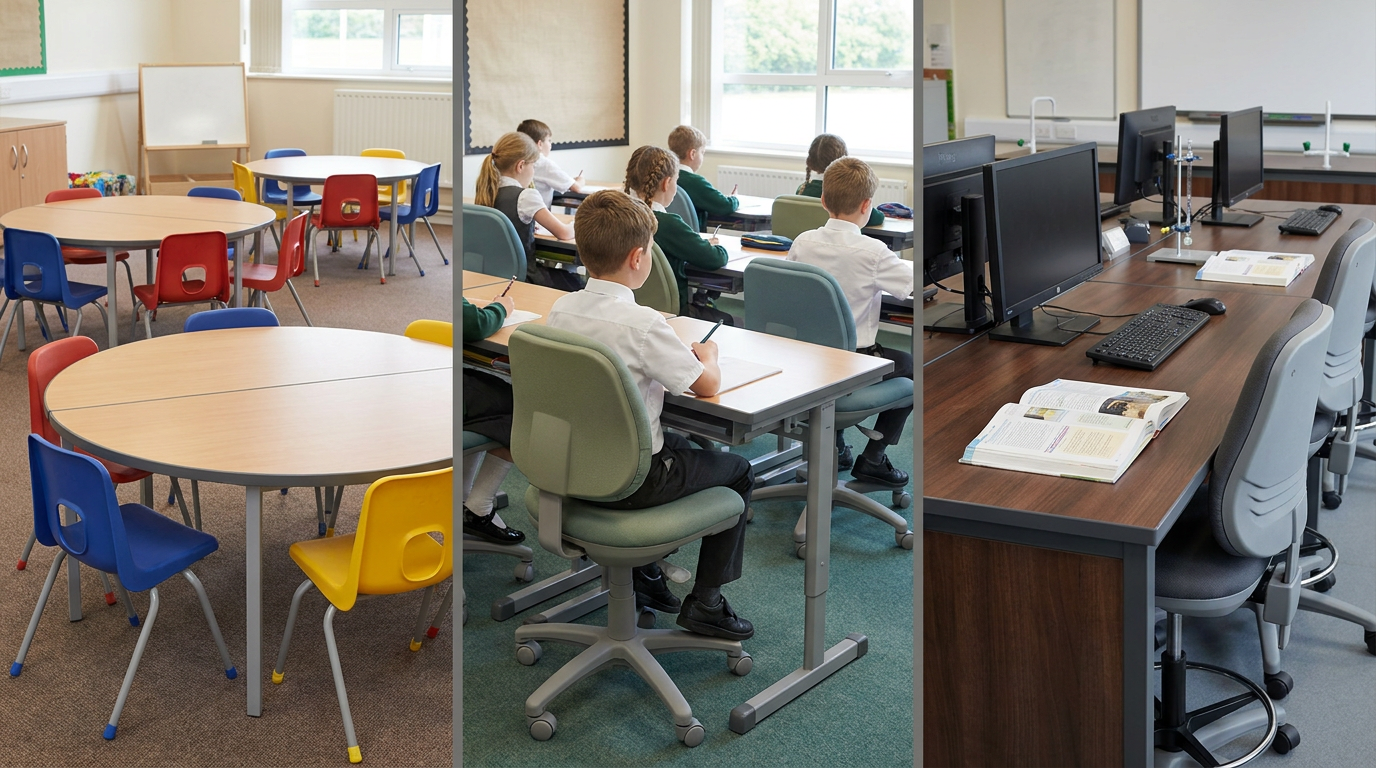
In the Early Years Foundation Stage (EYFS), ergonomics is intertwined with safety and pedagogy. The Department for Education (DfE) framework requires that equipment is safe and suitable. For tables, this means rounded edges to prevent injury, exceptionally durable and easy-to-clean surfaces (like high-pressure laminate) to handle messy play, and high stability to prevent tipping. Shapes like trapezoidal or circular tables are popular as they encourage group work and communication. For this age group, we often recommend exploring specialised furniture for Early Years that is designed with these specific needs in mind.
Key Stage 2
This stage marks a transition towards more structured, individual work. The relationship between chair and table height becomes paramount for developing good writing posture and preventing hunching. The table height must allow students to rest their forearms comfortably without raising their shoulders. It’s here that a mismatch in Size Marks can lead to poor habits. Proper desk posture ergonomics established at this age can have lasting benefits.
Secondary (Key Stages 3 & 4)
Older students require larger table surfaces to accommodate textbooks, laptops, and other equipment. In IT suites and science labs, guidance from the Health and Safety Executive (HSE) on Display Screen Equipment (DSE) becomes relevant. Tables must be deep enough to allow for a correct viewing distance from monitors. Durability is also critical, as the furniture needs to withstand use by older, larger, and heavier students. For these environments, Size Mark 6 is the common standard.
TL;DR: Ergonomic table needs change from stability and safety in EYFS, to promoting correct writing posture in KS2, and accommodating larger students and technology in Secondary schools.
### The Cost Cutters UK Approach
At Cost Cutters UK, our 35+ years of experience has shown us that buying furniture is about more than just filling a room; it’s about creating effective learning environments. We firmly believe that a “Design To Install We Do It All!” philosophy is crucial.
Our approach focuses on understanding your school’s specific pedagogical needs first. We then apply the BS EN 1729 standard rigorously to create a free, detailed space plan and quote. This ensures you don’t just get tables, you get a compliant, future-proofed solution that supports your students and staff. It’s this comprehensive service that has led to us being Rated Excellent On Trustpilot.
Beyond Height: Critical Features of Ergonomic School Tables
While compliant height is the non-negotiable foundation, several other features determine a table’s true value and suitability. School business managers should consider these factors when specifying a tender, as they significantly impact usability, longevity, and the desk posture ergonomics of the classroom.
- Surface Material: High-Pressure Laminate (HPL) is a popular choice for a reason. It offers excellent resistance to scratches, heat, and stains, and is easy to clean, ensuring a hygienic surface. Cheaper alternatives may look good initially but can quickly become damaged and unsightly.
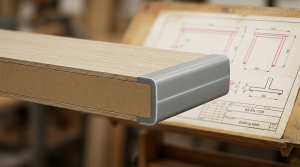
- Edge Type: The edge of a table takes a lot of punishment. A durable, tamper-resistant edge is essential. Poured Polyurethane (PU) edges are bonded directly to the board, creating a smooth, hard-wearing, and water-resistant finish that is very difficult for students to pick at, unlike some cheaper PVC-style edgings.
- Adjustability: Height-adjustable tables offer flexibility, which can be useful in multi-use spaces like libraries or SEN support rooms. However, for a standard classroom dedicated to a single year group, they can be an unnecessary expense and a potential point of failure. Fixed-height tables compliant with the correct Size Mark are often the more reliable and cost-effective solution.
- Shape and Modularity: The shape of your tables can define your teaching style. Rectangular tables are efficient for space, but trapezoidal, triangular, or semi-circular tables can be combined into pods for collaborative work, offering greater flexibility. Considering how tables will work together is key to a dynamic classroom layout.
Making smart choices on these features is crucial when analysing the long-term ROI of your furniture investment.
### Case Study: St. Jude’s Primary School
- Challenge: The Year 4 teaching team at St. Jude’s reported high levels of classroom disruption, fidgeting, and off-task behaviour, particularly during afternoon lessons. An initial audit revealed a mix of old, mismatched furniture, with many tables and chairs falling between Size Marks 3 and 4.
- Solution: We conducted a free classroom assessment and recommended a full replacement with BS EN 1729 Size Mark 4 compliant tables and chairs. The solution used durable PU-edged tables that matched the school’s colour scheme.
- Results: Within one term, teachers reported a 40% observable reduction in fidgeting and a significant improvement in student focus during independent writing tasks. The investment was approximately £2,800 for the classroom of 30 pupils.
- Key Insight: Addressing the underlying physical discomfort of students through correct ergonomic furniture can have a direct and measurable impact on behaviour and concentration, providing a strong return on investment.
Important Considerations
This guide provides a comprehensive overview based on established UK standards. However, a student’s posture is also influenced by other factors not covered in depth here, such as classroom lighting, the weight of school bags, and the duration of screen time. These elements should be considered as part of a holistic approach to student wellbeing.
While fixed-height, BS EN 1729-compliant furniture is the standard, some educational approaches favour more dynamic environments. Alternative solutions like standing desks or wobble stools can complement traditional setups, particularly for students with specific sensory needs. These are typically used to augment, not replace, core ergonomic furniture and should be evaluated for their specific use case.
For large-scale refurbishments, new builds, or if you have significant concerns about student health, seeking professional advice is recommended. An experienced educational furniture supplier can provide a free, no-obligation space plan and quote. This expert input can prevent costly procurement mistakes and ensure your layout is not only compliant but also optimised for your specific pedagogical goals and budget.
Investing in Your Students’ Future: The Final Word
Ultimately, prioritising correct ergonomics & posture is a fundamental investment in both student health and educational outcomes. By moving beyond generic advice and focusing on the UK’s BS EN 1729 standard, schools can procure tables and chairs that actively support concentration and prevent long-term physical strain. Understanding the evolving needs from EYFS to Secondary is key to creating learning environments that are safe, comfortable, and fit for purpose.
Making the right choice can seem complex, but it doesn’t have to be. The team at Cost Cutters UK has over 35 years of experience helping schools handle the school furniture procurement process. We offer Bulk Buy Discounts and flexible payment options like Credit Accounts Or Pay Flexibly. If you are planning a project or need help ensuring your school is compliant, contact our specialists for a free space plan and quote to create the optimal learning environment.
Frequently Asked Questions
What is ergonomics & posture?
Ergonomics is the science of designing environments to fit the user, not forcing the user to fit the environment. Posture refers to the position in which you hold your body. Therefore, good ergonomics & posture in a school means providing furniture that supports a child’s natural, healthy body position for learning, reducing strain and improving focus.
What are four signs of poor posture in students?
Four common signs of poor posture include slumping or hunching over a desk, a forward-head position, rounded shoulders, and frequent fidgeting. These observable behaviours are often a student’s unconscious attempt to find a more comfortable position and can be a clear indicator that their chair or table is the wrong size.
What is the 90-90-90 rule for sitting?
The 90-90-90 rule is a guideline for office ergonomics suggesting elbows, hips, and knees should be at a 90-degree angle. While a useful starting point for adults at a fixed computer workstation, it is less applicable to children in dynamic classrooms. For schools, adhering to the BS EN 1729 standard is the correct and more effective approach.
What are the 5 principles of ergonomics?
The core principles of ergonomics include working in a neutral posture, reducing excessive force, keeping items in easy reach, working at the proper height, and reducing repetitive motions. In a school classroom, this translates directly to providing correct table and chair heights, ensuring adequate desk space, and organising the learning environment efficiently.
What are the top 3 ergonomic factors for schools?
For schools, the top three ergonomic factors are correct furniture size, adequacy for the task, and flexibility to support different activities. The first point, matching table and chair height to the pupil, is the most critical. All three factors are addressed by correctly applying the BS EN 1729 standard during procurement.
What are some examples of ergonomic hazards in a classroom?
Ergonomic hazards in a classroom include chairs that are too high causing feet to dangle, tables that are too low causing hunching, and insufficient desk space leading to awkward postures. Other examples are glare from windows on screens and asking children to carry overly heavy school bags. A proper furniture and classroom assessment can mitigate many of these risks.
What is the main goal of ergonomics?
The main goal of ergonomics is to increase safety, comfort, and productivity by designing tasks and workspaces to fit the user’s capabilities and limitations. In a school, this means creating a physical environment that reduces physical strain and allows students to focus their energy on learning rather than on being uncomfortable.
Are adjustable height tables a good investment for schools?
Adjustable height tables can be a good investment, particularly in multi-use spaces like libraries or IT suites used by different year groups. However, for a single classroom, it is typically more reliable and cost-effective to purchase fixed-height tables that comply with the correct BS EN 1729 Size Mark for that specific year group.
How often should a school review its furniture?
Schools should conduct a visual audit of furniture annually for damage and safety issues. We recommend a full ergonomic review, assessing size and suitability against current standards, every 5-7 years or when undertaking a major refurbishment project. This ensures ongoing compliance and suitability for pupils as standards and teaching methods evolve.
Is plastic or wooden furniture better for ergonomics?
Ergonomics is determined by dimension and design, not the core material. Both modern engineered plastic and traditional wooden furniture can be fully compliant with BS EN 1729 standards. The choice of material should typically be based on other important factors like your budget, required durability, classroom aesthetics, and sustainability goals.
References
- Health and Safety Executive (HSE) – UK Government Guidance. Provides the legal framework and practical advice for Display Screen Equipment (DSE) workstations.
- European Agency for Safety and Health at Work (EU-OSHA) – EU Research Body (2022). Research highlights that musculoskeletal disorders are a significant health problem affecting millions and are increasingly reported in younger populations.
- Department for Education (DfE) – UK Government Statutory Framework. Mandates that premises and equipment in Early Years settings must be safe and suitable.
- British Educational Suppliers Association (BESA) – UK Professional Organisation. Members adhere to a Code of Practice ensuring products are safe and fit for purpose in an educational setting.
- World Health Organization (WHO) – Global Health Guidelines (2020). Recommends limiting sedentary time and notes the health risks associated with prolonged sitting.
- CMD Ltd – Industry Guidance. Provides detailed explanations of correct ergonomic sitting posture, reinforcing the principles of neutral spine and joint angles.
- University of Virginia (ehs.virginia.edu) – Educational Resource. Offers university-level guidance on office ergonomics, which provides a useful contrast to the specific needs of school children.
- Total Health Clinics – Healthcare Provider Insight. Emphasises the preventative role of good posture and ergonomics in avoiding injury in workplace and daily settings.

CONCLUSION
Investing in Your Students’ Future: Key Takeaways
In summary, ergonomics & posture are not just buzzwords but a key insight into creating effective learning environments. Prioritising them is a fundamental investment in both student health and educational outcomes. By moving beyond generic advice and focusing on the UK’s BS EN 1729 standard, schools can procure tables and chairs that actively support concentration and prevent long-term physical strain. Understanding the evolving needs from EYFS to Secondary is crucial for creating learning spaces that are safe, comfortable, and fit for purpose.
Making the right choice can seem complex, but it doesn’t have to be. The team at Costcutters UK has decades of experience helping schools navigate the [school furniture procurement process](https://fit