EYFS Compliance: A Practical Guide to Ensuring Safety in Your Early Years Environment
🎯 Key Takeaway
Achieving EYFS compliance involves adhering to the statutory framework’s safeguarding and welfare requirements to ensure children’s safety, health, and development in early years settings across England. The Early Years Foundation Stage (EYFS) framework is structured around four guiding principles and seven key areas of learning and development. Safety requirements mandate detailed risk assessments and a safe physical environment, including all furniture and equipment. Therefore, choosing a supplier with certified, purpose-built furniture (e.g., meeting BS EN 1729, the British and European safety standard for educational furniture) is a critical step in mitigating risks and ensuring compliance. This guide provides a practical checklist for auditing your space and making informed procurement decisions that support Ofsted approval.
For School Business Managers and nursery leaders, the pressure to create a safe, stimulating, and compliant learning environment is constant. For the Early Years Foundation Stage (EYFS), a statutory framework for early childhood education, ensuring EYFS compliance isn’t just best practice – it’s a non-negotiable legal duty. As of May 2026, the regulations set clear expectations for the welfare and safety of children, with the physical environment playing a central role. This responsibility can feel overwhelming. However, this guide translates complex rules into actionable steps. We’ll move from understanding the core regulations to practical actions, such as auditing your space and procuring the right equipment, helping you manage risk effectively and with confidence.
👤 Written by: Content Team
Reviewed by: Editorial Team, Industry Specialists with 35+ Years Experience; Rated Excellent On Trustpilot
Last updated: 5 May 2026
ℹ️ Transparency Disclosure: This article explores EYFS compliance based on an analysis of the official UK statutory framework and our 35+ years of industry experience. Our goal is to provide authoritative guidance. For full transparency, some links may connect to our services or specialised product ranges. All regulatory information within this disclosure is verified by our editorial team against the latest government publications.
A Quick Refresher: The Core of the EYFS Framework
The Early Years Foundation Stage (EYFS) framework provides the structure for the learning, development, and care of children from birth to five years old in England. It’s built upon four guiding principles which should shape practice in early years settings.
The 4 principles of EYFS are:
- A Unique Child: Every child is a competent learner from birth who can be resilient, capable, confident, and self-assured.
- Positive Relationships: Children learn to be strong and independent from a base of loving and secure relationships with parents and/or a key person.
- Enabling Environments: The environment plays a key role in supporting and extending children’s development and learning.
- Learning and Development: Children develop and learn in different ways and at different rates, and all areas of learning and development are equally important and inter-connected.
These principles underpin the 7 key areas of the EYFS, which are split into two categories. The three Prime Areas are considered fundamental for igniting curiosity and enthusiasm for learning:
- Communication and Language
- Physical Development
- Personal, Social and Emotional Development
These are strengthened and applied through the four Specific Areas:
- Literacy
- Mathematics
- Understanding the World
- Expressive Arts and Design
Understanding these foundational elements is the first step, as all eyfs regulations are designed to create an environment where these principles and learning areas can be delivered safely and effectively.
Decoding the EYFS Safety and Welfare Requirements
The legal force of EYFS compliance is most prominent in Section 3 of the framework: The safeguarding and welfare requirements. These are the mandatory standards that all providers must meet to keep children safe and promote their welfare. According to the official GOV.UK statutory guidance (2024), these requirements are not optional and are rigorously checked during Ofsted inspections.
The key themes within these eyfs safety requirements include:
- Child Protection: Providers must have and implement a clear policy and procedures to safeguard children.
- Suitable People: Robust systems must be in place for checking the suitability of staff and volunteers, including Disclosure and Barring Service (DBS) checks.
- Staff Qualifications and Ratios: Strict staff-to-child ratios must be maintained at all times to ensure children are properly supervised.
- Health: Procedures for managing medicines, responding to accidents, and maintaining hygiene must be clear and consistently applied.
- Managing Behaviour: Providers must have and implement a behaviour management policy.
- Safe Environment: This is a critical area covering premises, environment, and equipment. The framework explicitly states, ‘Providers must provide a safe and suitable premises, environment and equipment for all children’.
This final point has direct implications for every piece of furniture, every toy, and every resource in your setting. It’s not enough for an item to be functional; it must be demonstrably safe for its intended use by young children. The Warwickshire County Council (2024) for self-assessment, can be an invaluable resource.
Our experience suggests focussing on these key areas:
- Risk Assessments: Are they written, reviewed annually (or sooner if changes occur), and understood by all staff? They should cover activities, rooms, and individual pieces of equipment.
- Fire Safety: Are fire exits clear, alarms tested regularly, and evacuation procedures practised?
- Hygiene & Health: Are nappy changing areas, toilets, and food preparation spaces clean and equipped with appropriate hand-washing facilities?
- Security: Are procedures in place to prevent unauthorised persons from entering and to ensure children cannot leave unsupervised?
- Furniture & Equipment: Is all equipment fit for purpose, well-maintained, and free from hazards? For furniture, this means no sharp edges, no splinters, and exceptional stability.
The table below breaks down the ‘Safe Environment’ requirement into practical examples.
| Environmental Area | Key EYFS Requirement (Summary) | Compliant Feature Example | Relevant Standard |
|---|---|---|---|
| Furniture Stability | Equipment must not pose a tipping hazard and must be stable for its intended use. | A low-level storage unit with a wide base and anti-tip brackets; a child’s chair that doesn’t wobble. | BS EN 1729 |
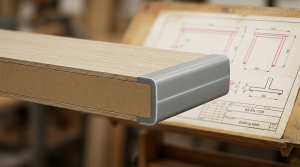
| Surface & Edges | Furniture and equipment must be free from sharp edges or points that could cause injury. | Tables and shelving units with rounded, smoothed, or ‘bullnosed’ edges. Lacquer is non-toxic. | BS EN 1729 |
| Hygiene & Cleaning | Premises and equipment must be kept clean and hygienic. | Tables with wipe-clean, non-porous laminate surfaces that resist bacterial growth. | General Health & Safety |
| Hazard Containment | Hazardous materials (e.g., cleaning supplies) must be stored securely out of children’s reach. | A lockable, wall-mounted cupboard specifically for chemical storage. | COSHH Regulations |
A detailed guide from Eden Training Solutions on safeguarding requirements reinforces that these physical checks are a core component of an inspector’s evaluation.
Common Pitfalls: Understanding Non-Compliance with EYFS Regulations
So, what is non compliance eyfs? In short, it is any failure to meet the statutory requirements laid out in the EYFS framework. This isn’t a matter of opinion; it’s a factual determination made by Ofsted during an inspection. The consequences can range from a welfare requirements notice (which details actions you must take by a certain date) to, in severe cases, suspension or cancellation of your registration.
Ofsted reports frequently cite common, and often avoidable, failures in the physical environment. These pitfalls are where settings often fall short on EYFS compliance:
- Worn-Out or Damaged Furniture: Using tables with peeling laminate that creates sharp edges, chairs with splinters, or shelving units that are unstable.
- Inappropriate Storage: Storing cleaning chemicals in unlocked, low-level cupboards or having trailing wires from electrical equipment.
- Unsecured Hazards: Failing to secure blind cords, which pose a strangulation risk, is a frequently noted safety breach.
- Using Domestic-Grade Equipment: Domestic furniture is not designed for the rigours of a busy early years setting. It breaks more easily, may not be stable enough, and is unlikely to meet the necessary safety standards, creating a clear point of non-compliance.
Guidance from professional bodies like the Early Years Alliance consistently highlights that maintaining a safe environment is a continuous process of vigilance, not a one-off task.
Procuring Compliant Furniture: From British Standards to Supplier Selection
The bridge between understanding the eyfs regulations and achieving practical compliance often lies in procurement. Choosing furniture and equipment isn’t just a design choice; it’s a fundamental safety decision. In our view, the most effective way to mitigate risks associated with the physical environment is to invest in furniture specifically designed for educational settings.
A key standard to look for is BS EN 1729. This is the British and European standard covering furniture for educational institutions. It has two parts:
- Part 1: Specifies appropriate dimensions, heights, and sizes for different age groups, promoting good posture.
- Part 2: Sets out strength, durability, and stability requirements to ensure furniture can withstand the demands of a school environment.
When vetting a supplier for EYFS compliance, we recommend asking these questions:
- Do they explicitly state that their furniture meets BS EN 1729?
- Can they provide certification or technical specifications upon request?
- Do they have experience working with early years settings and understand your specific challenges?
- Do they offer may help on their products?
- Do they offer services that simplify the process, such as space planning and installation?
At Cost Cutters UK, our “Design To Install We Do It All!” service is built on 35+ years of experience. We partner with brands like our specialised ranges like Twoey, which are designed from the ground up to meet and exceed these standards. You can view our official certifications and accreditations to see our commitment to safety. For organisations looking for value, we offer Bulk Buy Discounts and flexible payment options like Credit Accounts Or Pay Flexibly.
Frequently Asked Questions About EYFS Compliance
What is EYFS compliance?
EYFS compliance means legally adhering to all mandatory requirements in the Early Years Foundation Stage statutory framework. This covers everything from the 7 areas of learning to the crucial safeguarding and welfare rules designed to protect children. For all registered early years providers in England, from childminders to school reception classes, it is a non-negotiable legal duty enforced by Ofsted inspections.
What are the 4 principles of EYFS?
The 4 principles of EYFS are: A Unique Child, Positive Relationships, Enabling Environments, and Learning and Development. These principles are the fundamental beliefs that should guide all practice and decision-making in an early years setting. They act as a compass, ensuring that practitioners focus on the holistic needs of every child and create a supportive atmosphere for growth and learning.
What are the EYFS regulations?
The ‘EYFS regulations’ refer to the mandatory legal requirements within the statutory framework published by the Department for Education (DfE). These are not optional guidelines; they are the specific rules that all registered providers must follow to operate legally and maintain their registration. They cover areas such as staff ratios, safeguarding procedures, and the safety of the physical environment, including all equipment and furniture.
What is non-compliance in children’s EYFS?
Non-compliance is the failure to meet any of the statutory requirements of the EYFS framework, identified during an Ofsted inspection. This could be anything from having unsafe equipment or inadequate safeguarding procedures to incorrect staff-to-child ratios. Ofsted can issue a welfare requirements notice detailing necessary actions, and in serious cases, it can lead to suspension or cancellation of a provider’s registration.
What are the 7 key areas of the EYFS?
The 7 key areas of the EYFS are divided into three ‘prime’ areas and four ‘specific’ areas of learning. The prime areas are Communication and Language; Physical Development; and Personal, Social and Emotional Development. The specific areas are Literacy; Mathematics; Understanding the World; and Expressive Arts and Design. All areas are considered interconnected and vital for a child’s holistic development.
Why are the 7 areas of EYFS important?
The 7 areas are important because they provide a comprehensive framework for a child’s early learning and development. They ensure practitioners address all aspects of growth, from fundamental social skills and physical coordination (prime areas) to the foundational knowledge needed for future schooling (specific areas). This holistic approach ensures that no single aspect of a child’s development is overlooked during their crucial early years.
What is the role of risk assessments in EYFS compliance?
Risk assessments are a fundamental and mandatory component of EYFS compliance, required by the safeguarding and welfare section. Providers must actively identify potential hazards to children, record them, and take reasonable steps to control them. This process must be applied to all aspects of the provision, including daily activities, outings, the premises, and every piece of equipment used.
What happens during an Ofsted inspection regarding EYFS safety?
During an inspection, Ofsted will rigorously check that all EYFS safety and welfare requirements are being met. An inspector will observe daily practice, scrutinise records such as risk assessments and staff suitability checks, and conduct a physical walk-through of the premises. They will examine the condition of furniture and equipment to ensure the entire environment is safe and secure for children.
Can I use second-hand furniture in an EYFS setting?
Yes, but using second-hand furniture requires extreme caution and is not something we’d typically recommend. While not explicitly forbidden, you must be able to prove it is safe, stable, and fit for purpose, which is challenging without knowing its history or original specifications. It must be meticulously checked for damage, stability, and hidden hazards. Investing in new, certified furniture is often the safer, more reliable, and more compliant choice.
How often should I review my EYFS compliance?
EYFS compliance should be treated as a continuous, ongoing process rather than a one-off task. Formal risk assessments must be reviewed at least annually or whenever a significant change occurs, such as acquiring new equipment or altering a room layout. Also, daily safety checks of the environment and equipment are a standard and expected practice in all high-quality settings.
Important Considerations
This guide is based on the Early Years Foundation Stage (EYFS) statutory framework for England. Whilst the principles of child safety are universal, providers in Scotland, Wales, and Northern Ireland must refer to their own specific national curricula and regulatory bodies. Also, this article provides guidance and should not be considered a substitute for professional legal advice or an official Ofsted audit.
The primary approach discussed is an in-house audit followed by informed procurement. An alternative for larger settings or those with significant compliance concerns is to hire a specialised early years consultant for a comprehensive, independent safety audit. Although this involves a higher initial cost, it can provide deep insights and a detailed action plan for improvement.
For any major refurbishment, new build, or significant change of use in your setting, we strongly recommend consulting with specialists beyond your furniture supplier. This includes architects, fire safety officers, and local authority planning departments to ensure all aspects of building regulations and safety legislation are met before any work commences.
Create a Safe, Compliant, and Inspiring Early Years Space
Achieving and maintaining EYFS compliance is a foundational responsibility that directly impacts children’s safety and wellbeing. By understanding the key principles, decoding the specific safety and welfare requirements, and implementing a practical checklist for your physical environment, you can proactively manage risk. This process transforms compliance from a daunting task into a structured plan for creating a truly enabling environment where children can thrive. We believe this proactive stance is the hallmark of an outstanding provider.
Choosing the right equipment is a critical part of this plan. As a leading supplier of school and educational equipment, Cost Cutters UK has been partnering with UK schools and nurseries for over 35 years, and we are Rated Excellent On Trustpilot. Our team understands the nuances of creating safe and compliant learning spaces. We can help you handle the procurement process with confidence, from selecting individual items to a full classroom fit-out. Book a free, no-obligation space planning consultation today to discuss your requirements.
References
- GOV.UK – Statutory Framework. Provides the official legal requirements for the EYFS in England, including safeguarding and welfare standards.
- Warwickshire County Council – Audit Tool. Offers a practical audit tool for providers to self-assess their compliance with the 2024 EYFS framework.
- The National College – Compliance Checklist. A checklist published to help settings stay up-to-date with key changes to the EYFS framework.
- Early Years Alliance – Professional Body Guidance. Provides advice and information for practitioners on implementing the EYFS framework in practice.
- Eden Training Solutions – Industry Guide. A detailed guide focusing on the safeguarding and welfare requirements within the EYFS.
- leading supplier of school and educational equipment with over 35 years of experience partnering with UK schools and nurseries, Costcutters UK understands the nuances of creating safe and compliant learning spaces. Our team can help you navigate the