UK School Furniture Procurement: A Manager’s Guide to Compliance & Safety
🎯 Key Takeaway
Successful school furniture procurement requires a structured process for selecting and purchasing items that meet strict UK standards for safety, ergonomics, and fire resistance, such as BS EN 1729 and Crib 5. Compliance with UK regulations like BS EN 1729 (Parts 1 & 2) and the Furniture and Furnishings (Fire) (Safety) Regulations is a legal requirement, not an option. Beyond compliance, focusing on ergonomics and durability can reduce student injuries, support learning outcomes, and lower long-term replacement costs. This guide provides a complete framework for navigating the procurement process, ensuring you make safe, compliant, and cost-effective decisions for your school.
For School Business Managers and Headteachers, navigating the complexities of school furniture procurement can feel like a high-stakes balancing act. You’re tasked with managing tight budgets whilst ensuring every single chair, desk, and storage unit meets non-negotiable school furniture safety standards UK. The consequences of getting this wrong are significant, ranging from legal liability and invalidated insurance to, most importantly, compromising student welfare. However, getting it right yields substantial rewards: creating safer, more effective learning environments, enhancing student concentration, and achieving better long-term value for money. As of August 2026, the regulations are clear and reliable. This guide provides a definitive roadmap for a successful and compliant procurement journey, covering key standards, practical steps, and expert insights from our 35+ years of experience.
Written by: Content Team | Reviewed by: Editorial Team, 35+ Years Experience; Rated Excellent On Trustpilot
ℹ️ Transparency Disclosure
This article explores school furniture procurement based on official UK government guidance, British Standards, and over 35 years of industry experience. Some links may connect to our services, which we believe offer excellent value and compliance. All information is verified by our editorial team for accuracy. Costcutters UK is a trading name of Seated Furniture Ltd.
Why is Compliant School Furniture Procurement Non-Negotiable?
Compliant procurement is a legal and moral obligation for every UK school, governed by specific, non-domestic furniture regulations designed to protect students and staff. The legal framework rests on two main pillars: structural safety and fire resistance. Regulations are not just red tape; they are a direct response to preventable accidents and the need to ensure a safe environment. The Health and Safety at Work etc. Act 1974 places a duty of care on employers (the school or trust) to ensure the health, safety, and welfare of employees and anyone else on the premises (students and visitors).
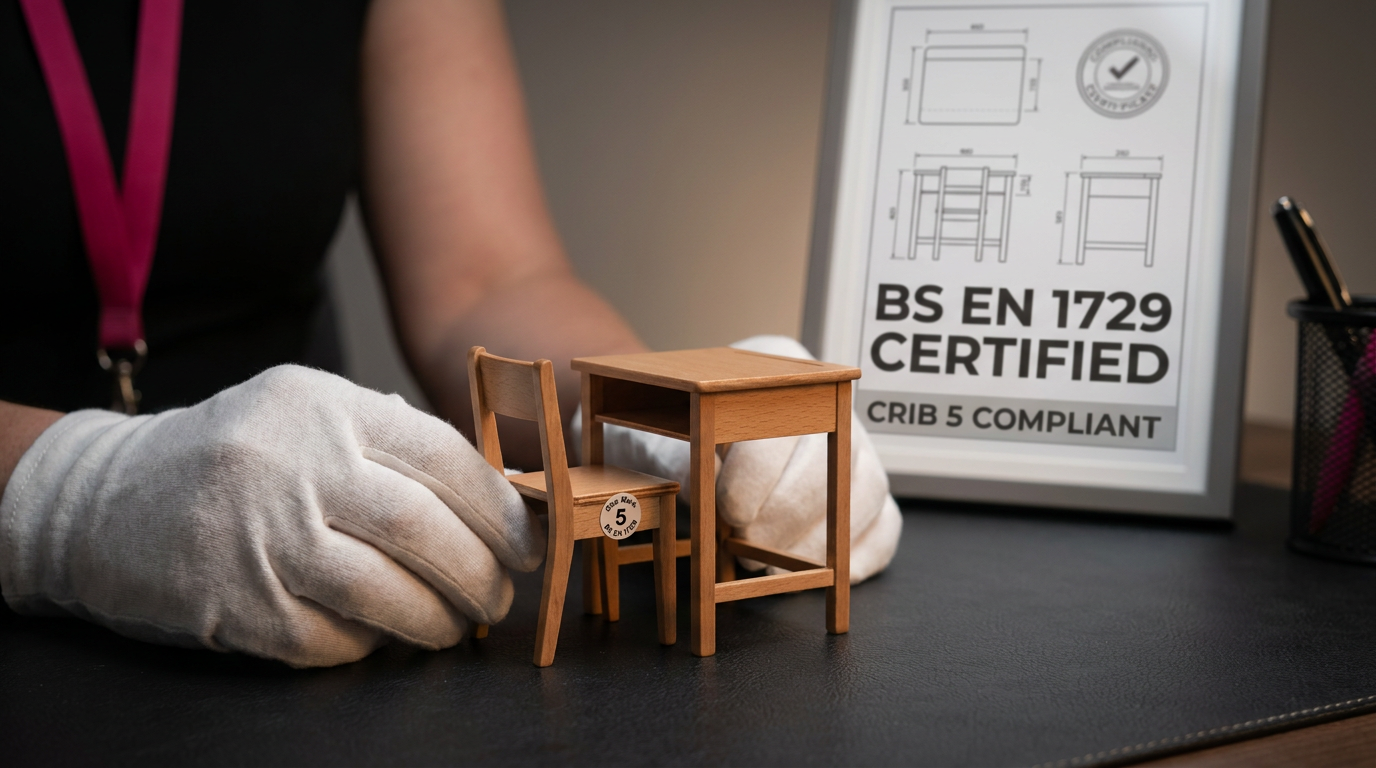
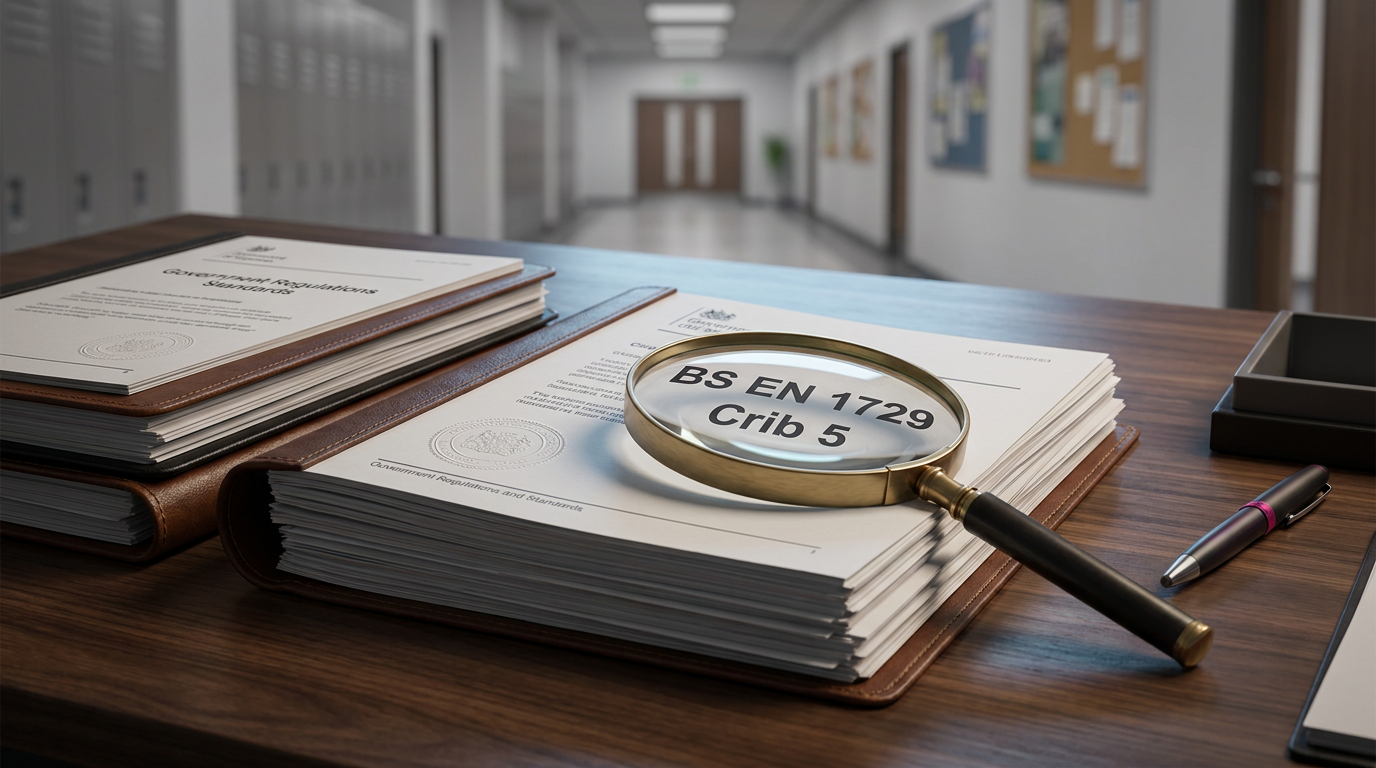
The primary standard for structural and ergonomic safety is BS EN 1729, which covers furniture for educational institutions. For fire safety, schools must adhere to The Furniture and Furnishings (Fire) (Safety) Regulations. According to guidance from the UK Government on fire safety regulations school furniture, upholstered items in non-domestic settings like schools must typically meet the BS 7176 Medium Hazard standard, often referred to as Crib 5. This standard, detailed by sources like schools.osiofficefurniture.co.uk, ensures that materials resist ignition and slow the spread of fire, allowing crucial time for evacuation.
Non-compliance carries severe risks. It can lead to prosecution by the Health and Safety Executive (HSE), invalidation of insurance policies in the event of a claim, and significant reputational damage. Most importantly, it places students at risk of injury from collapsing furniture or tragedy in a fire. Therefore, understanding and adhering to these UK school furniture regulations is a fundamental aspect of responsible school management.
What is BS EN 1729: A Plain English Guide for Schools?
BS EN 1729 is the definitive European and UK standard for chairs and tables in educational institutions, and understanding it is crucial for compliant procurement. It is not a suggestion but a benchmark for safety and ergonomics. The standard is split into two key parts, each serving a distinct but equally important purpose for student wellbeing and furniture longevity. A comprehensive bs en 1729 guide shows it’s about making sure furniture is fit for purpose in a demanding school environment.
Part 1: Functional Dimensions. This part is all about ergonomics. It specifies the correct height, depth, and width for chairs and tables based on the age and stature of the students using them. This ensures pupils can sit with good posture-feet flat on the floor, with appropriate back support-which is well-supported by research to aid concentration and reduce fidgeting. For example, a chair designed for a 6-year-old will have very different dimensions from one for a 16-year-old, and Part 1 provides the precise measurements for both.
Part 2: Safety Requirements and Test Methods. This part ensures the furniture is strong and stable enough to withstand the rigours of daily classroom life. It involves a series of demanding tests for strength, durability, and stability. For instance, tests are performed to prevent chairs from tipping over when a student leans back or to ensure a tabletop can bear a significant load without breaking. Adherence to Part 2 is what separates reliable, compliant classroom furniture from cheaper alternatives that may fail dangerously.
| Standard / Regulation | What It Covers | Why It Matters for a School | How to Verify Compliance |
|---|---|---|---|
| BS EN 1729 – Part 1 | Functional dimensions (chair height, seat depth, desk height) for different age groups. | Ensures correct posture, reduces fidgeting, and improves student concentration. | Check for the ‘Size Mark’ (1-6) on product specs and match to your pupils’ age range. |
| BS EN 1729 – Part 2 | Strength, durability, and stability testing to withstand classroom use. | Prevents accidents from furniture tipping, collapsing, or breaking. Ensures long-term value. | Ask the supplier for a certificate of compliance for BS EN 1729 Part 2. |
| BS 7176 (Crib 5) | Fire resistance for upholstered items (e.g., staffroom sofas, fabric chairs). | Legally required to slow fire spread, allowing critical time for safe evacuation. | Request a certificate confirming the product meets BS 7176 Medium Hazard (Crib 5). |
| HSE Regulations | General duty of care for workplace safety, including equipment suitability. | Forms the overarching legal basis for providing safe and appropriate furniture. | Document your procurement process, showing you’ve selected certified, compliant items. |
The Practical School Furniture Procurement Checklist
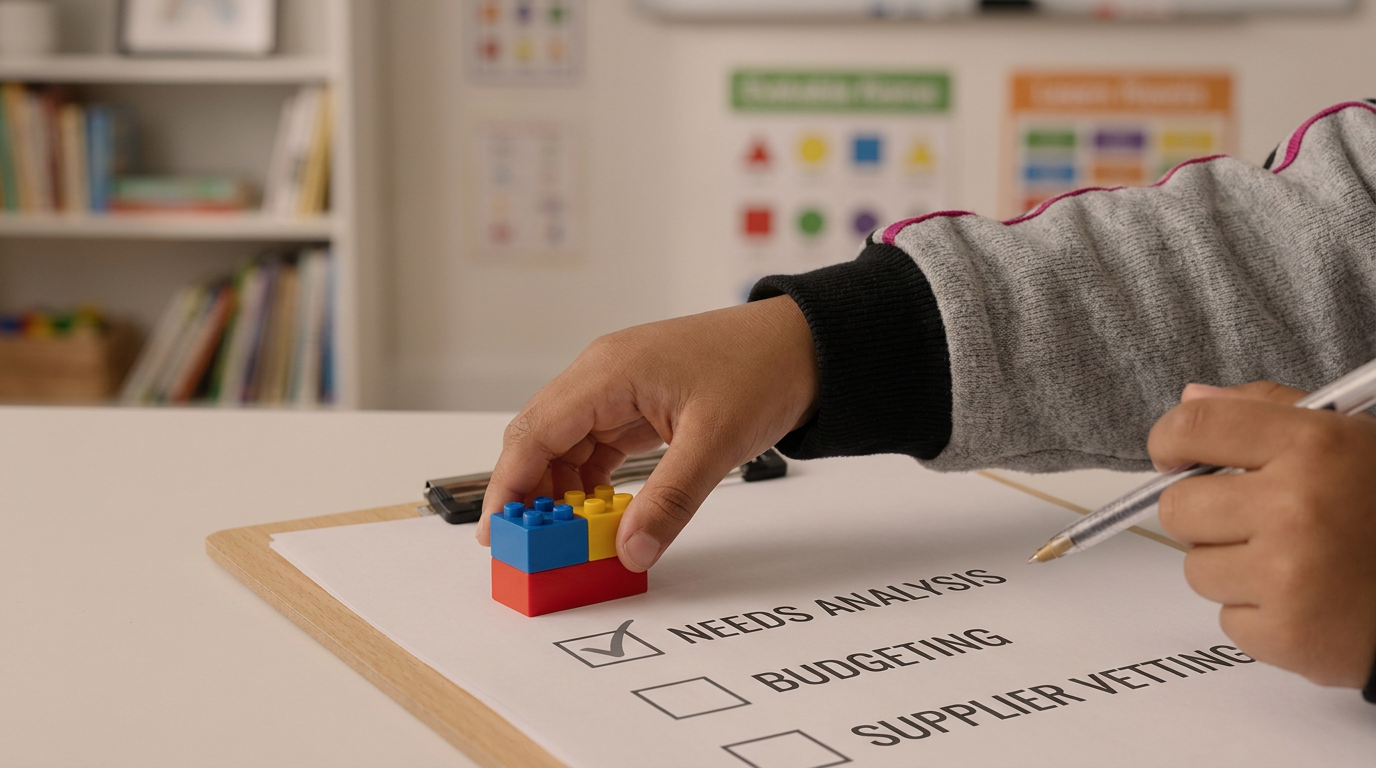
A structured approach to the school furniture procurement process is essential for success, Saving Time & Stress while ensuring compliance and value. We recommend a six-step process that moves from initial concept to final sign-off. This checklist provides a clear framework for any project, whether you’re furnishing a single classroom or an entire new block.
- Needs Analysis: Before looking at any catalogues, define the space’s function. What activities will happen here? What age groups will use it? Are there any specific Special Educational Needs (SEN) requirements to consider? Answering these questions first prevents costly mismatches later.
- Budgeting for the True Cost: Your budget must account for more than just the price of the chairs. Factor in Value Added Tax (VAT), delivery charges, professional installation fees, and the cost of responsibly disposing of old furniture. We offer Bulk Buy Discounts which can significantly stretch your budget on larger projects.
- Writing the Specification: This is where you formalise your requirements. Your specification document should explicitly state that all furniture must comply with BS EN 1729 (Parts 1 & 2) and that any upholstered items must meet Crib 5 standards. This creates a clear, non-negotiable benchmark for all potential suppliers.
- Supplier Vetting: Not all suppliers are created equal. Shortlist specialists in the education sector who can demonstrate a track record of successful school projects (see our next section for detailed vetting questions).
- Ordering and Scheduling: The school calendar dictates everything. We’ll be honest – leaving orders until the summer holidays is a recipe for delays. Our advice is to place orders in the spring term (April/May) to secure stock and schedule delivery for the first few weeks of the summer break.
- Delivery, Installation & Sign-Off: On delivery day, check the items against your order. If you’ve opted for a professional service, the team will handle assembly and placement. We firmly believe a professional school furniture installation is worth the investment for safety and efficiency. Do not sign off until you have inspected the final result and are completely satisfied.
Case Study: A Typical Primary School Refurbishment
- Challenge: A two-form entry primary school needed to refurbish four classrooms for Years 3 and 4. Their existing furniture was over 15 years old, showing significant wear, and didn’t conform to modern ergonomic standards, leading to complaints of discomfort and visible fidgeting among pupils.
- Solution: The School Business Manager used our “Design To Install We Do It All!” service. We conducted a needs analysis, created a 3D space plan with BS EN 1729 Size Mark 3 & 4 furniture, and scheduled a phased installation during the summer holidays.
- Results: The school equipped 120 pupil places with fully compliant, ergonomic furniture for a total project cost of £28,000. Post-installation feedback from teachers noted a visible improvement in student posture and a reduction in classroom disruption. The 10-year guarantee on the new furniture also reduced the school’s long-term replacement budget.
- Key Insight: Engaging a specialist early in the process allowed the school to accurately budget for the total project cost, including installation and disposal, avoiding unexpected expenses.
Beyond Compliance: Ergonomics, Durability, and Student Wellbeing
Achieving compliance is the baseline, not the end goal. The true value of correctly specified furniture lies in its positive impact on student wellbeing and educational outcomes. Ergonomics and durability are not just technical terms; they are essential components of a productive learning environment.
Research from bodies like the World Health Organization (WHO) consistently highlights the negative health effects of prolonged sedentary behaviour. The Health and Safety Executive (HSE) provides clear guidance on preventing musculoskeletal issues, which applies as much to students at their desks as it does to adults. Furniture that conforms to BS EN 1729 ensures that a child’s body is correctly supported, which can improve comfort and concentration. When students aren’t distracted by physical discomfort, they are better able to engage with their learning. Durability is a critical safety feature. Furniture that passes the stringent tests of BS EN 1729 Part 2 is built to last, representing a sound financial investment and reducing the risk of accidents from breakages. This focus on longevity is key to the proactive prevention of common furniture issues that can disrupt classrooms and drain maintenance budgets. The right compliant classroom furniture also supports modern teaching methods. Investing in high-quality, adaptable pieces like flexible learning furniture allows educators to easily reconfigure spaces for group work, individual study, and project-based learning, creating dynamic and engaging classrooms.
How to Vet Suppliers and Guarantee Compliance
Choosing the right supplier is as important as choosing the right furniture. A knowledgeable partner will guide you through the process, whereas an inexperienced one can lead to some of the common mistakes to avoid in procurement. The school furniture tender process should include rigorous vetting. What does this mean for you? You need to ask direct and specific questions to separate the experts from the generalists.
Here are key questions we recommend you ask any potential supplier:
- ‘Can you provide certificates of compliance for BS EN 1729 and Crib 5 for the specific products I am interested in?’ A reputable supplier will have these readily available. If they hesitate, that’s a major red flag.
- ‘Are you a member of the British Educational Suppliers Association (BESA)?’ As the British Educational Suppliers Association (BESA) notes in its code of practice, membership signifies a commitment to quality and ethical standards within the education sector.
- ‘Can you provide case studies and references from schools similar to ours?’ Speaking to another School Business Manager who has worked with the supplier is one of an effective forms of due diligence. Being Rated Excellent On Trustpilot is also a strong indicator of consistent customer satisfaction.
- ‘What are your procedures for delivery and installation during school holidays?’ An experienced education supplier understands the logistical constraints of working in schools and will have a well-supported by research process for managing summer holiday projects.
In our view, an effective approach is to partner with a specialist who offers a complete service, from design to installation. This ensures a single point of responsibility and a deep understanding of the unique demands of the education sector.
Important Considerations and Limitations
This guide provides comprehensive information for school furniture procurement but does not constitute legal advice. Regulations can be updated, and specific circumstances may require unique considerations. Typically consult the latest guidance from sources like the Health and Safety Executive (HSE) and the Department for Education (DfE) and seek legal counsel if you are unsure of your obligations.
While this guide outlines a reliable direct procurement process, other avenues exist. Your school or Multi-Academy Trust (MAT) may be part of a larger purchasing framework or consortium, such as those offered through your Local Authority or organisations like The Crescent Purchasing Consortium (CPC). You should investigate these options as they may be mandatory or offer significant advantages through pre-vetted suppliers and preferential pricing structures.
For large-scale projects, new builds, or spaces with complex requirements (e.g., science labs, SEN facilities), we strongly recommend partnering with an education furniture specialist. An expert can manage the entire process from space planning and 3D design to installation and compliance verification. This level of service is designed for Saving Time & Stress and preventing costly errors that can arise in complex projects.
Frequently Asked Questions About School Furniture Procurement
What is school furniture procurement?
School furniture procurement is the formal process schools use to research, select, and purchase furniture. It ensures all items are safe, compliant with UK law, ergonomic for students, and provide excellent long-term value. This strategic approach goes far beyond simple purchasing, incorporating crucial steps like needs analysis, detailed specification writing, and thorough supplier vetting to guarantee fitness for purpose and protect the school from liability.
What regulations must school furniture comply with in the UK?
In the UK, school furniture must primarily comply with the BS EN 1729 standard for ergonomics and safety. Additionally, any upholstered items must meet the Furniture and Furnishings (Fire) (Safety) Regulations, which typically means passing the BS 7176 Medium Hazard (Crib 5) test. These specific rules operate under the broader umbrella of the Health and Safety at Work etc. Act 1974.
What is the difference between domestic and contract furniture?
The critical difference lies in the rigour of safety and durability testing. Domestic furniture is designed for light home use, whereas contract furniture is built and certified to withstand heavy, continuous use in a public environment like a school. It undergoes stringent testing for stability, strength (BS EN 1729 Part 2), and fire resistance (Crib 5), making it the only compliant and safe choice for educational settings.
Are there specific fire safety rules for school furniture?
Yes, there are mandatory fire safety regulations for UK school furniture. Any item containing upholstery, such as staffroom sofas, fabric-covered task chairs, or reception seating, must meet the BS 7176 Medium Hazard standard. This is commonly known as the ‘Crib 5’ test. This legal requirement is in place to ensure materials resist ignition and slow the spread of flame in the event of a fire.
How does furniture impact student safety and wellbeing?
Correctly specified furniture is fundamental to student safety and creates a positive learning environment. Ergonomic furniture that complies with BS EN 1729 supports healthy posture, reducing musculoskeletal strain and improving concentration. Furthermore, furniture tested for strength and stability prevents dangerous accidents caused by items tipping over or collapsing, contributing significantly to a physically and psychologically secure school day for every pupil.
What makes a chair ‘ergonomic’ for a student?
An ergonomic student chair is one that meets the specific dimensional requirements of BS EN 1729 for the user’s age group. This means its seat height, depth, and backrest are designed to support a healthy, upright posture with the student’s feet resting flat on the floor. This proper fit minimises fidgeting and discomfort, allowing the pupil to focus better on their lessons.
How do I know what size furniture to buy?
You can determine the correct size by using the ‘Size Mark’ system defined in the BS EN 1729 standard. This system ranges from Size Mark 1 (for ages 3-4) to Size Mark 6 (for ages 14+). Reputable education furniture suppliers, like us, clearly list the corresponding Size Mark for each product, allowing you to easily match the chairs and tables to your specific year groups.
What should I look for in a school furniture supplier?
Look for a specialist supplier with deep, well-supported by research experience in the UK education sector. A good partner will readily provide compliance certificates (BS EN 1729, Crib 5), offer comprehensive services like space planning, and ideally hold a membership with the British Educational Suppliers Association (BESA). Their understanding of school-specific challenges, like holiday installation schedules, is invaluable.
Can I use office furniture in a classroom?
You should exercise extreme caution and verify compliance before using office furniture in a classroom. While some office furniture may meet fire safety standards, it is often not tested to the same rigorous durability and stability requirements (BS EN 1729 Part 2) as specialist school furniture. To ensure safety and compliance, it is typically our recommendation to procure furniture specifically designed and certified for educational use.
How can I ensure value for money in procurement?
True value for money is achieved by considering the total cost of ownership, not just the initial purchase price. Look for products with long may help (e.g., 5-10 years) as an indicator of durability. Compliant, reliable furniture that supports student wellbeing is a far better long-term investment than a cheaper alternative that may require early replacement and poses potential safety risks.
Partnering for a Safe and Compliant Learning Environment
A successful school furniture procurement strategy is fundamental to creating a safe, effective, and supportive learning environment. By prioritising compliance with UK standards like BS EN 1729, understanding the critical role of ergonomics and durability, and implementing a thorough vetting process, you protect your students, staff, and your school’s budget. This diligence transforms a simple purchase into a long-term investment in educational outcomes and demonstrates a profound commitment to student welfare.
Navigating this complex landscape can be daunting. At Cost Cutters UK, we’ve spent over 35 years helping schools like yours manage these projects smoothly. Our team of specialists provides a comprehensive “Design To Install We Do It All!” service, and we’re Rated Excellent On Trustpilot for our commitment to customer success. We offer flexible payment options, including Credit Accounts Or Pay Flexibly, to suit your budget cycles. To ensure your next project is a success, get in touch for a free space plan and no-obligation quote.
References
- Health and Safety Executive (HSE) – Official UK Government Guidance. Provides the legal framework and practical advice for workstation ergonomics under the Health and Safety (Display Screen Equipment) Regulations 1992.
- European Agency for Safety and Health at Work (EU-OSHA) – Pan-European Research. Highlights poor workstation design and prolonged sitting as key risk factors for musculoskeletal disorders (MSDs).
- Department for Education (EYFS Framework) (2024) – Statutory Framework for England. Mandates that premises and equipment in early years settings must be safe and suitable for their purpose.
- British Educational Suppliers Association (BESA) – Professional Organisation Code of Practice. Requires members to supply goods that are fit for their intended educational purpose and adhere to high safety and quality standards.
- World Health Organization (WHO) – Global Health Guidelines (2020). Recommends limiting sedentary time and provides the health basis for encouraging movement.
- Gov.uk – UK Government Guidance. Details the legal requirements for fire safety in furniture for non-domestic settings.
- OSI Office Furniture – Industry Guidance. Provides a practical breakdown of fire safety regulations as they apply specifically to school environments.
- Titan Direct – Manufacturer Standards Information. Explains the various British and European standards that apply to educational furniture, including BS EN 1729.

Conclusion
Partnering for a Safe and Compliant Learning Environment
In summary, school furniture procurement is fundamental to creating a safe, effective, and supportive learning environment. By prioritising compliance with key school furniture safety standards uk, such as BS EN 1729, understanding the critical role of ergonomics and durability, and implementing a thorough vetting process, you protect your students, staff, and your school’s budget. This diligence transforms a simple purchase into a long-term investment in educational outcomes.
Navigating this complex landscape can be daunting. At Costcutters UK, we have spent over 35 years helping schools like yours manage these projects seamlessly. Our team of specialists can help you with everything from needs analysis to fully compliant installation. To ensure your next project is a success, get in touch for a free space plan and no-obligation quote.