Common School Furniture Issues: A Proactive Prevention Guide for UK Schools
🎯 Key Takeaway
The most common school furniture issues stem from structural failures like wobbly chairs and broken desks, surface damage from vandalism, and non-compliance with UK safety standards, all of which drive up long-term costs. Prioritising durability and compliance during procurement, such as choosing items certified to BS EN 1729, significantly reduces replacement frequency. Implementing a regular classroom furniture maintenance schedule can extend the lifespan of chairs, desks, and storage units. Calculating the Total Cost of Ownership (TCO) instead of just the initial purchase price reveals the true financial impact and value of quality furniture.
For School Business Managers, tackling worn-out and broken furniture can feel like a constant battle. As of August 2026, with budgets under continuous pressure, the cycle of repair and replacement is a significant drain on resources. However, many common school furniture issues are not inevitable; they are the predictable result of short-term purchasing decisions and a lack of proactive maintenance. These recurring school furniture problems represent more than just an inconvenience; they pose safety risks, disrupt learning, and consume funds that could be better spent elsewhere.
This guide moves beyond reactive fixes. We will provide a strategic framework for UK schools to proactively manage furniture as a long-term asset, ensuring safety, maximising value for money, and creating a better learning environment for students.
Written by: The Cost Cutters UK Content Team | Reviewed by: Industry Specialists, 35+ Years Experience; Rated Excellent On Trustpilot
ℹ️ Transparency Disclosure: This article explores common school furniture issues based on our 35+ years of industry experience and analysis of UK government and safety standards. To provide comprehensive solutions, some links may connect to our specialised services and product pages. All information is verified by our editorial team to ensure accuracy and relevance for UK school managers.
What Are the Most Common School Furniture Issues?
The most frequent school furniture issues fall into three main categories: structural failures, cosmetic surface damage, and safety non-compliance. These problems not only incur direct repair costs but also present potential hazards to students and staff. Research from bodies like the European Agency for Safety and Health at Work (EU-OSHA) consistently highlights that poorly designed or maintained equipment is a leading contributor to health complaints, reinforcing the need for quality and upkeep.
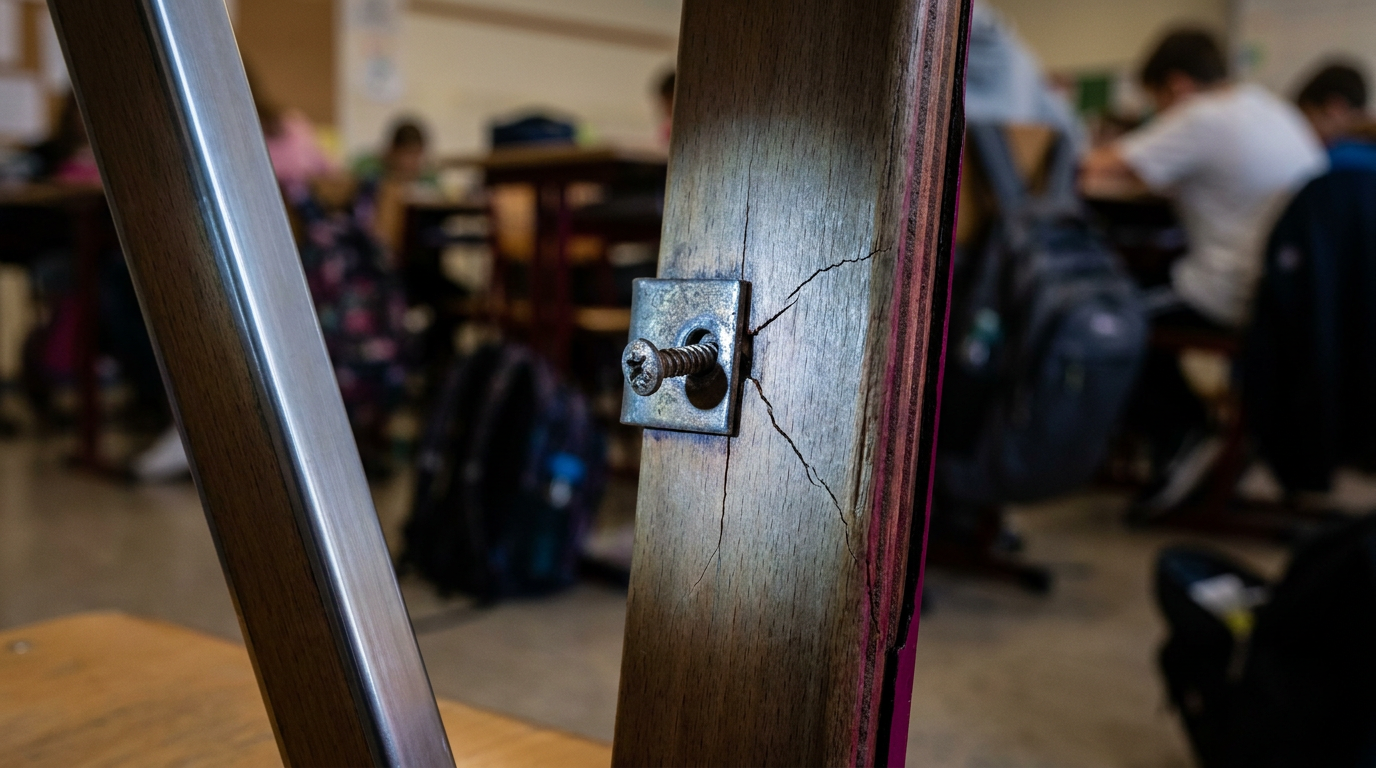
Data and our own experience show the most prevalent problems include:
- Structural Instability: Wobbly chairs and desks caused by loose or failed fixings are the number one reported issue, creating distractions and safety risks.
- Component Failure: Broken chair legs, cracked desk frames, and snapped welds often result from material fatigue or students using furniture improperly, such as rocking on chairs.
- Surface Degradation: Chipped, peeling, and graffitied desktops or chair shells are common. This wear and tear not only looks poor but can also create sharp edges or unhygienic surfaces.
- Storage Unit Malfunctions: Jammed or broken locker doors, cabinet hinges, and drawer runners disrupt classroom organisation and can render storage useless.
- Upholstery Wear: Faded, torn, or stained fabric on soft seating is not only unsightly but can also be a hygiene concern.
Why Does School Furniture Fail? A Root Cause Analysis
Understanding why furniture breaks is the first step towards preventing it. The failure of school furniture is rarely a single event; it’s typically the result of underlying factors that, when combined, lead to a shortened lifespan and an increased cost of school furniture replacement.
Inadequate Specification
The most common cause of premature failure is selecting furniture not built for the rigours of a school environment. A chair designed for light home use will not survive a year in a busy Year 9 classroom. This often happens when procurement focuses solely on the initial price tag. Materials like low-grade chipboard or thin-gauge metal are simply not specified for the high-traffic, intensive use they will receive. Choosing durable school furniture UK suppliers recommend is paramount.
Lack of Regular Maintenance
A loose screw on a chair leg is a minor, five-minute fix. Left unattended for a term, it is associated with stress on the other joints, leading to a crack in the frame – a failure that now requires a full replacement. This is a classic example of how minor, preventable issues escalate. A lack of a scheduled classroom furniture maintenance programme is a direct contributor to a higher failure rate.
Improper Use and Vandalism
Even the most durable furniture has its limits. Students rocking on chairs, standing on desks, or deliberately carving into surfaces accelerates wear and tear far beyond normal use. While this is a behavioural issue, selecting materials that are more resistant to such damage (e.g., solid grade laminate tops) can mitigate the impact.
These factors combine to dramatically affect the Total Cost of Ownership (TCO). TCO is a financial calculation that includes the initial purchase price plus all associated costs over the asset’s lifespan, including repairs, maintenance, and eventual disposal and replacement. As the table below illustrates, a cheaper initial purchase often leads to a much higher TCO.
Total Cost of Ownership: Budget vs. Durable Chairs (5-Year Projection)
| Cost Factor | Budget Chair (Non-Compliant) | Durable Chair (BS EN 1729 Compliant) |
|---|---|---|
| Initial Purchase Price (per unit) | £18 | £32 |
| Estimated Lifespan | 2 Years | 10+ Years |
| Annual Maintenance (Tightening) | £2 per unit | £1 per unit |
| Replacement Cost over 5 Years | £36 (Replaced twice) | £0 |
| 5-Year Total Cost of Ownership | £64 | £37 |
Note: Figures are illustrative estimates for comparison purposes. Data from Statista on the UK furniture market shows significant institutional spending, where such calculations are vital for budget optimisation. Statista (2024) reports on the scale of this market.
Your Proactive Prevention Programme: A Maintenance & Repair Guide
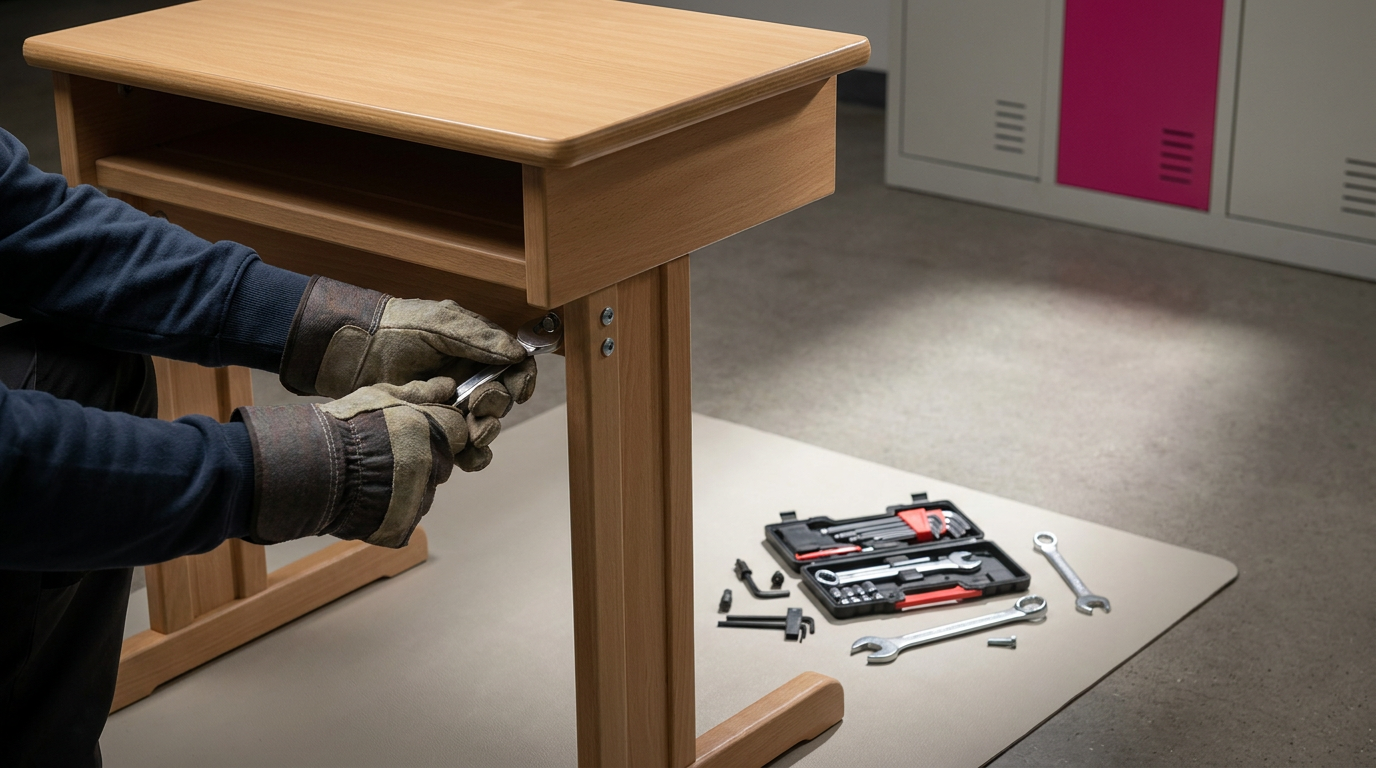
Shifting from a reactive to a proactive approach is key to preventing furniture damage in schools and maximising your budget. A simple, consistent maintenance programme can dramatically extend the life of your assets, Saving Time & Stress for your caretaking team. Here’s a practical guide to get started.
1. Conduct a Termly Furniture Audit
At the end of each term, have your site team conduct a visual audit of furniture in high-use areas. They don’t need to be experts; they just need a simple checklist.
- What to look for:
- Wobble Test: Does the chair or desk wobble when pushed?
- Joint Check: Are there visible gaps or cracks where legs meet the frame or seat?
- Surface Scan: Are there sharp edges, splinters, or large chips?
- Fixing Check: Are any screws, nuts, or bolts visibly loose or missing?
- Glide Check: Are the plastic feet (glides) on chair and table legs intact? Missing glides can damage floors and cause instability.
2. Create a Simple Maintenance Checklist
Based on the audit, create a small, dedicated toolkit for each school building. The caretaking staff can then efficiently work through rooms during school holidays.
- The Toolkit: Allen keys, screwdrivers, an adjustable spanner, and a pot of replacement screws and glides.
- The Checklist:
- [ ] Tighten all accessible fixings on chairs and desks.
- [ ] Replace any missing or broken chair/table glides.
- [ ] Check storage unit doors and hinges, tightening where necessary.
- [ ] Report any items with structural cracks or damage beyond a simple fix.
3. Know When to Repair vs. Replace
Not everything can or should be repaired. A good rule of thumb is: if the repair cost (including staff time) is more than 30% of the cost of a new, compliant replacement, it’s time to replace the item. A chair with a cracked frame, for instance, is a safety hazard that should be removed from service immediately, not repeatedly patched up. For those items that do need replacing, consult a comprehensive school furniture replacement guide to ensure you make a smart investment.
Smart Procurement: Preventing Future School Furniture Issues
The most effective way to manage future school furniture issues is to prevent them at the point of purchase. Smart procurement isn’t about finding the cheapest price; it’s about investing in value, safety, and durability to lower your long-term costs. We believe this is where schools can make the biggest impact.

1. Prioritise Compliance and Safety
This is non-negotiable. All furniture used in UK schools must be fit for purpose.
- BS EN 1729: This is the critical standard for educational furniture. BS EN 1729 is a British and European safety standard that specifies ergonomic and strength requirements for chairs and tables. Part 1 covers sizing and ergonomics to ensure good posture, while Part 2 covers strength and durability. Purchasing furniture that meets this standard is your first line of defence against premature failure and potential injury. Compliance is a key factor in meeting the Health and Safety Executive (HSE) regulations for a safe environment.
- EYFS & Ofsted: For early years, the Department for Education (EYFS Framework) explicitly states that premises, furniture, and equipment must be safe and suitable. In our experience, inspectors are increasingly looking at how the physical environment supports learning, and broken or unsuitable furniture is a clear red flag.
2. Analyse Materials and Construction
Look for durable school furniture UK specialists recommend.
- Frames: Fully welded metal frames are typically more reliable than self-assembly alternatives.
- Surfaces: For desks, consider Solid Grade Laminate (SGL) instead of standard MDF. It’s more expensive initially but is highly resistant to impact, scratches, and water, making it almost indestructible in a classroom setting.
- may help: Look for suppliers offering long may help (5-10 years) on frames. This is a clear indicator of their confidence in the product’s durability.
3. Evaluate Supplier Credentials and Service
Your supplier should be a partner, not just a checkout.
- BESA Membership: Check if the supplier is a member of the British Educational Suppliers Association (BESA). BESA members adhere to a code of practice that ensures products are safe and appropriate for educational use.
- Expert Consultation: A good supplier offers more than a catalogue. Our “Design To Install We Do It All!” service, for example, includes free space planning to ensure you not only buy durable furniture but also create an effective learning space. This is crucial when considering options like flexible learning furniture to support modern teaching methods. When you’re undertaking a large project, understanding how to go about budgeting for your school furniture is essential for success.
### Case Study: A Proactive Procurement Scenario
- Challenge: A secondary school was replacing classroom chairs every 3 years, costing them approximately £12,000 annually for a 200-chair rolling replacement programme, plus constant disruption from repairs.
- Solution: Instead of re-ordering the same low-cost chairs, the School Business Manager worked with us to procure BS EN 1729 compliant polypropylene chairs. The initial unit cost was 60% higher, but they came with a 10-year structural guarantee.
- Results: The school eliminated its annual chair replacement budget, saving an estimated £100,000 over the next decade. Caretaking time spent on chair repairs dropped by over 80% in the first year.
- Key Insight: Focusing on Total Cost of Ownership (TCO) instead of initial unit price unlocked significant long-term savings and reduced administrative burdens.
Frequently Asked Questions About School Furniture Management
What are the most common school furniture issues?
The most common school furniture issues are structural failures, surface damage, and safety non-compliance. These typically manifest as wobbly chairs, broken desk frames, and graffitied surfaces. Such problems not only increase long-term costs through constant repair and replacement but also pose tangible safety risks to students and staff in the learning environment. Many of these issues are preventable with better procurement and maintenance.
What are the biggest issues facing UK schools that affect furniture?
The primary issue is severely constrained budgets, which can force short-term purchasing decisions. This often leads schools to buy cheaper, less durable furniture that fails quickly, creating a false economy. The result is a cycle of higher long-term replacement costs, increased maintenance demands on staff time, and a learning environment that is frequently disrupted by broken equipment, directly impacting students.
What does BS EN 1729 compliant mean for school chairs?
BS EN 1729 compliance means a chair meets the official UK and European standard for educational furniture. This standard has two parts: Part 1 ensures the chair is ergonomically correct for the size of the child, promoting good posture. Part 2 tests its strength, stability, and durability to withstand the demands of a school environment. It’s a crucial certification to look for to guarantee safety and longevity.
How can our school prevent vandalism to furniture?
A dual approach of material selection and school policy is the most effective strategy. When procuring new furniture, choose reliable, vandal-resistant materials like Solid Grade Laminate (SGL) for desktops, which are highly resistant to scratches and graffiti. Complement this by implementing and enforcing clear school policies regarding the respectful treatment of school property, fostering a culture of care amongst students.
How often should school furniture be replaced?
There is no fixed replacement schedule; it depends entirely on the furniture’s quality and maintenance. High-quality, BS EN 1729 compliant furniture that is regularly maintained might last 10-15 years or more. In contrast, cheaper, non-compliant alternatives may need replacing every 2-3 years, making them significantly more expensive over their lifecycle and a poor long-term investment for any school.
What is ‘total cost of ownership’ for school furniture?
Total Cost of Ownership (TCO) is a calculation of the entire cost of an asset over its life. For school furniture, this includes the initial purchase price plus all subsequent costs like repairs, maintenance labour, and eventual replacement. It’s a strategic financial tool that helps School Business Managers see beyond the initial price tag and demonstrate the long-term value of investing in quality, durable goods.
What are the main categories of school furniture?
School furniture is typically grouped into four main categories: seating, surfaces, storage, and specialised furniture. Seating includes classroom chairs and stools. Surfaces cover desks and tables. Storage refers to bookcases, tray units, and lockers. Specialised furniture is designed for specific areas like science labs, art rooms, or to meet the needs of SEN students. Flexible and mobile furniture is a rapidly growing sub-category.
How does furniture impact SEN students?
Appropriate furniture is often a critical component of providing an inclusive environment for SEN students. For some, this may mean an adjustable-height desk for a wheelchair user, a specialised ergonomic chair for postural support, or sensory-friendly items that help improve concentration and reduce anxiety. The right furniture can be a key enabler, removing physical barriers to learning and helping every child to participate fully.
What trends are influencing school furniture?
The single biggest trend is the shift towards flexible learning environments. This pedagogical change is driving strong demand for furniture that is mobile, modular, and multi-purpose. Items like collaborative tables on castors, lightweight stackable chairs, and movable soft seating allow teachers and students to quickly reconfigure a classroom for different activities, from individual work to group projects, supporting a more dynamic approach to education.
Is it better to repair or replace a broken classroom chair?
A simple rule is to repair if the fix is minor but replace if the structure is compromised. If a screw is loose on a chair that is otherwise compliant and sound, a repair is highly cost-effective. However, if the frame is cracked, a leg is bent, or the repair cost will exceed 30% of a new, compliant replacement, then replacement is the safer and more financially sensible long-term option.
Important Considerations
The data and recommendations in this guide are based on general UK school conditions. The specific rate of furniture wear and tear can vary significantly based on the age of students, school policies, and the intensity of use. We recommend using our maintenance checklist as a starting point for your own tailored audit programme, adjusting it to the unique needs of your site.
The primary alternative to the proactive procurement model discussed is a ‘repair-first’ strategy. Whilst appealing for tight budgets, this approach can become inefficient if the underlying furniture quality is poor, leading to recurring staff time costs and potential safety risks from repeated failures. This strategy is most effective when applied to an existing stock of high-quality furniture, not as a way to prolong the life of unsuitable items.
For large-scale furniture replacement projects, or if you have significant concerns about the safety and compliance of your current inventory, we strongly advise consulting a specialist. An expert can conduct a full site audit, provide a detailed compliance report, and develop a phased replacement plan that aligns with your budget cycles, ensuring you get an effective possible value and outcome.
From Reactive Repairs to Proactive Investment
Ultimately, addressing school furniture issues requires a strategic shift from a cycle of reactive, costly repairs to one of proactive prevention and smart investment. By prioritising compliance, calculating the total cost of ownership, and implementing a simple programme for preventing furniture damage in schools, School Business Managers can extend asset life, ensure student safety, and free up valuable budget for other educational priorities. This approach turns furniture from a recurring problem into a long-term asset.
At Cost Cutters UK, we have partnered with schools across the country for over 35 years to create durable, compliant, and inspiring learning environments. We are Rated Excellent On Trustpilot for our commitment to customer success. If you are planning a furniture project, our specialist team can help. We offer Bulk Buy Discounts and flexible payment options, including Credit Accounts Or Pay Flexibly. Contact us for a free, no-obligation space plan and quotation.
References
- Health and Safety Executive (HSE) – UK Government Guidance. Provides the legal framework and practical advice for workstation safety and ergonomics in the UK.
- European Agency for Safety and Health at Work (EU-OSHA) – EU Research Body. Highlights that musculoskeletal disorders, often linked to poor seating, are a leading cause of work-related health problems in Europe.
- Department for Education (EYFS Framework) – UK Government Statutory Framework. Mandates that all premises, equipment, and furniture in early years settings must be safe, suitable, and properly maintained.
- British Educational Suppliers Association (BESA) – UK Industry Association. Members must adhere to a code of practice ensuring products are safe and fit for purpose in an educational environment.
- World Health Organization (WHO) – International Health Body Guideline (2020). Recommends limiting sedentary time for all age groups, influencing the design of active learning environments.
- Statista – Market Research Data (2024). Projects UK revenue in the Office Furniture market to reach US$2.28bn in 2024, indicating the scale of institutional furniture spending.
Frequently Asked Questions About School Furniture Management
What is school furniture issues?
The most common school furniture issues are structural failures, surface damage, and safety non-compliance. These problems, which manifest as wobbly chairs, graffitied desks, or items that don’t meet current standards, create significant safety hazards and lead to unforeseen budget expenditure. Understanding these common points of failure is the first step toward implementing a proactive prevention strategy, as many of these issues are avoidable through better procurement and maintenance, saving money and protecting students.
What are the biggest issues facing UK schools that affect furniture?
The single biggest issue is tightly constrained budgets, which often creates a false economy. When funds are limited, schools may be forced to prioritise low initial costs, leading to the
purchase of less durable furniture. This creates a false economy, as higher long-term replacement costs and safety risks ultimately negate any initial savings and negatively impact the learning environment.
What does BS EN 1729 compliant mean for school chairs?
BS EN 1729 is the key European and UK safety standard specifically for educational furniture. Compliance means a chair has been tested to meet specific dimensional requirements for different age groups (Part 1) and rigorous strength and stability standards (Part 2). Choosing compliant furniture is the single most effective way to ensure ergonomic support, reduce the risk of accidents, and guarantee durability in a demanding school environment.
How can our school prevent vandalism to furniture?
Preventing furniture vandalism requires a dual approach of material selection and school culture. During procurement, opt for highly durable surfaces like Solid Grade Laminate (SGL) for desktops, which are exceptionally resistant to scratching, impact, and graffiti. This should be supported by clear school policies on respecting property and involving students in maintaining a positive and well-kept learning environment, fostering a sense of ownership and pride.
How often should school furniture be replaced?
There is no fixed replacement schedule; it depends entirely on the initial quality, usage, and maintenance. High-quality, BS EN 1729 compliant furniture can have a lifespan of 10-15 years or more with a proper maintenance programme. In contrast, cheaper, non-compliant alternatives may fail and require replacement in as little as 2-3 years, making their total cost of ownership significantly higher despite a lower initial price.
What is ‘total cost of ownership’ for school furniture?
Total Cost of Ownership (TCO) is a financial calculation that includes the initial purchase price plus all associated costs over the asset’s lifespan. For school furniture, this encompasses costs for delivery, installation, maintenance labour, repairs, and eventual disposal or replacement. Using TCO allows School Business Managers to make more strategic procurement decisions, demonstrating that investing in more durable, higher-quality furniture is more cost-effective in the long run.
What are the main categories of school furniture?
School furniture is typically grouped into four main categories: seating, surfaces, storage, and specialised items. Seating includes classroom chairs and stools; surfaces cover desks and tables; and storage refers to bookcases, tray units, and cupboards. Specialised furniture is designed for specific areas like science labs, art rooms, libraries, or to meet the needs of SEN students. A growing fifth category is flexible furniture, designed for modularity.
How does furniture impact SEN students?
Appropriate furniture is a critical component of creating an inclusive learning environment for students with Special Educational Needs (SEN). For some, this means adjustable-height desks to accommodate wheelchairs, specialised chairs for postural support, or sensory-friendly items like wobble stools that can aid concentration. The right furniture moves beyond being a simple classroom fixture and becomes an essential tool for enabling access to education and supporting individual learning needs.
What trends are influencing school furniture?
The dominant trend influencing school furniture is the shift towards flexible and collaborative learning pedagogies. This is driving demand for mobile, modular, and multi-purpose furniture—such as lightweight stackable chairs, tables on castors, and tiered seating—that allows a single classroom space to be quickly reconfigured for lectures, group work, or independent study. Sustainability and the use of recycled materials are also becoming increasingly important factors.
Is it better to repair or replace a broken classroom chair?
The decision should be based on safety, compliance, and cost-effectiveness. A simple rule is to repair if the issue is minor (e.g., a loose fixing) and the chair remains structurally sound and compliant with standards like BS EN 1729. However, if the chair has structural damage (like a cracked frame) or the repair cost exceeds 30-40% of a new, compliant replacement, it is safer and more economical to replace it.
Important Considerations & Limitations
The data and recommendations in this guide are based on general UK school conditions. The specific rate of furniture wear and tear can vary significantly based on the age of students, school policies, and the intensity of use. We recommend using our maintenance checklist as a starting point for your own tailored audit.
The primary alternative to the proactive procurement model discussed is a ‘repair-first’ strategy. While appealing for tight budgets, this approach can become inefficient if the underlying furniture quality is poor, leading to recurring staff time costs and potential safety risks from repeated failures. It is most effective when applied to an existing stock of high-quality furniture.
For large-scale furniture replacement projects, or if you have significant concerns about the safety and compliance of your current inventory, we strongly advise consulting a specialist. An expert can conduct a full site audit, provide a detailed compliance report, and develop a phased replacement plan that aligns with your budget cycles.
From Reactive Repairs to Proactive Investment
In summary, school furniture issues require a strategic shift from a cycle of reactive, costly repairs to one of proactive prevention and smart investment. By prioritising compliance with standards like BS EN 1729, calculating the total cost of ownership instead of just the initial price, and implementing a consistent classroom furniture maintenance programme, School Business Managers can significantly extend asset life, ensure student safety, and free up valuable budget for other educational priorities. This approach transforms furniture from a recurring problem into a long-term asset.
At Costcutters UK, we have partnered with schools across the country for over 35 years to create durable, compliant, and inspiring learning environments. If you are planning a furniture project or need advice on preventing furniture damage in schools, our specialist team can help you maximise your return on investment. Contact us for a free, no-obligation space plan and quotation.