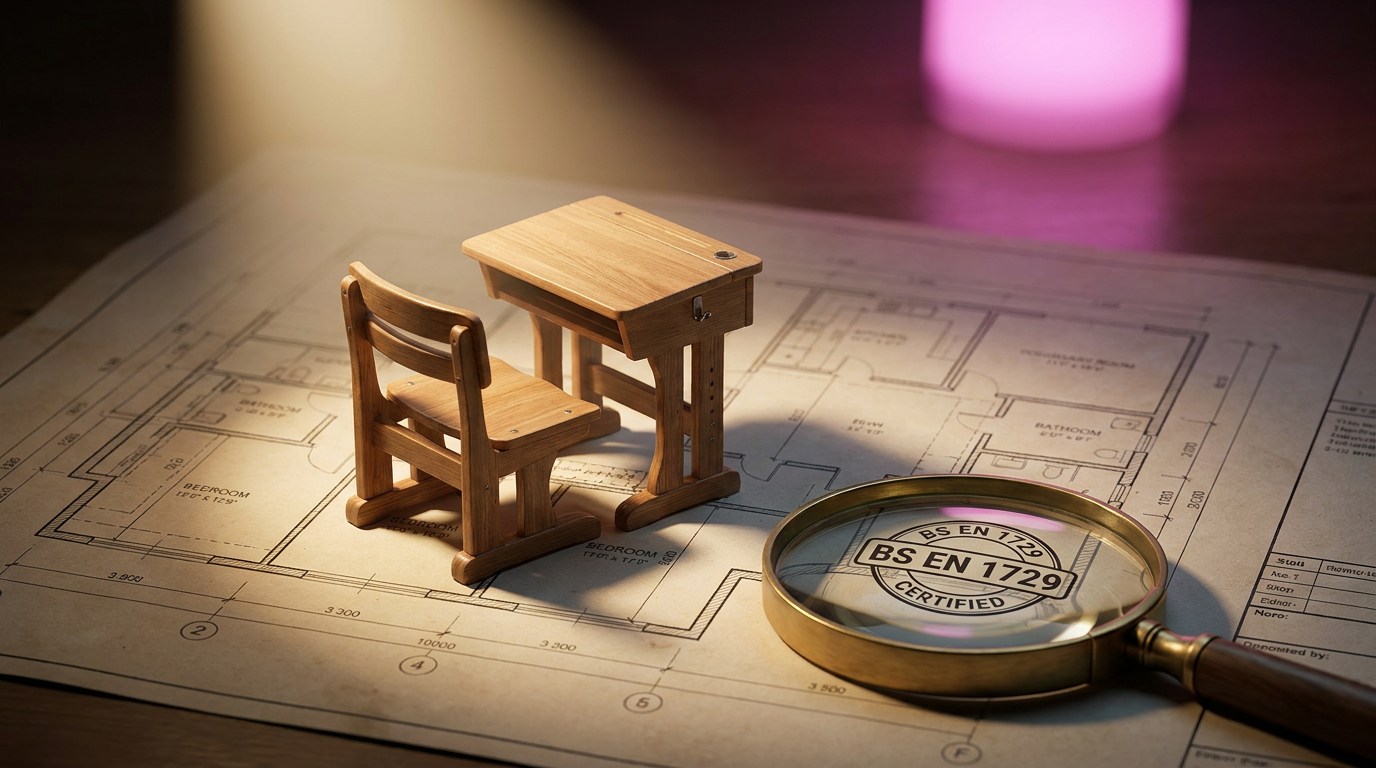
School Classroom Furniture: A Beginner’s Guide to UK Upgrades
🎯 Key Takeaway
Successful school classroom furniture upgrades depend on a strategic, year-long plan that focuses on ergonomics, compliance with UK standards like BS EN 1729, and smart procurement. This approach transforms a simple purchase into a long-term investment in educational outcomes. Prioritise furniture certified to BS EN 1729 for both ergonomic sizing (Part 1) and structural integrity (Part 2) to ensure student wellbeing and long-term value. Select modern, flexible furniture to support diverse teaching methods, which can improve student engagement, collaboration, and academic outcomes. This guide provides a comprehensive roadmap for School Business Managers to handle the entire process from concept to completion.
Outdated, uncomfortable furniture does more than just look tired; it can actively hinder learning. Poor posture leads to fidgeting, poor concentration, and long-term health issues. For school classroom furniture, making a change is not just a capital expense but a direct investment in your students’ wellbeing and academic success. This guide is designed for UK School Business Managers and provides a practical, term-by-term roadmap to manage an upgrade project from start to finish, ensuring you create a learning environment that truly performs. We’ll cover everything from planning and budgeting to choosing compliant, modern classroom furniture that inspires.
👤 Written by: The Cost Cutters UK Content Team
Reviewed by: Editorial Team, 35+ Years Experience; Rated Excellent On Trustpilot
Last updated: 15 August 2026
ℹ️ Transparency Disclosure
As part of our commitment to transparency, we want to be clear that this article explores the process of upgrading school classroom furniture based on our 35+ years of industry experience and official UK standards. Some links may connect to our services or partner resources that we believe are valuable. All information is verified by our editorial team to ensure accuracy and usefulness.
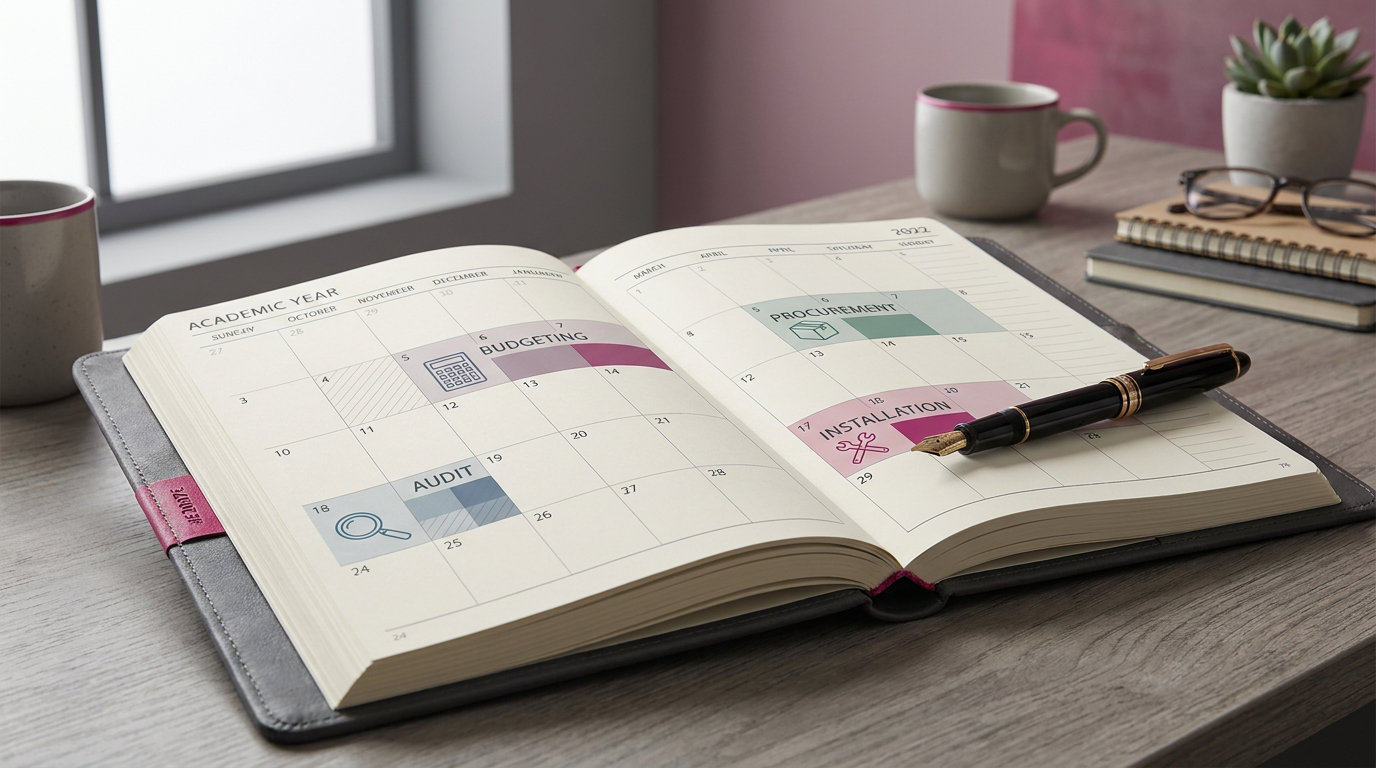
The School Year Project Plan: A Term-by-Term Guide
A successful furniture project is planned a full academic year in advance. Trying to rush an order in June for a September delivery is a recipe for stress, stock issues, and costly mistakes. By mapping your project to the academic calendar, you create a structured process that minimises disruption and maximises value, truly Saving Time & Stress.
Autumn Term (September-December): Audit & Vision
The first term is all about information gathering. This is the time to walk the school and audit your existing furniture. What’s broken? What’s unfit for purpose? Crucially, consult with teachers and students about what works and what doesn’t. Your goal is to build a clear picture of your needs, defining the scope and vision for the project. This is also the well-suited time to begin thinking about classroom layout planning and how new furniture could better support your curriculum. A clear understanding of your current asset utilisation is key; our guide on maximising your school’s assets can help.
Spring Term (January-April): Budgeting & Selection
With your vision defined, the spring term is dedicated to the financials and specifics. This is when you’ll present your business case to governors and secure budget approval. Start researching suppliers, gathering quotes, and comparing products. Don’t just look at catalogues; request samples so you can see and feel the quality for yourself. This is the core decision-making phase where you’ll select the furniture that best fits your vision, budget, and compliance requirements.
Summer Term & Holidays (May-August): Procurement & Installation
To ensure your furniture arrives on time for the new academic year, you should place your order no later than the May half-term. This allows for manufacturing lead times and avoids the summer rush. The summer term is also for logistics: arranging for the ethical disposal of old furniture and scheduling the installation. A professional installation during the quiet summer holidays ensures your classrooms are ready for day one, with no disruption to teaching time.
Choosing the Right School Classroom Furniture
Choosing the right furniture goes far beyond simply picking new desks and chairs. It’s about creating an environment that supports your educational goals. A Flexible Learning Environment, which is a space designed with adaptable furniture to support various teaching and learning styles, can have a profound impact. Research from the World Health Organization (WHO) in their 2020 guidelines recommends limiting sedentary time, reinforcing the need for more active and flexible classroom setups.
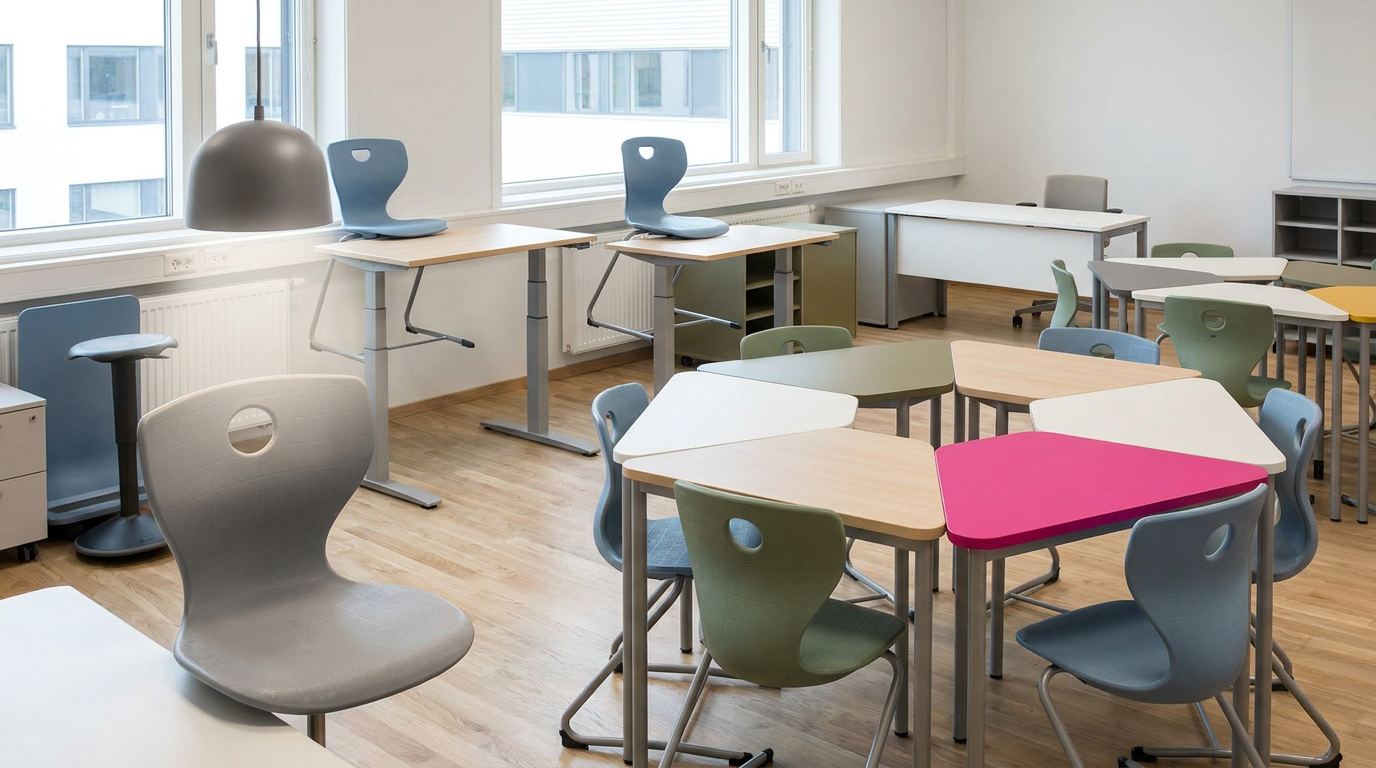
When you explore the differences between flexible and traditional furniture, you move from a one-size-fits-all approach to a more dynamic model. Consider a mix of standard desks, standing-height tables, soft seating, and collaborative tables. This variety gives teachers the freedom to configure the room for lectures, group work, or individual study. When looking for classroom furniture ideas UK schools can implement, think about mobility. Furniture with castors allows for quick and easy transitions between activities. Likewise, investing in high-quality ergonomic school chairs UK providers offer is non-negotiable for student health and concentration.
| Furniture Type | Primary Use Case | Flexibility | Typical Lifespan | Key Compliance Note |
|---|---|---|---|---|
| Traditional Desks & Chairs | Individual focused work, direct instruction | Low | 10-15 years | Must meet BS EN 1729 size marks for the correct age group. |
| Collaborative Tables | Group projects, team-based learning | Medium | 10-15 years | Shape (e.g., trapezoidal, circular) should enable easy grouping. |
| Standing-Height Desks | Active learning, short-term tasks | High | 10-15 years | Promotes movement and can improve focus; should be paired with high stools. |
| Classroom Soft Seating | Reading corners, quiet zones, informal discussion | High | 5-10 years | Must comply with BS 5852 fire retardancy regulations (Crib 5). |
Understanding UK Safety & Ergonomic Standards for School Classroom Furniture
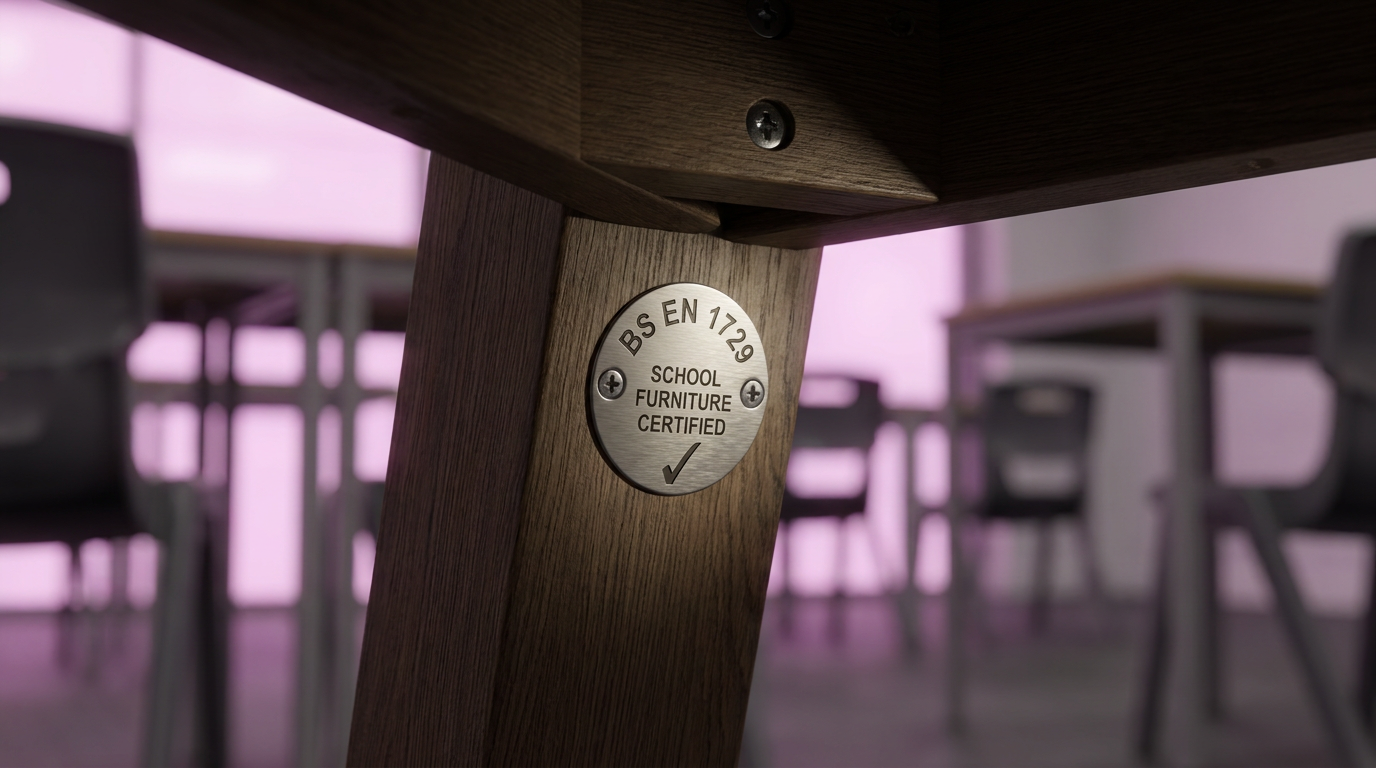
The single most important factor in furniture selection is compliance with UK standards. Ergonomics, the science of designing products for safe and efficient human use, isn’t a luxury; it’s a legal and moral responsibility. The key standard you need to know is BS EN 1729, the European Standard for chairs and tables for educational institutions.
This standard is split into two critical parts:
- BS EN 1729 Part 1: This covers ergonomics, specifying dimensions, heights, and ‘size marks’ to ensure furniture provides a comfortable and correct postural fit for children of different ages. Using the right size mark is fundamental to preventing the musculoskeletal disorders that the European Agency for Safety and Health at Work (EU-OSHA) identifies as a major health issue.
- BS EN 1729 Part 2: This details the safety requirements for strength, stability, and durability. Furniture is rigorously tested to ensure it can withstand the heavy use and abuse expected in a school environment. All upholstered items must meet fire safety regulations, typically BS 5852 Crib 5. Reputable suppliers will provide certificates of compliance. As we explain in our manager’s guide to compliance and safety, insisting on certified products is your best protection. It ensures you are meeting your duty of care as outlined by bodies like the Health and Safety Executive (HSE) and providing a safe environment for students.
Planning Your Classroom Layout for Maximum Impact
Great furniture is only half the story; how you arrange it is just as important. Effective classroom layout planning can dramatically improve classroom management, engagement, and learning outcomes. Instead of rows facing the front, consider creating distinct zones for different activities. This approach, often inspired by “Campfire” (whole group instruction), “Watering Hole” (small group collaboration), and “Cave” (individual quiet study) concepts, gives students choice and supports varied activities throughout the day.
When brainstorming classroom furniture ideas UK schools are adopting, think For flow and function. Can students move easily between zones without causing disruption? Is there a clear area for teacher-led instruction and spaces where students can work independently? Using mobile furniture like tables on castors or lightweight stackable stools makes reconfiguring the room for different lessons quick and easy.
We’ll be honest – this part can be tedious, but it’s crucial. That’s why we offer a free space planning service to help schools visualise their new environment and ensure it meets their needs perfectly.
Hypothetical Case Study: A Primary School Classroom Redesign
- Challenge: A Year 4 classroom with static, oversized desks was leading to poor student engagement and disruption during group activities. The layout made it difficult for the teacher to move around the room and support individual students.
- Solution: We worked with the school to implement a zonal layout. This included trapezoidal tables for collaborative ‘Watering Hole’ spaces, a soft-seating ‘Cave’ for quiet reading, and a dedicated ‘Campfire’ area with a teaching easel.
- Results: The school reported a 25% reduction in off-task behaviour and teachers noted a significant improvement in collaborative skills. A post-project survey showed 85% of students felt more positive about their classroom.
- Key Insight: Involving teachers in the classroom layout planning phase was critical to designing a space that directly supported their pedagogical approach.
Budgeting and Procurement: Making Every Pound Count
Securing funding and spending it wisely is a core challenge for any School Business Manager. When budgeting for furniture, it’s vital to look beyond the upfront price and consider the Total Cost of Ownership (TCO). A cheaper chair that breaks in three years is far more expensive than a compliant, durable one that lasts for ten. As the British Educational Suppliers Association (BESA) Code of Practice implies, fit-for-purpose quality is paramount.
When working with school furniture suppliers UK-wide, ask about their warranties and after-sales support. To make your budget go further, consider these strategies:
- Phased Rollouts: Upgrade one department or year group at a time to spread the cost over several financial years.
- Bulk Buy Discounts: For larger projects, we can offer significant savings. Consolidating your order with one trusted supplier often yields an effective value.
- Procurement Frameworks: Check if your Local Authority or Multi-Academy Trust is part of a purchasing consortium which may have pre-negotiated rates.
- Flexible Payment: Ask about options like Credit Accounts Or Pay Flexibly to manage cash flow effectively.
A detailed guide on budgeting for school furniture can provide more in-depth strategies to help you build a compelling business case and maximise your return on investment.
Frequently Asked Questions
What is school classroom furniture?
School classroom furniture includes items like desks, chairs, tables, storage units, and soft furnishings designed specifically for educational environments. It must be durable, safe, and ergonomically suited to support learning activities for different age groups. A key differentiator from standard commercial furniture is the mandatory compliance with specific safety and ergonomic standards, such as BS EN 1729, to ensure it is fit for purpose in a school setting.
How often should school furniture be replaced?
Most compliant school furniture has a lifespan of 10-15 years, but replacement should be based on condition, not just age. We recommend you regularly inspect for damage, instability, or if the furniture no longer supports current teaching methods. A phased replacement plan, upgrading one area at a time, is often the most practical approach for managing budgets and minimising disruption throughout the school.
What is the most durable material for school tables?
Solid wood or high-pressure laminate (HPL) tops with a sturdy, fully-welded steel frame are typically the most durable combination for school tables. HPL offers excellent resistance to scratches, heat, and impact, making it effective for a busy classroom. You should also ensure the edging is made from a high-impact material and is securely bonded to prevent peeling, which is a common point of failure.
What is BS EN 1729?
BS EN 1729 is the essential European Standard for educational furniture, split into two crucial parts. Part 1 specifies the ergonomic dimensions, heights, and colour-coded sizes to ensure a correct and healthy postural fit for pupils of different ages. Part 2 rigorously tests the furniture for strength, stability, and durability to ensure it can safely withstand the demands of a school environment.
How do I budget for a classroom furniture upgrade?
Start by auditing your current inventory and getting quotes from multiple suppliers at least 6-9 months before your financial year-end. Our advice is to adopt a ‘total cost of ownership’ approach, factoring in durability and warranty, not just the initial price tag. Explore options like phased rollouts over several years or leasing to manage cash flow effectively and make the project more affordable.
Are standing desks good for primary school students?
Yes, standing-height desks can be beneficial in primary classrooms when used as part of a flexible, varied environment. They encourage movement, break up sedentary time, and can improve focus for some children. However, they should not be the only option available. The effective setup is a mix of seating and standing heights, and high stools should typically be provided for rest periods.
What’s the difference between furniture for KS1 and KS2?
The main difference is the size, as specified by the BS EN 1729 size marks to ensure correct ergonomic fit. Key Stage 1 (ages 5-7) typically requires smaller chairs and lower table heights than Key Stage 2 (ages 7-11). Furthermore, KS1 furniture may also focus more on supporting play-based and collaborative learning, often featuring more varied shapes, brighter colours, and lower-level storage units.
How do I dispose of old school furniture?
Check with your local authority for recycling centres that accept commercial furniture, as their rules often differ from household waste. Many specialist school furniture suppliers, including Cost Cutters UK, offer a removal and ethical disposal or recycling service as part of their installation package. This is often the most convenient and environmentally responsible option, saving you time and administrative hassle.
Why is ergonomic furniture important for students?
Ergonomic furniture promotes good posture, reduces fidgeting, and can improve concentration levels in the classroom. Poorly fitting chairs and desks can lead to musculoskeletal discomfort and even long-term health issues for growing children. In our view, investing in ergonomics is a direct investment in student health, wellbeing, and their fundamental ability to learn effectively throughout the school day.
Can I mix and match furniture from different suppliers?
While you can, it’s often better to work with a single supplier for a large project to ensure consistency in quality, finish, and warranty. A single supplier can also offer better value through Bulk Buy Discounts and provide a cohesive project management service. This ‘Design To Install We Do It All!’ approach ensures a smooth process from space planning through to installation and aftercare.
Important Considerations and Next Steps
This guide provides a general framework for planning a school furniture upgrade. However, every school is unique. Factors such as the specific needs of students with Special Educational Needs and Disabilities (SEND), building limitations like narrow corridors or listed status, and specific curriculum demands will require tailored solutions. The budget figures and timelines are illustrative and should be demonstrated with detailed, project-specific quotes from suppliers.
The primary alternative to a full-scale replacement is a phased rollout, upgrading one year group or department at a time to spread costs. In some cases, refurbishing existing high-quality wooden furniture can be viable, but this rarely addresses ergonomic or flexibility issues. Another approach is leasing furniture, which can lower upfront capital expenditure but may have a higher total cost over time and less flexibility.
For complex projects or if you lack in-house project management resources, we recommend seeking professional guidance. A consultation with a furniture specialist can help you conduct a thorough needs analysis, create an efficient classroom layout plan, and ensure full compliance with all UK standards. This expert input ensures you achieve an effective long-term value and educational impact from your investment, and a professional installation service may help it’s done right.
Your Partner in Classroom Transformation
Upgrading your school classroom furniture is a significant project, but with careful planning, it becomes a powerful investment in your students’ future. By following a structured timeline, prioritising compliant and ergonomic designs, and budgeting for long-term value, you can create learning environments that are not only safe and comfortable but also inspiring and effective. The result is a space that supports modern teaching and empowers students to succeed.
At Cost Cutters UK, we have over 35 years of experience partnering with schools across the country to manage these transformations. Being Rated Excellent On Trustpilot reflects our commitment to this partnership. Our team of specialists can help with everything from initial space planning and product selection to professional installation and removal of old items. If you’re ready to see how we transformed this UK primary school or want to start your own project, contact us for a free space plan and a no-obligation quote.
References
- Health and Safety Executive (HSE) – Official UK Government Guidance. Provides the legal framework and practical advice for workstation ergonomics under the Display Screen Equipment (DSE) Regulations 1992, which informs best practice for all seated environments.
- European Agency for Safety and Health at Work (EU-OSHA) – Pan-European Research. This body highlights that musculoskeletal disorders are a leading cause of work-related health problems, emphasizing the importance of ergonomic interventions from a young age.
- Department for Education (EYFS Framework) – UK Government Statutory Framework. Mandates that premises, environment, and equipment in early years settings must be safe, suitable, and support children’s development, setting a legal precedent for all school ages.
- British Educational Suppliers Association (BESA) – Industry Code of Practice. Requires members to supply goods that are safe, fit for purpose in an educational setting, and of high quality, providing a standard of assurance for schools.
- World Health Organization (WHO) – Global Health Guidelines (2020). Recommends that children and adolescents should limit sedentary time, providing a clear health basis for creating more active and flexible classroom environments.
- Statista – Market Research Data (2024). Provides market size and revenue data for the UK office furniture sector, which is useful for contextualizing budget and procurement decisions within the broader market.
Conclusion
Your Partner in Classroom Transformation
In summary, school classroom furniture is a significant project, but with careful planning, it becomes a powerful investment in your students’ future. By following a structured timeline, prioritising compliant and ergonomic designs, and budgeting for long-term value, you can create learning environments that are not only safe and comfortable but also inspiring and effective. The result is a space that supports modern teaching and empowers students to succeed.
At Costcutters UK, we have over 35 years of experience partnering with schools across the country to manage these transformations. Our team of specialists can help with everything from initial space planning and product selection to professional installation and removal of old items. If you’re ready to star