School Table Costs: A UK Financial Breakdown & ROI Analysis for 2026
🎯 Key Takeaway
Analysing school table costs reveals that a basic primary school table can start from £70, while specialised science or canteen tables can exceed £500, with the true value found in long-term durability, not just the initial price tag.
• Prices are influenced by material, size, specialist features (e.g., chemical resistance), and compliance with UK safety standards like BS EN 1729.
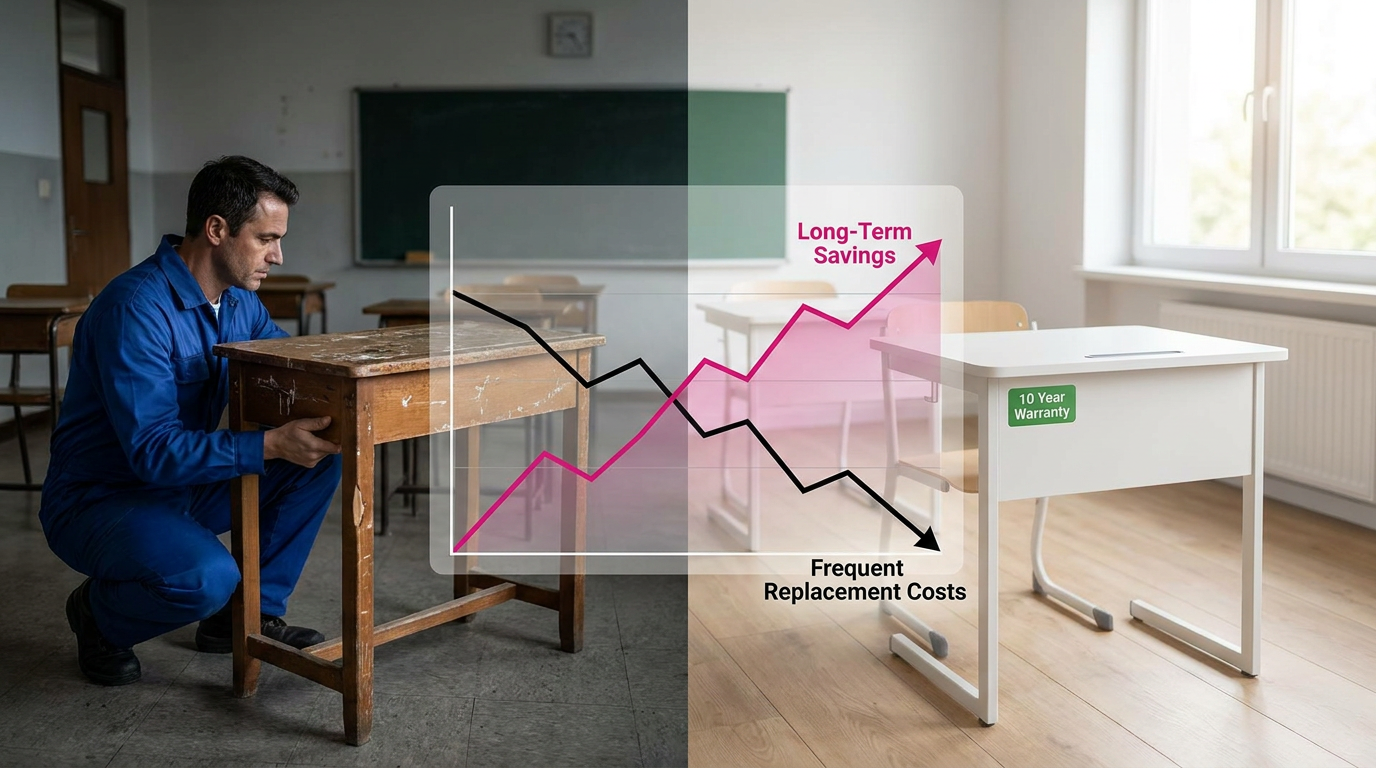
• Calculating the Total Cost of Ownership (TCO) is essential; a cheaper table replaced every three years is more expensive than a durable one with a 10-year warranty.
• Strategic procurement, such as leveraging bulk discounts through a Multi-Academy Trust (MAT) or a trusted supplier, can significantly reduce overall spending.
This guide provides a detailed framework for making a financially sound investment in your school’s learning environment.
For School Business Managers, balancing a tight school furniture budget with the need for high-quality, durable learning environments is a constant challenge. For school table costs, the initial price on a quote is often just the beginning of the story. A table isn’t merely a surface; it’s a fundamental piece of educational equipment that impacts pupil posture, classroom safety, and your long-term budget. As of late 2026, the market is filled with options, but the most astute investment moves beyond the price tag.
This guide provides a comprehensive breakdown of the factors that determine costs, how to calculate the true return on investment (ROI), and smart strategies to make your budget go further. We’ll explore average prices, explain why they vary, and give you the tools to justify investing in quality over the cheapest upfront option.
Written by: Content Team | Reviewed by: Editorial Team, 35+ Years Experience; Rated Excellent On Trustpilot
Last updated: 23 October 2026
ℹ️ Transparency Disclosure: This article explores school table costs based on over 35 years of industry experience and analysis of UK market data. Our goal is to provide clear, actionable information for procurement professionals. Some links may connect to our services, which support our ability to create in-depth guides like this. All information is verified by our editorial team to ensure accuracy and relevance.
What are the Average School Table Costs in the UK?
In the UK, average school table costs can range from as little as £70 for a basic primary classroom table to over £750 for a specialised folding canteen unit. The answer to how much does a school table cost depends entirely on its intended use, materials, and compliance standards. A simple classroom table for Key Stage 1 pupils has very different requirements from a chemical-resistant workbench in a secondary school science lab.
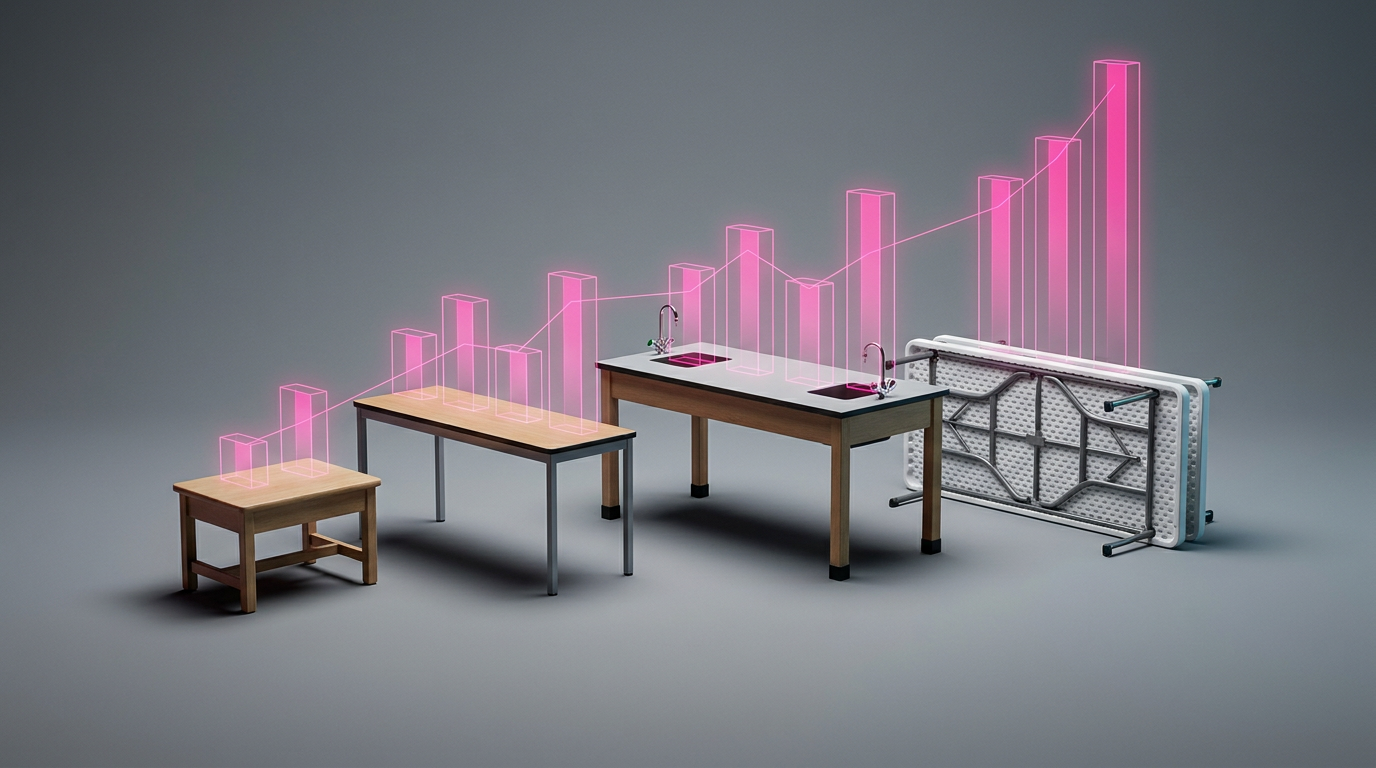
Data from across the commercial furniture market indicates that educational furniture is a significant area of expenditure, with the broader UK office furniture market alone valued at over £1.8 billion in 2024 according to a report from Statista (2024). This highlights the scale of investment schools are making. The price variations become clear when broken down by type. For example, the price of a teachers table reflects its need for a larger surface and potential storage, while the school cafeteria table cost is driven by complex folding mechanisms and seating capacity.
The table below provides a typical cost breakdown for different types of school tables, helping you benchmark your own procurement projects.
| Table Type | Typical Price Range (ex. VAT) | Primary Use Case | Key Features Affecting Cost |
|---|---|---|---|
| Standard Classroom Table (Primary) | £70 – £160 | General learning, group work | Size mark, laminate top, fully-welded frame |
| Standard Classroom Table (Secondary) | £90 – £200 | General learning, exams | Larger size, heavier-duty frame, crush-bent design |
| Teacher’s Desk | £150 – £350 | Classroom management, storage | Surface area, integrated drawers (pedestal), modesty panel |
| Specialist Science Table | £250 – £600+ | Labs (Chemistry, Biology) | Chemical-resistant Trespa/Iroko top, gas taps, reliable frame |
| Canteen / Dining Unit | £300 – £750+ | Dining halls, multi-use spaces | Folding mechanism, integrated seating, number of seats, mobility |
These figures demonstrate that a “one-size-fits-all” price doesn’t exist. Each category is engineered for a specific purpose, and that specialisation is reflected in the cost.
Why Do School Table Prices Vary So Much?
School table prices vary significantly due to three main factors: the quality and type of materials used, the complexity of construction, and the level of compliance with safety and ergonomic standards. A table that looks good in a catalogue might not be built to withstand the rigours of a 30-pupil classroom, and the price often reflects this difference in durability.
The material is the most obvious variable. A discussion of wooden vs plastic school furniture shows that while plastic can be cheaper, high-pressure laminate tops on a solid wood or MDF core offer superior longevity and scratch resistance. Specialist tops like Trespa, used in science labs for their chemical resistance, are a premium material that adds significant cost but is essential for safety.
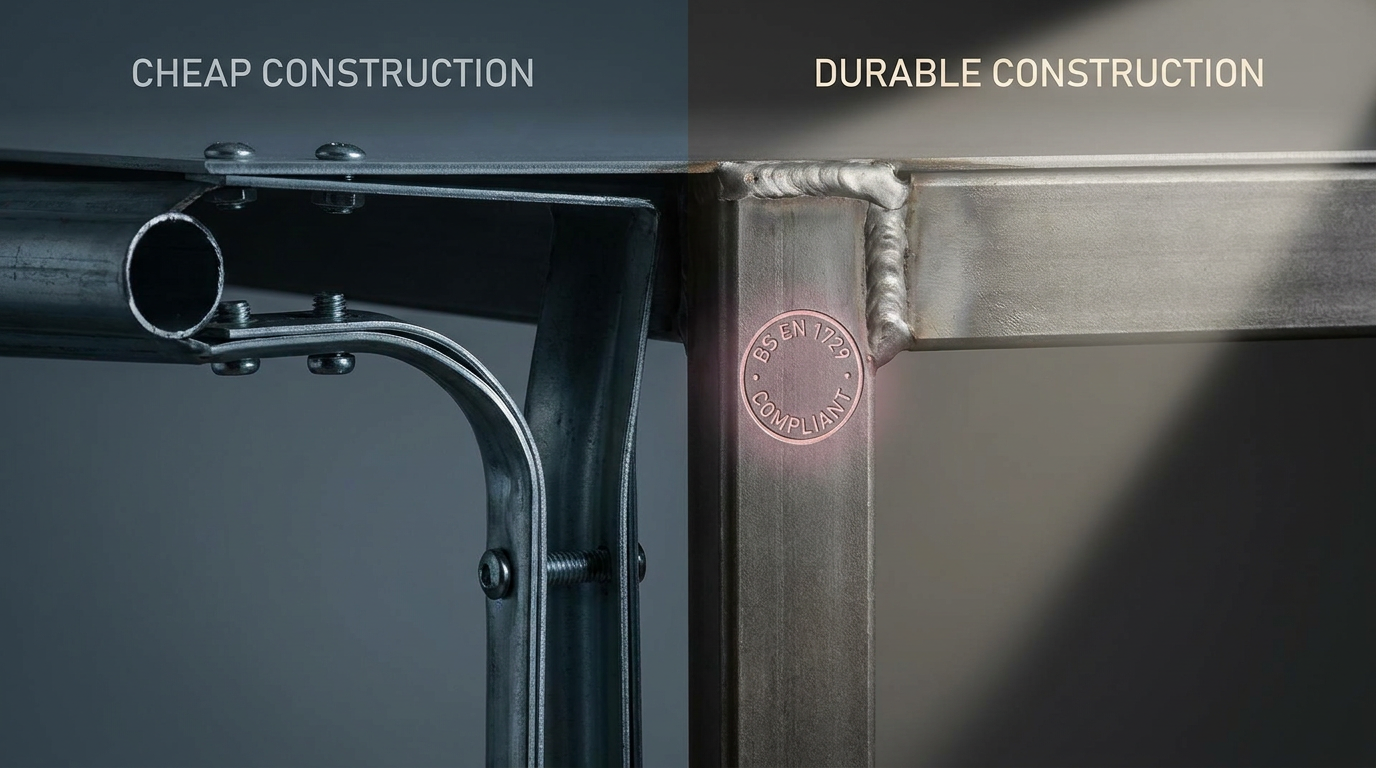
Construction is another critical factor. A cheap, self-assembly table with bolted-on legs will almost generally fail faster than a table with a fully-welded steel frame. The latter is far more reliable and resistant to the daily pushing, pulling, and leaning it will endure. This is a key reason why commercial-grade furniture costs more than domestic equivalents.
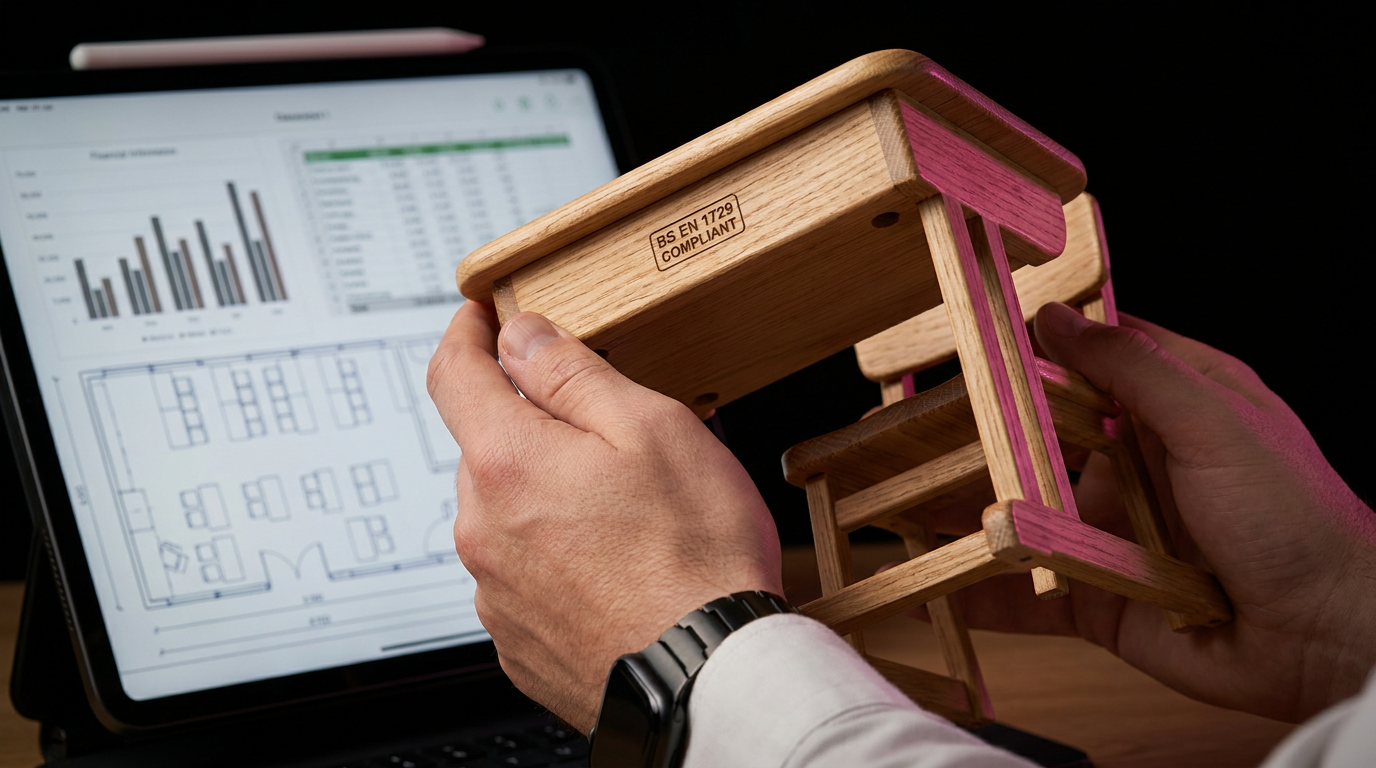
Crucially, BS EN 1729 compliance is a major cost driver but also a non-negotiable mark of quality. This British and European standard dictates correct heights, depths, and ergonomic considerations to support pupil posture and prevent long-term health issues, as advised by bodies like the Health and Safety Executive (HSE). It also specifies strength and stability requirements. A supplier committed to complying with UK safety standards like BS EN 1729 invests in testing and superior manufacturing, which is reflected in the price. In our experience, a table with a 10-year warranty is a clear indicator that the manufacturer has built it to last, justifying a higher initial outlay. When you’re choosing the right tables for different key stages, this standard is your best guide.
How to Calculate the True ROI of School Tables
To properly assess school table ROI, you must look beyond the initial purchase price and calculate the Total Cost of Ownership (TCO). Total Cost of Ownership (TCO) is a financial metric that calculates the full cost of an asset over its entire lifespan. It provides a far more accurate picture of value for your school furniture budget than a simple price comparison.
The formula is straightforward:
TCO = Initial Purchase Price + Maintenance/Repair Costs – Residual Value
Let’s be honest – the calculation is simple, but gathering the data can feel tedious. Still, it’s worth the effort. Consider this typical scenario:
- Table A (The ‘Bargain’): Costs £80. It comes with a 1-year warranty and, in a busy school environment, needs replacing every 3 years.
- Table B (The ‘Investment’): Costs £150. It is fully BS EN 1729 compliant and comes with a 10-year warranty.
Over a 10-year period:
- Cost of Table A: You would buy it three times (at year 0, year 3, and year 6), costing at least £240 (assuming no price increases).
- Cost of Table B: You buy it once, costing £150.
The ‘investment’ table is £90 cheaper over the decade. That’s the power of TCO.
Case Study: A Typical Multi-Academy Trust Scenario
- Challenge: Consider a hypothetical Multi-Academy Trust (MAT) with five primary schools spending approximately £15,000 annually replacing broken and non-compliant tables. This constant re-ordering was a strain on the central
school furniture budgetand created administrative headaches.- Solution: The trust could work with a supplier to develop a phased, centralised procurement plan. Instead of ad-hoc purchases, they commit to a bulk order of BS EN 1729 compliant tables with 10-year warranties for two schools in year one.
- Results: The MAT would likely achieve a 20%
Bulk Buy Discount, saving thousands on the initial order. The new tables would eliminate replacement costs for those schools, projecting significant 5-year savings.- Key Insight: Centralising procurement and prioritising long-term warranties over low initial cost delivers substantial financial and operational savings. There is a non-financial ROI to consider. The European Agency for Safety and Health at Work (EU-OSHA) highlights that poor workstation design is a key risk for musculoskeletal disorders. Investing in furniture that meets high ergonomic standards contributes to better pupil health, concentration, and well-being. Understanding ergonomic design and its long-term benefits is part of calculating the true value of your investment.
Smart Strategies for Managing Your School Furniture Budget
Maximising your school furniture budget doesn’t mean you have to buy cheap classroom tables. It’s about procuring smarter. In our 35+ years of experience, we’ve seen schools achieve incredible value by shifting their focus from short-term cost to long-term strategy.
First, use the power of scale. A phased procurement plan, where you replace furniture for two year groups at a time instead of making small, sporadic purchases, can unlock significant savings. If you’re part of a Multi-Academy Trust (MAT), centralising your furniture procurement is one of the most effective cost-saving measures you can take. By combining the purchasing power of several schools, a MAT can negotiate substantial Bulk Buy Discounts that a single school couldn’t access.
Second, build a relationship with a trusted, specialist supplier. A good supplier is more than a vendor; they’re a partner who understands the demands of the education sector. They can offer expert advice, provide free space planning to optimise your classrooms, and ensure everything you buy is compliant and fit for purpose. This approach is far more effective than sourcing from multiple non-specialist retailers. As the British Educational Suppliers Association (BESA) Code of Practice implies, reputable suppliers are committed to providing products that are safe and suitable for educational use.
Finally, redefine what ‘cheap’ means. Instead of the lowest price, look for the lowest TCO. A table with a 10-year warranty may have a higher upfront cost, but it represents far better long-term value. This strategy is key to “Saving Time & Stress” because it reduces the administrative burden of constant replacements and repairs.
Frequently Asked Questions
What is school table costs?
A basic UK school table cost starts around £70, but this varies significantly based on function and quality. Specialist tables for science labs can be over £500, while a teacher’s desk is typically £150-£350. The final price depends on materials, size, and compliance with safety standards like BS EN 1729. Typically consider the total cost of ownership over the table’s lifespan, not just the upfront school table costs.
How much does a teachers table cost?
The price of a teachers table in the UK generally ranges from £150 to £350. A basic desk will be at the lower end, whilst models with integrated pedestal drawers, larger surface areas, and heavy-duty construction will be more expensive. The price reflects not just size but also the durability required for daily use in a busy classroom environment and often includes features like modesty panels.
How much does a school cafeteria table cost?
A school cafeteria table cost can range from £300 to over £750 in the UK. The price is heavily influenced by the mechanism (e.g., folding tables with integrated seating are more expensive), the number of seats, and the durability of the materials. Because these tables are a significant investment, their warranty and ease of maintenance are critical factors in the purchasing decision, often justifying the higher price point for reliable models.
Why are school tables so expensive?
School tables seem expensive because they are built to a much higher standard than domestic furniture. They must withstand heavy daily use and comply with strict safety and ergonomic standards like BS EN 1729. Costs are driven by durable materials, reliable construction (like fully-welded frames), and features like chemical-resistant surfaces, all of which ensure longevity and pupil safety in a demanding environment.
How can I find cheap classroom tables?
Instead of searching for ‘cheap classroom tables’, it’s better to seek ‘value for money’. Look for suppliers offering long warranties (5-10 years) as this indicates quality construction. Purchasing in bulk, especially through a MAT, or during supplier sales can also reduce costs. We advise avoiding non-specialist retailers, as their products may not meet the necessary BS EN 1729 safety standards for schools.
What is the standard size of a school table?
There isn’t one single standard size; it is dictated by the BS EN 1729 standard, which specifies ‘size marks’ based on pupil height. This ensures ergonomic suitability for each key stage. For example, a table for 5-7 year olds will be much lower and smaller than one for secondary school students. A reputable supplier will guide you to the correct size mark for your pupils’ age group, ensuring compliance and comfort.
What are school tables called?
School tables have various names depending on their shape and function. Common types include rectangular or circular classroom tables, height-adjustable tables, and trapezoidal or ‘crush bent’ tables, named after their strong frame construction. In science labs, you’ll find Trespa or Iroko workbenches, while dining halls often use folding canteen units. The specific name often describes its key feature or intended use.
How much does a school table weigh?
A standard single pupil desk might weigh between 10-15 kg, whereas a larger classroom table for a group could be 20-30 kg. Specialist furniture like a heavy-duty science workbench or a large folding canteen table can weigh significantly more, sometimes over 100 kg. Weight is often a good indicator of the robustness of the frame and top, contributing to its overall durability and stability in a busy school setting.
How is school table ROI calculated?
School table ROI is best calculated using the Total Cost of Ownership (TCO). This involves dividing the total cost (initial price plus any repairs) by the number of years it remains in safe, usable condition. A table that costs more upfront but lasts 10 years offers a better ROI than a cheap table that needs replacing every 3 years. This provides a true measure of value for your school’s budget.
Why does BS EN 1729 compliance add to the cost?
BS EN 1729 is the British and European standard for educational furniture, and compliance adds to the cost because it demands higher quality. It requires manufacturers to use stronger materials, more reliable construction methods, and ergonomic designs well-supported by research to support pupil posture and well-being. While it increases the price, it may help the furniture is safe, durable, and fit for purpose, which is a sound investment.
Important Considerations
The prices provided are indicative averages as of late 2026 and can fluctuate based on raw material costs, supplier, and order volume. This guide focuses on new furniture; second-hand or refurbished options may present lower initial costs but often lack warranties and compliance certification, impacting long-term TCO.
While this guide focuses on traditional tables, schools may also consider flexible furniture solutions like modular tables, standing desks, or collaborative pods. These can offer pedagogical benefits but may require a different budget structure and space planning approach. Their ROI should be evaluated based on flexibility and space utilisation as well as durability.
For large-scale refurbishments, new builds, or creating specialised learning environments (e.g., SEN or EYFS), consulting with an educational furniture specialist is crucial. A specialist can provide free space planning, ensure compliance across all items, and develop a procurement strategy that aligns with your school’s specific educational goals and budget. Our “Design To Install We Do It All!” service is built for exactly this purpose.
Making a Smart, Long-Term Investment in Your School’s Furniture
Ultimately, understanding school table costs goes far beyond comparing initial price tags. By focusing on the Total Cost of Ownership and long-term school table ROI, School Business Managers can make informed, strategic decisions. Prioritising durability, compliance with BS EN 1729, and strong supplier warranties ensures that every pound spent is a genuine investment in the quality and safety of the learning environment for years to come.
If you’re planning a furniture project and need to maximise your budget, the team at Cost Cutters UK has over 35 years of experience helping schools do just that. We’re Rated Excellent On Trustpilot because we focus on delivering genuine value. We offer everything from Bulk Buy Discounts to flexible payment options like Credit Accounts Or Pay Flexibly. Contact us today for a free space plan and a no-obligation quote.
References
- Health and Safety Executive (HSE) – UK Government Guidance. Provides legal requirements and practical advice for ergonomic workstations to prevent musculoskeletal disorders.
- European Agency for Safety and Health at Work (EU-OSHA) – EU Research Body. Highlights poor workstation design as a key risk factor for musculoskeletal disorders in young people and workers.
- Department for Education (EYFS Framework) – UK Government Statutory Framework. Mandates that all premises, furniture, and equipment in early years settings must be safe, suitable, and fit for purpose.
- British Educational Suppliers Association (BESA) – Professional Organisation Code of Practice. Members must ensure products are safe and fit for their intended use in an educational environment.
- World Health Organization (WHO) – Global Health Guideline. Recommends limiting sedentary behaviour, providing a health basis for considering more ergonomic and flexible school furniture.
- Statista – Market Research Data (2024). Projects the UK office furniture market revenue, indicating the scale of commercial furniture expenditure.
CONCLUSION
Making a Smart, Long-Term Investment in Your School’s Furniture
In summary, school table costs go far beyond comparing initial price tags. Our assessment is that by focusing on the Total Cost of Ownership (TCO) and long-term school table ROI, School Business Managers can make informed, strategic decisions that deliver genuine value. We recommend prioritising durability, compliance with BS EN 1729, and strong supplier warranties to ensure that every pound spent is a genuine investment in the quality and safety of the learning environment for years to come.