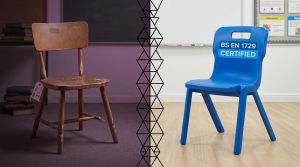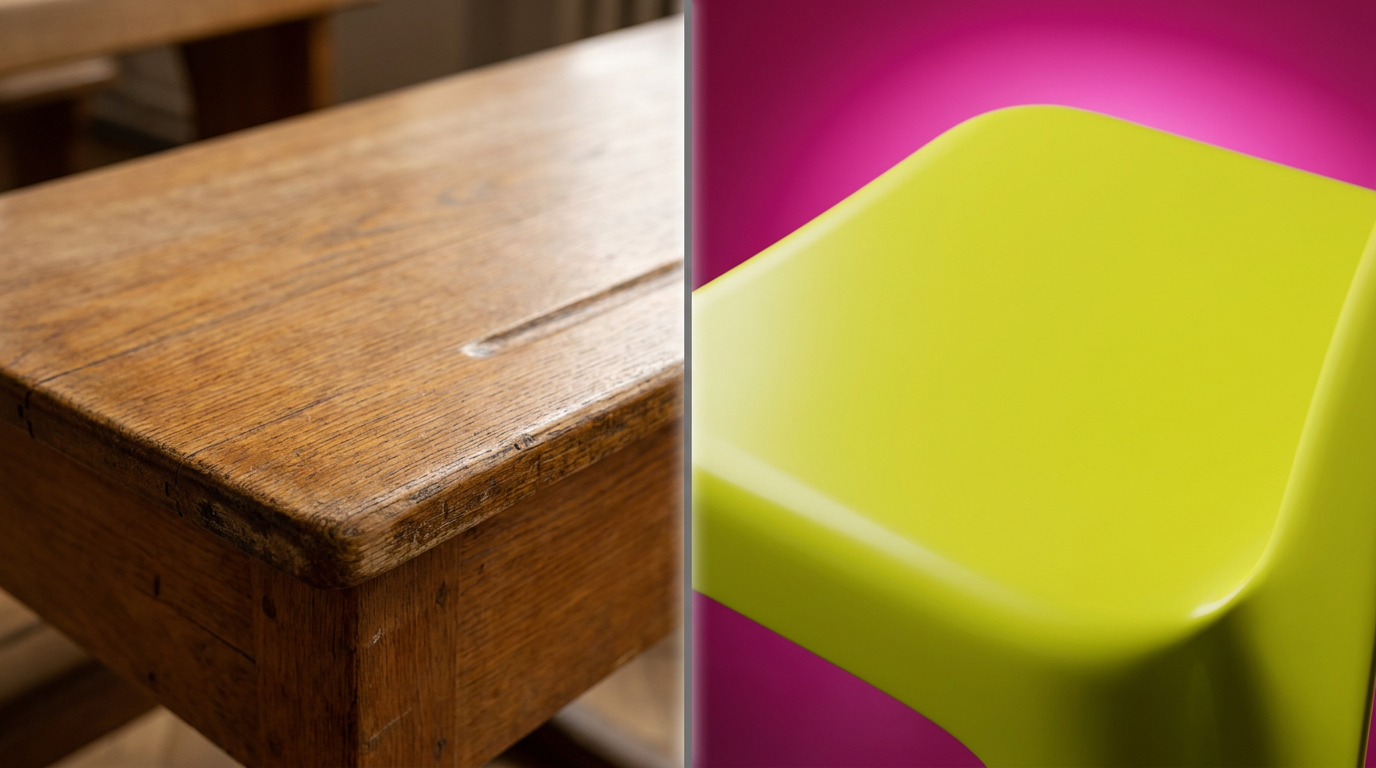
Wooden vs Plastic School Furniture: A Complete Comparison for UK Schools
🎯 Key Takeaway
The choice between wooden vs plastic school furniture directly impacts your budget, maintenance workload, and classroom environment. For most UK primary schools, modern plastic furniture offers a superior combination of affordability, hygiene, and practicality. However, wood retains a strong appeal for its traditional aesthetic and long-term durability, making it a viable choice for specific applications.
Deciding on the right furniture for your primary school is a significant investment. As of September 2026, educational leaders are increasingly focused on balancing tight budgets with the need for durable, safe, and stimulating learning environments. The debate over wooden vs plastic school furniture is central to this decision. This guide provides a direct comparison to help you make an informed choice, drawing on our 35+ years of experience supplying UK schools. We’ll analyse everything from Total Cost of Ownership (TCO) to classroom practicality, ensuring you have the data to choose wisely.
👤 Written by: The Education Furniture Experts at Cost Cutters UK | Reviewed by: Editorial Team, 35+ Years Experience; Rated Excellent On Trustpilot
Last updated: 15 September 2026
ℹ️ Transparency Disclosure: This article is written by the experts at Cost Cutters UK, a leading supplier of commercial furniture. Our recommendations are based on over three decades of industry experience, customer feedback, and product data. While we supply both wooden and plastic furniture, this guide aims to provide a balanced, objective comparison. Our primary goal is to empower you to make an effective decision for your school’s specific needs and budget.
Quick Verdict: Wooden vs Plastic School Furniture
⚡ Quick Verdict
For most UK primary schools, Plastic Primary School Tables & Chairs are the winning choice. They provide the optimal blend of affordability, superior hygiene, lightweight flexibility, and vibrant colour options essential for a modern, dynamic classroom.
- Overall Pick: Plastic Primary School Tables & Chairs – Unbeatable on cost, ease of cleaning, and everyday classroom practicality.
- Best for Durability & Tradition: Wooden – an effective option for schools prioritising a classic aesthetic, a calmer atmosphere, and the potential for long-term repairability.
Wooden vs Plastic School Furniture at a Glance: Side-by-Side Comparison
For School Business Managers and Headteachers, a clear, side-by-side view is crucial for procurement decisions. The following table summarises the key factors in the wooden vs plastic school furniture debate.
| Comparison Dimension | Wooden Furniture | Plastic Primary School Tables & Chairs |
|---|---|---|
| Total Cost of Ownership | Higher initial cost, but can be refinished to extend life. | Lower initial cost, but less repairable, potentially leading to earlier replacement. |
| Durability & Lifespan | Very high (solid wood). Susceptible to scratches/water damage if not lacquered. | High. Resistant to impact and water, but can fade or become brittle over many years. |
| Maintenance & Hygiene | Requires more care. Porous surfaces can harbour more germs if not properly sealed. | Excellent. Non-porous surfaces are extremely easy to wipe clean and sanitise. |
| Safety & UK Compliance | Heavy and stable. Must be certified to BS EN 1729 compliant furniture standards. | Lightweight. Rounded edges are common. Must be certified to BS EN 1729 standards. |
| Classroom Practicality | Heavy, difficult for pupils to move. Generally not stackable. | Lightweight and easy to reconfigure. Often stackable for easy storage. |
| Aesthetics & Environment | Creates a warm, traditional, and often calmer atmosphere. | Available in bright colours, effective for zoning and stimulating environments. |
| Environmental Impact | Can be sustainable if from FSC-certified sources. Repairable. | Often recyclable (check type). Manufacturing is energy-intensive. |
Best for Tradition & Durability: Wooden School Furniture
Best for: Schools aiming for a traditional, calm aesthetic and prioritising long-term repairability over initial cost.
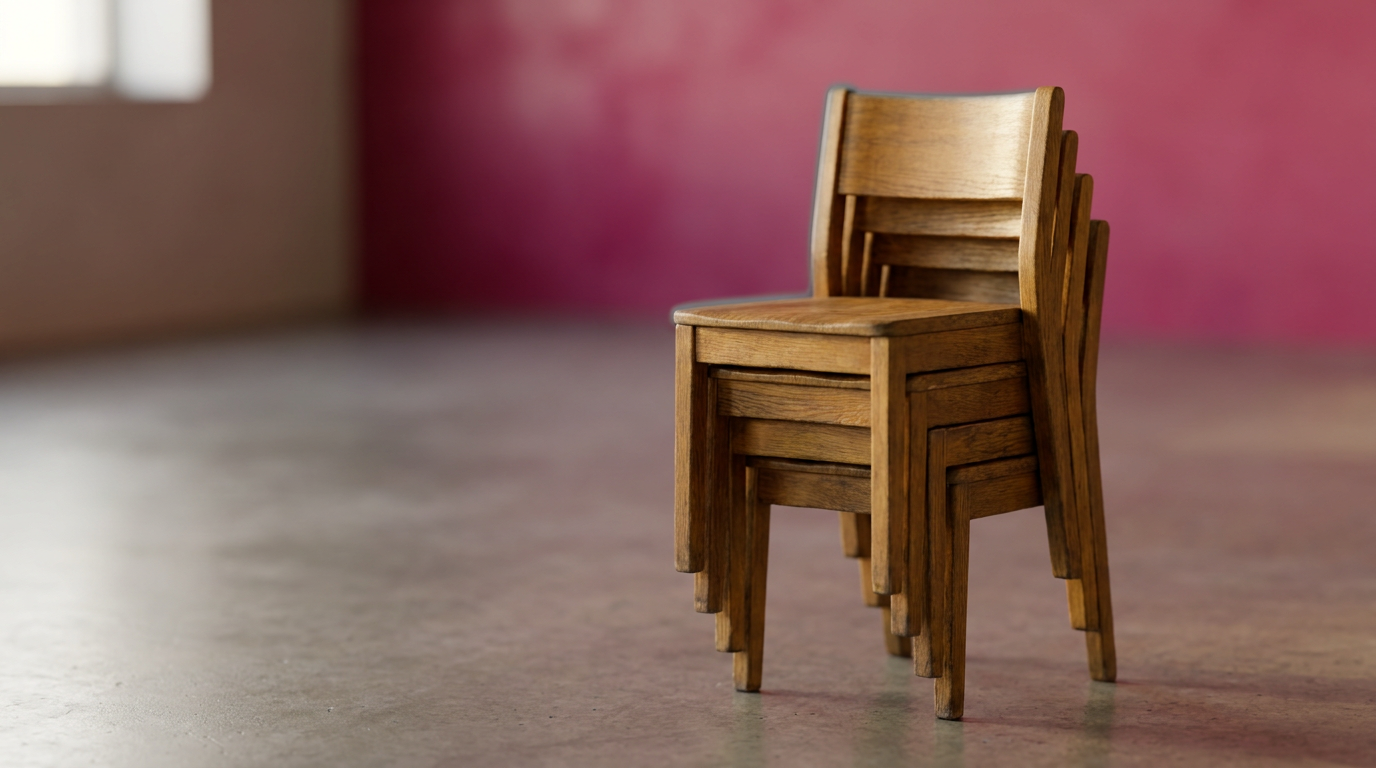
Wooden furniture is an excellent choice for creating a warm, traditional learning environment and offers superb long-term durability if well-maintained. Its natural look is often favoured for libraries, reception areas, or Special Educational Needs (SEN) rooms where creating a calm, homely atmosphere is paramount.
Pros:
- Timeless Aesthetic: Wood provides a classic, high-quality look that can contribute to a calmer learning environment, a point noted by early years specialists at Fennies (2022) in their analysis of play materials.
- Exceptional Durability: Solid wood furniture is incredibly reliable and stable. Its weight prevents it from being easily tipped over by young children.
- Repairable: Unlike plastic, wooden surfaces can be sanded and refinished to remove scratches and signs of wear, significantly extending their usable life. If you’re wondering when to replace your school’s furniture, wood’s repairability can push that date back.
- Sustainable Material: When sourced from FSC-certified forests, wood is a renewable and biodegradable material.
Cons:
- Higher Initial Cost: The upfront investment for solid wood furniture is typically much higher than for plastic alternatives.
- Heavy and Immovable: Its weight makes it difficult for teachers and pupils to reconfigure classroom layouts for different activities.
- Maintenance Intensive: Wood is susceptible to water damage, stains, and deep scratches. It requires a more careful cleaning regimen and periodic maintenance.
- Limited Design Flexibility: While classic, wood offers fewer options for bright colours and modern shapes compared to moulded plastic.
Best for Budget & Practicality: Plastic Primary School Tables & Chairs
Best for: Busy, modern primary schools that need cost-effective, hygienic, and flexible furniture for high-traffic classrooms.
Plastic furniture is the pragmatic choice for the modern primary school. Excelling in cost-effectiveness, hygiene, and flexibility, it meets the demanding needs of a dynamic learning environment where classroom layouts change daily and spills are a regular occurrence. It’s the go-to for outfitting multiple classrooms on a tight budget.
Pros:
- Affordable: Plastic furniture has a significantly lower upfront cost, making it easier to manage when budgeting for school furniture and calculating ROI. This allows schools to allocate funds to other critical resources.
- Superior Hygiene: The non-porous surface of plastic is incredibly easy to clean and disinfect, a critical factor for health and safety in a primary school setting.
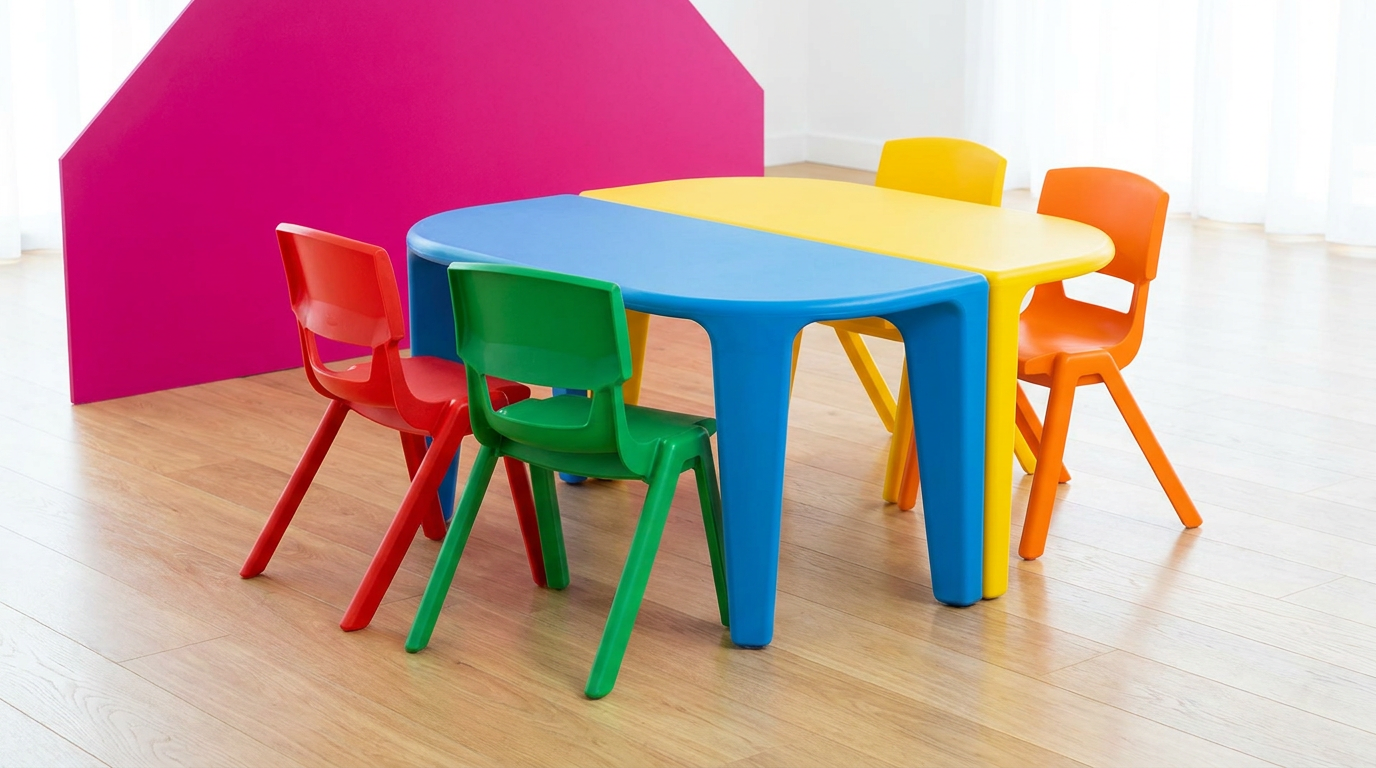
- Lightweight & Flexible: Chairs and tables are lightweight and often stackable, making it simple for staff to store them or reconfigure a room for group work, assemblies, or cleaning.
- Vibrant Colour Options: Available in a huge range of bright colours, plastic furniture is well-suited for creating stimulating early years classroom zones and implementing colour-coding systems for different age groups.
- Highly Resistant: It’s resistant to water, most stains, and impacts, making it well-suited to the rigours of a primary classroom.
Cons:
- Perceived as ‘Cheaper’: The aesthetic may not align with schools wanting a more traditional or premium feel.
- Less Repairable: A deep scratch or crack in plastic is permanent and cannot be easily repaired, which can shorten its aesthetic lifespan.
- Environmental Concerns: While many modern plastics are recyclable, their production is energy-intensive, and disposal must be managed correctly.
- Can Become Brittle: Over many years, exposure to sunlight can cause some plastics to fade and become brittle.
When to Choose Each Option
Making the final decision comes down to aligning the material’s strengths with your school’s core priorities. Here’s a simple guide to help you choose.
- Choose Wooden furniture if… your budget allows for a higher initial investment, you want to cultivate a traditional or ‘calm’ aesthetic (for example, in a library or SEN room), and you have the maintenance capacity to care for and potentially refinish items over their long lifespan. It’s the choice for permanence and tradition.
- Choose Plastic furniture if… you are outfitting multiple classrooms on a tight budget, ease of cleaning and hygiene are your absolute top priorities, you need to frequently reconfigure classroom layouts for varied activities, and you want to use colour to define learning zones or differentiate year groups. It’s the choice for practicality and flexibility.
#### Hypothetical Case Study: A Tale of Two Schools
- Challenge: A new-build academy needed to furnish 10 classrooms on a strict budget, prioritising hygiene and flexibility for active learning. An established village school wanted to refurbish its library to create a quiet, traditional reading space.
- Solution: The academy opted for colourful, stackable plastic tables and chairs, using our Bulk Buy Discounts to stay under budget. The village school chose solid wood tables and upholstered reading chairs for its library.
- Results: The academy saved an estimated 30% on initial outlay compared to an all-wood equivalent and reported a 50% reduction in cleaning time by staff. The village school saw a 25% increase in library usage, with pupils describing the new space as ‘cosy’ and ‘calm’.
- Key Insight: an effective material is not universal; it’s the one that best serves the specific function of the space and the school’s operational priorities.
If in doubt, our experience suggests the superior hygiene, flexibility, and cost-effectiveness of modern plastic furniture make it the default and most practical choice for the majority of primary classroom settings across the UK.
Limitations and Important Considerations
The discussion of wood versus plastic can sometimes be oversimplified. In practice, many schools use a blend of materials, and the quality of construction is just as important as the core material itself.
Firstly, many popular and effective furniture options are composites. A “wooden” table is often a high-pressure laminate or wood-effect veneer on a Medium-Density Fibreboard (MDF) or particleboard core. These offer some of the aesthetic benefits of wood with the wipe-clean durability of a plastic surface.
Secondly, supplier reputation is paramount. A poorly constructed wooden chair will fail faster than a well-engineered plastic one. Typically check for reliable may help and after-sales support. At Cost Cutters UK, our “Design To Install We Do It All!” service ensures you get not just the right product but also the expert support to back it up.
Finally, regardless of material, all furniture intended for UK educational use must be BS EN 1729 compliant furniture. This standard, which is detailed in guides on how to choose ergonomic primary school furniture, dictates appropriate sizes, heights, and ergonomic considerations for children. Compliance is non-negotiable for pupil safety and comfort.
What are common questions about school furniture?
What is the best furniture for a primary school, wood or plastic?
For most primary schools, plastic furniture is an effective all-round choice. It offers a superior combination of affordability, hygiene, and classroom flexibility that is hard to beat. While the debate over wooden vs plastic school furniture depends on priorities, plastic’s practicality typically wins for general classroom use.
Which is more durable for school chairs, wood or plastic?
Solid wood is technically more durable and has a longer potential lifespan if maintained. It can be sanded and refinished. However, high-quality, impact-resistant polypropylene plastic is extremely resilient to the daily wear and tear of a school environment and is not susceptible to water damage.
What are the main disadvantages of wooden school furniture?
The primary disadvantages are higher initial cost, heavy weight, and greater maintenance needs. Wood is more susceptible to scratches and water damage than plastic, and its porous nature requires proper sealing to maintain hygiene. Its weight also makes reconfiguring classrooms a difficult task.
What are the disadvantages of plastic school furniture?
The main drawbacks include a less premium aesthetic and a lack of repairability. Deep scratches or cracks in plastic are permanent. Some people also have concerns about the long-term environmental impact of plastic production and disposal, although many modern options are recyclable.
Is wooden school furniture more environmentally friendly?
It can be, but it’s not a simple yes or no. Wood from sustainably managed, FSC-certified sources is a renewable resource. However, manufacturing and shipping heavy furniture has a carbon footprint. Plastic production is energy-intensive, but its light weight can reduce transport emissions and many types are now recyclable.
What does BS EN 1729 compliant mean for school furniture?
BS EN 1729 is the British and European standard for the dimensions, strength, and stability of educational furniture. It ensures that chairs and tables are ergonomically designed for the size of the children using them, promoting good posture and preventing discomfort. Compliance is a critical safety requirement.
How can I clean and maintain school furniture effectively?
Plastic furniture should be wiped daily with a mild detergent and water. For wooden furniture, use a damp (not wet) cloth and a wood-safe cleaner, ensuring it is dried thoroughly. Avoid abrasive scourers on both materials. Regular checks for loose screws or splinters are also essential.
Can you mix wooden and plastic furniture in a school?
Yes, strongly, and this is often a very effective strategy. Many schools use practical, hard-wearing plastic furniture in general classrooms while opting for wooden furniture in libraries, reception areas, or staff rooms to create a different, calmer atmosphere. This hybrid approach can balance budget and aesthetics.
How does furniture colour affect a learning environment?
Colour psychology suggests bright colours can stimulate creativity and energy, while natural or muted tones can promote calm and focus. Using different colours for plastic chairs can help define specific learning zones or differentiate between year groups, which is a popular classroom management technique.
What is the Total Cost of Ownership (TCO) for school furniture?
Total Cost of Ownership (TCO), a crucial metric in procurement, includes the initial purchase price plus all lifetime costs. This covers maintenance, repairs, and eventual replacement. While wood has a higher initial cost, its long, repairable life can sometimes lead to a lower TCO than cheaper plastic that needs replacing sooner.
Important Considerations
This article provides a framework for comparing wooden and plastic furniture, but every school’s context is unique. The data presented is based on general industry knowledge and publicly available standards. Your specific costs and outcomes may vary based on supplier, usage intensity, and maintenance schedules. We’ll be honest – navigating all the options can be time-consuming, but getting it right pays dividends for years.
Alternative approaches are common and often highly effective. Many schools adopt a hybrid model, using durable plastic in high-traffic classrooms and reserving wooden furniture for specific zones like libraries or staff rooms. Furthermore, materials like metal-framed tables with laminate tops offer another compromise, blending the strength of steel with a durable, easy-clean surface.
If you are undertaking a large-scale refurbishment or new-build project, we recommend seeking professional guidance. Our experienced team can help you with everything from space planning to material selection, ensuring your investment meets your school’s needs perfectly. With options like our Credit Accounts Or Pay Flexibly plans, we make large projects more manageable.
Key Takeaways and Next Steps
In the comparison of wooden vs plastic school furniture, the right choice ultimately hinges on your school’s specific priorities, budget, and the intended use of the space. While wooden furniture offers timeless appeal and impressive repairability, modern Plastic Primary School Tables & Chairs are our top recommendation for the majority of UK primary schools. Their unbeatable combination of affordability, low maintenance, superior hygiene, and classroom flexibility makes them the most practical and cost-effective solution for the demands of a busy educational environment.
With over 35 years of experience, we’ve helped thousands of schools make this exact decision. We understand the pressures of balancing budgets while creating inspiring learning spaces. If you’re planning a project, let us help you with our “Design To Install We Do It All!” service. We pride ourselves on Saving Time & Stress for busy School Business Managers.
Get a Free Space Plan & Quote today and let our experts help you find the well-suited furniture solution for your school.
References
- Department for Education (DfE) (2024). The statutory framework for the Early Years Foundation Stage (EYFS) outlines safeguarding and welfare requirements, including the safety and suitability of equipment.
- British Educational Suppliers Association (BESA) (2023). BESA’s Code of Practice, which members adhere to, ensures educational products are safe and fit for their intended purpose.
- Health and Safety Executive (HSE) (2023). Provides UK guidance on ergonomics and safety for equipment, forming the basis for standards like BS EN 1729.
- RPB Education & Public (2023). An industry analysis comparing the roles and benefits of wood and plastic in school furniture design.
- Kids Home Decor (2023). A blog post comparing wooden and plastic furniture for children, highlighting factors like safety, durability, and aesthetics.
- Fennies Nurseries (2022). An article discussing the benefits of wooden materials in early years environments, focusing on sensory experience and durability.
- Statista (2024). Market research data indicating the scale of the UK furniture market, providing context for procurement trends. Revenue in the UK Office Furniture market is projected at US$2.28bn in 2024.
- World Health Organization (WHO) (2020). The WHO’s guidelines on physical activity and sedentary behaviour underscore the importance of classroom design that encourages movement, a factor influenced by lightweight, flexible furniture.

Conclusion
Key Takeaways and Next Steps
In the comparison of wooden vs plastic school furniture, the right choice ultimately depends on your school’s specific priorities, budget, and desired classroom aesthetic. While wooden furniture offers timeless appeal, a sense of calm, and excellent long-term repairability, modern Plastic Primary School Tables & Chairs emerge as our top recommendation for most UK primary schools. Their unbeatable combination of affordability, low maintenance, superior hygiene, and classroom flexibility makes them the most practical and cost-effective solution for the demands of a busy, dynamic learning environment.
Ready to find the perfect furniture for your classrooms? At Costcutters UK, we offer a comprehensive range of both wooden and plastic school furniture designed to meet the rigorous demands of UK schools, including a wide selection of BS EN 1729 compliant options. Explore our collection or contact our expert team for a no-obligation consultation to help you make the best investment for your students and staff.