Early Years Furniture Myths vs. Facts: A UK Buyer’s Guide
🎯 Key Takeaway
Understanding early years furniture myths vs. Facts is essential for school business managers to make informed, cost-effective, and compliant purchasing decisions that support child development. The cheapest price rarely equals an effective value; instead, you should focus on Total Cost of Ownership (TCO) and warranty. Also, compliance with UK safety standards like BS EN 1729 isn’t automatic and is critical for Ofsted inspections. Remember, furniture is an active tool that directly supports the EYFS curriculum and child-led learning.
Purchasing for an early years setting involves a delicate balance. As of March 2026, school and nursery managers face mounting pressure to stretch budgets whilst also creating safe, inspiring, and effective learning environments. This often leads to procurement decisions based on common but costly misconceptions. Navigating the world of early years furniture myths vs. Facts is therefore crucial to justify expenditure and, more importantly, to build spaces that genuinely support child development. This guide debunks five prevalent myths, empowering you to invest wisely in your early years classroom furniture. We’ll explore why the lowest price is a false economy and how the right furniture is a powerful educational tool.
👤 Written by: Content Team
Reviewed by: Editorial Team, Industry Specialists
Last updated: 27 March 2026
ℹ️ Transparency: This article explores common misconceptions about early years furniture based on our 35+ years of industry experience and analysis of UK educational standards. Cost Cutters UK is a leading UK supplier of school and educational equipment, and some links may connect to our services. All information is verified by our editorial team for accuracy and relevance. We are Rated Excellent On Trustpilot for our commitment to quality service.
Myth 1: The Cheapest Price Is typically an effective Value
This is perhaps the most pervasive and costly of all early years furniture myths vs. Facts. No, the cheapest initial price is frequently more expensive in the long term. The key concept here is Total Cost of Ownership (TCO), which refers to the full cost of a product including purchase, maintenance, repairs, and eventual replacement. A budget chair from a non-specialist retailer might seem like a bargain, but if it breaks within two years and has no warranty, you’ve just doubled your cost and administrative burden.

In contrast, a slightly more expensive, contract-grade chair backed by a 10-year warranty represents far greater value. This type of durable school furniture is engineered for the rigours of a classroom environment. Its durability comes from superior materials, such as fully welded steel frames instead of screws, and robust, easy-to-clean surfaces. According to a 2025 UK Education Procurement Annual Report, schools that focus on TCO can save an average of 15% on furniture over a 10-year period. Investing in quality from the outset minimises replacement costs, reduces maintenance labour, and prevents disruption to learning, ultimately Saving Time & Stress.
| Cost Factor | Budget Option (Domestic-Grade) | Quality Option (BS EN 1729 Compliant) | Notes |
|---|---|---|---|
| Initial Purchase Price | £20 per chair | £35 per chair | The budget option appears 43% cheaper at first. |
| Warranty | 1 Year (Limited) | 10 Years (Structural) | The quality option’s warranty covers a decade of use. |
| Expected Lifespan | 2 Years | 10+ Years | Contract-grade furniture is tested to last significantly longer. |
| 10-Year TCO (per chair) | £100 (5 replacements x £20) | £35 (1 purchase) | The ‘cheaper’ chair costs almost three times more over a decade. |
Myth 2: All Children’s Furniture is Automatically Safe for UK Schools
This is a critically dangerous assumption. No, furniture designed for domestic use does not meet the stringent requirements for educational settings, and compliance is not automatic. The key standard you must look for is BS EN 1729, the British and European safety standard for educational furniture. This standard has two parts: Part 1 covers ergonomics and sizing to ensure a healthy posture for children, while Part 2 tests for strength, stability, and durability to withstand the demands of a busy classroom.
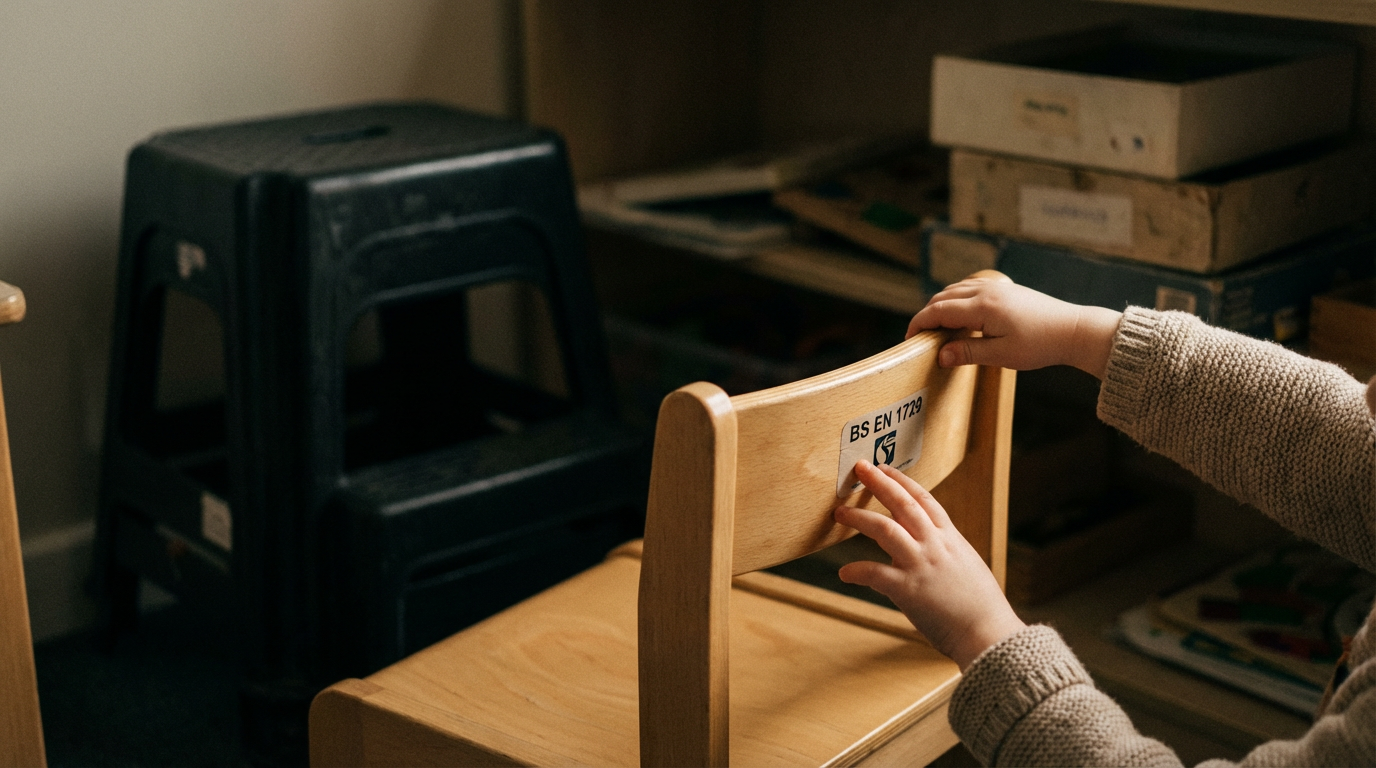
Key safety features mandated by these nursery furniture safety standards uk include:
- Stability: Furniture must be designed to prevent tipping, even when a child climbs on it.
- Structural Integrity: It must withstand significant forces without breaking.
- Safe Design: There should be no sharp edges, entrapment hazards for fingers, or accessible small parts.
- Non-Toxic Materials: All finishes and materials must be safe for children.
During an inspection, Ofsted, the Office for Standards in Education, Children’s Services and Skills, evaluates the safety of the learning environment. Using non-compliant furniture poses a direct risk to children and can be a major red flag for inspectors. At Cost Cutters UK, we take this seriously; you can review our full list of certifications and accreditations to see our commitment to these standards.
Myth 3: One Material Fits All Applications
This is simply not true; an effective material depends entirely on the specific use case. The belief that traditional wood is typically superior, or that modern plastic is typically flimsy, is outdated. Choosing ‘fit-for-purpose’ durable school furniture means matching the material’s properties to its function.
For instance, Solid Grade Laminate (SGL) is a high-density, completely waterproof material. This makes it the effective choice for messy play areas, sand-and-water tables, or science labs where exposure to liquids is constant. A study in the Journal of Applied Microbiology found that non-porous surfaces like SGL show significantly lower bacterial loads after cleaning compared to porous materials like untreated wood.
Conversely, High-Pressure Laminate (HPL) bonded to a dense wood core is well-suited for general-purpose tabletops. It offers excellent scratch resistance and is easy to wipe clean, providing a hard-wearing surface for writing and creative activities. Modern polymers (plastics) are also a fantastic choice for chairs, as they can be ergonomically moulded, are lightweight for easy rearrangement, and come in a wide array of colours to help define learning zones. The smart choice isn’t one single material, but a blend of materials chosen for their specific strengths.
Myth 4: Furniture’s Role in Learning is Overstated
This is a significant misconception. In reality, furniture is an integral part of the learning environment, often referred to as the ‘third teacher’ after the educator and the child’s peers. The choices you make for early years classroom furniture directly support the curriculum of the Early Years Foundation Stage (EYFS), the statutory framework for children aged 0-5 in England. The EYFS framework explicitly calls for “enabling environments” that are rich in learning opportunities.
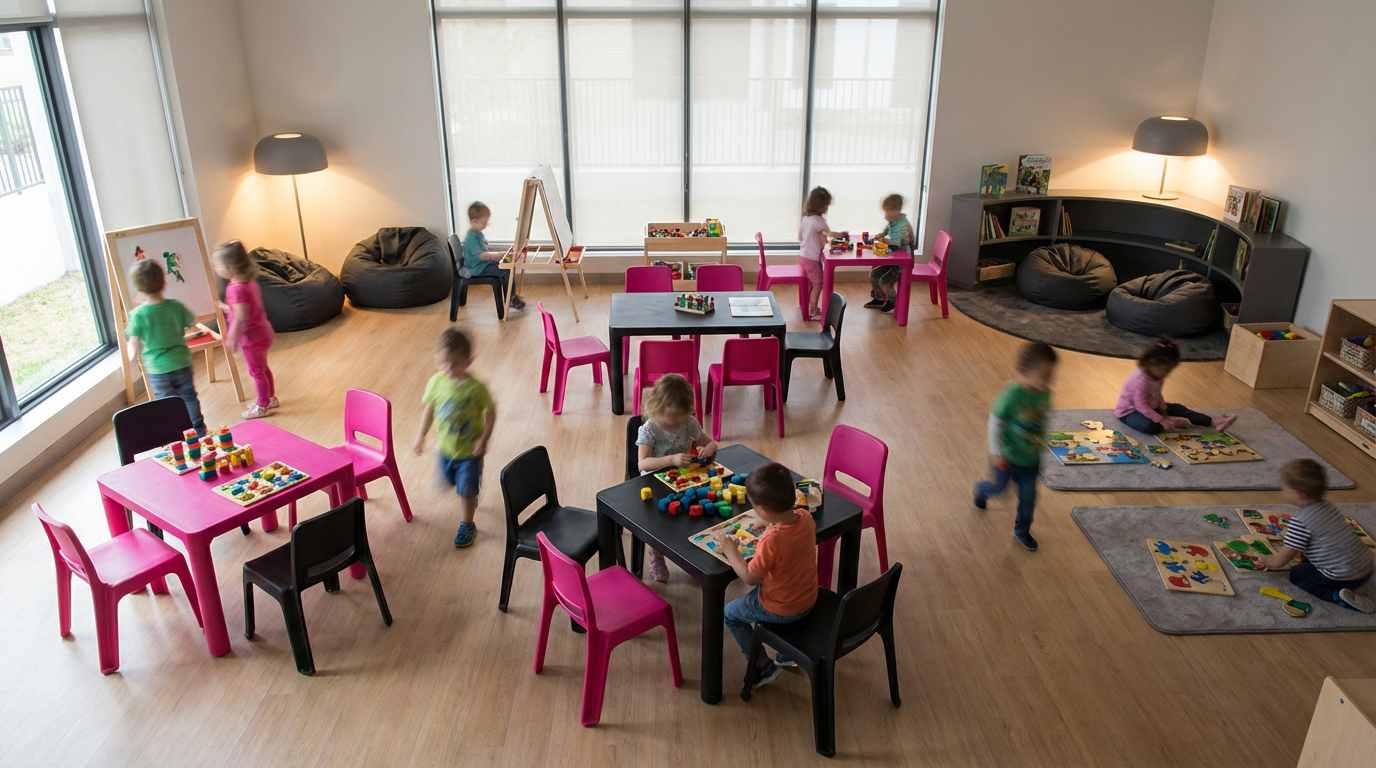
Flexible layouts with lightweight, movable, and multi-purpose furniture empower children. They encourage child-led learning, facilitate collaboration, and allow for a seamless transition between different types of play and focused work. The right furniture helps you meet eyfs furniture requirements by design. Low-level, open-fronted storage units encourage children to select and tidy away their own resources, fostering independence. Specially designed items, such as those found in specialised early years furniture ranges like Twoey, provide dedicated zones for art, reading, construction, and sensory exploration. It isn’t passive background dressing; it’s an active tool for pedagogy.
Myth 5: Managing Procurement In-House typically Saves Money
In our experience, this is rarely the case once you account for the hidden costs of staff time and project management. When a school business manager or headteacher decides to manage a refurbishment project themselves, they take on a huge administrative load. This includes hours spent researching products, vetting dozens of potential suppliers, checking compliance documents, coordinating separate deliveries, and overseeing multiple installation teams. A study from the Project Management Institute (PMI) notes that vendor management can consume up to 20% of a project manager’s time. For school staff, that’s time taken away from core educational and operational duties.
Partnering with established classroom furniture suppliers UK like Cost Cutters UK transforms this process. Our “Design To Install We Do It All!” service consolidates the entire project. We offer:
- Free Expert Consultation and Space Planning: We help you optimise your layout for learning.
- Compliance may help: We ensure every item meets UK standards.
- Bulk Buy Discounts: We use our scale to provide better pricing.
- Consolidated Delivery & Installation: One delivery, one installation team, one point of contact.
By using a single, trusted partner, you de-risk the project, ensure a professional result, and free up invaluable staff time. It’s a strategic decision that delivers better value and less stress.
Frequently Asked Questions About Early Years Furniture
What are early years furniture myths vs. Facts?
The core of early years furniture myths vs. Facts is distinguishing common, cost-driven assumptions from evidence-based truths about safety, durability, and educational value. A common myth is that the cheapest furniture offers an effective value. That compliant, durable furniture provides a lower total cost of ownership and a safer environment. Understanding this distinction is vital for making sound investments.
What is the most important safety standard for nursery furniture in the UK?
The most critical standard is BS EN 1729, which covers both ergonomics and strength for educational furniture. Part 1 ensures a correct ergonomic fit for children’s healthy development, while Part 2 mandates strength and stability to prevent breakages or tipping. Compliance with these nursery furniture safety standards uk is a key indicator that an item is safe for school use.
How does furniture meet EYFS furniture requirements?
Furniture supports EYFS furniture requirements by being flexible, accessible, and designed for specific learning areas. For example, low-level, open storage units promote independence and child-led choices. Tuff trays and sand tables facilitate sensory exploration, while child-sized tables and chairs encourage social interaction and focused tasks. These features are all core tenets of the EYFS framework, creating an enabling environment.
Is plastic or wooden furniture better for a classroom?
Neither material is inherently ‘better’; an effective choice depends entirely on the specific application. High-grade plastics offer excellent ergonomics, vibrant colours, and are lightweight and easy to clean, making them effective for chairs. Wood offers a classic aesthetic and great durability for frames, while laminated wood-core tables provide a sturdy, scratch-resistant work surface. A strategic combination is often the most effective solution.
What makes school furniture ‘durable’?
Durability in school furniture comes from contract-grade materials, robust construction, and protective finishes. Key features include high-pressure laminate surfaces, fully welded metal frames instead of screws, and impact-resistant edging. The clearest indicator of genuinely durable school furniture is a long manufacturer’s warranty, which typically ranges from 5 to 10 years, guaranteeing its longevity in a demanding environment.
Why can’t I just use furniture from a high-street shop?
High-street furniture is designed for light, domestic use and does not meet the necessary safety or durability standards. It isn’t tested to BS EN 1729, meaning it can wear out quickly and pose a safety risk to children in a busy classroom. Using non-compliant furniture could even invalidate your insurance. Contract-grade furniture is essential for compliance, safety, and long-term value.
What should I look for in a classroom furniture supplier in the UK?
Look for a supplier with extensive experience in the UK education sector and positive customer reviews. They should offer a wide range of compliant products and provide value-add services like free space planning, installation, and flexible payment options. A good supplier, like one that is Rated Excellent On Trustpilot, acts as a partner to help you achieve your project goals efficiently.
Do furniture colours really matter in an early years setting?
Yes, colour psychology can play a significant role in defining zones and influencing mood in a learning environment. Calming colours like blues and greens are often effective in quiet reading zones, while brighter colours like yellow can stimulate creativity in art areas. A thoughtful colour strategy can be a powerful tool, but it’s important to create balance and avoid overstimulation.
What is ‘flexible seating’ and why is it important?
Flexible seating refers to providing a variety of seating options beyond traditional chairs, such as wobble stools or soft benches. It is important because it gives children choice and control over their learning environment, which can increase engagement. It also accommodates different learning styles and sensory needs, and encourages movement, which research suggests can improve focus for young learners.
How often should I replace my early years furniture?
This depends entirely on the quality of the furniture you purchase and is a key fact to consider. Cheap, domestic-grade items might need replacing every one to two years, creating constant expense and disruption. In contrast, high-quality, contract-grade furniture with a 5 or 10-year warranty should last for at least a decade with proper care, offering a much lower total cost.
Important Considerations
This guide provides general principles for procuring early years furniture in the UK. However, the specific needs of your setting, including room dimensions, the age range of children, and any specialised requirements for pupils with special educational needs (SEN), will demand a more tailored approach. The statistics cited are based on industry averages from 2025 and may vary depending on the supplier and products chosen.
Whilst this article focuses on catalogue furniture from specialised suppliers, alternative approaches exist. These include commissioning bespoke joinery for unique or awkward spaces, or sourcing second-hand items. Bespoke solutions offer a well-suited fit but typically come at a higher initial cost and with a longer lead time. Second-hand furniture can be cheaper, but it may not come with the necessary compliance may help or warranties, posing a potential risk.
For any significant refurbishment or new build project, we strongly recommend seeking professional guidance. A specialist can conduct a site survey, produce 2D and 3D space plans to optimise your layout, and ensure your final selection is fully compliant, fit-for-purpose, and provides an effective long-term value. This expert partnership de-risks the project and ensures the environment actively supports your educational goals. We offer Credit Accounts Or Pay Flexibly to make this process easier.
Making Evidence-Based Decisions for Your Learning Environment
Navigating the world of early years furniture myths vs. Facts empowers you to move beyond simple price tags and make strategic investments in your learning environment. By prioritising total cost of ownership, demanding proof of compliance with UK safety standards, and understanding how furniture actively supports the EYFS curriculum, you create a safe, stimulating, and durable space that stands the test of time and delivers exceptional value.
As one of the UK’s leading classroom furniture suppliers uk for over 35 years, Cost Cutters UK helps schools and nurseries make these evidence-based decisions every day. We’ve built our reputation on providing not just products, but complete solutions. If you are planning a project, explore our complete catalogue of school and educational supplies or let our team provide expert advice tailored to your needs. Book a Free Space Planning Consultation to get started today.
References
- UK Education Procurement Annual Report (2025). Industry Report. Schools that focus on Total Cost of Ownership save an average of 15% on furniture over a 10-year period compared to those focused on initial price.
- Furniture Industry Research Association (FIRA). Technical Paper. Contract-grade furniture is tested to withstand forces and usage cycles 5-10 times greater than domestic furniture.
- British Standards Institution (BSI). Standard Publication BS EN 1729. Details the specific ergonomic, strength, and stability tests required for furniture in educational settings.
- Ofsted. The inspection handbook for schools. Government Guidance. Inspectors must evaluate the extent to which leaders and managers ensure the environment is safe and fit for purpose.
- Journal of Applied Microbiology. Peer-Reviewed Study. Non-porous surfaces like Solid Grade Laminate show significantly lower bacterial loads after cleaning compared to natural wood.
- O’Donnell Wicklund Pigozzi and Peterson Architects. The Third Teacher. Book. Explores 79 ways in which the design of the physical environment can shape and improve learning outcomes.
- Department for Education. EYFS Statutory Framework. Government Framework. Outlines the requirement for enabling environments with rich learning opportunities through play and exploration.
- Project Management Institute (PMI). Industry Study. Vendor management can account for up to 20% of a project manager’s time on multi-vendor projects.
- LinkedIn (2023). User article discussing the format of ‘Myth vs. Fact’ content. Highlights the importance of clear, evidence-based distinctions.
- Quora (2022). Community discussion. A fact is a verifiable piece of information, whereas a myth is a widely held but false belief.
- Cleveland Police UK (2024). Public awareness campaign. Demonstrates the use of a myth vs. Fact format to correct public misconceptions with verifiable information.
Conclusion
Making Evidence-Based Decisions for Your Learning Environment
In summary, navigating the world of early years furniture myths vs. facts empowers you to move beyond simple price tags and make strategic investments. By prioritising total cost of ownership, demanding proof of compliance with UK safety standards, and understanding how furniture actively supports the EYFS curriculum, you can create a safe, stimulating, and durable learning environment that stands the test of time.
As one of the UK’s leading classroom furniture suppliers uk for over 35 years, Costcutters UK helps schools and nurseries make these evidence-based decisions every day. If you are planning a project, our team can provide expert advice and a tailored plan to meet your specific needs. [Book a Free Space Planning Consultation](https://