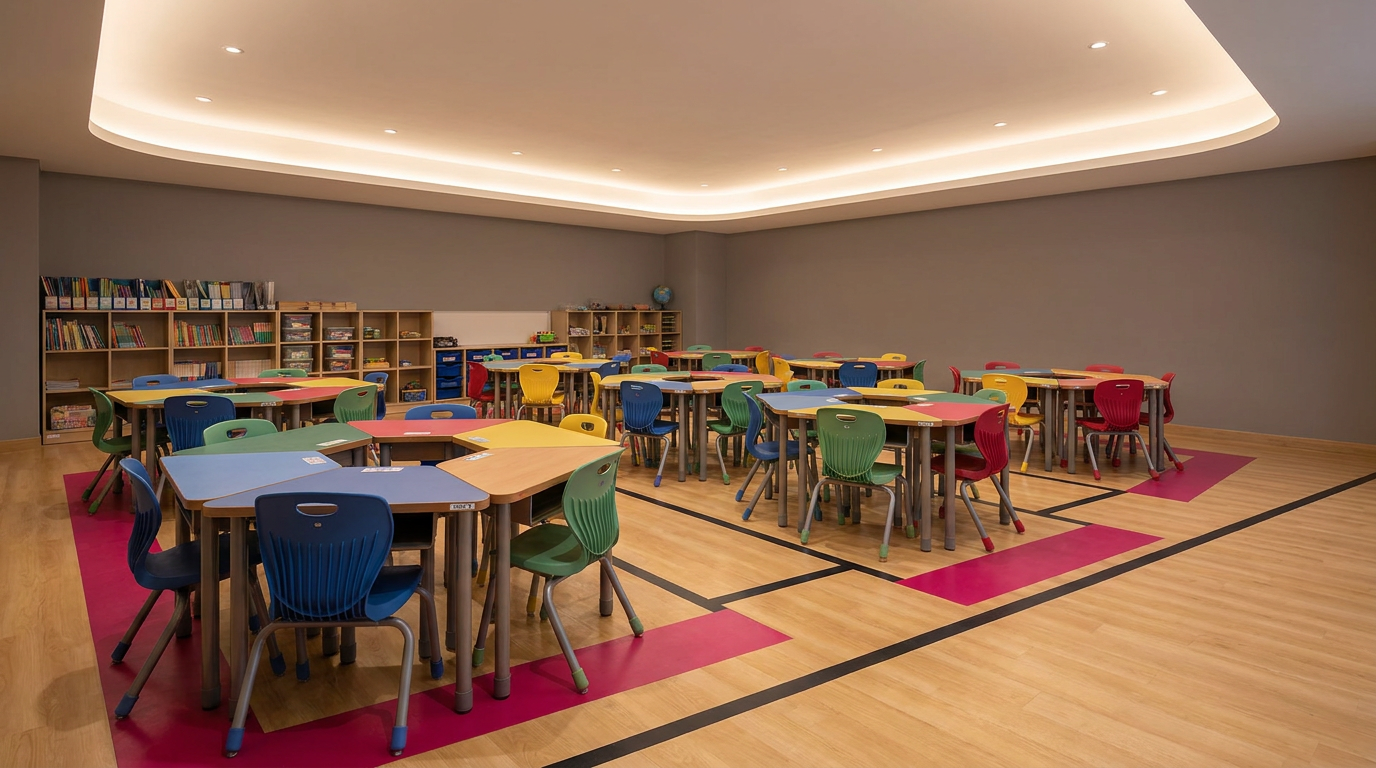
The Complete Guide to Primary School Tables and Chairs for UK Schools
🎯 Key Takeaway
Selecting the correct primary school tables and chairs requires adherence to the UK’s BS EN 1729 standard for sizing, choosing durable materials to maximise long-term value, and following a strategic procurement process.
• Ensure all furniture is BS EN 1729 compliant for pupil ergonomics and safety, a key UK requirement.
• Match table and chair ‘Size Marks’ to the specific age group and Key Stage (KS1, KS2) to support healthy posture.
• Analyse material choices like polypropylene and laminate MDF against your budget, focusing on total cost of ownership over initial price.
This guide provides School Business Managers with a comprehensive framework for making compliant, cost-effective, and durable furniture choices.
For any School Business Manager, procuring classroom furniture is a significant decision that extends far beyond aesthetics. For primary school tables and chairs, the choices you make directly impact pupil wellbeing, concentration, and the school’s long-term budget. As of September 2026, equipping a learning environment that is safe, ergonomic, and durable, all whilst navigating tight financial constraints, remains a primary challenge. This isn’t just about buying furniture; it’s an investment in the physical foundation of education.
The UK has specific standards that must be met, making this a matter of compliance, not just preference. This guide is designed to provide clarity and confidence. We’ll decode the essential BS EN 1729 standard, provide a clear sizing guide for Key Stage 1 (KS1) and Key Stage 2 (KS2), analyse material options for durability versus budget, and offer a practical procurement checklist to ensure you get an effective value.
👤 Written by: Costcutters UK Content Team
Reviewed by: Costcutters UK Editorial Team, Education Furniture Specialists
Last updated: 11 September 2026
ℹ️ Transparency Disclosure: This article explores the procurement of primary school tables and chairs based on UK government standards, industry best practices, and our 35+ years of experience. All information is verified by our editorial team. Some links may connect to our services, which we believe offer excellent value and support to UK schools.
Decoding UK Standards: Your Guide to BS EN 1729 Compliance
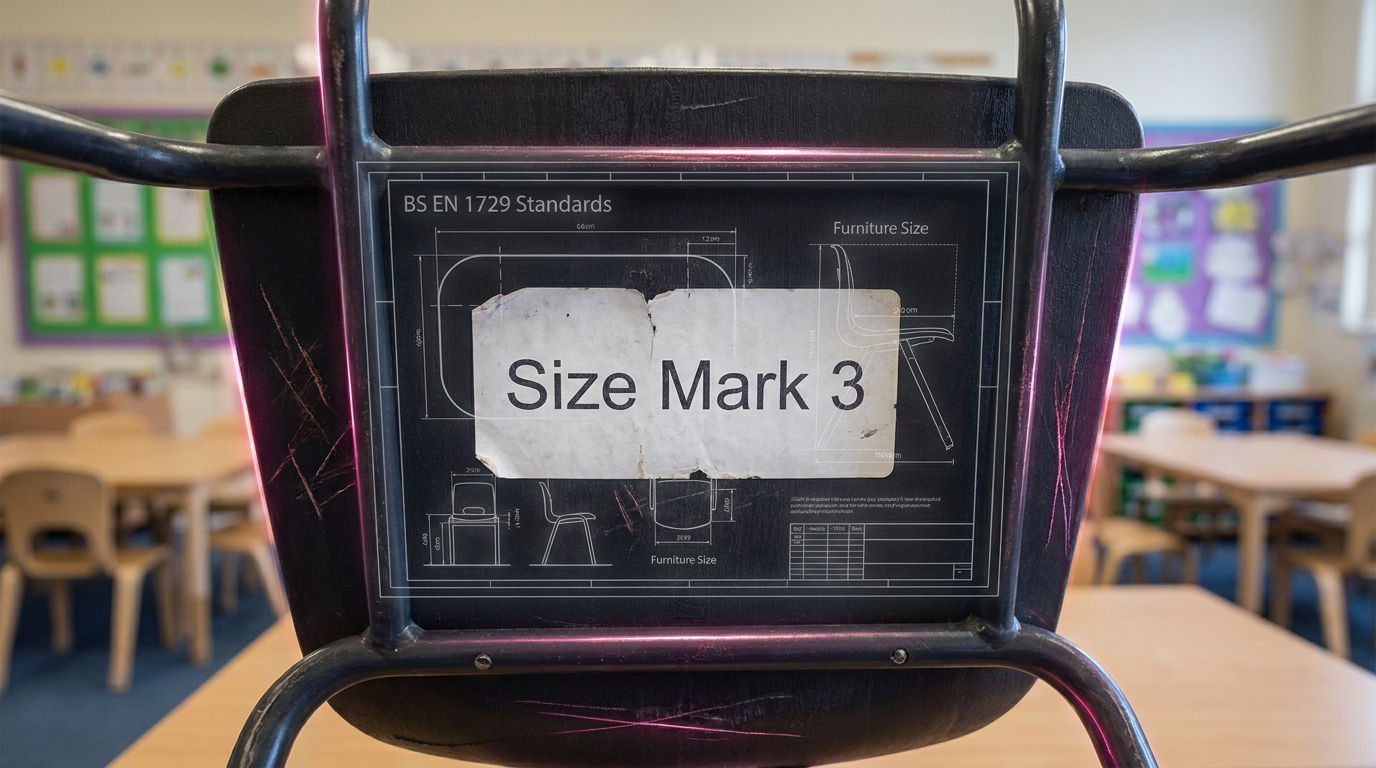
Understanding BS EN 1729 is the non-negotiable first step in procuring primary school classroom furniture. This standard, BS EN 1729 ‘Chairs and tables for educational institutions’, is a set of dimensional and structural requirements designed to ensure furniture supports good posture and can withstand the rigours of a school environment. It’s not a recommendation; it’s a fundamental health and safety benchmark. Compliance is often checked during inspections, and failing to meet it can have serious consequences.
The standard is split into two key parts:
- Part 1: Functional Dimensions: This part dictates the correct height, depth, and spacing for tables and chairs based on the size of the children using them. This is crucial for preventing musculoskeletal disorders (MSDs), which research from the European Agency for Safety and Health at Work (EU-OSHA) identifies as a major risk associated with poor workstation ergonomics, even from a young age.
- Part 2: Safety Requirements and Test Methods: This section ensures the furniture is strong, stable, and durable. It involves rigorous testing for factors like seat and back durability, stability to prevent tipping, and overall structural integrity.
Adhering to these standards is a core tenet of meeting your obligations under the Health and Safety Executive (HSE) guidelines for workstations and the Department for Education’s (DfE) requirement for safe equipment. Working with a supplier who is a member of the British Educational Suppliers Association (BESA) provides an extra layer of assurance, as members are bound by a code of practice to supply products that are fit for purpose and compliant with all relevant UK standards. You can learn more by reading about UK school health and safety standards.
The Ultimate Sizing Chart: Matching Furniture to Key Stages (KS1 & KS2)
To comply with BS EN 1729, you must match the furniture’s ‘Size Mark’ to the age and stature of your pupils. The Size Mark is a simple numbering system that corresponds to specific height ranges, ensuring a child’s feet can rest flat on the floor with their knees at a 90-degree angle, promoting healthy posture. Using the wrong size can lead to discomfort, fidgeting, and poor concentration.
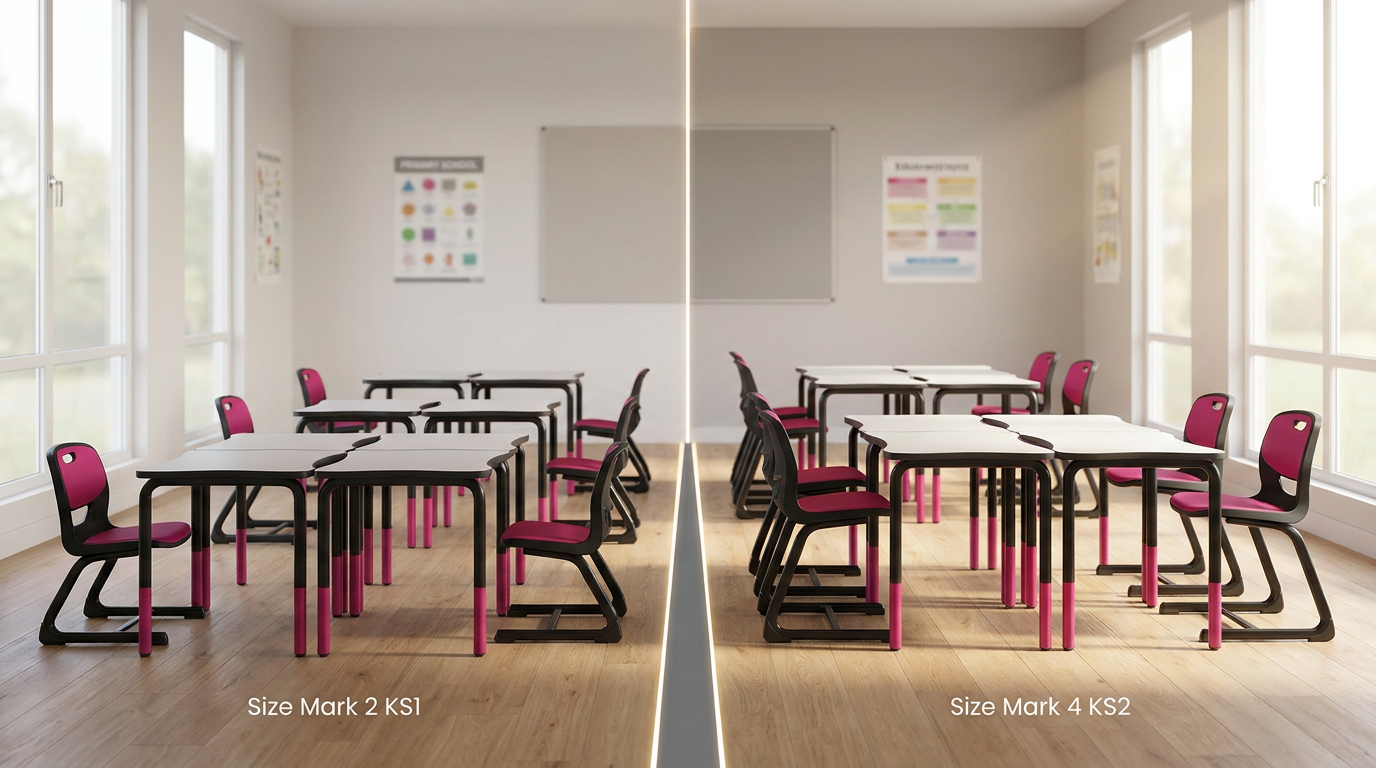
For primary schools, you’ll mainly be concerned with Size Marks 1 through 4, which cover the Early Years Foundation Stage (EYFS), KS1 (ages 5-7), and KS2 (ages 7-11). It’s a common mistake to order a single size for an entire classroom. In practice, children’s heights vary significantly within the same year group, so we recommend a mix of at least two appropriate sizes per class to accommodate everyone comfortably. This is a key part of any effective school furniture sizing guide.
Here is a clear breakdown of the BS EN 1729 Size Marks for primary education:
| Size Mark (BS EN 1729) | Recommended Pupil Stature (mm) | Recommended Age Group | Corresponding Key Stage |
|---|---|---|---|
| Size Mark 1 | 930 – 1160 | 3 – 4 years | EYFS / KS1 |
| Size Mark 2 | 1080 – 1210 | 4 – 6 years | KS1 |
| Size Mark 3 | 1190 – 1420 | 6 – 8 years | KS1 / KS2 |
| Size Mark 4 | 1330 – 1590 | 8 – 11 years | KS2 |
Data derived from BS EN 1729 standards.
Choosing the correct bs en 1729 compliant furniture based on this chart is the most effective way to ensure an ergonomic learning environment for every child.
Material Matters: Choosing Furniture for Durability vs. Budget
While compliance and sizing are paramount, material choice is where budget and long-term value intersect. The temptation to opt for cheap classroom tables can be strong, but this often leads to higher costs over time due to repairs and replacements. In our 35+ years of experience, we’ve seen that focusing on Total Cost of Ownership (TCO) is the most sustainable strategy. Investing in more durable school chairs and tables from the outset saves significant time, money, and hassle. A smart way to manage this is to implement a regular maintenance schedule to extend the life of your furniture.
Table Tops: Laminate MDF vs. Solid Wood
The most common table top material is a high-pressure laminate bonded to a Medium Density Fibreboard (MDF) core.
- Pros: It’s highly cost-effective, available in a huge range of colours and finishes, and very easy to wipe clean. The sealed edges, often made of tough PVC or PU, offer good protection against knocks and bumps.
- Cons: The main weakness is water ingress. If the laminate surface is deeply scratched or the edging is damaged, moisture can cause the MDF core to swell and degrade.
Solid wood or solid wood-lookalike tops offer a premium alternative.
- Pros: Exceptionally durable and can be sanded down and re-finished to repair damage, giving them a very long lifespan.
- Cons: This durability comes at a significantly higher initial cost, and they require more maintenance than laminate tops.
For most primary schools, a high-quality laminate MDF top with a reliable, tamper-proof edge offers an effective balance of durability and budget.
Chair Construction: Polypropylene vs. Wood
Polypropylene has become the dominant material for school chairs, and for good reason.
- Pros: These chairs are incredibly tough, stain-resistant, and lightweight. They come in vibrant colours that can brighten up a classroom and are ergonomically shaped for comfort. Plus, they are almost typically stackable, which is a huge benefit for storage and classroom flexibility.
- Cons: While modern polypropylene is very strong, older or lower-quality versions could become brittle over many years of use.
Traditional wooden chairs are still available but are less common.
- Pros: They offer a classic aesthetic and are very strong.
- Cons: They are heavier, more expensive, and can chip or splinter. They also lack the ergonomic shaping and colour options of modern polypropylene chairs.
Our recommendation for most primary school settings is the one-piece polypropylene chair. It delivers outstanding durability, safety, and value for money.
Smart Procurement: A Checklist for Ordering School Furniture
A strategic approach to procurement is essential for saving time & stress. Ordering classroom tables and chairs UK-wide follows a predictable cycle, and aligning with it ensures you get what you need, when you need it, and at an effective price.
Here’s our step-by-step checklist for School Business Managers:
- Audit and Assess (Autumn Term): Begin by auditing your current furniture. Identify what needs replacing due to damage or non-compliance. Measure a sample of pupils in each year group to verify which Size Marks you need for the next academic year.
- Budget Approval (Spring Term): Present your requirements and estimated costs to secure budget approval. This is the well-suited time to engage with suppliers. At Costcutters UK, we offer a free space plan and quote, which provides a clear, costed proposal to support your budget application and helps you avoid common space planning errors.
- Request Quotes and Compare (Spring Term): Get quotes from at least two to three reputable suppliers. Don’t just compare the headline price. Analyse the specifications: Are they fully BS EN 1729 compliant? What are the warranty periods? What are the delivery charges? This is where our Bulk Buy Discounts can make a significant difference to your total project cost.
- Place Your Order (By May/June): This is the golden rule. To guarantee delivery for the start of the new school year in September, orders must be placed before the summer holidays. The manufacturing and logistics pipeline for school furniture is immense during summer, and late orders risk not arriving on time.
- Confirm Logistics (July): Check delivery arrangements. Will the items be delivered flat-packed or assembled? Will drivers bring items into the building or just to the kerbside? Planning this avoids chaos on delivery day. Our “Design To Install We Do It All!” service handles this, ensuring a smooth process from order to classroom-ready.
Following a structured procurement for UK schools process is the key to a successful outcome.
### Case Study: A Hypothetical Primary School Refresh
- Challenge: A multi-academy trust took over a primary school with outdated, mismatched furniture across its 7 classrooms. This led to poor pupil posture, was non-compliant with BS EN 1729, and the school had a limited annual budget for capital expenditure.
- Solution: We conducted a free, no-obligation site survey and space plan. We identified that KS1 needed Size Mark 2 and 3 furniture, while KS2 required Size Marks 3 and 4. We proposed a 3-year phased replacement plan, starting with the classrooms in the worst condition. By leveraging our Bulk Buy Discounts and flexible payment options, the school could order durable polypropylene chairs and laminate tables for two classrooms each year.
- Results: In the first year, two classrooms were fully refitted, achieving 100% BS EN 1729 compliance in those rooms. The school stayed within its £15,000 annual budget. By Year 3, all classrooms were compliant, with an estimated 90% reduction in furniture maintenance requests.
- Key Insight: A phased procurement plan, guided by a specialist supplier, makes a complete furniture overhaul manageable and affordable without compromising on quality or compliance.
Important Considerations
This guide provides a comprehensive framework based on standard UK school requirements. However, specific needs, such as furniture for children with Special Educational Needs and Disability (SEND), may require specialised ergonomic assessments and products. You should typically consider the unique demographics of your pupil population when making procurement decisions.
While traditional tables and chairs form the core of classroom furniture, consider supplementing them with flexible seating options. Items like beanbags, floor cushions, or standing desks for designated zones can support different learning styles and activities. This aligns with guidance from the World Health Organization (WHO) in their 2020 report, which recommends limiting sedentary time to encourage movement and improve health outcomes.
For large-scale projects or complex classroom layouts, we strongly recommend seeking professional guidance. An educational furniture specialist can provide a free space plan, ensure compliance across all areas, and create a bespoke quote that maximises your budget and meets delivery deadlines. This is a core part of our service, designed for Saving Time & Stress for busy school managers.
Frequently Asked Questions About Primary School Furniture
What are primary school tables and chairs?
Primary school tables and chairs are specialised furniture designed to meet the ergonomic and safety needs of children aged 4-11. They must comply with the UK’s BS EN 1729 standard for size, strength, and stability. Choosing the correct items is crucial for supporting healthy posture during key developmental years and creating a safe, effective learning environment.
What size table for a 7 year old?
A 7-year-old pupil typically requires a ‘Size Mark 3’ table, which has a standard height of 590mm. This size is designed for children in early Key Stage 2. However, as heights can vary significantly within a single class, it is typically best practice to measure a sample of pupils before ordering to ensure a comfortable fit for the majority.
What size chair for a 7 year old?
A 7-year-old generally needs a ‘Size Mark 3’ chair, featuring a seat height of 350mm. This chair size is specifically designed to be paired with a Size Mark 3 table to ensure correct ergonomic posture. It’s critical to match chair and table sizes; using a mismatched pair undermines the benefits of compliant furniture and can cause discomfort.
Where can I find cheap classroom tables?
You can find cost-effective options by seeking suppliers who offer bulk purchase discounts and have a wide range of products. However, we advise caution. The cheapest initial price may not equal an effective long-term value. Focus on ‘Total Cost of Ownership’ by choosing durable materials and strong construction to avoid frequent replacement costs, which ultimately saves more money.
What are those school tables called?
General terms include ‘classroom tables’ or ‘school tables’, but they are often named by their shape or frame style. For example, you’ll find ‘trapezoidal tables’, ‘circular tables’, and ‘rectangular tables’, which allow for flexible layouts. You might also see terms like ‘crush bent tables’ or ‘fully welded tables’, which describe the reliable frame construction.
Where can I find folding tables and chairs for children in the UK?
Many educational furniture suppliers in the UK, including Costcutters UK, offer folding tables and chairs suitable for children. These are an excellent solution for multi-purpose spaces like school halls or dining areas. It’s important to check that they still meet the strength and stability requirements of BS EN 1729, even if they are intended for temporary use.
What are 10 things a classroom must have?
A well-equipped primary classroom typically includes several key items for effective learning. These essentials are age-appropriate tables and chairs, a teacher’s desk and chair, ample storage units (like tray units and bookcases), a whiteboard or interactive display, a reading corner, and clearly defined zones for different activities like creative play and quiet study.
How can I make a cosy classroom?
You can create a warmer, more inviting classroom by incorporating soft furnishings and natural-looking materials. A designated ‘reading corner’ with beanbags or floor cushions is a great start. Opting for furniture with wood-effect finishes over clinical grey can also help. Finally, ensure the layout is organised and uncluttered to create a calm and welcoming atmosphere for pupils.
What is the difference between KS1 and KS2 furniture?
The primary difference between KS1 and KS2 furniture is the size, as defined by BS EN 1729. KS1 furniture, for children aged 5-7, typically uses Size Marks 2 and 3. KS2 furniture, for ages 7-11, uses the larger Size Marks 3 and 4 to properly accommodate the physical growth of older children and ensure continued ergonomic support.
Are stacking chairs a good option for schools?
Yes, stacking chairs are an excellent and highly practical choice for schools. Their main benefit is efficient, space-saving storage, which is essential for multi-purpose rooms like assembly halls, gyms, and dining areas. When purchasing, typically check the product specifications for the ‘stackability’ number (e.g., “stacks up to 8 high”) to ensure they fit your available storage space.
Partnering for a Cost-Effective, Compliant Classroom
Choosing the right primary school tables and chairs is a critical investment in pupil welfare and school infrastructure. By prioritising BS EN 1729 compliance, matching sizing to Key Stages, evaluating materials for long-term durability, and following a strategic procurement timeline, you ensure a safe, comfortable, and effective learning environment. This methodical approach transforms a potentially complex task into a manageable process that delivers lasting value.
At Costcutters UK, we have over 35 years of experience partnering with schools to meet these challenges, a track record reflected in our status as Rated Excellent On Trustpilot. Our “Design To Install We Do It All!” service is built to support you at every stage. We offer Credit Accounts Or Pay Flexibly to help manage your budget. Contact our team today for a free space plan and a no-obligation quote to equip your classrooms for success.
References
- Health and Safety Executive (HSE) – UK Government Guidance. Provides the legal framework and practical advice for workstation safety and ergonomics in the UK, forming the basis for risk assessments in educational settings.
- European Agency for Safety and Health at Work (EU-OSHA) – EU Research Body. Highlights poor workstation design as a key risk factor for musculoskeletal disorders, reinforcing the need for correctly sized furniture from a young age.
- Department for Education (EYFS Framework) – UK Government Statutory Framework. Mandates that school premises, furniture, and equipment must be safe and suitable for their intended purpose, directly informing procurement standards.
- British Educational Suppliers Association (BESA) – Professional Organisation Code of Practice. Members must supply products that are fit for purpose in an educational environment and adhere to relevant safety standards, providing a quality mark for schools.
- World Health Organization (WHO) – Global Health Guidelines (2020). Recommends limiting sedentary time for all age groups, supporting the inclusion of flexible and varied classroom furniture to encourage movement.
- Statista – Market Research Data (2024). Reports that revenue in the UK Office Furniture market amounts to US$2.28bn in 2024, indicating the scale and economic importance of the commercial furniture sector.
Frequently Asked Questions About Primary School Furniture
What should I look for when buying primary school tables and chairs?
Primary school tables and chairs are furniture specifically designed for use in educational settings for children aged 4-11. This furniture must meet specific ergonomic and safety standards, like BS EN 1729 in the UK, to support healthy posture and withstand the demands of a classroom environment. When procuring primary school tables and chairs, the key is to match size, material, and compliance to the pupils’ needs and the school’s budget.
What size table for a 7 year old?
**A 7-year-old pupil, typically in Key Stage 2, requires a ‘Size Mark 3’ table with a height of
590mm. However, it is always best to measure a sample of pupils directly, as heights can vary significantly within the same age group.
What size chair for a 7 year old?
A 7-year-old pupil typically requires a ‘Size Mark 3’ chair, which has a seat height of 350mm. This size is designed to pair correctly with a Size Mark 3 table, ensuring the pupil’s feet are flat on the floor and their arms are at a comfortable height for writing. Always match chair and table size marks to maintain correct ergonomic posture.
Where can I find cheap classroom tables?
You can find cheap classroom tables from specialist educational suppliers offering bulk purchase discounts or economy ranges. However, it is crucial to focus on the ‘Total Cost of Ownership’ rather than just the initial price. Investing in durable materials and robust construction, even if slightly more expensive upfront, often provides better long-term value by minimising replacement and repair costs over the furniture’s lifespan.
What are those school tables called?
School tables are often referred to by their shape or construction, such as ‘trapezoidal tables’, ‘crush bent tables’, or ‘fully welded tables’. The name typically describes a key feature; for example, trapezoidal or circular tables are named for their shape and are used to create flexible group work layouts, while crush bent refers to a specific method of bending the steel frame for strength.
Where can I find folding tables and chairs for children in the UK?
Folding tables and chairs for children are available from most major UK educational furniture suppliers. They are an excellent solution for multi-purpose spaces like school halls or dining areas. When purchasing, ensure that even folding furniture meets the strength and stability requirements of BS EN 1729 to guarantee safety during use, as they are subject to the same rigorous demands as static furniture.
What are 10 things a classroom must have?
A well-equipped classroom must have age-appropriate tables and chairs, a teacher’s desk, and ample storage like tray units and bookcases. Other essentials include a primary teaching display like a whiteboard or interactive screen, a designated reading corner, accessible resource stations, pupil coat and bag storage, effective lighting, and clear, organised learning zones for different activities.
How can I make a cosy classroom?
You can make a classroom cosy by creating a designated reading or quiet corner with soft furnishings like beanbags, floor cushions, or a small rug. Using furniture with natural wood-effect finishes and a calm colour palette can also create a warmer, less clinical atmosphere. Ensuring the layout is uncluttered and allows for easy movement contributes significantly to a comfortable and welcoming environment.
What is the difference between KS1 and KS2 furniture?
The primary difference between KS1 and KS2 furniture is the size, which is mandated by BS EN 1729. KS1 furniture (for ages 5-7) typically uses Size Marks 1 and 2 to suit smaller children. KS2 furniture (for ages 7-11) uses the larger Size Marks 3 and 4 to correctly accommodate the stature of older pupils, ensuring continued ergonomic support as they grow.
Are stacking chairs a good option for schools?
Yes, stacking chairs are an excellent and highly practical option for schools. Their main benefit is efficient, space-saving storage, which is essential for multi-purpose areas like assembly halls, gyms, and dining rooms. When buying, check the product specifications for how many chairs can be safely stacked to ensure the model meets your specific storage capacity needs.
Important Considerations & Alternatives
This guide provides a comprehensive framework based on standard UK school requirements. However, specific needs, such as furniture for children with special educational needs (SEN), may require specialised ergonomic assessments and products. Always consider the unique demographics of your pupil population.
While traditional tables and chairs form the core of classroom furniture, consider supplementing them with flexible seating options. Items like beanbags, floor cushions, or standing desks for designated zones can support different learning styles and activities, as recommended by the WHO to reduce sedentary time.
For large-scale projects or complex classroom layouts, we strongly recommend seeking professional guidance. An educational furniture specialist can provide a free space plan, ensure compliance across all areas, and create a bespoke quote that maximises your budget and meets delivery deadlines.
Partnering for a Cost-Effective, Compliant Classroom
In summary, selecting the right primary school tables and chairs is a critical investment in pupil welfare and school infrastructure. By prioritising BS EN 1729 compliance, matching sizing to Key Stages, evaluating materials for long-term durability, and following a strategic procurement timeline, you ensure a safe, comfortable, and effective learning environment.
At Costcutters UK, we have over 35 years of experience partnering with schools to meet these challenges. Our team of specialists can help you navigate the complexities of compliance and budgeting. Contact us today for a free space plan and a no-obligation quote to equip your classrooms for success.