The Ultimate Space Organisation Checklist: A UK Guide for Schools, Offices & Public Sector
🎯 Key Takeaway
A space organisation checklist is a structured tool used to plan, execute, and manage the refurbishment or reorganisation of a professional environment, ensuring all critical steps from budget allocation to regulatory compliance are met.
• Sector-Specific Needs: Effective checklists are tailored to the unique demands of schools (DfE guidelines), offices (HSE regulations), and the public sector (procurement rules).
• Budget and Function First: The process should typically begin with defining the budget and the primary function of the space to guide all subsequent decisions.
• Beyond Furniture: A comprehensive plan includes logistics such as delivery scheduling, installation, and the removal of old items, which are often overlooked.This guide provides detailed, downloadable checklists to help UK managers navigate this process with confidence.
Overseeing a major refurbishment can be a source of significant pressure for UK School Business Managers, Facilities Managers, and Procurement Officers. As of June 2026, the challenge remains the same: creating functional, inspiring, and compliant spaces within tight budgets. Juggling aesthetics, user wellbeing, regulatory demands, and costs often feels overwhelming. However, a structured approach using a detailed space organisation checklist transforms a stressful project into a clear, manageable process. At Costcutters UK, our 35+ years of experience have shown us that effective space organisation is the foundation of a productive environment. This guide provides sector-specific checklists to empower you to plan with authority and execute with confidence.
👤 Written by: Costcutters UK Content Team
Reviewed by: Costcutters UK Editorial Team, 35+ Years in Educational & Commercial Furnishings
Last updated: 7 June 2026
ℹ️ Transparency: This article explores best practices for space organisation based on over 35 years of industry experience and analysis of UK regulatory requirements. Some links may connect to our services or products. All information is verified by our editorial team to ensure accuracy and relevance as of June 2026. Costcutters UK is a leading supplier of educational and commercial furniture.
The School Space Organisation Checklist (For SBMs & Headteachers)
A successful school space organisation checklist is a strategic plan that aligns physical space with educational outcomes. It begins by defining the primary learning objective for the space – whether that’s fostering collaboration, enabling focused individual work, or providing specialised support for Special Educational Needs (SEN) pupils. An effective plan moves methodically from this core objective through to compliance, budgeting, and final implementation.
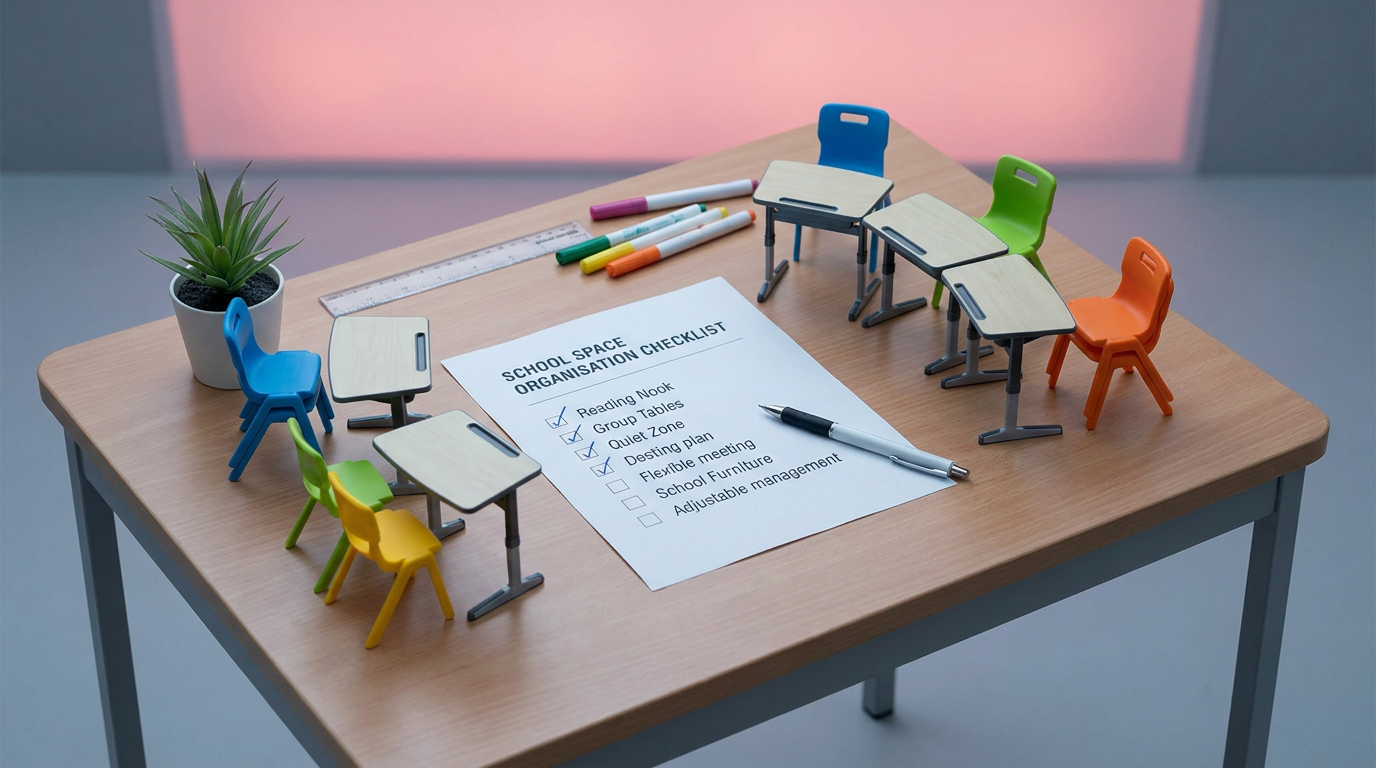
This process involves a detailed needs analysis, accounting for pupil numbers, age groups, and curriculum demands. It also requires careful adherence to UK-specific regulations. For instance, guidelines from the Department for Education (DfE), the UK government department responsible for education, provide crucial benchmarks for space allocation per pupil. Also, all furniture must meet safety and durability standards like BS EN 1729, the European standard for educational furniture dimensions, strength, and stability, to ensure it is fit for purpose. By following a phased checklist, you can ensure your learning environments are safe, compliant, and conducive to academic success.
Phase 1: Planning & Compliance
- Define Learning Objectives: Clarify the primary purpose of the space. Is it for active, collaborative learning, quiet reading, or practical science lessons?
- Measure & Analyse: Accurately measure the room dimensions. Document existing features like windows, doors, power sockets, and radiators.
- Assess User Needs: Determine the number of pupils and staff who will use the space daily. Consider specific age-group requirements and any accessibility needs.
- Check DfE Guidelines: Consult the relevant Department for Education (DfE) Building Bulletins to ensure your plans for classrooms, libraries, and canteens meet area and design recommendations.
- Set the Budget: Establish a clear budget that accounts for furniture, delivery, installation, and the removal of old items. We recommend building in a 10% contingency for unexpected costs.
Phase 2: Furniture Selection & Layout
- Specify Compliant Furniture: Select chairs, desks, and storage that conform to BS EN 1729. This ensures ergonomic suitability and durability for the demanding school environment.
- Create Layout Mock-ups: Develop several zoning plans and classroom layout ideas to find the most effective configuration for traffic flow and different learning activities.
- Prioritise Durability: For high-traffic areas like canteens and libraries, choose furniture with robust frames and easy-to-clean, impact-resistant surfaces. This is a key part of any good canteen design guide.
- Integrate Technology: Plan for charging trolleys, interactive whiteboards, and sufficient power access for student devices.
- Finalise Your Procurement List: Create a detailed list of all required items using a school furniture procurement checklist to ensure nothing is missed before placing an order from a supplier of a comprehensive range of school equipment.
The Office Space Organisation Checklist (For Facilities & Office Managers)
An effective office space organisation checklist directly addresses how your employees actually work. The process must begin with a thorough analysis of workstyles – whether your organisation favours agile working, a hybrid model, or traditional fixed desks. This initial analysis informs every subsequent decision, from zoning the floor plan to selecting furniture.

A critical component of this checklist is compliance with UK workplace law. The Health and Safety Executive (HSE), Britain’s national regulator for workplace health and safety, provides strict guidelines. All workstation setups must comply with Display Screen Equipment Regulations (DSE Regulations), which govern the use of computers and display screens at work, to protect employee wellbeing. Beyond desks, the checklist should cover acoustic planning to manage noise in open-plan environments and map out power and data infrastructure to support modern workflows. Implementing these practical workplace organisation tips ensures the resulting space is not just aesthetically pleasing but also productive, safe, and legally compliant.
Phase 1: Needs Analysis & Regulation
- Survey Employee Work Habits: Use surveys or workshops to understand how teams collaborate, where they do focused work, and what they need from the office environment. This is the foundation of any good office space planning guide.
- Conduct DSE Risk Assessments: Evaluate existing workstations or plan new ones to ensure they meet DSE Regulations. This includes adjustable chairs, appropriate screen height, and adequate desk space.
- Map Power & Data Points: Audit existing power and data outlets and plan for new ones to support laptops, monitors, and collaborative technology throughout the space.
- Set a Realistic Budget: Define your budget, allocating funds for ergonomic furniture, acoustic solutions, installation, and professional fees if required.
Phase 2: Zoning & Furniture Specification
- Zone for Different Activities: Divide the floor plan into zones for quiet, focused work; collaborative team areas; and social spaces. This helps manage noise and distractions.
- Select Ergonomic Furniture: Choose task chairs with full adjustability and desks (including sit-stand options) that support healthy posture and comply with HSE guidance.
- Plan the Breakout Area: Designate space for a breakout area to support employee wellbeing. Select comfortable, versatile modern breakout furniture that encourages informal meetings and relaxation. This is a key part of breakout area design.
- Optimise Storage: Replace personal under-desk pedestals with centralised lockers or storage walls to create a cleaner, more agile environment.
The Public Sector Procurement Checklist for Space Organisation
For procurement officers in councils, NHS trusts, and other government bodies, a checklist for space organisation is fundamentally about compliance, transparency, and achieving ‘Best Value’. The process is more rigid than in the private sector and must follow established rules for public sector furniture procurement.
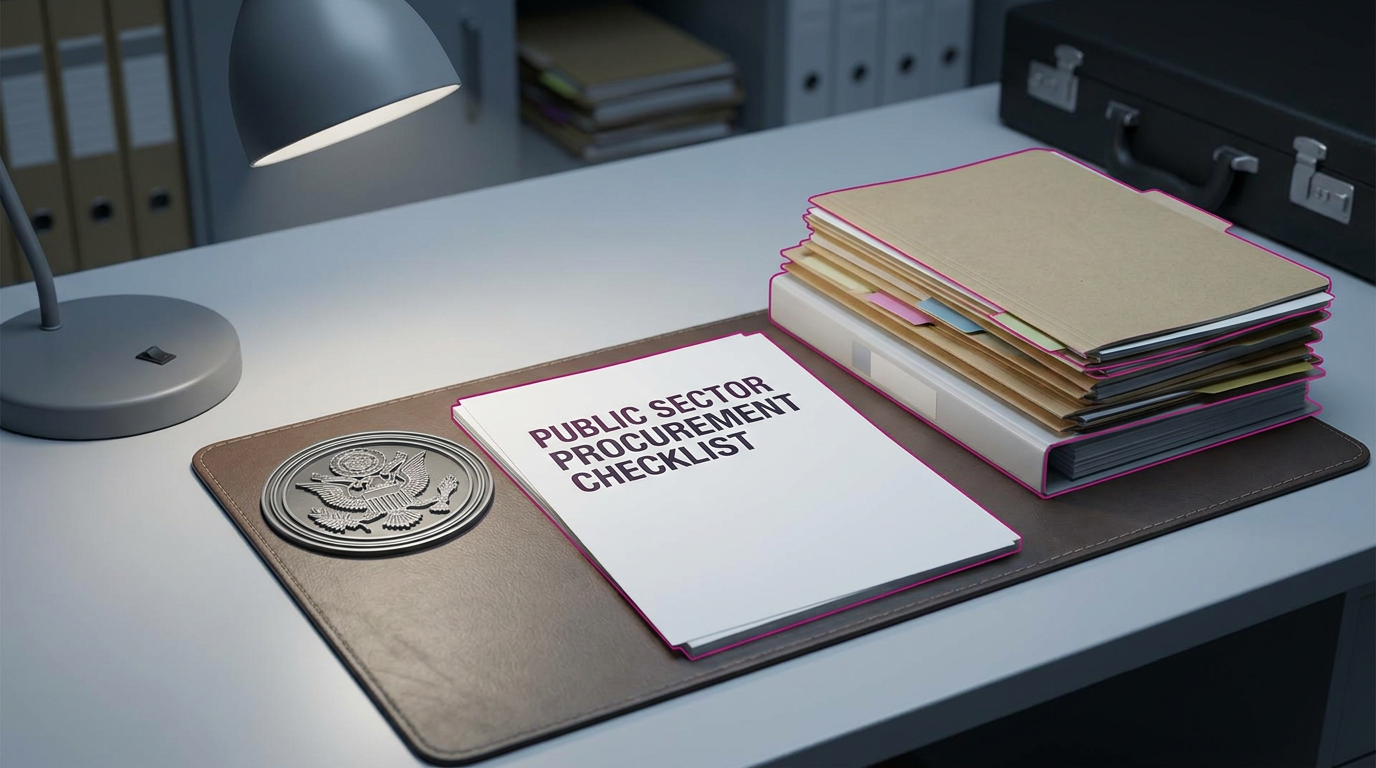
The first step is identifying the correct procurement framework. Using a pre-vetted framework from a public buying organisation like ESPO (a public sector purchasing organisation in the UK) ensures that suppliers are compliant and that the process is efficient. The checklist must then guide the creation of a clear, non-proprietary specification that allows for fair competition. Supplier vetting is equally critical; this involves verifying accreditations (like ISO 9001 for quality management) and evaluating bids based on whole-life cost, not just the initial price. This structured approach may help public funds are spent responsibly and that the final outcome meets rigorous standards.
Phase 1: Pre-Tender & Specification
- Define Project Scope & Objectives: Clearly document the project’s goals, user requirements, and desired outcomes.
- Identify Suitable Procurement Frameworks: Research and select a compliant framework (e.g., ESPO, Crown Commercial Service) that covers the required furniture and services.
- Write a Detailed Specification: Create a tender document that specifies performance, dimensions, and material standards (e.g., BS EN 1729) without naming specific brands. This is a vital part of a school furniture procurement checklist as well.
- Establish Evaluation Criteria: Define how you will score bids, assigning weightings to cost, quality, sustainability credentials (e.g., FSC certification), and service level agreements.
Phase 2: Supplier Vetting & Evaluation
- Verify Supplier Accreditations: Check that potential suppliers hold relevant certifications. You can often check our UK certifications and accreditations as an example of what to look for.
- Evaluate Bids Systematically: Score each submitted tender against your pre-defined cost vs. Quality matrix. Assess factors like product warranties, sustainability policies, and proposed project management.
- Check Lead Times & Service may help: Confirm that the supplier’s proposed delivery and installation schedule aligns with your project timeline.
- Request Whole-Life Costing Data: Ask for information on durability, repairability, and expected lifespan to make a true ‘Best Value’ assessment beyond the initial purchase price.
Beyond the Checklist: From Plan to Reality
A detailed checklist provides an excellent roadmap, but it’s only the first step. The implementation phase – turning your plan into a functional space – is where many projects encounter hidden complexities and stress. Even an effective-laid plans can be derailed by logistical hurdles.
The Implementation Challenge
The real work begins after the order is placed. This phase involves a significant amount of coordination that is often underestimated. You may find yourself juggling staggered deliveries from multiple suppliers, managing different teams of tradespeople for assembly, and dealing with the logistical headache of removing and ethically disposing of old, unwanted furniture. Assembling dozens of flat-pack items can consume days of staff time, causing disruption and delaying the project’s completion. We’ll be honest – this part can be tedious, but it’s where professional help makes a world of difference.
Our Full-Service Solution
At Cost Cutters UK, we believe our role extends far beyond simply supplying furniture. Our “Design To Install We Do It All!” service is built to eliminate the stress of implementation. We provide a single, expert point of contact to manage the entire process for you. This includes free space planning to optimise your layout, a dedicated project manager to coordinate all logistics, and our own professional installation team to build and place every item correctly. We even handle the removal and recycling of your old furniture, ensuring a seamless transition. This comprehensive approach is designed for Saving Time & Stress, allowing you to focus on your day job while we handle the rest.
To help you plan, consider these budget frameworks:
| Feature / Service Level | Good (Basic Budget) | Better (Mid-Range Budget) | Best (Premium Investment) |
|---|---|---|---|
| Furniture Quality | Standard materials, 1-3 year warranty | Enhanced durability, 5-8 year warranty | Premium finishes, ergonomic design, 10+ year warranty |
| Design Service | Basic 2D layout plan | Detailed 2D/3D space plans & consultation | Full consultation with 3D visuals & mood boards |
| Installation Service | Kerbside delivery only | Delivery to room of choice & assembly | Full installation, placement, and packaging removal |
| Project Management | Self-managed | Basic delivery coordination | Dedicated project manager as single point of contact |
### Case Study: A Typical Primary School Canteen Overhaul
– Challenge: A primary school in the North West was struggling with an outdated, noisy canteen. The furniture was worn, the layout caused long queues, and the space was difficult to clean, leading to increased caretaking costs and a poor dining experience for 250 pupils.
– Solution: Cost Cutters UK provided a full “Design To Install” service. Our team created a new layout using a detailed canteen design guide, incorporating wipe-clean tables with durable edges and colourful, stackable chairs to improve flexibility. We implemented a zonal layout to improve traffic flow and used acoustic panels to reduce noise levels.
– Results: The project was completed during a one-week half-term break. Queuing times were reduced by an estimated 40%, and cleaning time was cut by 30 minutes per day. The school reported a significant improvement in pupil behaviour during lunchtimes.
– Key Insight: A full-service solution that includes space planning and installation is crucial for minimising disruption in a busy school environment.
Frequently Asked Questions
What is a space organisation checklist?
A comprehensive space organisation checklist is a step-by-step document that guides you through the entire process of a workspace or educational environment refurbishment. It covers everything from initial planning and budgeting to final installation and compliance checks. Following this structured list ensures no critical detail is missed, leading to a more efficient and successful project outcome.
How do I start planning my office layout?
The first step is to analyse how your team works and what activities the space needs to support. Consider which tasks require quiet focus and which depend on collaboration. Surveying your staff is an excellent way to gather this essential data before you start drawing plans or looking at furniture. This analysis forms the foundation of a successful office space planning guide.
What are the key considerations for modern classroom layout ideas?
Flexibility is the most important factor for modern classroom layout ideas. Furniture should be lightweight and easy for pupils and teachers to move, supporting various activities from individual study to group work. You should also consider integrating technology charging points and using durable, safe materials that comply with BS EN 1729 standards for educational use.
How much does a typical office or school refurbishment cost?
Costs vary widely based on the project’s size, the quality of furniture selected, and the level of service required. A basic furniture refresh might cost £250-£400 per person. However, a comprehensive redesign with high-end ergonomic furniture and a full “Design To Install” service could exceed £700 per person. We typically recommend requesting a detailed quote for your specific needs.
What is the difference between a breakout area and a canteen?
A canteen’s primary function is dining, whereas a breakout area is a multi-purpose space designed for informal meetings, collaboration, and relaxation. While a canteen may be used for breaks, breakout area design intentionally incorporates comfortable seating, collaborative tools, and a more relaxed atmosphere to foster creativity, team cohesion, and employee wellbeing outside of the main dining function.
Do I need a professional for library space planning?
For minor updates you may not, but for a full redesign, expert advice for library space planning is invaluable. A specialist can help you optimise shelving capacity to maximise your collection, create distinct quiet study zones, integrate digital media hubs, and ensure traffic flows smoothly. This professional input ensures the final space is both highly functional and truly inviting for users.
What is involved in public sector furniture procurement?
Public sector furniture procurement involves a formal, regulated process to ensure fairness, transparency, and value for money. This typically means using an approved procurement framework (like ESPO), issuing a detailed public tender, and rigorously vetting suppliers for compliance, financial stability, and relevant accreditations. It is a much more structured process than standard commercial purchasing.
How can I make my workplace more organised on a tight budget?
Focus on decluttering and implementing smart storage solutions to maximise your existing space. Introduce a clear-desk policy, install vertical shelving to use wall height effectively, and choose multi-functional furniture like storage benches or mobile pedestals. Even applying simple workplace organisation tips can have a big impact without requiring a major investment in all-new furniture.
Are there specific design rules for a school canteen?
Yes, a good canteen design guide should prioritise durability, ease of cleaning, and efficient traffic flow. Furniture must be robust enough to withstand heavy daily use, and all surfaces should be non-porous and simple to wipe down. The layout must be planned to minimise queuing times and provide enough space between tables to meet accessibility and safety standards.
What is the benefit of a full-service furniture supplier?
The main benefit is saving time and reducing stress by having a single point of accountability for your project. A full-service partner like Cost Cutters UK manages everything from space planning and product selection to delivery coordination, professional installation, and removal of old items. This provides you with one expert contact and ensures the project is completed efficiently and to a high standard.
Important Considerations & Professional Guidance
The checklists in this guide offer a comprehensive framework for planning. However, they are not a substitute for a detailed, on-site assessment. Every space has unique architectural features, power/data limitations, and user needs that can only be fully understood through a physical survey. Our advice is to use these tools for initial planning before engaging in a site-specific consultation to refine the details.
The primary alternative to using a comprehensive checklist and full-service partner is a Do-It-Yourself (DIY) approach. This may involve sourcing furniture from multiple retail suppliers and managing installation internally or with local contractors. While this can seem cheaper upfront for very small projects, this path often carries hidden risks. These can include compliance gaps, logistical delays, and unexpected costs from managing multiple vendors and timelines.
We strongly recommend seeking professional guidance for any large-scale refurbishment, projects involving structural changes, or spaces with specialised requirements (e.g., SEN classrooms, science labs, or secure office environments). An experienced space planning consultant can ensure safety, compliance, and optimal functionality, preventing costly errors. Their expertise delivers a superior long-term result and provides peace of mind that the investment is sound.
Start Your Stress-Free Refurbishment Today
A well-executed space organisation checklist is your most valuable tool for transforming any school, office, or public sector environment efficiently and on budget. By breaking the project into manageable phases – planning, compliance, selection, and implementation – you can avoid common pitfalls and create a space that truly serves its users. This structured approach empowers you to make informed decisions that balance cost, function, and aesthetics.
At Costcutters UK, we’ve spent over 35 years turning these plans into reality for organisations across the country. Our experts handle the complexities so you don’t have to. You can find our services Rated Excellent On Trustpilot, and we offer flexible payment options like Credit Accounts Or Pay Flexibly along with Bulk Buy Discounts. If you’re ready to move from checklist to completion, Book your free, no-obligation space planning consultation with our team today.
References
- Department for Education (DfE) Building Bulletins – Government Guidance. Provides area guidelines and design principles for spaces within educational facilities in the UK.
- Health and Safety Executive (HSE) – DSE Workstations – Regulatory Guidance. Outlines employer obligations for ensuring the health and safety of workers using Display Screen Equipment.
- ESPO (Eastern Shires Purchasing Organisation) – Procurement Framework. A public sector-owned professional buying organisation offering compliant procurement frameworks for furniture and other goods.
Start Your Stress-Free Refurbishment Today
A well-executed space organisation checklist is your most valuable tool for transforming any school, office, or public sector environment efficiently and on budget. By breaking the project into manageable phases – planning, compliance, selection, and implementation – you can avoid common pitfalls and create a space that truly serves its users. This structured approach empowers you to make informed decisions that balance cost, function, and aesthetics.
At Costcutters UK, we’ve spent over 35 years turning these plans into reality for organisations across the country. Our experts handle the complexities so you don’t have to. You can find our services Rated Excellent On Trustpilot, and we offer flexible payment options like Credit Accounts Or Pay Flexibly along with Bulk Buy Discounts. If you’re ready to move from checklist to completion, Book your free, no-obligation space planning consultation with our team today.
References
- Department for Education (DfE) Building Bulletins – Government Guidance. Provides area guidelines and design principles for spaces within educational facilities in the UK.
- Health and Safety Executive (HSE) – DSE Workstations – Regulatory Guidance. Outlines employer obligations for ensuring the health and safety of workers using Display Screen Equipment.
- ESPO (Eastern Shires Purchasing Organisation) – Procurement Framework. A public sector-owned professional buying organisation offering compliant procurement frameworks for furniture and other goods.
Frequently Asked Questions About Space Organisation
What is a space organisation checklist?
A comprehensive space organisation checklist is a step-by-step document that guides you through the entire process of a workspace or educational environment refurbishment, from initial planning and budgeting to final installation and compliance checks. It ensures no critical detail is missed, streamlining the project for efficiency and success.
How do I start planning my office layout?
The first step is to analyse how your team works. As a key part of any office space planning guide, you must consider which activities need quiet focus and which require collaboration. Surveying your staff is an excellent way to gather this data before you start drawing plans or looking at furniture.
**What are the key considerations for modern classroom layout ideas?