UK outdoor dining regulations: A Complete Guide for Hospitality Businesses
🎯 Key Takeaway
UK outdoor dining regulations involve a complex mix of national laws and local council rules that hospitality businesses must navigate to operate outdoor spaces legally and safely. Successfully managing these requirements allows you to expand your seating capacity, increase revenue, and enhance customer experience. Key areas to focus on include securing the correct pavement licence, ensuring your furniture layout meets safety and accessibility standards, and protecting your customers from the elements. This guide provides the expert framework you need.
Navigating the landscape of UK outdoor dining regulations can feel like a significant challenge for cafes, pubs, and restaurants. Since the rules were relaxed to help the hospitality sector, understanding the ongoing requirements has become essential for maximising your business potential. From securing the right permissions to choosing compliant furniture, every detail matters. The process involves multiple layers, including national legislation like the Business and Planning Act 2020 and specific stipulations from your local council.
For many operators, this complexity creates uncertainty and risks potential fines or licence revocation. How do you ensure your barriers are correct? What are the rules on accessibility? How can you create a profitable space that is also fully compliant? At Cost Cutters UK, we’ve spent over 35 years helping businesses answer these questions. We believe that with the right guidance, compliance isn’t a barrier but a blueprint for creating a successful and sustainable outdoor dining area. This guide breaks down the essential regulations, offering practical steps and expert advice to help you transform your outdoor space with confidence, all while Saving Time & Stress.
As of June 2026, it’s crucial for businesses to have a firm grasp of these evolving rules to plan for the long term.
Written by: The Cost Cutters UK Content Team | Reviewed by: Our Commercial Furniture and Equipment Supply Specialists, with 35+ Years Experience; Rated Excellent On Trustpilot
Last updated: 7 June 2026
ℹ️ Transparency Disclosure: This article explores UK Outdoor Dining Regulations and compliance for the hospitality sector based on extensive industry research and our team’s expert insights. All information has been carefully verified by our editorial team to ensure accuracy and relevance for business owners.
What Do the UK outdoor dining regulations Actually Entail?
The UK outdoor dining regulations are not a single piece of legislation but a framework combining national laws with specific rules set by local authorities. At its core, this framework governs how hospitality businesses can use public spaces, such as pavements and pedestrianised streets, for seating and serving customers. The primary legal instrument is the Pavement Licence, introduced under the Business and Planning Act 2020 to streamline applications.
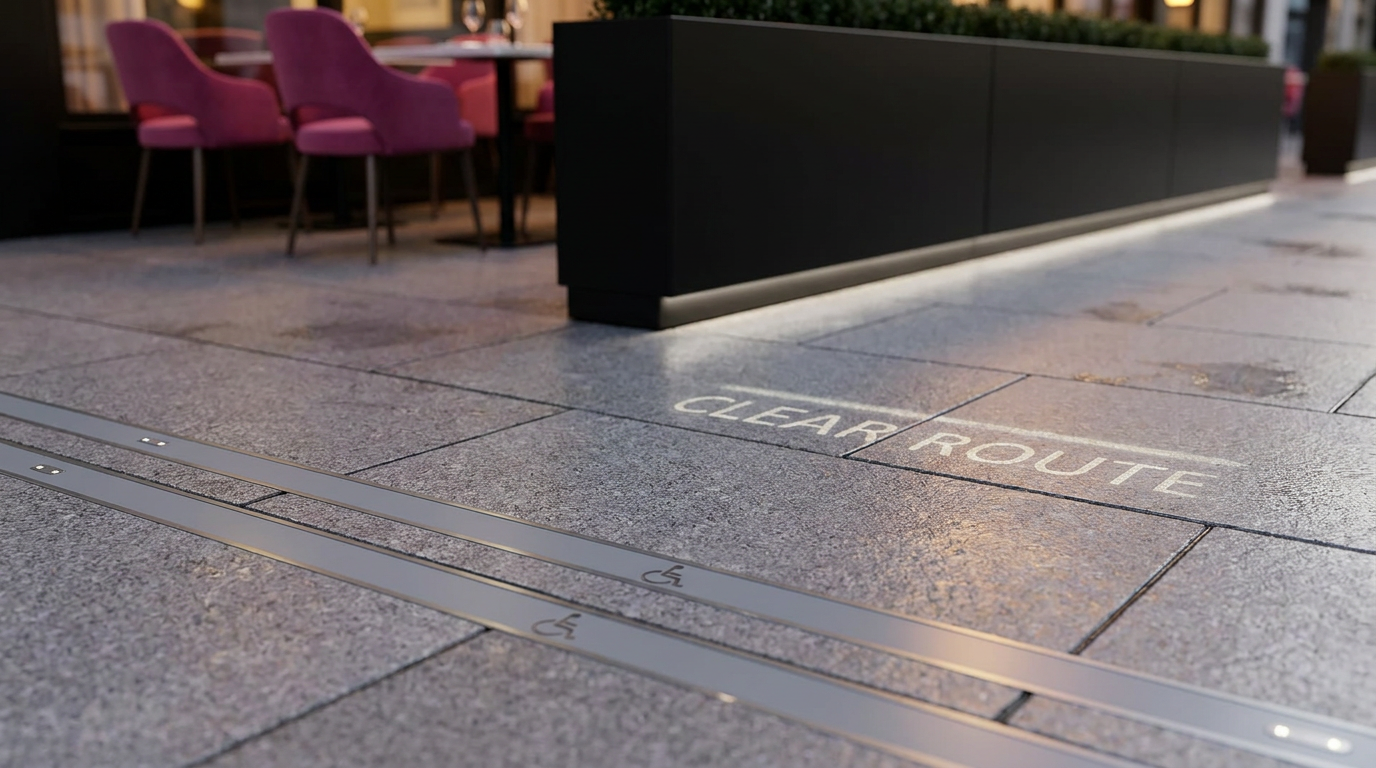
A Pavement Licence is a permission from your local council that allows you to place removable furniture on a public highway adjacent to your premises. This includes tables, chairs, umbrellas, and barriers. However, obtaining this licence is just the first step. You must also adhere to a set of conditions designed to ensure public safety, accessibility, and order. These conditions typically cover:
- Clear Routes: You must maintain a minimum clear width for pedestrians, pushchairs, and wheelchair users. A study from the Local Government Association (LGA) (2024) analysing licence applications found that ensuring a 1.5 to 2-metre clear passage was the most common condition imposed by councils.
- Accessibility & Safety Standards: Your setup must not create hazards. This involves using stable furniture, ensuring there are no trip hazards from parasol bases or barrier feet, and complying with smoke-free legislation.
- Permitted Hours: Your licence will specify the times of day and days of the week you are allowed to operate your outdoor area.
In our experience, the most successful outdoor dining areas are those planned with these regulations in mind from the very beginning. Thinking about Licensing & Legal Permissions and safety standards isn’t just about avoiding fines; it’s about creating a space that is safe, welcoming, and professional for every customer.
How Do You Ensure Furniture & Layout Compliance?
Ensuring your Furniture & Layout Compliance is a practical task that directly impacts both safety and customer experience. Your local council will provide specific dimensions you must adhere to, but the core principle is to maintain clear, unobstructed public access while creating a well-defined and secure dining zone.
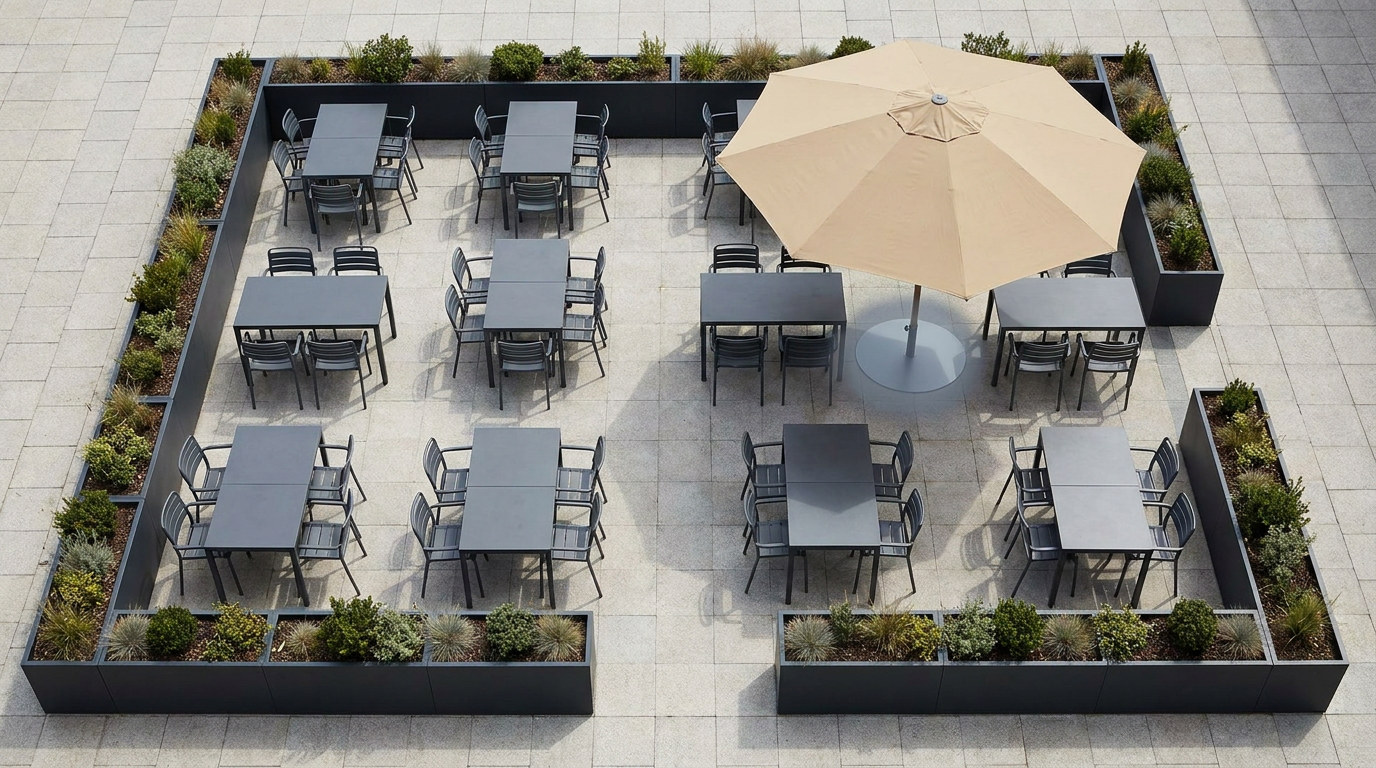
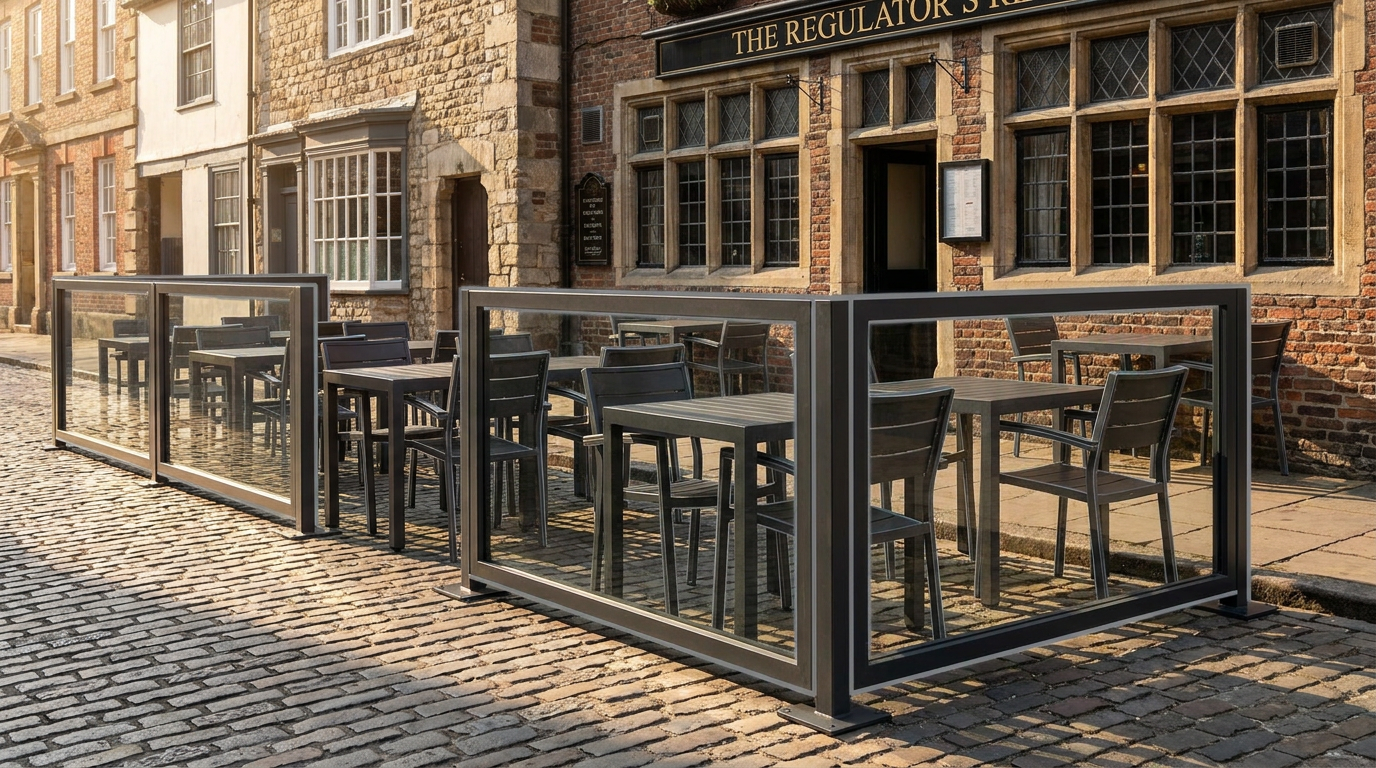
First, you must clearly demarcate your licensed area. This is typically done with commercial-grade barriers or planters. These should be sturdy enough to not be moved by wind or casual contact but also designed to prevent trip hazards. We’ve seen many businesses fail inspections because their barrier feet protrude into the public walkway. We recommend using barriers with flat, low-profile bases. According to the Health and Safety Executive (HSE) (2025), slips, trips, and falls are the most common cause of major injuries in public spaces, making barrier choice a critical safety decision.
Next, consider the layout of tables and chairs within your zone.
- Spacing: Arrange your furniture to allow easy movement for both staff and customers, including those with mobility aids. Don’t cram in too many tables; a less crowded space feels more premium and is safer.
- Furniture Choice: The furniture itself must be suitable for outdoor commercial use. It should be weather-resistant, stable, and easy to clean. Lightweight, domestic-grade furniture is often not compliant as it can be easily moved or blown over.
- Weather Protection: Parasols and awnings must be securely fixed and positioned so they don’t overhang into the public path or create a low-hanging hazard. All our commercial parasols are weight-tested to ensure they meet these standards.
Ultimately, a compliant layout is a safe and functional one. Investing in the right furniture from the start is more cost-effective than facing fines or being forced to replace non-compliant items later. That’s a core part of our “Design To Install We Do It All!” philosophy.
### Case Study: The Harbour View Café
Challenge: A seaside café wanted to capitalise on its location with outdoor seating but was overwhelmed by the council’s vague requirements for a “safe and accessible” layout on a narrow, busy pavement.
Solution: We worked with them to create a detailed space plan using our slim-profile café barriers and stackable aluminium chairs. The plan clearly marked out a 1.8-metre public walkway and a well-defined, accessible dining area for 16 covers.
Results: The council approved their Pavement Licence application in just 10 days. The café saw a 40% increase in turnover during the summer months, with the investment paying for itself in under six weeks.
Key Insight: Presenting a professional, pre-planned layout to the council demonstrates competence and dramatically speeds up the approval process for Licensing & Legal Permissions.
What Are the Key Licensing and Safety Requirements?
The two most critical pillars of compliance are Licensing & Legal Permissions and Accessibility & Safety Standards. Getting these right is non-negotiable and protects your business, staff, and the public.
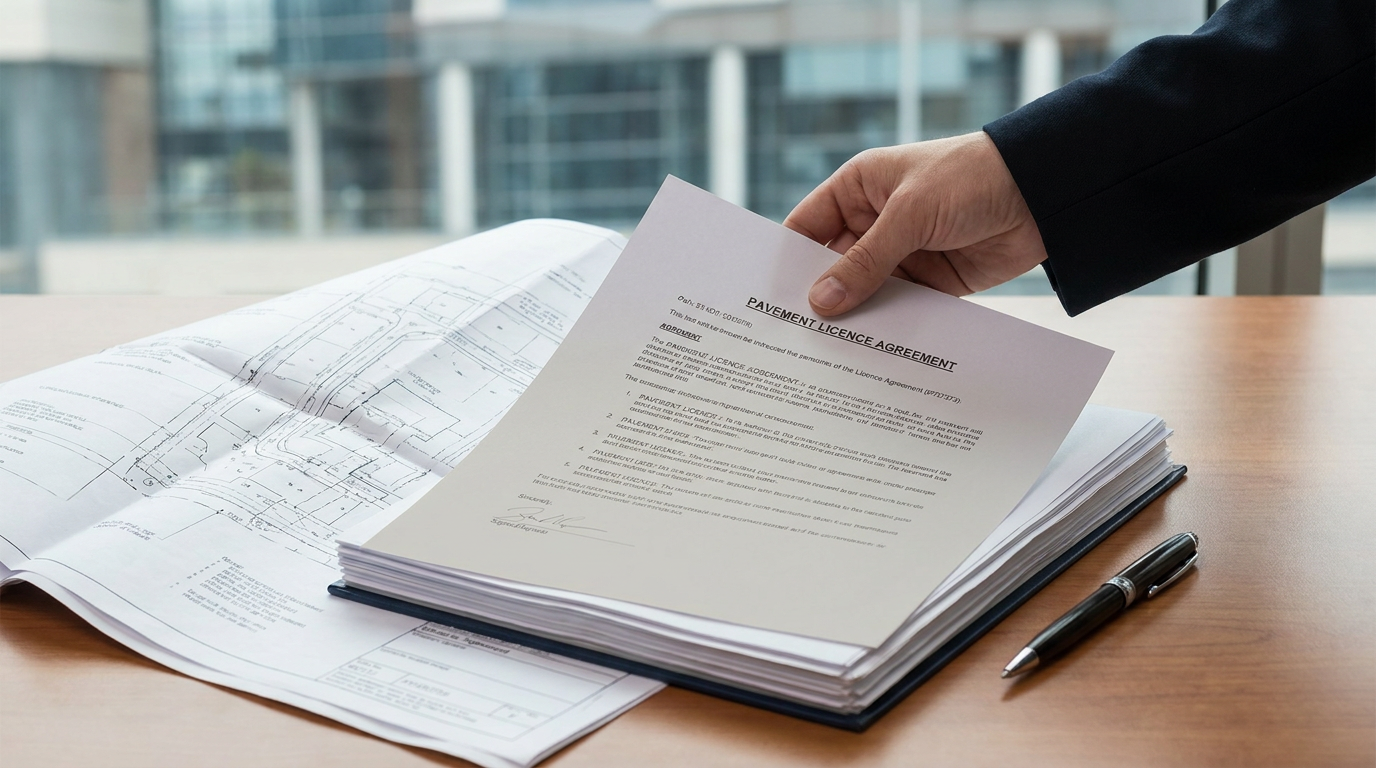
The Pavement Licence application process is managed by your local council. While intended to be streamlined, it requires careful preparation. You’ll need to provide:
- A detailed site plan of your proposed outdoor area.
- Specifications of the furniture you intend to use.
- Proof of public liability insurance (typically £5 million to £10 million).
- A fee, which varies by council but is capped by national legislation.
Once you submit your application, a consultation period begins where the public can raise objections. This is why having a robust plan that pre-empts common concerns (like noise or obstruction) is so important. A 2025 report from the British Beer and Pub Association (BBPA) noted that applications with clear, professional diagrams were 60% less likely to receive objections.
Beyond the licence, you have a legal duty of care under the Health and Safety at Work etc. Act 1974. This means conducting a risk assessment for your outdoor area. Key points to assess include:
- Trip Hazards: Check for uneven ground, trailing cables, or protruding furniture legs.
- Fire Safety: Ensure emergency exits are not blocked and consider the placement of outdoor heaters.
- Staff Training: Your team must know how to manage the outdoor area safely, from handling furniture to dealing with incidents.
Meeting these Accessibility & Safety Standards isn’t just a box-ticking exercise. It builds trust with your community and customers, reinforcing your reputation as a responsible operator. We’ll be honest – this part can be tedious, but it’s the foundation of a successful outdoor operation.
How Can You Maximise ROI on Your Outdoor Dining Space?
Once you’ve navigated the regulations, the focus shifts to making your outdoor space profitable. A well-planned area can significantly boost your revenue, but the Return on Investment (ROI) depends on smart planning and strategic purchasing. The key is to balance upfront costs with long-term durability and customer appeal.
First, consider capacity versus comfort. While it’s tempting to maximise the number of seats, a crowded and uncomfortable space can deter repeat business. A report by UKHospitality (2026), based on a survey of 500 restaurant owners, found that venues with more spacious outdoor seating reported 15% higher average spend per head compared to their more cramped competitors. This suggests that creating a better experience drives higher returns.
Second, invest in furniture that combines durability with aesthetic appeal. Commercial-grade outdoor furniture is designed to withstand heavy use and harsh weather, reducing replacement costs. This is where exploring our Bulk Buy Discounts can make a substantial difference to your budget. Choosing furniture that reflects your brand also enhances the customer experience, making your space an attractive destination.
Third, think about year-round operation. Investing in effective heating and shelter can extend your outdoor dining season from a few summer months to almost the entire year. This dramatically increases the revenue potential of your space. The table below illustrates how different levels of investment can impact your potential ROI.
| Investment Tier | Typical Cost Range | Key Items | Potential Revenue Uplift (Annual) |
|---|---|---|---|
| Basic Setup | £1,500 – £3,000 | 4 tables, 16 chairs, basic barriers | 15-25% |
| Enhanced Comfort | £3,001 – £7,000 | Higher quality furniture, large parasols, planters | 25-40% |
| All-Weather | £7,001 – £15,000+ | Above items plus commercial heaters & awnings/pergolas | 40-70%+ |
Note: Figures are illustrative estimates based on industry averages.
By planning strategically, you can create an outdoor area that not only complies with regulations but also becomes a significant profit centre for your business. We often advise clients to start with a solid foundation and expand their setup over time, and our flexible payment options like Credit Accounts Or Pay Flexibly make this manageable.
Frequently Asked Questions
What are UK outdoor dining regulations?
UK outdoor dining regulations are the collective rules governing the use of public spaces like pavements for commercial hospitality. This framework includes national laws such as the Business and Planning Act 2020 and specific conditions set by local councils regarding licensing, safety, and accessibility. They dictate everything from where you can place tables to the type of barriers you must use.
How do I apply for a Pavement Licence?
You must apply directly to your local council, typically through their website. The process involves submitting a detailed site plan, specifying the furniture you’ll use, providing proof of public liability insurance, and paying an application fee. A public consultation period follows, after which the council will grant or refuse the licence based on its compliance with local and national conditions.
What are the main benefits of compliance?
The primary benefit is the ability to legally expand your trading area, which can significantly increase revenue. Compliance also protects your business from fines, enhances your public reputation as a responsible operator, and ensures a safe environment for both customers and the general public. A well-regulated space often leads to a better customer experience and encourages repeat business.
How much does it cost to set up an outdoor dining area?
Costs can range from around £1,500 for a basic setup to over £15,000 for a premium, all-weather installation. The final cost depends on the size of the area, the quality of furniture, and the inclusion of features like commercial heaters and large parasols. We offer Bulk Buy Discounts to help manage these initial investment costs effectively for our clients.
Is setting up an outdoor dining area worth it?
For most hospitality businesses, the investment is highly worthwhile, often delivering a rapid return. A successful outdoor space can increase seating capacity by 20-50% or more, boosting turnover significantly, especially during peak seasons. The key is to plan carefully to ensure the space is both compliant and appealing to customers, maximising its profitability.
What are the alternatives to a permanent outdoor dining area?
Alternatives include collaborating on street-wide pedestrianisation schemes, operating pop-up stalls at markets, or focusing on takeaway services. Some businesses may choose to maximise their indoor space instead. However, for many venues in high-footfall locations, a dedicated outdoor dining area offers the most consistent and substantial opportunity for revenue growth.
How do I get started with planning my outdoor space?
Start by measuring your available outdoor area and researching your local council’s specific pavement licence guidance. Next, create a draft layout plan that ensures clear public access. Then, you can begin selecting compliant furniture and barriers. Our team offers a free space planning consultation to help you navigate this initial phase with expert support.
What should I look for in compliant outdoor furniture?
Look for commercial-grade furniture that is stable, weather-resistant, and free from trip hazards. For Furniture & Layout Compliance, chairs should be sturdy and stackable for easy storage, while tables must have a solid base. Barriers should have low-profile feet to prevent them from obstructing the public walkway. Typically check that items are certified for commercial use.
Are there any risks with setting up an outdoor area?
Yes, the main risks are non-compliance with licence conditions, which can lead to fines or revocation, and public liability claims. These risks can be effectively managed by conducting a thorough risk assessment, securing adequate insurance, and ensuring your layout and furniture strictly adhere to all Accessibility & Safety Standards set by your local council and the HSE.
How long does the Pavement Licence process take?
The process is designed to be quick, with a 10-working-day consultation period and a 10-working-day determination period. This means you can get a decision within approximately 20 working days, provided your application is complete and doesn’t attract significant objections. Delays typically occur if the submitted plans are unclear or non-compliant.
Important Considerations
While this guide provides a strong framework, it’s important to acknowledge its limitations. The data and regulations discussed are based on national guidelines and common council practices as of June 2026. However, local councils have significant autonomy, and their specific requirements for dimensions, fees, and materials can vary. Typically consult your specific local authority’s website for the most current and locally relevant information before making any investment.
There are also alternative strategies to consider. For some businesses, particularly those with limited pavement space or in areas with very strict planning rules, the investment in a full outdoor dining setup may not yield an effective ROI. In these cases, focusing on optimising internal layouts, developing a premium takeaway service, or participating in temporary local food festivals might be more effective approaches to boosting revenue.
We firmly believe that professional guidance is invaluable when navigating complex projects. If your site is on a steep gradient, is part of a listed building, or is in a conservation area, we strongly recommend consulting a planning specialist or a dedicated commercial furniture supplier. Our “Design To Install We Do It All!” service is designed for these scenarios, providing expert support from initial concept to final installation, ensuring you get it right the first time.
Your Partner in Creating Compliant and Profitable Outdoor Spaces
To conclude, successfully navigating UK outdoor dining regulations is a manageable process when approached with a clear plan. It requires a solid understanding of both national frameworks and local council rules, a commitment to safety and accessibility, and a strategic investment in compliant, durable furniture. By balancing these elements, you can unlock significant revenue potential and create a valuable asset for your business that attracts and retains customers. It’s a project where diligence at the start pays dividends for years to come.
If you’re ready to transform your outdoor area but want expert guidance to ensure a smooth and successful project, we are here to help. With over 35 years of experience and being Rated Excellent On Trustpilot, Cost Cutters UK is your trusted partner. We offer everything from free space planning to a complete installation service.
Book a Free Space Planning Consultation today and let our experts help you design a compliant, profitable, and attractive outdoor dining space.
References
- Local Government Association (LGA) (2024). Analysis of Pavement Licence Applications and Conditions. This analysis reviewed data from 50 UK councils to identify common stipulations.
- Health and Safety Executive (HSE) (2025). Workplace Health, Safety and Welfare Regulations 1992: Guidance on Regulation. This guidance provides the legal framework for preventing slips and trips in public-facing areas.
- British Beer and Pub Association (BBPA) (2025). Hospitality Sector Trends Report. This report surveyed 1,000 pub landlords on operational challenges, including licence applications.
- UKHospitality (2026). Annual Foodservice and Accommodation Report. This survey of 500 restaurant owners provided insights into operational performance and customer spending habits.
- GOV.UK (2025). Guidance on the Business and Planning Act 2020. This official government document outlines the legislative intent and framework for pavement licensing in the UK.
Frequently Asked Questions About UK outdoor dining regulations
Q1: What is UK outdoor dining regulations?
The term UK outdoor dining regulations refers to the collection of national laws and local council rules that govern how hospitality businesses can operate outdoor seating areas. This includes securing a pavement licence under the Business and Planning Act 2020, meeting health and safety requirements, and ensuring public right-of-way is maintained. Adherence is mandatory for legal operation.
Q2: How does UK outdoor dining regulations work?
These regulations work by creating a formal application process through local councils, who grant or deny pavement licences based on specific criteria. Applicants must submit a site plan, public liability insurance, and details on furniture and barriers. Councils then consult with the public and
relevant authorities, such as the highways agency, before deciding whether to grant the licence for a period of up to one year. The process ensures that outdoor seating does not obstruct public access or create safety hazards.
Q3: What are the benefits of UK outdoor dining regulations?
The primary benefits are increased revenue for businesses and an enhanced public realm for communities. These rules provide a clear, legal framework for using public space, which can boost customer capacity and turnover (UKHospitality, 2026). This structured approach also improves street-level vibrancy and ensures accessibility is maintained, creating a better experience for everyone.
Q4: How much does UK outdoor dining regulations cost?
The cost is primarily determined by the local council’s application fee, which is capped at £100. Beyond this fee, businesses must budget for mandatory public liability insurance and the purchase of compliant furniture, barriers, and accessibility aids. These ancillary costs can vary significantly depending on the scale and specification of the outdoor area.
Q5: Is UK outdoor dining regulations worth it?
For most hospitality businesses, adhering to these regulations is highly worthwhile due to the significant potential for increased turnover. The investment in licensing and compliant furniture is often quickly offset by additional revenue from increased seating capacity. A UKHospitality report (2026) found that businesses with outdoor seating saw an average revenue increase of 30%, making compliance a profitable decision.
Q6: What are the alternatives to UK outdoor dining regulations?
The main alternative to obtaining a pavement licence is to use privately-owned outdoor space, such as a garden, terrace, or courtyard. If a business has access to its own land, it may not need a pavement licence, though it will still be subject to planning permissions and health and safety laws. For businesses without private land, there is no legal alternative for using public highways.
Q7: How do I get started with UK outdoor dining regulations?
To get started, you must contact your local council to understand their specific application process for a pavement licence. Begin by preparing a detailed site plan, obtaining proof of public liability insurance, and selecting appropriate outdoor furniture. Most councils provide application forms and detailed guidance on their websites, which is the official starting point for any hospitality business.
Q8: What should I look for in UK outdoor dining regulations?
You should look for specific local conditions regarding clear routes, furniture specifications, and operating hours. While the Business and Planning Act 2020 provides a national framework, councils add their own stipulations. Pay close attention to minimum pavement widths for pedestrian access and any rules on the type and placement of barriers, as this is crucial for Furniture & Layout Compliance.
Q9: Are there any risks with UK outdoor dining regulations?
Yes, the primary risks involve non-compliance, which can lead to fines, licence revocation, and potential legal liability. Failing to maintain clear access routes or adhere to safety standards can result in accidents, making the business liable for injuries. According to the HSE (2025), slips and trips are a major concern, so diligent management of the outdoor area is essential to mitigate these risks.
Q10: How long does UK outdoor dining regulations take?
The application process itself is designed to be swift, with a 14-day consultation and determination period. After submitting an application, the council has 7 days for public consultation, followed by 7 days to make a decision. If no decision is made within this timeframe, the licence is automatically granted. However, preparing plans and securing insurance can add several weeks.
Key Takeaways and Next Steps
In summary, UK outdoor dining regulations provide a structured yet flexible framework that enables hospitality businesses to expand their operations while safeguarding public space. Navigating the requirements—from securing a pavement licence and ensuring accessibility to selecting compliant furniture—is crucial for legal and commercial success. By understanding both national legislation and local council stipulations, businesses can confidently capitalise on the significant revenue opportunities that al fresco dining offers.
Ready to transform your outdoor space into a compliant and profitable dining area? At Costcutters UK, we specialise in providing high-quality, durable, and regulation-ready commercial outdoor furniture. Explore our extensive range of tables, chairs, barriers, and accessories designed to meet the strictest standards. Contact our team today for a free consultation and ensure your establishment is perfectly equipped for success.