School Health and Safety UK: Debunking 5 Costly Myths for School Leaders
🎯 Key Takeaway
Effective school health and safety UK compliance requires moving beyond common misconceptions to a proactive system of risk management, compliant procurement, and shared responsibility. This approach protects pupils and staff while delivering long-term value for money. It’s a system that prioritises safety through adherence to standards like BS EN 1729, which is a legal requirement, not a suggestion. Also, robust risk assessments are a critical legal defence and financial planning tool, not just paperwork. Ultimately, investing in compliant, durable furniture reduces long-term costs and liability risks.
For managing budgets, school leaders are under constant pressure. Yet, the duty of care for pupils and staff is non-negotiable. This tension can lead to ‘cost-saving’ decisions that, in reality, are dangerous myths that compromise wellbeing and expose the institution to significant legal and financial risk. Navigating the complexities of school health and safety UK is a core leadership function. This guide debunks five of the most common and costly myths, providing a practical framework for School Business Managers and Headteachers to ensure their learning environments are genuinely safe, compliant, and built for long-term value. We’ll explore official health and safety in schools guidance to separate fact from fiction.
Written by: Costcutters UK Content Team
Reviewed by: Costcutters UK Editorial Team, 35+ Years in Educational Supplies & Furniture
Last updated: 13 June 2026
ℹ️ Transparency Disclosure: This article explores school health and safety UK based on official HSE and DfE guidance, combined with our 35+ years of industry experience in educational procurement. Our goal is to provide clear, actionable advice. Some links may connect to our services, which we believe offer excellent value and compliance. All information is verified by our editorial team for accuracy and relevance.
Myth 1 vs. Fact: ‘If it looks sturdy, it’s safe’ vs. The Legal Reality of BS EN 1729
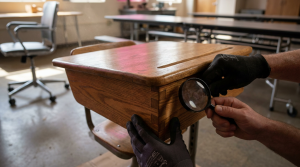
The belief that a simple visual check is enough to deem furniture safe is a pervasive and dangerous myth. Furniture for educational institutions must meet specific, legally recognised standards. BS EN 1729, the British and European standard for educational furniture, is not a ‘nice to have’; it’s a critical safety and procurement benchmark. This standard is split into two parts: Part 1 defines appropriate dimensions, heights, and ergonomic considerations for pupils of different age groups, while Part 2 tests for strength, stability, and durability under conditions that simulate a demanding school environment.
According to the Health and Safety Executive (HSE), slips, trips, and falls are a leading cause of injury in the education sector, with faulty or inappropriate equipment often being a contributing factor. Research from the Furniture Industry Research Association (FIRA) informs these standards, ensuring that a chair or desk won’t easily tip, collapse under load, or wear out prematurely, creating hazards. Specifying school furniture safety standards like BS EN 1729 during procurement is a fundamental aspect of your legal duty of care. It’s an essential part of establishing clear classroom safety rules UK and goes beyond simple appearances to ensure furniture is fit for purpose and safe for children.
Myth 2 vs. Fact: ‘Risk assessments are just box-ticking’ vs. The Legal & Financial Stakes of School Health and Safety UK
It’s easy to view risk assessments as a bureaucratic chore, but this myth dangerously downplays their role. A risk assessment is the cornerstone of effective school health and safety UK. The Health and Safety Executive (HSE), the UK’s national regulator for workplace health and safety, requires assessments to be ‘suitable and sufficient’. This means they must be a dynamic tool for identifying real-world hazards, evaluating the risk, and implementing practical control measures to prevent harm. It is your primary legal defence in the event of an incident.
The process, as outlined in HSE school guidelines, involves five steps: identify hazards, decide who might be harmed, evaluate the risks and decide on precautions, record your findings, and review your assessment regularly. Failure to do so has severe consequences. Incidents requiring reporting under the Reporting of Injuries, Diseases and Dangerous Occurrences Regulations (RIDDOR) can trigger HSE inspections and enforcement action. According to data from the HSE, fines for health and safety breaches in the education sector can be substantial, running into tens or even hundreds of thousands of pounds. A thorough school risk assessment checklist UK, informed by guidance from the Department for Education (DfE), is therefore a critical financial planning tool, not just paperwork.
Myth 3 vs. Fact: ‘H&S is the caretaker’s job’ vs. Understanding Shared Responsibility for School Health and Safety UK
Attributing health and safety solely to a site manager or caretaker is a common but incorrect assumption. The legal responsibility for school health and safety UK is shared, stemming from the ’employer’. As the Department for Education (DfE), the UK government department responsible for education, clarifies in its health and safety in schools guidance, the identity of the employer varies. It can be the Local Authority, the Governing Body, or the Academy Trust.
While this body holds the ultimate legal accountability, it delegates day-to-day management. The Headteacher has a strategic role in ensuring there’s a clear health and safety policy and a culture of safety. School Business Managers are crucial in ensuring compliant procurement and resource allocation. Department heads are responsible for risks specific to their areas, like science labs or sports facilities. Crucially, all staff members have a duty to take reasonable care of their own safety and that of others. This shared model requires a clear organisational structure and robust communication, ensuring that safety isn’t one person’s job – it’s everyone’s responsibility.
Myth 4 vs. Fact: ‘Cheap furniture is a budget win’ vs. The True Cost of Non-Compliance
In an environment of tight budgets, opting for cheaper, non-specialist furniture can seem like a prudent saving. However, this is a short-term illusion that ignores the Total Cost of Ownership (TCO), a financial calculation of direct and indirect costs. Compliant furniture, built to school furniture safety standards, may have a higher upfront cost, but it delivers far greater long-term value and protects the institution from significant liability. Non-compliant furniture, such as domestic-grade items, is not designed for the rigours of a school environment.
This leads to a cycle of frequent repairs and replacements, eroding the initial ‘saving’ many times over. More importantly, it introduces serious safety hazards. A chair that breaks or a table that becomes unstable can cause injury, leading to potential legal claims and reputational damage. As research from bodies like the Furniture Industry Research Association (FIRA) indicates, certified products have a significantly longer and safer operational life. A true budget win is investing in compliant, durable products from the start, Saving Time & Stress associated with accidents and replacements.
| Factor | Non-Compliant Furniture (e.g., Domestic Grade) | Compliant Furniture (BS EN 1729 Certified) |
|---|---|---|
| Average Lifespan | 1-3 years in a school environment | 10-15+ years |
| Warranty | Typically 1 year (voided by commercial use) | 5-25 years, specific to educational use |
| Repair/Replacement | Frequent; high ongoing cost | Infrequent; low maintenance |
| Safety & Liability | High risk of failure, instability; high liability | Tested for strength & stability; low liability |
| Total Cost of Ownership | High due to replacement cycle and potential liability | Low due to longevity and durability |
Myth 5 vs. Fact: ‘Specialist hazards are managed by others’ vs. Proactive Premises Management
It’s a comforting thought that complex hazards like asbestos or fire safety are handled entirely by external bodies, but it’s a myth. While you will use specialist contractors, the school’s leadership team retains a crucial duty of management and oversight. For instance, with managing asbestos in schools UK, the law is clear. According to the HSE, any school built before the year 2000 must assume asbestos is present. The duty holder (the employer) must identify its location and condition, maintain an up-to-date asbestos register, and have a clear management plan. You must ensure any contractor working on site is aware of the register to prevent accidental disturbance.
Similarly, school fire safety regulations UK require more than just an annual check from a contractor. The school is responsible for ensuring regular fire drills are conducted, staff are trained, escape routes are kept clear, and daily visual checks of fire doors and signage are undertaken. This demonstrates proactive management. Relying solely on third parties without internal oversight is not sufficient and fails the ‘suitable and sufficient’ test for managing premises risks.
A Practical Checklist for School Health and Safety UK Procurement
A robust procurement process is your first line of defence in ensuring safety and compliance. In our experience, asking the right questions upfront prevents costly mistakes later. We recommend that School Business Managers use a consistent school risk assessment checklist UK for all significant purchases, especially furniture and equipment.
Here is a practical checklist to guide your procurement decisions:
- Verify Supplier Credentials: Does the supplier have a long track record in the UK education sector? Check for relevant certifications and memberships. You can see our full list of certifications and accreditations as an example of what to look for.
- Demand Proof of Compliance: For any furniture, request written confirmation that it complies with BS EN 1729 Parts 1 & 2. Do not accept vague assurances.
- Analyse the Warranty: A long-term warranty (5+ years) specific to educational use is a strong indicator of product quality and the manufacturer’s confidence in its durability.
- Consider Total Cost of Ownership (TCO): Look beyond the initial price tag. Factor in delivery, installation, durability, and warranty to calculate the true long-term cost.
- Check for Value-Added Services: Does the supplier offer services that simplify the process, such as space planning, delivery scheduling, and installation? Our “Design To Install We Do It All!” service is designed to manage this complexity for you.
- Review Customer Feedback: Look for independent reviews on platforms like Trustpilot to gauge reliability and service quality. We’re proud to be Rated Excellent On Trustpilot.
- Assess Payment Flexibility: Enquire about options like Credit Accounts Or Pay Flexibly to manage your school’s budget effectively.
Frequently Asked Questions
What is school health and safety UK?
School health and safety UK refers to the comprehensive legal framework of policies, procedures, and duties designed to protect pupils, staff, and visitors on school premises. It is a wide-ranging field that covers everything from physical building safety and fire regulations to conducting risk assessments for classroom activities and procuring safe, compliant equipment. It is a fundamental responsibility for all educational institutions in the United Kingdom.
Who is legally responsible for health and safety in a UK school?
The ’employer’ holds the primary legal responsibility for health and safety, but the specific identity of this body varies by school type. For community schools, it is the Local Authority. For voluntary-aided, foundation schools, and academies, the governing body or academy trust is the employer. While they hold ultimate accountability, they delegate the day-to-day operational management of these duties to the Headteacher and senior leadership team.
What are the main requirements of DfE health and safety for schools guidance?
The DfE health and safety for schools guidance primarily clarifies roles, responsibilities, and the expectation for a sensible, proportionate approach to risk management. It advises on creating a health and safety policy, conducting risk assessments, and managing specific areas like school trips and premises issues. Crucially, it complements the legal duties set out in the Health and Safety at Work etc. Act 1974 and the associated HSE school guidelines.
What is a school risk assessment?
A school risk assessment is a systematic process of identifying what in the school environment could cause harm to people. Its purpose is to evaluate the level of risk posed by these hazards and to implement reasonable, practical control measures to prevent that harm from occurring. Under UK law, conducting and recording these assessments is a mandatory legal requirement for all schools to ensure a safe learning environment.
What does the school furniture standard BS EN 1729 cover?
The BS EN 1729 standard specifies the essential ergonomic and safety requirements for furniture used in UK educational institutions. Part 1 covers the appropriate dimensions, shapes, and sizes for different age groups to promote good posture and comfort. Part 2 details the strength, stability, and durability tests that furniture must pass to prove it can withstand the demanding conditions of a school environment, ensuring it is safe and robust.
How often should schools conduct fire drills?
UK school fire safety regulations UK typically require a fire drill to be conducted at least once every term. However, best practice, as often detailed in a school’s specific fire risk assessment, suggests varying the times and simulated conditions of these drills. This ensures that evacuation procedures are effective and familiar to all staff and pupils under different circumstances, reinforcing the school’s emergency preparedness.
Are classroom safety rules legally required in the UK?
While no single law dictates specific classroom safety rules UK, establishing and enforcing them is a critical part of a school’s legal duty of care. These rules function as a key control measure within a school’s risk assessment framework, especially in high-risk areas like science laboratories, DT workshops, or PE lessons. They are an essential tool for managing pupil behaviour and preventing foreseeable accidents, making them a de facto requirement.
What is the role of the HSE in schools?
The Health and Safety Executive (HSE) is the UK’s independent regulator for workplace health and safety, which includes schools. Its role is to provide guidance, set standards, and enforce the law. The HSE investigates serious incidents and complaints in schools and has the authority to issue improvement notices, prohibition notices, and even prosecute institutions for significant breaches of health and safety law, making its guidance essential to follow.
What should a school do about asbestos?
Any UK school building constructed before 2000 has a legal duty to manage the risks from asbestos. This involves identifying where asbestos-containing materials (ACMs) are, recording their condition in an asbestos register, and creating a clear management plan. The core principle of managing asbestos in schools UK is to manage it in situ where possible and to ensure this crucial information is shared with any contractors who might disturb it.
Can we use second-hand furniture in our school?
Using second-hand furniture is strongly discouraged as it carries significant safety and liability risks for the school. While it may seem like a cost saving, the furniture must still be well-supported by research to meet current safety standards like BS EN 1729. Obtaining this proof for used items is often impossible. If an accident were to occur due to the failure of this furniture, the liability would fall directly on the school.
Important Considerations
This guide provides a general overview of key health and safety principles in UK schools. However, it is not an exhaustive legal document. Every school premises is unique, and you must conduct specific risk assessments tailored to your environment, buildings, and pupil demographic.
While this article focuses on in-house management and compliant procurement, some organisations, particularly large Multi-Academy Trusts or schools with complex site issues, may find value in engaging a specialist health and safety consultant for periodic audits or specific projects. This can provide an additional layer of external verification.
All information is based on guidance available as of the publication date. Legislation and official guidance can change. Typically refer to the official Health and Safety Executive (HSE) and Department for Education (DfE) websites for the very latest statutory requirements and advice before making decisions.
Building a Safer School Environment with a Trusted Partner
Ultimately, a robust approach to school health and safety UK is not a burden, but a strategic investment in the wellbeing of your community and the financial stability of your institution. By moving beyond common myths and embracing a culture of proactive, compliant management, you create a safer learning environment and demonstrate due diligence to all stakeholders.
With over 35 years of experience supplying the UK education sector, Costcutters UK understands the balance between budget and compliance. Our team is trained to help you select durable, certified furniture that meets all necessary standards, and we offer Bulk Buy Discounts to help your budget go further. To ensure your learning spaces are both inspiring and safe, book a free, no-obligation space planning consultation with our experts today.
References
- Health and Safety Executive (HSE) – Education Sector Guidance – Official UK Government Guidance. Provides the legal framework and practical advice for managing health and safety in UK schools, including risk assessment and accident reporting.
- Department for Education (DfE) – Health and safety: responsibilities and duties for schools – Official UK Government Policy. Outlines the specific roles and responsibilities for different school types (maintained, academy, etc.) and provides a policy framework.
- British Standards Institution (BSI) – BS EN 1729 – Official Standards Publication. Defines the mandatory dimensional, strength, and stability requirements for furniture used in educational environments in the UK and Europe.
- Furniture Industry Research Association (FIRA) – Industry Research Body. Provides data on furniture testing, durability, and lifespan, often used to inform standards and TCO calculations.
- HSE – Managing asbestos in your school or college – Specific UK Government Guidance. Details the legal duty to manage asbestos in school premises, including the need for a management plan and register.
Conclusion
Building a Safer School Environment with a Trusted Partner
In summary, school health and safety UK is not a burden, but a strategic investment in the wellbeing of your community and the financial stability of your institution. By moving beyond common myths and embracing a culture of proactive, compliant management, you create a safer learning environment and demonstrate due diligence to all stakeholders.
With over 35 years of experience supplying the UK education sector, Costcutters UK understands the balance between budget and compliance. Our team is trained to help you select durable, certified furniture that meets all necessary standards. To ensure your learning spaces are both inspiring and safe, [book a free, no-obligation space planning consultation](https://www.