
The Ultimate Guide to Furniture Procurement: Tools & Checklists for UK Managers
🎯 Key Takeaway
Successful furniture procurement involves a structured process of planning, sourcing, and management, using specialised checklists and tools to ensure you acquire the right products on time and within budget. This guide provides the resources to manage this complex task effectively. We believe a thorough supplier evaluation is critical for assessing quality, reliability, and after-sales support, not just price. For instance, using sector-specific checklists may help compliance with UK standards like BS EN 1729 for schools. Furthermore, leveraging digital tools, from budget templates to project management software, helps track progress and control spending.
Managing a large-scale furniture purchase for a school, office, or hospitality venue can be a source of significant stress and complexity. As of June 2026, the pressure to deliver on time, on budget, and with compliant products is immense. However, a structured approach transforms this daunting task into a manageable project. That’s why we’ve developed this guide as your ‘Procurement Sanity Kit’. Based on our 35+ years of experience, it provides the practical checklists and tool recommendations you need. This guide covers everything from the fundamentals of the furniture procurement process to the specific requirements for successful office furniture procurement and school furniture procurement, “Saving Time & Stress” for managers across the UK.
Written by: The Cost Cutters UK Content Team | Reviewed by: Industry Specialists, 35+ Years Experience; Rated Excellent On Trustpilot
Transparency Disclosure: This article explores the process of furniture procurement based on our extensive industry experience and analysis of best practices. This transparency is key to our process. Some links may connect to our services, such as our
free, no-obligation space planning consultation. All information is verified by our editorial team to ensure accuracy and relevance for UK procurement managers. This disclosure is part of our commitment to being a trusted partner.
Understanding the Core Furniture Procurement Process
A standard, effective furniture procurement process exists to bring order and predictability to acquiring new assets. It is a strategic lifecycle that moves far beyond a simple purchase, encompassing everything from initial concept to post-installation review. Following these stages methodically is your best defence against costly errors.
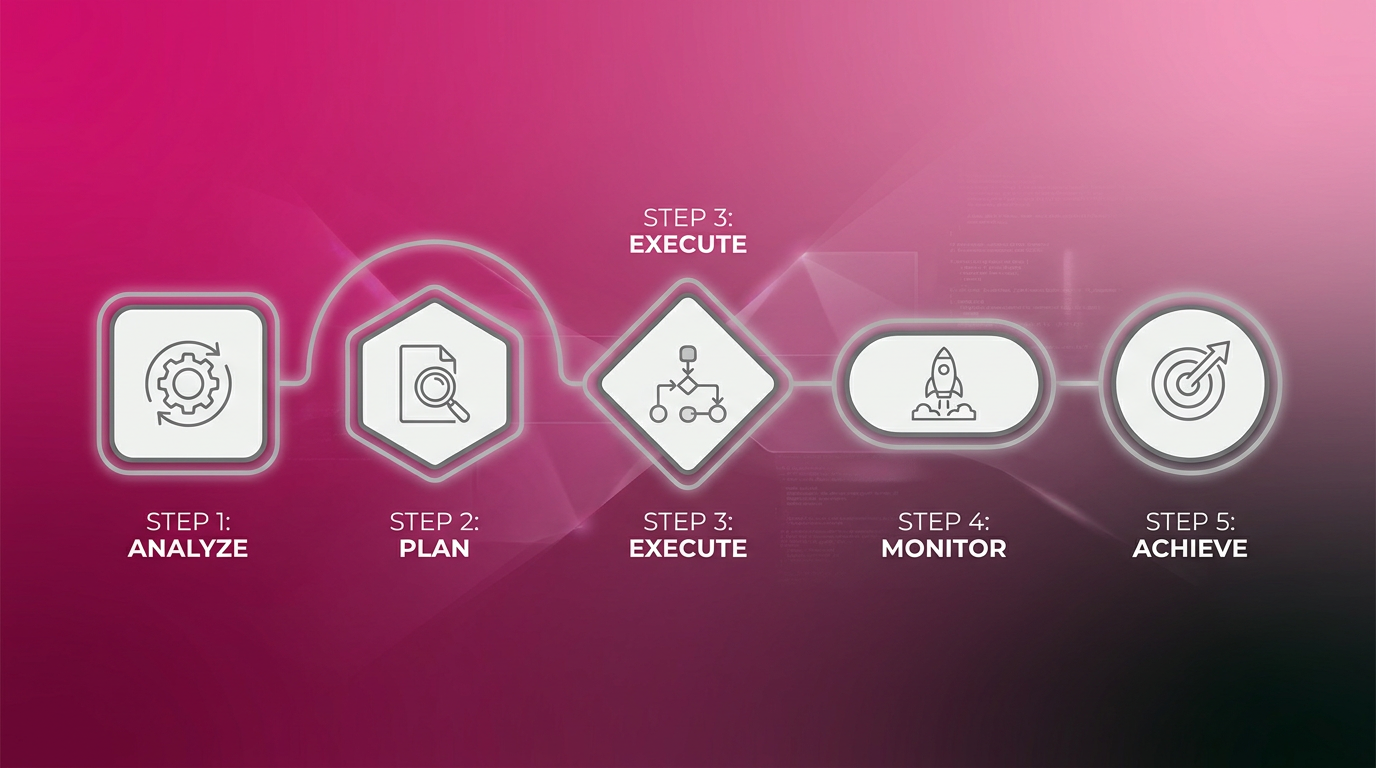
The process typically breaks down into five distinct stages:
- Needs Assessment & Budgeting: This foundational stage involves defining the project’s scope. What furniture is needed? Why is it needed? Who are the end-users? This is where you establish clear objectives and secure a realistic budget.
- Specification & Sourcing: You translate your needs into detailed product specifications. This includes dimensions, materials, colours, and compliance standards. Sourcing involves identifying potential suppliers who can meet these specifications.
- Supplier Evaluation & Selection: Here, you assess potential partners. This isn’t just about price. Our experience suggests you must evaluate quality, reliability, lead times, warranties, and after-sales support. You’ll often use key
procurement documentslike a Request for Quotation (RFQ) at this stage. - Ordering & Logistics: Once a supplier is selected, you formalise the order with a Purchase Order (PO) and agree on logistics. This includes delivery schedules, installation plans, and arrangements for access to the site.
- Installation & Review: The final stage involves the physical installation of the furniture, followed by a post-project review to assess success against the initial objectives and provide feedback to the supplier.
Underpinning this entire process are the ‘5 Ps of Procurement’: Price (total cost of ownership), Product (quality and compliance), Place (logistics), People (supplier relationship), and Process (efficiency). Balancing all five is crucial for a successful outcome.
### Case Study: A Hypothetical Academy Trust Scenario
Challenge: A multi-academy trust needed to furnish two new science labs and a sixth form common room across different sites, with a fixed budget of £80,000 and a tight 8-week summer holiday deadline. The internal team lacked the specific expertise for such a complex project.
Solution: The trust partnered with a full-service supplier. We handled the entire process, from creating compliant 3D space plans to consolidating orders from multiple specialist manufacturers and coordinating phased deliveries and installations at both sites.
Results: The project was completed one week ahead of schedule and 4% under budget, allowing for the purchase of additional IT equipment. The trust saved an estimated 120 administrative hours.
Key Insight: Engaging a “Design To Install We Do It All!” partner for multi-faceted projects can de-risk the process and often research suggests more cost-effective than managing multiple suppliers internally.
What are the Essential Tools for Procurement?
Yes, a range of accessible tools can dramatically simplify the furniture procurement process, providing structure and control. You don’t necessarily need expensive, complex software; for most projects, a smart combination of foundational templates and collaborative platforms is highly effective. In our experience, the key is to choose tools for procurement that match the scale of your project.
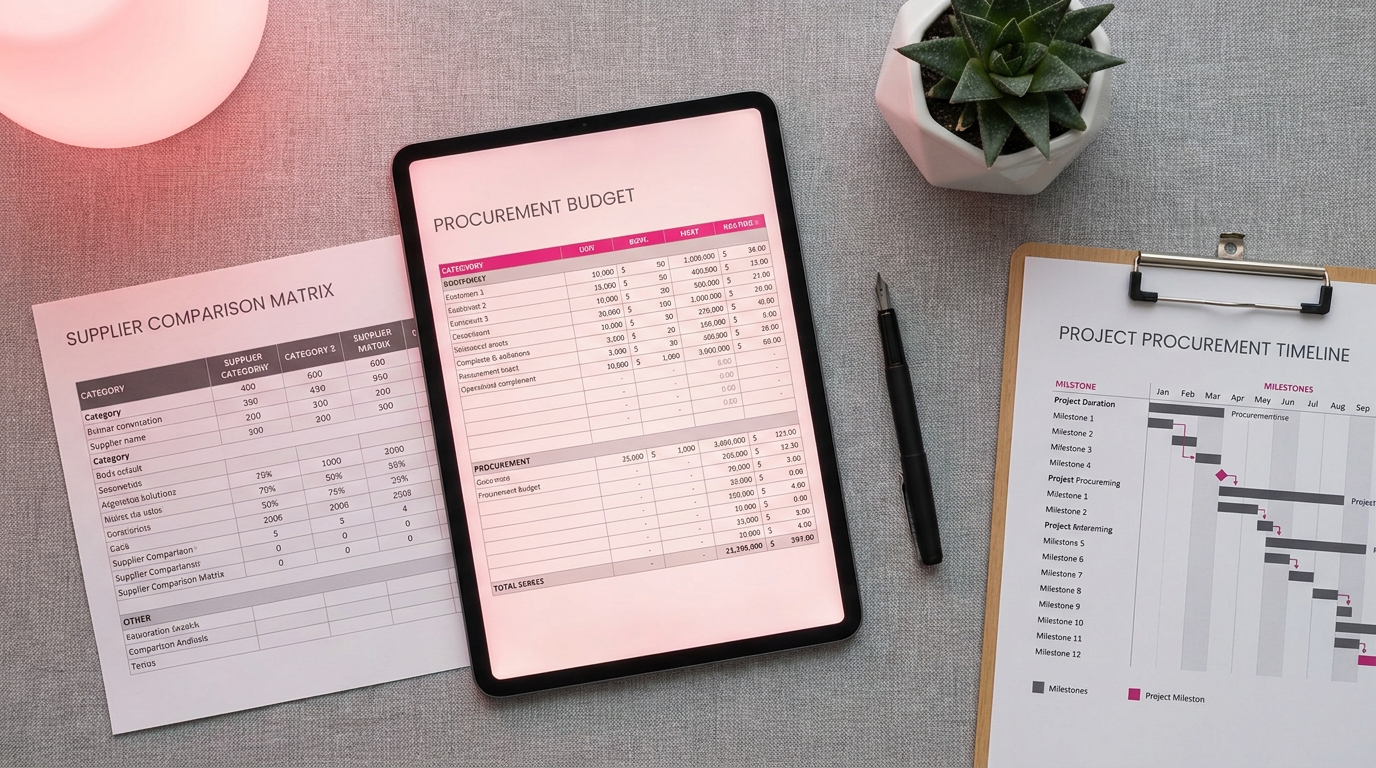
We categorise the most useful tools into three groups:
1. Foundational (Downloadable Templates)
These are the non-negotiable basics for any organised procurement project. They provide a clear framework for decision-making and tracking. We recommend starting with:
- Budget Spreadsheet: A template to track planned vs. Actual spending.
- Supplier Comparison Sheet: A matrix to score potential suppliers against key criteria (price, warranty, lead time, reviews).
- Project Timeline/Gantt Chart: A simple chart to map key milestones and deadlines.
2. Digital Collaboration Tools
For projects involving multiple stakeholders, these tools are invaluable for maintaining clear communication and accountability. Platforms like Trello, Asana, or Microsoft Planner allow you to create task lists, assign owners, set deadlines, and share procurement documents in one central place. This prevents crucial details from getting lost in email chains.
3. Specialised Procurement Software
Larger organisations, particularly in the public sector, may use dedicated e-procurement platforms. These systems automate the entire procure-to-pay cycle, from issuing tenders to processing invoices. While powerful, they are often overkill for small to medium-sized projects. For most school business managers or office managers, the combination of templates and a collaboration tool offers an effective balance of control and simplicity.
The Ultimate Furniture Procurement Checklist for UK Organisations
A comprehensive procurement checklist is your roadmap to success. It ensures no critical step is missed, from initial planning to final sign-off. Below is our master checklist, broken down into key phases. We then provide specific considerations for office and school environments, where compliance and user needs are paramount.
Master Checklist: Key Phases
Phase 1: Pre-Purchase & Planning
- [ ] Define project scope and objectives clearly.
- [ ] Identify all key stakeholders and form a project team.
- [ ] Conduct needs analysis with end-users.
- [ ] Secure and finalise the budget.
- [ ] Create a detailed project timeline with key milestones.
- [ ] Research relevant UK standards and regulations (e.g., DSE, BS EN 1729).
Phase 2: Sourcing & Selection
- [ ] Develop detailed furniture specifications for each item.
- [ ] Identify a longlist of potential suppliers (at least 3-5).
- [ ] Issue a Request for Quotation (RFQ) with clear requirements.
- [ ] Evaluate supplier proposals based on pre-defined criteria (use a scoring matrix).
- [ ] Check supplier references and read reviews (e.g., Trustpilot).
- [ ] Request product samples to assess quality.
- [ ] Negotiate price, delivery terms, and warranty.
- [ ] Select final supplier and formalise with a contract or Purchase Order.
Phase 3: Post-Purchase & Implementation
- [ ] Confirm delivery and installation schedule.
- [ ] Prepare the site for delivery (clear access, protect floors).
- [ ] Supervise installation and check items against the delivery note.
- [ ] Conduct a snagging inspection and report any damages or discrepancies immediately.
- [ ] Ensure all old furniture and packaging are removed as agreed.
- [ ] Sign off on project completion and process final payment.
- [ ] Schedule a post-project review to capture lessons learned.
Sector-Specific Considerations
Office Furniture Procurement
When undertaking office furniture procurement, the focus is on employee wellbeing, productivity, and flexibility. Key considerations include:
- Ergonomics: All workstations must comply with DSE regulations to protect employee health. Investing in modern ergonomic furniture with adjustable features is not a luxury; it’s a legal and practical necessity.
- Hybrid & Agile Working: Does the furniture support new ways of working? Consider modular seating, movable partitions, and touchdown desks.
- Acoustics: In open-plan offices, acoustic pods, screens, and sound-absorbing panels are vital for concentration.
School Furniture Procurement
Safety, durability, and age-appropriateness are the cornerstones of school furniture procurement.
- Compliance: All furniture must conform to UK school furniture regulations, particularly BS EN 1729, which is the UK and European standard governing ergonomic dimensions, safety, and strength for educational furniture.
- Durability: School furniture endures intensive use. Look for reliable construction, scratch-resistant surfaces (e.g., Solid Grade Laminate), and long warranties.
- Age Appropriateness: Ensure chairs and tables are the correct height for the specific age group, from choosing safe and durable early years furniture to sixth-form study areas.
| Consideration | Office Environment | School (Primary/Secondary) | Healthcare/Care Home |
|---|---|---|---|
| Primary Standard | DSE Regulations 1992 | BS EN 1729 (Parts 1 & 2) | CQC Standards, HTM 63/71 |
| Key Material Trait | Aesthetics & Durability | High Impact & Vandal Resistance | Anti-microbial & Easy to Clean |
| Ergonomic Focus | Adjustable for individual users | Sized for specific age groups | Accessibility & mobility support |
| Warranty Expectation | 5-10 years | 10-25 years on frames | 5+ years, including fabric |
For a more exhaustive list, our complete school equipment checklist provides further detail.
Important Considerations
This guide provides a comprehensive framework, but real-world procurement can present unique challenges not covered, such as navigating complex tender processes in the public sector or dealing with international supply chain disruptions. The tools for procurement and checklists are designed to be broadly applicable but may require customisation for highly specialised projects, like fitting out a scientific laboratory.
The primary alternative to a ‘do-it-yourself’ procurement process is engaging a full-service furniture partner. While this guide empowers you to manage the process, a partner takes on the full responsibility – from initial space planning and 3D design to supplier coordination, delivery logistics, installation, and removal of old furniture and packaging. This trades direct control for significant time savings and reduced administrative burden.
We recommend using these tools for straightforward, smaller-scale projects. For large-scale fit-outs, multi-site installations, or projects with tight deadlines and complex logistical needs, consulting a professional furniture specialist is advisable. A specialist can prevent costly errors, ensure regulatory compliance, and use their industry network to secure an effective value, plus offer Bulk Buy Discounts.
Frequently Asked Questions About Furniture Procurement
What is furniture procurement?
Furniture procurement is the formal, strategic process an organisation uses to plan, source, and acquire furniture. It extends beyond simple purchasing to include needs analysis, budgeting, supplier negotiation, logistics management, installation, and post-project review. Effective furniture procurement ensures the final products are fit-for-purpose, compliant, and deliver long-term value for money, whether for a single office or an entire school campus. It’s a critical business function for managing significant capital expenditure.
What is a procurement checklist?
A procurement checklist is a structured document used to guide and verify every step of the purchasing process. Its purpose is to ensure consistency, prevent costly errors, and guarantee that all compliance and quality requirements are met. A good procurement checklist, as detailed in guides from sources like GoAudits, is tailored to the specific industry, such as education or healthcare, ensuring sector-specific standards are not overlooked during the evaluation and purchasing stages.
What are the tools used in procurement?
The tools used in procurement range from simple spreadsheets to complex enterprise-level software. For most managers, foundational tools for procurement include budget templates, supplier comparison sheets, and project timeline charts. Additionally, collaborative software like Trello or Asana helps manage tasks and communication. Larger organisations may use integrated e-procurement platforms that automate the entire process, but a combination of the first two is often sufficient and more agile for typical projects.
What documents are needed for procurement?
The core procurement documents create a clear, auditable trail for the entire transaction. These typically include a Request for Quotation (RFQ) to solicit bids, a formal Purchase Order (PO) to place the order, and a supplier contract or signed terms and conditions. Upon delivery, a Delivery Note indicates receipt of goods, and the final Invoice triggers payment. These documents are essential for financial control and legal protection.
What are the four factors to consider in the selection of office furniture?
The four most critical factors are ergonomics, durability, flexibility, and aesthetics. Ergonomics ensures compliance with DSE regulations and promotes employee wellbeing. Durability, backed by a solid warranty, determines the total cost of ownership. Flexibility is vital to support modern, agile, and hybrid working models. Finally, aesthetics should align with your company’s brand identity and culture. Budget, of course, underpins all of these important considerations.
What are the 5 P’s of procurement?
The 5 P’s are a classic framework for evaluating a procurement deal: Price, Product, Place, People, and Process. Price refers to the total cost of ownership, not just the ticket price. Product is about quality and specification compliance. Place covers all logistics and delivery timing. People relates to the supplier relationship and their support. Process is the efficiency and transparency of the transaction itself. A successful outcome requires balancing all five.
What are the 10 C’s of procurement?
The 10 C’s offer a more detailed framework for supplier evaluation, expanding on the 5 P’s. While the full list can vary, key examples include: Competency (the supplier’s skill), Capacity (their ability to deliver on time), Commitment to Quality, Cost (total cost, not price), and Compliance (with all necessary standards and regulations). This model encourages a deeper, more rigorous assessment of potential partners before making a commitment.
Why is having a procurement process important?
A formal procurement process is crucial for managing risk, ensuring compliance, and achieving an effective possible value for money. It provides a transparent and fair framework for spending organisational funds, which is especially important in the public sector. A defined process moves purchasing from a reactive, administrative task to a strategic function that protects the organisation from poor quality, budget overruns, and non-compliant products, ultimately “Saving Time & Stress.”
How do you evaluate a furniture supplier?
You should evaluate a supplier on criteria that go far beyond the initial price. Our advice is to assess their product quality by requesting samples, check their reputation by reading testimonials from Rated Excellent On Trustpilot and asking for case studies, and scrutinise their warranty terms and after-sales support. A true partner acts as a consultant who can add value with their expertise, not just a seller fulfilling an order.
Can I manage a large furniture project myself?
Yes, it’s possible to manage a project yourself with the right tools, but it is a significant time commitment. Juggling multiple suppliers, coordinating complex delivery schedules, ensuring every item is compliant, and handling installation logistics can quickly become a full-time job. We’ll be honest – for large or complex projects, partnering with a full-service supplier who can offer Credit Accounts Or Pay Flexibly often prevents costly mistakes and frees you to focus on your primary role.
The Smartest Tool: A Partner to Manage Your Furniture Procurement
Effective furniture procurement hinges on a methodical approach, supported by reliable checklists and the right management tools. By understanding core principles, leveraging templates, and tailoring checklists to your sector, you can handle the complexities of buying for your organisation. This structured process is your best defence against budget overruns, compliance issues, and logistical headaches, ensuring you secure durable, fit-for-purpose furniture.
While these resources empower you to manage the process, the most effective tool is often an expert partner. At Cost Cutters UK, our “Design To Install We Do It All!” service has been streamlining this process for clients for over 35 years. If you’d rather focus on your day job than on coordinating deliveries, book a free, no-obligation space planning consultation with our team today.
Related Resources
References
- bhouse.design – Industry Guide. Outlines the key stages of office furniture procurement from planning to installation.
- goaudits.com – Checklist Template. Provides a template for assessing furniture quality attributes during inspection.
- casamakes.com – Blog Post. Offers practical tips for managing the procurement of Furniture, Fixtures, and Equipment (FF&E).
- adcertificationscheme.co.uk – PDF Guide. A best-practice checklist for general procurement processes within the UK.
- hyhealthcarefurniture.com – Industry Guide. Details a 12-point checklist for selecting suppliers of healthcare furniture, focusing on compliance and durability.
- order.co – Blog Post. Covers essential steps from planning to achieving savings in furniture procurement.
Conclusion
The Smartest Tool: A Partner to Manage Your Furniture Procurement
In summary, successful furniture procurement hinges on a methodical approach, supported by robust checklists and the right management tools. By understanding core principles, leveraging templates, and tailoring checklists to your sector, you can navigate the complexities of buying for your organisation. This structured process is your best defence against budget overruns, compliance issues, and logistical headaches, ensuring you secure durable, fit-for-purpose furniture.
While these resources empower you to manage the process, the most effective tool is often an expert partner. At Costcutters UK, we’ve provided a full ‘Design to Install’ service for over 35 years, making the entire procurement process redundant for our clients. If you’d rather focus