school furniture regulations UK: A Complete Guide for Educational Institutions
🎯 Key Takeaway
Navigating school furniture regulations UK involves adhering to specific British and European standards to ensure student safety, comfort, and wellbeing. As of June 2026, compliance isn’t just a legal requirement; it’s a fundamental part of creating an effective learning environment. Key standards to focus on are BS EN 1729 for dimensions and safety, fire safety regulations, and ergonomic principles. Understanding these rules is crucial for procurement, preventing accidents, and supporting positive educational outcomes.
For any educational institution, ensuring a safe and conducive learning environment is paramount. A significant, yet often overlooked, aspect of this is the furniture within your classrooms, libraries, and common areas. Getting the procurement of these items right involves more than just aesthetics and budget; it requires a thorough understanding of the school furniture regulations UK landscape. These regulations are not arbitrary rules but a framework designed to protect students and staff, enhance learning, and ensure your investment is both durable and fit for purpose.
This guide provides a comprehensive overview for school business managers, headteachers, and procurement officers. We will explore the core standards you need to know, the benefits of compliance, and how to handle the procurement process effectively, ensuring you are making informed, safe, and cost-effective decisions for your school.
Written by: The Cost Cutters UK Content Team | Reviewed by: Our Commercial Furniture Specialists, with 35+ Years Experience
Credentials: Rated Excellent On Trustpilot
ℹ️ Transparency Disclosure: This article explores compliance and safety in school furniture based on our 35+ years of industry experience, official government guidance, and established standards. Our mission is to provide clear, practical information to help educational institutions make an effective choices. All facts have been verified by our expert team.
What are the Core UK Standards for School Furniture?
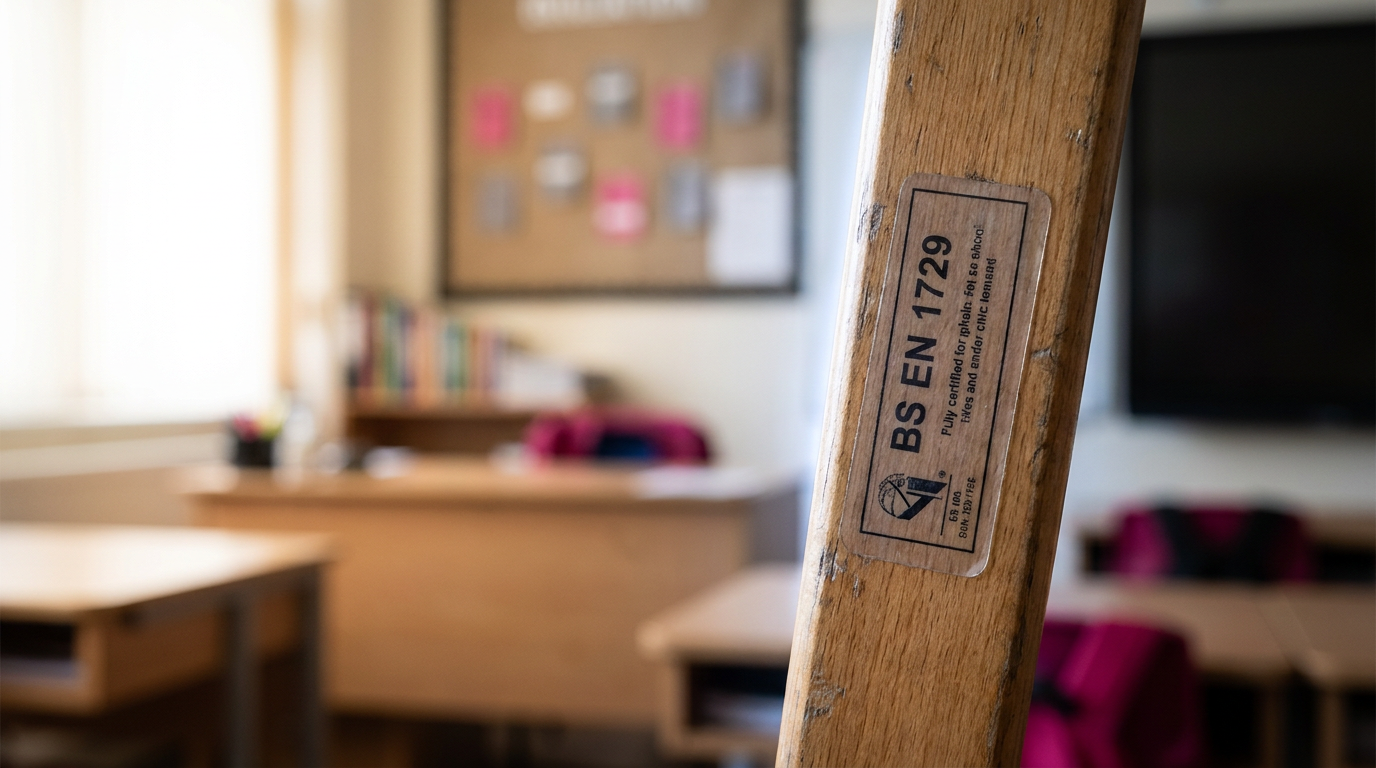
The foundation of school furniture regulations UK is a set of British and European Standards (BS EN) that specify requirements for strength, durability, stability, and, most importantly, safety. BS EN 1729 ‘Furniture – Chairs and tables for educational institutions’ is the most critical standard. It is split into two parts:
- BS EN 1729-1: Focuses on functional dimensions. This part ensures that furniture is appropriately sized for different age groups, promoting good posture and preventing musculoskeletal issues. It uses a ‘size mark’ system to make procurement straightforward.
- BS EN 1729-2: Covers safety requirements and test methods. This involves rigorous testing for stability, strength, and durability to ensure furniture can withstand the demands of a busy school environment without tipping, breaking, or creating hazards.
Beyond BS EN 1729, other regulations are also vital. The Furniture and Furnishings (Fire) (Safety) Regulations dictate the fire resistance of materials, foams, and fillings used in upholstered items. A key document from the UK government outlines upcoming changes, with the Furniture and Furnishings (Fire) (Safety) (Amendment) Regulations 2025 set to introduce new standards [1]. Also, BS EN 16121 applies to non-domestic storage furniture, covering items like bookcases and cupboards, assessing their safety, strength, and durability.
Understanding this Core UK Standards & Legislation is the first step in a compliant Procurement & Compliance Process. When sourcing furniture, you should actively seek confirmation from suppliers that their products meet these specific standards. Reputable suppliers, like us at Cost Cutters UK, will provide this documentation as a matter of course.
Why Is Adhering to School Furniture Regulations UK So Important?
Adhering to school furniture regulations UK offers three primary benefits: ensuring student safety, enhancing the learning experience, and guaranteeing long-term value for your investment. Firstly, compliance is fundamental to Practical Safety in the School Environment. Furniture that meets BS EN 1729-2 standards has been tested to prevent common accidents like chairs tipping over or tables collapsing. According to guidance from educational furniture specialists, non-compliant furniture is a leading cause of preventable classroom injuries [4].
Secondly, ergonomically correct furniture, as specified by BS EN 1729-1, directly impacts student concentration and health. A study referenced by Enable Education (2023) highlights that correctly sized chairs and desks improve posture, reduce fidgeting, and can increase a student’s ability to focus for longer periods [3]. This creates a more effective and comfortable learning atmosphere.
Finally, compliant furniture is an investment in durability. Products tested to these standards are built to last, reducing the total cost of ownership by minimising the need for frequent repairs and replacements. This allows schools to allocate their budgets more effectively. We’ve seen firsthand how investing in compliant items initially saves significant time and money down the line, avoiding the stress of equipment failure and potential liability.
Key UK Furniture Standard Requirements
| Standard | Focus Area | Key Requirement | Relevance for Schools |
|---|---|---|---|
| BS EN 1729-1 | Ergonomics & Sizing | Specifies dimensions based on pupil height (size marks) | Promotes good posture; prevents discomfort and distraction. |
| BS EN 1729-2 | Safety & Durability | Tests for stability, strength, and impact resistance | Prevents accidents from tipping or structural failure. |
| FF(F)S Regulations | Fire Safety | Governs the flammability of upholstery and fillings | Crucial for safety and legal compliance in all school areas. |
| BS EN 16121 | Storage Furniture | Ensures stability and strength of cupboards/shelving | Prevents heavy units from tipping over, especially when loaded. |
How to Manage the Procurement & Compliance Process
A structured approach to the Procurement & Compliance Process is essential for meeting school furniture regulations UK. It transforms a potentially complex task into a manageable strategy that protects both students and your school’s budget.
First, begin with a thorough needs analysis. This involves auditing your existing furniture, identifying gaps, and consulting with teaching staff about classroom needs. Consider the age and size of the students who will use the furniture to determine the correct ‘size marks’ as per BS EN 1729-1.
Next, vet your suppliers rigorously. Don’t just focus on the initial price. Ask for clear evidence of compliance. A reliable supplier should be able to provide certification or documentation proving their products meet the relevant Core UK Standards & Legislation. At Cost Cutters UK, we provide this information upfront, because we believe in transparency. This is also where our Bulk Buy Discounts can offer significant value, allowing you to equip entire departments or year groups compliantly and affordably.
Finally, maintain meticulous records. Keep copies of all certifications and invoices detailing the specifications of the purchased furniture. This documentation is your proof of due diligence in the event of an inspection by an authority like the Health and Safety Executive (HSE) or an insurance claim. Our “Design To Install We Do It All!” service includes managing this paperwork, Saving Time & Stress for busy school managers.
#### Case Study: A Primary School’s Furniture Overhaul
Challenge: A multi-academy trust noticed a high rate of furniture breakage and several minor student injuries related to unstable chairs at one of its primary schools. Their existing procurement process was fragmented and focused solely on the lowest unit cost.
Solution: We were brought in to conduct a full site audit. We proposed a phased replacement plan using BS EN 1729-compliant furniture, correctly sized for each year group from Reception to Year 6. The school leveraged our Bulk Buy Discounts and flexible payment options.
Results: In the 12 months following the installation, the school reported a 90% reduction in furniture-related maintenance requests and zero reported injuries from tipping chairs. Teachers also noted improved student focus during lesson time.
Key Insight: A procurement strategy based on compliance and total cost of ownership, rather than just initial price, delivers superior safety outcomes and better long-term financial value.
Important Considerations
While this guide provides a strong foundation, it’s based on the regulations and standards available as of June 2026. Legislation, particularly concerning fire safety, is subject to change. Therefore, it is crucial for procurement managers to typically verify the very latest requirements from official sources like the gov.uk website before making a large purchase. The information here is for guidance and does not constitute legal advice.
An alternative approach to buying new is furniture refurbishment. For certain high-quality items with a solid frame, reupholstering with compliant fabrics can be a cost-effective and sustainable option. However, this process must be handled by specialists who can certify that the refurbished item meets all current fire and safety standards. This is often more complex than purchasing new, certified products.
If you are undertaking a large-scale project, such as a new build, a complete block refurbishment, or specifying furniture for a Special Educational Needs (SEN) environment, we strongly recommend seeking professional guidance. Our experienced team can help you handle the complexities of compliance, space planning, and ergonomic suitability. Our “Design To Install We Do It All!” service is designed for exactly these scenarios, ensuring every detail is covered from start to finish.
Navigating Compliance with Confidence
To conclude, navigating the landscape of school furniture regulations UK is a critical responsibility that directly impacts student safety, wellbeing, and educational attainment. By focusing on key standards like BS EN 1729, understanding fire safety laws, and implementing a robust procurement process, you can ensure your institution is not only compliant but also providing an effective possible physical environment for learning. This isn’t just about ticking boxes; it’s about making a strategic investment in your students’ future.
With over 35 years of experience and a service Rated Excellent On Trustpilot, we at Cost Cutters UK are committed to helping educational institutions make informed choices. We simplify the complexities of compliance, offering a wide range of certified furniture, Bulk Buy Discounts, and flexible payment options like Credit Accounts Or Pay Flexibly. Let us help you create safe, durable, and inspiring learning spaces.
Ready to ensure your school’s furniture is fully compliant? Book a Free Space Planning Consultation with our specialists today and let us handle the details, Saving Time & Stress.
Frequently Asked Questions about school furniture regulations UK
What is school furniture regulations UK?
The term ‘school furniture regulations UK’ refers to the collection of British and European Standards (BS EN) that dictate the safety, strength, dimensions, and fire resistance of furniture intended for educational institutions. Key amongst these are BS EN 1729 for sizing and safety and the Furniture and Furnishings (Fire) (Safety) Regulations. Compliance is essential for ensuring a safe learning environment and meeting legal obligations.
What is compliance in a school?
In a school context, compliance means actively adhering to all relevant laws, regulations, and standards set by educational and governmental bodies. This covers everything from safeguarding and data protection to health and safety. Regarding furniture, compliance involves procuring and maintaining items that meet specific safety and ergonomic standards, such as BS EN 1729, to protect students and staff.
What are the safety standards for school tables?
The primary safety standards for school tables are outlined in BS EN 1729-2. This standard includes rigorous tests for stability to prevent tipping, strength to withstand expected loads without collapsing, and durability to endure the wear and tear of a school environment. It ensures there are no sharp edges or entrapment points that could cause injury, forming a core part of Practical Safety in the School Environment.
What are five general safety rules in school?
Whilst not exhaustive, five key safety rules include maintaining clear corridors, following fire drill procedures, using equipment only under supervision, reporting any hazards immediately, and ensuring all furniture is stable and fit for purpose. This last point directly connects to procuring furniture that meets UK regulations, as compliant items are inherently designed to minimise physical risk in the classroom.
How does fire safety apply to school furniture?
The Furniture and Furnishings (Fire) (Safety) Regulations apply to any upholstered items, such as staff room sofas, reception seating, or classroom soft furnishings. These rules require materials, fillings, and covers to meet specific levels of fire resistance to slow the spread of flames and reduce smoke production in the event of a fire. Checking for compliance labels is a critical part of the procurement process.
What are the 5 C’s of compliance?
In a general business context, the 5 C’s of compliance often refer to Commitment from leadership, Control activities, Communication, Competence and training, and Continuous improvement. For a school’s furniture procurement, this means leadership commits to a safety-first budget, controls are in place to check supplier certifications, and the process is reviewed regularly to adapt to new regulations.
What are the key areas of compliance for furniture?
The five key areas of compliance for school furniture are ergonomic sizing (BS EN 1729-1), structural safety and stability (BS EN 1729-2), fire resistance (Fire Safety Regulations), material toxicity (REACH), and durability. A compliant procurement process must verify that a product meets the requirements in all these areas to be considered safe and appropriate for school use.
What are safety considerations?
Safety considerations are the factors and potential risks that must be evaluated and mitigated when planning an activity, using a space, or purchasing equipment. For school furniture, this includes assessing the risk of tipping, collapse, entrapment of fingers or limbs, sharp edges, and the flammability of materials. Regulations are designed to address these very considerations systematically.
Can I use office furniture in a school?
You can, but only if it meets the specific standards for educational environments, which are often more rigorous than for typical offices. For example, an office chair may not have been tested to the same stability and durability standards as a BS EN 1729-compliant school chair. It is typically safer and more appropriate to procure furniture specifically designed and certified for educational use.
Why are there different furniture sizes for schools?
Furniture is sized differently to match the anthropometric data of children at different developmental stages, as specified in BS EN 1729-1. Using furniture that is too large or too small can cause poor posture, discomfort, and musculoskeletal strain. Providing size-appropriate tables and chairs is crucial for student health, comfort, and their ability to concentrate in class.
References
- GOV.UK (2024). A government publication outlining the upcoming amendments to the Furniture and Furnishings (Fire) (Safety) Regulations for 2025.
- Edu-Quip (2023). A buying guide blog post detailing practical considerations for selecting school tables and chairs, with reference to UK standards.
- Enable Education (2023). An informational blog post discussing the importance of tests and certifications like BS EN 1729 for educational furniture.
- David Bailey Furniture (n.d.). An article discussing various aspects of classroom safety, including the role of properly specified furniture.
- Education Business UK (2022). An article highlighting the importance of safety considerations in the educational environment, including furniture procurement.
Conclusion
Key Takeaways and Next Steps
In summary, school furniture regulations UK provide a critical framework for ensuring the safety, health, and well-being of students. Adhering to these standards, including the Furniture and Furnishings (Fire) (Safety) Regulations and BS EN 1729, is essential for creating learning environments that are not only compliant but also conducive to concentration and physical development. From fire retardancy to ergonomic sizing and structural durability, these rules guide the procurement process to protect children and support educational outcomes.
Navigating the complexities of compliance can be challenging. At Costcutters UK, we specialise in providing high-quality, fully compliant educational furniture that meets all necessary UK standards. Explore our extensive range of BS EN 1729 certified tables and chairs, or contact our expert team today for personalised guidance on your procurement needs. Let us help you create a safer and more effective learning space for your students.