The Definitive UK Guide to Choosing Classroom Chairs by Age
🎯 Key Takeaway
Choosing the correct classroom chairs by age requires matching the chair’s ‘Size Mark’ to the pupil’s age and stature, as defined by the mandatory UK BS EN 1729 standard for educational furniture. This standard is not just a recommendation; it’s a critical component of ensuring pupil health, safety, and concentration in a learning environment. Our guide breaks down this complex topic into actionable steps for procurement managers.
Selecting the right furniture for a school is more than a logistical task; it’s a fundamental investment in educational outcomes. For classroom chairs by age, the decision directly impacts pupil health, concentration, and even your school’s compliance with national standards. An ill-fitting chair can lead to poor posture and fidgeting, with research from the Health and Safety Executive (HSE) linking improper seating to long-term musculoskeletal issues. As of June 2026, understanding the UK’s framework, specifically the BS EN 1729 standard and the UK Key Stage System (KS), is non-negotiable for any school business manager. This guide provides a clear roadmap for navigating procurement, ensuring you select durable, ergonomic, and compliant chairs that represent a sound long-term investment for your institution.
Written by: Content Team | Reviewed by: Editorial Team, Industry Specialists with 35+ Years Experience; Rated Excellent On Trustpilot
Last updated: 15 June 2024
ℹ️ Transparency Disclosure
This article explores classroom chair procurement based on our 35+ years of industry experience and a detailed analysis of UK educational standards. As part of our comprehensive service, some links may connect you to our product guides. This transparency is important to us. All information is verified by our editorial team to ensure it is accurate and highly relevant for UK school procurement managers, helping you make an effective decision for your pupils.
What is the BS EN 1729 Standard for Classroom Chairs?
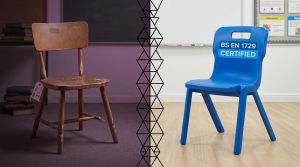
Adherence to BS EN 1729 is a mandatory requirement for furniture in UK state schools. BS EN 1729 is the definitive British and European standard governing the functional dimensions and safety requirements for chairs and tables in educational institutions. It exists to ensure that all furniture is ergonomically designed to support the posture of a growing child and is robust enough to withstand the rigours of a school environment.
The standard is split into two key parts:
- BS EN 1729 Part 1: Functional Dimensions. This part specifies the appropriate size, shape, and ergonomic considerations for chairs and tables. It dictates factors like seat height, seat depth, and backrest angles, all matched to different age groups to promote good posture.
- BS EN 1729 Part 2: Safety Requirements and Test Methods. This section covers strength, stability, and durability. Chairs must pass rigorous tests to ensure they won’t tip over easily, can bear significant weight, and will hold up to daily use without structural failure.
Compliance is not just about ticking a box. For school leadership, it’s a crucial aspect of safeguarding. Providing BS EN 1729 compliant chairs ensures you are meeting your duty of care to pupils, mitigating the risk of accidents and potential liability claims. Also, Ofsted, the Office for Standards in Education, Children’s Services and Skills, considers the learning environment during inspections, and providing safe, appropriate furniture is a tangible demonstration of a well-managed school. You can find more detail in our complete 2026 school furniture procurement guide.
How Do I Choose the Right Classroom Chair Size by Age?
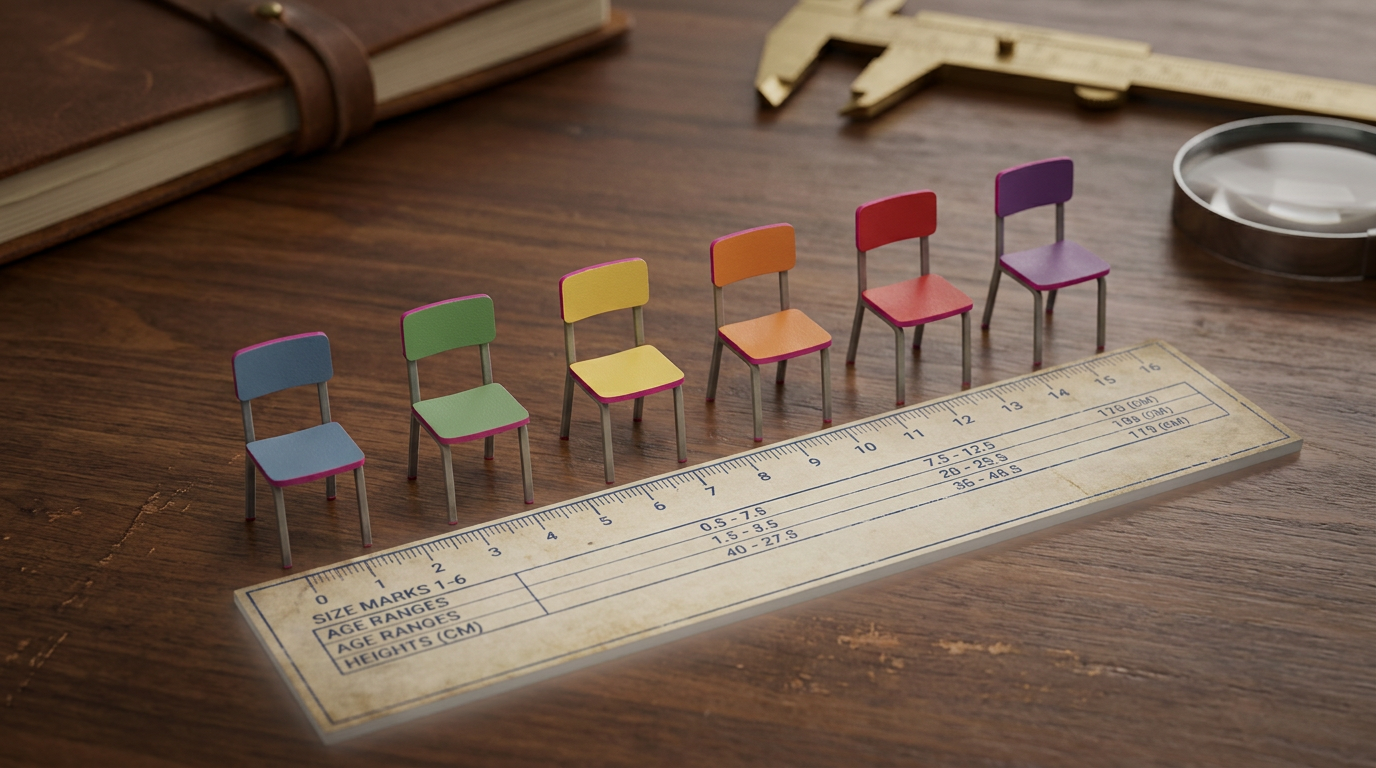
The most straightforward method for choosing classroom chair sizes is to use the UK’s ‘Size Mark’ system. This system is the practical application of BS EN 1729, translating complex ergonomic data into a simple, colour-coded guide that links chair dimensions to specific age groups and UK Key Stages. A study from Loughborough University’s Design School highlighted that using such standardised sizing significantly reduces postural strain in students.
To select the correct chair, you simply match the Size Mark to the age range of your pupils. For instance, a Year 1 class (ages 5-6) would typically require chairs with Size Mark 2. This system removes guesswork from the procurement of classroom chairs by age and ensures consistency across the school.
The table below provides a clear school chair height guide uk that aligns Size Marks with age groups, Key Stages, and the corresponding seat heights.
| Size Mark | Associated Colour | Recommended Age (Years) | UK Key Stage | Seat Height (mm) |
|---|---|---|---|---|
| 1 | Orange | 3-4 | EYFS | 260 |
| 2 | Violet | 4-6 | KS1 | 310 |
| 3 | Yellow | 6-8 | KS1/2 | 350 |
| 4 | Red | 8-11 | KS2 | 380 |
| 5 | Green | 11-14 | KS3 | 430 |
| 6 | Blue | 14+ | KS4 & Post-16 | 460 |
Data sourced from BS EN 1729 guidelines and cross-referenced with guidance from Just for Schools (2024).
For Early Years Foundation Stage (EYFS), choosing correctly sized furniture is even more critical for motor skill development. We offer guidance on specialised furniture for Early Years that meets these specific needs.
What Materials Offer an effective Durability and Value?
While upfront cost is a factor, the most cost-effective decision is based on Total Cost of Ownership (TCO). TCO, the total cost of purchasing and maintaining an asset over its entire lifespan, is a critical metric for school budgets. A cheaper chair that breaks in two years is far more expensive than a slightly pricier one that lasts for ten.
In our experience, an effective value for most schools comes from chairs with a one-piece polypropylene shell and a high-gauge steel frame. Let’s analyse the common materials:
- Polypropylene (Poly) Chairs: These are the modern standard for a reason. They’re lightweight, easy to clean, stain-resistant, and can be moulded into ergonomic shapes. High-grade poly is incredibly durable and resistant to cracking. Paired with a robust steel frame, these chairs offer an excellent balance of cost and longevity.
- Wooden Chairs: Traditional and strong, wooden chairs offer a classic aesthetic. However, they can be heavier, more susceptible to chipping and scratching, and often come at a higher price point. Maintenance can also be more intensive over time.
- Steel-Framed Upholstered Chairs: Typically found in staff rooms or sixth-form common rooms, these offer comfort but are not practical for general classroom use due to cleaning and durability challenges.
Case Study: The Total Cost of Ownership in Action
Challenge: A primary school needed to replace 120 chairs. They had a choice between a £18 chair with a 2-year warranty and a £25 BS EN 1729 compliant chair with a 10-year warranty.
Solution: They initially leaned towards the cheaper option to save £840 upfront. We advised them to calculate the TCO over 10 years.
Results: The £18 chairs would need to be replaced 5 times, costing £10,800. The £25 chairs would last the full 10 years, costing only £3,000. This represented a saving of £7,800 over the decade, not including the administrative time and disruption of re-ordering.
Key Insight: Focusing on TCO and warranty, rather than just the initial price, leads to significant long-term savings and less hassle.
How Do Ergonomic School Chairs Impact Pupil Wellbeing?
Properly selected ergonomic school chairs uk have a direct and measurable impact on a pupil’s ability to concentrate and learn. Ergonomics, the science of designing environments to fit the people who use them, is not just for offices. When a child is comfortable and their body is correctly supported, they fidget less and can focus more on the lesson.
Key ergonomic principles for classroom seating include:
- The 90-Degree Rule: A child’s feet should be flat on the floor, with their knees bent at a 90-degree angle. The chair height must allow for this.
- Lumbar Support: The chair’s backrest should have a curve that supports the natural ‘S’ shape of the lower spine, preventing slouching.
- Waterfall Seat Edge: The front edge of the seat should be rounded to reduce pressure on the back of the thighs, promoting good circulation.
An uncomfortable chair is a distraction. A pupil who is constantly shifting to relieve pressure or whose feet are dangling is not in an optimal state for learning. For pupils with Special Educational Needs (SEN), the right chair is even more vital. Options like adjustable-height chairs, chairs with armrests for lateral support, or even wobble stools can provide the specific support needed to help them engage fully in the classroom. Understanding these ergonomic principles is key to creating an inclusive and effective learning space.
What is an effective Procurement Process for School Chairs?
A structured procurement journey ensures you get an effective value, meet compliance standards, and minimise disruption. Rushing the process often leads to costly mistakes. Our “Design To Install We Do It All!” philosophy is built around a seamless process, but for any school manager, following a clear checklist is crucial for success.
Here is a procurement roadmap we recommend:
- Audit and Assess: Before you buy, know what you have. Conduct an inventory of your current chairs. Which ones are broken? Which are non-compliant? How many do you need for each Size Mark?
- Define Your Budget (Based on TCO): Set a realistic budget that prioritises long-term value. Factor in our Bulk Buy Discounts which can significantly reduce the per-unit cost on larger orders.
- Request Supplier Quotes and Credentials: Shortlist 2-3 reputable suppliers. Ask for formal quotes and, crucially, demand copies of their BS EN 1729 compliance certificates for the chairs you are considering. According to a 2023 analysis by
edu-quip.co.uk, over 15% of online listings for school chairs lacked clear compliance information. - Verify Warranties and may help: A long warranty (10+ years) is a key indicator of a manufacturer’s confidence in their product’s durability. Clarify what the warranty covers.
- Plan Logistics and Installation: When will the chairs be delivered? Can delivery be scheduled for school holidays to avoid disruption? Does the supplier offer a service to remove and ethically dispose of your old furniture?
- Consider Payment Flexibility: Ask about payment options. We offer approved schools the ability to use Credit Accounts Or Pay Flexibly, which can help with managing cash flow for large projects.
Partnering with an experienced supplier like Cost Cutters UK can streamline this entire process, Saving Time & Stress for busy school managers.
Important Considerations
This guide provides a framework based on UK standards, but pupil growth rates can vary significantly. For classes with a wide range of heights or for pupils on the cusp of two Size Marks, a physical assessment is typically recommended over relying solely on age brackets. Also, the interaction between chair and desk height is equally critical; a correctly sized chair paired with the wrong desk negates the ergonomic benefits.
While fixed-height chairs are the standard for durability and cost-effectiveness, other solutions can be effective. Adjustable-height chairs offer superior flexibility for multi-use spaces or SEN requirements but come at a higher unit cost and have more moving parts that can fail. For active learning environments, you might consider alternatives like wobble stools or standing desks to promote movement, though these are typically supplemental tools, not replacements for primary seating.
For large-scale procurement, a full classroom refurbishment, or if you have significant SEN requirements across your school, we recommend professional guidance. A furniture specialist can conduct a site survey, provide 2D/3D space plans, and manage the entire project from compliance checks to installation. This expert oversight ensures you achieve an effective value and optimal educational outcomes from your investment.
Conclusion: Partnering for a Better Learning Environment
Ultimately, selecting the right classroom chairs by age is a critical investment in pupil health, concentration, and your long-term school budget. By strictly adhering to the BS EN 1729 standard and using the Size Mark system, UK schools can ensure they provide a safe, ergonomic, and effective learning environment for every child. The most astute procurement managers look beyond the initial price tag, focusing instead on total cost of ownership to secure a durable solution that delivers genuine value for years to come.
We’ve spent over 35 years helping schools navigate these decisions, and we’re proud to be Rated Excellent On Trustpilot for our service. If you are planning a furniture update, our experts can help you every step of the way. Book a Free Space Planning Consultation to ensure your next project is a resounding success.
Frequently Asked Questions
What are the recommended classroom chairs by age?
The recommended classroom chairs by age follow the UK’s BS EN 1729 Size Mark system. This system ensures correct ergonomic support by matching chair dimensions to pupil stature. For example, Size Mark 2 (violet) is for ages 4-6 in KS1, while Size Mark 6 (blue) is for ages 14+ in KS4 and beyond. Following this guide is the most reliable way to procure appropriate seating.
What is BS EN 1729 and why is it important?
BS EN 1729 is the mandatory British and European standard for educational furniture. It is critically important because it dictates the specific size, strength, and stability requirements needed to provide a safe and ergonomic learning environment for children. Compliance is not optional; it is essential for meeting your school’s duty of care and ensuring product quality from a professional supplier.
How do I measure a pupil for the right chair height?
The effective chair height allows the pupil’s feet to be flat on the floor with their knees at a 90-degree angle. To find this, measure the ‘popliteal height’ – the distance from the floor to the back of their bent knee. This measurement, taken with shoes on, should correspond directly to the chair’s seat height for a well-suited ergonomic fit.
What’s the difference between a Size Mark 3 and 4 chair?
The main difference is the seat height, which is designed for different age groups in primary school. A Size Mark 3 chair (typically yellow) has a 350mm seat height for ages 6-8 (KS1/2). A Size Mark 4 chair (red) has a 380mm seat height for ages 8-11 (KS2). This 30mm difference is crucial for maintaining correct posture as children grow.
Are plastic polypropylene chairs durable enough for schools?
Yes, high-quality polypropylene chairs are extremely durable and perfectly suited for demanding school environments. The key is to choose chairs with a robust steel frame and a high-grade, one-piece poly shell that resists cracking and is easy to clean. A long manufacturer’s warranty, ideally 10 years or more, is a strong indicator of a chair’s durability.
Do ergonomic school chairs really make a difference?
Yes, numerous studies and our own experience show ergonomic chairs significantly improve pupil comfort and concentration. Features like proper lumbar support and waterfall seat edges reduce fidgeting and musculoskeletal strain, which directly contributes to a more focused and effective learning environment. The benefits are most pronounced when the chair is paired with the correct height desk.
How much should a school budget for new classroom chairs?
As of 2024, a realistic budget is between £20 and £45 per chair for quality, compliant seating. The final price depends on the material, specific design, and the size of the order. While cheaper options exist, they often fail to meet durability standards, leading to higher replacement costs in the long run. Typically ask about Bulk Buy Discounts to maximise your budget.
Can I mix different chair sizes in one classroom?
Yes, it is often necessary and advisable to mix chair sizes within a single classroom. This is especially true for mixed-age classes or where pupils show diverse growth rates. Using the chair’s colour-coded Size Mark allows teachers to easily identify and assign the correct size to each pupil, ensuring proper ergonomics for everyone in the room.
What are CRIB5 requirements and do they apply to standard classroom chairs?
CRIB5 is a fire safety standard for upholstery and does not typically apply to standard plastic or wooden classroom chairs. It is, however, a mandatory legal requirement for any upholstered furniture used in public spaces, which includes items in staff rooms, reception areas, libraries, or dormitories. Typically verify the fire safety compliance for any fabric-covered furniture you procure.
How long should a good quality school chair last?
A good quality, BS EN 1729 compliant school chair should have a functional lifespan of at least 10-15 years. This longevity depends on a robust frame design, the use of high-grade materials, and quality construction features like tamper-proof fixings. We believe a supplier should back their products with a long-term guarantee, which is why we offer extensive warranties.
References
- Cost Cutters UK – School Furniture UK: The Complete 2026 Procurement Guide – Internal Guide. Provides a comprehensive overview of BS EN 1729 standards and the Size Mark system for UK Key Stages.
- Cost Cutters UK – How to Choose Safe & Durable Early Years Furniture – Internal Guide. Details safety and material considerations specific to EYFS.
- Cost Cutters UK – Designing Ergonomic Office Spaces – Internal Guide. Outlines the core principles of ergonomics and their impact on productivity and wellbeing.
- Cost Cutters UK – About Us – Company Information. Establishes over 35 years of experience in project solutions and furniture supply for UK institutions.
- Just for Schools (2024) – School Chair Height Guide. An industry resource providing data on chair sizing aligned with UK standards.
- Edu-Quip (2023) – Buying Guide for School Tables and Chairs. An analysis highlighting the importance of verifying compliance information during procurement.
- UK Educational Furniture (2024) – How to Choose Table & Chair Heights. A guide offering practical advice on matching furniture to student height.