Advanced Ergonomics: A Deep Dive into Modern Office Chair Features
🎯 Key Takeaway
Advanced ergonomics in office chairs refers to a sophisticated system of adjustable components and dynamic mechanisms designed to provide tailored support to an individual’s body, reduce musculoskeletal strain, and promote healthy posture during prolonged periods of sitting. Key features include dynamic lumbar support, 4D armrests, seat depth adjustment, and responsive tilt mechanisms. Proper adjustment is crucial for preventing work-related musculoskeletal disorders (MSDs), which affect thousands of UK workers annually. Investing in chairs with advanced ergonomics leads to measurable improvements in employee comfort, focus, and overall productivity. This guide analyses each feature in detail, helping you make an informed investment in workplace health and efficiency.
In the UK, an estimated 470,000 workers suffered from work-related musculoskeletal disorders in 2020/21, according to the Health and Safety Executive (HSE). A significant portion of these issues, particularly back and neck pain, can be linked to inadequate seating. For advanced ergonomics, it’s crucial to understand that this is more than just a marketing term; it represents a comprehensive system designed to improve both posture and productivity. While many chairs are labelled ‘ergonomic’, not all are created equal. This guide dissects the specific, high-end features that differentiate a truly advanced chair from a basic one, ensuring your investment enhances wellbeing and complies with DSE regulations chair requirements. For a broader perspective, see our guide on designing ergonomic office spaces.
👤 Written by: Costcutters UK Content Team
Reviewed by: Costcutters UK Editorial Team, 35+ Years in Commercial Furniture Supply
Last updated: 15 June 2026
ℹ️ Transparency Disclosure: This article explores advanced ergonomics based on independent research, industry standards, and our 35+ years of experience in furniture specification. Some links may connect to our services. All information is verified by our editorial team to ensure accuracy and compliance with UK regulations.
What Defines Advanced Ergonomics?
There is a significant difference between a basic ergonomic chair and one employing advanced principles. Basic ergonomics typically covers height adjustment and a simple backrest. In contrast, advanced ergonomics is a holistic system that adapts to the user’s specific body shape, size, and movements. This approach is built on three pillars:
- Adjustability: The ability to tailor every key component of the chair – from armrest position to seat depth – to fit the user’s unique physical dimensions. This is where the science of anthropometry, the study of human body measurements, comes into play.
- Responsiveness: The chair’s mechanism actively moves with and supports the user as they shift, lean, and recline. This concept, often called dynamic seating, encourages micro-movements that prevent static muscle load.
- Support: The chair is engineered to maintain a healthy posture, particularly the natural S-curve of the spine, even during prolonged use. This actively works to prevent the development of a Musculoskeletal Disorder (MSD), which refers to injuries and disorders affecting the human body’s movement system, including muscles, tendons, ligaments, and nerves.
Research published by organisations like the London School of Business and Administration (LSBA) in their Advanced Ergonomics Certification programme (2024) highlights that a failure to provide this level of tailored support is a leading cause of workplace discomfort and injury. We believe a chair isn’t truly ergonomic unless it adapts to the person, not the other way around.
The Core Components: A Feature-by-Feature Analysis
The effectiveness of an advanced ergonomic chair lies in the quality and range of its adjustable components. Understanding these ergonomic chair adjustments is key to making an informed choice. It’s the synergy between these features that creates a truly supportive seating experience.
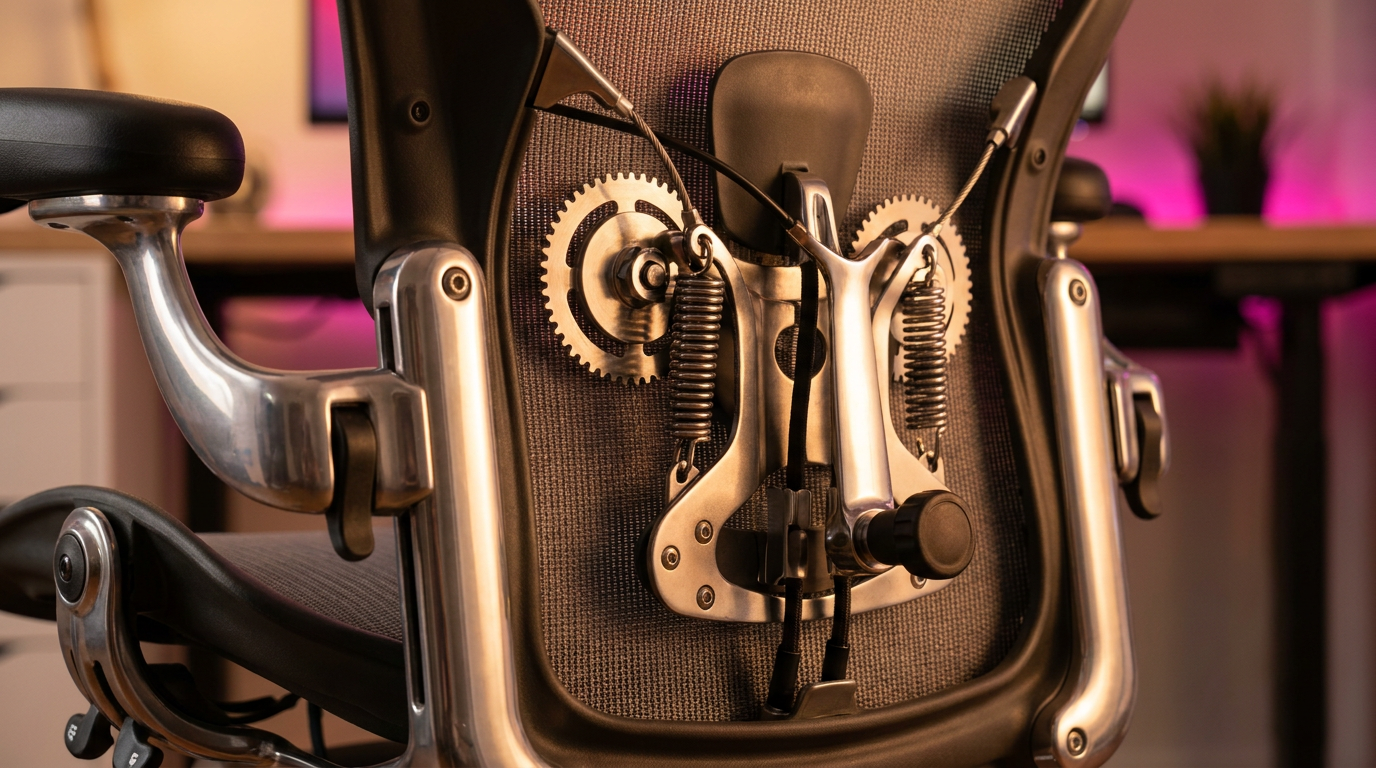
Dynamic Lumbar Support
Static lumbar support is a fixed curve in the chair’s back. A better option is height-adjustable support. However, the gold standard is dynamic and depth-adjustable lumbar support adjustment. This feature allows the user to not only position the support vertically to match their spinal curve but also to adjust its pressure forwards and backwards. According to guidance from UNC’s Environmental Health and Safety department (2023), proper lumbar support is critical for reducing intradiscal pressure by up to 50%. It actively supports the natural lordotic curve of the lower back, preventing the user from slumping and placing strain on their spine.
Seat Depth and Angle Adjustment
A common mistake is using a chair with a seat pan that is too long or too short. The ‘three-finger rule’ is a great guideline: you should be able to fit three fingers between the back of your knee and the front edge of the seat. Seat depth adjustment allows the seat pan to slide forwards or backwards to accommodate different thigh lengths. This improves blood circulation and reduces pressure on the back of the knees. As explained in a guide from Newtralchair.com (2024), this adjustment is fundamental to achieving the 90/90/90 sitting rule, where your hips, knees, and ankles are at 90-degree angles for optimal posture.
4D Armrests (Height, Width, Depth, and Pivot)
Armrests are often overlooked, but their adjustability is vital for reducing neck and shoulder strain. The levels of adjustment are typically defined as:
- 1D: Height adjustable.
- 2D: Height and width.
- 3D: Height, width, and depth (forward/backward).
- 4D: Height, width, depth, and pivot (angling inwards/outwards).
4D armrests provide precise support for the forearms during different tasks. When typing, armrests should be positioned to allow the shoulders to remain relaxed and the wrists straight. When reading or using a tablet, they can be pivoted inwards to provide support closer to the body. This level of customisation is explored in many of The Ultimate Furniture Buying Guides for UK Education, Office & Leisure.
Advanced Chair Mechanisms Explained
The mechanism is the ‘engine’ of an ergonomic chair, dictating how the backrest and seat pan move in relation to each other. This is central to the concept of dynamic seating, which encourages movement to reduce fatigue and improve focus. A Synchro-Tilt Mechanism is a sophisticated system where the seat and backrest are linked but tilt at different ratios, typically 2:1 (back-to-seat). This means that as you recline, the backrest tilts twice as much as the seat pan, allowing you to open your posture while keeping your feet comfortably on the floor and your eyes level with your monitor.
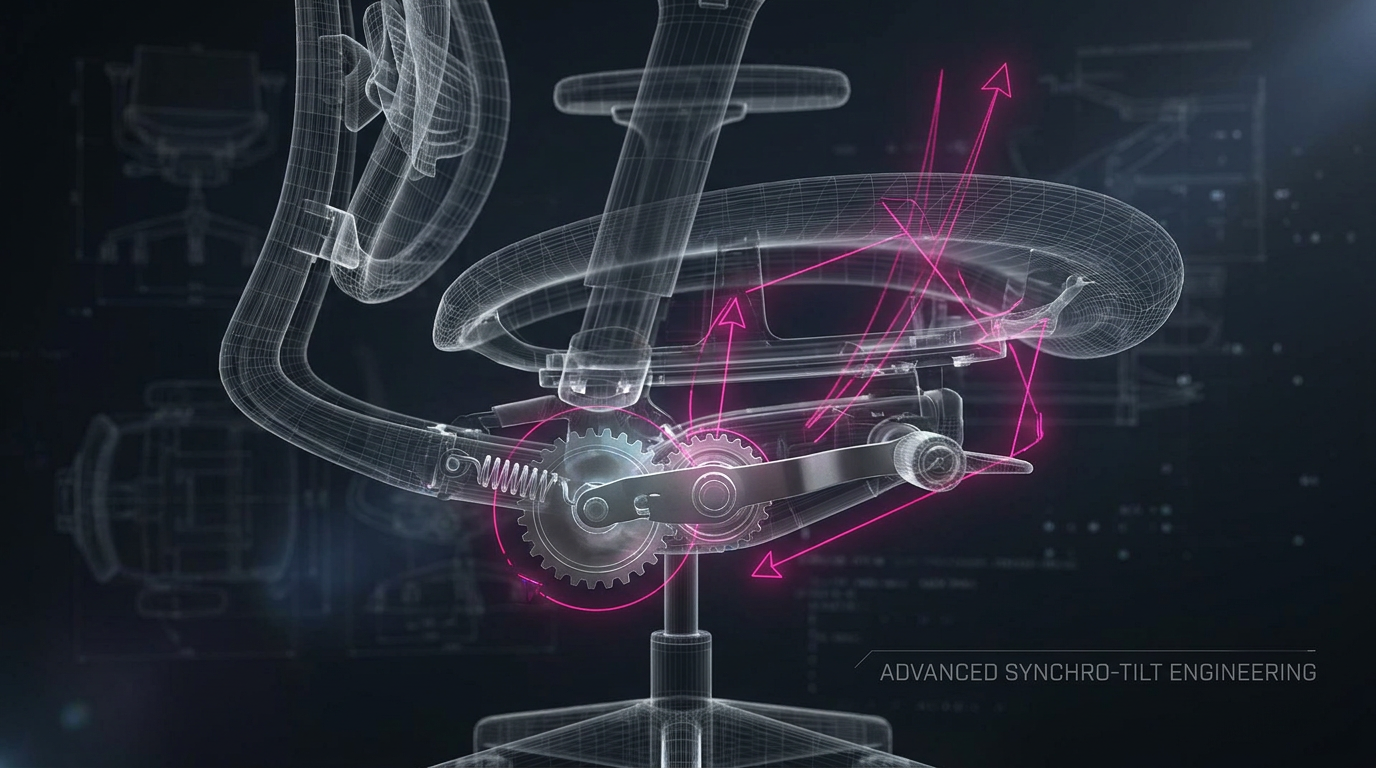
A conference paper on advanced ergonomics published on ScienceDirect (2017) notes that active seating can significantly reduce static muscle fatigue. This is because the chair’s responsive movement promotes blood flow and prevents the stiffness associated with sitting in one position for too long. Understanding the differences between mechanisms helps demystify many common furniture buying misconceptions.
| Mechanism Type | Description | Best For | Typical Cost Bracket |
|---|---|---|---|
| Task Mechanism | A simple mechanism where the backrest angle can be adjusted, but the seat is fixed. | Basic, short-duration tasks. Not recommended for prolonged use. | Low (£) |
| Asynchronous Tilt | The seat pan and backrest angles can be adjusted and locked independently. | Users who require highly specific, fixed postures for specialised tasks. | Medium (££) |
| Synchro-Tilt | Seat and backrest tilt together in a pre-set ratio (e.g., 2:1). Encourages natural, dynamic movement. | All-day general office use, promoting active sitting and comfort. | Medium-High (£££) |
| Advanced Synchro | A synchro-tilt mechanism with added features like weight-tension control, multi-position lock, and forward tilt. | Demanding users and organisations prioritising maximum ergonomic benefit. | High (££££) |
### Case Study: A Hypothetical Scenario
Challenge: A mid-sized UK accounting firm noticed a 15% increase in sick days related to back and neck pain over two years, costing them an estimated £30,000 annually in lost productivity. Their existing ‘ergonomic’ chairs were basic task chairs with minimal adjustability.
Solution: We implemented a phased replacement of 50 workstations with chairs featuring advanced ergonomics, specifically advanced synchro-tilt mechanisms, dynamic lumbar support, and 4D armrests. Employees received brief training on how to perform their own ergonomic chair adjustments.
Results: Within 12 months, self-reported musculoskeletal discomfort dropped by 60%, and absenteeism related to back pain fell by 80%. The firm calculated a full return on investment in just 18 months.
Key Insight: Investing in genuinely advanced ergonomic seating, paired with user education, delivers measurable financial and wellbeing benefits that far outweigh the initial capital cost.
How Does Advanced Ergonomics Align with UK Workplace Regulations?
Yes, selecting chairs with advanced ergonomic features is the most effective way for an employer to meet and exceed their legal duties in the UK. The primary legislation is the Health and Safety (Display Screen Equipment) Regulations 1992, often called the DSE Regulations. A core part of these regulations is an employer’s duty of care to provide suitable and adjustable equipment for employees who are classified as DSE users.
According to the official guidance from the Health and Safety Executive (HSE), the UK’s government agency for workplace safety, a work chair must be stable and allow the user to find a comfortable position. The DSE regulations chair requirements specify that the chair must have an adjustable seat height and an adjustable backrest in both height and tilt.
Chairs with advanced ergonomics meet these baseline requirements and go much further. Features like seat depth adjustment, dynamic lumbar support, and adjustable armrests directly address the HSE’s goal of ensuring equipment is suitable for the individual. Furthermore, high-quality chairs are often certified to office chair standards UK such as BS EN 1335, which specifies dimensions, safety requirements, and test methods for office work chairs. This provides independent verification that the chair is fit for purpose. This approach to compliance is similar to meeting the stringent requirements outlined in guides for other sectors, such as our guide on school furniture regulations UK.
Frequently Asked Questions About Advanced Ergonomic Chairs
What is advanced ergonomics?
Advanced ergonomics is the science of designing workplace equipment that provides personalised, dynamic support to fit a wide range of body types and tasks. Unlike basic adjustable chairs, it incorporates sophisticated mechanisms and multiple adjustment points to actively promote healthy posture, reduce strain, and prevent musculoskeletal disorders. This ensures a higher level of comfort and safety for the user.
How do I properly adjust an ergonomic office chair?
Start by adjusting the seat height so your feet are flat on the floor and your knees are at a 90-degree angle. Next, set the seat depth to leave a 2-3 finger gap behind your knees. Adjust the lumbar support to fit the curve of your lower back, and finally, set armrest height so your shoulders are relaxed. Typically consult the manufacturer’s guide for specific instructions.
What is the most important feature of an ergonomic chair?
While all features are interconnected, dynamic lumbar support is often considered the most critical. It provides constant support to the lower back’s natural curve, whether you are sitting upright or reclining. This feature is fundamental in preventing and alleviating the lower back pain that affects a vast number of office workers. A good chair must support the spine correctly.
Are expensive ergonomic chairs worth the investment?
Yes, in most cases, a high-quality ergonomic chair is a worthwhile long-term investment in health and productivity. The higher cost reflects superior materials, more reliable mechanisms, extensive research and development, and longer warranty periods. Considering the high cost of absenteeism from musculoskeletal issues, the initial outlay often provides a significant return on investment.
How does an ergonomic chair help with back pain?
An ergonomic chair helps by maintaining the natural ‘S’ curve of the spine and reducing pressure on the vertebrae. Features like adjustable lumbar support, a reclining backrest, and a supportive seat pan work together to prevent slouching. This promotes good posture, which distributes weight evenly and minimises strain on the muscles and ligaments of the back. Proper adjustment is key for this benefit.
What are the UK’s DSE regulations for office seating?
The UK’s Health and Safety (Display Screen Equipment) Regulations 1992 require that an operator’s chair be stable, allow easy movement, and have an adjustable seat height and backrest. The chair must provide adequate support to the user. While the law sets a minimum standard, modern best practice involves providing highly adjustable chairs to meet these requirements effectively for all users.
What is the difference between a synchro-tilt and an asynchronous mechanism?
A synchro-tilt mechanism links the seat and backrest, so they tilt in a set ratio (e.g., 2:1), keeping your feet on the floor. An asynchronous mechanism allows the seat and backrest angles to be adjusted and locked independently of each other. Synchro-tilt is better for general dynamic movement, while asynchronous offers more specialised, static postures.
How long should an ergonomic office chair last?
A high-quality ergonomic chair should last between 7 to 15 years, depending on usage and build quality. Look for chairs with long warranty periods (often 5-10 years) covering the frame and mechanisms. Cheaper chairs may only last 1-2 years before components fail, making them a false economy. Durability is a key factor in the total cost of ownership.
Is a mesh or fabric chair better for ergonomics?
Both materials can be ergonomic; the choice often comes down to personal preference and environment. Mesh offers superior breathability and conforms well to the body, which is great for warmer offices. High-quality foam and fabric offer excellent pressure distribution and can feel more supportive for some users. The underlying frame and adjustments are more important than the material alone.
Can an ergonomic chair fix my bad posture?
An ergonomic chair can significantly help improve posture, but it cannot single-handedly ‘fix’ it. The chair provides the necessary support to make holding a correct posture comfortable and intuitive. However, lasting improvement also requires conscious effort from the user, regular movement, and potentially exercises to strengthen core muscles. It is a tool, not a cure.
Important Considerations
While this guide is based on established ergonomic principles, You should recognise that ergonomics is highly individual. A chair that is well-suited for one person may not suit another due to differences in body size, pre-existing conditions, or job tasks. The effectiveness of any chair is also entirely dependent on its correct adjustment and use, which is a point often missed and can lead to musculoskeletal disorders workplace issues even with good equipment.
An advanced ergonomic chair is a cornerstone of a healthy workspace, but it is not a complete solution. Alternative approaches like sit-stand desks, monitor arms, ergonomic mice, and regular movement breaks are equally important parts of a holistic ergonomic strategy. In our experience, these elements should be considered in conjunction with seating to create a truly supportive environment.
For individuals with chronic pain, specific medical conditions, or complex needs, a standard assessment may not be sufficient. In these cases, we strongly recommend a professional ergonomic assessment from a qualified occupational therapist or certified ergonomist. They can provide a bespoke recommendation tailored to specific medical requirements, ensuring the chosen solution is both safe and effective.
From Features to Fit: Your Next Step in Workplace Wellbeing
Investing in office chairs with advanced ergonomics is a direct investment in the health of your team and the productivity of your organisation. By moving beyond basic adjustments to embrace features like dynamic lumbar support, 4D armrests, and responsive synchro-tilt mechanisms, you create a work environment that actively prevents injury and enhances focus. Understanding these features allows you to see past marketing claims and select seating that delivers tangible, long-term value. We’ve seen firsthand how the right chair can transform an employee’s comfort and output.
At Cost Cutters UK, our “Design To Install We Do It All!” philosophy means we’re here to help. With over 35 years of experience helping businesses and institutions specify furniture that meets both regulatory and human needs, our team can help you handle the options. We offer Bulk Buy Discounts and flexible payment options like Credit Accounts Or Pay Flexibly, making it easier to invest in your team’s wellbeing. If you’re ready to improve your workspace, book a free space planning consultation today to ensure your next furniture investment is a healthy one.
References
- EuroMaTech – Training Course Outline (2024). Details the principles of advanced workplace ergonomics and injury prevention strategies.
- ScienceDirect – Conference Paper (2017). Discusses advanced industrial tools for ergonomics, connecting them to modern manufacturing concepts.
- London School of Business and Administration (LSBA) – Certification Programme (2024). Outlines the curriculum for an advanced certification, highlighting key areas of ergonomic expertise.
- UNC EHS – University Health & Safety Guidance (2023). Provides a general overview of ergonomic principles for office and lab environments.
- Health and Safety Executive (HSE) – UK Government Guidance (2022). Official guidance on the Display Screen Equipment (DSE) regulations for UK employers.
- LinkedIn – Article (2023). Identifies four key elements of ergonomics: posture, force, repetition, and duration.
- Newtralchair.com – Blog Guide (2024). Explains the 90/90/90 rule for proper sitting posture, a foundational ergonomic principle.
Conclusion
From Features to Fit: Your Next Step in Workplace Wellbeing
In summary, advanced ergonomics is a direct investment in the health of your team and the productivity of your organisation. By moving beyond basic adjustments to embrace features like dynamic lumbar support, 4D armrests, and responsive synchro-tilt mechanisms, you create a work environment that actively prevents injury and enhances focus. Understanding these features allows you to see past marketing claims and select seating that delivers tangible, long-term value.
At Costcutters UK, we have over 35 years of experience helping businesses and institutions specify furniture that meets both regulatory needs and human needs. Our team can help you navigate the options.