7 Critical Classroom Design Mistakes That Hinder Learning & Waste Budgets
🎯 Key Takeaway
The most common classroom design mistakes involve poor spatial planning, selecting inappropriate furniture based on price alone, and neglecting crucial sensory factors such as lighting, acoustics, and colour. Static, one-size-fits-all layouts restrict modern teaching methods and hinder student collaboration. Plus, choosing non-compliant or non-durable furniture leads to safety risks and higher long-term replacement costs. Overlooking sensory elements like poor acoustics and harsh lighting can negatively impact concentration, especially for students with Special Educational Needs (SEN). This guide details each mistake and provides practical, UK-specific solutions based on our 35 years of experience.
The impact of a classroom’s physical environment on student learning and wellbeing is significant. Yet, many schools, constrained by tight budgets and time pressures, unknowingly repeat critical classroom design mistakes. These common classroom design flaws not only hinder educational outcomes but also result in wasted funds through premature furniture replacement and inefficient use of space. As of April 2026, the need for adaptable, supportive learning spaces has rarely been greater.
With over 35 years of experience supplying school and educational equipment, we’ve seen firsthand how strategic design transforms a learning environment. This guide identifies the seven most critical errors we see in UK schools and provides authoritative, practical solutions to help you create spaces that truly work for students and staff, ensuring every pound of your budget is invested wisely. We’ll be honest – some of this requires careful planning, but the payoff is immense.
Written by: Content Team | Reviewed by: Editorial Team, 35+ Years Experience; Rated Excellent On Trustpilot
Last updated: 30 April 2026
ℹ️ Transparency Disclosure: This article explores common classroom design mistakes based on over 35 years of industry experience in UK school fit-outs. For full transparency, some links may connect to our specialised services and products. All information is verified by our editorial team to ensure accuracy and relevance for UK educational institutions.
What Are the Most Common Classroom Design Mistakes?
From inflexible layouts to poor furniture choices, several key errors can undermine the effectiveness of a learning space. Understanding these pitfalls is the first step toward creating a successful classroom environment.
Mistake 1: Static, One-Size-Fits-All Layouts
One of the most frequent mistakes is creating a rigid classroom layout where desks are fixed in rows facing the front. This traditional model fails to support the dynamic nature of modern teaching, which often requires a blend of direct instruction, collaborative group work, and independent study. A static, bad classroom layout restricts movement, making it difficult for teachers to circulate and for students to transition between activities without causing disruption.
Poor traffic flow is more than an inconvenience; it can be a genuine safety concern and a source of constant, low-level disruption that eats away at valuable teaching time. A bad classroom layout with no clear pathways leads to students jostling for space and can make supervision challenging.
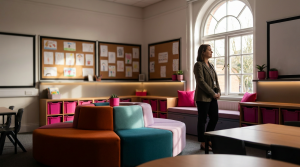
The solution is to create a flexible learning environment through ‘zoning’. This classroom design approach involves designating specific areas for different activities:
- Collaboration Hubs: Using cluster tables or flexible breakout furniture to encourage group work.
- Quiet Zones: A comfortable corner for independent reading or focused work, often with soft seating.
- Instruction Area: A dedicated space for teacher-led activities, equipped with a whiteboard or interactive display.
- Tech Station: An area with access to charging ports and devices.
This approach allows the space to adapt to the lesson’s needs, not the other way around, promoting student agency and better classroom management.
Mistake 2: Focusing on Price Over Compliance and Durability
Choosing furniture based solely on the upfront cost is one of the most expensive classroom furniture mistakes a school can make. Whilst budget pressures are a real concern for every School Business Manager, opting for cheaper, non-specialist furniture often leads to higher long-term costs due to frequent damage, repairs, and replacements. More importantly, it can compromise student safety and comfort.
A critical component of uk classroom design guidelines is adherence to BS EN 1729. This is the key UK and European standard for educational furniture, and it’s split into two parts:
- Part 1: Specifies ergonomic requirements, including appropriate heights and dimensions for different age groups to ensure good posture and comfort.
- Part 2: Sets out strength, stability, and durability standards to ensure furniture can withstand the rigours of a school environment.
Ignoring this standard means you risk purchasing furniture that is uncomfortable, unsafe, and not built to last. At Cost Cutters UK, we ensure our products meet these stringent criteria, as detailed in our UK certifications and accreditations. The table below illustrates the true cost of these common classroom furniture mistakes.
| Feature | Common Mistake (Price-Focused) | Best Practice (Value-Led Solution) | Long-Term Impact |
|---|---|---|---|
| Compliance | Non-compliant furniture (no BS EN 1729) | Fully compliant with BS EN 1729 Parts 1 & 2 | Value: Reduced risk of injury; ensures ergonomic support. |
| Durability | Weaker materials, poor construction | Fully-welded frames, high-impact edges | Value: 5-10 year lifespan vs 1-2 years; lower replacement cost. |
| Warranty | 1-year standard warranty | 5+ year guarantee | Value: Peace of mind and protection against manufacturing defects. |
| Suitability | ‘One size fits all’ approach | Size-mark appropriate for age group | Value: Improved posture and concentration for students. |
Mistake 3: Neglecting the Sensory Environment (Lighting, Acoustics & Colour)
A major design flaw is overlooking the classroom’s sensory environment. An atmosphere that is either over-stimulating or under-stimulating can severely impede concentration and learning, particularly for children with Special Educational Needs (SEN), a term for learning difficulties or disabilities that affect a child’s education.
Three elements are crucial here:
- Lighting: Many classrooms still rely on harsh, flickering fluorescent lighting. Research from sources like Kurani, a design firm specialising in learning spaces, highlights that poor lighting can cause headaches, eye strain, and fatigue. An effective practice is to maximise natural light where possible and supplement it with layered, controllable LED lighting that can be adjusted for different tasks.
- Acoustics: Poor classroom acoustics are a pervasive problem. Hard, reflective surfaces like concrete floors and bare walls cause sound to bounce around, amplifying noise and making it difficult for students to hear the teacher. A 2015 study by the University of Salford found that classroom design, including acoustics, can impact learning progress by up to 16% in a single year. Solutions include acoustic panels, soft flooring like carpet tiles in quiet zones, and even fabric noticeboards to absorb sound.
- Colour: The old belief that primary schools must be decorated in a riot of bright primary colours is outdated. While colour is important, a more strategic approach is needed. Using a calm, neutral base palette (like light blues, greens, or greys) for the main walls creates a less distracting backdrop. Brighter colours can then be used as accents to define zones, draw attention to key displays, or add energy to collaborative areas.
Mistake 4: Inefficient and Inaccessible Storage
Clutter is the enemy of a calm and organised learning environment, and it’s almost typically a direct result of inadequate storage planning. One of the most common classroom storage mistakes is not differentiating between the various types of storage needed. A successful classroom requires a system that caters to:
- Teacher Storage: For personal items, teaching resources, and administrative paperwork.
- Student Storage: Easily accessible personal spaces, such as individual tray units or cubbies.
- Shared Resource Storage: For art supplies, science equipment, or books that need to be accessed by the whole class.
Another frequent error is relying on bulky, fixed cupboards and shelving units that consume valuable floor space and are inflexible. This makes it difficult to reconfigure the room for different activities and often leads to items being stored in hard-to-reach places, resulting in them not being used at all.
The solution lies in smart, flexible storage. We recommend a combination of:
- Mobile Storage: Gratnells tray units on castors can be moved where they’re needed and stored under worktops to save space.
- Vertical Storage: Using taller, slimmer shelving units maximises wall space without encroaching on the floor.
- Multi-purpose Furniture: Benches with built-in storage boxes or tables with integrated trays provide functionality while keeping clutter at bay.
The Solution: A Partnership Approach to Classroom Design
So, how do you avoid these pitfalls and set up a classroom for success? The answer lies in moving from simply buying furniture to engaging in a partnership with experienced specialists. This is where the Cost Cutters UK ‘Design To Install We Do It All!’ service provides immense value, Saving Time & Stress for busy school staff.
Instead of leaving you to navigate complex catalogues and floor plans alone, our approach involves working with you every step of the way. We believe this collaborative process is the key to getting it right the first time. Our service includes:
- Free Consultation & Space Planning: We listen to your educational goals, assess your physical space, and help you define your needs.
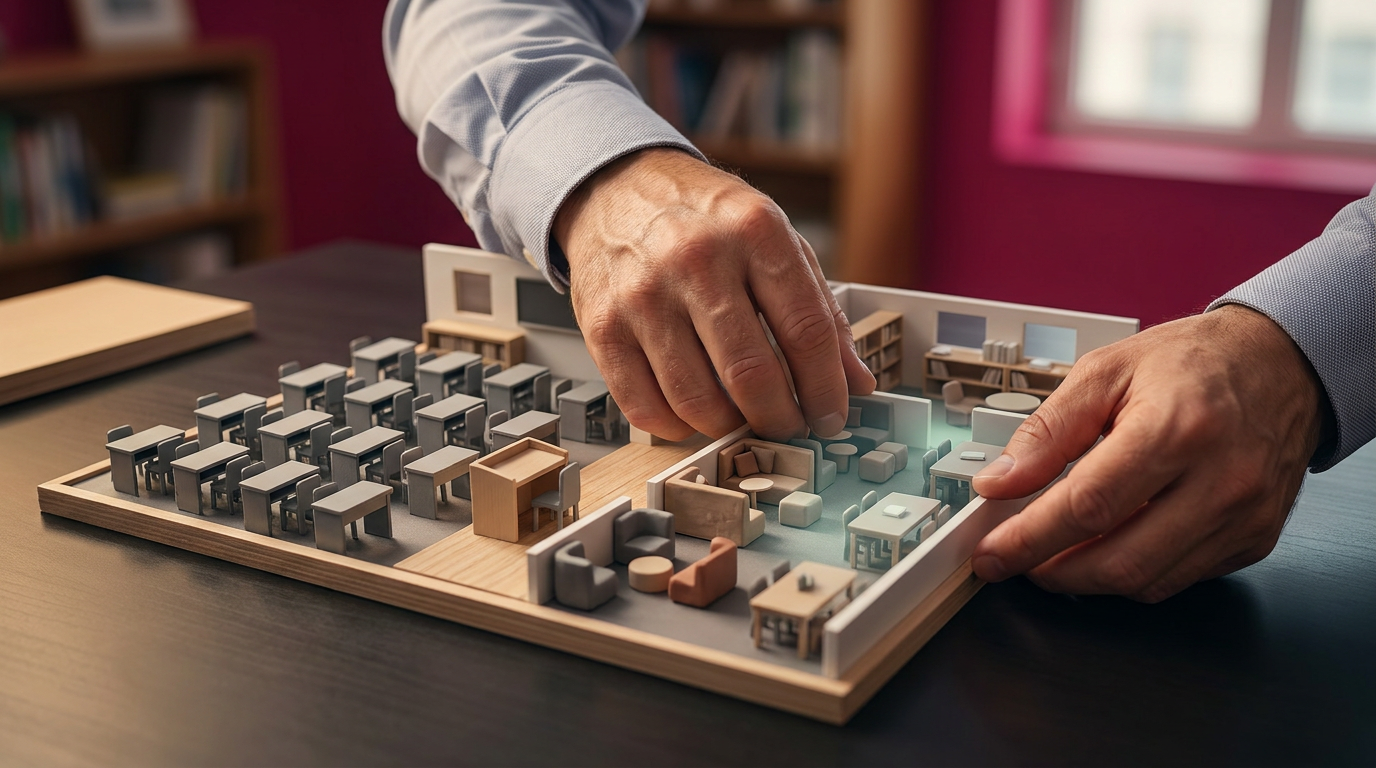
- 2D & 3D Visuals: We create detailed layouts and visuals so you can see exactly how the space will work before committing to any purchase. This helps identify potential issues with flow or furniture placement early on.
- Expert Product Selection: Drawing on our extensive range, we recommend furniture that is not only compliant and durable but also perfectly suited to your pedagogical aims and budget. We can offer Bulk Buy Discounts to maximise value.
- Full Installation: Our professional team delivers and installs everything, ensuring it’s set up correctly and safely, leaving you with a classroom ready for learning.
This comprehensive partnership ensures your investment results in a truly effective learning environment, one that our clients agree is worthy of our ‘Rated Excellent On Trustpilot’ status.
### Case Study: A Hypothetical Primary School Scenario
Challenge: A Year 4 classroom in a UK primary school was struggling with a static layout, high noise levels, and worn-out furniture. This led to frequent disruptions and difficulty in implementing group work, costing valuable teaching time.
Solution: We partnered with the school to redesign the space. This involved creating distinct zones with flexible tables, installing acoustic panels on one wall, replacing old chairs with ergonomic BS EN 1729 compliant seating, and adding mobile storage units.
Results: Within one term, the teacher reported a 40% reduction in lesson disruptions. Student engagement in group activities increased, and the classroom felt calmer and more organised. The long-term value was secured with a 10-year guarantee on the new furniture.
Key Insight: A holistic approach that addresses layout, acoustics, and furniture simultaneously yields far greater results than tackling each issue in isolation.
Important Considerations
The recommendations in this guide are based on extensive experience and established best practices. However, every classroom and student cohort is unique. The effective design will typically depend on specific factors such as room size, age group, teaching style, and the specific needs of your students, particularly those with an Education, Health and Care Plan (EHCP).
Whilst this article focuses on physical design, creating an optimal learning environment also involves pedagogical strategies, school culture, and technology integration. The furniture and layout are foundational elements that enable these other aspects to succeed. Alternative approaches, such as fully outdoor learning programmes or highly specialised tech-centric classrooms, may be suitable for certain educational goals but require different planning considerations.
For a significant refurbishment or new build, we strongly recommend a professional consultation. An educational space planning expert can conduct a detailed needs analysis, produce 3D visualisations, and ensure your final design is compliant, functional, and delivers an effective possible value for your school’s budget. This avoids costly trial and error.
Designing for the Future of UK Learning
avoiding common classroom design mistakes is fundamental to creating learning environments that are safe, engaging, and supportive of modern pedagogy. By moving beyond static layouts, prioritising value and compliance over initial price, and carefully considering the sensory environment, schools can build spaces that actively enhance educational outcomes and make efficient use of public funds. A well-designed classroom isn’t an expense; it’s an investment in every student’s future.
At Cost Cutters UK, we have spent 35 years partnering with UK schools to transform their learning spaces. We’re proud to be Rated Excellent On Trustpilot and offer flexible payment options, including Credit Accounts Or Pay Flexibly. If you are ready to explore how to set up a classroom for success, our team of experts is here to help with everything from initial design to final installation. Book your free, no-obligation space planning consultation today to get started.
Frequently Asked Questions
What are the most common classroom design mistakes?
The most common classroom design mistakes include creating inflexible layouts, choosing furniture that isn’t compliant with UK standards like BS EN 1729, and ignoring sensory factors such as poor acoustics and bad lighting. These errors can disrupt learning, affect student wellbeing, and lead to wasted budget through premature replacements. Proper planning with an experienced partner helps avoid these expensive and disruptive pitfalls from the outset.
How does classroom layout affect student behaviour?
A well-designed layout with clear pathways and defined zones directly reduces disruption and distraction, promoting on-task behaviour. Conversely, a cramped or illogical ‘bad classroom layout’ can lead to increased off-task chatter, physical jostling, and difficulty for the teacher to supervise effectively. A good layout provides non-verbal cues for expected behaviour in different areas of the room, creating a more orderly and focused environment.
What are the UK guidelines for classroom furniture?
The primary UK guideline for educational furniture is BS EN 1729, which ensures items are safe, durable, and ergonomically sound. This two-part standard specifies correct dimensions for pupil well-being and posture (Part 1) and sets minimum strength and durability requirements for safety and longevity (Part 2). Adhering to these UK classroom design guidelines is crucial for any school procurement officer to ensure furniture represents a safe, long-term investment.
Why is flexible seating important in modern classrooms?
Flexible seating is important because it allows a classroom to quickly adapt to different learning activities, from collaborative group projects to individual quiet work. It gives students a degree of choice and ownership over their learning environment, which can improve both focus and engagement. This approach supports a dynamic, student-centred educational model, moving away from the limitations of a rigid, teacher-centric layout that only suits one style of teaching.
How can I improve classroom acoustics on a budget?
To improve acoustics without a major refurbishment, the most effective strategy is to add soft materials that absorb sound. This can include fabric-covered notice boards, rugs in reading corners, curtains on windows, and soft furnishings like beanbags or cushions. Even simple, low-cost additions like putting felt pads on the bottom of chair and table legs can make a noticeable difference in reducing disruptive background noise levels.
What colours are best for a learning environment?
Research suggests that neutral or muted tones like light blues, greens, or greys for main walls create a calm backdrop effective for learning. Brighter colours can then be used strategically as accents to define different zones or highlight key information areas, such as a feature wall behind the main whiteboard. It’s best to avoid using too many bright, primary colours across large areas, as this can be visually over-stimulating for many children.
How do I create effective storage in a small classroom?
In a small classroom, the key is to ‘go vertical’ with tall, narrow shelving units to maximise wall space without taking up valuable floor area. Use multi-functional furniture, such as benches with built-in storage or mobile tray units that can be tucked under tables when not in use. Clearly labelled containers are also essential for ensuring students and staff can find and put away resources quickly, preventing clutter from building up.
What makes a classroom inclusive for students with SEN?
An inclusive classroom proactively considers sensory needs by managing noise levels, providing calm and controllable lighting, and avoiding visual clutter. It must also ensure physical accessibility with wide, clear pathways for mobility aids and furniture at appropriate heights. Offering choice in seating and providing dedicated quiet, low-stimulus zones are also key features for supporting students with a wide range of Special Educational Needs (SEN).
How can I set up a classroom for success without a large budget?
Start with a thorough declutter and reorganisation of your existing layout to optimise flow and create defined zones. Prioritise investment in a few key pieces of high-quality, flexible furniture rather than replacing everything with cheap alternatives. Focus on low-cost, high-impact changes like improving lighting with different lamp types, adding soft furnishings for acoustics, and implementing a clear and consistent storage labelling system.
What should I look for in a school furniture supplier?
Look for a supplier with well-supported by research experience in the UK education sector, who can provide references and is Rated Excellent On Trustpilot. They must offer products compliant with BS EN 1729 and provide robust, long-term may help. A valuable partner will also offer services beyond supply, such as free space planning and design consultation, to help you avoid common classroom design mistakes and maximise your budget effectively.
References
- Department for Education (DfE) – Government Guidance. Provides baseline design guidance for school buildings in the UK, including space, acoustic, and lighting standards.
- University of Salford (2015) – Academic Study. Research from “The impact of classroom design on pupils’ learning” found that well-designed primary school classrooms can boost learning progress by up to 16% in a single year.
- Kurani – Design Firm Analysis. Highlights common mistakes such as poor lighting, excessive noise, and physical discomfort as key barriers to learning in their analysis of over 10,000 learning spaces.
- Westshore Furniture – Industry Insights. Identifies overcrowding and poor traffic flow as critical design mistakes that hinder movement and make supervision difficult for educators.
- Classroom Direct – Supplier Guidance. Warns against using furniture that is not age-appropriate or sized correctly, which can lead to discomfort and safety issues for students.
Conclusion
Designing for the Future of UK Learning
In summary, avoiding common classroom design mistakes is fundamental to creating learning environments that are safe, engaging, and supportive of modern pedagogy. By moving beyond static layouts, prioritising value and compliance over initial price, and carefully considering the sensory environment, schools can build spaces that actively enhance educational outcomes and make efficient use of public funds.
At Costcutters UK, we have spent 35 years partnering with UK schools to transform their learning spaces. If you are ready to create a classroom for success, our team of experts is here to help with everything from initial design to final installation. Book your free, no-obligation space planning consultation today to get started.