A Guide to Seasonal Preparation for Schools: The Ultimate UK Institutional Planner
🎯 Key Takeaway
Effective seasonal preparation for schools involves a year-round strategic approach to planning, procurement, and maintenance aligned with the UK academic calendar. This ensures facilities are safe, compliant, and ready for every term and event. This guide provides a detailed timeline and checklist to help UK institutions master their seasonal planning, Saving Time & Stress. By aligning refurbishment and deep cleaning schedules with key holiday periods like Summer, Easter, and Christmas and factoring in public sector procurement lead times, you can ensure a smooth process. It’s also vital to prioritise furniture and equipment that meet British safety standards (e.g., BS EN 1729) to ensure pupil and staff wellbeing.
The relentless cycle of the academic year presents a recurring challenge for school business managers and facilities teams. Just as one term ends, the pressure begins for preparing school for new academic year. This cycle of planning for refurbishments, deep cleans, and major events can feel overwhelming. Strategic seasonal preparation for schools is the solution, transforming this reactive scramble into a controlled, proactive process. With over 35 years of experience, we at Costcutters UK have honed this process into a science. This guide delivers a practical, timeline-based master plan for stress-free management of your institution’s calendar, ensuring you’re typically one step ahead.
👤 Written by: Costcutters UK Content Team
Reviewed by: Costcutters UK Editorial Team, Specialists in Educational and Public Sector Procurement
Last updated: 19 April 2026
ℹ️ Transparency: This article explores seasonal preparation for schools based on over 35 years of industry experience and analysis of UK public sector procurement cycles. Our recommendations are grounded in our work with thousands of UK institutions. Some links may connect to our specialised furniture and equipment services. All information is verified by our editorial team to ensure accuracy and relevance for UK institutions.
A Year at a Glance: Key Planning Windows for UK Institutions
The key to successful institutional management is understanding that planning windows operate independently of term times. The institutional year is a continuous cycle where ‘quiet’ periods are the most critical for action. Major refurbishment projects, for instance, are executed during the six-week summer holiday, but the planning must begin as early as January to align with budget approvals and procurement lead times.
This proactive approach prevents disruption during term time. Minor projects and deep cleans are best scheduled for half-term breaks and the shorter Easter holiday. The Christmas period, meanwhile, is effective for preparing for spring term events and finalising office shutdown procedures. A crucial, often overlooked window is the end of the financial year (March), which is the final opportunity to allocate any remaining budget towards upcoming projects. Effective public sector event logistics depend entirely on this forward-planning mindset. By treating the entire year as a series of interconnected planning phases, you can move from a reactive to a strategic operational model, ensuring facilities are typically fit for purpose without impacting learning.
The Academic Cycle: A Term-by-Term Checklist for Seasonal Preparation for Schools
A structured, term-by-term approach provides the clarity needed to manage the complex demands of a school environment. We recommend breaking down the year into three core preparation phases, each with a specific focus. This ensures that maintenance, procurement, and event logistics are handled at the most logical and least disruptive times. The goal is to create a predictable rhythm, allowing your team to work efficiently without the last-minute panic that often accompanies the start of a new term. This is fundamental to successfully preparing school for new academic year.

Summer Term & Holiday Preparation (The Big One)
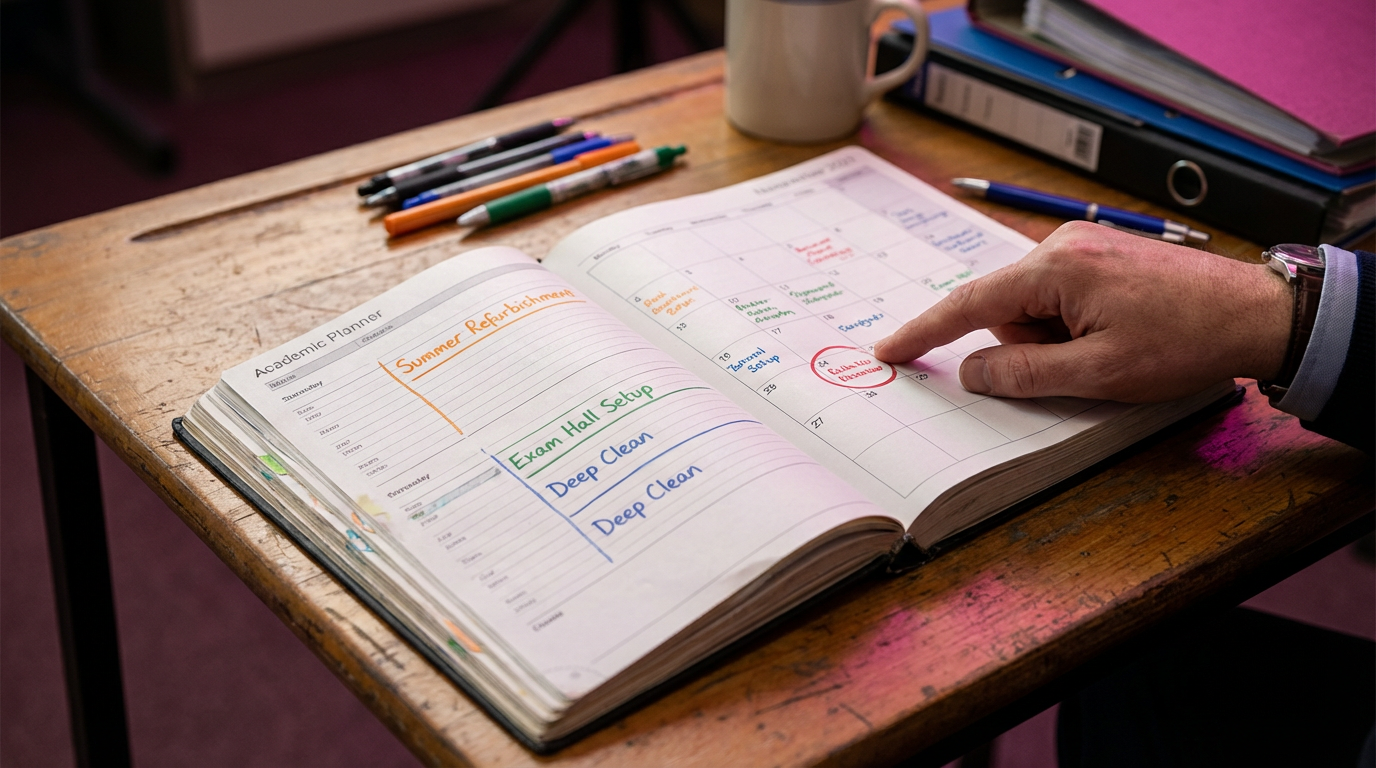
This period represents the single largest window for significant estate improvements. Planning should commence in the preceding Spring term. Your school summer refurbishment checklist is the master document for this phase. It must detail everything from classroom clear-outs and furniture audits to scheduling decorators and flooring contractors. This is also the time for major grounds maintenance and the installation of new playground or outdoor equipment. A thorough end of term deep clean checklist should be executed after all refurbishment work is complete but before new furniture is installed, ensuring a pristine environment for the new academic year.
Autumn & Spring Term Preparation (Maintenance & Events)
While smaller in scale, these periods are vital for ongoing maintenance and event planning. The Autumn half-term is a key opportunity for tasks like PAT testing, minor repairs identified in the summer, and preparing for Christmas events or nativities. The Spring term is dominated by preparations for exam season, which, according to the Joint Council for Qualifications (JCQ), has strict setup requirements. This is also the critical window to finalise budgets and specifications for the next major summer refurbishment, kicking off the procurement cycle in earnest. We’ve found that proactive planning here is what separates a smooth summer project from a chaotic one.
| Task | Recommended Start Month | Key Consideration | Relevant Standard/Guideline |
|---|---|---|---|
| Major Refurbishment Specification | January | Define scope, budget, and desired outcomes. Allow ample time for quotes. | ISBL Guidance |
| Exam Hall Furniture Procurement | February | Order exam desks/chairs to ensure delivery well before May. | JCQ Regulations |
| New Classroom Furniture Orders | May | Place orders for summer delivery to align with installation schedules. | BS EN 1729 |
| End-of-Term Deep Clean Scheduling | June | Book cleaning contractors for the last week of term to avoid clashes. | HSE Guidelines |
Event-Based Preparation: From AGMs to Exam Halls
Effective event management requires a different planning mindset from term-time preparation. The key is logistical agility and having the right equipment on hand. Whether you are setting up for hundreds of exam candidates, a parents’ evening, a governor’s AGM, or even acting as a polling station, the core needs are flexibility and efficiency. This is where a strategic approach to event furniture planning uk pays dividends.
Our experience shows that multi-purpose furniture is the most valuable asset. Lightweight, stackable chairs and folding tables allow a school hall to transform from a dining area to an exam hall in a matter of hours. For more formal events like conferences, a detailed conference room setup checklist is invaluable. This should cover audio-visual equipment, sightlines, accessibility, and layout (e.g., theatre vs. Cabaret style). Investing in good quality temporary seating for events and robust storage solutions ensures you are typically prepared, minimising labour and setup time. We also recommend exploring our range of flexible breakout furniture to create dynamic spaces for collaborative events.
The Procurement Master Plan: A Timeline for Stress-Free Project Delivery
The most common point of failure in school projects is underestimating procurement lead times. A successful project hinges on a realistic, backwards-planned timeline. If your ‘Project Complete’ date is 1st September, ready for the new term, you must begin the process in January. Rushing this critical path is a recipe for stress, compromise, and budget overruns.
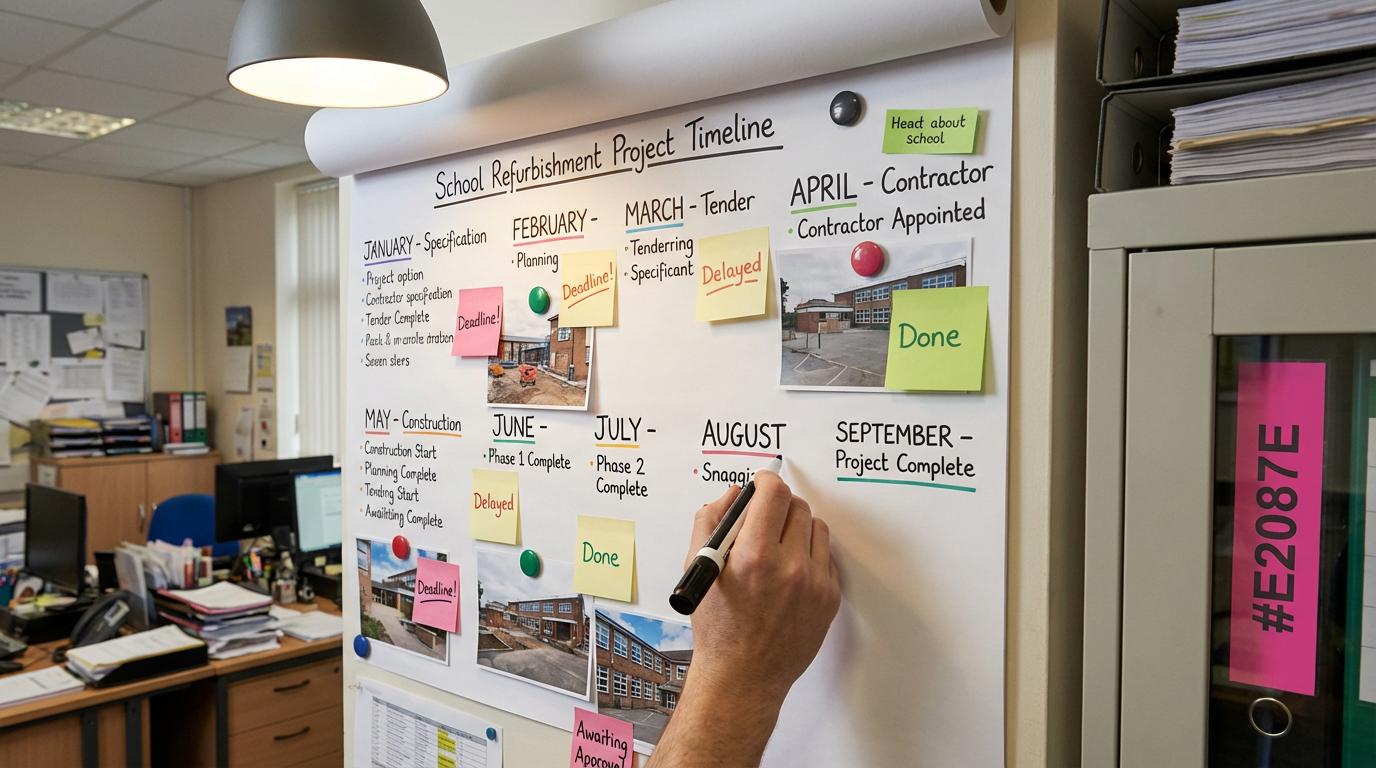
Here is a typical reverse timeline for a summer refurbishment project:
- January – February (9 Months Out): Specification & Budgeting. This is when you define the project scope. What needs replacing? What are the desired outcomes? Initial budgets are set, and stakeholder approval is sought.
- March – April (6 Months Out): Quotes & Sign-Off. With a clear specification, you can now go to market. For public sector bodies, this may involve using a framework like those offered by the ESPO (Eastern Shires Purchasing Organisation). This stage concludes with final supplier selection and budget sign-off.
- May – June (3 Months Out): Order Placement. This is the final deadline for placing orders for furniture and equipment to guarantee pre-holiday delivery. Any delays here will have a direct impact on the installation schedule.
- July – August (1 Month Out): Installation & Snagging. The site is prepared (decorating, flooring), followed by furniture delivery and installation. This phase must include a buffer for resolving any ‘snagging’ issues before the final handover.
- 1st September: Project Complete.
Understanding this timeline is crucial for managing expectations and ensuring your school summer refurbishment checklist is a plan for success, not a list of anxieties. Our “Design To Install We Do It All!” service is built around this exact timeline, managing every step for you.
### Case Study: A Hypothetical Academy Trust Scenario
Challenge: An academy trust with three primary schools faced recurring logistical chaos every summer. They were consistently missing deadlines for classroom readiness, leading to staff stress and a poor start to the academic year. Their project costs were also 15% over budget due to last-minute rush fees for delivery.
Solution: We worked with the trust to implement a centralised procurement timeline, starting in January. Using our “Design To Install We Do It All!” service, we consolidated their needs, created a master school summer refurbishment checklist, and placed bulk orders in early May.
Results: All classrooms across the three schools were fully refurbished and installed one week ahead of the September deadline. The trust achieved a 12% saving through our Bulk Buy Discounts and eliminated rush fees, bringing the project in under budget. Staff morale improved significantly due to the stress-free start.
Key Insight: Centralising procurement and adhering to a strict 9-month timeline transforms seasonal preparation from a logistical nightmare into a predictable and cost-effective process.
Ensuring Compliance & Safety in Your Seasonal Preparations
Beyond logistics and aesthetics, safety and compliance are non-negotiable pillars of seasonal preparation. All furniture and equipment in a UK educational setting must meet stringent standards to ensure the wellbeing of pupils and staff. Neglecting this can have serious consequences, both For safety incidents and legal liability.
The most important standard is BS EN 1729, a British and European standard that specifies the ergonomic dimensions, strength, and stability for chairs and tables used in educational institutions. This standard ensures that furniture is appropriately sized for children of different age groups, promoting good posture and preventing physical strain. When procuring durable classroom furniture uk, typically verify it is certified to both parts of this standard.
Also, the Health and Safety Executive (HSE), Britain’s national regulator for workplace health and safety, provides clear guidance for the education sector. This includes risk assessments for manual handling during room setups and ensuring that all upholstered furniture complies with The Furniture and Furnishings (Fire) (Safety) Regulations. As a supplier, we ensure all relevant products meet these critical benchmarks. You can view a full list of our full range of UK certifications and accreditations for complete peace of mind.
Frequently Asked Questions About Institutional Planning
What is seasonal preparation for schools?
Seasonal preparation for schools is the proactive, year-round planning and execution of maintenance, refurbishment, and procurement tasks. It is aligned with the academic calendar to ensure facilities remain safe, compliant, and fit for purpose. This strategic approach minimises disruption during term time and helps manage budgets effectively, ensuring the school is typically ready for pupils, staff, and events.
How do I create a school summer refurbishment checklist?
Start by creating categories for auditing, procurement, and works. A robust checklist should include sections for auditing existing furniture, defining the project scope (e.g., which rooms), specifying new equipment, scheduling tradespeople like painters or electricians, and planning for delivery, installation, and removal of old items. This structured approach prevents crucial steps from being missed.
What are the key safety standards for UK school furniture?
The most critical standard is BS EN 1729, which governs strength, stability, and ergonomic dimensions for classroom furniture. This ensures items are safe and appropriately sized for pupils. Plus, all upholstered furniture must comply with UK fire safety regulations, and it’s wise to choose suppliers who can provide certification for their products.
How far in advance should I plan for temporary event seating?
For large events, you should book temporary seating at least 3-6 months in advance. This is especially true during peak seasons like summer or for exam periods when demand is high. For smaller requirements, 4-6 weeks might be adequate, but early booking through a trusted partner typically secures better availability and often better pricing.
What is the most cost-effective way to furnish a new classroom?
The most cost-effective method focuses on long-term value, not just the initial price. Opt for durable, compliant furniture with a long guarantee (5-10 years) to minimise replacement costs. Leveraging Bulk Buy Discounts by consolidating orders and using public sector procurement frameworks are also excellent strategies for achieving significant savings.
How can I ensure furniture is durable enough for a school environment?
Look for furniture with long may help, robust materials, and official certifications. Prioritise items with may help of 5 years or more, constructed from solid wood or heavy-gauge steel. Surfaces should be scratch-resistant, such as high-pressure laminate. Most importantly, ensure the products are certified to BS EN 1729 for strength and stability, a key indicator of durable classroom furniture uk.
What’s included in an end of term deep clean checklist?
A comprehensive end of term deep clean checklist covers tasks far beyond daily cleaning. It typically includes high-level dusting of all surfaces, cleaning windows and light fixtures, sanitising desks and chairs, deep cleaning carpets and hard floors using professional machinery, and a thorough disinfection of all washroom facilities and high-touch points.
How do public sector procurement rules affect furniture buying?
Public sector rules are designed to ensure fairness, transparency, and value for money. This often means you must obtain multiple quotes or use an approved supplier from a procurement framework. While it adds a formal step to the process, these frameworks pre-vet suppliers for compliance and use collective buying power to offer competitive pricing.
What are the benefits of using a single supplier for a school refurbishment?
Using a single, specialised supplier streamlines project management and accountability. It creates one point of contact, ensures a consistent quality and design aesthetic across the project, and simplifies complex delivery and installation logistics. This approach significantly reduces the administrative burden and the risk of delays caused by coordinating multiple vendors.
How do I set up a conference room for maximum engagement?
For better engagement, arrange seating to encourage interaction rather than passive listening. A U-shape or cabaret-style layout is often more effective than a traditional boardroom setup, as it improves sightlines and facilitates discussion. Using flexible, lightweight furniture from a good event furniture planning uk supplier also allows the space to be easily reconfigured for different activities.
Important Considerations & Alternative Approaches
This guide provides a comprehensive framework, but every institution has unique needs and budget cycles. The timelines presented are based on typical lead times as of early 2026 but can be affected by global supply chain issues or highly customised orders. Therefore, you should typically confirm specific delivery schedules with your supplier at the point of order to build a realistic project plan.
The primary alternative to using a full-service supplier is managing projects in-house by coordinating with individual tradespeople and multiple vendors. While this can sometimes offer cost savings on individual components, it significantly increases the administrative burden on facilities managers. It also carries a higher risk of project delays, quality inconsistencies, and coordination errors, which can ultimately prove more costly.
For large-scale refurbishments involving structural changes, significant investment (e.g., over £50,000), or specialised requirements such as SEN (Special Educational Needs) spaces, we strongly recommend seeking professional guidance. A specialised space planning consultation can help you optimise layouts, ensure full compliance with all regulations, and maximise your return on investment for years to come.
Partner with an Expert for Seamless Seasonal Preparation
Mastering seasonal preparation for schools and public institutions transforms a stressful, reactive cycle into a predictable, strategic advantage. By aligning procurement and maintenance with the natural rhythm of the academic and business year, you ensure your spaces are typically safe, inspiring, and ready for purpose. This proactive approach not only prevents disruption but also demonstrates effective long-term financial planning, a key factor noted by bodies like the Institute of School Business Leadership (ISBL).
With over 35 years of experience partnering with UK institutions, Costcutters UK understands these challenges intimately. We are proud to be Rated Excellent On Trustpilot because we offer more than just furniture; we provide a complete “Design To Install We Do It All!” service built around your calendar and budget. We also offer flexible payment options, allowing you to Credit Accounts Or Pay Flexibly. To simplify your next project, explore our complete catalogue of educational and office supplies or book a free, no-obligation space planning consultation with our expert team today.
References
- Institute of School Business Leadership (ISBL) – Professional Body Guidance. Highlights the importance of long-term estate management and strategic procurement planning in UK schools.
- British Standards Institution (BSI) – BS EN 1729 – Technical Standard. Defines the official dimensions, strength, and stability requirements for furniture used in educational settings.
- Health and Safety Executive (HSE) – Education Sector Guidance – Governmental Guidance. Provides guidelines on managing risks in schools, including those related to maintenance, workplace safety, and asbestos management.
- Joint Council for Qualifications (JCQ) – Regulatory Document (2025). Specifies the precise conditions for conducting examinations in the UK, including desk spacing and room setup.
- ESPO (Eastern Shires Purchasing Organisation) – Public Sector Buying Organisation. Details the frameworks available to public sector bodies for procuring goods and services, including furniture, from pre-approved suppliers.
- The Furniture Industry Research Association (FIRA) – Industry Research Body. Publishes research on furniture flammability, ergonomics, and durability, underpinning many UK safety standards.
Conclusion
Partner with an Expert for Seamless Seasonal Preparation
In summary, seasonal preparation for schools is a strategic process that transforms a stressful, reactive cycle into a predictable advantage. By aligning procurement and maintenance with the natural rhythm of the academic and business year, you ensure your spaces are always safe, inspiring, and ready for purpose. This proactive approach not only prevents disruption but also demonstrates effective long-term financial planning.
With over 35 years of experience partnering with UK institutions, Costcutters UK understands these challenges intimately. We are proud to be Rated Excellent On Trustpilot because we offer more than just furniture; we provide a complete “Design To Install We Do It All!” service built around your calendar and budget. We also offer flexible payment options, allowing you to **Credit