Planning Your School Furniture Project: A Step-by-Step Guide
🎯 Key Takeaway
A successful school furniture project requires a structured, multi-stage approach encompassing thorough needs analysis, strategic budgeting that considers long-term value, strict adherence to UK compliance standards, and detailed logistical planning. A well-managed project avoids common pitfalls and delivers a learning environment that supports modern pedagogy. By focusing on Total Cost of Ownership (TCO) over initial price and involving all stakeholders from the outset, you can ensure the investment provides lasting value for pupils and staff alike. This guide provides the blueprint for achieving this.
For a School Business Manager (SBM), managing a school refurbishment project is a high-stakes responsibility. The pressure to deliver on time, within budget, and with minimal disruption is immense. A comprehensive school furniture project is more than just buying chairs and tables; it’s an opportunity to fundamentally transform learning environments, support new teaching methods, and improve student well-being. However, navigating the complexities of procurement, safety compliance, and logistics can be overwhelming. This step-by-step guide is designed to be your practical blueprint, providing a clear school furniture project plan to help you manage the process effectively, Saving Time & Stress while delivering exceptional results.
Written by: Content Team | Reviewed by: Editorial Team, Industry Specialists with 35+ Years Experience; Rated Excellent On Trustpilot
Last updated: 31 July 2024
ℹ️ Transparency Disclosure: This article explores the process of planning and executing a school furniture project, based on over 35 years of industry experience and analysis of UK government and safety regulations. Some links may connect to our specialised services. All information is verified by our editorial team to ensure accuracy and relevance for UK school leaders.
Best For: School Business Managers, Headteachers, and Facilities Managers in UK primary and secondary schools, academies, and Multi-Academy Trusts (MATs) planning a refurbishment.
Not effective For: Small-scale individual classroom top-ups or minor furniture replacements where a full project framework isn’t necessary.
Step 1: Building a Solid Foundation with Needs Analysis & Stakeholder Consultation
Before a single catalogue is opened, the most critical phase of your project is understanding precisely what you need and why. A reliable needs analysis forms the foundation of your entire school furniture project plan. This isn’t just about replacing what’s broken; it’s about aligning the physical environment with your school’s educational vision.
Start by conducting a thorough audit of your current furniture. A useful classroom refurbishment checklist uk would include inventorying items, assessing their condition, and noting any compliance issues or unsuitability for current teaching practices. Are your chairs and tables promoting poor posture? Does the layout hinder collaborative learning? The answers to these questions define your project goals.
Equally important is stakeholder consultation. In our experience, projects that fail to meet expectations often skipped this step. You must consult with:
- Teaching Staff: How do they want to use the space? What furniture would support their pedagogical approach?
- Support Staff & Site Managers: What are the practical considerations for cleaning, maintenance, and durability?
- Pupils: What do they find comfortable? How do they move and work within the classroom?
This collaborative approach ensures the final result is practical, effective, and embraced by the people who use it every day. The World Health Organization (WHO) now provides extensive guidelines on physical activity, which reinforces the need for flexible spaces that limit sedentary behaviour, a key consideration that should emerge from these consultations.
Step 2: Strategic Budgeting Beyond the Price Tag – Understanding TCO
Effective school furniture budget planning moves beyond simply finding the lowest price. The most crucial concept for any SBM to grasp is Total Cost of Ownership (TCO), a financial calculation that includes the initial purchase price plus all direct and indirect costs over the asset’s lifespan. The cheapest chair that breaks in two years is far more expensive than a durable alternative that lasts for ten.
Your budget must account for several factors:
- Initial Purchase Price: The baseline cost of the furniture items.
- Delivery & Installation: These are often significant, separate costs.
- Disposal of Old Furniture: Compliant removal and recycling carry a price.
- Durability & Warranty: A longer warranty indicates a manufacturer’s confidence in their product’s lifespan, reducing future repair costs.
We’ll be honest – persuading budget holders to invest more upfront can be a challenge. That’s why data is your best ally. A market report from Statista (2024) shows the UK office furniture market alone is projected to reach £1.81 billion, indicating the scale of investment in functional spaces. To illustrate the power of TCO, consider this comparison for a classroom of 30 chairs. It clearly shows how a higher initial outlay delivers better long-term value, a key point when exploring school furniture budgets and ROI maximisation.
| Cost Factor | Standard Classroom Chair (Example) | High-Durability Compliant Chair (Example) | Comment |
|---|---|---|---|
| Initial Purchase Price (x30) | £1,050 (£35/chair) | £1,650 (£55/chair) | 57% higher initial cost for the durable option. |
| Expected Lifespan | 3-5 Years | 10-15 Years | Based on typical school environment wear and tear. |
| Repair/Replacement Costs (over 10 years) | £700 (2 full replacements cycle) | £150 (minor repairs, if any) | Cheaper chairs often require frequent, costly replacements. |
| 10-Year Total Cost of Ownership | £1,750 | £1,800 | The cost gap narrows significantly over the product’s life. |
By presenting a TCO analysis, you shift the conversation from cost to investment. Also, remember to investigate potential funding streams, grants, or flexible payment options. We offer Credit Accounts Or Pay Flexibly to help schools manage these large capital expenditures. When you understand the true lifespan of school furniture, you make smarter purchasing decisions.
How to Navigate UK School Furniture Safety & Compliance
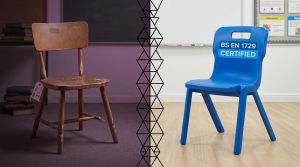
Ensuring all new furniture meets UK safety and ergonomic standards isn’t just best practice; it’s a legal and moral obligation. The primary standard you must be aware of is BS EN 1729. This is the British and European standard that specifies the functional dimensions, strength, and stability for chairs and tables used in educational institutions. It is not optional.
BS EN 1729 is split into two key parts:
- Part 1: Functional Dimensions: This part focuses on ergonomics. It sets out the correct heights, depths, and angles for chairs and tables based on the size of the pupils using them. This is crucial for preventing musculoskeletal disorders (MSDs), a risk highlighted by the European Agency for Safety and Health at Work (EU-OSHA) in their research on workplace health.
- Part 2: Safety Requirements and Test Methods: This part ensures the furniture is strong and stable enough to withstand the rigours of a school environment. It involves rigorous testing for strength, durability, and stability to prevent accidents.
Compliance is especially critical in early years settings. The Department for Education’s EYFS Statutory Framework (2024) mandates that all premises, furniture, and equipment must be “safe and suitable for their purpose.” Furthermore, guidance from the Health and Safety Executive (HSE) on Display Screen Equipment (DSE) reinforces the need for appropriate seating and desking. When procuring furniture, you must demand certification of compliance from your supplier. Failure to do so exposes both pupils and the school to unnecessary risk. For a deeper dive, our guide on school furniture safety and compliance is an essential read.
Step 4: Mastering the School Furniture Procurement Process
The school furniture procurement process in the UK can seem bureaucratic, but it’s designed to ensure fairness, transparency, and value for money. Depending on your school’s status (e.g., maintained, academy, MAT) and the project’s value, your options will typically include getting direct quotes, running a formal tender, or using a procurement framework.
For smaller projects, obtaining three written quotes may suffice. For larger investments that exceed a certain financial threshold (which varies by institution), you may be required to issue a formal school furniture tender uk. This involves creating a detailed specification document outlining your requirements and inviting suppliers to bid. While this ensures a competitive process, it is also time-consuming and complex.
A highly efficient alternative is to use a public sector procurement framework. These frameworks have already vetted suppliers for financial stability, compliance, and quality, effectively creating a pre-approved list of education furniture suppliers uk. This can significantly simplify and speed up the procurement process.
Regardless of the route you take, your evaluation of potential suppliers should be rigorous. We recommend you check for:
- well-supported by research Education Sector Experience: Do they understand the unique demands of a school environment?
- Compliance Certification: Can they provide evidence that their products meet BS EN 1729?
- Case Studies & References: Can they show you examples of similar successful projects?
- Warranty & After-Sales Support: What may help do they offer?
- Professional Memberships: Are they members of reputable bodies like the British Educational Suppliers Association (BESA), which has a strict code of practice?
For more detailed advice, you can consult a dedicated beginner’s guide to school furniture procurement.
##### Hypothetical Case Study: A Secondary School Science Block Refurbishment
Challenge: A secondary school’s science labs had outdated, fixed benching that was non-compliant with modern safety standards and unsuitable for collaborative group work. This was hindering practical lessons and posed a potential safety risk.
Solution: The school partnered with a specialist supplier to design a flexible layout using mobile, chemical-resistant workbenches and ergonomic, height-adjustable stools. The supplier managed the entire process, from 3D space planning to the compliant disposal of the old furniture during the summer holidays.
Results: The new layout increased practical lesson capacity by 20% and allowed for smooth transition between theoretical and group work. Staff reported a 40% reduction in time spent on classroom setup. The project was completed on budget and two days ahead of schedule.
Key Insight: Engaging a partner who provided a “Design To Install We Do It All!” service eliminated the logistical burden on the SBM and ensured a compliant, pedagogically-sound outcome.
Step 5: Classroom Design, Layout & Future-Proofing
Successful classroom fit out projects go beyond simply choosing furniture; they involve designing a cohesive learning ecosystem. The layout of a classroom has a profound impact on behaviour, engagement, and learning outcomes. Modern pedagogy is moving away from the traditional “chalk and talk” model towards more dynamic, student-centred approaches. Your furniture choices should reflect this.
Consider incorporating different zones within the classroom:
- Collaborative Zones: Large tables or modular arrangements that encourage group work.
- Quiet Study Areas: Individual carrels or pods for focused, independent learning.
- Flexible Seating: A mix of stools, soft seating, and standard chairs to give pupils choice.
- Technology Integration: Ensure the layout provides easy access to power for devices and supports the use of interactive whiteboards.
Future-proofing your investment is also key. Opt for adaptable, multi-functional, and modern and ergonomic classroom furniture. For example, trapezoidal tables can be used individually or pushed together to form various group configurations. Stackable chairs save space, and height-adjustable tables can accommodate pupils of different ages and sizes.
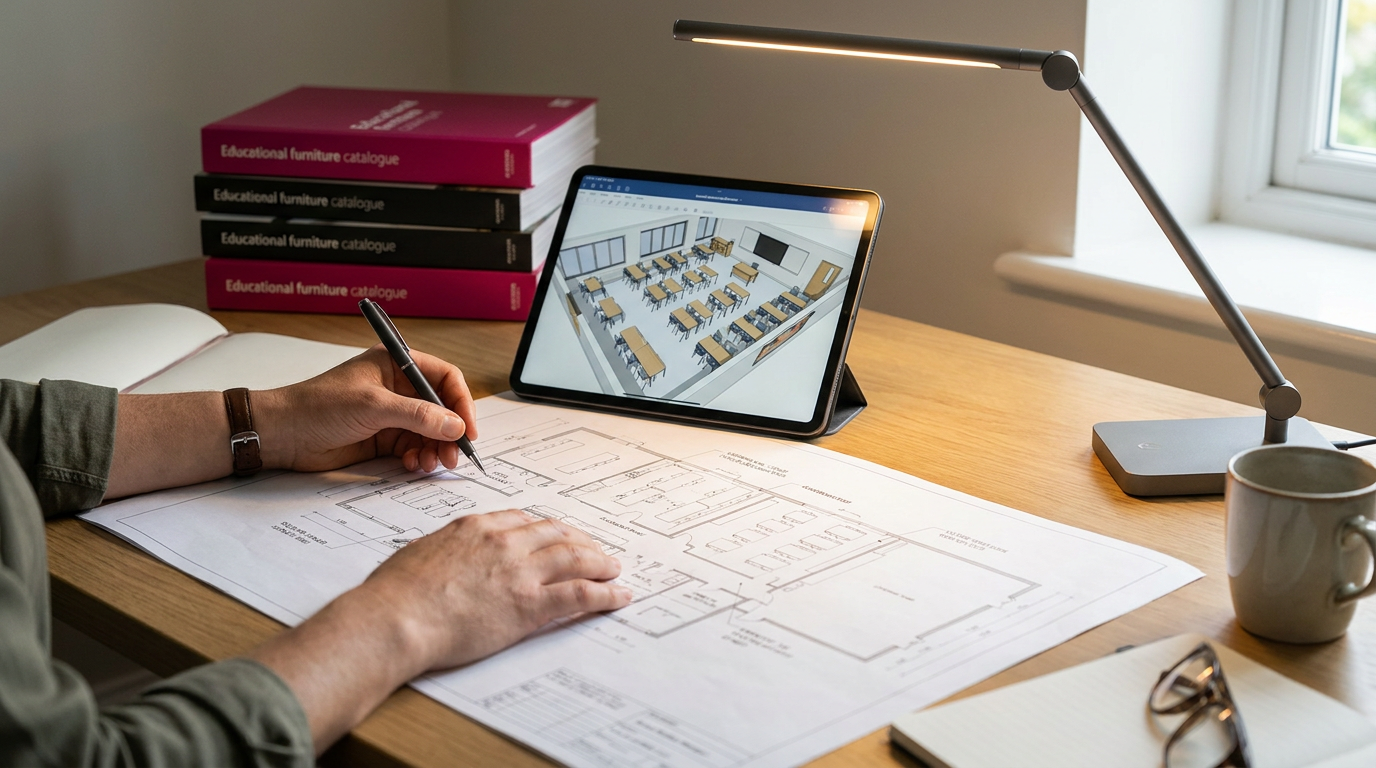
This is where a professional space planning service adds immense value. We use 3D visualisation software to create detailed layouts, allowing you to see exactly how the space will work before committing. This helps optimise traffic flow, ensure accessibility for all students, and maximise the educational potential of your new furniture.
Step 6: Managing Installation, Delivery & Disposal
The final phase of managing a school refurbishment project is logistics. A flawless plan can be derailed by poor execution at this stage. Meticulous coordination is essential for a stress-free installation, especially if the work is scheduled for the tight window of the summer holidays.
Your classroom refurbishment checklist uk for this phase should include:
- Clear Timelines: Work backwards from your ‘go-live’ date. Confirm lead times with your supplier as soon as the order is placed-they can be 8-12 weeks or more.
- Site Coordination: Liaise closely with your site manager and the supplier’s installation team. Confirm delivery dates, site access (are there any height or weight restrictions?), and secure storage areas for the furniture before installation.
- Pre-Delivery Checks: Ensure the rooms are cleared and ready for the installation team.
- Post-Delivery Inspection: Once the installation is complete, walk through the space with the project manager to check every item, sign off on the work, and create a snagging list for any minor issues.
- Disposal of Old Furniture: This is an often-overlooked step. A reputable supplier will offer a service for the compliant and environmentally responsible removal and disposal of your old furniture, providing you with the necessary waste transfer notes.
When you partner with an experienced supplier, this entire phase is managed for you, ensuring everything runs smoothly and your rooms are ready for the start of term.
Why Partner with an Expert for Your School Furniture Project?
As this guide demonstrates, a successful school furniture project involves navigating a maze of strategic, financial, legal, and logistical challenges. From understanding TCO and ensuring BS EN 1729 compliance to managing tenders and coordinating a multi-faceted installation, the workload on an already busy SBM can be immense.
This is why partnering with specialist education furniture suppliers uk is often the most effective approach. An expert partner acts as an extension of your team, providing a single point of contact and end-to-end project management. The benefits are clear:
- Saving Time & Stress: We handle the tenders, supplier vetting, compliance checks, and logistics, freeing you to focus on your core responsibilities.
- Risk Mitigation: Our expertise ensures full compliance with all UK safety standards, protecting your students and your school.
- Budget Optimisation: Through our experience and Bulk Buy Discounts, we help you maximise your budget by focusing on TCO and long-term value.
- likely to support Outcome: Our “Design To Install We Do It All!” service ensures a smooth process from the initial idea to the final handover, with a result that meets your educational objectives. With a service that is Rated Excellent On Trustpilot, you can be confident in the outcome.
Important Considerations
This guide provides a comprehensive framework, but every school’s context is unique. The specific financial thresholds for tendering, internal approval processes, and pedagogical priorities will vary. The timelines and budget examples provided are illustrative and should be adapted based on quotes from suppliers and your school’s specific academic calendar and project scope.
While this guide outlines a single, comprehensive project, a phased approach can be a viable alternative for schools with limited budgets or those wishing to trial new concepts. You might refurbish one department or year group at a time. Another alternative is managing the project entirely in-house versus partnering with a full-service supplier. This can save on management fees but requires significant time investment and expertise from school staff.
For large, complex, or high-value projects, seeking professional guidance is strongly recommended. An experienced educational furniture specialist can prevent costly mistakes, ensure full compliance, and manage the entire process. If your team lacks the time or specific expertise in procurement and project management, partnering with an expert is the most efficient path to a successful outcome.
Frequently Asked Questions About School Furniture Projects
What is a school furniture project?
A school furniture project is the comprehensive process of planning, procuring, and installing new furniture for educational spaces. It involves detailed needs analysis, stakeholder consultation, budgeting, compliance checks, and logistical coordination to create effective and safe learning environments. This process applies to everything from a single classroom refurbishment to a complete, new-build school fit-out, ensuring the final result supports the institution’s educational goals.
How do I create a budget for school furniture?
Start by auditing your needs and getting initial quotes, but typically plan using Total Cost of Ownership (TCO). Your school furniture budget planning should account for the furniture cost plus delivery, installation, and disposal of old items. It is wise to factor in a contingency of 10-15% for unforeseen issues. This comprehensive approach ensures you are budgeting for long-term value, not just the upfront price tag.
What is BS EN 1729 and why is it important?
BS EN 1729 is the mandatory British and European standard for the strength, stability, and ergonomic dimensions of educational furniture. Compliance is crucial as it ensures furniture is appropriately sized for pupils, reducing the risk of musculoskeletal issues, and is reliable enough to withstand the demands of a school environment. Typically verify a supplier’s compliance certification to ensure pupil safety and school liability are covered.
How long does a classroom refurbishment take?
A single classroom installation can take from a few days to a week, but the full project timeline is much longer. Planning, budgeting, and the school furniture procurement process can take 2-4 months alone. Furthermore, furniture often has manufacturing lead times of 6-12 weeks. Therefore, it’s vital to begin planning at least six months ahead of your desired completion date, especially for summer holiday projects.
Should my school run a furniture tender?
You may need to run a school furniture tender uk if the project value exceeds your school or MAT’s financial threshold. While a formal tender can ensure fairness and value, it is a complex and lengthy process. An effective alternative is using a pre-approved public sector procurement framework, which simplifies the process of engaging with vetted suppliers and can save a significant amount of administrative time.
What’s the best time of year to install school furniture?
The summer holiday is the most popular time for large-scale installations as it minimises disruption to teaching. However, this is a peak period for suppliers, so you must book your delivery and installation slot well in advance. For smaller projects, half-term breaks can also work, but they require meticulous planning to ensure completion within the very short timeframe available.
How can I make my classroom furniture more sustainable?
Focus on durability to reduce the frequency of replacement, which is the most sustainable action you can take. Additionally, choose suppliers with strong environmental credentials who use FSC-certified wood or recycled materials. Ask about their take-back or recycling schemes for your old furniture. A reputable partner should provide clear evidence of their commitment to sustainability, helping your school meet its green objectives.
What are the biggest mistakes to avoid in a school furniture project?
The biggest mistake is focusing only on the lowest upfront cost, which often leads to expensive repairs and replacements later. Other common errors include failing to consult with teachers who will use the space, underestimating furniture lead times, and not verifying a supplier’s compliance with UK safety standards like BS EN 1729. Thorough planning is an effective way to prevent these costly pitfalls.
Do I need a project manager for a furniture upgrade?
For a small project, an SBM can often handle it, but for larger refurbishments, project management becomes a full-time job. Managing a school refurbishment project for multiple classrooms or a whole school is highly complex. Using a supplier who provides a dedicated project manager can save you significant time, reduce stress, and ensure the project runs smoothly, on time, and within budget.
How do I choose a good school furniture supplier?
Look for a supplier with extensive experience specifically within the UK education sector. A good supplier will offer space planning services, demonstrate deep knowledge of compliance standards, and provide detailed case studies. Check if they are listed on any official procurement frameworks and typically ask for references. Our advice is to prioritise partners who focus on service and project management, not just selling products.
Your Next Steps to a Successful Project
Executing a successful school furniture project is a significant undertaking, but a structured approach transforms it from a daunting task into a manageable process. By prioritising thorough needs analysis, strategic budgeting with TCO in mind, rigorous compliance checks, and detailed logistical planning, you can mitigate risks and ensure a result that enhances the learning environment for years to come. This blueprint provides the foundation for success in your next classroom fit out project.
At Cost Cutters UK, we have spent over 35 years partnering with schools to manage these projects from concept to completion. Our expertise in space planning, UK compliance, and end-to-end project management removes the stress from your team, allowing you to focus on what matters most. If you are starting to plan your project, our specialists are ready to help.
References
- Health and Safety Executive (HSE) – UK Government Guidance. Provides the legal framework and practical advice for workstation safety and ergonomics in the UK.
- European Agency for Safety and Health at Work (EU-OSHA) – EU Agency Research. Highlights poor workstation design as a key risk factor for musculoskeletal disorders (MSDs).
- Department for Education (DfE) – UK Government Statutory Framework (2024). Mandates that premises, furniture, and equipment in early years settings must be safe and suitable.
- British Educational Suppliers Association (BESA) – Professional Organisation Standard. Requires member suppliers to provide products that are fit for purpose in an educational setting and meet safety standards.
- World Health Organization (WHO) – International Body Guideline (2020). Recommends limiting sedentary time, providing a health-based rationale for active and flexible learning spaces.
- Statista – Market Research Data (2024). Reports on revenue and growth projections for the UK office furniture market.
Conclusion
Your Next Steps to a Successful Project
Executing a successful school furniture project is a significant undertaking, but a structured approach transforms it from a daunting task into a manageable process. By prioritising thorough needs analysis, strategic budgeting with TCO in mind, rigorous compliance checks, and detailed logistical planning, you can mitigate risks and ensure a resu