Modern Classroom Furniture: A UK School’s Guide to Durable & Ergonomic Choices
🎯 Key Takeaway
Choosing the right modern classroom furniture requires a strategic focus on ergonomics, durability, and flexibility to support diverse learning styles and meet crucial UK safety standards like BS EN 1729. Ergonomics isn’t a luxury; it’s a vital component of supporting pupil wellbeing and is influenced by UK health and safety regulations. Durability should be assessed by material quality, construction, and warranty, not just upfront cost. Plus, flexible layouts with mobile and modular furniture are key to facilitating the active, collaborative learning that is often viewed favourably. This guide provides a practical framework for School Business Managers to make informed, long-term investments in their learning environments.
For School Business Managers (SBMs), balancing tight budgets with the need for high-quality, inspiring learning environments is a constant challenge. Traditional classroom layouts of static desks in rows no longer meet the dynamic demands of the UK curriculum. As of mid-2026, it’s clear that investing in the right modern classroom furniture is a strategic decision that directly impacts student engagement, wellbeing, and even how learning environments are perceived. This guide provides a clear path forward, covering how to define modern furniture, understand critical compliance, assess durability, calculate the true cost, and explore effective layout trends.
Written by: The Cost Cutters UK Content Team | Reviewed by: Editorial Team, Industry Specialists with 35+ Years Experience; Rated Excellent On Trustpilot
ℹ️ Transparency Disclosure: This article explores best practices for selecting educational furniture based on our 35+ years of industry experience and an analysis of UK regulatory standards. For full transparency, some links may connect to our specialised services. All information is verified by our editorial team to ensure accuracy. Cost Cutters UK is a trusted supplier to schools and public sector organisations across the United Kingdom.
What Defines True Modern Classroom Furniture?
True modern furniture is defined by its flexibility, mobility, and ability to support a wide range of activities, moving decisively beyond static rows of desks. It is about creating an agile environment that empowers both teachers and students. The core idea is to establish distinct ‘zones’ within a single classroom that cater to different learning styles and tasks: areas for collaborative group work, stations for focused individual study, and comfortable nooks for relaxed reading.
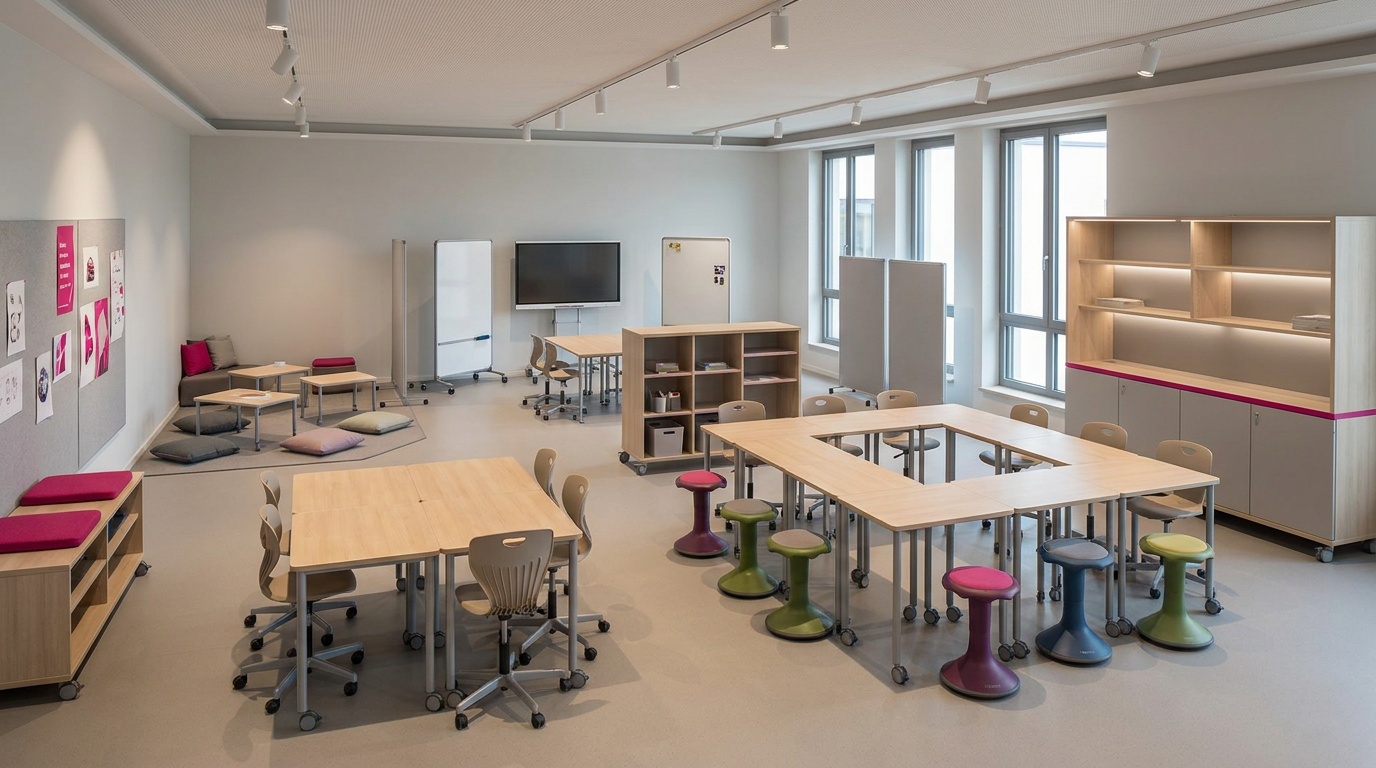
Among the latest trends in classroom furniture are key pieces that facilitate this agility:
- Modular Tables: Shaped tables (like trapezoids or segments) that can be clustered for group work or separated for individual tasks.
- Flexible Seating: A variety of seating options such as wobble stools, floor cushions, and soft benches give students choice and support movement. This is a cornerstone of flexible classroom seating UK schools are adopting.
- Mobile Units: Everything from whiteboards and storage units to seating on castors allows for rapid reconfiguration of the space.
- Varied Heights: Incorporating standing-height desks and low tables encourages posture changes throughout the day, aligning with advice from the World Health Organization (WHO) (2020) to limit sedentary time.
Ultimately, the answer to ‘what furniture should be in a classroom?’ is no longer a single desk and chair. It’s a curated collection of pieces that create an adaptable ecosystem, fostering student agency and physical wellbeing.
The Ergonomics Imperative: A Guide to BS EN 1729 Compliance
Yes, complying with ergonomic standards is a legal and ethical necessity for UK schools. Ergonomics, in simple terms, refers to the science of designing furniture and equipment to fit the human body, not forcing the body to fit the furniture. For schools, the key standard is BS EN 1729, the UK and European standard for chairs and tables in educational institutions.
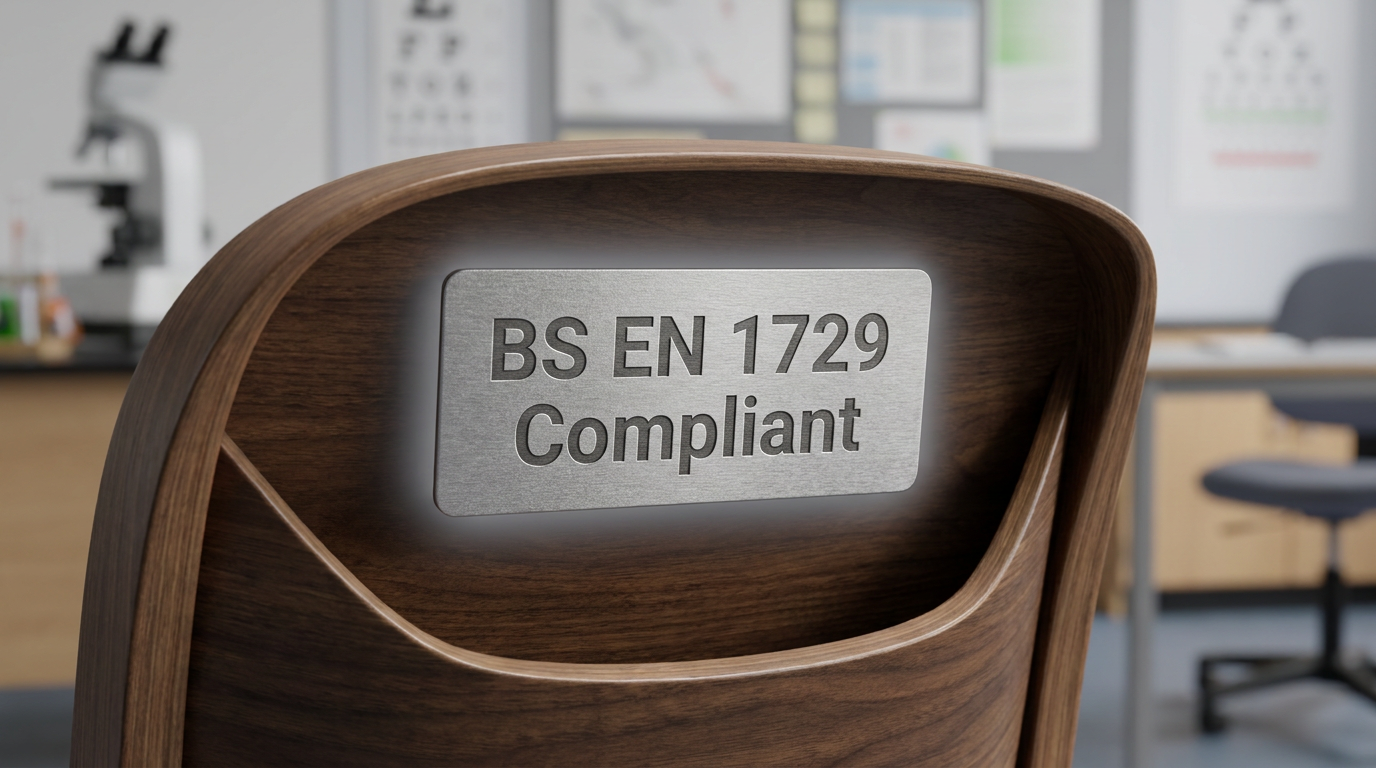
This standard is crucial and has two main parts:
- Part 1: Functional Dimensions: This part is about getting the size right. It specifies dimensions, heights, and angles for furniture based on the age and size of the pupils using it. Think of it like ensuring a child has the right size shoes; poorly sized furniture can contribute to poor posture and discomfort.
- Part 2: Safety Requirements: This covers strength, stability, and durability. It ensures that the furniture can withstand the rigours of a school environment without breaking or becoming a safety hazard.
Guidance from the Health and Safety Executive (HSE) on preventing musculoskeletal disorders (MSDs), which are injuries affecting muscles, nerves, and tendons, underscores this. Research from the European Agency for Safety and Health at Work (EU-OSHA) also highlights poor workstation design as a key risk factor for MSDs across Europe. Providing ergonomic classroom furniture is not just about comfort; it’s about supporting concentration, improving behaviour, and safeguarding pupil health. Adhering to BS EN 1729 protects both your students and the school from potential liability. Furthermore, The Department for Education (DfE) (2024) statutory framework for early years also mandates that equipment must be safe and suitable for its purpose.
A Buyer’s Checklist for Durability: How to Spot Furniture Built to Last
Assessing durability before you buy is possible by systematically examining materials, construction, certifications, and supplier may help. A cheap price tag often hides future costs in repairs and early replacement. Therefore, a reliable procurement process is essential. In our experience, using a checklist helps focus on what truly matters for long-lasting performance.

We recommend looking for these key indicators of durable school furniture:
- Materials: Scrutinise the raw materials. Are the frames made from a heavy-gauge steel? Are tabletops solid wood, high-pressure laminate (HPL), or just a thin melamine-faced chipboard (MFC)? Each has a different lifespan.
- Construction: Check the joints. Welded steel frames are typically more reliable than those assembled with screws. Look for tamper-proof fixings where assembly is required to prevent pupils from disassembling them.
- Edge Banding: This is a frequent point of failure. Look for thick, impact-resistant PVC or, even better, polyurethane (PU) edging that is chemically bonded to the board. This prevents moisture ingress and peeling.
- Certifications: The most important certification is BS EN 1729 Part 2 for strength and stability. Reputable suppliers will provide certificates on request. This aligns with the British Educational Suppliers Association (BESA) Code of Practice, which ensures products are ‘fit for purpose’.
- Warranty: A long warranty is a manufacturer’s vote of confidence in its own product. A 5-year guarantee is good; a 10-year or lifetime frame guarantee on durable school furniture is excellent.
Inspiring Layouts for Active Learning: Top Trends in UK Classroom Design
An effective classroom layout is a powerful teaching tool. Modern designs, often favoured for their positive impact on engagement, move away from uniformity and towards purposeful variety. By using flexible classroom seating UK-wide, schools can create dynamic spaces that support different pedagogical approaches. You can see how this works in practice by looking at projects like this nursery revitalisation project.
Here are three layout concepts that facilitate active learning:
- The Campfire: This layout is for storytelling, direct instruction, and group discussion. It involves arranging soft seating, benches, or even floor cushions in a semi-circle around a focal point, like an interactive whiteboard or the teacher. It fosters a sense of community and encourages collaborative communication.
- The Watering Hole: This concept describes a central hub for informal peer-to-peer learning. It often features standing-height tables, bar stools, or mobile work surfaces where small groups can gather to collaborate on a task, share resources, or have a quick discussion. It’s less formal than group tables and promotes spontaneous interaction.
- The Cave: Every learner sometimes needs a quiet space for focused, independent work. ‘Cave’ spaces provide this sanctuary. They can be created with individual study carrels, high-backed acoustic chairs that dampen noise, or simply by turning a desk to face a wall in a quiet corner. This is crucial for deep thinking and concentration, and it’s one of the most important latest trends in classroom furniture.
Inclusive Design: Furniture for Special Educational Needs (SEN)
Adaptable and ergonomic classroom furniture is particularly beneficial for pupils with Special Educational Needs (SEN). Height-adjustable desks can accommodate wheelchair users or those who need to stand. For pupils with sensory processing sensitivities, such as Autism Spectrum Disorder (ASD), sensory-friendly options like cocoon chairs, weighted blankets, or wobble cushions can provide the necessary input to help them regulate and focus. A flexible layout also ensures clear pathways and allows for the creation of low-stimulation zones when needed.
Calculating the True Cost of Modern Classroom Furniture
To make a truly informed investment, we must look beyond the initial purchase price and consider the Total Cost of Ownership (TCO). TCO is a financial calculation that reveals the full cost of an asset over its entire lifespan. For a School Business Manager, this is the most powerful metric for demonstrating value for money to governors and trustees, and it is a key part of any strategic school furniture procurement process.
The basic formula is:
TCO = (Initial Purchase Price + Maintenance & Repair Costs) / Lifespan in Years
A cheaper chair that breaks in 3 years is far more expensive in the long run than a compliant, durable school furniture option that lasts for 15+ years. The data below illustrates this critical point. The UK’s office and institutional furniture market is substantial, with Statista (2024) projecting revenues of £1.80 billion, highlighting the scale of these procurement decisions.
Hypothetical Case Study: A Primary School’s Chair Procurement
Challenge: A 2-form entry primary school needed to replace 120 classroom chairs. Their budget was tight, leading to a debate between a £15 non-compliant chair and a £35 BS EN 1729 compliant chair.
Solution: The School Business Manager used a TCO model. They calculated that the cheap chairs would likely need replacing within 3 years, whilst the compliant chairs came with a 15-year guarantee.
Results: The TCO for the cheap chair was (£15 / 3 years) = £5 per year. The TCO for the quality chair was (£35 / 15 years) = £2.33 per year. The school invested in the compliant chairs, saving £31,920 over the 15-year period.
Key Insight: Presenting the decision For TCO, not upfront cost, secured approval from the governors and ensured a better, safer, and more economical long-term outcome.
| Item | Low-Cost Option (Non-Compliant) | High-Quality Option (BS EN 1729 Compliant) | Comment |
|---|---|---|---|
| Initial Price Per Chair | £15.00 | £35.00 | The upfront cost is significantly lower for the non-compliant option. |
| Expected Lifespan | 3 Years | 15+ Years | The quality option’s lifespan is backed by a manufacturer’s warranty. |
| Cost Over 15 Years | £75.00 (5 replacements x £15) | £35.00 (1 purchase) | This excludes admin time for re-procurement and disposal costs. |
| Total Cost of Ownership (per year) | £5.00 | £2.33 | The compliant chair delivers over double the value for money. |
Frequently Asked Questions
What is modern classroom furniture?
Modern classroom furniture is defined as adaptable, ergonomic, and often mobile pieces designed to support varied and active learning activities. Instead of just static desks and chairs, it includes items like modular tables, a variety of seating options, and mobile storage. The primary goal of modern classroom furniture is to create a flexible environment that can be easily reconfigured by teachers and students to suit the task at hand.
What furniture should be in a classroom?
A well-equipped classroom should include a mix of student seating, work surfaces, teacher furniture, and ample storage. The essential items are varied seating (chairs, stools), work surfaces (individual and collaborative tables), a teacher’s station (desk or lectern), and organised storage (shelving, trays, cubbies). The specific mix of what furniture should be in a classroom will typically depend on the pupils’ age group, the subject being taught, and the school’s pedagogical approach.
What are the latest trends in classroom furniture?
The latest trends in classroom furniture focus on flexibility, student choice, and wellbeing. Key examples include flexible seating options that allow students to choose what works for them (e.g., wobble stools, floor cushions), furniture with castors for easy mobility and reconfiguration, and biophilic design which incorporates natural colours, materials, and patterns to create a calming atmosphere. These trends are driven by research on student engagement and physical health.
How does modern furniture support students with special needs (SEN)?
Adaptable furniture provides crucial support for students with SEN by offering choice and accommodating specific physical or sensory needs. Height-adjustable desks can fit wheelchairs, while sensory-friendly items like cocoon chairs offer a secure, calming space for pupils who may feel overwhelmed. The flexibility of the overall layout also allows for the creation of quiet, low-stimulation zones, which benefits all learners but is essential for some.
What should we avoid when choosing classroom furniture?
You should avoid prioritising a low initial price over the total cost of ownership, ignoring compliance with UK standards, and choosing overly stimulating designs. Cheap furniture often leads to higher long-term costs due to frequent repairs and replacements. Ignoring standards like BS EN 1729 creates safety risks and potential liability. Finally, chaotic colour schemes and patterns can be distracting for many students, particularly those with SEN.
How much does classroom furniture cost in the UK?
The cost varies widely, but a basic primary classroom for 30 pupils can range from £3,000 to £8,000+. This price depends heavily on the quality, flexibility, and technology integration of the furniture chosen. A classroom with standard static desks will be at the lower end, whereas a fully flexible space with specialist ergonomic seating will be higher. We typically recommend getting a detailed quote based on a specific room plan.
Is durability more important than ergonomics?
Both are critically important and non-negotiable for school furniture; one should rarely be sacrificed for the other. Ergonomics (covered by BS EN 1729 Part 1) is a matter of pupil health and wellbeing. Durability (covered by Part 2) is about safety and ensuring value for money from your investment. A reputable supplier will provide furniture that meets both standards without compromise.
What are some classroom must-haves for a flexible layout?
The essential items for a flexible layout are tables on lockable castors, stackable chairs or stools, and mobile storage units. Tables on wheels are the cornerstone, allowing for swift transitions between different activity modes. Stackable seating is crucial for saving space when an open floor area is needed. Mobile storage units, such as book trolleys or tray units on wheels, can also double as effective and temporary room dividers.
How often should school furniture be replaced?
The replacement cycle depends entirely on the initial quality; there is no fixed rule. Cheap, poor-quality furniture might fail and need replacing in as little as 3-5 years, creating a false economy. In contrast, high-quality, compliant furniture with a reliable frame and a long warranty should be expected to last for 15 years or more. Regular safety and condition audits are an effective way to manage replacement cycles.
Why is a supplier’s reputation important?
A reputable supplier provides expertise, compliance assurance, and reliable after-sales support, not just products. They act as a partner, offering services like space planning to ensure you get the most from your investment and guaranteeing that all products meet UK standards like BS EN 1729. Their longevity in the market, like our 35+ years, is a sign of financial stability and a long-term commitment to the education sector.
Important Considerations
This guide provides a framework based on UK standards and common educational practices. However, every school’s needs are unique. The effective furniture mix will depend on specific factors like the age of pupils, curriculum focus (e.g., STEM vs. Arts), available space, and budget constraints. The trends discussed are not universally applicable, and a thorough needs assessment with teaching staff is typically the recommended first step.
While a fully modernised classroom is the effective for many, a phased approach can also be effective. Schools on a tight budget might consider a hybrid model, replacing only the most worn-out items or focusing on one key element, such as introducing a set of collaborative tables. Another alternative is to refurbish existing high-quality furniture frames with new tops or upholstery, which can be a cost-effective and sustainable option when planning your school’s budget.
Choosing classroom furniture is a significant capital investment with long-term implications for pupil health and educational outcomes. For large-scale projects or complex room layouts, we strongly recommend consulting with an educational furniture specialist. An expert can provide complimentary space planning services, ensure full compliance with all UK regulations, and help you calculate the Total Cost of Ownership to secure an effective long-term value for your school. “Design To Install We Do It All!” is our promise, Saving Time & Stress for busy school leaders.
Partnering for a Future-Proof Learning Environment
Selecting the right modern classroom furniture is a critical investment in your school’s future. By prioritising BS EN 1729-compliant ergonomics, verifiable durability, and strategic flexibility, you create learning environments that not only support student wellbeing and engagement but also deliver exceptional long-term value. Moving beyond upfront price to a Total Cost of Ownership model ensures your budget is used effectively, creating spaces that are safe, inspiring, and adaptable for years to come.
At Cost Cutters UK, we have over 35 years of experience helping schools, academies, and nurseries across the UK make these crucial decisions. We are Rated Excellent On Trustpilot because our team of specialists understands the unique challenges you face. We can help you navigate compliance, design effective layouts, and choose furniture that fits your educational vision and budget, with options for Bulk Buy Discounts and flexible payments via Credit Accounts Or Pay Flexibly. Request a free, no-obligation space plan and quote today to see how we can transform your learning spaces.
References
- Health and Safety Executive (HSE) – UK Government Guidance. This source provides the legal framework and practical advice for workstation ergonomics under the Health and Safety (Display Screen Equipment) Regulations 1992, which has applications in educational settings for preventing musculoskeletal disorders.
- European Agency for Safety and Health at Work (EU-OSHA) – EU Research Body. Its research reports that musculoskeletal disorders (MSDs) are the most common work-related health problem in Europe, consistently identifying poor workstation design as a key risk factor.
- Department for Education (DfE) – UK Government Statutory Framework (2024). The EYFS Framework mandates in its welfare requirements that premises, furniture, and equipment must be safe, suitable for purpose, and promote learning and development for young children.
- British Educational Suppliers Association (BESA) – UK Industry Association Code of Practice. The code requires its members to ensure all products are safe, of good quality, and ‘fit for their intended purpose’ in an educational environment, providing a benchmark for supplier trust and product reliability.
- World Health Organization (WHO) – Global Health Guidelines (2020). In its guidelines on physical activity and sedentary behaviour, the WHO recommends limiting sedentary time for all age groups, providing a strong health-based rationale for active classrooms and furniture that encourages movement.
- Statista – Market Research Data (2024). This platform provides market analysis, projecting the UK office furniture market revenue to be £1.80 billion in 2024, which indicates the significant scale of furniture procurement in the country’s professional and institutional sectors.
Conclusion
Partnering for a Future-Proof Learning Environment
In summary, modern classroom furniture is a critical investment in your school’s future. By prioritising BS EN 1729-compliant ergonomics, verifiable durability, and strategic flexibility, you create learning environments that not only support student wellbeing and engagement but also deliver exceptional long-term value. Moving beyond upfront price to a Total Cost of Ownership model ensures your budget is used effectively, creating spaces that are safe, inspiring, and adaptable for years to come.
At Costcutters UK, we have over 35 years of experience helping schools, academies, and nurseries across the UK make these crucial decisions. Our team of specialists understands the unique challenges you face. We can help you navigate compliance, design effective layouts, and choose furniture that fits your educational vision and budget. **Request a free