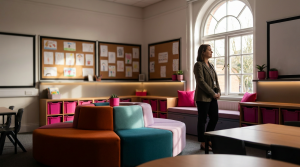
School Budget Planning & Funding: Your Definitive UK Guide
🎯 Key Takeaway
Effective school budget planning is the strategic process UK schools use to align financial resources with educational objectives, ensuring every pound is allocated for maximum impact. It involves forecasting income from all funding streams, planning expenditure, and monitoring financial performance throughout the academic year.
• Core funding in the UK primarily comes from the Dedicated Schools Grant (DSG), supplemented by targeted funds like Pupil Premium and capital grants.
• A successful budget cycle involves three key phases: strategic planning (Autumn), detailed budgeting (Spring), and continuous monitoring (all year).
• Strategic procurement and understanding Total Cost of Ownership (TCO) are critical for maximising value, especially for significant investments like school furniture.This guide provides school business managers and headteachers with the actionable steps to handle the complexities of UK school finance.
Effective school budget planning has become one of the most critical responsibilities for school leadership teams across the United Kingdom. With immense pressure to deliver outstanding educational outcomes against a backdrop of tight fiscal constraints, a well-structured budget is no longer just a financial necessity; it’s a strategic tool for driving school improvement. As of April 2026, navigating the complexities of funding streams and compliance is more challenging than ever. This definitive guide is designed to provide practical, UK-focused advice, from understanding high-level funding down to making tangible procurement decisions. As a trusted partner to UK schools for over 35 years, we at Costcutters UK understand the challenges you face, and we’re here to help you turn financial plans into exceptional learning environments.
Written by: Costcutters UK Content Team | Reviewed by: Editorial Team, 35+ Years Experience; Rated Excellent On Trustpilot
Last updated: 17 April 2026
ℹ️ Transparency Disclosure: This article explores school budget planning based on official government guidance, industry reports, and our 35 years of experience supplying the UK education sector. For full transparency, some links may connect to our services or product pages. All information is verified by our editorial team to ensure accuracy and relevance for UK school leaders.
The UK School Funding Landscape Explained: How Are Schools Funded in the UK?
The core of school funding in the UK, specifically in England, comes from the central government via the Department for Education (DfE). The primary government funding stream for schools in England is the Dedicated Schools Grant (DSG), a ring-fenced grant paid to local authorities. According to the Department for Education (DfE) (2024), core school funding rose to over £60 billion for the 2024–25 financial year, its highest-ever level in real terms per pupil.
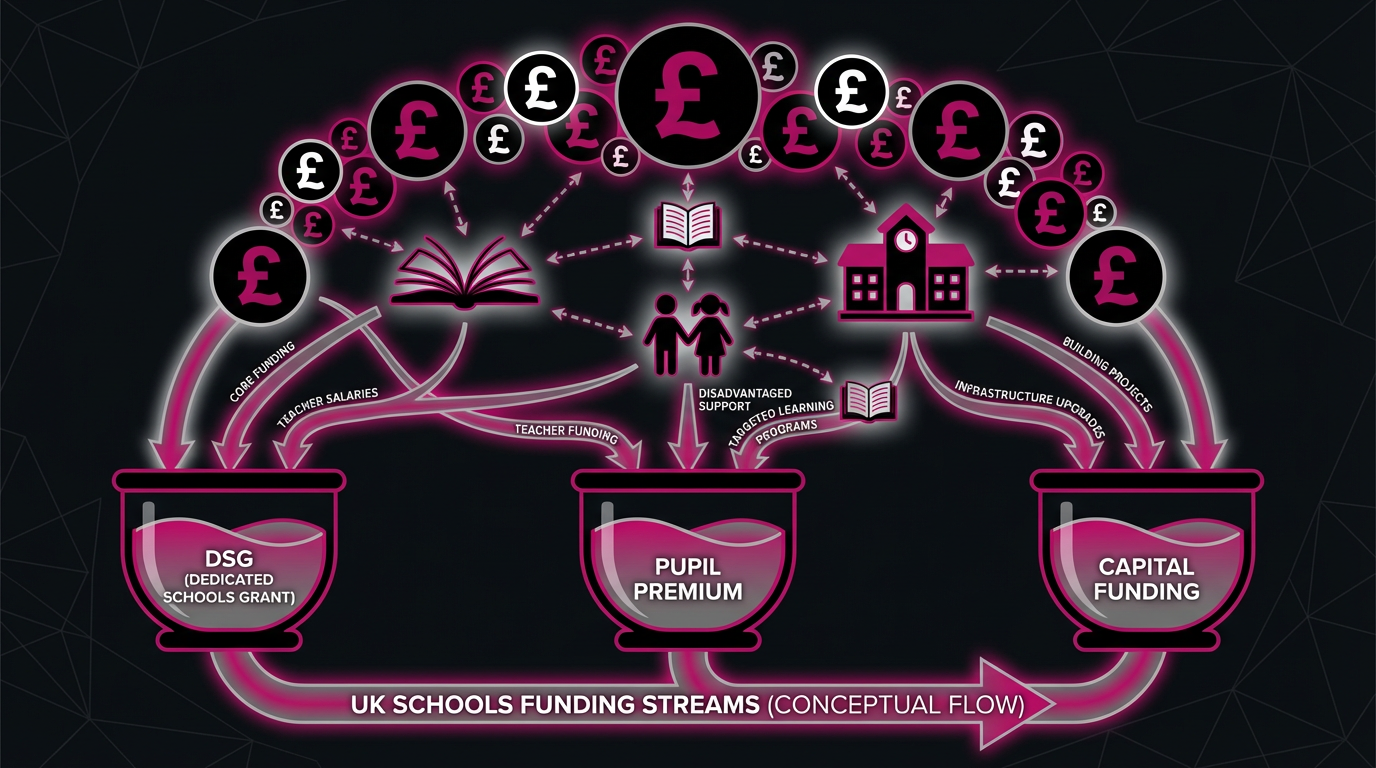
The DSG is allocated through four main blocks:
- Schools Block: The largest component, allocated to local authorities using the National Funding Formula (NFF) to cover the core running costs for pupils from reception to Year 11.
- High Needs Block: Funds provision for pupils with special educational needs and disabilities (SEND).
- Early Years Block: Funds nursery places for two, three, and four-year-olds.
- Central School Services Block: Covers ongoing responsibilities held by local authorities.
Beyond the DSG, schools receive targeted funding streams. Pupil Premium funding, for example, is additional money given to schools to improve educational outcomes for disadvantaged pupils. Also, schools receive separate capital funding for schools uk, which is distinct from the revenue funding of the DSG. Capital funding is for significant investments in buildings and equipment. This includes formulaic allocations like School Condition Allocation (SCA) for local authorities and larger Multi-Academy Trusts (MATs), or Devolved Formula Capital (DFC) for individual schools. So, understanding how are schools funded in the uk requires looking at both revenue and capital streams. While principles are similar, devolved nations have distinct school funding UK systems.
The Annual School Budget Planning Cycle: A Term-by-Term Guide
A structured, year-round approach to school budget planning is essential for financial stability and strategic alignment. Rather than a single event, it’s a continuous cycle of planning, monitoring, and revising. Our experience suggests breaking the year into three distinct phases.
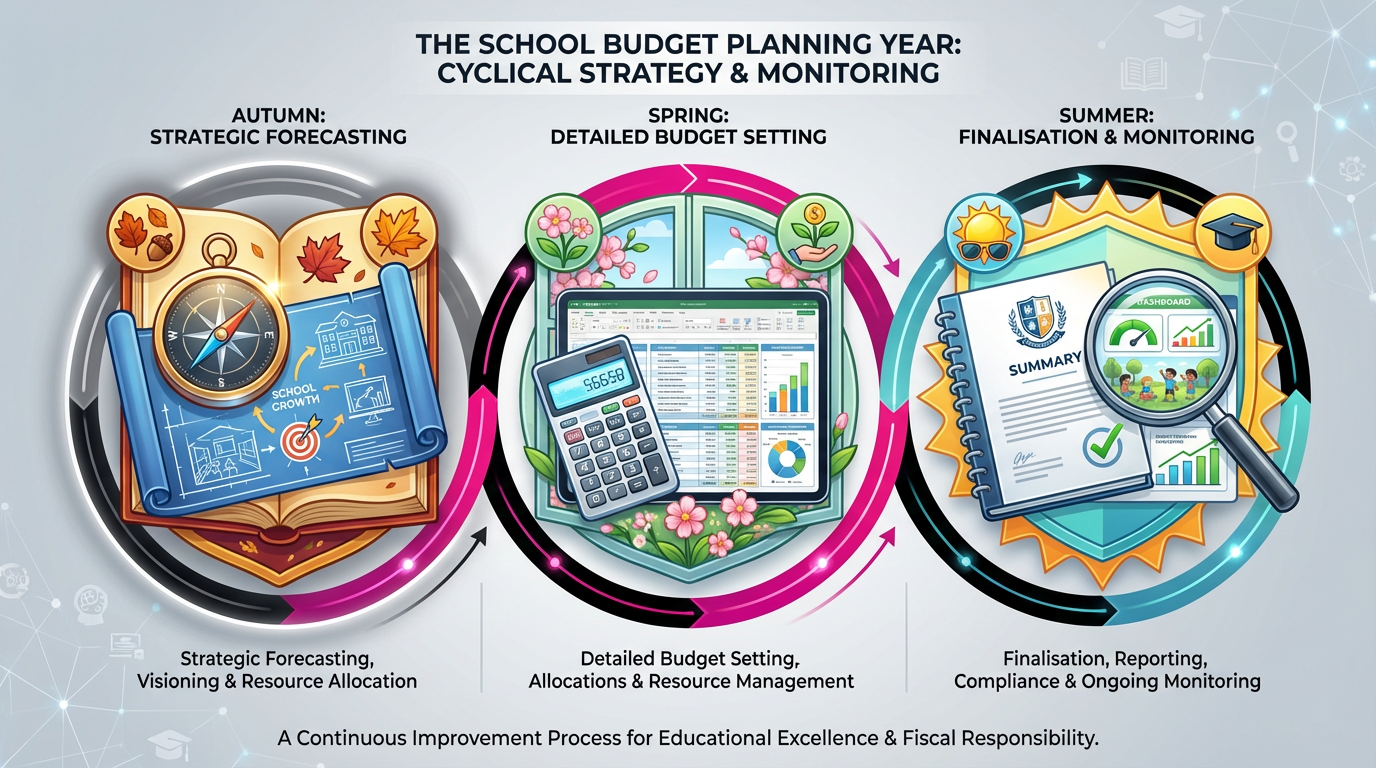
Autumn Term (September – December): Strategic Forecasting & Planning
This is the phase for big-picture thinking. You should begin by reviewing the School Development Plan (SDP) to ensure budget priorities align with educational goals. According to expert advice from SAAF Education, aligning the budget with the school’s strategic vision is a critical first step. Start initial modelling of staffing costs, which typically account for 70-80% of a school’s budget. Forecast pupil numbers for the next academic year, as this is the primary driver of your main school funding UK allocation.
Spring Term (January – April): Detailed Budget Setting
In this period, the plan becomes concrete. The DfE usually announces final funding allocations, allowing you to move from estimates to firm numbers. This is where you build the detailed budget line by line, allocating funds to curriculum areas, support services, and premises. It’s also the time to address any potential school budget deficit uk. A guidance paper from the ASCL (Association of School and College Leaders) (2025) highlights key pressures like unfunded pay awards that often lead to deficits. The draft budget must be presented to and approved by the governing body or trust board.
Summer Term (May – August): Finalisation & Year-End Procedures
With the budget approved, you can finalise staffing decisions and purchasing plans for the year ahead. This term is also focused on closing the current year’s accounts, ensuring all spending is correctly recorded and preparing for the final outturn report. A key recommendation from The Key for School Leaders is to involve governors in continuous budget monitoring throughout the year, not just at the approval stage.
From Theory to Tender: A Practical Guide to the School Procurement Process
A well-planned budget is only effective if the money is spent wisely. This is where a robust and compliant school procurement process comes in. For all state-funded schools, procurement must adhere to public contract regulations, which are built on the principles of achieving value for money, fairness, and transparency.

The first step is understanding procurement thresholds. For smaller purchases, obtaining three written quotes may be sufficient. However, for larger contracts above specific financial thresholds set by the government, a formal tender process is often required. This involves publishing a detailed specification of requirements and inviting suppliers to bid for the contract in a structured and competitive process.
This can be a time-consuming and complex task. That’s why many schools and MATs use public sector procurement frameworks for schools. These are essentially pre-vetted lists of suppliers that have already demonstrated their ability to meet standards for quality, financial stability, and pricing. Using frameworks from organisations like the Crescent Purchasing Consortium (CPC) or the Eastern Shires Purchasing Organisation (ESPO) is a compliant route to market that significantly reduces administrative burden and risk. It streamlines the school procurement process, Saving Time & Stress. When selecting any supplier, it is also crucial to check their credentials, including insurance, quality certifications, and track record. You can review our public sector accreditations as an example of what to look for.
Data Spotlight: Key UK School Funding Streams at a Glance
Understanding the different pots of money available is fundamental to effective financial management. The UK school funding landscape is complex, with money flowing from central government for both day-to-day running costs (revenue) and long-term investments (capital). The table below simplifies the main funding streams for maintained schools and academies in England, clarifying their purpose and how they are typically allocated. This data is critical for accurate forecasting and strategic planning.
| Funding Stream | Type | Primary Purpose | Typical Allocation Method |
|---|---|---|---|
| Dedicated Schools Grant (DSG) | Revenue | Core operational costs (staff, utilities, supplies) | Formula-based via Local Authority, driven by pupil numbers. |
| Pupil Premium Funding | Revenue | Raising attainment for disadvantaged pupils | Per-pupil allocation based on eligibility for free school meals. |
| School Condition Allocation (SCA) | Capital | Maintaining and improving school buildings | Formula-based allocation to LAs and large MATs. |
| Condition Improvement Fund (CIF) | Capital | Significant condition improvement projects | Competitive bidding process for smaller MATs and standalone academies. |
| Devolved Formula Capital (DFC) | Capital | Small-scale capital projects and equipment | Formula-based allocation directly to individual schools. |
Sources: Department for Education (DfE) (2024), The Key for School Leaders.
From Spreadsheet to Staffroom: Maximising Capital Spend on School Furniture
Translating a line item on a spreadsheet for capital funding for schools uk into a successful, transformative project requires careful planning. This is particularly true for significant investments like school furniture, where the impact goes far beyond simple aesthetics. In our experience, the most successful schools move beyond looking at the initial price tag and instead consider the Total Cost of Ownership (TCO). TCO, the total cost of an asset including purchase, operation, and maintenance, provides a more accurate picture of long-term value.
A cheap chair that breaks in two years is far more expensive than a durable one with a 10-year guarantee. Investing in high-quality, ergonomic furniture that meets UK standards like BS EN 1729 not only ensures safety and durability but also directly supports learning. A well-designed classroom can improve concentration, facilitate different teaching styles, and enhance student well-being.
Consider this typical scenario:
Hypothetical Scenario: A Primary School Library Refresh
– Challenge: A school has a £25,000 capital budget to refurbish its dated and uninspiring library. Student usage is low, and the space doesn’t support modern collaborative learning.
– Solution: Instead of just buying new shelves and tables, we help them re-imagine the space. They invest in a mix of traditional tables, soft seating, and mobile, investing in modern breakout furniture to create different zones for quiet reading, group work, and presentations.
– Results: The initial outlay is fully spent, but the TCO is lower due to longer product may help. Within one academic year, library book loans increase by 40%, and teachers report a 15% increase in student engagement during library sessions.
– Key Insight: The investment was aligned with the School Development Plan’s goal of ‘fostering a love of reading’, turning a capital expense into a direct educational gain.
This demonstrates how a strategic school procurement process for furniture is not just about buying items but about investing in educational outcomes.
Frequently Asked Questions
What is school budget planning?
School budget planning is the annual process of forecasting income, allocating expenditure to meet educational goals, and monitoring financial health. It is a strategic cycle managed by school business leaders and headteachers to ensure value for money and regulatory compliance. Ultimately, effective school budget planning aligns the School Development Plan with financial reality, ensuring resources are directed where they will have the most impact on pupils.
How are schools funded in the UK?
Most state schools in the UK are funded via the Dedicated Schools Grant (DSG) from central government, distributed by Local Authorities. This is supplemented by specific grants like Pupil Premium for disadvantaged pupils and various capital funds for buildings and equipment. Academies and Multi-Academy Trusts receive their funding directly from the Education and Skills Funding Agency (ESFA), bypassing the Local Authority.
What is the difference between revenue and capital funding?
Revenue funding covers the day-to-day running costs of a school, such as salaries, utility bills, and teaching supplies. In contrast, capital funding is for acquiring or improving long-term assets, like building new classrooms, replacing a roof, or purchasing significant new furniture. These two types of funding are allocated separately and are not interchangeable; they must be managed in different budget pots.
What is a school budget deficit and what is associated with it?
A school budget deficit occurs when a school’s planned expenditure exceeds its total income for the financial year. Common is associated with of a school budget deficit uk include rising staff costs, inflation on supplies, unexpected building maintenance, and falling pupil numbers which reduces formula funding. Managing this requires a formal recovery plan that must be approved by the school’s governors or the academy’s board of trustees.
How can my school generate its own income?
Schools can generate income through several avenues, most commonly by hiring out facilities like sports halls, pitches, or classrooms after school hours. Other methods include running paid-for extracurricular clubs, applying for specific grants from charitable trusts, and building a strong parental fundraising programme through a PTA or Friends Association. Any income generation activity must, however, align with the school’s charitable status and educational purpose.
What is the role of a school business manager in budgeting?
The school business manager (SBM) or bursar typically leads the operational side of budget planning and management. This involves preparing the draft budget for the headteacher, monitoring spending against forecasts throughout the year, ensuring financial compliance, and overseeing procurement. They are the key financial advisor to the senior leadership team and governors, making their role central to the school’s financial health.
How do I apply for capital funding for a school project?
Applications for major capital funding for schools uk are often made through competitive bidding rounds announced by the DfE, such as the Condition Improvement Fund (CIF) for smaller academies. For many maintained schools and large MATs, capital funds are received as an annual formulaic allocation (SCA/DFC). All applications and business cases require a strong, evidence-based justification demonstrating the project’s need and value for money.
What are public sector procurement frameworks for schools?
These are pre-approved lists of suppliers that have already been vetted for quality, price, and compliance with public sector regulations. Using public sector procurement frameworks for schools, like those from ESPO or CPC, allows schools to purchase goods and services efficiently without running a full, lengthy tender process themselves. This approach is compliant, saves significant administrative time, and reduces procurement risk.
How can I demonstrate ‘best value’ in school purchasing?
Best value is not just about the lowest price; it’s the optimal combination of whole-life cost, quality, and sustainability to meet the user’s need. You can demonstrate it by obtaining and comparing quotes, considering the Total Cost of Ownership (TCO) beyond the initial price, and using compliant procurement frameworks. Documenting this decision-making process is essential for demonstrating accountability and passing financial audits.
Who has the final sign-off on a school budget?
The final approval for a school’s budget rests with the governing body or the board of trustees in an academy trust. While the headteacher and SBM prepare and recommend the budget, the board holds the ultimate legal and financial responsibility for its approval and subsequent oversight. This is a critical governance function, ensuring the school remains a solvent and going concern.
Important Considerations
This guide is based on funding regulations and guidance available as of April 2026 for the English education system, with general principles applicable across the UK. However, funding formulas, specific grant conditions, and local authority policies can change annually. Devolved nations (Scotland, Wales, Northern Ireland) have distinct funding systems which are not covered in detail here, so leaders in those regions should consult their respective education departments.
While this article focuses on a structured planning and procurement cycle, alternative approaches exist. Some Multi-Academy Trusts (MATs) employ centralised procurement and financial services, which can offer greater purchasing power through Bulk Buy Discounts but may result in less individual school autonomy. Other schools may opt for leasing arrangements for significant assets like IT equipment or furniture to spread costs, which involves different financial modelling compared to an outright capital purchase.
Effective school budget planning is complex and carries significant legal and financial responsibility. For major capital projects, managing a persistent school budget deficit uk, or navigating complex procurement tenders, we strongly recommend seeking specialised advice. This can come from your Local Authority finance team, an independent financial consultant for schools, or a specialist partner like Cost Cutters UK for space planning and procurement.
From Financial Planning to Future-Ready Learning Spaces
Ultimately, successful school budget planning transcends spreadsheets and financial returns; it is the foundation upon which outstanding educational environments are built. By understanding the nuances of UK school funding, adopting a strategic annual cycle, and embracing a value-driven procurement process, school leaders can navigate fiscal constraints and unlock opportunities to invest in what truly matters: the students. We’re proud to be Rated Excellent On Trustpilot by schools like yours.
For over 35 years, Cost Cutters UK has partnered with schools to turn budget plans into reality. Our “Design To Install We Do It All!” service ensures you achieve best value and create inspiring, durable, and compliant learning spaces. We offer flexible payment options, including the ability to Credit Accounts Or Pay Flexibly. If you are planning a refurbishment or new build project, book a free space planning consultation with our education specialists today.
References
- Department for Education (DfE) – Government Guidance (2024). Core school funding in England will rise to over £60 billion in 2024–25, the highest level ever in real terms per pupil.
- ASCL (Association of School and College Leaders) – Guidance Paper (2025). Identifies key pressures on school budgets including staff pay awards, energy costs, and funding for pupils with special educational needs.
- The Key for School Leaders – Resource Hub. Emphasises the importance of involving governors/trustees at every stage of budget planning and monitoring.
- SAAF Education – Blog Post/Expert Advice (2023). Outlines the importance of aligning budget priorities with the school’s strategic vision and development plan.
- The Access Group – Industry Best Practices. Highlights best practices such as scenario planning, stakeholder collaboration, and using specialised budgeting software.
- EdExec – Trade Publication Article (2023). Discusses how schools can use historical data on expenditure and student outcomes to inform future budget allocations.
Conclusion
From Financial Planning to Future-Ready Learning Spaces
In summary, successful school budget planning transcends spreadsheets and financial returns; it is the foundation upon which outstanding educational environments are built. By understanding the nuances of UK school funding, adopting a strategic annual cycle, and embracing a value-driven procurement process, school leaders can navigate fiscal constraints and unlock opportunities to invest in what truly matters: the students.
For over 35 years, Costcutters UK has partnered with schools to turn budget plans into reality. Our expertise in space planning and public sector procurement ensures you achieve best value and create inspiring, durable, and compliant learning spaces. If you are planning a refurbishment or new build project, book a free space planning consultation with our education specialists today.