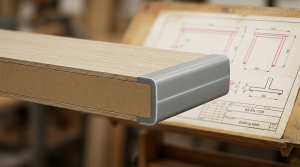
UK Safety Standards for School Tables: The Definitive 2026 Guide
🎯 Key Takeaway
The primary safety standards for school tables in the UK are BS EN 1729 Parts 1 & 2, which cover ergonomic dimensions and structural safety, and BS 5852 for fire retardancy. These regulations ensure furniture is safe, durable, and appropriate for pupils’ size.
• BS EN 1729 is the core standard, dictating table height, size, and stability to prevent injury and support good posture.
• Fire safety compliance, often to Crib 5 level in certain environments, is mandated by The Furniture and Furnishings (Fire) (Safety) Regulations 1988.
• Verifying supplier certification is a critical due diligence step for School Business Managers to ensure legal compliance and pupil safety.
This guide provides a detailed breakdown of each standard and a practical checklist for procurement, ensuring you make informed, compliant decisions for your school.
Ensuring the wellbeing of pupils is the highest priority for any educational institution. As of September 2026, navigating the complex web of safety standards for school tables remains a critical responsibility for school leadership. It’s not just about buying furniture; it’s about safeguarding children and investing public funds wisely. When procuring furniture, understanding the specific educational furniture regulations UK is essential for legal compliance and creating an effective learning environment. Poorly chosen tables can lead to poor posture, classroom accidents, and wasted budgets.
This guide demystifies the key standards, including BS EN 1729 and fire safety rules, providing a clear path for School Business Managers. We’ll translate the technical jargon into practical advice, covering everything from ergonomic requirements to classroom table safety. Our goal is to empower you to make confident procurement decisions, ensuring every table in your school is a safe foundation for learning. For a broader overview, you can also review our guide on choosing the right school tables.
👤 Written by: Costcutters UK Content Team
Reviewed by: Costcutters UK Editorial Team, 35+ Years in Educational Furniture Supply, Rated Excellent On Trustpilot
Last updated: 15 September 2026
ℹ️ Transparency: This article explores UK safety standards for school tables based on official government and British Standards Institution guidance. All information has been verified by our editorial team to ensure accuracy as of September 2026. Costcutters UK is a leading supplier of compliant educational furniture, and some links may connect to our services. We are committed to providing transparent and authoritative advice.
What Are The Key UK Safety Standards for School Tables?
The principal standard governing school tables in the United Kingdom is BS EN 1729. This is a European standard adopted by the British Standards Institution (BSI), and it is designed to ensure that educational furniture is safe, durable, and ergonomically suitable for pupils. It is split into two distinct but equally important parts: Part 1 covers functional dimensions for good posture, while Part 2 addresses structural safety requirements.
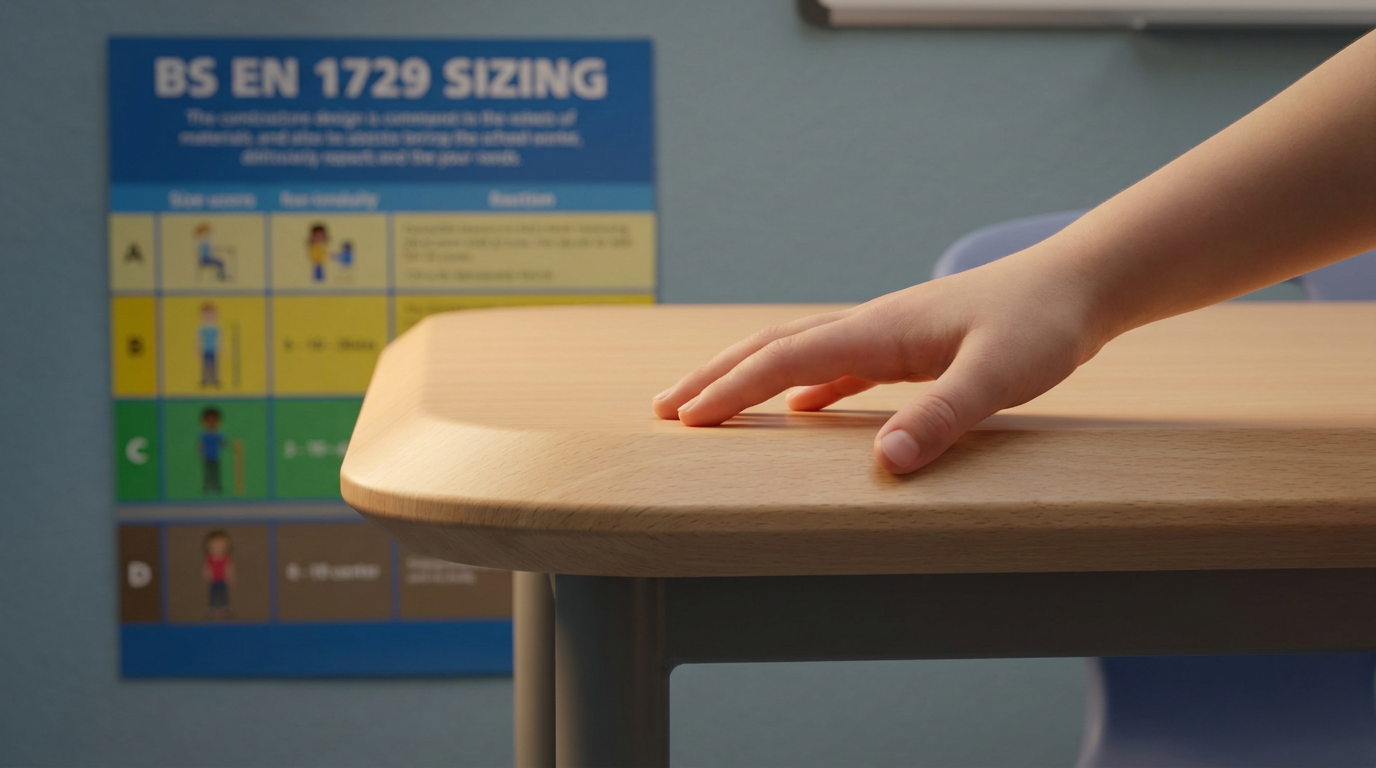
According to the European Agency for Safety and Health at Work (EU-OSHA), musculoskeletal disorders (MSDs), often linked to poor ergonomics, are a leading cause of health problems, and their prevention should start in school. Adherence to BS EN 1729 is the primary mechanism for achieving this. Think of it as the foundational UK school table standards that protect both pupils and the school from liability. Compliant furniture not only prevents accidents but also supports concentration and long-term physical health.
Below is a breakdown of the sizing marks as defined by BS EN 1729, which helps match tables to the correct age groups.
| Size Mark | Colour Code | Stature Range (mm) | Table Height (mm) |
|---|---|---|---|
| 1 | Orange | 800 – 950 | 460 |
| 2 | Violet | 930 – 1160 | 530 |
| 3 | Yellow | 1080 – 1210 | 590 |
| 4 | Red | 1190 – 1420 | 640 |
| 5 | Green | 1330 – 1590 | 710 |
| 6 | Blue | 1460 – 1880 | 760 |
Source: Adapted from BS EN 1729 guidance from sources like the British Standards Institution (BSI) and Edu-Quip.
BS EN 1729 Part 1: Ergonomics and Sizing
This part of the standard is all about pupil health. It specifies the correct height, depth, and width of tables and chairs based on the average stature of children at different ages. The ‘size mark’ system (shown in the table above) uses colour codes to make it simple for schools to select appropriate furniture for different key stages, from Early Years Foundation Stage (EYFS) to secondary school. For example, you can find more detail in our guide on specific requirements for primary school tables.
The goal is to promote good posture and reduce the risk of MSDs. When a child sits at a table of the correct height, their feet are flat on the floor, their knees are at a 90-degree angle, and their arms can rest comfortably on the surface. This alignment is crucial for comfort and concentration. Our guide to ergonomics and correct posture provides further detail on this important topic.
BS EN 1729 Part 2: Strength and Stability
While Part 1 focuses on health, Part 2 is about preventing immediate physical injury. It outlines a series of rigorous tests that furniture must pass to prove it can withstand the demands of a busy school environment. These tests are designed to simulate real-world use and misuse.
Key tests include:
- Stability Tests: To ensure a table won’t tip over if a pupil leans on the edge or pushes against it.
- Load Tests: To verify the table can support heavy weights (like stacks of books or even a pupil sitting on it) without buckling or breaking.
- Durability Tests: To simulate years of use, ensuring joints and components remain secure.
- Hazard Checks: To identify and eliminate sharp edges, corners, and gaps where fingers could be trapped.
When you purchase a table certified to BS EN 1729, you are receiving a product that has been independently verified as structurally sound. We believe this is non-negotiable for any educational setting.
Understanding School Furniture Fire Safety Regulations
Yes, all furniture supplied to schools must comply with specific school furniture fire safety regulations under UK law. The primary legislation is The Furniture and Furnishings (Fire) (Safety) Regulations 1988. These regulations mandate that furniture must pass flammability tests to resist ignition from sources like cigarettes and matches, thereby slowing the spread of fire.
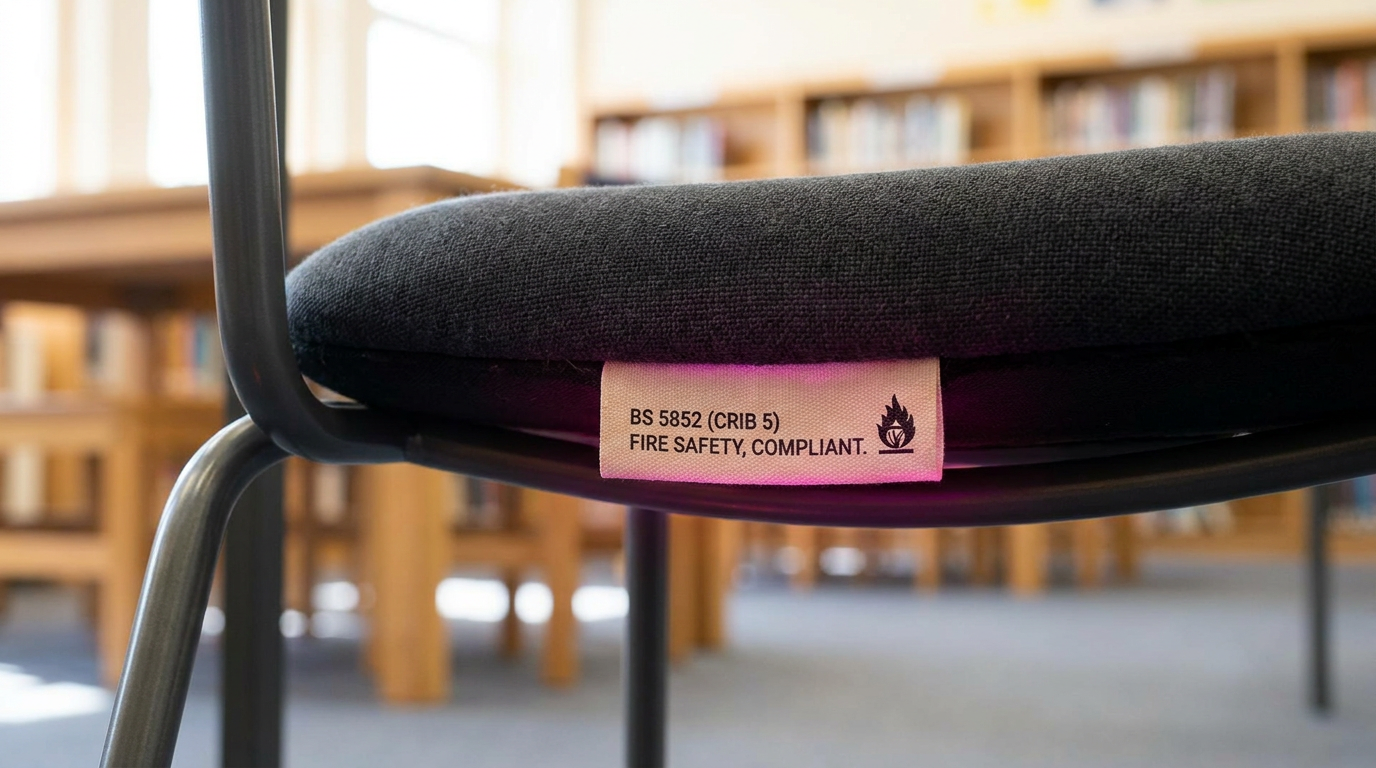
The technical standard most commonly used to demonstrate compliance is BS 5852. This standard defines different levels of fire retardancy. For most contract environments, including many parts of a school, a higher level of resistance known as ‘Crib 5’ or ‘Ignition Source 5’ is required. As guidance from authorities like Wandsworth Council’s services for schools points out, this is particularly important for upholstered items in areas such as staff rooms, reception areas, libraries, and any residential or boarding accommodation.
It’s important to distinguish between different types of furniture. A standard classroom table made of wood and metal has different requirements from an upholstered chair in a common room. However, suppliers must be able to provide evidence of compliance for all items. Non-compliance is not just a safety risk; it’s a breach of legal duty.
Practical Safety Checks for Classroom Tables
Beyond procurement and certification, regular hands-on checks are essential for maintaining classroom table safety. A diligent facilities manager or staff member can perform these checks as part of a routine risk assessment, identifying potential hazards before they cause an injury. We recommend creating a simple checklist for annual inspections.
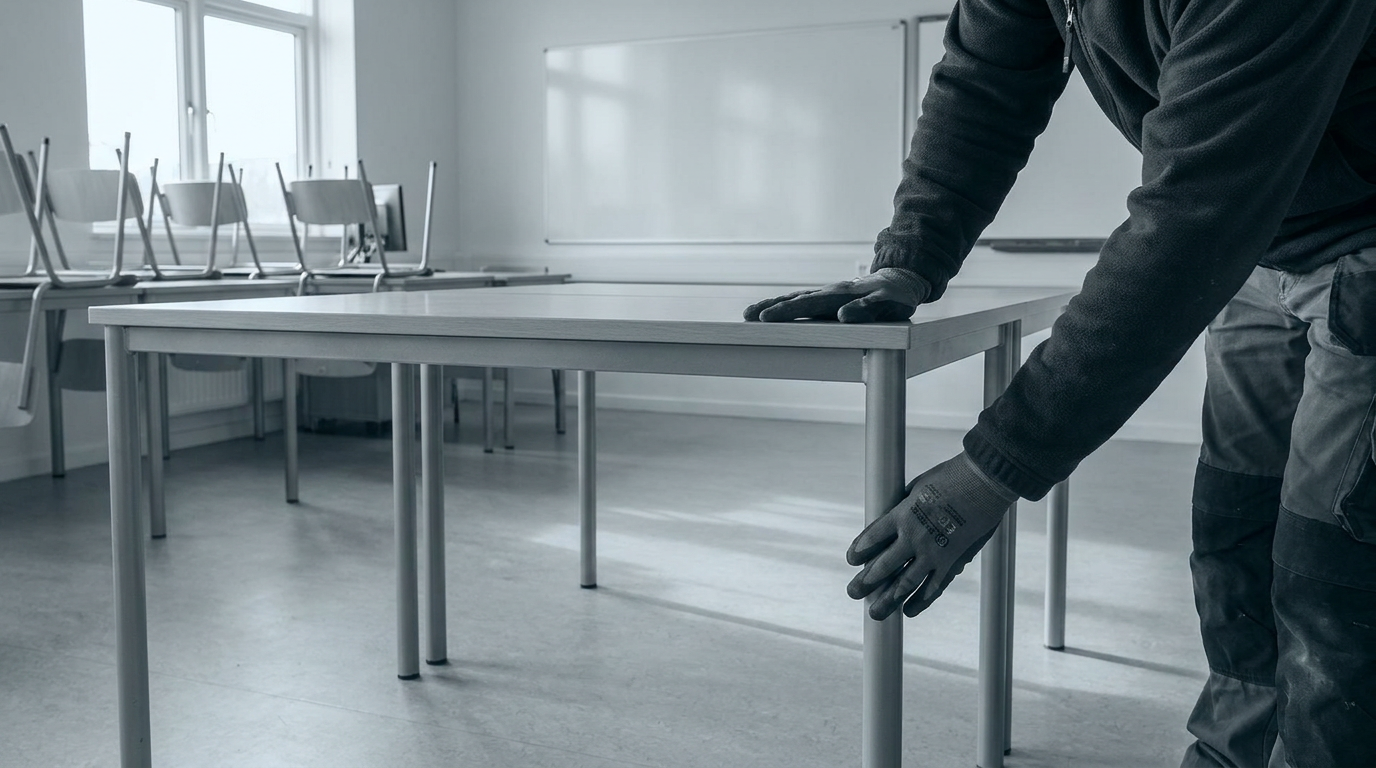
Here are five key points to look for:
- Stability (The ‘Wobble Test’): Firmly push on the table’s corners and edges. It should not rock, tilt, or feel unstable. Check that all legs are even and that any levelling feet are correctly adjusted. An unstable table is a tipping hazard.
- Surface Condition: Run your hand over the tabletop and edges. There should be no splinters, sharp cracks, or peeling laminate that could cause cuts or trap dirt. A smooth, intact surface is also easier to clean and more hygienic.
- Edge and Corner Safety: All corners and edges should be rounded or chamfered. Sharp 90-degree corners are a significant impact hazard, especially in classrooms with younger children. The principles of BS EN 1729 design these hazards out from the start.
- Structural Integrity: Inspect the table’s underbelly. Check that all leg attachments, welds, and screws are tight and free from rust or stress fractures. If a table has a folding mechanism, ensure it locks securely in place and doesn’t show signs of wear.
- Trapping Hazards: Look for any gaps, especially in height-adjustable or folding tables, where a child’s fingers could become trapped. Any moving parts should be guarded or designed to prevent such injuries.
How Can Schools Verify Compliance with School Table Safety Standards?
Verifying compliance is a crucial part of the procurement process and a key responsibility for School Business Managers. It involves more than just taking a supplier’s word for it. A reliable due diligence process ensures pupil safety and protects the school’s budget and reputation. Understanding educational furniture regulations UK is the first step.
We’ll be honest – this part can be tedious, but it’s critical for Saving Time & Stress in the long run. Here is our recommended procurement checklist:
- Request Certificates of Compliance: Before placing an order, ask the supplier to provide current, valid certificates for the specific products you intend to buy. This should include a certificate for BS EN 1729 (Parts 1 & 2) and, where applicable, for BS 5852 fire retardancy. Do not accept a general statement of compliance; ask for product-specific documentation.
- Vet Your Supplier: Choose established, reputable UK suppliers. Are they members of a recognised trade body like the British Educational Suppliers Association (BESA)? A BESA Code of Practice, for instance, requires members to ensure products are fit for purpose and meet all relevant standards. A long trading history and positive reviews (like being Rated Excellent On Trustpilot) are also strong indicators of reliability.
- Analyse Total Cost of Ownership (TCO): Cheap, non-compliant furniture is a false economy. It may break sooner, require frequent replacement, and pose a liability risk. Compliant furniture, built to BS EN 1729 durability standards, lasts longer. By calculating the TCO instead of just the initial purchase price, you’ll make a more sustainable investment. This is one of an effective ways of avoiding costly procurement mistakes.
- Check Product may help: A long guarantee (e.g., 5 or 10 years) is a powerful signal of a manufacturer’s confidence in their product’s strength and durability. A short guarantee on a classroom table should be a red flag.
- Seek Flexible Payment Options: Trusted suppliers understand school budgeting cycles and often offer Credit Accounts Or Pay Flexibly options to make procurement manageable.
Frequently Asked Questions About School Table Safety
What are the safety standards for school tables?
The core safety standards for school tables in the UK are BS EN 1729 and The Furniture and Furnishings (Fire) (Safety) Regulations 1988. BS EN 1729 covers ergonomics and structural safety, ensuring tables are the right size and strong enough for school use. The fire regulations, often referencing BS 5852, ensure materials don’t pose an undue fire risk. Together, they create a comprehensive safety framework.
What is the BS 5852 standard?
BS 5852 is a British Standard that specifies methods for assessing the ignitability of furniture by different ignition sources. It is a critical part of ensuring school furniture fire safety. For contract furniture, the ‘Crib 5’ test within this standard is often required, which simulates a more intense ignition source to prove higher fire retardancy, especially for upholstered items in public spaces.
What is the difference between BS EN 1729 Part 1 and Part 2?
Part 1 of BS EN 1729 dictates the functional dimensions, while Part 2 covers the structural safety requirements. Part 1 ensures a table is the correct height and size for a pupil to maintain good posture. Part 2 involves a series of physical tests to confirm the table is stable, strong, and durable enough to prevent accidents like tipping or collapse during normal school activities.
How often should school tables be inspected for safety?
Best practice suggests formal, documented inspections of all furniture at least annually, with more frequent visual checks. While there isn’t a strict legal schedule, guidance from the Health and Safety Executive (HSE) promotes regular risk assessments. Routine checks by staff can help identify wear and tear, like a loose leg or a chipped surface, before it becomes a safety hazard in the classroom.
Are second-hand school tables safe to use?
Second-hand tables can be used, but they present a compliance risk and require rigorous inspection. It is very difficult to verify if they originally met standards like BS EN 1729, and any fire safety labels may be missing or illegible. In our view, the most reliable way to ensure pupil safety and legal compliance is to procure new, certified furniture from a reputable supplier.
Do these standards apply to tables for SEN pupils?
Yes, the fundamental principles of safety, stability, and durability apply to all school furniture, including for pupils with Special Educational Needs (SEN). SEN furniture, such as height-adjustable tables or wheelchair-accessible desks, may have specialised features but must still be reliable and safe. These items should adhere to the spirit of BS EN 1729 while meeting the specific needs of the user.
What are the risks of using non-compliant tables?
Using non-compliant tables introduces serious risks of physical injury, long-term health problems, and legal liability for the school. Physical risks include collapse or tipping. Poor ergonomics can contribute to musculoskeletal issues. In the event of an accident, the school could be found negligent. Furthermore, non-compliant furniture is often less durable, representing poor value for money.
How can I check if a table is fire-retardant?
Compliant furniture must carry a permanent, visible label stating it meets the relevant fire safety regulations. For upholstered items, this is typically a triangular label mentioning BS 7176 or a square one referencing the 1988 regulations. For non-upholstered items, compliance should be stated on technical specifications. If in doubt, typically request a formal certificate of compliance from your supplier.
Do classroom tables need to be fixed to the floor?
No, in most classroom settings, tables do not need to be fixed to the floor. The stability tests within BS EN 1729 are specifically designed to ensure that freestanding tables are resistant to tipping under normal use. Fixing tables would severely limit classroom flexibility for different teaching styles. The main exceptions are for heavy, specialised benches in science labs or D&T workshops.
What are safety policies in schools?
A school’s safety policy is a formal document outlining procedures to ensure the health, safety, and welfare of pupils and staff. This comprehensive policy covers everything from fire drills to risk assessments of equipment and premises. A key part of this policy should be a commitment to procuring, using, and maintaining furniture that is compliant with UK safety standards, as guided by the Department for Education (DfE).
Important Considerations
This guide is based on standards and regulations current as of September 2026. British and European standards are periodically reviewed and updated. Schools should typically verify the latest versions of standards like BS EN 1729 with their supplier or the British Standards Institution (BSI), the UK’s national standards body, during any procurement process.
While purchasing new, certified furniture is the recommended approach for likely to support compliance, some schools may consider refurbishing existing high-quality stock. However, this must be undertaken by a professional company that can certify the refurbished items meet current strength, stability, and fire safety standards. In many cases, this process can be less cost-effective than a full replacement with warranted new products.
For complex projects, such as designing a new library, an ICT suite, or a learning space for pupils with specific physical needs, we strongly recommend consulting a professional educational space planner. They can perform a detailed needs analysis and ensure the layout and furniture selection optimises for safety, ergonomics, and educational outcomes. Our “Design To Install We Do It All!” service is built for exactly this purpose.
Ensuring a Safe Learning Environment Through Compliant Furniture
Ultimately, meeting the required safety standards for school tables is not merely a box-ticking exercise; it is a fundamental pillar of a school’s duty of care. By understanding and applying the principles of BS EN 1729 for ergonomics and stability, alongside BS 5852 for fire safety, School Business Managers protect pupils from harm while making fiscally sound, long-term investments. A diligent procurement process that prioritises certification, supplier reputation, and total cost of ownership is the most effective strategy for success.
At Costcutters UK, we have over 35 years of experience helping schools across the country navigate these regulations, offering everything from Bulk Buy Discounts to flexible credit accounts. All our school tables are certified to meet or exceed UK school table standards. If you need assistance planning a safe, compliant, and effective learning space, our expert team is here to help. You can even see how we transformed this school’s learning environment in a recent project.
Get a free, no-obligation space plan and quote today.
References
- Health and Safety Executive (HSE) – Government Guidance. Provides the legal framework and practical advice for risk assessment related to workplace and classroom equipment to prevent musculoskeletal disorders.
- European Agency for Safety and Health at Work (EU-OSHA) – International Body Research. Highlights that musculoskeletal disorders are a leading cause of work-related health problems in Europe, often linked to poor ergonomic design of furniture.
- Department for Education (EYFS Framework) – Government Statutory Framework (2024). Mandates that premises, environment, and equipment in early years settings must be safe, suitable, and compliant with safety regulations.
- British Educational Suppliers Association (BESA) – Professional Organisation Code of Practice. Requires member suppliers to ensure their products are fit for purpose in an educational setting and adhere to all relevant safety standards.
- World Health Organization (WHO) – International Body Guideline (2020). Recommends limiting sedentary behaviour, reinforcing the need for ergonomic furniture that supports healthy posture during periods of sitting in schools.
- Statista – Market Research Data (2024). Reports that revenue in the UK Office Furniture market, which includes educational furniture, is projected to be US$2.28bn in 2024, highlighting the scale of procurement.
- British Standards Institution (BSI) – National Standards Body. Manages the UK committee responsible for developing and maintaining standards for educational furniture, including BS EN 1729.
- Education Business UK – Industry Publication. An article highlighting the critical importance of considering safety in the procurement of all school equipment and furniture to fulfil duty of care.
- Edu-Quip – Supplier Guidance. Provides a practical buying guide for schools, explaining the relevance of BS EN 1729 size marks for choosing appropriate tables and chairs.
Conclusion
Ensuring a Safe Learning Environment Through Compliant Furniture
In summary, safety standards for school tables are not just a matter of regulatory compliance; they are a fundamental aspect of a school’s duty of care. By understanding the key principles of BS EN 1729 for ergonomics and stability, and BS 5852 for fire safety, School Business Managers can protect pupils from harm and make fiscally responsible, long-term investments. A diligent procurement process focused on certification and supplier reputation is the most effective strategy.
At Costcutters UK, we have over 35 years of experience helping schools across the country navigate these regulations. All our school tables are certified to meet or exceed UK standards. If you need assistance planning a safe, compliant, and effective learning space, our expert team can help. See how we transformed one school’s learning environment or get a free, no-obligation space plan and quote today.