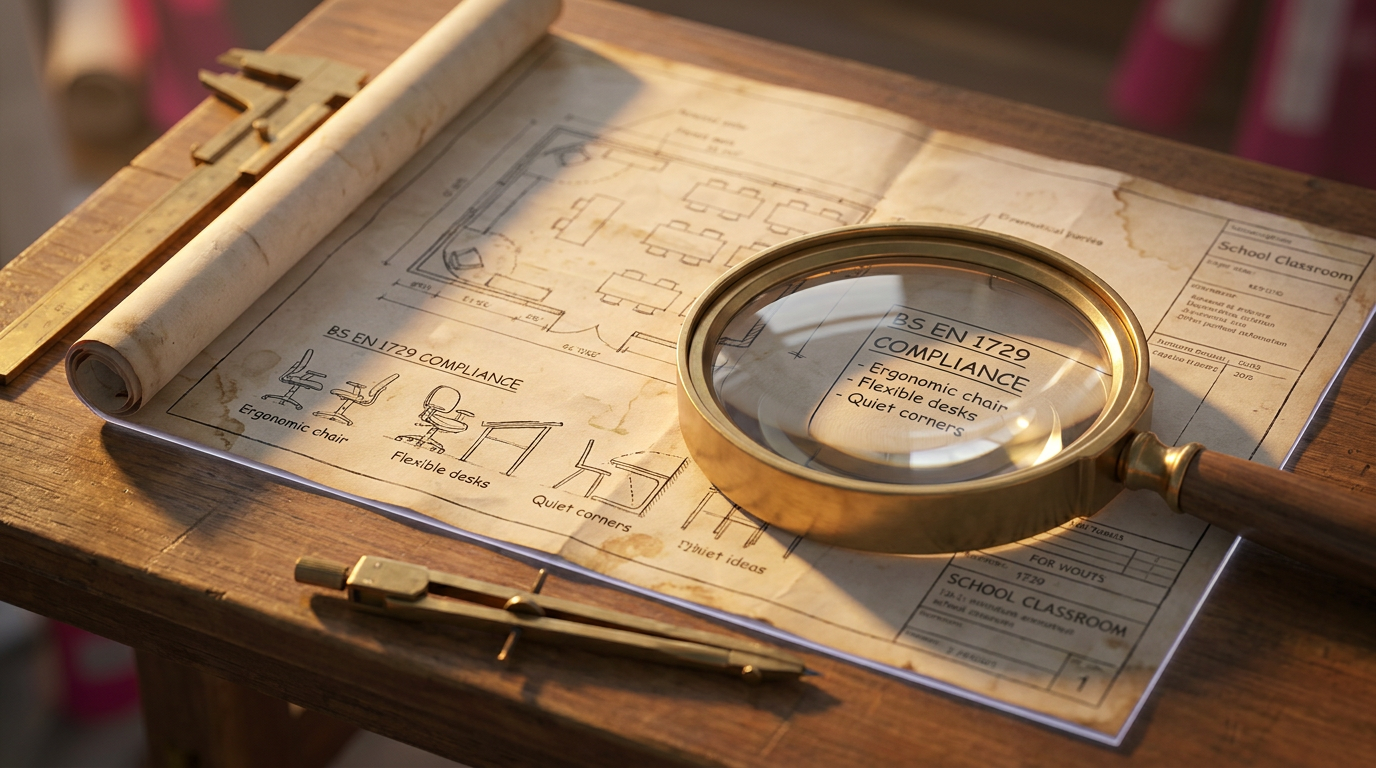
Planning Your School Furniture Project: A Comprehensive How-To Guide
🎯 Key Takeaway
A successful school furniture project requires a structured, multi-phase approach that includes a thorough audit, strategic budgeting, compliant design, careful supplier selection, and professionally managed installation.
• Phase-Based Planning: Break the project into five manageable phases: Audit, Budget, Design, Procurement, and Execution.
• Compliance is Key: Ensure all selected furniture meets UK standards like BS EN 1729 to guarantee pupil safety and ergonomic support.
• Expert Partnership: Working with an experienced supplier minimises disruption and ensures deadlines, especially during school holidays, are met.
This guide provides a detailed framework to navigate each phase, ensuring your project is delivered on time, within budget, and to the highest standard.
Embarking on a large-scale school furniture project can feel like a monumental task for any School Business Manager (SBM) or Headteacher. The pressure to deliver inspiring and effective learning environments, whilst juggling budgets, compliance, and tight deadlines, is immense. As of August 2026, the need for adaptable, ergonomic, and future-proofed spaces has rarely been greater. This guide is designed to be your definitive roadmap, breaking down the entire process into five manageable phases. We’ve built this framework from our 35+ years of experience to make your next school furniture planning exercise less stressful and more successful, ensuring you achieve an effective possible outcome for your pupils and staff.
Written by: The Cost Cutters UK Content Team | Reviewed by: Industry Specialists, 35+ Years Experience; Rated Excellent On Trustpilot
Last updated: 15 August 2026
ℹ️ Transparency Disclosure: This article explores the process of planning a school furniture project based on our extensive industry experience and analysis of official UK guidance. We aim for complete transparency; some links may connect to our services. All information has been verified by our editorial team for accuracy. Cost Cutters UK is a trusted supplier for schools and businesses across the United Kingdom, committed to providing exceptional value and service.
Phase 1: Auditing Your Space & Defining Your Vision
The essential first step in any project is to conduct a detailed assessment of what you currently have and clearly define what you aim to achieve. Before you can plan for new furniture, you need a comprehensive understanding of your existing assets and shortcomings. In our experience, a thorough audit prevents unnecessary spending and aligns the project with your school’s educational goals. This initial school furniture planning phase is foundational to success.
We recommend creating a simple inventory for each room, noting the quantity, condition, and compliance status of every furniture item. Is the furniture broken, worn, or simply outdated? Does it meet current standards? This audit provides the data needed for budgeting and disposal planning.
Concurrently, it’s crucial to involve stakeholders like teachers and even pupils. What kind of learning do you want to facilitate? The World Health Organization (WHO) (2020) guidelines on physical activity underscore the health risks of prolonged sitting, making the case for more dynamic learning spaces. Discuss whether you need to support traditional teaching, collaborative group work, or a mix of both. This is the well-suited time to explore the debate between choosing between flexible and traditional furniture to ensure your new environment supports your pedagogical vision for years to come.
Phase 2: How to Create a Realistic School Furniture Budget
A detailed and realistic school furniture budget is the financial backbone of your project, preventing scope creep and ensuring you derive maximum value from every pound spent. To build one effectively, you must account for all direct and indirect costs, not just the price tags on chairs and tables. Our advice is to itemise everything to avoid surprises later.
Your budget should include line items for:
- The furniture itself (including VAT)
- Delivery charges
- Professional installation fees
- Removal and ethical disposal of old furniture
- A contingency fund of 5-10% for unforeseen issues
Market data from Statista (2024) shows the UK furniture market is a significant industry, so prices can be competitive, but quality varies immensely. We firmly believe in pursuing ‘best value’ over the ‘lowest price’. Cheaper items may not withstand the rigours of a school environment, leading to higher replacement costs down the line.
To maximise your school furniture budget, explore our Bulk Buy Discounts, consider a phased purchasing plan across financial years, or choose multi-functional furniture that can serve several purposes. Furthermore, you can speak with our team about flexible payment options; we offer Credit Accounts Or Pay Flexibly to help schools manage their cash flow effectively.
Phase 3: Design, Layout, and Ensuring UK Compliance
A detailed classroom furniture layout plan is strongly critical for creating a space that is functional, safe, and legally compliant. This phase moves beyond simply picking products to strategically planning how they will exist in a physical space to enhance learning and ensure accessibility. The layout must facilitate smooth traffic flow, create distinct zones for different activities, and adhere to strict UK safety standards.
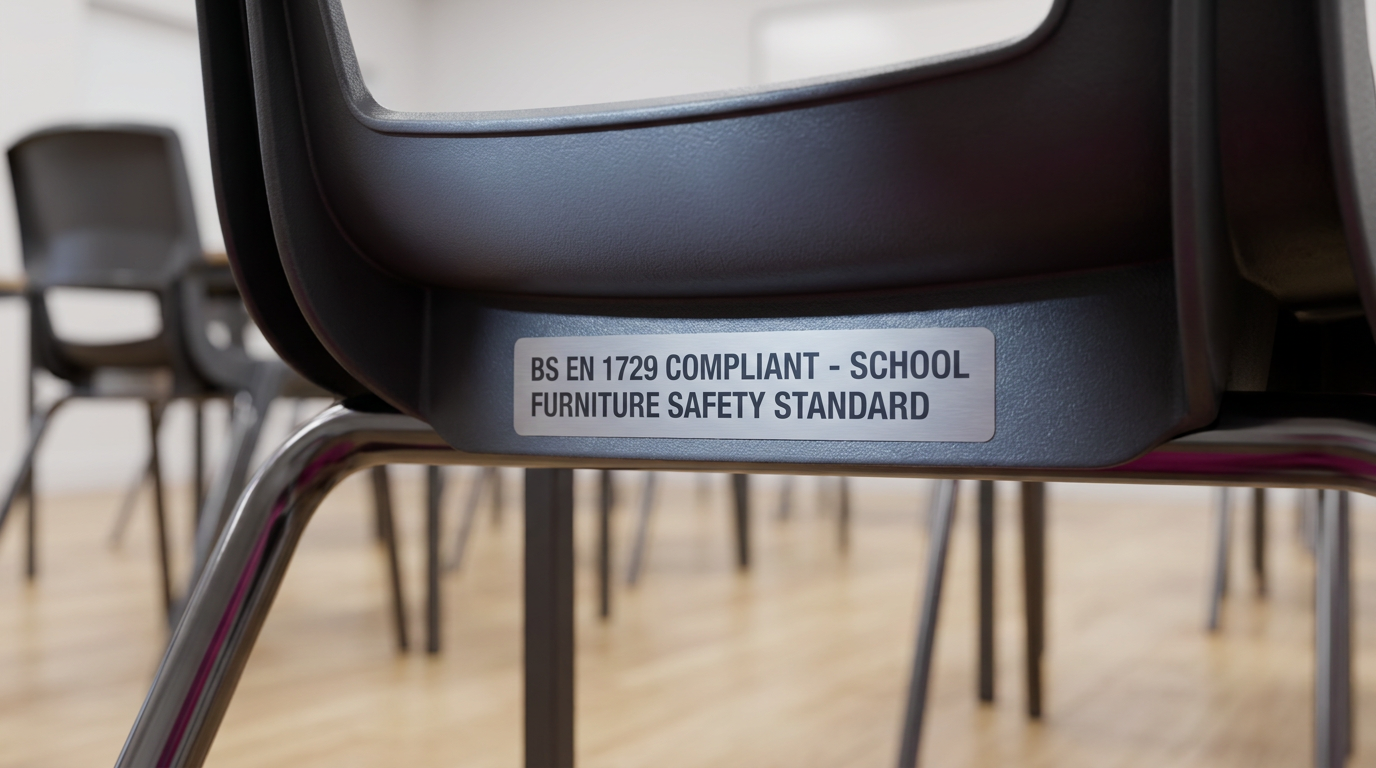
The most important of these is school furniture compliance UK, governed by the standard BS EN 1729. BS EN 1729 is the European standard, adopted in the UK, that specifies functional dimensions and safety requirements for chairs and tables in educational institutions.
- Part 1 covers dimensions, ensuring furniture is ergonomically appropriate for the size and age of the pupil.
- Part 2 details safety requirements, testing for strength, stability, and durability.
Adherence is not just a recommendation; it’s a core part of a school’s duty of care. The standard uses a ‘Size Mark’ system to help you match furniture to the correct age group. For example, Size Mark 3 is for ages 6-8, while Size Mark 6 is for ages 14 and above. Guidance from the Health and Safety Executive (HSE), the national regulator for workplace safety, provides a legal framework for ergonomics, particularly for staff workstations. For a deep dive into your legal obligations, our guide on ensuring compliance and safety is an essential resource. Our ‘Design To Install We Do It All!’ service includes creating 2D and 3D plans that ensure your layout is fully compliant from the outset.
Phase 4: Choosing the Right UK School Furniture Suppliers
Selecting the right partner from the many UK school furniture suppliers is one of the most critical decisions you’ll make. A great supplier acts as a project partner who provides expertise and support, not just a transactional seller. Their experience can be the difference between a smooth, successful project and a stressful, problematic one.
When vetting potential suppliers, we recommend using this checklist:
- Education Sector Experience: Do they have a well-supported by research track record of working with UK schools? Ask for case studies or references.
- Compliance Knowledge: Can they demonstrate that their products meet school furniture compliance UK standards like BS EN 1729?
- Project Management Services: Do they offer a comprehensive service that covers planning, delivery, and installation? This is key to Saving Time & Stress.
- Professional Accreditation: Are they members of a recognised body like the British Educational Suppliers Association (BESA)? A BESA membership indicates a commitment to quality and ethical standards.
- Transparent Quoting: Do they provide detailed, itemised quotes that break down all costs? Avoid suppliers who only give a single lump-sum figure.
- may help & After-Sales Support: What warranties do they offer on their products? A long guarantee is a sign of confidence in the product’s durability.
At Cost Cutters UK, we are proud to be Rated Excellent On Trustpilot because we deliver on all these points, acting as a trusted partner from start to finish.
Phase 5: Executing Your School Furniture Project Without the Stress
Meticulous logistical planning is the key to a smooth and stress-free installation phase for your school furniture project. For most UK schools, the summer holiday period is the golden window for major works, as it may reduce disruption to teaching. However, these slots are in high demand, so booking your delivery and installation well in advance is paramount for effective school refurbishment project management.
The key logistical steps to manage are:
- Coordinating Dates: Confirming delivery and installation dates that align with your school’s schedule and site availability.
- Site Access: Ensuring clear access for delivery vehicles and installation teams.
- Team Management: Overseeing the on-site team to ensure they work safely and efficiently.
- Waste Disposal: Arranging for the removal and ethical recycling of all packaging and old furniture.
We’ll be honest – this part can be tedious, but it’s where a full-service supplier research suggests its worth. Our ‘Design To Install We Do It All!’ promise means we handle every one of these details. A dedicated project manager from our team becomes your single point of contact, coordinating everything and freeing up your valuable time.
| Project Phase | Key Activities | Typical Timeline (UK School Context) | Costcutters UK Support |
|---|---|---|---|
| 1. Audit & Vision | Furniture audit, stakeholder meetings, define goals. | 4-6 weeks (Spring Term) | Needs analysis, expert consultation. |
| 2. Budgeting | Cost itemisation, seek funding, get initial quotes. | 2-4 weeks (Spring Term) | Free initial quotes, Bulk Buy Discounts. |
| 3. Design & Compliance | Create classroom furniture layout plan, select products. | 3-5 weeks (End of Spring Term) | Free 2D/3D space planning, compliance checks. |
| 4. Procurement | Finalise supplier, place order, confirm schedule. | 2-3 weeks (Start of Summer Term) | Dedicated account manager, flexible payments. |
| 5. Execution | Delivery, installation, old furniture removal. | 1-3 weeks (Summer Holidays) | Full project management, professional installers. |
| 6. Handover | Final checks, snagging list, sign-off. | 1-2 days (End of Summer Holidays) | Post-project support, warranty activation. |
From Plan to Reality: A Successful School Furniture Project Case Study
Consider a typical scenario for a UK primary school looking to modernise its Key Stage 2 classrooms.
- Challenge: The school’s existing furniture was over 20 years old, showing significant wear and failing to support modern, collaborative teaching methods. The classrooms felt cramped and uninspiring, and the SBM was concerned about compliance with current ergonomic standards. They had a fixed budget and a tight deadline for completion over the summer break.
- Solution: The school partnered with Cost Cutters UK. We began with a free, on-site consultation and space audit. Our design team then produced 3D visualisations of a new classroom furniture layout plan featuring flexible tables, ergonomic chairs in correct size marks, and mobile storage units. A phased delivery and installation schedule was agreed upon to fit the six-week summer holiday window.
- Results: The four classrooms were completely transformed on time and within the agreed school furniture budget. The new layout increased usable floor space by 15% and provided zones for both focused work and group activities. Teacher feedback noted a tangible improvement in pupil engagement. The project was fully compliant with BS EN 1729.
- Key Insight: Engaging an expert partner with a ‘Design To Install’ service early in the process was critical. It removed the logistical burden from the SBM and ensured a professional, compliant outcome without any hidden costs or delays.
Frequently Asked Questions
What is a school furniture project?
A school furniture project is the complete process of planning, budgeting, sourcing, and installing new furniture within an educational setting. This can range from a single classroom refresh to a whole-school refurbishment, with a primary focus on creating effective, safe, and compliant learning environments for both pupils and staff.
How do you plan a school project?
The most effective method is to follow a structured, phased plan. Start by auditing your current assets and defining your educational goals. Next, create a detailed budget, design a compliant layout with a space plan, select a reputable supplier, and finally, schedule and manage the installation. Breaking it down this way makes the process manageable.
How do I create a school furniture budget?
Begin by itemising all potential costs: the furniture, VAT, delivery, installation, and old furniture removal. We strongly recommend adding a 10% contingency to your school furniture budget for any unforeseen expenses. Typically seek ‘best value’ through durability and may help, not just the lowest initial price, to ensure a better long-term investment.
What is BS EN 1729 and why is it important?
BS EN 1729 is the crucial UK and European standard for chairs and tables in educational institutions. It specifies the correct dimensions, strength, and stability needed to ensure furniture is ergonomically sound and safe for pupils. Adhering to this standard is a key part of school furniture compliance UK and demonstrates due diligence in safeguarding pupil welfare.
How do I choose the right size furniture for different year groups?
You should use the ‘Size Mark’ guide that is part of the BS EN 1729 standard. This system clearly links furniture dimensions to specific pupil age ranges, from nursery (Size Mark 1) to sixth form (Size Mark 6). A knowledgeable supplier can provide a chart and expert advice to help you select the correct sizes for every classroom.
What’s the best time of year to install school furniture?
The summer holiday period in July and August is overwhelmingly an effective time for a major installation. This minimises any disruption to teaching and learning. For smaller projects, half-term breaks or the Easter holidays can also be viable windows. Planning well in advance is essential to secure an installation slot during these busy periods.
Should we consider flexible or traditional classroom furniture?
This decision depends entirely on your school’s teaching and learning objectives. Traditional furniture is well-suited to teacher-led instruction. In contrast, flexible furniture like configurable tables and mobile seating better supports collaborative, project-based learning. Many schools now opt for a hybrid approach to cater to different activities.
Can we manage the installation ourselves to save money?
While it may seem cost-effective, self-installation can introduce hidden costs and risks. These include staff time, incorrect assembly that could void warranties, and the challenge of waste disposal. A professional installation service ensures furniture is built correctly, placed according to plan, and all packaging is removed, Saving Time & Stress.
What should I look for in a UK school furniture supplier?
Look for a supplier with well-supported by research experience in the UK education sector and positive reviews. They should offer free space planning, provide clear evidence of compliance with standards like BS EN 1729, have case studies from other schools, and offer a comprehensive school refurbishment project management service.
What happens to our old school furniture?
A responsible supplier will offer a full furniture removal and recycling service. They work with licensed waste management partners to ensure that old items are disposed of ethically and in full compliance with UK environmental regulations. This is a key service to inquire about to ensure your project is sustainable from start to finish.
Important Considerations
This guide provides a comprehensive framework based on our extensive industry experience. However, specific costs and timelines can vary based on project scale, geographical location, and prevailing market conditions. All budget figures mentioned are estimates for planning purposes. We typically recommend obtaining a formal, itemised quote from prospective UK school furniture suppliers for accurate financial planning.
The primary alternative to a fully managed project is a ‘Do-It-Yourself’ (DIY) approach, where the school sources items from multiple vendors and coordinates installation internally. Whilst this can sometimes lower initial costs, it places a significant administrative burden on staff and carries risks related to compliance, logistics, and final quality. For large-scale projects, the value of professional project management often outweighs the perceived savings.
For any school furniture project involving multiple rooms or significant expenditure, we strongly recommend consulting with an education furniture specialist. An expert can provide a free space plan and quote, ensure all products are compliant and fit for purpose, and manage the entire process. This professional oversight ensures your project is completed on time and with minimal disruption, especially during critical school holiday periods.
Your Partner for a Successful School Furniture Project
Executing a successful school furniture project is a significant undertaking, but with a structured, phase-based approach, it becomes a manageable and rewarding process. By focusing on a thorough audit, strategic budgeting, compliant design, and careful school refurbishment project management, you can transform your learning environments effectively. This ensures the result not only meets the needs of pupils and staff today but also provides lasting value for years to come.
At Cost Cutters UK, we have partnered with hundreds of UK schools to deliver refurbishment projects of all sizes. Our dedicated education team acts as an extension of yours, providing expert advice, free space planning, and full project management to ensure a stress-free result. We are Rated Excellent On Trustpilot for a reason. If you’re ready to start planning, contact us for a free, no-obligation quote and discover how our ‘Design To Install We Do It All!’ service can bring your vision to life.
References
- Health and Safety Executive (HSE) – UK Government Guidance. Provides legal requirements and practical advice for workstation ergonomics under the Display Screen Equipment (DSE) Regulations 1992.
- European Agency for Safety and Health at Work (EU-OSHA) – EU Research Body. Highlights poor workstation design as a primary risk factor for work-related musculoskeletal disorders.
- Department for Education (EYFS Framework) – UK Government Statutory Framework (2024). Section 3 mandates that premises and equipment in early years settings must be safe and suitable for their purpose.
- British Educational Suppliers Association (BESA) – Professional Organisation Code of Practice. Members must supply products that are fit for their intended purpose in an educational context, ensuring quality and safety.
- World Health Organization (WHO) – Global Health Guidelines (2020). Recommends people of all ages limit time spent being sedentary, providing the health rationale for active learning environments.
- Statista – Market Research Data (2024). Reports on revenue and growth projections for the UK office furniture market.
- Witley Jones – Industry Blog. Provides insights from a specialist manufacturer on the importance of a phased approach from design through to installation for school projects.
- OSI Office Furniture – Supplier Guidance. Offers practical advice in their buying guide on leveraging the summer holiday period for major school furniture procurement and installation.
- PBC Today – Construction & Planning News. Publishes articles discussing how modern school design and furniture choices are evolving to meet new pedagogical demands.


Related Resources
Conclusion
Your Partner for a Successful School Furniture Project
In summary, a school furniture project becomes a manageable and rewarding process when executed with a structured, phase-based approach. It is a significant undertaking, but by focusing on a thorough audit, strategic budgeting, compliant design, and careful school refurbishment project management, you can transform your learning environments effectively. This ensures the result not only meets the needs of pupils and staff today but also provides lasting value for years to come.
At Costcutters UK, we have partnered with hundreds of UK schools to deliver refurbishment projects of all sizes. Our dedicated education team acts as an extension of yours, providing expert advice, free space planning, and full project management to ensure a stress-free result. If you’re ready to start planning, contact us for a free, no-obligation quote and discover how we can help bring your vision to life.