The Ultimate School Furniture Projects Guide 2026: Tools & Resources for UK Schools
🎯 Key Takeaway
This school furniture projects guide 2026 provides UK school business managers with the essential tools, compliance checklists, and logistical plans needed for successful refurbishments. It centralises critical resources to save time and ensure project delivery on budget and schedule.
• Access UK-specific budgeting tools, grant information (e.g., CIF), and space planning resources.
• Understand and apply key UK compliance standards, including BS EN 1729 and HSE regulations.
• Master project execution with timeline templates and best practices for installation and disposal during school holidays.
Use this guide as your central toolkit to navigate every stage of your next school furniture project with confidence.
As a UK School Business Manager, you’re tasked with a complex balancing act. You face tight budgets, ever-stricter compliance demands, and the immovable deadlines of school holidays. Managing school refurbishment projects under these conditions can be a significant source of stress. This is where a comprehensive school furniture projects guide 2026 becomes an indispensable asset. As of August 2026, this guide serves as your definitive toolkit, breaking down the process into three manageable stages: meticulous Planning & Budgeting, rigorous Compliance & Safety, and smooth Execution & Logistics. We’ve designed it to empower you with the resources and confidence needed to transform learning spaces effectively, referencing our full School Furniture Replacement: A UK Project Manager’s Complete Guide for deeper insights.
👤 Written by: Costcutters UK Content Team
Reviewed by: Costcutters UK Editorial Team, 35+ Years in Educational & Commercial Fit-Outs
Last updated: 18 August 2026
ℹ️ Transparency: This article explores best practices for school furniture projects based on over 35 years of industry experience and analysis of official UK government and regulatory guidance. For full transparency, some links may connect to our services. All information is verified by our editorial team. Costcutters UK is a trusted supplier on multiple UK education procurement frameworks.
Part 1: Your Essential Planning & Budgeting Toolkit
The first step in any successful school furniture project is to create a detailed project plan and a realistic budget. This phase is about more than just picking products; it’s about building a solid foundation for the entire project. We recommend starting with thorough stakeholder consultation, involving teachers, support staff, pupils, and especially the Special Educational Needs Coordinator (SENCO) to capture diverse requirements. This helps distinguish genuine needs from simple wants.
Digital tools are invaluable here. A good classroom layout planner tool allows you to visualise different configurations and ensure the furniture fits the space and supports modern pedagogy. Likewise, a simple education furniture budget calculator helps you track costs beyond the price tag, including delivery, installation, and disposal.
For funding, it’s crucial to explore UK-specific avenues. The Condition Improvement Fund (CIF), an annual grant for academies to improve facilities, is a key resource. Don’t overlook local authority or multi-academy trust funds. To maximise value, we advise using established school furniture procurement UK frameworks. These frameworks pre-vet suppliers for quality and value, Saving Time & Stress. This strategic planning is vital, especially as data from Statista (2024) shows significant ongoing investment in the UK furniture market, indicating a competitive landscape where planning yields better outcomes. We also suggest reviewing current UK education trends to ensure your new spaces are future-proof. For practical organisation, our downloadable space organisation checklist is an excellent starting point.
Part 2: The Compliance & Safety Resource Centre
Yes, there is a mandatory set of standards that educational furniture must meet to ensure pupil safety and well-being. This section is your hub for navigating these critical compliance requirements. The primary standard you need to know is BS EN 1729, which is the UK and European standard for educational furniture. It’s split into two parts:
- Part 1: Functional Dimensions. This part specifies the correct size, height, and shape of chairs and tables for different age groups, promoting good posture.
- Part 2: Safety Requirements and Test Methods. This part ensures the furniture is strong, stable, and durable enough to withstand the demanding school environment.
To simplify this, we recommend using a school furniture compliance checklist throughout your procurement process. Official guidance from the Health and Safety Executive (HSE), the national regulator for workplace safety, provides the legal framework for ergonomics. According to the HSE, poorly designed workstations are a leading cause of musculoskeletal issues. The Department for Education (DfE) sets out requirements in its statutory frameworks. For younger pupils, the Early Years Foundation Stage (EYFS) framework from the Department for Education mandates that all equipment and furniture must be safe and suitable. This is why understanding the specific requirements for Early Years furniture is so important. Finally, look for suppliers who are members of the British Educational Suppliers Association (BESA). Their Code of Practice (2023) ensures products are fit for purpose. Also, check for FIRA certification. FIRA, the Furniture Industry Research Association, is an independent body whose certification provides a trusted mark of quality and safety.
Part 3: The Project Execution & Logistics Playbook
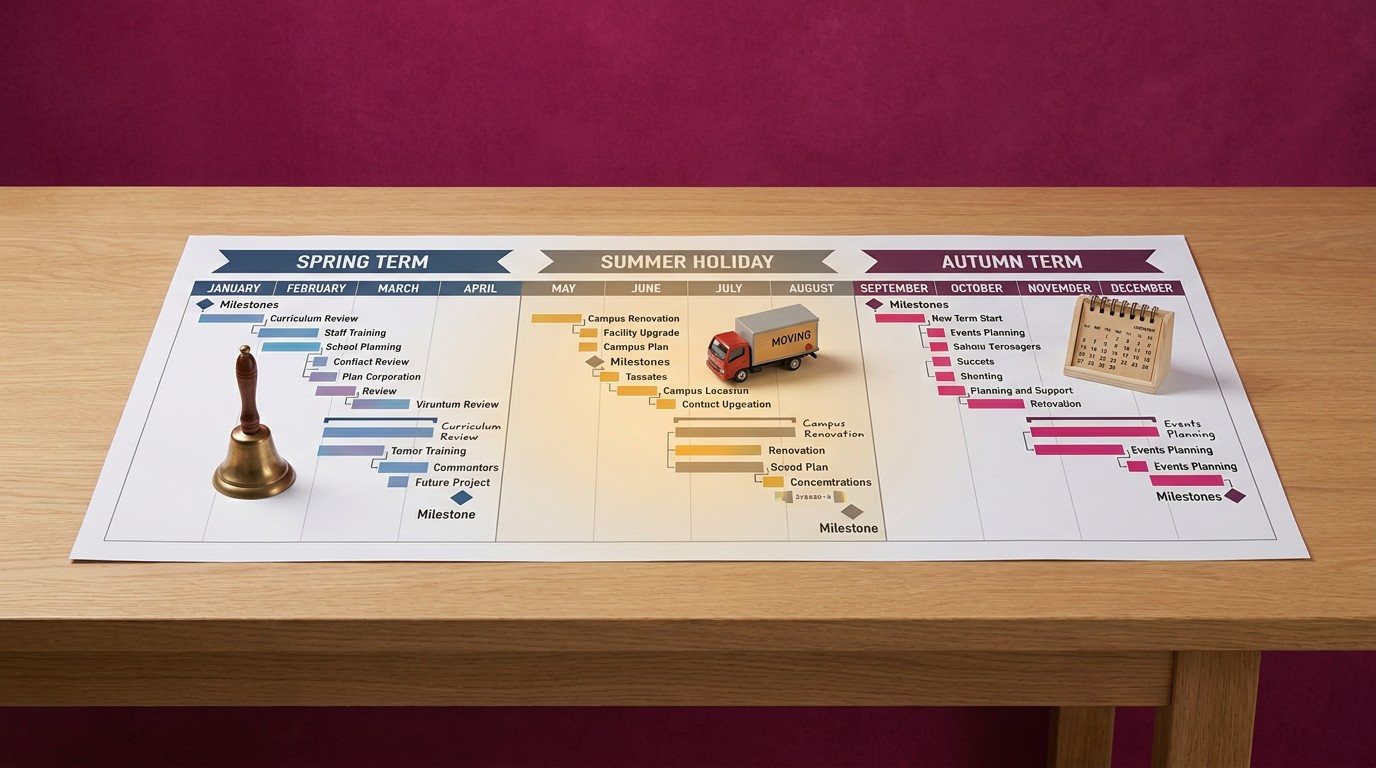
Successful execution of a school refurbishment hinges on meticulous scheduling, almost typically centred around the tight six-week summer holiday window. This section is your playbook for managing school refurbishment projects effectively. The key is to work backwards from the first day of the autumn term. All ordering should be completed in the spring term to account for manufacturing and delivery lead times, which can be several weeks.
You’ll need to decide between a phased delivery, where items arrive as rooms are ready, or a single large-scale installation. While a single delivery can seem efficient, it requires significant storage space and can create bottlenecks. Phased deliveries often work better in practice, allowing for a more controlled workflow. Key logistical challenges to plan for include site access for large vehicles, protecting existing floors and finishes, and coordinating with other trades like painters or electricians.
Environmentally compliant disposal of old furniture is another critical task. You must use a licensed waste carrier and obtain a Waste Transfer Note to fulfil your legal obligations. In our experience, planning this early prevents last-minute panics. The World Health Organization (WHO) (2020) guidelines on limiting sedentary behaviour reinforce the importance of creating active, well-designed spaces, making the project’s success even more impactful. Poorly planned logistics can lead to delays that impact learning, a risk highlighted by research from the European Agency for Safety and Health at Work (EU-OSHA) on how environmental factors affect well-being.
Here is a typical project timeline based on our 35+ years of experience:
| Project Phase | Typical Duration (for a 6-week summer holiday project) | Key Tasks | Critical Dependency |
|---|---|---|---|
| Pre-Project (Spring Term) | 8-12 weeks | Finalise layout, gain approvals, place orders. | Supplier confirmation of stock & lead times. |
| Week 1: Site Prep & Rip Out | 5 days | Clear rooms, protect floors, dispose of old furniture. | Licensed waste carrier availability. |
| Weeks 2-3: Decoration & Prep | 10 days | Painting, flooring, electrical first-fix (if required). | Coordination between different trade schedules. |
| Weeks 4-5: Furniture Installation | 10 days | Receive deliveries, assemble & place furniture. | Clear site access and prepared rooms. |
| Week 6: Snagging & Handover | 5 days | Final checks, cleaning, sign-off with school contact. | Availability of project manager for final checks. |
Part 4: Why Your Supplier is Your Most Important Tool
An expert supplier acts as a project partner, not just a vendor who sells you tables and chairs. When undertaking a complex refurbishment, choosing the right partner is arguably the most critical decision you’ll make. They are your most important tool for de-risking the project and ensuring a successful outcome.
So, what does a true partner offer? In our view, they provide value far beyond the catalogue price. This includes services like free, professional space planning using 3D software to help you visualise and refine your ideas. They should also offer proactive compliance advice, ensuring every item you specify meets standards like BS EN 1729. This is a core part of effective school furniture procurement UK.
At Costcutters UK, our “Design To Install We Do It All!” philosophy is built on this partnership model. With over 35 years of experience, we’ve learned that dedicated project management is key. Our team anticipates logistical hurdles, coordinates deliveries to fit your schedule, and manages installation teams, Saving Time & Stress for busy school managers. We believe this comprehensive service is what turns a good project into a great one. It’s why so many schools trust us, as reflected in our status of being Rated Excellent On Trustpilot.
Frequently Asked Questions About UK School Furniture Projects
What is a school furniture projects guide 2026?
A school furniture projects guide 2026 is a strategic resource designed to help UK school managers successfully deliver refurbishment projects. It provides structured advice covering budgeting, compliance with standards like BS EN 1729, and logistical planning. Following such a guide helps ensure projects are completed on time, within budget, and result in safe, effective learning environments for pupils.
How do I create a budget for school furniture?
Start by conducting a thorough needs analysis room by room and then request quotes from multiple approved suppliers. Use an education furniture budget calculator template to ensure you include all associated costs, such as delivery charges, installation fees, and the cost of environmentally compliant disposal of old furniture. This provides a much more accurate total project cost than just item prices alone.
What is BS EN 1729 and why is it important?
BS EN 1729 is the essential UK and European standard governing the size, strength, and stability of furniture used in educational institutions. It’s a critical BS EN 1729 guide for procurement because it ensures furniture is ergonomically appropriate for pupils’ posture and reliable enough for the school environment. Compliance is a key part of a school’s legal duty of care.
How long does a typical school refurbishment take?
Most significant school refurbishments are planned to fit within the six-week summer holiday period. However, the planning and procurement process starts much earlier. Orders for furniture often need to be placed during the spring term to accommodate manufacturing and delivery lead times, ensuring everything is on-site and ready for installation in July and August.
What is the best way to dispose of old school furniture in the UK?
The correct method is to use a licensed waste carrier who can provide a Waste Transfer Note for your records. This is a legal requirement to prove you have disposed of the waste responsibly. We recommend seeking a provider that prioritises recycling or donating usable items to charities, which helps meet sustainability targets and can sometimes reduce disposal costs.
Can I get funding or grants for school furniture?
Yes, several funding streams are available for UK schools, particularly academies. The Condition Improvement Fund (CIF) is a key annual grant that can be used for projects that include furniture as part of a larger refurbishment. It’s also worth checking for specific grants offered by your local authority or multi-academy trust.
What should I look for in a school furniture supplier?
Look for a supplier who acts as a partner, offering more than just low prices. Key attributes include extensive experience in the education sector, being listed on a recognised procurement framework, and providing value-added services. These services should include free space planning, compliance guidance, dedicated project management, and reliable warranties, as these are invaluable.
How does a classroom layout planner tool help?
A classroom layout planner tool allows you to create a 2D or 3D digital model of your space with the proposed furniture. This is immensely helpful for confirming that your chosen items will fit, that you are ordering the correct quantities, and that there is sufficient space for movement. It also serves as a powerful visual aid to get buy-in from teaching staff.
What are the main safety regulations for UK school furniture?
The primary regulation is BS EN 1729, which covers ergonomic and structural safety. Beyond this, schools must adhere to the general duties of the Health and Safety at Work etc. Act 1974. Specific guidance from the HSE on workplace ergonomics and the DfE’s statutory EYFS framework for early years settings also apply and must be followed.
What is FIRA certification?
FIRA certification is a quality mark from the independent Furniture Industry Research Association that verifies a product’s safety and durability. When you see the FIRA mark on an item of furniture, it provides third-party assurance that it has been rigorously tested and is structurally sound and fit for its intended use, giving you peace of mind.
Important Considerations & Professional Guidance
While this guide is a comprehensive starting point, it’s important to recognise its limitations. Regulations, standards, and funding opportunities in the education sector can change. We advise you to typically verify the latest guidance from official sources like the DfE and HSE websites before finalising any project plans or purchase orders. This ensures your project remains fully compliant.
We also acknowledge that a full, large-scale refurbishment isn’t typically feasible. Alternative approaches can be equally valid. A phased project that tackles one department or year group at a time can make costs more manageable. Alternatively, focusing on high-impact areas, such as replacing outdated chairs with ergonomic models or introducing new collaborative tables, can deliver significant benefits within a tighter budget.
Finally, for large, complex, or multi-site projects, professional guidance is invaluable. Engaging a dedicated project manager or fully leveraging the project management services of an experienced supplier like Costcutters UK is often the most effective way to ensure success. An expert partner mitigates risk, manages timelines, and handles the logistical complexities, allowing you to focus on your core responsibilities.
Start Your Next Project with Confidence
Executing a successful refurbishment is achievable with the right preparation. This school furniture projects guide 2026 has provided the essential toolkit, covering everything from initial budgeting and UK-specific compliance to logistical execution. By using the school furniture compliance checklist, timelines, and resources provided, school business managers can streamline their process, avoid common pitfalls, and deliver transformative learning environments on schedule.
Your supplier is your most critical partner in this process. With over 35 years of experience helping UK schools, the team at Costcutters UK offers more than just furniture; we provide the project management expertise to make your vision a reality. We offer Bulk Buy Discounts and flexible payment options like Credit Accounts Or Pay Flexibly. For a no-obligation discussion about your upcoming project, get a free space plan and quote today.
References
- Health and Safety Executive (HSE) – UK Government Guidance. Provides legal requirements and practical advice for workstations under the Health and Safety (Display Screen Equipment) Regulations 1992.
- European Agency for Safety and Health at Work (EU-OSHA) – EU-Body Research. Highlights that work-related musculoskeletal disorders (MSDs) are a leading cause of occupational illness, often linked to poor workplace ergonomics.
- Department for Education (EYFS Framework) – UK Government Statutory Framework. Section 3 sets out requirements for the safety and suitability of premises, environment, and equipment in early years settings.
- British Educational Suppliers Association (BESA) – Professional Organisation Code of Practice (2023). Members must adhere to a code ensuring products are safe and fit for their intended purpose in an educational environment.
- World Health Organization (WHO) – Global Health Guidelines (2020). Recommends limiting sedentary time and engaging in regular physical activity to combat associated health risks.
- Statista – Market Research Data (2024). Reports that revenue in the UK Office Furniture market is projected to be US$2.28bn in 2024, indicating significant ongoing investment.
Start Your Next Project with Confidence
In summary, this school furniture projects guide 2026 has provided the essential toolkit for a successful refurbishment, covering everything from initial budgeting and UK-specific compliance to logistical execution. By using the school furniture compliance checklist, timelines, and resources provided, school business managers can streamline their process, avoid common pitfalls, and deliver transformative learning environments on schedule.
Your supplier is your most critical partner in this process. With over 35 years of experience helping UK schools, the team at Costcutters UK offers more than just furniture; we provide the project management expertise to make your vision a reality. For a no-obligation discussion about your upcoming project, request a free space plan and quote today.
Important Considerations & Professional Guidance
While this guide provides a comprehensive framework, it is essential to acknowledge that regulations, funding opportunities, and market conditions can change. School business managers should always verify the latest guidance from official sources like the DfE and HSE websites before finalising project plans.
We also recognise that a complete, single-phase refurbishment is not always feasible. For schools facing tighter budgetary constraints or immediate, localised needs, a phased approach can be a highly effective alternative. Focusing on high-impact areas first, such as replacing outdated chairs with ergonomic seating or introducing collaborative tables in key learning zones, can deliver significant benefits while spreading costs over multiple financial years.
Ultimately, for large, complex, or multi-site projects, professional oversight is invaluable. Engaging a dedicated project