Advanced School Furniture Procurement: A Strategic Guide for Large UK Projects
🎯 Key Takeaway
Effective school furniture procurement for large projects involves a strategic, phased approach that combines thorough needs analysis, compliant tendering using UK frameworks, and expert project management. This guide provides a complete playbook for School Business Managers (SBMs) to deliver transformational furniture projects on time and on budget. Core components include aligning stakeholders early to define clear project goals, utilising official UK procurement frameworks like the Crescent Purchasing Consortium (CPC) for value and compliance, and engaging a dedicated partner to manage logistics, ensuring completion within tight school holiday schedules.
For School Business Managers, overseeing large scale school furniture projects is a high-stakes responsibility. It’s not merely a transaction; it’s a critical investment in the learning environment that will impact pupils and staff for a decade or more. As of August 2026, the challenges are significant: tight budgets, demanding compliance standards, and the immovable deadline of the school holidays. For effective school furniture procurement, a reactive, catalogue-based approach is insufficient. This guide provides a strategic, phase-by-phase playbook for transforming this complex task into a manageable process, ensuring your project is delivered successfully, on time, and on budget. For those at the very beginning, our guide on planning your furniture replacement project offers a foundational starting point.
Written by: Cost Cutters UK Content Team | Reviewed by: Cost Cutters UK Editorial Team, Specialists in Education & Public Sector Procurement | 35+ Years Experience; Rated Excellent On Trustpilot
ℹ️ Transparency Disclosure: This article explores advanced strategies for school furniture procurement based on our 35+ years of industry experience and analysis of official UK government and educational body guidance. We believe in providing clear, actionable advice. Some links may connect to our specialised project services. All information is verified by our editorial team to ensure accuracy and relevance for UK schools.
Phase 1: What is the Best Way to Start Planning a Major Furniture Project?
The most critical first step is a comprehensive needs analysis and stakeholder alignment. Before you even think about products or suppliers, you must define what success looks like for your specific school. This isn’t a task for one person; it requires a dedicated project team. We recommend forming a group that includes the SBM, Headteacher, teaching staff representatives, the site manager, and your IT lead. This ensures all perspectives are considered, from pedagogical aims to practical maintenance.
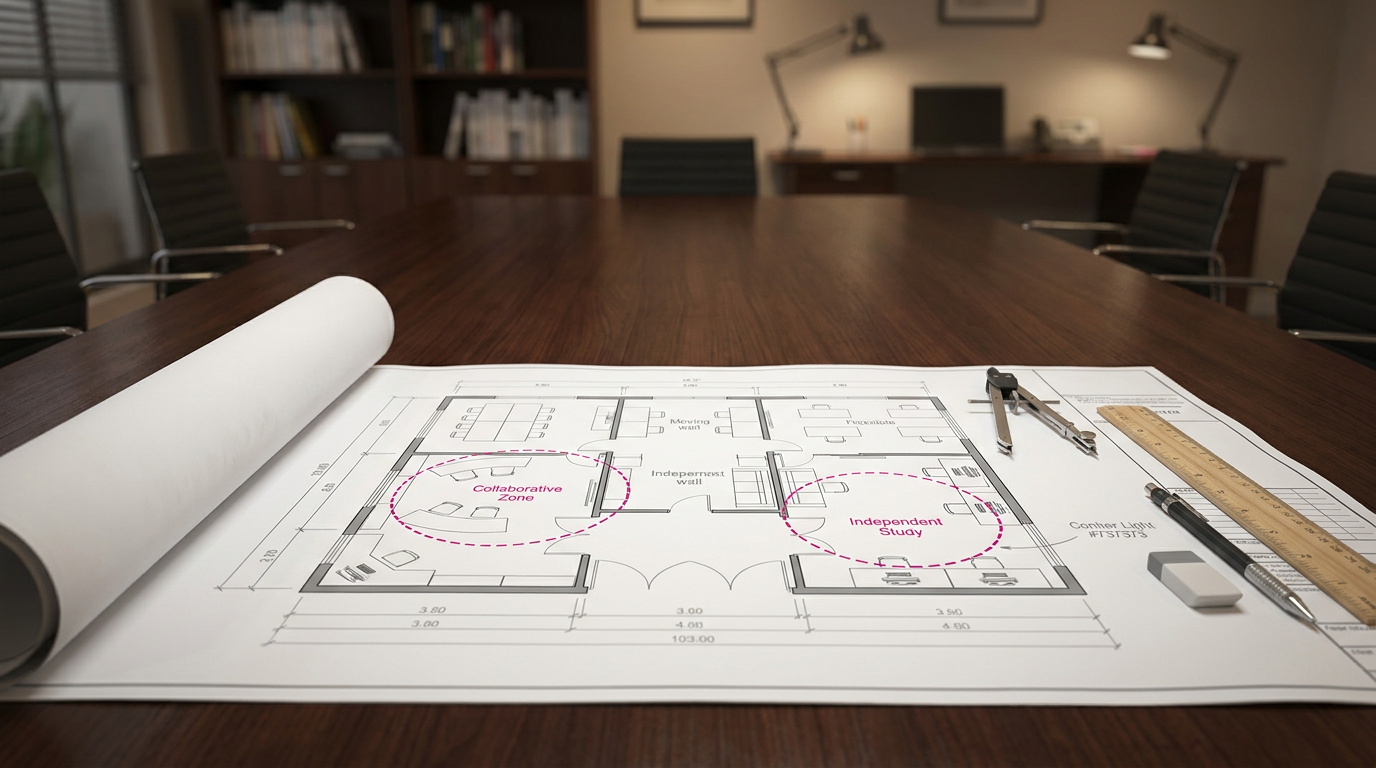
Your team’s first task is conducting a detailed needs assessment. This goes far beyond counting desks and chairs. Consider the following:
- Pedagogical Goals: Does the furniture need to support collaborative work, independent study, or technology-rich lessons? Exploring options for flexible learning environments is crucial here.
- Ergonomic Needs: How will the furniture cater to different age groups and sizes, as well as students with specific physical requirements?
- Storage and Space: Where will bags, books, and equipment be stored to keep learning spaces clear and functional? How can the layout maximise the usable space?
- IT Integration: Are charging points, cable management, and secure device storage required?
Once you have this clarity, you can begin your school furniture budget planning. A common mistake is to focus only on the initial purchase price. Instead, we advocate for whole-life costing. This approach considers durability, warranty periods, and maintenance, which often reveals that a slightly more expensive but reliable product offers better long-term value. For Multi-Academy Trusts (MATs), which are governing bodies running groups of academy schools, this phase also involves securing centralised funding and ensuring the project aligns with trust-wide estate strategies. Our comprehensive guide to school budget planning can provide further detail.
Phase 2: How Can Schools handle the UK Tender Process and Vet Suppliers?
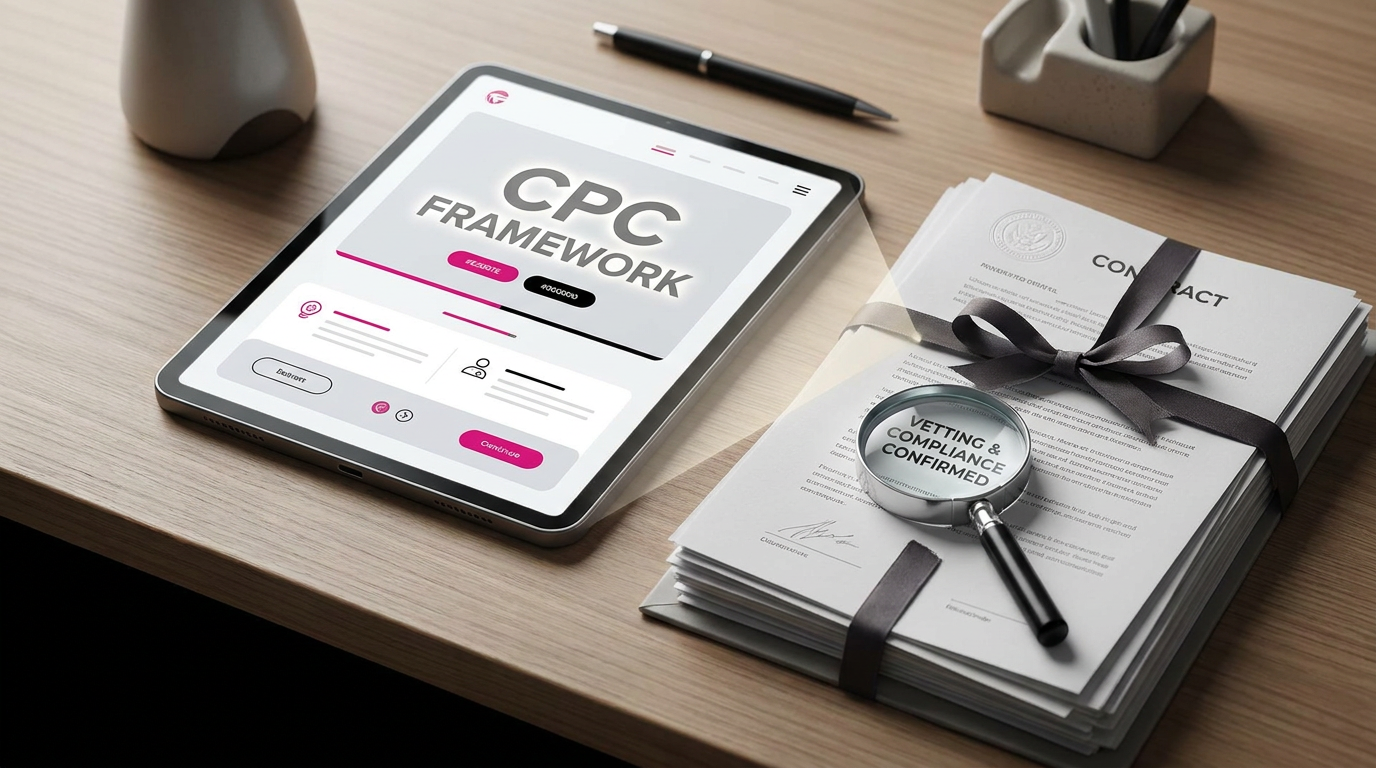
For large projects, using a recognised UK procurement framework is the most efficient and compliant method. These frameworks, such as the one offered by the Crescent Purchasing Consortium (CPC), are pre-established agreements with a list of approved suppliers. The CPC is a UK purchasing consortium that provides legally compliant frameworks specifically for the education sector. Using a school furniture procurement framework UK offers immense benefits: it indicates suppliers have been pre-vetted for financial stability and quality, ensures legal compliance with public procurement regulations, and leverages collective buying power to secure competitive pricing. This saves an enormous amount of administrative time for the SBM.
The alternative is running an open tender, which is more time-consuming and carries more risk. Whichever route you choose, writing a reliable tender document is vital. It should specify the desired outcomes (e.g., ‘a flexible learning space for 30 Year 5 pupils’) rather than just a list of products. Key information to demand from potential bulk school furniture suppliers includes:
- well-supported by research Experience: Case studies of similar large scale school furniture projects.
- Compliance: Evidence of adherence to standards like BS EN 1729 compliance. BS EN 1729 is the key European and British standard for the dimensions, strength, and stability of furniture in educational settings.
- Accreditations: Membership of bodies like the British Educational Suppliers Association (BESA), a UK trade association whose members adhere to a strict code of practice.
- Project Management Capability: A clear explanation of how they would manage the logistics from design to installation.
A thorough guide to compliance and safety is an invaluable resource during this vetting stage.
| Procurement Method | Key Benefit | Typical Timescale | Best For |
|---|---|---|---|
| CPC Framework | Pre-vetted suppliers, legal compliance, value for money. | 4-8 weeks | Most public sector schools and MATs seeking efficiency and risk reduction. |
| Open Tender (OJEU/FTS) | Widest possible market competition. | 3-6 months | Very high-value projects where maximising competition is the primary goal. |
| Request for Quote (RFQ) | Simple and fast for smaller-value needs. | 2-4 weeks | Small, straightforward purchases below the official public procurement threshold. |
| Direct Award | Speed and simplicity with a known, trusted supplier. | 1-2 weeks | Low-value or urgent requirements where a pre-existing relationship exists. |
Source: Adapted from guidance by The CPC (2024) and FIRA (2023).
Phase 3: What Does a Successful Project Management Playbook Look Like?
A detailed project plan, overseen by a single point of contact, is strongly essential for a successful installation. This is where a supplier transitions into a true project partner. The logistical complexity of a large-scale installation, especially one condensed into the six-week summer holiday, cannot be underestimated. Effective school refurbishment project management requires a meticulous playbook.
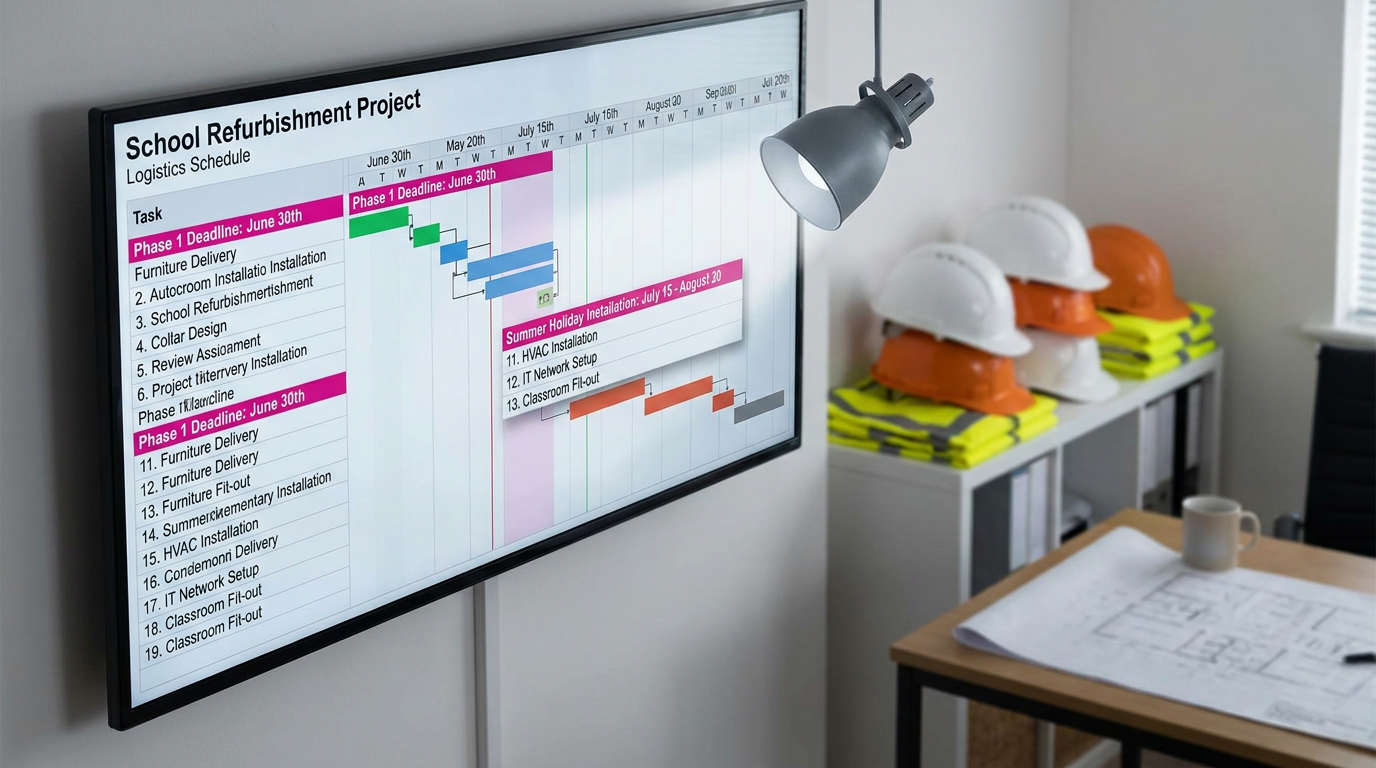
Key logistical elements include:
- Phased Delivery Schedules: Coordinating deliveries to align with site readiness and avoid overwhelming storage space. This might mean one floor is delivered in week one, another in week two, and so on.
- Coordination with Trades: Liaising with decorators, flooring fitters, and electricians to ensure the furniture arrives only after their work is complete.
- Site Access & Risk Assessment: Planning lorry access, confirming working hours, and conducting a full health and safety assessment. This is a legal requirement under the Health and Safety Executive (HSE), Britain’s workplace safety regulator.
- Waste Management: Arranging the ethical and legal disposal of old furniture. This must comply with UK regulations like WEEE (Waste Electrical and Electronic Equipment) for any items with electrical components. We’ll be honest – this part can be tedious, but a good partner handles it all.
The true value of a partner who offers professional furniture installation is that they manage this entire process. They absorb the stress of coordinating multiple moving parts, allowing the SBM to focus on other critical school operations. This dedicated management is what ensures a large scale school furniture projects finishes on schedule, ready for the first day of term.
Why is a Dedicated Partner Crucial for Strategic School Furniture Procurement?
In our experience, for large and complex projects, engaging a single-source partner significantly reduces risk, administrative burden, and ensures a cohesive, well-executed outcome. A simple supplier sells products; a partner delivers a solution. This distinction is fundamental to successful school furniture procurement. A partner moves beyond being one of many bulk school furniture suppliers to offer an integrated “Design To Install We Do It All!” service that addresses common project pitfalls.
Here’s what that looks like in practice:
- Beyond the Catalogue (Free Space Planning): Instead of just picking items, a partner provides free space planning and 3D design services. This allows you to see exactly how the furniture will work in your space, supporting your pedagogical goals before you spend a penny.
- The Human Factor (Dedicated Project Management): A named project manager becomes your single point of contact. They handle all the logistics detailed in Phase 3, “Saving Time & Stress” for you and your site team.
- Navigating the Maze (Procurement Expertise): An experienced partner understands the nuances of the education furniture tender process and frameworks like CPC. We can help you write your specification and ensure your tender is reliable and compliant.
### Hypothetical Case Study: A Secondary School MAT
- Challenge: A Multi-Academy Trust needed to refurbish science labs across three schools. They faced inconsistent standards, stretched budgets, and a lack of in-house project management capacity to handle the work over a single summer holiday.
- Solution: The MAT engaged Cost Cutters UK as a single project partner. We conducted site surveys at all three schools, created a standardised yet flexible lab design, and used our position on the CPC framework to ensure compliant procurement and best value.
- Results: The entire project, worth over £350,000, was delivered on time and 5% under budget. The MAT benefited from our Bulk Buy Discounts and consistent quality across all sites.
- Key Insight: Centralising procurement with a single, expert partner allowed the MAT to achieve economies of scale and a higher quality outcome than if each school had managed its own project.
Important Considerations
This guide provides a strategic framework for procurement. The specific furniture choices, colour schemes, and layouts must be determined by your school’s unique pedagogical needs, pupil demographics, and existing architecture. The research cited, while authoritative, represents broad principles; a detailed on-site survey and consultation is typically required to finalise any project plan.
The primary alternative to using a full-service partner is to manage the entire process in-house. This involves the School Business Manager or estates team writing the tender, vetting suppliers, coordinating all logistics, and managing installation directly. Whilst this can offer maximum control, it is extremely resource-intensive and carries a higher risk of delays, budget overruns, or compliance errors if the team lacks specialised experience in large furniture projects.
Our advice is to seek professional guidance when your project involves significant structural changes, listed buildings, or complex M&E (mechanical and electrical) requirements. For such projects, a specialist project partner like Cost Cutters UK can act as a single point of contact, coordinating with architects, builders, and other contractors to ensure a smooth and fully compliant refurbishment.
From Procurement to Partnership: Ensuring Project Success
Ultimately, successful school furniture procurement for large projects hinges on shifting from a transactional mindset to a strategic one. By focusing on detailed planning, compliant tendering through UK frameworks, and reliable school refurbishment project management, you transform a daunting task into a manageable process. This structured approach ensures the final result is not just new furniture, but an enhanced learning environment that delivers outstanding value for years to come. We are proud to be Rated Excellent On Trustpilot for this very reason.
At Cost Cutters UK, we have over 35 years of experience as a dedicated partner to schools and MATs across the country. Our specialist team provides a complete, end-to-end service, from free space planning to fully managed installation. We offer flexible payment options, including Credit Accounts Or Pay Flexibly. If you are planning a large-scale project, contact our experts for a free consultation and see how we can help you achieve your vision.
Frequently Asked Questions
What is school furniture procurement?
The term school furniture procurement refers to the complete strategic process schools and educational trusts use to research, tender for, purchase, and install furniture. This goes beyond simple ordering to include budget planning, compliance checks, supplier vetting, and project management to ensure an effective value and outcome for the learning environment. This structured approach is vital for large projects.
How do I create a budget for a large furniture project?
Start by conducting a needs assessment to define the scope, then research benchmark costs to build your initial budget. We strongly recommend including a 10-15% contingency for unexpected issues. Crucially, you should factor in whole-life costs like durability and warranty, not just the initial ticket price. Explore all available funding streams, including capital funds and any specific grants.
What is BS EN 1729 and why is it important?
BS EN 1729 is the key British and European standard for the dimensions, strength, and stability of furniture in educational settings. Specifying compliance ensures furniture is ergonomically appropriate for pupils’ size and weight, which helps reduce the risk of musculoskeletal issues and promotes better concentration. It is a non-negotiable requirement for ensuring pupil welfare and product safety.
How long does a large school furniture project take?
A large project typically takes between 3 to 9 months from initial planning to final installation. The procurement and tender phase alone can take 2-3 months. The physical installation is almost typically condensed into the 6-week summer holiday period, which requires meticulous logistical planning. Our advice is to start the planning process in the autumn term for a following summer installation.
What are the benefits of using a procurement framework like CPC?
Using a framework like the Crescent Purchasing Consortium (CPC) saves significant time and may help legal compliance. Suppliers listed on these frameworks are pre-vetted for financial stability and quality, and pricing has been benchmarked to ensure value for money. This dramatically reduces the administrative burden on your school’s business manager and mitigates the risk of a poor supplier choice.
How should we manage the disposal of old school furniture?
Old furniture must be disposed of in accordance with UK environmental laws, such as the WEEE regulations for items with electrical parts. Reputable suppliers, like us, offer a full removal and recycling service as part of their project management package. This ensures compliance and is far more efficient than arranging disposal separately. Typically request waste transfer notes as proof of correct disposal.
Can we phase the installation over several holidays?
Yes, a phased installation is a very common and effective strategy for whole-school projects or those with large budgets. A good supplier partner will work with you to create a logical plan, perhaps tackling one school block or year group area per holiday period (e.g., summer, Easter). This helps manage cash flow and minimises disruption to the school’s day-to-day operations.
How do we ensure the new furniture supports our teaching goals?
You must involve teaching staff in the pre-procurement planning phase to discuss pedagogical aims like collaborative work or technology integration. A good partner will then offer a free space planning service. This translates your educational goals into 2D and 3D layouts, demonstrating exactly how the furniture will function in the space before you commit to a purchase.
What’s the difference between a supplier and a project partner?
A supplier simply sells and delivers products, whereas a project partner provides a comprehensive “Design To Install” service. This includes consultation, space design, navigating procurement, dedicated project management, installation, and aftercare. For large, complex projects, a partner is essential to de-risk the process and ensure a successful outcome, acting as an extension of your own team.
How does procurement work for a Multi-Academy Trust (MAT)?
MATs often use centralised procurement policies to use their collective buying power for better value. The process usually involves the central finance team working with individual schools to standardise requirements where possible. Using a single framework and supplier across the trust can lead to significant cost savings through Bulk Buy Discounts, better service continuity, and consistent quality in all schools.
References
- Health and Safety Executive (HSE) – UK Government Guidance. Provides legal requirements and practical advice for workstation ergonomics under the Display Screen Equipment (DSE) Regulations 1992.
- European Agency for Safety and Health at Work (EU-OSHA) – EU Research Body Report. Highlights poor workstation design as a key risk factor for musculoskeletal disorders (MSDs) in both adults and children.
- Department for Education (EYFS Framework) – UK Government Statutory Framework. Mandates that premises, furniture, and equipment in early years settings must be safe, suitable, and fit for purpose.
- British Educational Suppliers Association (BESA) – UK Professional Organisation Code of Practice. Members must adhere to a Code of Practice ensuring products are safe, of good quality, and fit for their intended use in an educational context.
- World Health Organization (WHO) – Global Health Body Guideline (2020). Recommends that children and adolescents should limit the amount of time spent being sedentary to improve health outcomes.
- Statista – Market Research Data (2024). Reports that revenue in the UK Office Furniture market amounts to US$2.28bn in 2024, indicating a substantial market.
- Crescent Purchasing Consortium (CPC) – UK Public Sector Buying Organisation. Provides a compliant Furniture and Associated Services Framework Agreement for educational institutions.
- Furniture Industry Research Association (FIRA) – Industry Research Body. Publishes exploratory papers on best practices and trends in educational furniture procurement.
- BE Furniture Sales – Commercial Supplier Guidance. Offers practical buying guides for schools, covering material choices, sizing, and key product categories.
Conclusion
From Procurement to Partnership: Ensuring Project Success
In summary, successful school furniture procurement for large projects hinges on shifting from a transactional mindset to a strategic one. By focusing on detailed planning, compliant tendering through UK frameworks, and robust school refurbishment project management, you transform a daunting task into a manageable process. This approach ensures the final result is not just new furniture, but an enhanced learning environment that delivers value for years to come.
At Costcutters UK, we have over 35 years of experience as a dedicated partner to schools and MATs across the country. Our specialist team provides a complete, end-to-end service, from free space planning to fully managed installation. If you are planning a large-scale project, contact our experts for a free consultation and quote to see how we can help you achieve your vision.