7 Common Mistakes to Avoid When Planning Your Outdoor Seating Area
🎯 Key Takeaway
To avoid these mistakes when planning an outdoor seating area, organisations must prioritise whole-life value over initial price, select materials well-supported by research to withstand the UK climate, and ensure every element complies with national safety and accessibility standards. This involves focusing on ‘whole-life cost’ by considering maintenance and replacement expenses, not just the purchase price. We also recommend selecting materials like powder-coated metals and UV-stabilised recycled plastic that are specifically designed for British weather, and verifying compliance with UK regulations such as BS EN 1729 for schools and the Equality Act 2010 for public accessibility.
A poorly planned outdoor area can quickly become a wasted investment-a collection of empty benches and unused tables that drain your budget and fail to serve your users. For School Business Managers and Facilities Managers, the pressure to get it right is significant. Learning how to avoid these mistakes when planning is the key to transforming an empty patch of ground into a vibrant, functional, and long-lasting asset. This guide outlines the seven most common pitfalls we’ve seen in our 35+ years of experience and provides the expert advice you need to create safe and durable spaces for schools, offices, and the public sector.
Written by: Content Team | Reviewed by: Editorial Team, 35+ Years Experience; Rated Excellent On Trustpilot
Last updated: 3 June 2026
ℹ️ Transparency Disclosure: This article explores planning commercial outdoor seating based on our 35+ years of industry experience and analysis of UK regulations. Our goal is to provide practical, authoritative advice. Some links may connect to our services, which we believe are excellent solutions for the challenges discussed. All information is verified for accuracy by our editorial team. Cost Cutters UK is a leading supplier of furniture to the education and public sectors, and we’re proud of being Rated Excellent On Trustpilot.
Mistake 1: Prioritising Upfront Cost Over Whole-Life Value
The most frequent error we see is choosing furniture based solely on the initial price tag. In our experience, the cheapest option is rarely the most cost-effective. A truly strategic procurement process looks beyond the purchase price to consider the Whole-Life Cost (WLC), which is the total expense of an asset over its entire operational life. WLC, sometimes called Total Cost of Ownership (TCO), includes not just the initial outlay but also the ongoing costs of maintenance, repairs, and eventual replacement.
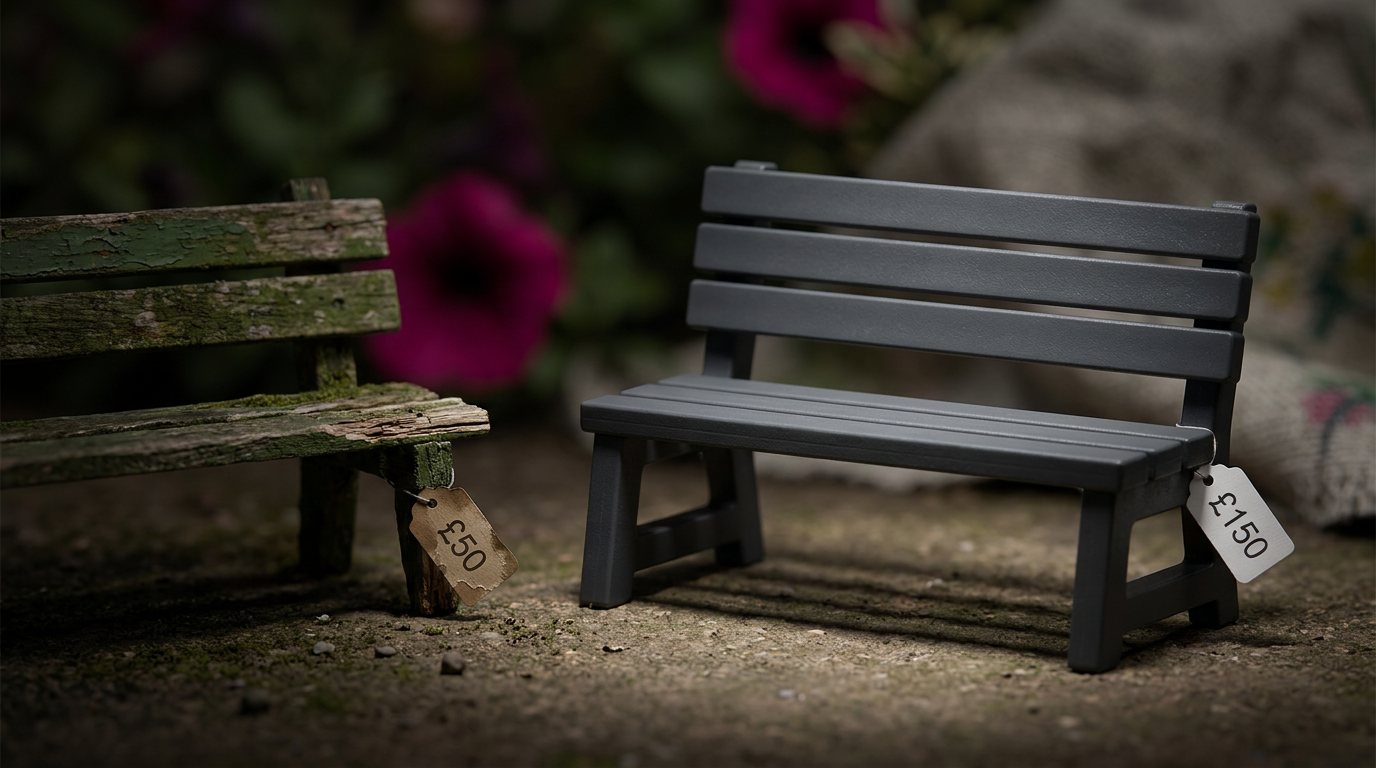
Consider this common scenario: a school purchases untreated softwood benches because they are 40% cheaper than their recycled plastic counterparts. However, after just two winters, the wood begins to splinter and rot. The benches require annual sanding and re-staining, consuming staff time and material costs. After four years, they’re unusable and need replacing.
In contrast, investing more initially in durable outdoor benches made from powder-coated steel or recycled plastic pays dividends. These materials are designed to last for 15 years or more with minimal to zero maintenance. The higher upfront cost is quickly offset by the elimination of repair bills and replacement cycles. Choosing hard wearing outdoor furniture from a trusted commercial outdoor furniture uk supplier saves not only your budget but also countless hours of administrative stress, making it the smarter financial decision. That’s why we typically recommend our clients to consider our flexible payment options, such as Credit Accounts Or Pay Flexibly, to afford higher quality products.
Mistake 2: Underestimating the Great British Weather
Choosing furniture that isn’t built to withstand the relentless cycle of the UK climate is a recipe for rapid deterioration. Residential-grade garden furniture, often seen in discount stores, simply isn’t engineered for the demands of a commercial or public environment. It will quickly succumb to rust, rot, UV degradation, and frost damage. To avoid this costly error, you must select materials well-supported by research to perform in exposed, high-use settings.

The material you choose has the single biggest impact on the longevity and maintenance requirements of your outdoor seating. Our experience shows that certain materials consistently outperform others in the UK’s damp and variable conditions. For example, hard wearing outdoor furniture made from recycled plastic is a standout choice; it’s non-porous, impervious to rot and frost, and doesn’t fade under UV light. It’s one of the reasons we champion it so often. Similarly, heavy-gauge steel with a high-quality powder-coat finish offers excellent protection against corrosion and impact.
Here is a comparison of common materials used for weatherproof outdoor tables and chairs:
| Material | Typical Lifespan (UK Climate) | Maintenance Level | Best For |
|---|---|---|---|
| Recycled Plastic | 25+ Years | None | Schools, parks, high-traffic public areas, coastal locations |
| Powder-Coated Steel | 15-20 Years | Very Low | Modern office breakout areas, urban spaces, secure locations |
| Aluminium | 15-20 Years | Low | Cafes, hospitality venues, areas where furniture is moved often |
| Treated Softwood | 5-8 Years | High (Annual) | Low-traffic, sheltered areas where aesthetics are prioritised |
| Hardwood (e.g., Iroko) | 10-15 Years | Medium (Bi-annual oiling) | Prestigious sites, memorial benches, traditional settings |
Choosing materials from the top of this table, like those used in our durable outdoor benches, ensures your investment remains safe, attractive, and functional for years, not just a few seasons.
Mistake 3: Ignoring Safety, Compliance & Accessibility
For any organisation, but especially for schools and public bodies, overlooking safety and legal compliance is a critical failure. The law requires that furniture placed in public or educational settings must be safe, stable, and accessible. Failing to meet these standards not only creates a risk of injury but can also lead to legal challenges and reputational damage.

For any project involving school outdoor seating, the primary standard to be aware of is BS EN 1729. This is a European standard recognised in the UK that specifies the strength, stability, and ergonomic dimensions for furniture intended for use in educational institutions. It ensures that chairs and tables are the correct size for children and are robust enough to handle the rigours of a playground environment. When procuring school playground benches uk, you must verify that they are free from sharp edges, resistant to splintering, and have tamper-proof fixings.
For public space seating and commercial areas, the Equality Act 2010 is the key piece of legislation. This Act legally requires service providers to make ‘reasonable adjustments’ to ensure disabled people are not at a substantial disadvantage. For outdoor furniture, this means providing clear, wide pathways for wheelchair users (typically 1200mm), including some tables with cut-outs to accommodate wheelchairs, and ensuring seating is at a height that is accessible to people with mobility issues. By working with a supplier who understands these regulations and can show you their our UK-recognised certifications, you ensure your project is compliant from day one.
Mistake 4: Inefficient Space Planning & User Flow
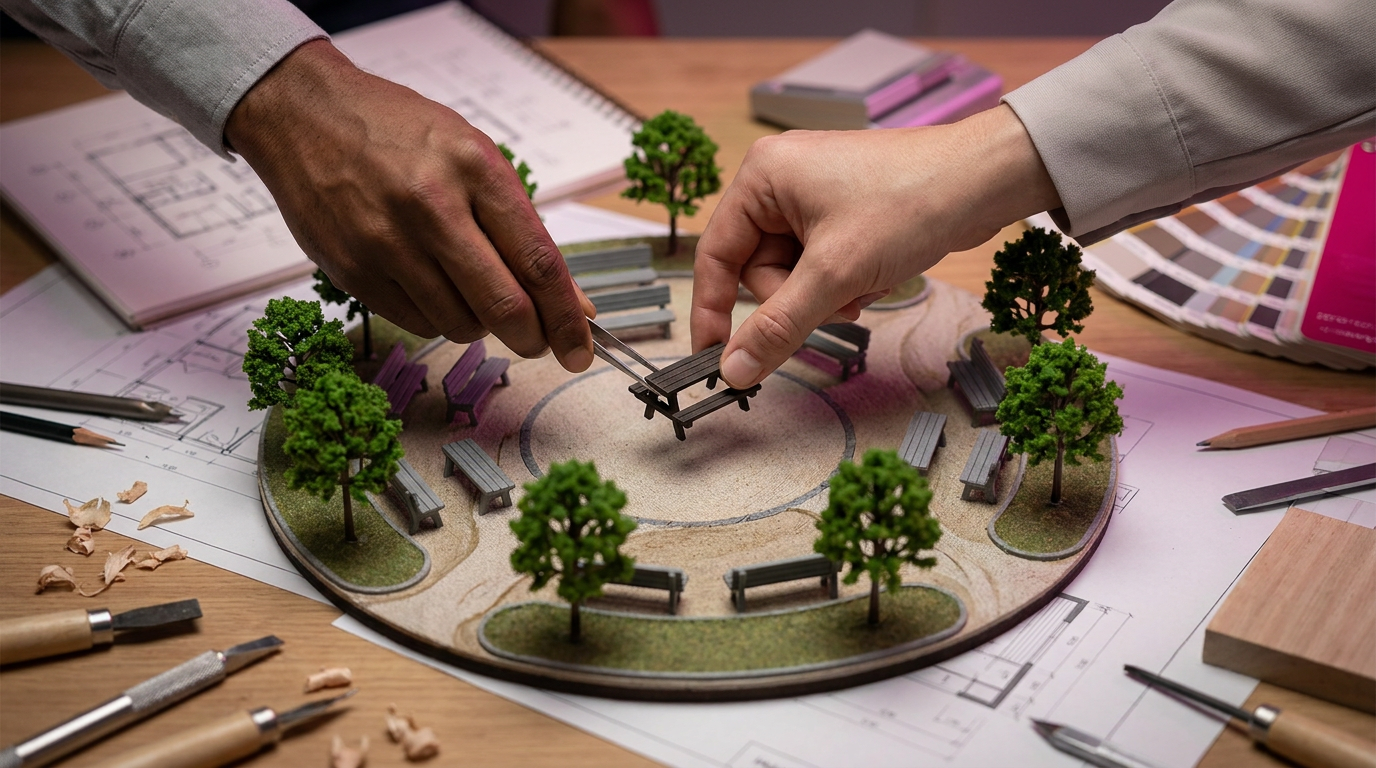
A common planning mistake is to treat outdoor furniture as an afterthought, simply placing benches wherever there is a spare bit of pavement. This often results in seating that is isolated, exposed, or inconveniently located, leading to underuse. Effective planning goes beyond the furniture itself to consider how the entire space will function. The goal is to create an environment that actively encourages use. An effective approach is to design the space in ‘zones’ based on intended activities. For an office outdoor breakout area, you might create a quiet zone with comfortable seating for focused work or relaxation, alongside a more social hub with larger tables for team lunches. For school outdoor seating, this could mean creating distinct areas for socialising, outdoor learning, and quiet reading. Consider how people will move through the space-are the circulation paths wide enough and clear of obstructions?
Also, think about the natural environment. Where does the sun fall at lunchtime? Is there adequate shade for hot days or shelter from wind? Positioning seating to facilitate social interaction is also crucial. For instance, circular or inward-facing arrangements promote conversation far more effectively than benches placed in a straight, formal line. Investing in a proper layout, perhaps using our range of breakout furniture to create these zones, is just as important as the furniture you select. From “Design To Install We Do It All!”, our team can help you map out the well-suited user flow.
Mistake 5: Forgetting About Maintenance & Security
The final common mistake is failing to consider the long-term operational needs of the space, specifically maintenance and security. The choices you make during the planning phase will directly impact the time and money spent on upkeep for years to come. Thinking about these practicalities from the start is essential for a sustainable project.
For instance, if you choose furniture with cushions, where will they be stored overnight and during wet weather? Without adequate secure outdoor storage solutions, cushions quickly become mouldy, dirty, and unusable. It’s a small detail that can render expensive furniture useless. We’ll be honest – this part can be tedious, but it’s vital. Similarly, it’s important to select materials that are easy to clean. Some recycled plastic furniture, for example, is available with surfaces that are resistant to graffiti, making cleanup simple and fast.
Security is another paramount concern, particularly in unfenced public parks or school grounds. Heavy furniture made from concrete or solid recycled plastic is an inherent deterrent to theft. For lighter items, ground fixings are non-negotiable. These can be either surface-mounted (bolted onto a hard surface like concrete) or root-fixed (concreted into the ground). This prevents both theft and vandalism and also stops furniture from being moved into undesirable locations or tipping over. These considerations tie directly back to the concept of Whole-Life Cost; a low-maintenance, secure installation reduces ongoing operational expenditure.
### Case Study: A Hypothetical School Courtyard Redevelopment
Challenge: A secondary school had a central courtyard with old, rotting wooden benches. The area was underused, looked uninviting, and the annual cost to sand and repaint the benches was consuming a significant portion of the site maintenance budget.
Solution: The school partnered with us to redesign the space. We replaced the 10 wooden benches with 8 recycled plastic picnic tables and 4 curved benches, creating distinct social and quiet zones. All items were specified in the school’s colours and were root-fixed for security.
Results: Student use of the courtyard at lunchtime increased by an estimated 70%. The annual maintenance budget for the area was reduced by over £1,500. The new furniture has a 25-year guarantee, eliminating replacement costs for the foreseeable future.
Key Insight: Investing in zero-maintenance, correctly zoned furniture delivered a quantifiable return by cutting operational costs and creating a more valuable asset for the school community.
Important Considerations and Next Steps
This guide provides a strategic framework for planning your outdoor area. However, it cannot replace a detailed, on-site survey. Factors unique to your location, such as ground conditions, specific user needs, and local council regulations, will require professional assessment for a fully optimised and compliant plan. Our “Design To Install We Do It All!” service covers this, Saving Time & Stress.
The primary alternative to using a specialised, full-service supplier is to source furniture from multiple vendors and manage the design and installation process in-house. While this may seem cheaper initially, it often leads to compatibility issues, inconsistent quality, and a lack of accountability if problems arise. A single-partner approach streamlines procurement and ensures a cohesive, likely to support outcome, often with the benefit of Bulk Buy Discounts.
We recommend consulting with a commercial furniture specialist early in your project. An expert can help you conduct a needs analysis, produce compliant space plans, and handle the complexities of procurement. This proactive step ensures you avoid these mistakes when planning and secures an effective long-term value for your organisation.
Frequently Asked Questions About Planning Outdoor Spaces
What are the most critical mistakes to avoid when planning a commercial outdoor seating area?
The most common mistakes to avoid when planning are prioritising low initial cost over long-term value, underestimating the UK weather, and ignoring safety compliance. Focussing on the “Whole-Life Cost” of durable, weatherproof, and legally compliant furniture is the most effective way to ensure a successful, lasting investment for your organisation.
How do I choose the right material for UK weather?
Select non-porous and corrosion-resistant materials that are well-supported by research to withstand damp, frost, and UV exposure. Recycled plastic is an outstanding choice as it does not rot or rust and requires no maintenance. Powder-coated steel and high-grade aluminium are also excellent, durable options for weatherproof outdoor tables and chairs.
What safety standards apply to school outdoor seating in the UK?
The key standard for school furniture is BS EN 1729, which governs strength, stability, and appropriate sizing for children. Plus, all furniture, including school playground benches uk, should have rounded edges, be free from splinters, and feature tamper-proof or secure fixings to prevent accidents and ensure stability.
How much space should I leave around outdoor tables and chairs?
As a general rule, you should allow a minimum of 900mm to 1200mm for main circulation paths. This ensures there is sufficient space for people to move around freely and provides clear, unimpeded access for wheelchair users, helping you comply with the Equality Act 2010.
Is recycled plastic furniture a good investment?
Yes, recycled plastic furniture is an excellent long-term investment for almost any commercial outdoor space. Its extreme durability, zero-maintenance requirements, and resistance to rot, frost, and vandalism deliver a superior return on investment. Plus, it’s an environmentally responsible choice that many organisations favour.
What is ‘whole-life cost’ and why does it matter for outdoor furniture?
Whole-life cost is the total expense of an asset, including the initial purchase price plus all costs for maintenance, repairs, and eventual replacement. It matters because it provides a true financial picture, often revealing that a cheaper initial purchase becomes far more expensive over its lifespan due to high upkeep.
Do I need planning permission for outdoor benches and tables?
In most cases, you do not need planning permission for freestanding, movable furniture. However, if you are installing permanent structures, or if your property is a listed building or located within a conservation area, it is typically advisable to check with your local planning authority first.
How can I make my outdoor area accessible?
Ensure your space complies with the Equality Act 2010 by providing firm, level ground surfaces and wide, clear pathways. You should also include specific accessible furniture, such as picnic tables with extended ends or cut-outs that comfortably accommodate wheelchair users, ensuring everyone can use the space.
What’s the difference between commercial and residential outdoor furniture?
Commercial-grade furniture is specifically engineered for high-frequency use in public environments and must meet stricter safety and durability standards. It uses more robust materials, stronger construction methods, and often features tamper-proof fixings, unlike furniture designed for light use in a private garden.
How do I secure outdoor furniture against theft or vandalism?
an effective methods are to choose very heavy furniture or to use permanent ground fixings. Heavy materials like concrete or solid recycled plastic act as a natural deterrent. For all other items in unsecured areas, they should be either surface-mounted to a solid base or root-fixed directly into the ground.
Create a Lasting Outdoor Asset, Not a Short-Term Fix
Ultimately, the key to a successful project is to avoid these mistakes when planning by adopting a long-term, strategic view. By focusing on whole-life value, compliant design, and user-centric planning, you transform an outdoor seating area from a simple purchase into a lasting asset for your school, office, or community. This approach not only saves money but also creates a safe, engaging, and durable environment for everyone to enjoy. Investing in quality commercial outdoor furniture uk for your office outdoor breakout area is an investment in your people.
At Cost Cutters UK, our team has over 35 years of experience helping organisations like yours plan and install successful outdoor spaces. We understand the unique challenges faced by the UK public and education sectors, and our “Design To Install We Do It All!” service is built to make the process seamless. If you’re ready to create an outdoor area that delivers on every metric, our specialists are here to help. Book your free, no-obligation space planning consultation today to get started.
References
- Cost Cutters UK – Breakout Furniture – Internal Product Page. Provides a range of durable and stylish furniture suitable for creating informal breakout areas in commercial settings.
- Cost Cutters UK – Certifications & Accreditations – Internal Information Page. Details the company’s adherence to UK-recognised quality and safety standards, establishing trust and authority.
- Cost Cutters UK – Secure Outdoor Storage – Internal Product Category Page. Offers secure, weatherproof storage solutions suitable for outdoor equipment and cushions, addressing a key maintenance consideration.
- Cost Cutters UK – Quote Cart – Internal Service Page. Provides a direct mechanism for users to request detailed pricing for large-scale projects.
- The Furnishing of outdoor spaces – Archiproducts. Offers insights into balancing functionality and design in outdoor furniture, relevant to creating engaging spaces.
- How to Choose the Best Materials for Outdoor Furniture – Garden Street. Provides a UK-centric guide on material selection for longevity in the British climate.
- The Benefits of Outdoor Workspaces – Forbes. Discusses the productivity and well-being advantages of creating outdoor areas for employees, reinforcing the value of an office outdoor breakout area.
- Accessible Seating and Tables – United States Access Board. While US-based, it provides universal design principles for accessible seating that are best practice and relevant to fulfilling