Advanced Strategies for Creating Stimulating EYFS Environments
🎯 Key Takeaway
Creating stimulating EYFS environments involves the strategic design of physical spaces and resources to foster curiosity, engagement, and development across all seven areas of learning. It is a delicate balance of sensory input, safety, and child-led opportunities that goes far beyond simple decoration. We’ve found that the most successful spaces focus on creating distinct ‘zones’ for different types of play, such as quiet, creative, and active areas. It’s also vital to integrate multi-sensory, natural, and open-ended materials to encourage exploration and imagination, even on a tight budget. Finally, you must prioritise furniture and resources that are compliant with UK safety standards (BS EN 1729) for long-term value and safety.
As of September 2026, UK schools and nurseries face increasing pressure to deliver outstanding educational outcomes within tight budgetary constraints. For the Early Years Foundation Stage (EYFS), creating stimulating EYFS environments can feel like an expensive, time-consuming task. However, our 35+ years of experience have shown us that ‘advanced’ doesn’t have to mean ‘expensive’. It means being strategic.
This guide moves beyond aesthetics to provide a practical framework for success. We will explore how to engineer flow with zonal design, integrate rich sensory experiences affordably, use dynamic provisioning to spark curiosity, and make smart, compliant procurement choices. This is about making a strategic investment in educational outcomes, not just a design exercise for creating enabling environments eyfs. It’s a core part of what we do in our “Design To Install We Do It All!” service.
Written by: The Cost Cutters UK Content Team | Reviewed by: Editorial Team, 35+ Years Experience; Rated Excellent On Trustpilot
ℹ️ Transparency Disclosure: This article explores advanced strategies for EYFS environment design based on pedagogical research, UK statutory guidance, and our team’s extensive experience in school fit-outs. Our goal is to provide authoritative, practical advice. Some links may connect to our services, which we believe offer excellent solutions to the challenges discussed. All information is verified for accuracy by our editorial team.
What Are the Core Principles of Stimulating EYFS Environments?
The design of the physical environment is a primary factor in Ofsted’s judgement of quality, and for good reason. A well-designed space is not just a backdrop for learning; it is an active participant. According to the Department for Education’s (DfE) statutory framework, creating enabling environments eyfs is one of the four guiding principles that should shape early years provision. This means creating spaces that are rich with learning opportunities, where children feel safe and confident to explore.
An effective environment is far more than just a ‘pretty classroom’. It’s about educational science. A learning space, often called the ‘third teacher’, directly supports the seven areas of learning:
- Prime Areas: Communication and Language; Physical Development; Personal, Social and Emotional Development (PSED).
- Specific Areas: Literacy; Mathematics; Understanding the World; Expressive Arts and Design.
Research from the UCL Institute of Education (2019) on the Reggio Emilia approach reinforces that the environment significantly impacts a child’s concentration, behaviour, and capacity for independent thought. A cluttered, chaotic, or poorly resourced room can increase stress and hinder development. By contrast, a calm, organised, and thoughtfully provisioned space empowers children, reduces challenging behaviour, and makes the delivery of a high-quality curriculum possible. As The Office for Standards in Education, Children’s Services and Skills (Ofsted) makes clear in its inspection framework, the environment must enable children to access resources independently and pursue their own interests.
How Can the Zonal Method Engineer Flow and Stimulation?
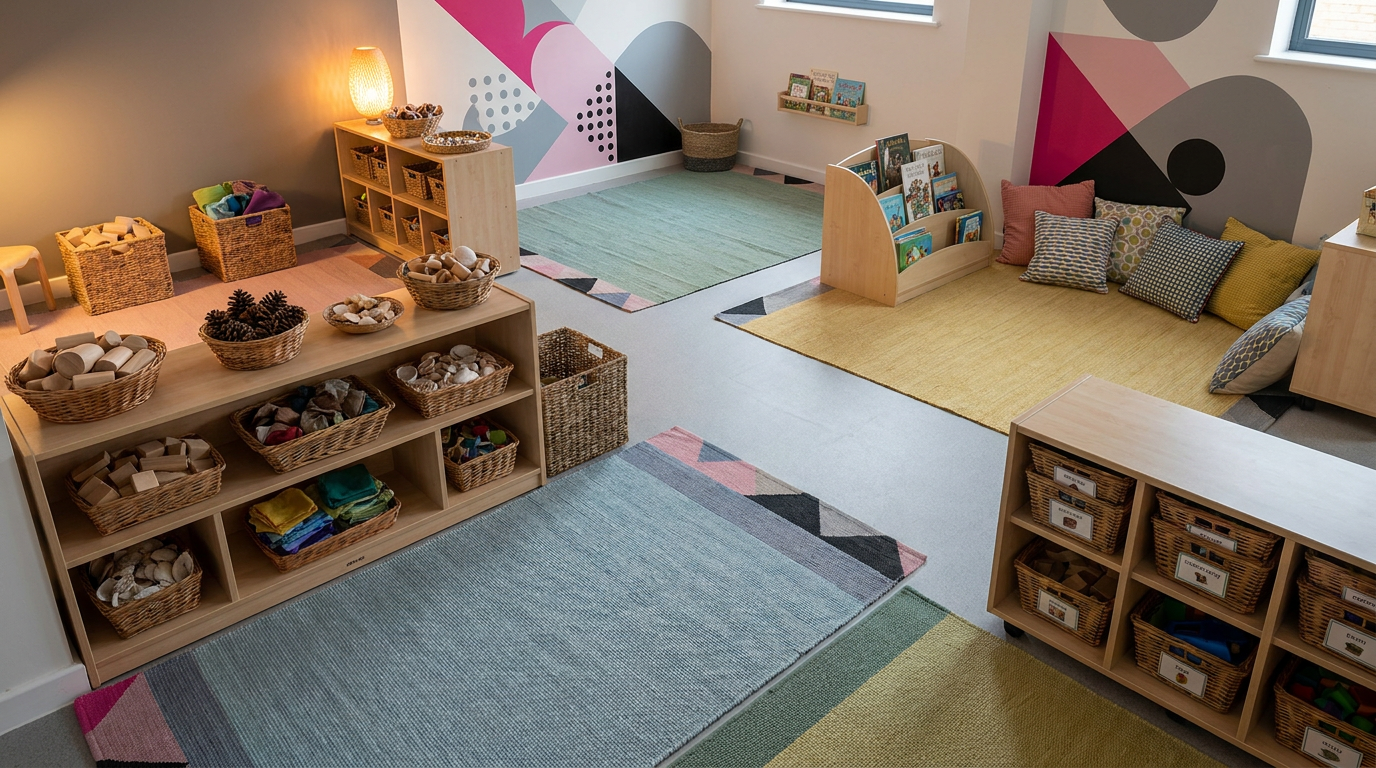
The ‘zonal method’ is a powerful strategy for organising an EYFS classroom to support different types of learning and behaviour simultaneously. It isn’t just about labelling corners; it’s about engineering the flow of the room to create distinct eyfs learning zones with specific purposes. This thoughtful organisation helps children understand expectations, manage their own behaviour, and make independent choices about their play.
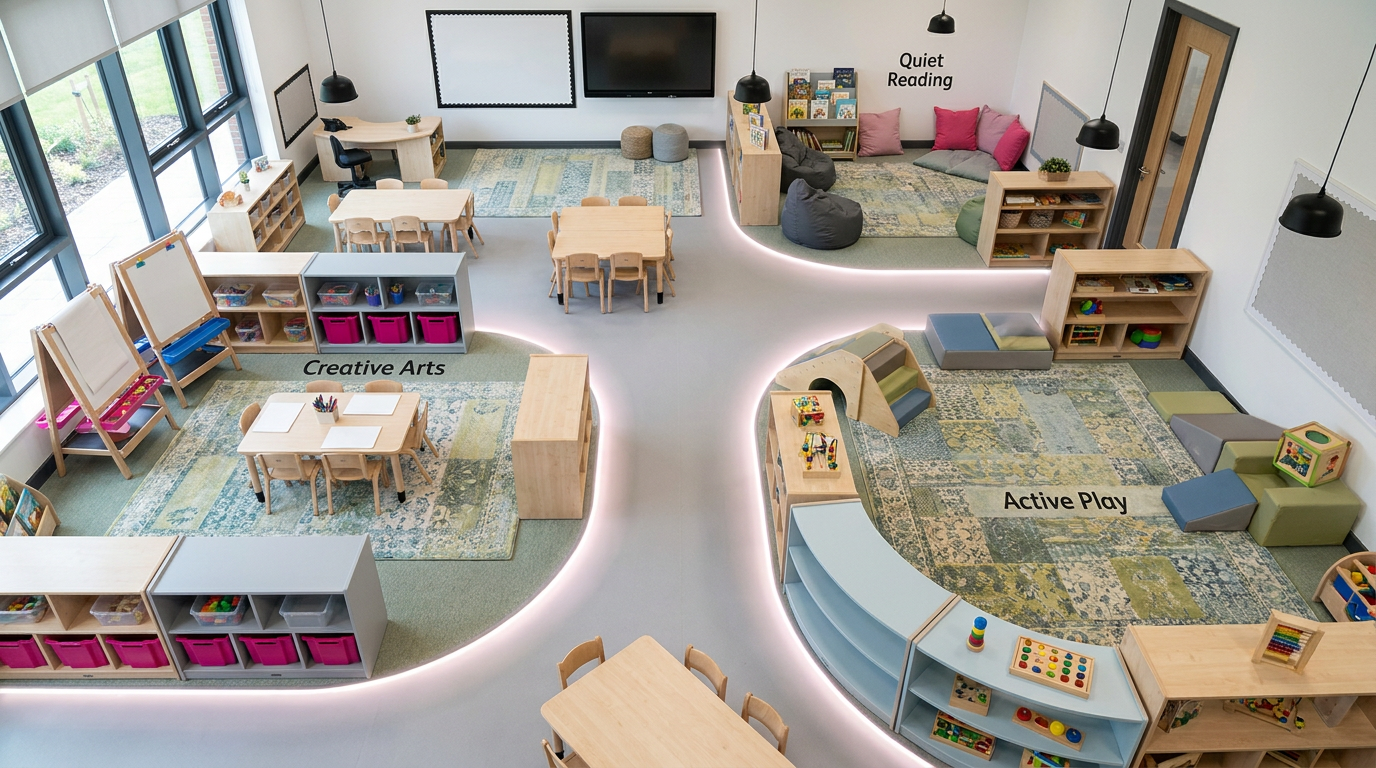
The core principle is to separate active, noisy, or messy zones from those that require quiet and concentration. For example:
- Active/Messy Zones: Areas for construction, water play, and messy art should be grouped together, ideally on a hard-wearing, easy-to-clean floor surface. These zones encourage collaboration, gross motor skills, and large-scale creativity.
- Quiet/Calm Zones: A cosy reading nook filled with cushions, a mark-making area with various writing tools, or a maths investigation station should be situated away from the high-energy areas. These zones support focus, fine motor skills, and reflective learning.
You can use furniture to define these zones effectively without building walls. Low-level storage units, shelving, or even different coloured rugs can create clear but accessible boundaries. This is one of the most effective eyfs classroom design ideas for bringing order to a busy space. This approach is detailed further in our practical guide to classroom zones.
This concept should also extend to your eyfs outdoor learning environment. A well-designed outdoor space is not just for letting off steam; it’s an extension of the classroom. You can create zones for large-scale construction with crates and planks, a mud kitchen for sensory science, a quiet garden area for reading, and open space for physical development. Connecting indoor and outdoor provision with a smooth flow is key to enhancing UK school outdoor learning.
How Can You Integrate Multi-Sensory Elements on a School Budget?
Creating rich sensory environments for early years is fundamental to child development, but it doesn’t require a limitless budget for specialised equipment. While high-tech sensory rooms have their place, effective sensory integration is about weaving tactile, auditory, and visual experiences into the everyday environment using cost-effective eyfs resources.

The key is to focus on open-ended, natural materials, often referred to as ‘loose parts’. These are items that can be moved, combined, redesigned, and tinkered with in multiple ways. Think shells, pinecones, wood offcuts, fabric scraps, pebbles, and buttons. These items are often free or very low-cost and offer infinite possibilities for imaginative play, sorting, counting, and pattern-making.
Another powerful, low-cost tool is a simple digital projector. You can use it to project images of forests, oceans, or even abstract patterns onto a wall or into a den, instantly transforming the space and providing visual stimulation without physical clutter. This can be more versatile than fixed light-up panels. For more ideas, explore our guide to sensory play environments.
Of course, there is a place for specialist equipment, especially for children with specific sensory needs. The table below compares DIY options with specialist items to help you make informed decisions.
| Sensory Resource | Low-Cost / DIY Option (£) | Specialist Supplier Option (£) | Key Developmental Benefit | ||
|---|---|---|---|---|---|
| Tactile Exploration | “Treasure baskets” with natural objects (pinecones, shells, wood) | £5 – £20 | Specialist tactile panels with varied textures | £150 – £400 | Develops tactile discrimination, vocabulary, and categorisation skills. |
| Light & Visual Play | Digital projector and a white sheet or wall | £50 – £150 | Interactive LED Light Panel | £250 – £600 | Encourages visual tracking, cause-and-effect understanding, and calming focus. |
| Cosy/Quiet Space | Cushions, blankets, and a pop-up tent or large cardboard box | £30 – £60 | Purpose-built sensory den or pod | £300 – £800+ | Provides a safe space for emotional self-regulation and reduces sensory overload. |
| Auditory Input | DIY “sound shakers” made with bottles and rice, pasta, or beads | £0 – £10 | Set of tuned percussion instruments | £80 – £250 | Develops auditory processing, rhythm, and listening skills. |
Note: Prices are estimates as of September 2026 and can vary significantly.
What is Dynamic Provisioning and How Do Provocations Spark Curiosity?
Dynamic provisioning is the practice of continually evolving the learning environment based on children’s interests and developmental needs. It moves beyond static eyfs continuous provision ideas where the same resources are available all term. Instead, it involves introducing provocations for learning eyfs.
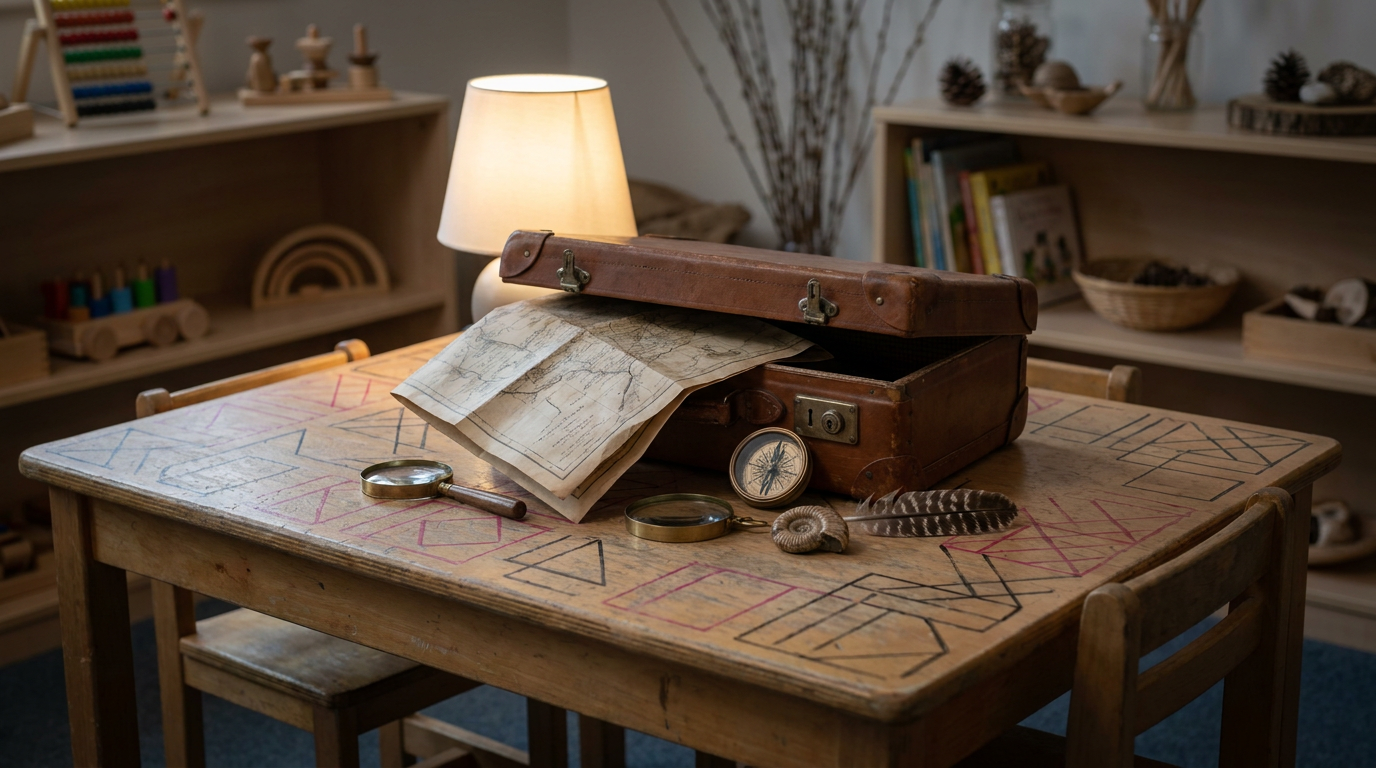
A provocation, a concept popularised by the Reggio Emilia approach, is an intentional arrangement of materials designed to provoke thought, curiosity, and investigation. It is different from a simple activity with a defined outcome. For example:
- Activity: Setting out a pre-cut craft kit to make a paper plate ladybird. The outcome is pre-determined.
- Provocation: Placing a collection of real leaves, twigs, a magnifying glass, and some black and red paint next to a book about insects. There is no set outcome; the child is invited to explore, question, and create in their own way.
Provocations are powerful because they encourage higher-order thinking. They are open-ended invitations to wonder. Here are a few practical examples:
- In the Investigation Area: A partially opened old suitcase containing maps, a compass, and foreign coins. A sign asks, ‘Where could this have been?’
- At the Water Tray: Freeze small plastic animals in blocks of ice and provide pipettes with warm water, salt, and small tools.
- In the Construction Zone: Add pictures of famous bridges alongside the usual building blocks.
By introducing fresh provocations weekly, you can enhance your continuous provision without needing to completely overhaul your classroom. This method keeps the environment exciting and responsive, ensuring it consistently supports the curriculum goals outlined in the DfE’s (2024) statutory framework. It’s a smart way of “Saving Time & Stress” for practitioners whilst maximising learning.
What Is the Procurement Reality for Stimulating EYFS Environments?
No, you should not use domestic furniture in a school setting, and this is a critical point for anyone responsible for procurement. While a budget sofa from a high-street store like IKEA might seem like a cost-effective eyfs resource, it presents significant risks For safety, durability, and compliance. School furniture must be built to withstand the rigours of a commercial environment and meet specific legal standards.
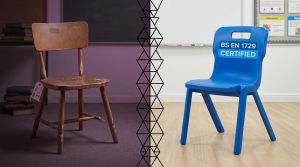
The most important of these is BS EN 1729. This is the British and European safety standard that dictates the appropriate size, strength, and stability for chairs and tables used in educational institutions. Using non-compliant furniture not only poses a risk to children’s safety and postural health but can also invalidate your insurance and breach your duty of care as outlined by the Health and Safety Executive (HSE).
When sourcing for stimulating EYFS environments, School Business Managers must look beyond the initial ticket price and consider the ‘whole-life cost’. A cheap domestic bookcase may break within a year, whereas a purpose-built, BS EN 1729 compliant unit from a specialist supplier is designed to last for many years, offering far better value. This is a key factor when trying to understand the true cost of a learning space.
This is where our expertise becomes a vital asset. At Cost Cutters UK, we manage the entire process. We help you plan your space, select from thousands of fully compliant products, and handle the delivery and installation. Our “Design To Install We Do It All!” service ensures you get a safe, durable, and inspiring environment that meets all regulations, often with the advantage of our Bulk Buy Discounts. We simplify the complexities of choosing the right early years furniture and ensure you meet all EYFS compliance and safety standards.
### Case Study: A Hypothetical Primary School Scenario
- Challenge: A two-form entry primary school in the North West had an outdated, cluttered EYFS unit. The space lacked clear zoning, leading to disruptive behaviour and low engagement. Their budget for a complete overhaul was limited to £15,000.
- Solution: We worked with the school’s leadership team, using our free space planning service. We designed a new layout using the zonal method, defining areas with durable, low-level storage units. We sourced multi-purpose, BS EN 1729 compliant tables and chairs and helped them select cost-effective sensory resources.
- Results: After installation, the school reported a 40% reduction in logged behavioural incidents in the first term. Practitioner observations showed a 60% increase in sustained, child-led engagement in the new investigation and construction zones. The total project cost came in at £14,200, under budget.
- Key Insight: A professional space plan, even with a modest budget, can completely transform the functionality of a room and directly impact learning outcomes.
Important Considerations and Next Steps
The strategies outlined are based on established best practice, but every setting and cohort of children is unique. The effectiveness of any environmental design depends on its implementation by skilled practitioners who can observe and adapt the provision to the children’s evolving interests and needs. Furthermore, this guide focuses on general principles; specific adaptations for children with Special Educational Needs and Disabilities (SEND) may require consultation with specialists.
While this guide champions cost-effective solutions, alternative approaches include engaging educational design consultants or undertaking a full-scale refurbishment. These options involve higher initial investment but can deliver a transformative, cohesive environment. A report from design firm Oktra (2023) on workspace transformation highlights that professional design can yield significant long-term returns on investment, a principle that also applies to educational settings. You should weigh the long-term benefits of a professionally planned space against the immediate savings of a purely DIY approach.
For any significant environmental changes, especially those involving structural alterations or large furniture orders, we recommend professional guidance. A specialist can ensure your plans are not only pedagogically sound but also fully compliant with health and safety regulations, building codes, and procurement rules. Booking a free space planning consultation can help you avoid costly mistakes and maximise the impact of your budget.
Frequently Asked Questions
What are stimulating EYFS environments?
Stimulating EYFS environments are thoughtfully designed learning spaces that encourage exploration, creativity, and critical thinking. They are rich in resources and opportunities that cater to all seven areas of learning as defined by the EYFS framework. Critically, they balance child-led discovery with adult-guided activities to ensure comprehensive development and are consistently Rated Excellent On Trustpilot by our school partners who achieve them.
How do you create an enabling environment on a budget?
Creating an enabling environment on a budget is about being resourceful and strategic with your spending. We recommend you prioritise open-ended, natural materials (‘loose parts’) over expensive single-purpose toys. Use smart, durable storage to define zones and regularly rotate resources to maintain interest. This approach prioritises imagination over high-cost items and is a core part of our value-driven philosophy.
What do Ofsted look for in an EYFS environment?
Ofsted inspectors look for an environment that is safe, engaging, and supportive of every child’s learning and development. According to their framework, they will assess how resources are used to build on children’s interests, how the space supports the curriculum’s intent, and whether it enables children to become independent learners. A well-planned environment is a key physical indicator of a high-quality provision.
How does the environment affect a child’s learning in early years?
The physical environment acts as the ‘third teacher’ in early years, directly impacting learning. A calm, organised, and resource-rich space can improve concentration, reduce challenging behaviour, and foster positive social interactions. Conversely, a chaotic or over-stimulating environment can hinder learning and cause anxiety. The design directly impacts a child’s ability to engage with the curriculum and develop effectively.
What should be in an EYFS outdoor learning environment?
An effective EYFS outdoor learning environment should offer opportunities for large-scale physical activity and managed risk-taking. Key elements include areas for construction (e.g., crates, planks), a mud kitchen for messy science, water play, and natural elements for exploration like bug hotels or planting beds. It should not be an afterthought but a planned extension of the indoor classroom.
What is the difference between an invitation and a provocation?
While similar, a ‘provocation’ is designed to be more challenging and open-ended than an ‘invitation’. An invitation might be a puzzle set out on a table, suggesting a clear task with a single solution. A provocation, however, might be a collection of mirrors, reflective objects, and torches with no defined outcome, prompting deeper questioning, experimentation, and creativity from the children.
How can I make my classroom more sensory-friendly?
To make a classroom more sensory-friendly, consider both reducing and providing appropriate sensory input. Use natural lighting where possible, neutral colours on walls to reduce visual clutter, and create a designated ‘cosy corner’ with soft furnishings for regulation. At the same time, provide specific sensory resources like texture boards or weighted blankets for children who need that targeted input to feel calm and focused.
What are the key safety standards for UK school furniture?
The primary safety standard for UK educational furniture is BS EN 1729 Parts 1 & 2. This standard ensures that chairs and tables are of the correct size, strength, and stability for use by children in a demanding school environment. Adhering to this is not optional; it is crucial for pupil safety, promoting good posture, and meeting your legal duty of care.
How often should you change your continuous provision?
Core continuous provision resources should remain consistent for stability, but they should be enhanced weekly or fortnightly. This involves adding new items, provocations, or books based on children’s current interests and observed learning needs. The goal is to evolve the environment rather than completely changing it, providing a familiar foundation that is continually refreshed with new challenges and opportunities.
What are the 7 areas of learning in an EYFS classroom?
The EYFS framework specifies seven areas of learning that the environment must support. These are divided into three prime areas: Communication and Language; Physical Development; and Personal, Social and Emotional Development. They are supplemented by four specific areas: Literacy; Mathematics; Understanding the World; and Expressive Arts and Design. A well-designed environment provides accessible resources and opportunities covering all seven areas.
Your Partner in Creating Exceptional Early Years Spaces
Ultimately, creating stimulating EYFS environments is one of the most powerful tools a school has to improve outcomes and foster a lifelong love of learning. By strategically zoning your space, integrating multi-sensory resources, using dynamic provocations, and making smart, compliant procurement choices, you can build a high-impact setting that delivers exceptional value and impresses inspectors. This approach allows you to achieve more, even with financial constraints.
Transforming your vision into a safe, compliant, and inspiring reality requires careful planning and expertise. The team at Cost Cutters UK has over 35 years of experience helping schools across the country design and equip their effective learning spaces, with flexible payment options like Credit Accounts Or Pay Flexibly. If you’re ready to take the next step, book a free, no-obligation space planning consultation with our specialists today.
Related Resources
References
- Department for Education (DfE) (2024) – Statutory Framework. Defines the ‘enabling environment’ as a key principle and sets the standards for the seven areas of learning.
- Ofsted (2023) – Inspection Framework. Outlines how inspectors judge the quality of education, including the role of an ambitious curriculum and a supportive learning environment.
- White, J. (2019). ‘The Third Teacher in Practice’. UCL Institute of Education – Academic Article. Discusses the Reggio Emilia concept of the environment as a ‘third teacher’ and its application in modern UK early years settings.
- Health and Safety Executive (HSE) – Government Guidance. Provides the legal framework and practical guidance for conducting risk assessments in workplaces, including schools.
- British Educational Suppliers Association (BESA) – Industry Body Guidance. Promotes the use of compliant, purpose-built furniture and resources to ensure safety and quality in UK schools.
- UK Parliament (2023) – House of Commons Library Briefing Paper. Provides data and context on early years funding and policy in England, highlighting the financial pressures on settings.
- Oktra (2023) – Industry Insight Article. Discusses how principles of good environmental design in workspaces can improve wellbeing and productivity, concepts transferable to educational settings.
- IKEA (2023) – Life at Home Report. An annual global study of thousands of people that explores how home environments impact wellbeing, with findings on comfort, organisation, and personal space.
Frequently Asked Questions About Stimulating EYFS Environments
What are stimulating EYFS environments?
Stimulating EYFS environments are thoughtfully designed learning spaces that encourage exploration, creativity, and critical thinking. They are rich in resources and opportunities that cater to all seven areas of learning, balancing child-led and adult-guided activities. A successful environment is adaptable, safe, and responsive to the unique interests and developmental needs of the children using it, forming a core part of a high-quality educational provision.
How do you create an enabling environment on a budget?
Creating an enabling environment on a budget is about being resourceful and strategic. Prioritise open-ended, natural materials (‘loose parts’) like pinecones, shells, and fabric scraps over expensive single-purpose toys. Use smart, multi-functional storage to define zones and regularly rotate a smaller pool of high-quality resources to maintain novelty and interest. This approach prioritises fostering imagination over acquiring high-cost items.
What do Ofsted look for in an EYFS environment?
Ofsted inspectors look for an environment that is safe, engaging, and supportive of every child’s learning and development. They will assess how resources are used to build on children’s existing knowledge and interests, how the space supports the intended curriculum, and whether it enables children to develop independence and curiosity. A well-planned and purposeful environment is a key indicator of a high-quality, ambitious provision.
How does the environment affect a child’s learning in early years?
The physical environment acts as the ‘third teacher’ in early years, directly influencing development. A calm, organised, and resource-rich space can improve concentration, reduce challenging behaviour, and foster positive social interactions. Conversely, a chaotic, cluttered, or over-stimulating environment can hinder learning and cause sensory overload and anxiety. The design directly impacts a child’s ability to engage, explore, and learn effectively.
What should be in an EYFS outdoor learning environment?
An effective EYFS outdoor learning environment should offer opportunities for large-scale physical activity, managed risk-taking, and connection with nature. Key elements include areas for gross motor construction (e.g., crates, planks, tyres), a mud kitchen for sensory play, water play apparatus, and natural features for exploration like bug hotels or planting beds. It should operate as a seamless extension of the indoor classroom.
What is the difference between an invitation and a provocation?
While similar, a ‘provocation’ is designed to be more challenging and open-ended than an ‘invitation’. An invitation might be a puzzle set out on a table, suggesting a clear task with a defined outcome. A provocation, such as a collection of mirrors, reflective objects, and torches, has no defined outcome. It is intended to provoke deeper questioning, experimentation, and creative thinking.
How can I make my classroom more sensory-friendly?
To create better sensory environments for early years, consider both reducing and providing sensory input. Use natural lighting where possible, neutral colours on walls to reduce visual clutter, and create a designated ‘cosy corner’ with soft furnishings for regulation. At the same time, provide specific, targeted sensory resources like texture boards, wobble cushions, or weighted blankets for children who benefit from that input.
What are the key safety standards for UK school furniture?
The primary safety standard for UK educational furniture is BS EN 1729. This two-part standard ensures that chairs and tables are of the correct size, dimensions, strength, and stability for use by children in a demanding school environment. Compliance is crucial for pupil safety, promoting good posture, and for the school to meet its legal duty of care and health and safety obligations.
How often should you change your continuous provision?
Core continuous provision resources should remain consistent for stability, but they should be enhanced weekly or fortnightly. This is a key aspect of effective eyfs continuous provision ideas. Enhancements involve adding new items, provocations, or related books based on children’s current interests and learning needs. The goal is to evolve the environment rather than completely overhauling it, providing both familiarity and novelty.
What are the 7 areas of learning in an EYFS classroom?
The EYFS framework specifies seven areas of learning that the classroom environment must support. These are divided into the three prime areas: Communication and Language; Physical Development; and Personal, Social and Emotional Development. They are strengthened and applied through the four specific areas: Literacy; Mathematics; Understanding the World; and Expressive Arts and Design. A well-designed environment provides resources and opportunities covering all seven areas.
Important Considerations and Next Steps
The strategies outlined are based on established best practice, but every setting and cohort of children is unique. The effectiveness of any environmental design depends on its implementation by skilled practitioners who can observe, reflect, and adapt the provision to the children’s evolving interests and needs. Furthermore, this guide focuses on general principles; specific adaptations for children with Special Educational Needs and Disabilities (SEND) will require consultation with specialists and a more individualised approach.
While this guide champions cost-effective solutions, alternative approaches include engaging educational design consultants or undertaking a full-scale refurbishment. These options involve higher initial investment but can deliver a transformative, cohesive environment designed by experts. It is crucial for school leaders and
business managers to weigh the long-term benefits and total cost of ownership of a professionally planned space against the immediate, but often misleading, savings of a purely DIY or domestic furniture approach.
For any significant environmental changes, especially those involving structural alterations or large furniture orders, professional guidance is strongly recommended. A specialist can ensure your plans are not only pedagogically sound but also fully compliant with health and safety regulations, building codes, and public procurement rules. Booking a free space planning consultation can help you avoid costly mistakes and maximise the impact of your budget from the outset.
Conclusion
Your Partner in Creating Exceptional Early Years Spaces
In summary, creating stimulating EYFS environments is one of the most powerful tools a school has to improve outcomes and foster a lifelong love of learning. By strategically zoning your space, integrating multi-sensory resources, using dynamic provocations, and making smart, compliant procurement choices, you can build a high-impact setting that delivers exceptional value for money and provides a foundation for outstanding practice.
Transforming your vision into a safe, compliant, and inspiring reality requires careful planning and expertise. The team at Costcutters UK has decades of experience helping schools across the country design and equip their ideal learning spaces. If you’re ready to take the next step, book a free, no-obligation space planning consultation with our specialists today.
References
- Department for Education (DfE). (2024). Statutory framework for the early years foundation stage. GOV.UK. Retrieved from https://www.gov.uk/government/publications/early-years-foundation-stage-framework–2
- Ofsted. (2023). Education inspection framework. GOV.UK. Retrieved from https://www.gov.uk/government/publications/education-inspection-framework
- White, J. (2019). ‘The Third Teacher in Practice’. UCL Institute of Education. Discusses the Reggio Emilia concept of the environment as a ‘third teacher’ and its application in modern UK early years settings.
- Health and Safety Executive (HSE). Risk assessment: A brief guide to controlling risks in the workplace. HSE.GOV.UK. Retrieved from https://www.hse.gov.uk/simple-health-safety/risk/index.htm
- British Educational Suppliers Association (BESA). About Us. BESA.org.uk. Promotes the use of compliant, purpose-built furniture and resources to ensure safety and quality in UK schools.
- Oktra. (2024). The Principles of Agile Workspace Design. oktra.co.uk. Explores flexible space design, a concept applicable to modern, adaptable learning environments.
- UK Parliament. (2023). Post-legislative scrutiny of the School Premises Regulations 2012. committees.parliament.uk. Provides context on the legal requirements for school buildings and furniture.
- IQ Workspace. (2025). Ergonomics in Educational Spaces. iqworkspace.co.uk. Details the importance of correctly sized and designed furniture for student well-being and concentration.