Choosing the Right Early Years Furniture in a Nursery: A UK Procurement Guide
🎯 Key Takeaway
Selecting the right early years furniture in a nursery involves a strategic process that balances developmental needs with UK safety standards, durability, and budget to create an optimal learning environment. This guide provides school leaders with a comprehensive framework for making informed and strategic furniture procurement decisions. Key considerations include ensuring compliance with UK safety standard BS EN 1729, which is non-negotiable for child safety, aligning furniture choices with the seven areas of the Early Years Foundation Stage (EYFS) framework to support curriculum goals, and calculating the Total Cost of Ownership (TCO) to make smarter long-term financial decisions.
As of May 2026, UK school leaders and nursery managers face the persistent challenge of creating inspiring, effective learning spaces whilst navigating tight budgets. Procuring the right equipment is a critical piece of this puzzle. For early years furniture in a nursery, the decision goes far beyond simple aesthetics or initial cost. It’s a strategic investment in child development, staff wellbeing, and operational efficiency. An effective choices act as a silent partner to your teaching staff, facilitating learning and play.
This guide provides a practical roadmap for making these crucial decisions. We will explore how to align your choices with the Early Years Foundation Stage (EYFS) framework, demystify safety compliance with standards like BS EN 1729, and introduce smart procurement strategies that focus on long-term value over short-term savings. We’ll show you how to select furniture that works as hard as you do.
Written by: Costcutters UK Content Team | Reviewed by: Costcutters UK Editorial Team, 35+ Years in Educational Supplies, Rated Excellent On Trustpilot
Last updated: 14 May 2026
ℹ️ Transparency Disclosure: This article explores best practices for selecting early years furniture based on our extensive industry experience and analysis of UK educational standards. For full transparency, some links may connect to our services, such as our space planning consultation. All information is verified by our editorial team to ensure accuracy and relevance for UK educational settings. Costcutters UK is a leading supplier of educational equipment in the UK, and we are proud of our “Rated Excellent On Trustpilot” status.
How Can Strategic Furniture Choices Power EYFS Learning Outcomes?
The most effective early years furniture is an active pedagogical tool that directly enables curriculum delivery. The Early Years Foundation Stage (EYFS), which is the statutory framework setting standards for the learning, development and care of children from birth to five in England, is built around seven key areas. According to research from The LEGO Foundation (2022) on play-based learning, the physical environment is a critical component in fostering cognitive skills. Well-chosen classroom furniture for early years creates “enabling environments” where children can learn and develop. This means every table, chair, and storage unit should have a purpose tied to these developmental goals.
Furnishing the Prime Areas of Learning
The three prime areas of the EYFS form the bedrock of early development. Your furniture choices should actively support them:
- Communication and Language: Furniture can create spaces that encourage interaction. For example, small group tables foster conversation, whilst dedicated listening stations with comfortable seating help children focus on auditory activities.
- Physical Development: This goes beyond large play equipment. Correctly sized tables and chairs, compliant with BS EN 1729’s ergonomic standards, are essential for healthy posture. Low-level, accessible shelving and climbing frames support gross motor skills, independence, and risk assessment.
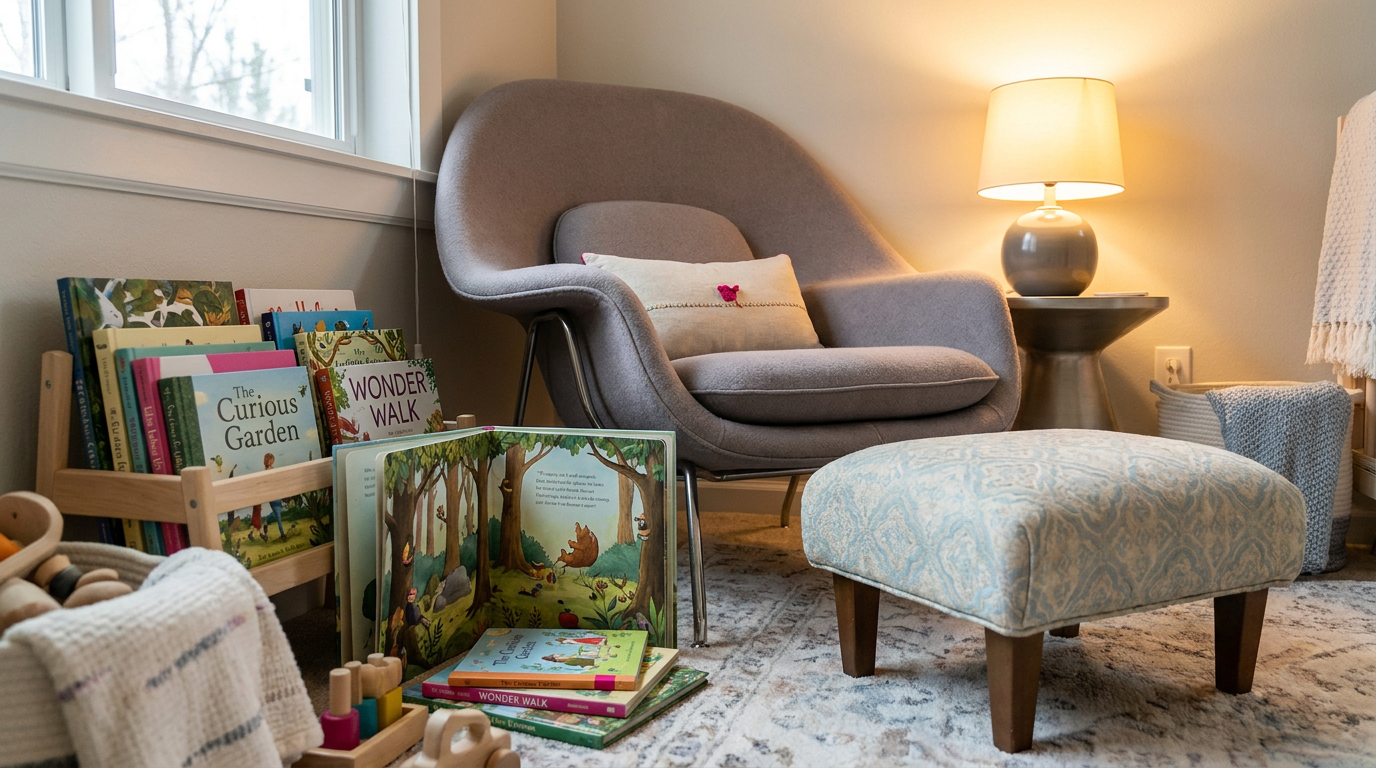
- Personal, Social and Emotional Development (PSED): Creating a sense of belonging and security is vital. Cosy corners with soft seating provide a safe retreat for children who need quiet time. Round tables encourage inclusivity, ensuring no child is at the head or corner, which promotes social skills and collaborative play.
Supporting the Specific Areas of Learning
The four specific areas build upon the prime areas, and specialised furniture is key to their success. The right educational furniture UK makes these learning opportunities intuitive and accessible.
- Literacy: A well-stocked reading corner with forward-facing book browsers is irresistible to young readers. Also, dedicated mark-making tables with integrated paper and pen storage encourage early writing skills.
- Mathematics: Furniture can facilitate mathematical thinking. For instance, sorting trays and multi-compartment storage units for counters and blocks help children understand concepts like classification and number.
- Understanding the World: Sand and water tables are classic for a reason; they are hubs for early scientific exploration. Also, nature tables and display units allow children to bring in and observe items from the outside world, fostering curiosity.
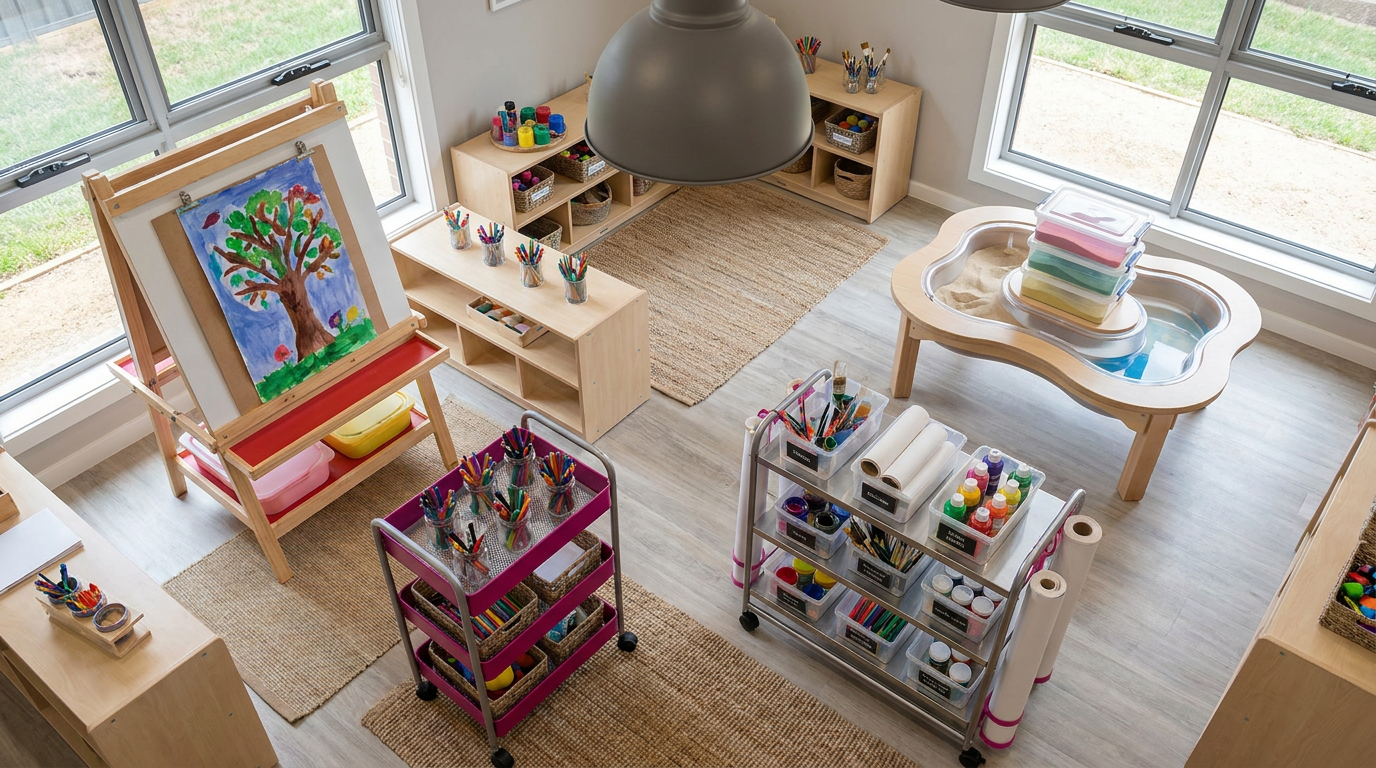
- Expressive Arts and Design: This area demands practical solutions. Double-sided easels allow multiple children to paint at once, whilst mobile art trolleys keep paint, glue, and craft supplies organised and accessible, turning cleanup into a manageable task.
What is the Essential Furniture Checklist for Every Nursery Zone?
A well-equipped nursery is organised into distinct zones, each with a clear purpose. This approach not only helps manage the classroom but also allows children to make independent choices about their play and learning. We recommend structuring your space with dedicated zones and furnishing them with purpose-built nursery school furniture. Think of your room as a landscape of opportunities.
Creative and Sensory Zones
This is where mess equals learning. The furniture here must be durable, easy to clean, and designed to contain materials.
- Adjustable Easels: Double-sided models are effective for promoting collaboration.
- Sand and Water Tables: Look for models with lids and drainage taps. A premium option like the TickiT Sensory Mood Sand and Water Table can add a fantastic sensory dimension.
- Art and Craft Trolleys: Mobile units that keep paper, paints, and collage materials organised and within reach are essential for
Saving Time & Stressduring setup and cleanup. - Drying Racks: A crucial piece of equipment for managing the volume of artwork produced.
Reading, Role-Play, and Quiet Areas
These zones provide space for imagination, social development, and calm reflection.
- Book Browsers and Shelving: Forward-facing browsers make book covers visible and appealing. Low-level shelving empowers children to select and return books themselves.
- Soft Seating: Beanbags, floor cushions, and small sofas create a comfortable and inviting reading nook.
- Role-Play Furniture: A play kitchen, shop counter, or workbench forms the centrepiece of your home corner. Look for robust, realistic
pre-school furniture UKfrom specialised brands like Twoey. - Costume and Prop Storage: An open wardrobe or a box on wheels makes it easy for children to access and tidy away role-play items.
Core Learning and Group Work
This is the functional heart of the classroom, requiring flexibility and robust design.
- Tables: A mix of shapes and sizes is best. Height-adjustable tables offer the most longevity and ergonomic support. Clover-leaf or semi-circular tables are excellent for group activities.
- Chairs: Must be ergonomically designed and sized appropriately for the age group to comply with BS EN 1729. Stackable chairs are a practical choice for flexible spaces.
- Storage Units: Low-level, open-faced units with trays or baskets are non-negotiable. They promote independence as children can see and access resources themselves.
How Do You Master Procurement for Early Years Furniture in a Nursery?
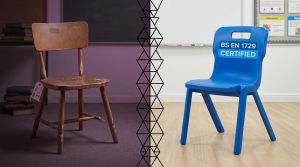
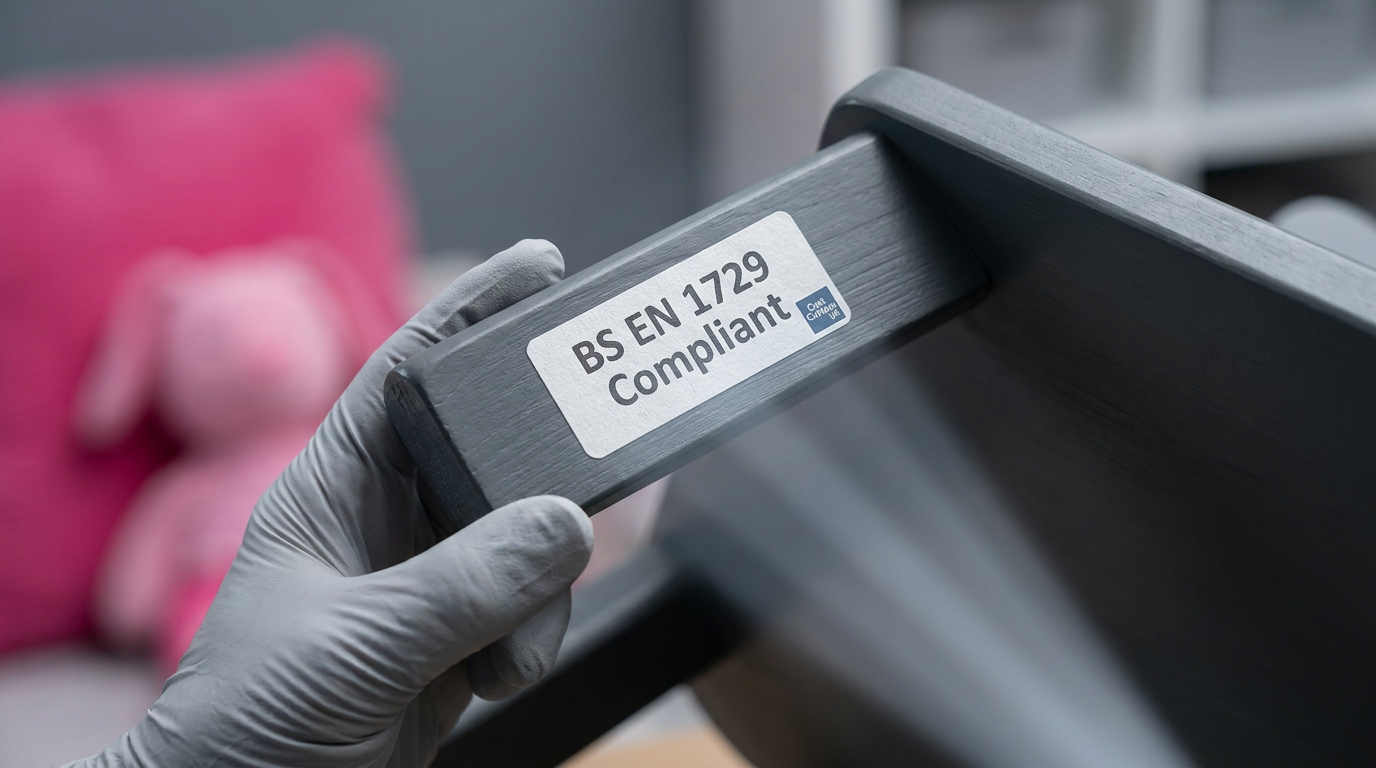
Mastering the procurement of early years furniture in a nursery means looking beyond the price tag to prioritise safety, long-term value, and compliance. The most crucial factor is adherence to British and European safety standards. BS EN 1729, the standard for educational furniture, is not just a recommendation; it’s a vital part of your duty of care. This standard has two parts: Part 1 covers functional dimensions (ensuring correct posture), and Part 2 covers safety, strength, and durability requirements. Choosing compliant furniture mitigates risk and ensures the equipment is fit for purpose.
Another key concept is Total Cost of Ownership (TCO). A cheap, domestic-grade table might seem like a saving, but if it needs replacing in two years, it’s a false economy. High-quality, contract-grade durable school furniture costs more initially but pays for itself through a lifespan that can be five to ten times longer. This approach reduces replacement costs, minimises classroom disruption, and frees up future budgets. By investing wisely upfront, you are making a more sustainable financial decision. This is where our Bulk Buy Discounts and flexible payment options can make a significant difference.
Total Cost of Ownership: A Comparison
| Metric | Low-Quality Option (e.g., Domestic-Grade) | High-Quality Option (e.g., BS EN 1729 Compliant) | Long-Term Implication |
|---|---|---|---|
| Initial Cost | Low (£50-£80 per table) | Higher (£120-£200+ per table) | Higher initial outlay for long-term savings. |
| Lifespan | 1-2 years in a nursery environment | 10-15+ years | Drastically reduced replacement frequency and cost. |
| Safety Compliance | Not certified; potential sharp edges, instability. | Certified to BS EN 1729; stable, non-toxic, ergonomic. | Reduced risk of accidents and liability issues. |
| Warranty | 1 year (or less) | 5-10+ years | Peace of mind and protection against manufacturing defects. |
| TCO (5 Years) | £125-£200 (assuming 2-3 replacements) | £120-£200 (initial purchase only) | The higher-quality option becomes more cost-effective over time. |
Note: Costs are illustrative. Sources: Nortek Group analysis and internal data.
What Happens Beyond the Purchase? A Guide to Space Planning and Installation
Effective space planning is the crucial step that transforms a collection of furniture into a functional, inspiring learning environment. Simply buying new classroom furniture for early years isn’t enough; how it’s arranged dictates the flow of the room, the quality of supervision, and the effectiveness of your learning zones. Professional space planning can maximise pupil capacity, ensure clear pathways for safety, and create a logical layout that minimises disruption and encourages focused play. It’s a core part of our “Design To Install We Do It All!” philosophy.
We believe a successful project follows a clear, collaborative process:
- Initial Consultation & Needs Analysis: We start by understanding your vision, curriculum needs, cohort size, and budget. This isn’t just about a floor plan; it’s about what you want to achieve pedagogically.
- 2D & 3D Space Planning: Our designers create detailed visual plans. 2D layouts confirm measurements and flow, while 3D visualisations bring the space to life, allowing you to see exactly how the finished room will look and feel. This removes guesswork and ensures stakeholder buy-in before a single item is ordered.
- Quotation & Procurement: Once the plan is approved, we provide a detailed, itemised quotation. We can use
Bulk Buy Discountsand offer flexible payment options likeCredit Accounts Or Pay Flexiblyto align with your school’s procurement process. - Delivery & Installation: Our professional installation team delivers and assembles everything, placing it according to the approved plan. They remove all packaging,
Saving Time & Stressfor your site and teaching staff, leaving you with a classroom ready for learning.
### Case Study: Acorn Preschool’s Transformation
Challenge: Acorn Preschool in Manchester had an outdated, cluttered layout with mismatched furniture. This restricted free-flow play, made supervision difficult, and limited their intake capacity.
Solution: We provided a full ‘Design To Install’ service. After a detailed consultation, our team created a 3D space plan that defined clear learning zones. We supplied and installed a full suite of BS EN 1729 compliant, multi-functional furniture.
Results: The new layout increased usable space, allowing them to raise their pupil capacity by 15%. Staff reported easier supervision, and their next Ofsted report specifically praised the “well-organised and stimulating learning environment.”
Key Insight: Investing in professional space planning delivered a Return on Investment (ROI) not just financially, but in the quality of the educational provision.
Frequently Asked Questions
What is early years furniture in a nursery?
Early years furniture in a nursery refers to specialised equipment designed for children aged 0-5, focusing on safety, appropriate sizing, and supporting developmental play. This includes everything from child-sized tables and chairs to storage units and play equipment. All items must be robust enough for a commercial setting and ideally compliant with UK safety standards like BS EN 1729 to ensure they are fit for purpose.
What furniture is essential for a UK nursery setting?
Essential nursery furniture includes child-sized tables and chairs, accessible low-level storage units, a book browser for a reading corner, and dedicated items for play zones. For example, a play kitchen or a sand and water table are vital for imaginative and sensory play. The exact list of nursery school furniture will depend on the specific zones you wish to create and the age range of the children.
What should I look for when choosing nursery furniture?
When choosing nursery furniture, prioritise safety (BS EN 1729 compliance), durability (contract-grade materials), and functionality (how it supports learning). Also consider factors like ease of cleaning, flexibility for different activities, and the supplier’s warranty and after-sales service. Verify that materials are non-toxic and that the design is free from sharp edges or potential entrapment hazards.
How does furniture support the 7 areas of the EYFS?
Furniture directly supports the EYFS by creating dedicated, enabling environments for each area of learning. For example, a well-resourced mark-making table with accessible supplies supports ‘Literacy’, a climbing frame supports ‘Physical Development’ through active play, and a group table encourages ‘Personal, Social and Emotional Development’ by facilitating interaction and collaboration between children.
What are the latest trends in pre-school furniture in the UK?
Current trends focus on natural materials, flexible and mobile furniture that can be easily reconfigured, and items that promote ‘loose parts play’. According to industry insights from sources like Early Years Resources, there is also a strong emphasis on creating calm, neutral environments with biophilic design elements that help bring nature indoors.
What makes nursery furniture safe and compliant in the UK?
Safe nursery furniture in the UK must be stable, free of sharp edges or entrapment hazards, and made from non-toxic materials. The key indicator of compliance for safe nursery furniture is certification to British Standard BS EN 1729. This standard governs the strength, durability, and crucial ergonomic dimensions required for furniture used in educational settings.
What are the key rules for arranging furniture in an early years classroom?
Key rules include creating clear pathways for movement, defining distinct learning zones (e.g., quiet, messy), ensuring all areas are visible to staff for supervision, and arranging furniture to encourage both group collaboration and individual focus. A common mistake to avoid is placing a noisy, active zone directly next to a quiet reading corner.
How can I ensure the school furniture I buy is durable?
To ensure you buy durable school furniture, look for items specifically described as ‘contract’ or ‘educational’ grade, not ‘domestic’. We recommend checking for solid wood or high-pressure laminate construction, fully welded robust metal frames, and a long manufacturer’s warranty. A guarantee of 5 years or more is a good indicator of a product built to last in a demanding school environment.
What is the difference between domestic and educational furniture?
Educational furniture is built to withstand heavy daily use in a school environment and must meet stringent safety standards like BS EN 1729. Domestic furniture, in contrast, is designed for lighter home use and typically lacks the structural robustness and safety certifications required for a commercial setting like a nursery, making it an unsuitable and potentially unsafe choice.
How do I budget for a full nursery fit-out?
Budgeting for a fit-out requires listing all desired items zone by zone, getting detailed quotes from specialist suppliers, and prioritising essentials. We advise factoring in a contingency fund of 10-15% for unforeseen needs. Crucially, consider the Total Cost of Ownership – a more durable item may have a higher initial price but will save money over its lifespan.
Important Considerations
This guide offers a framework based on established best practices and UK standards. However, every early years setting has unique spatial dimensions, budget constraints, and specific cohort needs. The effective furniture solution will typically require a tailored approach that adapts these principles to your specific context. A one-size-fits-all solution rarely delivers an effective outcome.
While sourcing second-hand furniture or using DIY solutions may seem like a cost-saving alternative, these approaches carry significant risks. Such items often lack proof of compliance with BS EN 1729, may have unknown structural weaknesses, and could invalidate your institution’s insurance in the event of an accident. In our experience, the long-term value and safety provided by professionally sourced, compliant furniture are significantly superior.
For any significant project, such as a complete classroom or nursery refurbishment, we strongly recommend professional guidance. An educational furniture specialist can provide a free space planning service to optimise your layout for learning and safety, ensure all selections are compliant, and manage the entire project from quotation to installation. This expert partnership saves you valuable time and prevents costly errors.
Partnering for a Better Learning Environment
Ultimately, selecting the right early years furniture in a nursery is a strategic decision that profoundly impacts child development, staff efficiency, and long-term budgets. By prioritising EYFS alignment, demanding certified safety and durability, and considering the total cost of ownership, school leaders can create environments that are not only compliant but truly inspiring. This investment lays the foundation for effective learning for years to come.
At Costcutters UK, we have spent over 35 years helping schools and nurseries across the country make these crucial decisions. Our expertise goes beyond the catalogue. If you are planning a project, we invite you to book a free, no-obligation space planning consultation with our team to explore an effective options from our full range of school and educational equipment.
References
- Department for Education (DfE) (2024) – Statutory Framework. Defines the seven areas of learning and development which all early years furniture and resources should be designed to support.
- British Standards Institution (BSI) – Standards Body. Publishes BS EN 1729 Parts 1 & 2, which detail the official safety and dimensional requirements for educational furniture in the UK.
- The LEGO Foundation, ‘Creating Creators’ (2022) – Research Report. Highlights the critical role of play-based learning and enabling environments in fostering creativity and cognitive skills in early childhood.
- Early Years Alliance – Industry Body Guidance. Provides practical advice for settings on creating safe and stimulating learning environments that comply with Ofsted expectations.
- Early Years Resources – Industry Guide. Analysis of trends in early years furniture, highlighting the move towards natural materials and biophilic design.
- Nortek Group – Supplier Data. Provides comparative data on the expected lifespan and TCO of domestic versus contract-grade educational furniture.
- Willowbrook Education – Educational Blog. Discusses the link between classroom layout, furniture choice, and improved learning outcomes.
Conclusion
Partnering for a Better Learning Environment
In summary, selecting the right early years furniture in a nursery is a strategic decision that profoundly impacts child development, staff efficiency, and long-term budgets. By prioritising EYFS alignment, demanding certified safety and durability, and considering the total cost of ownership, school leaders can create environments that are not only compliant but truly inspiring.
At Costcutters UK, we have spent over 35 years helping schools and nurseries across the country make these crucial decisions. Our expertise goes beyond the cat