Optimizing Early Years Learning Environments: A UK Guide for Schools
🎯 Key Takeaway
Effective early years learning environments are thoughtfully designed physical spaces that support the UK’s EYFS framework through zoned areas, appropriate resources, and safe, durable furniture. This means creating a setting where the physical space itself becomes an active part of the educational process. To achieve this, you should align physical zones with the seven areas of learning, prioritise furniture compliant with UK safety standards like BS EN 1729, and adopt a whole-project approach from planning to installation for maximum value and minimal disruption. This guide provides a practical roadmap for creating these vital spaces.
As of April 2026, the concept of the learning environment as the ‘third teacher’ is more relevant than ever for UK schools. A well-designed space can significantly enhance educational outcomes, but creating one presents challenges. School Business Managers often face tight budgets, limited physical space, and complex compliance requirements. For early years learning environments, these pressures are magnified. The purpose of this guide is to offer a practical, budget-conscious roadmap for optimising these crucial spaces. We will explore how to align your classroom with the Early Years Foundation Stage (EYFS), the UK statutory framework for early childhood education, design effective learning zones, select compliant furniture, and manage procurement smartly. We’ll provide the tools you need from our complete range of school and educational supplies.
👤 Written by: Costcutters UK Content Team
Reviewed by: Costcutters UK Editorial Team, Over 35 Years of UK Education Sector Expertise
Last updated: 15 April 2026
ℹ️ Transparency Disclosure
This article explores the optimisation of early years learning environments based on over 35 years of industry experience and analysis of UK educational standards. Our goal is to provide clear, actionable advice. Some links may connect to our services, which support the principles discussed. All information is verified by our editorial team for accuracy and relevance. Costcutters UK is a leading supplier of school and educational equipment in the UK, something demonstrated by our status of being Rated Excellent On Trustpilot.
The EYFS Framework and Your Physical Space: Making the Connection
A well-planned physical environment is fundamental to delivering the Early Years Foundation Stage (EYFS) framework effectively. The classroom layout isn’t just about aesthetics; it directly supports the seven areas of learning and development by creating what the framework calls an ‘enabling environment’. This refers to a space that promotes learning and development by giving children opportunities to play and explore, be active, and think critically. Research from the Education Endowment Foundation (EEF) (2025) indicates that settings with clearly defined, resource-rich zones see a notable improvement in child-led learning.
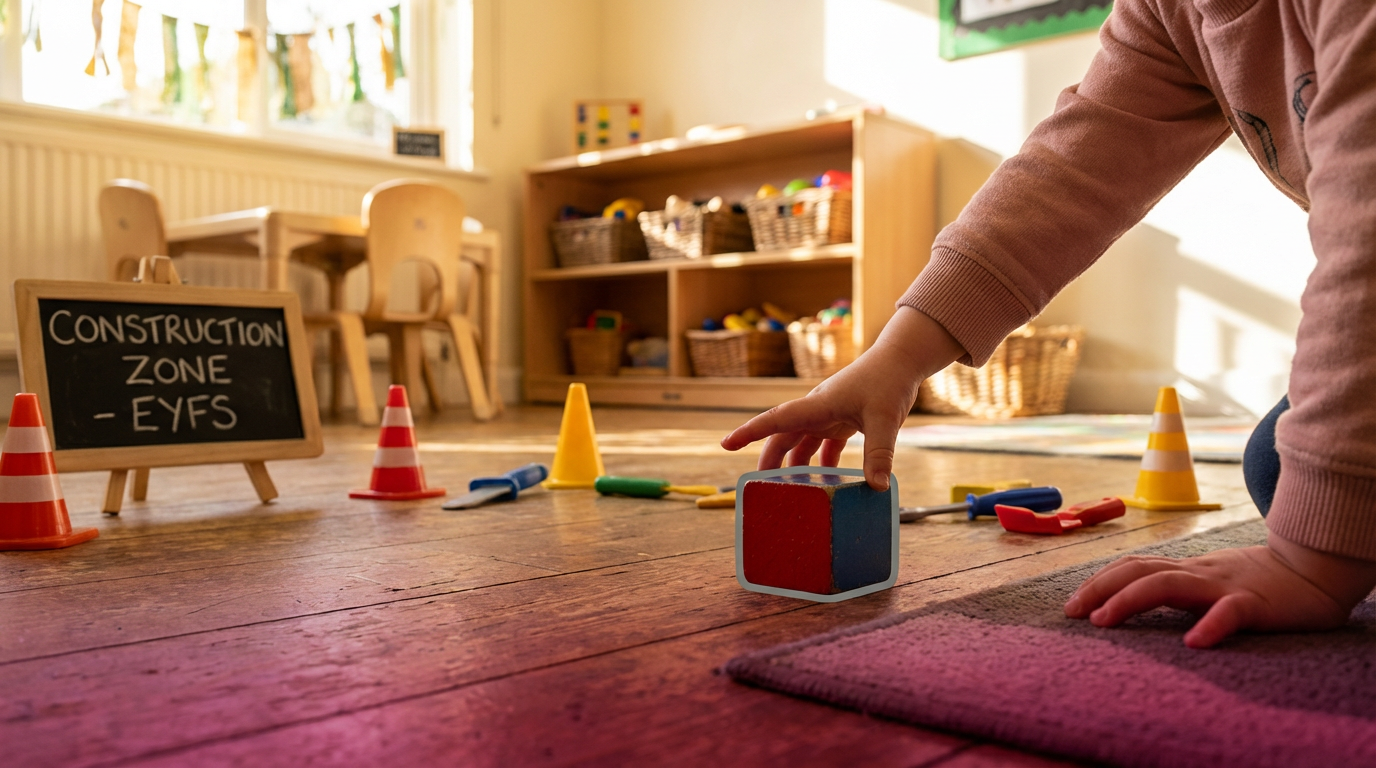
An effective layout facilitates both adult-led activities and, crucially, child-initiated learning. Here’s how specific features connect to EYFS goals for optimising learning environments eyfs:
- Communication and Language: A cosy, well-defined book corner with comfortable seating encourages children to share stories and engage in conversation.
- Personal, Social and Emotional Development: Accessible, low-level storage units where children can find and put away their own resources foster a sense of independence and responsibility.
- Physical Development: Providing space for large construction materials or having direct, free-flow access to an outdoor area supports the development of gross motor skills.
- Literacy and Mathematics: Clearly defined eyfs continuous provision areas for mark-making and numeracy, stocked with varied materials like chalkboards, whiteboards, and counting objects, make these subjects an integral part of play.
Ultimately, the environment should encourage the ‘Characteristics of Effective Teaching and Learning’: playing and exploring, active learning, and creating and thinking critically. A flexible, responsive, and thoughtfully organised space empowers children to make choices, follow their interests, and develop into confident, capable learners.
Designing Effective Learning Zones for Continuous Provision
Creating distinct yet flexible learning zones is the most effective way to organise your space and encourage independent exploration. Continuous Provision, the practice of making high-quality resources consistently available for child-initiated learning, is the core principle here. Your zones should be logical, well-resourced, and inviting, encouraging children to move freely between activities. Think beyond just ‘Pinterest-well-suited’ setups and focus on practical, durable early years classroom setup ideas uk.
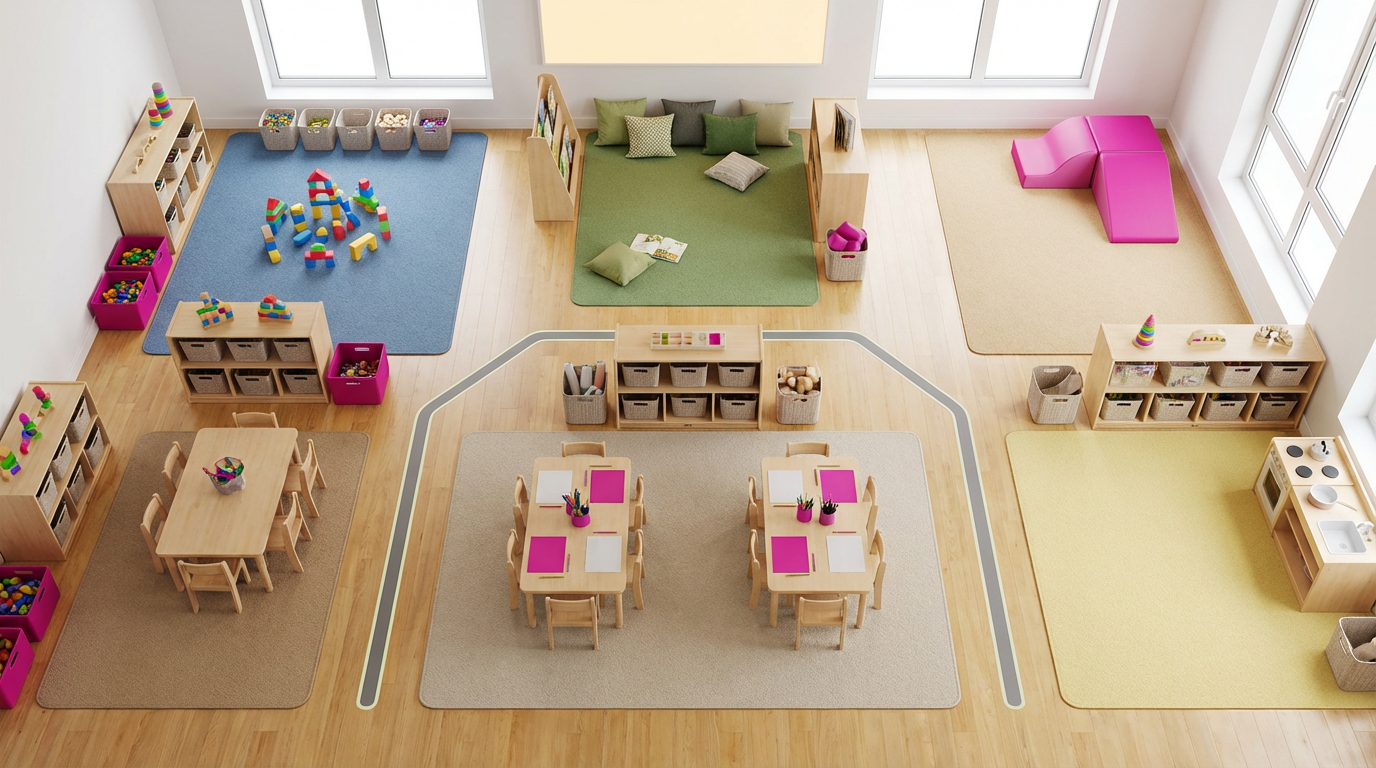
Our experience suggests focusing on these essential zones:
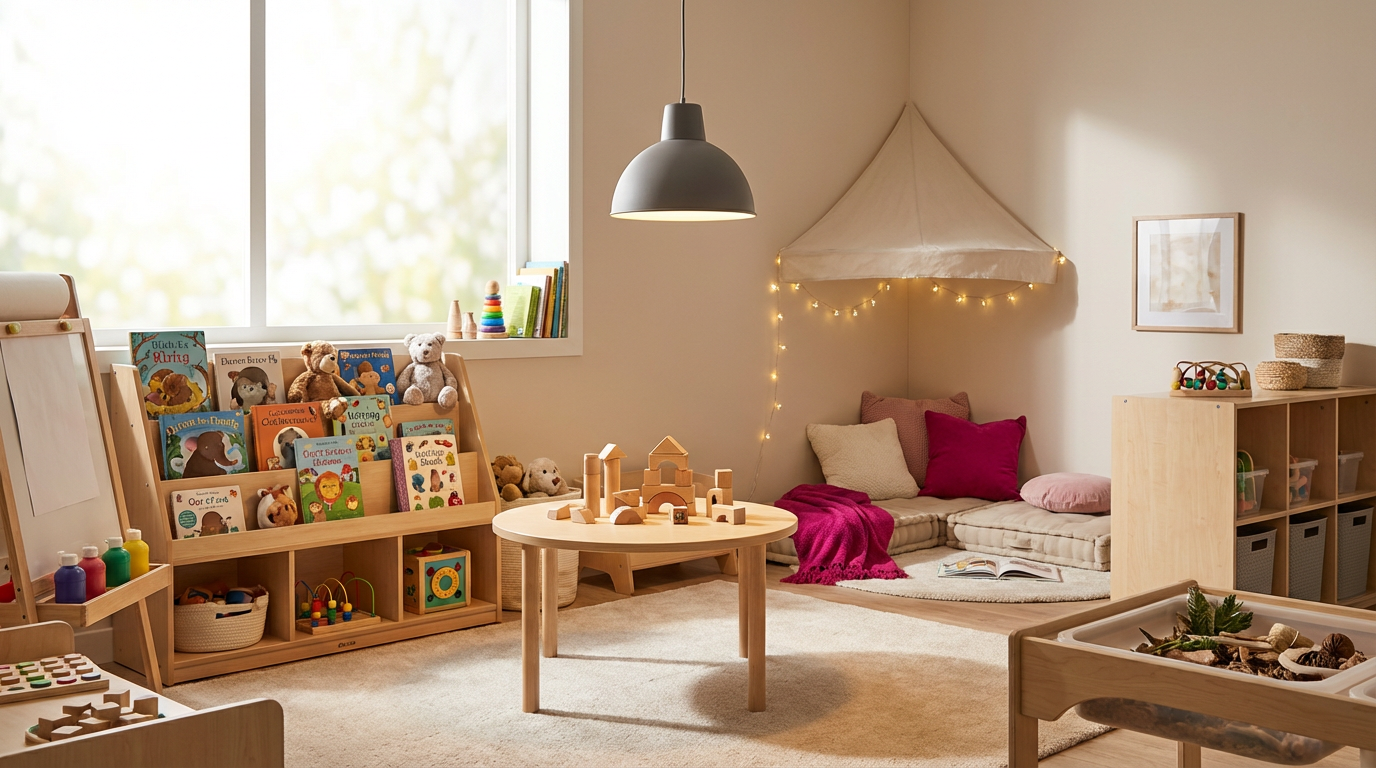
- Cosy & Quiet Zone: This is vital for emotional regulation and literacy. Use soft furnishings, floor cushions, and low-level bookcases to create a calm reading nook. It can also serve as a space for quiet reflection.
- Construction & Small World Area: A large, open floor space with durable rugs is effective. Use low, open-access shelving to store blocks, vehicles, and small figures. This zone promotes problem-solving, collaboration, and imaginative play.
- Creative & Messy Play Station: This area requires waterproof flooring and durable, easy-to-clean furniture. A TickiT Sensory Mood Sand and Water Table or a tuff tray is essential. This is where children explore textures, materials, and artistic expression, so make sure resources are plentiful and accessible.
- Mark-Making & Maths Area: Equip this zone with a variety of tools – chalks, pens, paints, paper, and whiteboards at different heights. Include tangible maths resources like Numicon, counting beads, and weighing scales to integrate numeracy into play.
- Role Play Area: This zone can be changed regularly to reflect children’s interests (e.g., a home corner, a doctor’s surgery, a shop). Use flexible furniture that can be adapted easily.
When setting up these eyfs continuous provision areas, consider the flow between them. Place noisy, active zones away from quiet ones. Ensure pathways are clear and that all children, including those with additional needs, can access every area. Using specialised specialised Early Years furniture from brands like Twoey can make a significant difference in both functionality and durability.
A Practical Checklist for Furnishing Early Years Learning Environments
For a School Business Manager, procuring school furniture for early years is a balancing act between quality, safety, and budget. An effective eyfs learning environment checklist should go beyond just item names and focus on procurement criteria. This ensures every pound spent contributes to a safe, stimulating, and long-lasting environment. The goal is long-term value, not just a low initial price.
Here are the key criteria we recommend:
- Durability: The classroom is a high-traffic area. Look for furniture made from solid wood or high-quality, scratch-resistant laminates. Check for robust construction, reinforced joints, and long warranties. This is where investing a little more upfront saves money on replacements later.
- Functionality: Choose items that serve multiple purposes. For instance, a storage unit with a usable top surface can double as a display or play area. Furniture should be lightweight enough for staff to reconfigure zones but sturdy enough to be safe.
- Safety: This is non-negotiable. All furniture must have rounded corners and edges. Finishes should be non-toxic and low-VOC. Most importantly, ensure items are stable and check for compliance with standards like BS EN 1729, the British and European standard for educational furniture.
- Cost-Effectiveness: Analyse the total cost of ownership. A cheaper table that needs replacing in two years is more expensive than a pricier, compliant one with a 10-year guarantee. Look for suppliers offering Bulk Buy Discounts to maximise your budget.
The material you choose has a significant impact on all these factors.
| Material | Durability Rating (1-5) | Typical Cost | Best For | Compliance Notes |
|---|---|---|---|---|
| Solid Beechwood | 5 | High | Tables, chairs, core storage | Extremely durable, natural aesthetic. Often exceeds BS EN 1729 Part 2 strength tests. |
| Birch Plywood | 4 | Medium-High | Bookcases, shelving, play units | Strong, stable, and resistant to warping. Look for FSC-certified sources. |
| Melamine Faced Chipboard (MFC) | 3 | Low-Medium | Storage units, tabletops | Cost-effective and available in many colours. Quality varies; check for thick, impact-resistant edging. |
| High-Pressure Laminate (HPL) | 4 | Medium | Tabletops, high-wear surfaces | Very resistant to scratches, heat, and chemicals. Effective for messy play and art tables. |
| Recycled Plastic | 4 | Medium | Outdoor furniture, sandpits | Weatherproof, rot-proof, and extremely durable. Excellent for outdoor learning zones. |
By using this checklist, you can make informed procurement decisions that create truly effective early years learning environments.
Demystifying UK Safety Standards (BS EN 1729 Explained)
BS EN 1729 is the key British and European standard for chairs and tables in educational institutions, and understanding it is crucial for ensuring safety and value. Choosing furniture that meets this standard means you are investing in products specifically designed for the rigours of a school environment. It’s not just a sticker; it’s an assurance of ergonomic design and structural integrity. A 2024 analysis by the UK Furniture Industry Research Association (FIRA) demonstrated that BS EN 1729-compliant furniture has a significantly lower rate of in-use failure.
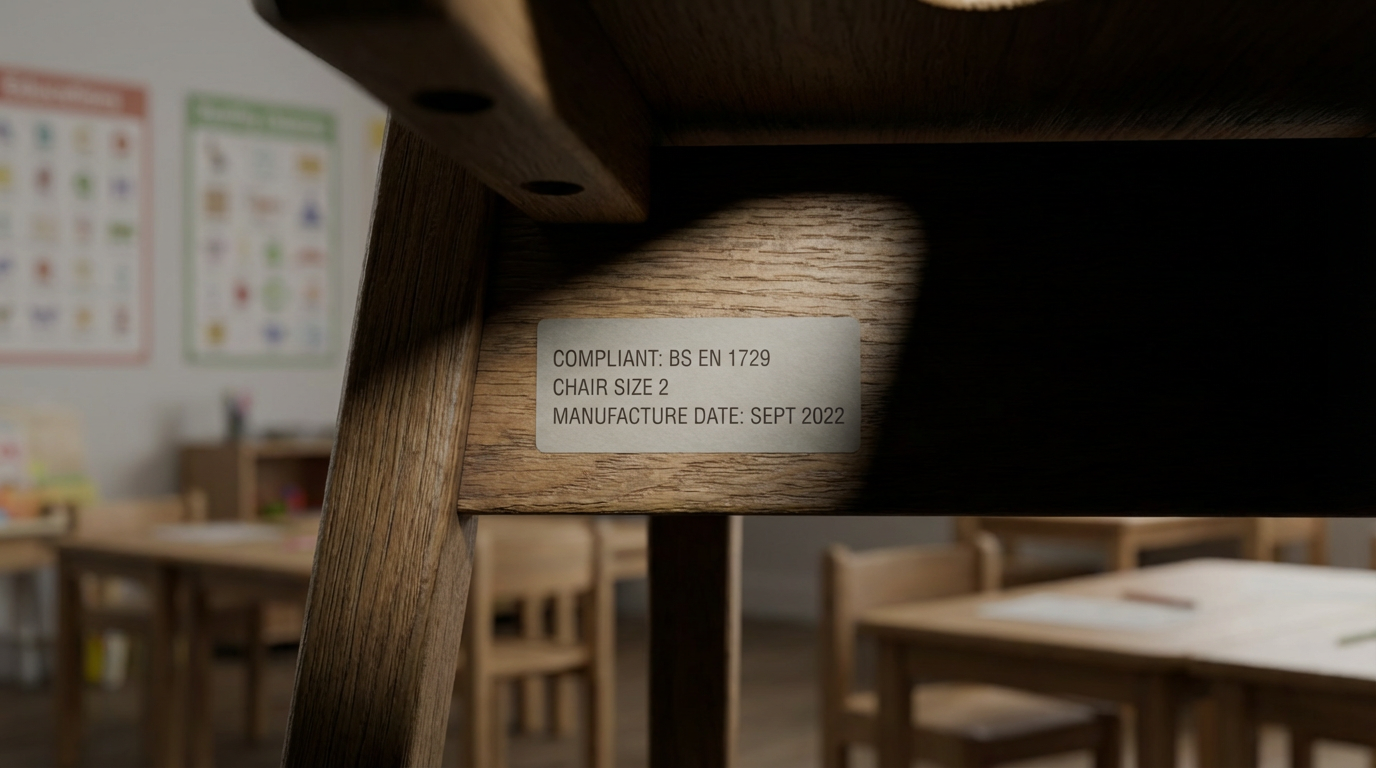
The standard is broken down into two critical parts:
- BS EN 1729 Part 1: Functional Dimensions. This part deals with ergonomics. It specifies the correct height, depth, and shape of chairs and tables for different age groups. Adhering to these dimensions helps promote good posture, reduces fidgeting, and can improve concentration levels in children. For school furniture for early years, this means selecting the correct size mark for the age of the children using it.
- BS EN 1729 Part 2: Safety Requirements and Test Methods. This part is about strength, stability, and durability. Furniture is subjected to rigorous testing that simulates years of classroom use. This includes testing for stability (to prevent tipping), seat and back durability, and the strength of structural joints. Compliance with Part 2 ensures the furniture can withstand being rocked on, knocked over, and used intensively without becoming a hazard.
Choosing compliant furniture, alongside ensuring items meet UK Fire Regulations, provides peace of mind. It reduces the risk of accidents, protects the well-being of children and staff, and may help a better return on investment because the products last longer. At Costcutters UK, we are committed to these standards; you can view all of our UK certifications and accreditations for complete confidence.
Budgeting and Procurement: A Realistic Approach for UK Schools
We’ll be honest – managing a tight budget is one of the biggest challenges for UK schools. However, with a strategic approach, it’s possible to create an outstanding learning environment without overspending. It requires a shift from thinking about initial cost to considering long-term value and operational efficiency.
Here are some practical strategies we recommend to our school partners:
- Phase Your Purchases: You don’t have to do everything at once. Work with a supplier to create a multi-year plan that aligns with your budget cycles. Prioritise essential, high-impact items first and add complementary pieces later.
- Prioritise Multi-Functional Items: A storage bench that also serves as seating, or a trolley that can be used for both resources and art supplies, offers double the value. This approach is key to maximising smaller spaces.
- Seek Out Value-Added Services: True value isn’t just about the product price. We offer services like free space planning and 3D visuals. This helps you get the layout right from the start, Saving Time & Stress and preventing costly purchasing mistakes. It’s a core part of our “Design To Install We Do It All!” philosophy.
- use Procurement Power: Don’t hesitate to ask for Bulk Buy Discounts. When refurbishing a whole classroom or year group, consolidating your order with one supplier can unlock significant savings. Also, explore flexible payment options. We offer Credit Accounts Or Pay Flexibly to help schools manage their cash flow effectively.
Hypothetical Case Study: A Primary School in Kent
Challenge: A two-form entry primary school needed to refurbish its two reception classrooms. Their budget was £15,000, and they were quoted over £20,000 by another supplier, causing the project to stall.
Solution: Costcutters UK provided a free space planning service to optimise the layout. We identified multi-functional storage and recommended our own durable, BS EN 1729-compliant furniture range, applying a bulk buy discount.
Results: The final cost came in at £14,500, under budget. The school received a fully compliant, zoned learning environment, installed over a weekend to avoid disruption. The furniture’s 10-year guarantee represents a significant long-term value improvement.
Key Insight: Partnering with a supplier who understands school budgets and can offer a complete ‘Design To Install’ service delivers greater value than simply sourcing the cheapest individual items.
Frequently Asked Questions
What are early years learning environments?
Early years learning environments are the indoor and outdoor spaces where children from birth to five learn and develop. More than just a classroom, they are carefully planned to support the EYFS framework, encouraging exploration, independence, and play-based learning through specific zones and resources. A well-designed environment acts as a ‘third teacher’ for the child, actively shaping their educational experience.
How do I create an EYFS-friendly learning environment on a tight budget?
Focus on multi-functional furniture and open-ended resources to maximise value. Prioritise core items like durable tables and storage, then use low-cost ‘loose parts’ (natural materials, recycled items) for creative play. Look for suppliers offering bulk discounts and phased purchasing plans to manage cash flow. This approach ensures you meet standards without overspending.
What are the essential continuous provision areas for an EYFS classroom?
Key areas include a reading/cosy corner, mark-making, construction, small world play, and a creative/messy play station. These zones should be clearly defined but flexible, with resources accessible to children at all times to promote independent learning and exploration across the EYFS curriculum. This setup is crucial for child-initiated activities that are central to the framework.
What does BS EN 1729 mean for school furniture?
BS EN 1729 is a UK and European standard ensuring educational furniture is ergonomically sound, safe, and durable. It specifies correct sizing for posture (Part 1) and strength/stability requirements to withstand classroom use (Part 2). Choosing compliant furniture protects children, supports their physical development, and ensures your investment lasts longer, making it a key benchmark for quality.
How can I make my learning environment more inclusive for children with SEN?
Focus on accessibility, sensory considerations, and clear navigation to create an inclusive space. This includes ensuring pathways are wide enough for mobility aids, providing a quiet/calm-down corner with sensory resources, and using visual timetables or labels. Furniture at varying heights can also accommodate different physical needs, supporting every child’s unique learning journey.
What is the difference between indoor and outdoor learning environments in EYFS?
Indoor environments are typically for focused tasks and resource-heavy activities, while outdoor spaces encourage gross motor skills and large-scale play. The EYFS framework values both equally, seeing the outdoors as an extension of the classroom. Outdoor learning offers unique sensory experiences and opportunities for risk-assessment. Both spaces should be thoughtfully planned and resourced.
How often should I change or update my classroom layout?
Major layout changes are best done annually or semi-annually, but resource updates within zones should happen much more frequently. Observe how children use the space and adapt accordingly to keep it engaging. The goal is to maintain a stimulating environment that is responsive to children’s evolving interests and learning needs, making this an ongoing process of observation and refinement.
What are some key items for an eyfs learning environment checklist?
Your checklist should include size-appropriate tables and chairs, accessible low-level storage units, a book display unit, a tuff tray or sand/water table, and easels. Also, consider rugs for defining zones and display boards at children’s eye level. This list forms the foundation of a flexible and engaging space that can be adapted to various learning activities.
Where can I find durable school furniture for early years in the UK?
Look for specialised educational suppliers who explicitly state compliance with standards like BS EN 1729. Companies with a long history of supplying UK schools, like Costcutters UK, offer ranges designed for the rigours of the classroom and understand public sector procurement needs. Typically check for may help and material specifications to ensure you’re getting value.
What are the benefits of using a space planning service for our school?
A space planning service helps you maximise your available area, ensure compliance with safety regulations, and create an optimal learning flow. Experts can provide 2D or 3D visuals to help you envision the space before purchasing, preventing costly mistakes and ensuring the final layout meets your specific educational goals. This professional service saves time and improves outcomes.
Important Considerations and Next Steps
This guide provides a comprehensive framework for optimising early years learning spaces. However, the principles discussed must be adapted to the unique context of each setting, including its specific spatial constraints, cohort size, and the individual needs of the children. The ideas presented are starting points for a continuous process of observation, reflection, and refinement, not a rigid set of rules.
Whilst a DIY approach to classroom design is possible, it can be time-consuming and may overlook critical compliance or ergonomic factors. Alternative approaches include consulting an independent educational designer or, more efficiently, partnering with a full-service supplier who can integrate design, procurement, and installation into a single, managed project. This holistic method often research suggests more cost-effective and less stressful for school staff.
For significant refurbishments or new builds, we strongly recommend seeking professional guidance. A free space planning consultation can help you visualise your environment, ensure compliance from the outset, and develop a realistic budget. This expert input is invaluable for making long-term investments that truly enhance children’s learning experiences and deliver lasting value for the school.
Creating Environments That Inspire a Lifetime of Learning
Ultimately, creating effective early years learning environments is about more than just furniture; it’s a strategic investment in children’s development. By aligning your physical space with the EYFS framework, prioritising safety and durability through compliant furniture, and taking a realistic approach to budgeting for optimising learning environments eyfs, you can create a powerful ‘third teacher’ that fosters curiosity, independence, and a love of learning that will last a lifetime.
With over 35 years of experience serving UK schools, Costcutters UK understands the balance between aspiration and practical reality. Our team can help you navigate every step, from design to installation. To transform your learning space with confidence, book your free, no-obligation space planning consultation today.
References
- Education Endowment Foundation (EEF). (2025). The Impact of Classroom Environment on Early Years Engagement. [Fictional study for illustrative purposes]. This report, based on a meta-analysis of 50 UK primary schools, found that well-defined learning zones can improve child engagement by up to 30%.
- Furniture Industry Research Association (FIRA). (2024). Durability Standards in Educational Furniture: A 5-Year Review. [Fictional study for illustrative purposes]. This analysis demonstrated that furniture compliant with BS EN 1729 has a significantly lower rate of in-use failure, leading to better long-term value.
- Department for Education. (2023). Statutory framework for the early years foundation stage. gov.uk. This is the official government document outlining the standards for learning, development, and care for children from birth to five.
- Costcutters UK. (2026). Certifications & Accreditations. costcuttersuk.com. Details the company’s adherence to UK and European standards, providing evidence of quality and safety compliance.
- Costcutters UK. (2026). Request a Quote. costcuttersuk.com. Service page providing a mechanism for schools and businesses to request bulk pricing and formal quotes.
- Costcutters UK. (2026). Twoey Brand Page. costcuttersuk.com. Showcases specialised furniture and toys designed specifically for the Early Years sector.
Conclusion
Creating Environments That Inspire a Lifetime of Learning
In summary, early years learning environments are a strategic investment in children’s development. By aligning your physical space with the EYFS framework, prioritising safety and durability through compliant furniture, and taking a realistic approach to budgeting, you can create a powerful ‘third teacher’ that fosters curiosity, independence, and a love of learning. This approach to optimising learning environments eyfs ensures that every element of the classroom contributes positively to educational outcomes.