How to Choose Ergonomic Primary School Furniture: A UK Guide
🎯 Key Takeaway
Selecting the right ergonomic primary school furniture requires matching pupil height to BS EN 1729 size marks, ensuring correct posture through the 90-90-90 rule, and choosing durable materials that offer long-term value.
• UK Compliance is Key: typically verify that furniture meets both parts of the BS EN 1729 standard for correct sizing and structural safety.
• Sizing by Key Stage: Use the official size mark colour codes to match tables and chairs to specific age groups, from Early Years to Key Stage 2.
• Prioritise Posture: A correctly sized chair and table allow a child’s feet to be flat on the floor with knees and hips at a 90-degree angle, supporting concentration.
This guide provides a step-by-step process for making informed procurement decisions that support student health and learning outcomes.
Choosing furniture for a primary school isn’t like furnishing an office. Growing children have unique physical requirements, and the chairs and tables they use every day have a significant impact on their health, comfort, and ability to learn. As of September 2026, the focus on pupil well-being has rarely been greater. For ergonomic primary school furniture, getting it wrong can lead to poor posture, fidgeting, and a lack of focus in the classroom. This is why UK-specific standards exist to guide schools. This article provides a definitive guide, covering the essential standards, correct sizing, practical selection criteria, and budget considerations to help you make an effective investment for your pupils.
👤 Written by: Content Team | Reviewed by: Editorial Team, Industry Specialists, 35+ Years Experience; Rated Excellent On Trustpilot
Last updated: 15 September 2026
ℹ️ Transparency Disclosure: This article explores how to choose ergonomic furniture for primary schools based on official UK standards and our 35+ years of industry experience. Some links may connect to our services. All information is verified by our editorial team.
What is the UK Standard for School Furniture? A Guide to BS EN 1729
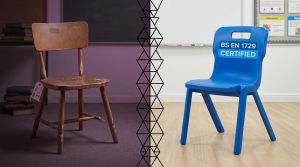
Yes, there is a crucial standard governing educational furniture in the UK, and it’s called BS EN 1729. This is the benchmark that ensures furniture is appropriately sized and safe for children in a learning environment. Understanding this standard is the first step in responsible procurement. Without compliance, you risk purchasing furniture that is not only unsuitable but potentially unsafe.
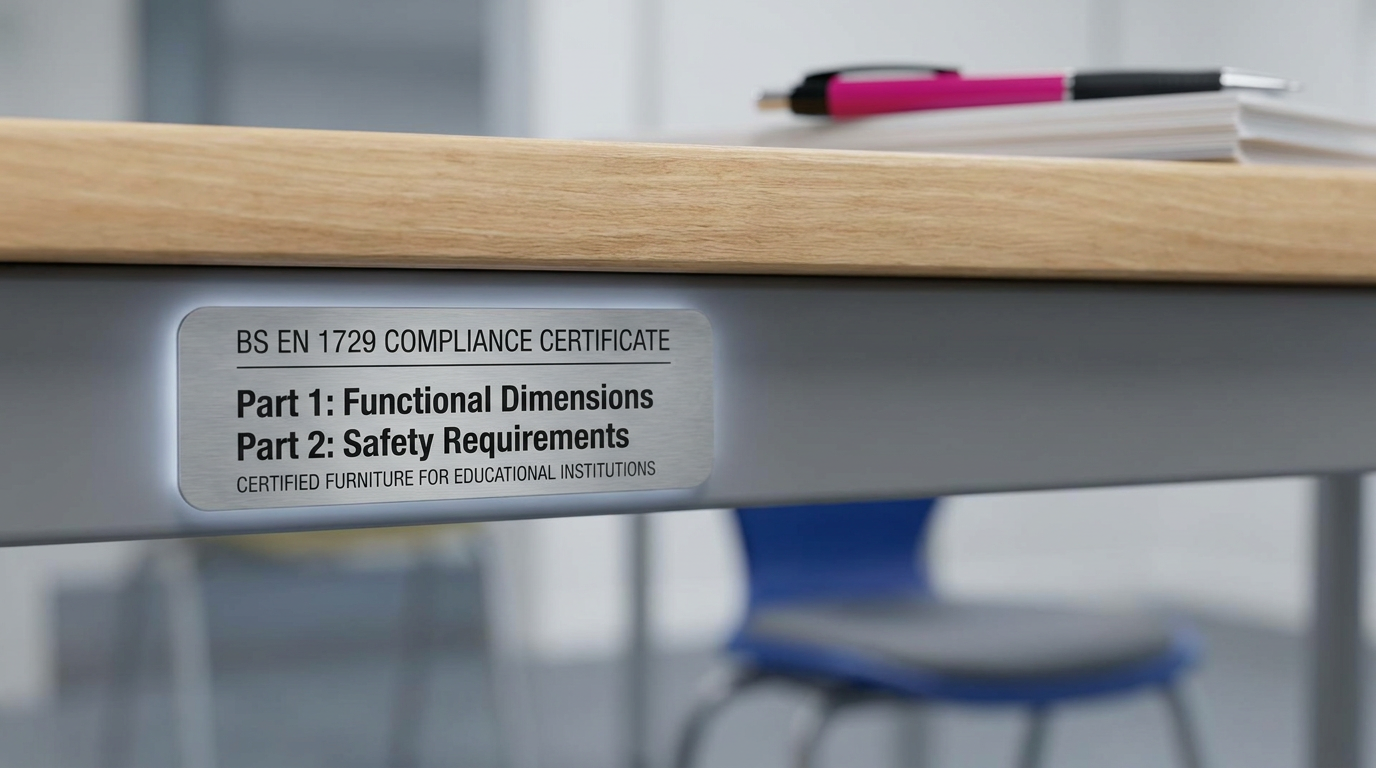
BS EN 1729, the British and European standard for educational furniture dimensions and safety, is split into two distinct parts:
- Part 1: Functional Dimensions. This part is all about sizing. It specifies the correct height for chairs and tables based on the stature of the pupils who will use them. It uses a system of ‘size marks’ to make matching easy, ensuring children can sit with a healthy posture.
- Part 2: Safety Requirements. This part covers strength, stability, and durability. It sets out rigorous testing procedures to ensure furniture can withstand the demands of a busy school environment without tipping over, breaking, or becoming a hazard.
Compliance with both parts of the bs en 1729 furniture standards is non-negotiable. The European Agency for Safety and Health at Work (EU-OSHA) highlights that musculoskeletal disorders (MSDs) are a widespread issue, and the principles of prevention begin with good ergonomics from a young age. Britain’s national regulator for workplace health and safety, the Health and Safety Executive (HSE), provides extensive guidance on workstation setup, reinforcing the importance of correct posture that is equally applicable in schools. By insisting on BS EN 1729-compliant furniture, you are investing in your pupils’ long-term health.
Sizing Chart: Matching Furniture to UK Key Stages (KS1 & KS2)
The practical application of BS EN 1729 Part 1 is a system of ‘size marks’. These are often colour-coded, providing a simple visual reference for matching chairs and tables to the correct age group. This system removes the guesswork, allowing you to create an ergonomically sound environment for pupils from their first day in reception through to the end of Year 6.
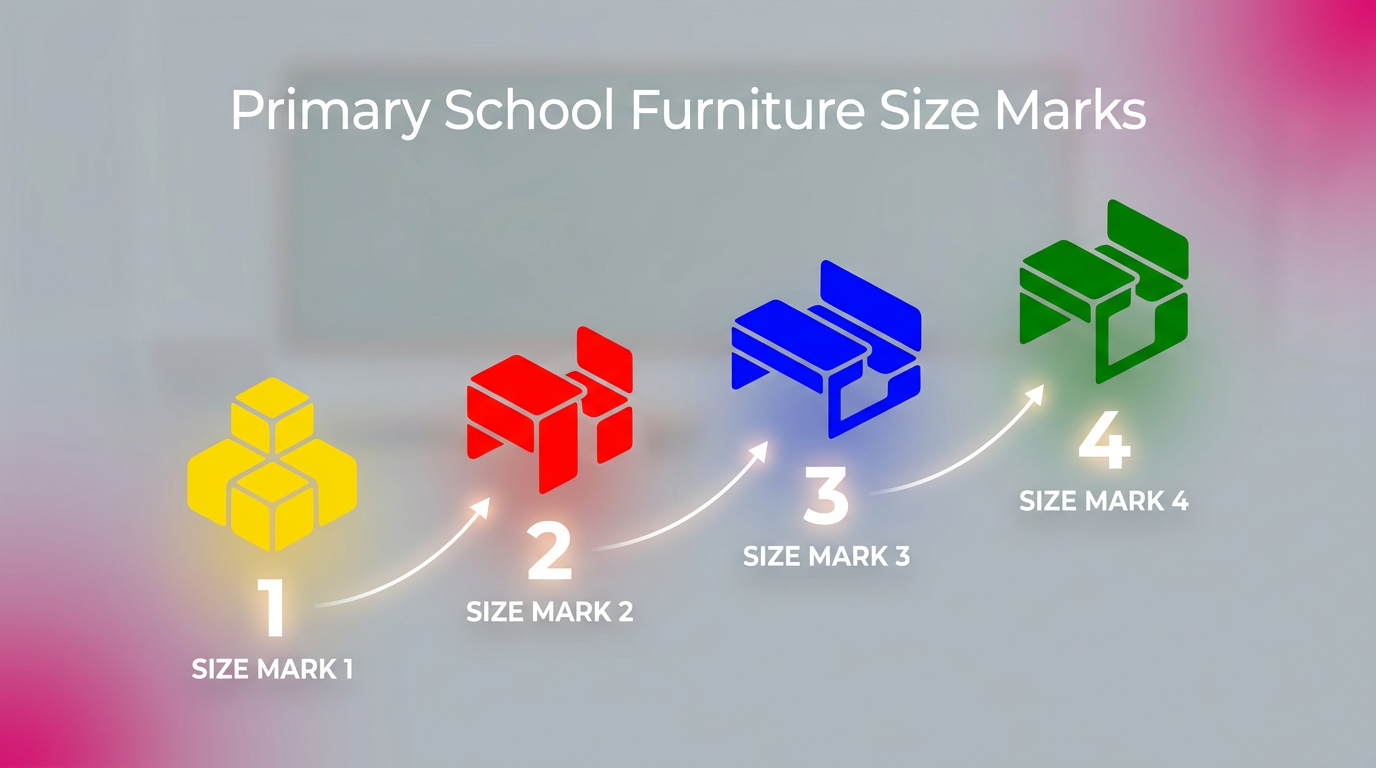
Key Stage 1 (KS1), the legal term for schooling for ages 5 to 7, and Key Stage 2 (KS2), for ages 7 to 11, have different size requirements. The table below provides a clear classroom table height guide and corresponding chair sizes. We recommend measuring a sample of your pupils, especially in classrooms with mixed-age groups, to ensure you select the most appropriate size mark. Remember, the chair and table must be matched to achieve the correct posture.
| Size Mark | Colour Code | Recommended Age | UK Key Stage | Chair Seat Height (mm) | Table Height (mm) |
|---|---|---|---|---|---|
| Size Mark 1 | Yellow | 3 – 4 Years | EYFS | 260 | 460 |
| Size Mark 2 | Red | 4 – 6 Years | EYFS / KS1 | 310 | 530 |
| Size Mark 3 | Blue | 6 – 8 Years | KS1 | 350 | 590 |
| Size Mark 4 | Green | 8 – 11 Years | KS2 | 380 | 640 |
| Size Mark 5 | Brown | 11 – 14 Years | KS2 / KS3 | 430 | 710 |
Data compiled from BS EN 1729 standard guidelines. For a more detailed breakdown, see our complete guide to primary school tables and chairs for UK schools.
The 5-Step Checklist for Choosing Ergonomic Primary School Furniture
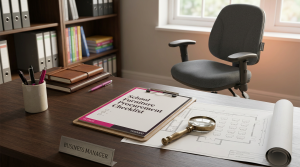
Procuring furniture can feel overwhelming. To simplify the process, we’ve developed a practical 5-step checklist for School Business Managers and Headteachers. Following these steps will help you make a confident and compliant choice.
- Verify BS EN 1729 Compliance: Before you even consider price or colour, ask the supplier for proof of compliance with both Part 1 and Part 2 of the bs en 1729 furniture standards. Reputable suppliers will have this information readily available. The British Educational Suppliers Association (BESA) Code of Practice (2024) requires members to supply goods fit for purpose, and this standard is the key indicator.
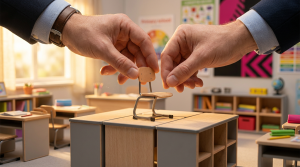
- Measure Your Pupils & Match to Size Marks: Use the sizing chart above. Identify the primary age group for each classroom and select the corresponding size mark. For a quick check, measure the lower leg length (floor to back of the knee) of a few pupils – it should roughly match the chair seat height.
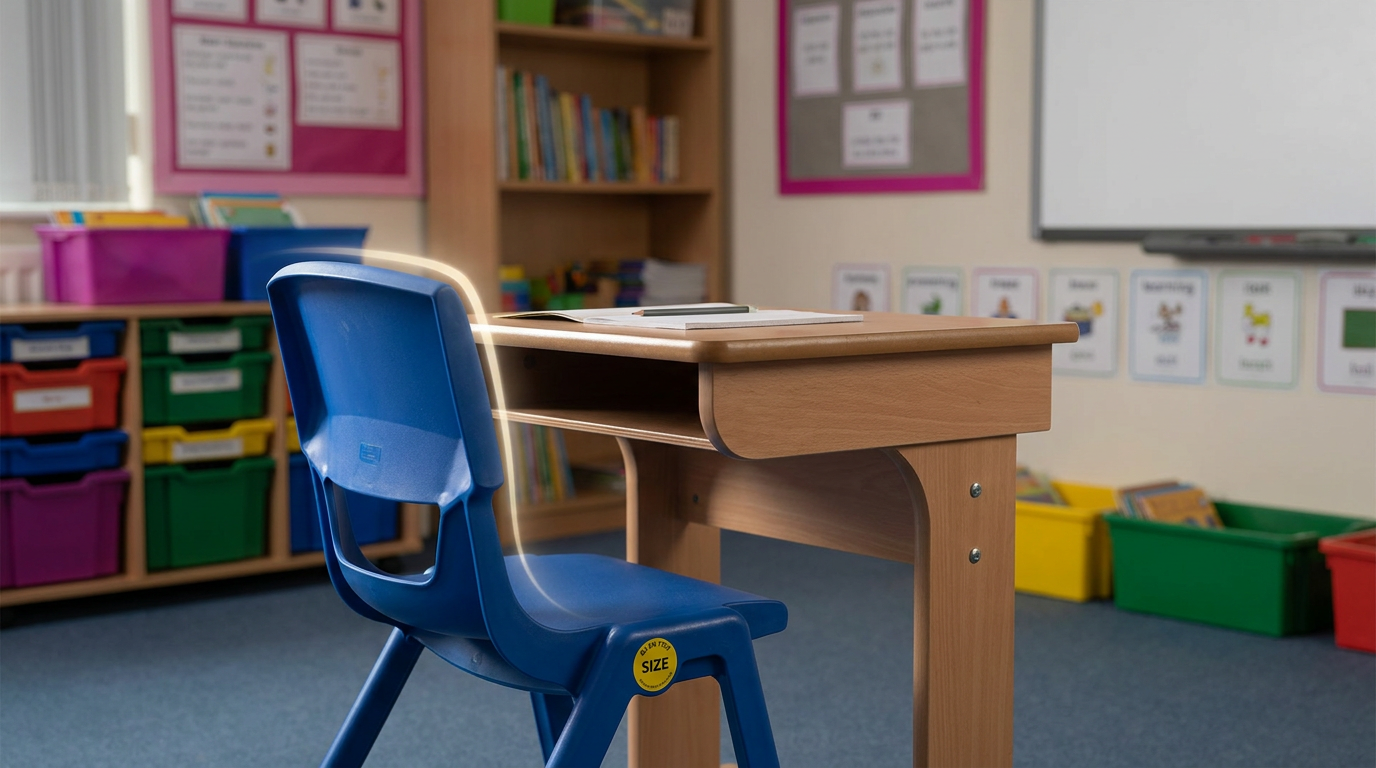
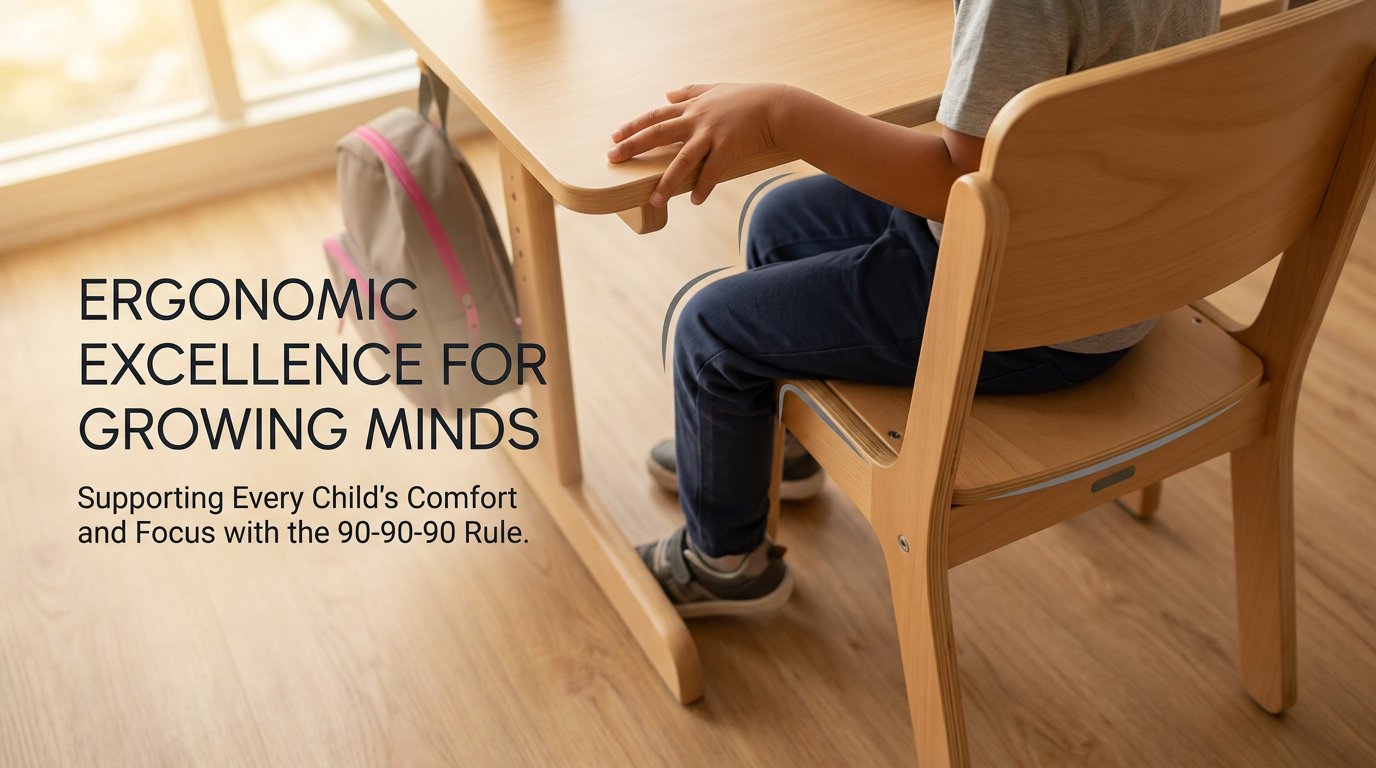
- Assess Posture (The 90-90-90 Rule): This is the golden rule of ergonomics. When a child is seated correctly, their body should form three 90-degree angles:
- Ankles: Feet are flat on the floor.
- Knees: Bent at a 90-degree angle.
- Hips: Bent at a 90-degree angle, with their back supported by the chair.
Their elbows should also rest comfortably at a 90-degree angle on the tabletop.
- Evaluate Table Surface & Shape: There are key ergonomic considerations for school tables. A matte or low-sheen laminate finish is preferable to a glossy one as it reduces glare and visual strain. Edges and corners should be rounded to prevent injury. Consider table shapes that facilitate your teaching style – trapezoidal or circular tables can be great for collaborative work.
- Consider Adjustability & Flexibility: While fixed-height furniture is the reliable standard, some scenarios benefit from flexibility. Chairs with some ‘give’ or flex in the backrest can support micro-movements, which aids concentration. This aligns with guidance from the World Health Organization (WHO) (2020) to limit sedentary time. For a guide on how to choose a student desk that meets these needs, consult a specialist.
Beyond Ergonomics: Durability, Materials, and Budget
While ergonomics is paramount, the practical realities of a school budget and environment mean durability and material choice are just as important. A chair isn’t ergonomic if it’s broken.
The most common material choices involve trade-offs:
- Polypropylene Shells: Modern, lightweight, easy to clean, and can be moulded into ergonomic shapes with excellent lumbar support. Often the most cost-effective option.
- Laminate MDF Tops: A durable and budget-friendly choice for tabletops, available in many colours and finishes. Look for high-pressure laminate (HPL) with a tough, sealed edge for longevity.
- Solid Wood: Extremely durable and offers a traditional aesthetic but is heavier and typically more expensive.
Frame construction is another critical factor. Fully-welded steel frames are significantly more reliable than self-assembly options and will withstand years of use. It’s crucial to think about the Total Cost of Ownership (TCO), not just the initial price. A cheaper chair that you must replace in two years is far more expensive than a compliant, durable one that lasts ten. For more advice, explore our guides on strategic cost-saving on classroom furniture and determining when to replace primary school tables and chairs.
Finally, consider features like stackability for easy storage and cleaning, and check the manufacturer’s warranty – a longer warranty is a strong indicator of quality and confidence in the product’s durability.
Frequently Asked Questions About Ergonomic School Furniture
What is ergonomic primary school furniture?
Ergonomic primary school furniture refers to tables and chairs specifically designed to fit a child’s body, support healthy posture, and reduce physical discomfort. It adheres to official standards like BS EN 1729 to ensure the size is correct for different age groups. By promoting a proper sitting position, this type of furniture helps improve concentration, minimise fidgeting, and support long-term physical well-being during crucial developmental years in the classroom.
What are the ergonomic considerations for school tables?
The primary ergonomic considerations for school tables are height, surface finish, and edge safety. The table’s height must be correctly matched to the chair height to allow a child’s elbows to rest at a 90-degree angle. The surface should be non-reflective to prevent eye strain from glare, and all edges and corners should be smoothly rounded to prevent bumps and scrapes during daily use.
How do you choose the right student desk?
To choose the right student desk, you must first match its height to the correct chair size using the BS EN 1729 size marks for your pupils’ age group. Next, consider the desk’s primary function – is it for individual focus or collaborative group work? This will inform an effective shape and size. Finally, we recommend you assess its material durability, stability, and safety features, such as rounded corners, to ensure it’s a sound long-term investment.
What is the 90-90-90 rule for seating?
The 90-90-90 rule is a simple ergonomic guideline for achieving an effective, low-stress seated posture. It dictates that a person’s ankles, knees, and hips should each be bent at approximately a 90-degree angle. For a child, this means their feet are resting flat on the floor (not dangling) while their back is supported. This posture minimises strain and is the goal when selecting correctly sized furniture.
What are the UK furniture size marks?
The UK furniture size marks are a colour-coded system derived from the BS EN 1729 standard to simplify choosing the correct size of school furniture. For primary schools, the key marks range from Size Mark 2 (Red, ages 4-6) to Size Mark 4 (Green, ages 8-11). Each colour corresponds to a specific chair and table height, ensuring an appropriate ergonomic fit for children as they grow through the key stages.
Why is a waterfall seat edge important on a school chair?
A waterfall seat edge, which curves downwards at the front, is vital for preventing pressure on the back of a child’s legs. A sharp, 90-degree edge can dig into the thighs, restricting blood flow and causing discomfort, numbness, and fidgeting. The rounded waterfall design removes this pressure point, significantly improving comfort during long periods of sitting and allowing pupils to focus better on their lessons.
Should we buy adjustable or fixed-height furniture?
This decision depends on your school’s specific needs and budget. Fixed-height furniture is generally more reliable, cost-effective, and effective for classrooms with a single, distinct age group. Adjustable furniture provides excellent flexibility for mixed-age classes or libraries used by multiple year groups. However, it typically has a higher initial cost and more moving parts that could require maintenance over time.
How does good ergonomics improve learning?
Good ergonomics improves learning by fundamentally reducing physical distractions and discomfort for the pupil. When a child is seated comfortably in a chair and at a table that fits their body, they are far less likely to fidget, slouch, or feel pain. This frees up their mental and physical energy to be directed towards the lesson, resulting in better concentration, longer attention spans, and improved information retention.
Is plastic or wood better for primary school chairs?
Both materials have distinct advantages for school environments. Modern one-piece polypropylene (plastic) chairs are lightweight, highly durable, easy to clean, and can be ergonomically moulded. Traditional wooden or wood-and-steel chairs are exceptionally strong and offer a classic aesthetic but are often heavier and more expensive. An effective choice depends on your priorities regarding budget, desired look, and the need for easy classroom rearrangement.
What does EYFS say about furniture?
The Early Years Foundation Stage (EYFS) statutory framework from the Department for Education (DfE) mandates that premises, furniture, and equipment must be safe and suitable for their purpose. While it doesn’t specify BS EN 1729, it requires a safe and secure environment. This means choosing furniture that is stable, appropriately sized, and free of hazards, which naturally aligns with the principles of ergonomic standards. Following our guide helps with ensuring EYFS compliance.
Important Considerations
This guide is based on the BS EN 1729 standard, which provides an excellent framework for the majority of pupils. However, in any classroom, there will be children who are taller or shorter than average for their age. Fixed-height furniture represents a best-fit compromise. For children with specific postural or accessibility needs (e.g., requiring a wheelchair or specialised seating), a separate, individual assessment by an occupational therapist is essential.
While compliant fixed-height chairs and tables are the standard, schools can explore alternatives to encourage more movement. These include height-adjustable desks that allow for sit-stand working, or dynamic seating like wobble stools or floor cushions for short periods in designated zones. These can be excellent additions but may require different classroom management strategies and are typically used to supplement, not replace, standard ergonomic furniture.
Making the right choice involves balancing compliance, ergonomics, durability, and budget. For a large-scale refurbishment or new build, we strongly recommend consulting with an educational furniture specialist. An expert can conduct a site survey, help you analyse your school’s specific needs, and create a comprehensive space plan that ensures you achieve a safe, effective, and long-lasting learning environment.
Investing in Your Pupils’ Future: The Right Next Steps
Choosing the right ergonomic primary school furniture is a critical investment in both pupil well-being and educational outcomes. By prioritising BS EN 1729 compliance, correctly matching size marks to your pupils, and considering the total cost of ownership over initial price, you create a learning environment that is safe, comfortable, and conducive to concentration. This foundational step supports healthy physical development for years to come.
At Cost Cutters UK, we have over 35 years of experience helping schools navigate these decisions, and we’re Rated Excellent On Trustpilot. Our team understands the unique challenges of educational procurement, from offering Bulk Buy Discounts to flexible payment options like Credit Accounts Or Pay Flexibly. If you need help planning your next classroom fit-out or require guidance on bulk purchasing, request a free space plan and quote today. With our “Design To Install We Do It All!” service, we make the process simple, Saving Time & Stress.
References
- Health and Safety Executive (HSE) – UK Government Guidance. Provides the legal framework and practical advice for ergonomic workstation setup in the UK, forming the basis of workplace health and safety.
- European Agency for Safety and Health at Work (EU-OSHA) – EU Research Body. Highlights that musculoskeletal disorders are the most common work-related health problem in Europe, emphasizing the need for early prevention.
- Department for Education – UK Government Statutory Framework. Mandates that all equipment and furniture in early years settings must be safe and suitable for purpose, a key welfare requirement.
- British Educational Suppliers Association (BESA) – UK Industry Association. Its Code of Practice (2024) requires members to supply goods that are fit for their intended educational purpose and meet relevant safety standards like BS EN 1729.
- World Health Organization (WHO) – Global Health Guidelines (2020). Recommends that children and adolescents should limit the amount of time spent being sedentary, reinforcing the need for ergonomic and flexible school environments.
- Statista – Market Data Research (2024). Provides market data showing the significant scale of furniture as a business and institutional investment in the UK.
Investing in Your Pupils’ Future: The Right Next Steps
In summary, choosing the right ergonomic primary school furniture is a critical investment in both pupil well-being and educational outcomes. By prioritising BS EN 1729 compliance, correctly matching size marks to your pupils, and considering the total cost of ownership over initial price, you create a learning environment that is safe, comfortable, and conducive to concentration. This foundational step supports healthy physical development for years to come.
At Costcutters UK, we have over 35 years of experience helping schools navigate these decisions. Our team understands the unique challenges of educational procurement. If you need help planning your next classroom fit-out or require guidance on bulk purchasing, request a free space plan and quote today to ensure your investment is a success.
Frequently Asked Questions About Ergonomic School Furniture
What is ergonomic primary school furniture?
Ergonomic primary school furniture consists of tables and chairs specifically designed to fit a child’s body, support healthy posture, and reduce physical discomfort. It adheres to official standards like BS EN 1729 to ensure sizing is appropriate for different age groups and key stages. By providing correct support, this furniture helps improve a pupil’s concentration, overall well-being, and long-term physical development in the classroom environment.
What are the ergonomic considerations for school tables?
The primary ergonomic considerations for school tables are height, surface finish, and edge safety. The table’s height must be correctly paired with the chair height to allow a pupil’s elbows