Cost-Saving Classroom Furniture: A Strategic Guide for UK Schools
🎯 Key Takeaway
Achieving cost-saving classroom furniture involves a strategic approach that looks beyond the initial price tag to consider total cost of ownership, durability, and smart procurement methods. For UK schools, this means leveraging bulk discounts, compliant products, and long-term value.
• Calculate the Total Cost of Ownership (TCO), not just the ticket price, by factoring in durability, warranty, and replacement frequency.
• Utilise UK-specific Public Sector Buying Organisations (PSBOs) like ESPO and YPO for pre-vetted suppliers and competitive pricing.
• Prioritise furniture that meets BS EN 1729 standards for ergonomics and safety, reducing long-term risks and replacement costs.This guide provides actionable strategies for School Business Managers (SBMs) to maximise their budgets and create effective learning environments.
For school business managers and headteachers across the UK, balancing shrinking budgets with the need for high-quality learning environments is a constant challenge. For cost-saving classroom furniture, the temptation to choose the cheapest option is strong. However, true economy isn’t found on the price tag alone. It’s achieved through strategic education furniture procurement that prioritises long-term value, durability, and functionality. This guide moves beyond initial cost to explore a more robust financial strategy. We will cover how to calculate the Total Cost of Ownership (TCO), use smart buying tactics, and understand the crucial role of durability and warranties in protecting your school’s investment. This approach ensures you get more from your budget whilst exploring our complete range of school equipment.
👤 Written by: Costcutters UK Content Team
Reviewed by: Costcutters UK Editorial Team, 35+ Years of UK Education Sector Expertise
Last updated: 22 April 2026
ℹ️ Transparency Disclosure: This article explores strategies for cost-effective school furniture procurement based on over 35 years of industry experience and analysis of UK purchasing frameworks. Some links may connect to our services or product pages. All information is verified by our editorial team to ensure accuracy and relevance for UK educational institutions.
Beyond the Price Tag: Calculating the True Cost of Your Classroom Furniture
The most effective way to secure genuine savings is to shift focus from purchase price to Total Cost of Ownership (TCO). TCO is a financial calculation that reveals the full cost of an asset throughout its entire lifecycle, not just its initial acquisition cost. For classroom furniture, this includes the purchase price plus all subsequent expenses, such as maintenance, repairs, and eventual disposal and replacement.

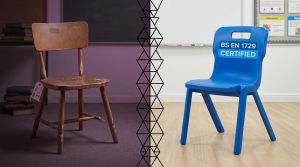
Opting for seemingly budget-friendly school furniture with a low upfront cost can create a false economy. Research from industry bodies like the Furniture Industry Research Association (FIRA) suggests that non-compliant, low-spec furniture may need replacing in as little as 3-5 years. In contrast, well-made, compliant furniture can last 10-15 years or more. Consider the hidden costs associated with the cheaper option:
- Frequent Replacements: Buying cheap often means buying twice, or even three times, within the lifespan of one quality purchase.
- Administrative Overheads: Staff time is wasted sourcing replacements, managing repairs, and processing multiple small orders.
- Disposal Costs: Disposing of broken furniture incurs costs and logistical challenges.
- Disruption: Broken or unsafe furniture disrupts lessons and can even lead to classroom closures.
Therefore, a £50 chair that lasts 15 years has a TCO of £3.33 per year. A £30 chair that needs replacing every 4 years has a TCO of £7.50 per year, plus the associated administrative and disposal costs. This calculation demonstrates how a higher initial investment in quality, cost-saving classroom furniture delivers superior long-term value.
Strategic Procurement: 4 Ways UK Schools Achieve Cost-Saving on Classroom Furniture
Strategic education furniture procurement is the cornerstone of maximising your budget. Rather than making reactive, piecemeal purchases, a planned approach allows schools to use their buying power and access better value. Here are four well-supported by research strategies UK schools use to achieve significant cost-saving on classroom furniture.
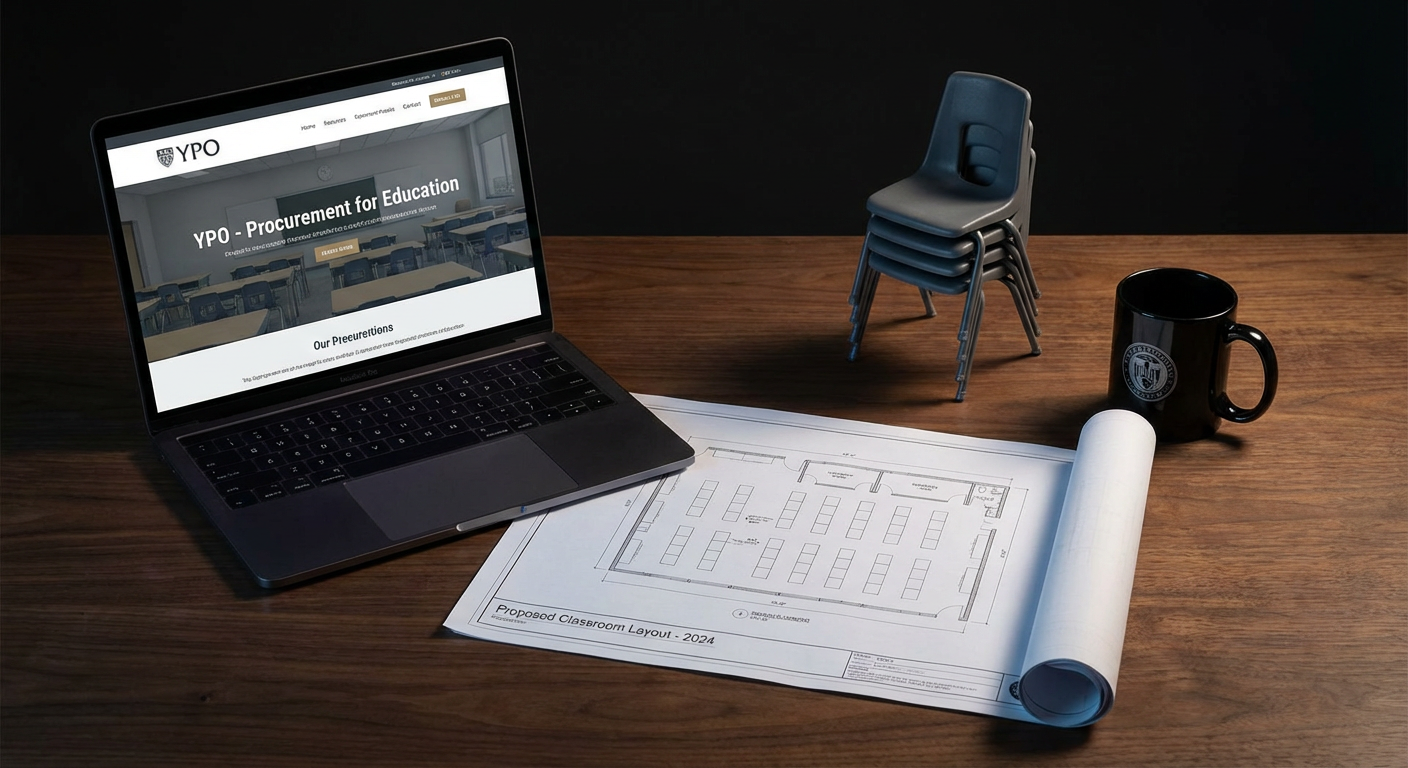
- Use Public Sector Buying Organisations (PSBOs): Organisations like the Yorkshire Purchasing Organisation (YPO) and ESPO are invaluable resources. A PSBO, an entity that creates procurement frameworks for public bodies, does the hard work for you. According to YPO (2026), their frameworks provide access to pre-vetted suppliers whose products are already assessed for compliance, quality, and competitive pricing. This saves enormous amounts of time and ensures you are buying from a trusted source, mitigating risk.
- use Bulk Buy Discounts: This is one of the most direct ways to save money. When undertaking a multi-classroom or whole-school refurbishment, consolidate your requirements into a single, large order. Suppliers are almost typically able to offer a significant school furniture bulk discount on large-volume purchases. Our experience shows this can lead to savings of 10-20% compared to buying items for one classroom at a time. This approach requires planning but yields substantial financial rewards.
- Implement a Phased Refurbishment Plan: If a full-scale refurbishment isn’t financially feasible in one go, a phased approach is a smart alternative. Work with a supplier to create a multi-year plan, tackling one year group or department at a time. This allows you to spread the cost over several budget cycles while still benefiting from a cohesive plan and consistent design. A good supplier will help you lock in designs to ensure continuity.
- Utilise Free, Expert Space Planning: Over-ordering or buying incorrectly sized furniture is a common and costly mistake. We strongly recommend partnering with a supplier who offers a free space planning service. Our “Design To Install We Do It All!” approach uses expert planners to create 2D and 3D layouts. This ensures your space is maximised, compliant with safety standards, and furnished with the exact quantity of items needed, preventing wasted expenditure.
Case Study: A Multi-Academy Trust Scenario
Challenge: A trust needed to refurbish 15 primary classrooms but faced a tight capital budget. Initial quotes for cheap, imported furniture were low, but the estates manager was rightly concerned about safety compliance and high replacement costs within 5 years.
Solution: We partnered with the trust to develop a strategic procurement plan. They committed to the full project to secure a significant Bulk Buy Discount but arranged for delivery and payment to be phased over two financial years, aligning with their budget cycle. They chose BS EN 1729 compliant furniture with a robust 10-year warranty.
Results: The trust achieved a 17% bulk discount, saving over £15,000. The projected 15-year TCO was 40% lower than the cheaper, non-compliant alternative by eliminating at least two full replacement cycles.
Key Insight: A collaborative partnership with your supplier can unlock creative financial solutions that deliver both immediate savings and profound long-term value, Saving Time & Stress.
The Smart Buyer’s Guide to Cost-Effective Furniture
Choosing the right type of furniture is just as important as the procurement method. Certain product categories are inherently designed to offer better value and flexibility, stretching your budget further. In our experience, focussing on adaptability and bundled value is key to smart, cost-saving classroom furniture selection.
First, consider classroom furniture packs. These bundles, which typically include a set number of tables and chairs for a standard classroom, are a cornerstone of budget-friendly purchasing. Suppliers like Edu-Quip (2026) highlight these deals because they offer savings of 5-15% compared to buying the items individually. They simplify the ordering process and provide a clear, upfront cost for a complete setup, making them an excellent choice for new classrooms or total refurbishments.
Second, prioritise modular and flexible furniture. The modern classroom is a dynamic space. Furniture that can be easily reconfigured for group work, individual study, or presentations has a much longer useful life. As noted by suppliers like UK Educational Furniture (2026), modular soft seating and trapezoidal tables allow you to adapt a space without buying new items. This future-proofs your investment against changing pedagogical needs and is a key component of Long-Term Value & Durability.
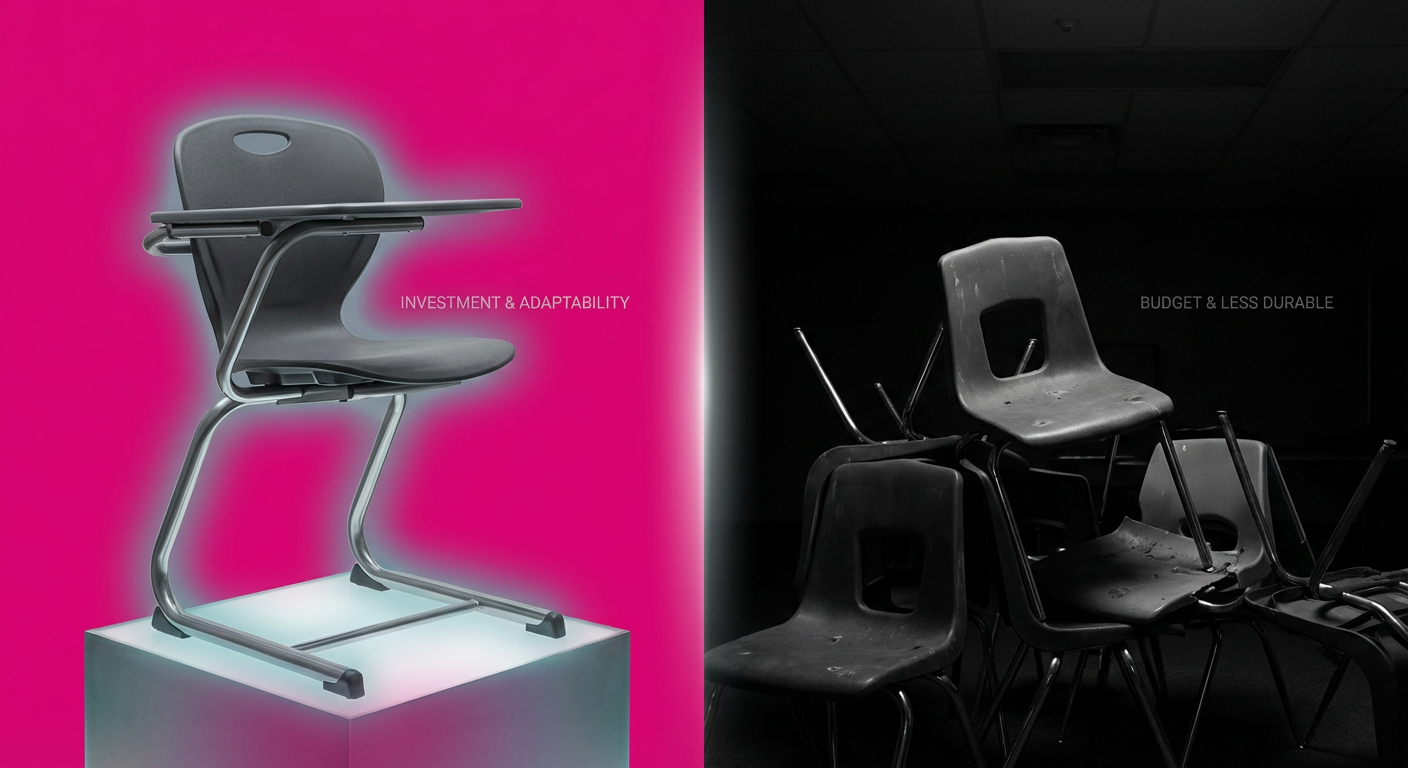
Finally, whilst refurbished furniture is an option, it requires caution. An article from Coggin-SOS (2025) discusses the potential savings, but we advise clients to be aware of the trade-offs. Warranties are often limited or non-existent, and items may not meet current BS EN 1729 safety standards. The table below compares these choices.
| Consideration | Budget Option (e.g., Refurbished/Imported) | Quality Investment (e.g., BS EN 1729 Compliant) | Long-Term Budget Impact |
|---|---|---|---|
| Typical Lifespan | 3-5 Years | 10-15+ Years | Quality option avoids 2-3 replacement cycles. |
| Warranty | 0-1 Year (if any) | 5-15 Years | Protects budget against premature failure. |
| Safety Compliance | Often non-compliant or unverified | Certified to BS EN 1729 | Mitigates risk and ensures pupil safety. |
| Annualised Cost | Higher due to frequent replacement | Lower over the full product lifecycle | A £50 chair with a 15-year life is cheaper than a £30 chair with a 4-year life. |
| Resale/Repurpose Value | Negligible | Moderate | Durable furniture can be repurposed for other areas. |
Durability and Warranty: Your Best Defence for Long-Term Savings
The most robust defence for your budget is choosing furniture built to withstand the rigours of a school environment. Durability isn’t a luxury; it’s a core component of any effective cost-saving classroom furniture strategy. This comes down to two key factors: materials and manufacturing standards, and the warranty that backs them up.
First, examine the material specifications. For tables, look for thick, impact-resistant edges and scratch-resistant tops like Solid Grade Laminate (SGL). For chairs, fully-welded steel frames are significantly more durable than self-assembly alternatives. High-impact polypropylene shells resist cracking and are easy to clean. These features may add a small amount to the initial cost but pay for themselves many times over by preventing breakages and eliminating repair costs.
Second, insist on products that meet BS EN 1729. This is the British and European standard that defines appropriate sizes, heights, and structural integrity for educational furniture. Part 1 ensures the furniture is ergonomically correct for the age of the child, supporting good posture. Part 2 is a series of strength and stability tests. Compliance with this standard is your assurance that the furniture is not only safe but also built to last. It is a non-negotiable benchmark for responsible procurement. You can view our commitment to these standards via our UK safety and quality accreditations.
Finally, a strong warranty is your financial guarantee. A supplier confident in their product’s durability will offer a long warranty, typically 5, 10, or even 15 years. This transfers the risk of premature failure from your school’s budget to the manufacturer. Don’t settle for a standard 1-year guarantee; a lengthy warranty is a clear indicator of quality and a critical element of Long-Term Value & Durability.
Frequently Asked Questions
What is cost-saving classroom furniture?
Cost-saving classroom furniture refers to products that provide an effective long-term value, not just the lowest initial price. This is achieved by selecting durable, compliant items with a low Total Cost of Ownership (TCO). It involves smart procurement strategies to ensure the furniture lasts for many years, minimising replacement and repair costs for your school.
How can I get a school furniture bulk discount?
You can secure a school furniture bulk discount by consolidating your requirements into a single, large order for a supplier. Instead of buying for one classroom at a time, plan for a whole department or year group. Request a formal quote for this larger project, as your increased purchasing power gives you significant use for negotiating a better price.
Are classroom furniture packs really cheaper?
Yes, classroom furniture packs are almost typically more affordable than purchasing the equivalent tables and chairs separately. Suppliers bundle these items to offer value and simplify the ordering process for a standard classroom. These packs typically represent a saving of 5-15%, making them an excellent and efficient option for maximising a tight budget.
Is refurbished school furniture a good idea?
Refurbished furniture can offer initial savings but carries significant risks that may increase long-term costs. It often comes with a limited or non-existent warranty and may not comply with current BS EN 1729 safety standards. This can lead to higher repair bills and earlier replacement, making it a gamble for budget holders seeking long-term value.
What does BS EN 1729 compliant mean and why does it matter for cost?
BS EN 1729 is the British and European standard for the strength, stability, and ergonomic sizing of educational furniture. Compliant furniture is inherently more durable and safer, which directly reduces repair and replacement costs over its lifespan. Adhering to this standard is a crucial part of a long-term cost-saving strategy, as it ensures longevity and minimises risk.
What is the most durable type of classroom tabletop?
For maximum durability and an effective long-term value, a Solid Grade Laminate (SGL) tabletop is the superior choice. SGL is exceptionally resistant to scratches, impact, water, and heat, making it effective for a demanding school environment. Although its initial cost is higher than standard MDF, its long lifespan makes it far more cost-effective over time by reducing replacement needs.
How long should a good quality classroom chair last?
A high-quality, BS EN 1729 compliant classroom chair should be expected to last for a minimum of 10 to 15 years. Reputable suppliers will support this with a manufacturer’s warranty of at least 10 years. This longevity is a critical factor in calculating your Total Cost of Ownership and ensuring your investment provides excellent long-term value for money.
Can I use a phased approach to buying furniture to spread the cost?
Yes, a phased refurbishment is an extremely effective strategy for managing large projects on a tight budget. You can prioritise the most urgent areas first and plan to update other zones in subsequent financial years. A good supplier can help you develop a multi-year plan, ensuring consistency in style and colour across all phases of the project.
What are the benefits of modular classroom furniture?
Modular furniture provides excellent long-term value because of its inherent flexibility and adaptability. Pieces can be easily reconfigured to support different teaching styles, class sizes, or group activities. This versatility means the furniture remains useful as educational needs evolve, preventing the need to purchase new sets for different purposes and future-proofing your investment.
How can a free space planning service save my school money?
A free space planning service prevents expensive purchasing errors by ensuring you buy the correct quantity and size of furniture. Experts create optimised layouts that comply with safety regulations and maximise your space. By providing 2D or 3D visualisations before you buy, this service helps you avoid the cost of returning items or having underutilised furniture.
Important Considerations
This guide provides strategic advice, but every school’s context is unique. The specific savings realised will depend on supplier negotiations, project scale, and existing facilities. The longevity estimates provided are based on industry averages for compliant products under normal use; exceptional wear and tear may alter these figures. Also, this article focuses on procurement strategy and does not explore the pedagogical impact of different furniture choices.
Beyond purchasing new, schools can explore alternatives. A phased refurbishment, as mentioned, allows costs to be spread over several budget years. Another option is a furniture audit to identify items that can be repaired or repurposed, rather than replaced. For certain needs, leasing furniture can be a viable option, particularly for temporary classrooms, though it is often less cost-effective in the long term compared to a quality purchase.
For any significant refurbishment project, we strongly recommend consulting with an educational furniture specialist. An expert can provide a free, no-obligation space planning consultation to ensure your layout is efficient, safe, and effective. They can also help navigate complex procurement frameworks and build a quote that maximises value for money, ensuring your investment serves students and staff well for years to come.
Your Partner in Creating Affordable, High-Quality Learning Spaces
achieving effective cost-saving classroom furniture is a balance of smart procurement, a focus on long-term value, and selecting durable, compliant products. By moving beyond the initial price tag and calculating the Total Cost of Ownership, UK schools can make sustainable investments that support learning for over a decade. Strategies like using procurement frameworks, buying in bulk with classroom furniture packs, and choosing flexible furniture are key to maximising every pound in your budget. We’ve been Rated Excellent On Trustpilot for our commitment to this approach.
With over 35 years of experience partnering with UK schools, Costcutters UK understands these challenges. We offer flexible payment options, allowing you to establish Credit Accounts Or Pay Flexibly. Our team provides expert advice and a free space planning service to help you design an optimal and budget-friendly learning environment. Explore our range of cost-saving furniture or request a free, no-obligation quote today to see how our “Design To Install We Do It All!” service can help you achieve your goals.
References
- Edu-Quip – Supplier Information (2026). Their product listings highlight the availability and affordability of classroom furniture bundle deals for schools.
- Coggin-SOS – Industry Article (2025). This article discusses the pros and cons of using refurbished furniture as a method to stretch school budgets.
- UK Educational Furniture – Product Catalogue (2026). This catalogue showcases a variety of options for modular and soft seating designed for flexible learning spaces.
- YPO (Yorkshire Purchasing Organisation) – Procurement Framework (2026). The site provides clear examples of pre-vetted classroom table and chair packs available through a public sector framework.
- Direct Educational Furniture – Supplier Information (2025). Their website states a specific saving of 5% on exclusive classroom furniture packs, demonstrating the value of bundles.
Conclusion
Your Partner in Creating Affordable, High-Quality Learning Spaces
In summary, effective cost-saving classroom furniture is a balance of smart procurement, a focus on long-term value, and selecting durable, compliant products. By moving beyond the initial price tag and calculating the Total Cost of Ownership, UK schools can make sustainable investments that support learning for over a decade. Strategies like using procurement frameworks, buying in bulk with classroom furniture packs, and choosing flexible furniture are key to maximising every pound in your budget.