Debunking School Furniture Myths: An Evidence-Based Guide for UK Schools
🎯 Key Takeaway
The most common school furniture myths lead to poor value, non-compliance, and negative impacts on learning; that long-term value outweighs initial cost. The key takeaway is that overlooking these myths results in wasted budgets and environments that hinder student development. The cheapest quote often results in higher total cost of ownership due to repairs and early replacement. Furthermore, ergonomic furniture compliant with BS EN 1729 is an educational necessity, not a luxury. Finally, flexible learning spaces directly support modern UK pedagogy and improve student engagement. Read on to discover the evidence-based facts that will empower you to make smarter, more defensible furniture investments for your school.
As a School Business Manager, you face the constant challenge of stretching a tight budget whilst providing an effective possible resources for students. For procurement, it’s tempting to believe that the lowest price tag represents an effective deal. However, our 35+ years of experience shows that many common beliefs about procurement are actually costly school furniture myths. These misconceptions can lead to wasted funds, non-compliant environments, and a negative impact on learning outcomes. As of August 2026, understanding the facts is more critical than ever. This guide will debunk five of the most pervasive myths, providing an evidence-based framework to help you make smarter, long-term investments that truly benefit your school community.
Written by: Content Team | Reviewed by: Editorial Team, Industry Specialists with 35+ Years Experience; Rated Excellent On Trustpilot
Last updated: 15 August 2026
ℹ️ Transparency Disclosure: This article explores school furniture procurement based on our 35+ years of industry experience and analysis of official UK and EU standards. Our commitment to transparency is core to our mission. Some links may connect to our comprehensive services. All information is verified by our editorial team to ensure accuracy and relevance.
Myth 1: ‘The Cheapest Quote is the Best Value’
This is perhaps the most damaging of all common school furniture myths. The cheapest initial quote is very rarely an effective long-term value for your school. The initial price tag is only one part of the financial picture. To make a truly informed decision, you must consider the Total Cost of Ownership (TCO), a calculation that includes the initial purchase price plus all costs incurred during the product’s lifespan, such as repairs, maintenance, and eventual replacement.
A lower upfront cost often signals the use of inferior materials, weaker construction, and shorter warranty periods. This can lead to a cycle of frequent repairs and the need for a full replacement much sooner than anticipated, ultimately costing your school more. A well-planned strategic budget spending strategy prioritises longevity. As the British Educational Suppliers Association (BESA) Code of Practice implies, furniture must be ‘fit for purpose’ in a demanding school environment, a standard that the cheapest options frequently fail to meet. A higher-quality item, though more expensive initially, typically offers a longer lifespan and a more reliable warranty, delivering a lower TCO and better value for your school furniture budget.
The table below illustrates how a slightly higher initial investment can result in significant long-term savings.
| Cost Factor | Low-Cost Option (e.g., £5,000) | Quality Option (e.g., £8,000) | Notes |
|---|---|---|---|
| Initial Purchase Price | £5,000 | £8,000 | The most visible, but often misleading, figure. |
| Expected Lifespan | 3-5 Years | 10-15 Years | Quality furniture is built to last in a school environment. |
| Warranty | 1-2 Years | 10+ Years | A longer warranty indicates manufacturer confidence in durability. |
| Estimated Repair Costs | £300 per year (Years 3-5) | £50 per year (Years 6-10) | Lower quality items require more frequent maintenance. |
| Total Cost Over 10 Years | £10,900 (incl. One replacement) | £8,250 | The quality option delivers over 24% savings in this scenario. |
Myth 2: ‘One Size Fits All Students’
This is a dangerous myth that poses a significant compliance and wellbeing risk. The idea that a single chair or desk size is adequate for an entire key stage is fundamentally flawed. Children are not miniature adults; their bodies are developing, and ill-fitting furniture can lead to poor posture, discomfort, and long-term musculoskeletal issues. Research from the European Agency for Safety and Health at Work (EU-OSHA) (2022) highlights that risk factors for these disorders often begin in youth due to poor ergonomics.
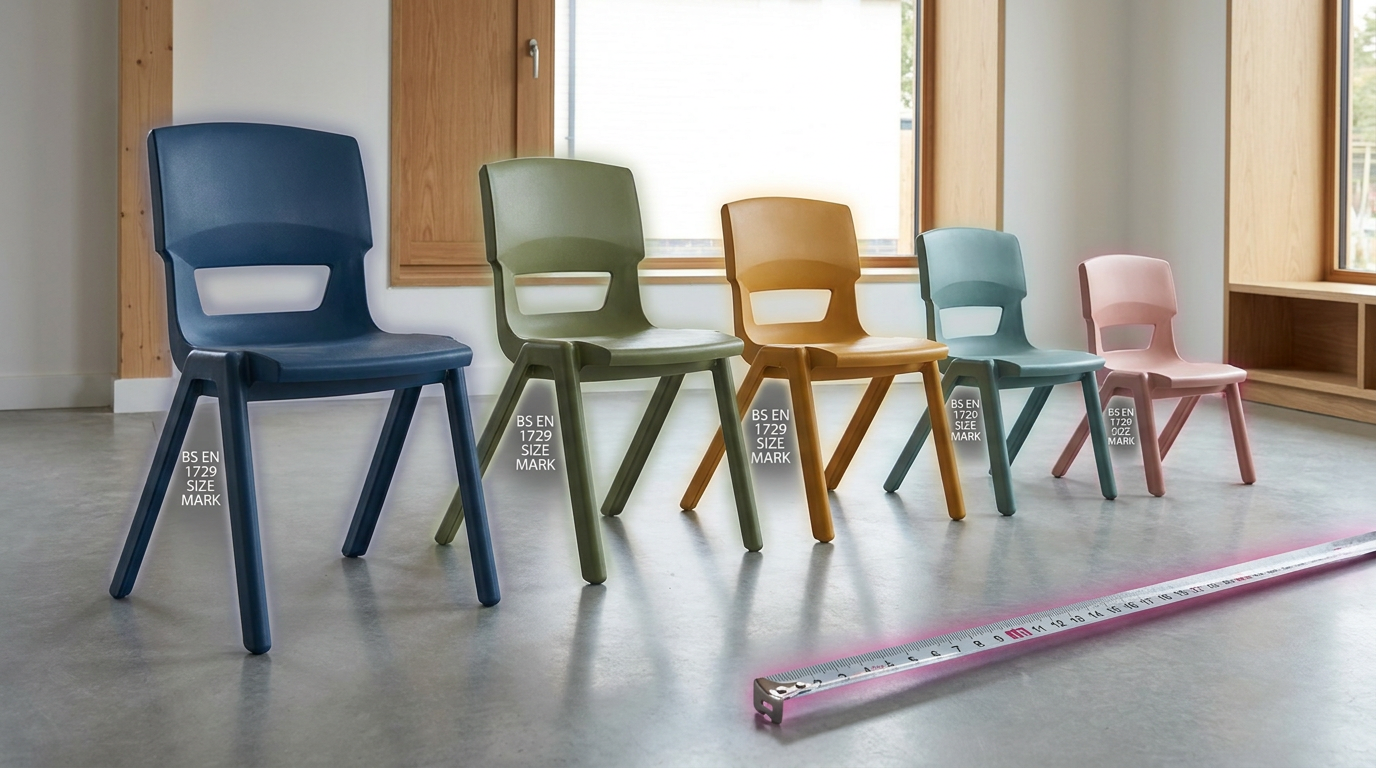
In the UK, the standard for this is BS EN 1729, which refers to the British and European standard specifically for educational furniture. It is split into two parts:
- Part 1: Specifies the appropriate size, shape, and ergonomic dimensions for furniture based on the height of the students using it. It uses a ‘size mark’ system to make matching furniture to age groups straightforward.
- Part 2: Sets the minimum safety requirements for strength, stability, and durability.
Adhering to these standards isn’t just best practice; it’s a core component of a school’s duty of care. The Health and Safety Executive (HSE), Great Britain’s national regulator for workplace health and safety, provides extensive guidance on ergonomics, the principles of which are directly applicable to protecting student health. Investing in correctly sized, ergonomic classroom chairs and tables improves student concentration by reducing fidgeting and discomfort, therefore creating a more effective learning environment. It’s a foundational element of student wellbeing.
Myth 3: ‘Traditional Layouts Are All You Need’
This belief is increasingly out of step with modern educational practice. While traditional rows of forward-facing desks have a place, particularly for examinations, they are poorly suited to the dynamic, collaborative teaching methods prevalent today. Modern pedagogy emphasises project-based learning, peer-to-peer collaboration, and personalised instruction – activities that are restricted by static furniture arrangements.
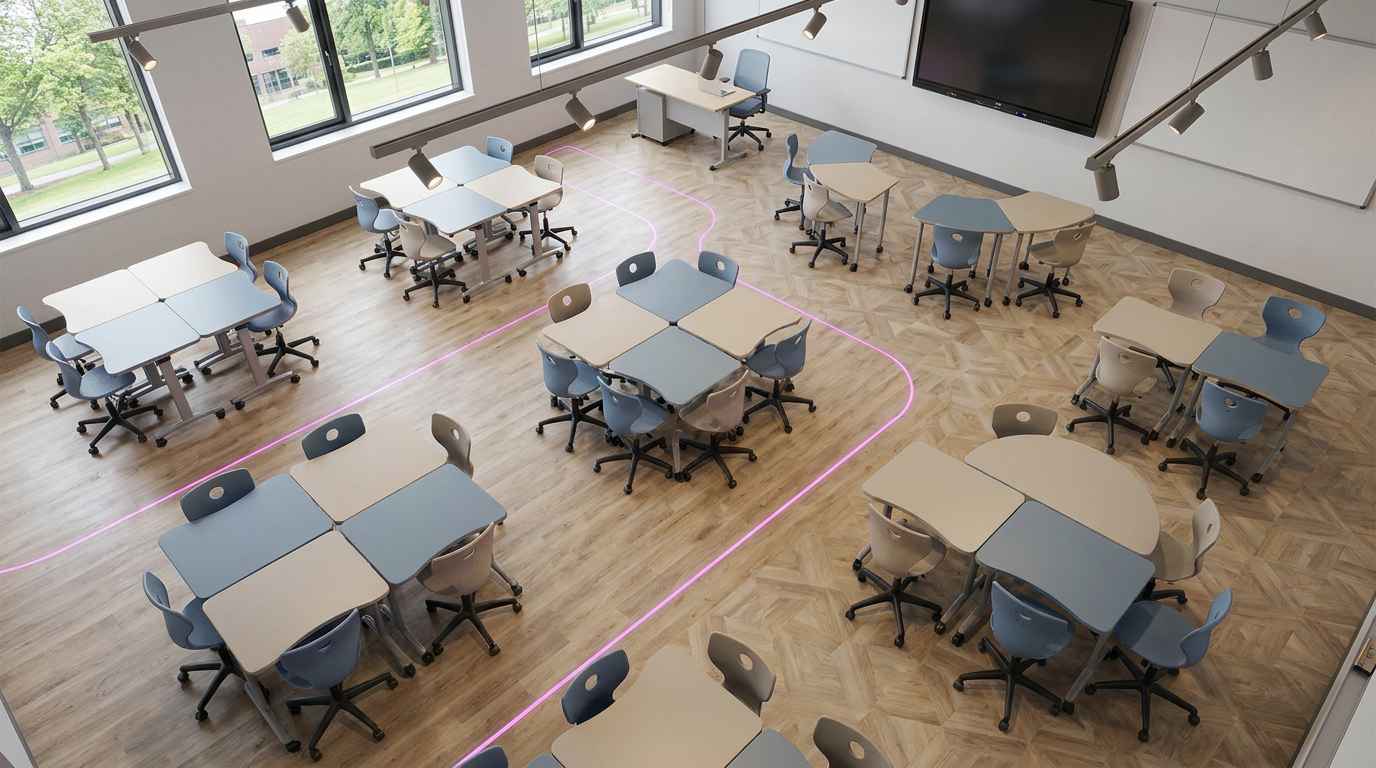
The solution lies in creating flexible learning spaces. This approach uses modular, mobile, and varied furniture to allow teachers and students to quickly reconfigure a room to suit the task at hand. Imagine a classroom that can shift from a lecture-style setup to small group pods, a presentation area, or individual quiet study zones in a matter of minutes. This adaptability is a powerful tool. It empowers teachers to use diverse instructional strategies and fosters student skills like autonomy, communication, and teamwork. Furthermore, this aligns with global health advice. Guidelines from the World Health Organization (WHO) (2020) recommend limiting sedentary time, a principle that flexible learning furniture actively supports by encouraging more movement and varied postures throughout the school day.
Hypothetical Scenario: A Secondary School Science Department
- Challenge: A science department found its fixed, heavy lab benches were hindering collaborative project work. Group experiments were awkward, and transitioning to theory lessons was inefficient, wasting valuable teaching time.
- Solution: The school invested in a ‘Design To Install’ service to create a flexible lab. They replaced fixed benches with a mix of mobile, height-adjustable tables and durable, stackable stools. A tiered seating area was added for demonstrations.
- Results: Teachers reported a 20% increase in time spent on practical activities. Student engagement scores in science lessons rose by 15% in the first term.
- Key Insight: Investing in flexible furniture isn’t just about aesthetics; it’s a direct investment in pedagogical effectiveness and maximising instructional time.
Myth 4: ‘Durability Isn’t as Important for Older Students’
This is a common and costly misconception. The assumption that secondary, college, or sixth-form students are less demanding on furniture is incorrect. While the nature of the wear and tear may change – perhaps less accidental paint and more deliberate graffiti or structural stress from heavier users – the intensity is often just as high, if not higher. Post-16 environments see high-traffic, near-constant use, requiring furniture that can withstand the rigours of a busy campus.
For these older age groups, specifying durable school furniture is critical for managing your budget and ensuring safety. Key features to look for include fully welded, heavy-gauge steel frames, tamper-proof fixings to prevent disassembly, and extremely hard-wearing surfaces like Solid Grade Laminate (SGL), which is resistant to scratches, heat, and chemicals. As members of the British Educational Suppliers Association (BESA), a UK trade association for educational product suppliers, we understand that products must be fit for their educational purpose. A long warranty (10 years or more) is a clear indicator of a manufacturer’s confidence in their product’s durability. Prioritising durability is one of the most effective strategies for preventing common furniture issues and directly lowers the Total Cost of Ownership discussed earlier.
Myth 5: ‘Colour and Style are Just Decoration’
This myth dismisses the powerful psychological impact of the physical environment on learning. While it’s true that function comes first, aesthetics are far from trivial. The concept of the environment as ‘the third teacher’ suggests that a well-designed space can actively support learning, foster a sense of pride, and improve student behaviour.
Colour psychology, the study of how colours affect human behaviour, offers practical insights for schools. Cool colours like blues and greens are often associated with calmness and concentration, making them effective for libraries, study halls, or quiet reading corners. In contrast, warmer colours like yellows and oranges can stimulate energy and creativity, which is well-suited for art studios, drama rooms, or collaborative breakout spaces.
A cohesive, modern, and thoughtfully designed aesthetic sends a powerful message to students: that they are valued and their learning environment matters. This can cultivate a greater sense of belonging and respect for school property, potentially even reducing instances of vandalism. It’s not about chasing trends; it’s about making intentional design choices that contribute to a positive and effective educational atmosphere.
Frequently Asked Questions About School Furniture
What are the most common school furniture myths?
The most prevalent school furniture myths include believing the cheapest quote is an effective value, that one size of furniture fits all students, and that traditional classroom layouts are typically sufficient. Other myths are that durability is less crucial for older students and that aesthetics like colour don’t impact learning. These misconceptions often lead to poor financial decisions and suboptimal learning environments that fail to support students and staff effectively.
Why is cheap school furniture often more expensive?
Cheap school furniture is often more expensive in the long run because of its higher Total Cost of Ownership (TCO). Low initial prices frequently mean inferior materials and construction, leading to a shorter product lifespan, more frequent and costly repairs, and the need for a full replacement sooner. A quality item with a longer warranty, although more expensive upfront, provides better value over a 5-to-10-year period.
What is the most used piece of furniture in a school?
The student chair is unequivocally the most used piece of furniture in any school. A single student can use their chair for up to 1,000 hours over the course of one academic year. This incredibly high usage rate highlights why it is strongly critical to invest in durable, high-quality, and ergonomic classroom chairs that are built to withstand constant use while supporting student health and concentration.
Does ergonomic furniture really make a difference for students?
Yes, ergonomic furniture makes a significant and measurable difference to both student health and their ability to learn effectively. Ergonomic classroom chairs and desks that are correctly sized for the student help prevent musculoskeletal issues and promote good posture. This improved physical comfort has been shown to increase concentration spans, reduce distracting fidgeting, and lead to better overall engagement during lessons.
What is BS EN 1729 and why is it important?
BS EN 1729 is the official British and European standard that governs the functional dimensions and safety requirements for chairs and tables in educational institutions. Part 1 ensures furniture is of an appropriate size for the child’s height, promoting good posture. Part 2 specifies the strength and stability needed for the classroom environment. Compliance is crucial for student safety, long-term health, and fulfilling a school’s duty of care.
Is flexible classroom furniture just a trend?
No, the move towards flexible furniture is a direct and practical response to the evolution of modern teaching methods. Contemporary pedagogy emphasises collaborative projects, group work, and varied learning activities, which static, traditional layouts cannot effectively support. Flexible learning spaces are a functional tool that allows teachers to adapt the physical environment to the lesson’s objective, thereby boosting student engagement.
How does classroom furniture colour affect student behaviour?
Colour can subtly influence student mood, focus, and energy levels within a learning environment. Educational psychology suggests that cool colours such as blues and greens may promote a sense of calm and concentration, making them effective for libraries or quiet zones. Conversely, warmer colours like yellows and oranges can help stimulate creativity and energy, making them well-suited for art rooms or collaborative project areas.
Are common education myths related to classroom setup?
Yes, many pervasive education myths are directly linked to the physical classroom environment. For example, the outdated belief that students must sit still and in silence to learn is directly challenged by the well-supported by research success of active and flexible learning spaces. Likewise, the need for size-appropriate, ergonomic furniture for a diverse student body debunks the idea that a ‘one-size-fits-all’ approach to education is effective.
What should a school look for when procuring durable furniture?
Schools should prioritise features specifically designed for high-use educational environments. Key indicators of durable school furniture include fully welded heavy-gauge metal frames, tamper-proof fixings, and exceptionally hard-wearing surfaces like Solid Grade Laminate (SGL). Typically check for certification to BS EN 1729 Part 2 for strength and stability, and look for long warranties of 10 years or more as a sign of quality.
How can schools manage a tight school furniture budget effectively?
The most effective strategy is to focus on long-term value over short-term price. We recommend developing a phased replacement plan to tackle the highest-priority areas first. Partnering with a specialist supplier who can offer free space planning helps maximise your investment. When evaluating options for your school furniture budget, typically calculate the total cost of ownership, including lifespan and warranty, not just the initial quote.
Important Considerations and Next Steps
This guide is based on established UK standards and our extensive industry experience. However, every school’s needs are unique, influenced by its specific student demographics, building constraints, and pedagogical goals. The specific costs and lifespans mentioned are illustrative and will vary based on supplier, materials, and usage intensity. Therefore, it’s essential to conduct your own due diligence.
Whilst this article champions modern, ergonomic, and flexible furniture, traditional options can still have a place in certain contexts, such as dedicated examination halls. The key is not to default to traditional layouts out of habit but to consciously choose furniture that actively supports the intended learning activity for each specific space within your school. A blended approach is often the most practical solution.
For any large-scale procurement or refurbishment projects, we strongly recommend consulting with an educational furniture specialist. An expert can conduct a site audit, provide a detailed space plan, and ensure full compliance with all regulations, including BS EN 1729 and guidelines from the Department for Education (DfE). They can also help you build a compelling business case that demonstrates long-term value to governors and trustees, a service we are proud to offer.
Making a Smart Investment in Your School’s Future
Moving beyond common school furniture myths is the first step toward smarter procurement. By focusing on total cost of ownership instead of initial price, prioritising ergonomics and compliance with BS EN 1729, and embracing furniture that supports modern teaching, you can create learning environments that are not only cost-effective but also actively contribute to student success. These are not just purchases; they are investments in your school’s educational infrastructure.
At Cost Cutters UK, we have spent over 35 years helping schools navigate these decisions. Our expertise lies in creating spaces that work for your budget, your teachers, and your students, from our ‘Design To Install We Do It All!’ service to our flexible payment options. If you’re planning a project, our team can provide a no-obligation consultation on durable and ergonomic choices. Get a Free Space Plan & Quote today to start building a better learning environment.
References
- Health and Safety Executive (HSE) – Official UK Government Guidance. This source provides the legal framework for workstation ergonomics, with principles that are fundamental to ensuring student wellbeing in educational settings.
- European Agency for Safety and Health at Work (EU-OSHA) – EU-wide Research Report (2022). This research highlights that work-related musculoskeletal disorders are a major issue, with risk factors often beginning in youth due to poor ergonomics.
- Department for Education (EYFS Framework) – UK Statutory Framework. This framework mandates that premises and equipment in early years settings must be safe and suitable, a core principle applicable across all key stages.
- British Educational Suppliers Association (BESA) – Industry Code of Practice. The code requires members to supply goods that are ‘fit for their intended purpose’ in an educational setting, implying a higher standard of durability.
- World Health Organization (WHO) – Global Health Guidelines (2020). These guidelines recommend limiting sedentary time, supporting the pedagogical shift towards more active and flexible learning environments in schools.
- Statista – Market Data Report (2024). This report projects the UK office furniture market revenue at US$2.28 billion for 2024, illustrating the significant scale of institutional furniture procurement.

Conclusion
Making a Smart Investment in Your School’s Future
In summary, school furniture myths prevent schools from making smart, long-term investments that benefit both their budgets and their students. By focusing on total cost of ownership instead of initial price, prioritising ergonomics and compliance with BS EN 1729, and embracing furniture that supports modern teaching, you can create learning environments that are not only cost-effective but also actively contribute to student success.
At Costcutters UK, we have spent over 35 years helping schools navigate these decisions. Our expertise lies in creating spaces that work for your budget, your teachers, and your students. If you’re planning a project, our team can provide a no-obligation consultation and a free space plan to help you