The Ultimate School Furniture Projects Guide 2026: Tools & Resources for UK Schools
🎯 Key Takeaway
This definitive school furniture projects guide 2026 provides UK School Business Managers and headteachers with the essential tools, compliance resources, and project management frameworks needed for successful planning, procurement, and installation. It empowers you to handle the complexities of a refurbishment with confidence. Utilise digital planning tools and budget templates to establish a clear project scope and secure funding. Then, navigate UK-specific procurement frameworks like the Crescent Purchasing Consortium (CPC) and ESPO to ensure compliance and value for money. Finally, implement a phased installation plan with reliable stakeholder communication to minimise disruption to the school day.
As a School Business Manager or headteacher, you juggle countless strategic priorities. When a large-scale furniture project arises, it’s more than just a purchase; it’s a significant investment in your learning environment and a complex project to manage. This comprehensive school furniture projects guide 2026 is designed to provide clarity and control, helping you handle the entire process from initial concept to final installation. We’ll walk you through the essential phases of planning, procurement, and execution, providing the specific tools and education furniture resources needed to overcome UK-specific challenges. For a broader overview, you can also consult our complete guide to school furniture replacement projects.
Written by: The Cost Cutters UK Content Team | Reviewed by: Editorial Team, 35+ Years Experience; Rated Excellent On Trustpilot
Last updated: 15 August 2026
ℹ️ Transparency Disclosure: This article explores the essential tools and resources for managing school furniture projects, based on our 35+ years of industry experience and official UK government guidance. In the spirit of full disclosure, some links may connect to our own services, such as our free space planning and quoting. All information is verified by our editorial team to ensure accuracy and relevance for UK educational institutions.
What tools ensure successful planning?
Successful school furniture projects begin with a thorough needs analysis and a reliable, realistic budget. This initial phase sets the foundation for every subsequent decision, and getting it right is crucial for Saving Time & Stress later on.
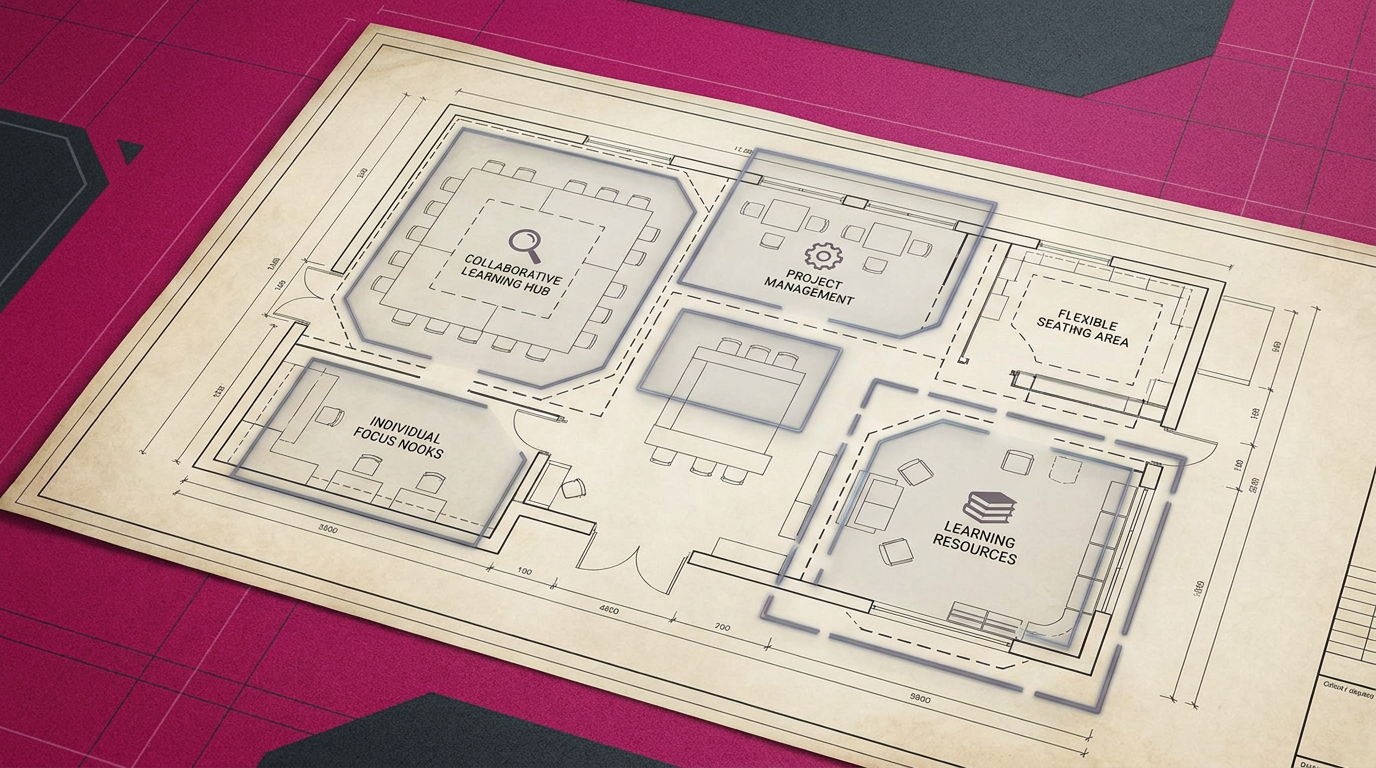
The first step is to conduct a detailed needs analysis. This involves more than just counting old desks. We recommend you consult with teaching staff to understand their pedagogical needs, observe how current classrooms are used, and identify pain points. What kind of learning do you want to facilitate? Collaborative group work, individual focused study, or flexible layouts that can adapt to different tasks?
Once you have a clear vision, you can use several classroom furniture planning tools to bring it to life:
- Budgeting Spreadsheets: A detailed spreadsheet is non-negotiable. It should itemise furniture costs, delivery, installation, and a contingency fund (typically 10-15%). For detailed guidance, see our advice on planning your school’s budget.
- Mood Boards & Design Concepts: Use tools like Pinterest or simple presentation slides to gather images, colour schemes, and furniture styles. This helps align stakeholders on the desired aesthetic and feel of the space, especially when considering modern classroom furniture trends.
- Free Room Planners: Our free 2D/3D space planning service allows you to visualise layouts, check for traffic flow issues, and ensure your chosen items fit perfectly. This is vital for avoiding common furniture layout mistakes.
Finally, form a small project team. In our experience, including representatives from the Senior Leadership Team (SLT), teaching staff, and the facilities or site manager ensures all perspectives are considered, fostering collective ownership of the project’s success.
How should you navigate procurement?
Using a compliant procurement route is mandatory for most UK schools and is an effective way to demonstrate value for money to governors and auditors. This part of the process can seem daunting, but it’s straightforward when you understand the available options. This section acts as your essential school furniture procurement guide.
Schools in the UK have several routes to procure furniture. You can purchase directly from a supplier (for low-value orders), run a formal tender process (often used by a Multi-Academy Trust (MAT), an organisation that runs a group of academy schools), or use a pre-approved procurement framework.
A procurement framework is a compliant agreement with a list of vetted suppliers, created for use by public sector bodies like schools. Using one is highly efficient because the framework provider has already done the hard work of checking suppliers for financial stability, quality assurance, and compliance. The most recognised frameworks for education include the Crescent Purchasing Consortium (CPC), a UK procurement framework organisation for the education sector, and ESPO, a UK public sector-owned professional buying organisation. Using these frameworks helps ensure you are getting competitive pricing.
When vetting suppliers, even on a framework, we recommend you check for membership of the British Educational Suppliers Association (BESA), a UK trade association for educational suppliers. BESA’s code of practice ensures members supply products that are fit for purpose. Also, ask for case studies from similar schools and investigate their commitment to sustainability by reviewing their policies on sustainable school furniture.
| Procurement Route | Description | Best For | Compliance Check |
|---|---|---|---|
| Direct Purchase | Buying directly from a supplier’s catalogue or website without a formal competition. | Small, low-value orders that fall below your school’s specific financial threshold. | Requires internal checks to ensure value for money is being achieved. |
| Procurement Framework (e.g., CPC, ESPO) | Using a pre-vetted list of approved suppliers who have already been assessed for price and quality. | Most projects, as it simplifies compliance and saves significant time. | The framework provider (e.g., CPC) has already performed the due diligence. |
| Formal Tender (e.g., RFQ/ITT) | Running your own competitive process by inviting multiple suppliers to bid for the contract. | Very large, high-value, or complex projects, often managed at a MAT level. | The school or MAT is responsible for ensuring the entire process is fair and compliant. |
| Supplier Quote Comparison | Requesting and comparing quotes from three or more different suppliers for the same specification. | Medium-value projects that are above direct purchase limits but don’t require a full tender. | The school must document the process to demonstrate fair evaluation and value. |
How do you manage and execute the project?
A detailed project and logistics plan is strongly critical to minimise disruption to the school day and ensure a smooth installation. Effective school furniture project management is less about the furniture itself and more about communication, scheduling, and coordination. From our 35+ years of experience, this is where projects either succeed brilliantly or cause major headaches.
Our advice is to typically favour a phased installation plan, especially if the work must happen during term time. Schedule deliveries and installations for school holidays (Summer, Easter, or half-terms) whenever possible. If term-time work is unavoidable, work with your supplier to complete one classroom or area at a time, sealing it off from student access.
A comprehensive school refurbishment checklist is your best friend during this phase. It should cover:
- Pre-Delivery: Room clearance schedule, confirmation of access routes, protection for floors and doorways, and communication with staff.
- Delivery Day: A named contact to meet the delivery team, a plan for checking items against the order, and a designated secure holding area.
- Installation: Confirmation that all fitters are DBS-checked, a clear works schedule, and a reliable plan for removing packaging and old furniture.
Communication is paramount. You should have clear templates to inform staff about which rooms will be out of action and when, let parents know about any changes to school access, and even get pupils excited about their new learning spaces.
#### Case Study: A Hypothetical Primary School Scenario
Challenge: A two-form entry primary school needed to refurbish four Year 5 and 6 classrooms over the summer but had a tight six-week window and a fixed budget of £40,000. The headteacher was concerned about managing the project alongside other pre-term preparations.
Solution: The school partnered with us for a ‘Design To Install We Do It All!’ service. We created a detailed project plan with a phased installation schedule. All furniture was ordered with likely to support delivery dates for the third week of the holidays, allowing two weeks for installation and one week for snagging and teacher setup.
Results: The project was completed one week ahead of schedule and £1,500 under budget. The school experienced zero logistical issues, allowing staff to focus on educational planning for the new term.
Key Insight: Engaging a partner with well-supported by research project management expertise offloaded the logistical burden, Saving Time & Stress for the school’s leadership team and ensuring a predictable outcome.
What are essential UK compliance resources?
All school furniture sold in the UK must meet specific safety and ergonomic standards to be deemed fit for purpose. Ensuring compliance isn’t just a box-ticking exercise; it’s a fundamental part of your duty of care to pupils and staff. This section outlines the key regulations and education furniture resources you must be aware of.
The benchmark standard is BS EN 1729. This is the British and European standard for chairs and tables in educational institutions. It is split into two parts:
- Part 1: Functional Dimensions: This part specifies the correct size, height, and ergonomic dimensions for furniture based on the age and size of the children using it. This helps prevent musculoskeletal issues and supports good posture.
- Part 2: Safety Requirements: This covers strength, durability, and stability, ensuring the furniture can withstand the rigours of a school environment without breaking or becoming a hazard.
When procuring furniture, you must specify that it meets BS EN 1729. Reputable suppliers will state this clearly in their product specifications. Guidance from the Health and Safety Executive (HSE), the UK government agency for workplace health and safety, provides the legal framework for workstation safety, which is relevant for staff areas and IT suites. The Department for Education (DfE), the UK government department responsible for education, also mandates in its Early Years Foundation Stage (EYFS) framework that all premises and equipment must be safe and suitable for purpose. Citing these official sources is a key part of demonstrating due diligence.
Frequently Asked Questions
What is a school furniture projects guide 2026?
A school furniture projects guide 2026 is a comprehensive resource that outlines the key stages, tools, and compliance requirements for successfully managing a school furniture refurbishment in the UK. It covers everything from initial planning and budgeting to procurement, installation, and post-project review, tailored to the current regulations and best practices for the year 2026.
What is the most important part of a school furniture project?
The most crucial part is the initial planning phase, without a doubt. A detailed needs analysis, a clear budget, and stakeholder buy-in at the start prevent most common problems later, such as budget overruns or unsuitable furniture choices. A solid plan acts as the foundation for the entire project’s success.
How do I create a budget for school furniture?
Start by auditing your existing furniture to determine what needs replacing and research costs for different types of furniture to get preliminary quotes. Remember to include costs for delivery, installation, and removal of old furniture, plus a 10-15% contingency. We also advise looking into funding opportunities like the Condition Improvement Fund (CIF) to supplement your school’s capital budget.
What is BS EN 1729 and why is it important?
BS EN 1729 is the British and European safety standard for chairs and tables in educational institutions. It specifies ergonomic dimensions for comfort and healthy posture, as well as strength and durability requirements to ensure furniture is safe for daily use. Specifying furniture that meets this standard is a key part of your school’s due diligence.
How can I minimise disruption during a furniture installation?
Plan installations during school holidays whenever possible to avoid any impact on teaching time. If term-time work is unavoidable, use a phased approach by completing one area at a time. Work with a supplier who provides a clear schedule and uses DBS-checked fitters to ensure pupil safety and minimal disruption.
What is a school procurement framework?
It is a pre-approved list of suppliers that have been vetted for quality, price, and compliance for use by public sector bodies like schools. Using a framework like CPC or ESPO saves significant time and ensures your school is spending public money in a compliant and transparent way, without needing to run a full, complex tender process yourself.
How long does school furniture last?
The lifespan of school furniture depends on its quality, but a typical warranty is between 5-10 years. High-quality items that meet standards like BS EN 1729 will last much longer and prove more cost-effective over time. Consider the ‘whole-life cost’, as cheaper items may need replacing more frequently, costing more in the long run.
Can I get help with classroom layout and design?
Yes, many specialist school furniture suppliers, including us, offer a free space planning service. We use CAD software to create 2D and 3D visuals of your space with the new furniture, helping you optimise layouts for learning zones and traffic flow before you commit. This service is invaluable for visualising the final result and gaining stakeholder approval.
What should be on a school refurbishment checklist?
A good checklist includes pre-installation tasks (confirming measurements, clearing rooms), delivery day tasks (checking for damage), and post-installation tasks (final inspection, snagging list, waste removal). It should assign responsibility for each item to the school’s site manager or the supplier’s project manager to ensure nothing is missed and accountability is clear.
How do I choose a reliable school furniture supplier?
Look for a supplier with extensive experience in the UK education sector and check if they are on a recognised school furniture procurement guide or framework. A reliable partner, often Rated Excellent On Trustpilot, will act as a consultant, helping with compliance and project management. They should offer flexible payment options, such as Credit Accounts Or Pay Flexibly, and Bulk Buy Discounts.
What are the important next steps?
This guide provides a comprehensive framework, but every school project is unique. The specific funding routes, procurement thresholds, and logistical challenges will vary depending on whether you are a maintained school, an academy, or part of a large Multi-Academy Trust. The information presented here should therefore be adapted to your institution’s specific policies and local context.
The primary alternative to managing a project in-house using these tools is to engage a full turnkey solution provider. Whilst this guide empowers you to manage the process, a turnkey partner takes on all responsibility from design to installation for a management fee. This can be a viable option for large, complex projects or for schools with limited internal capacity to oversee the work.
We firmly believe that for any large-scale refurbishment, you should consult a specialist. An expert can provide a free, no-obligation site survey, space plan, and quote, ensuring your plans are viable, compliant, and accurately costed from the outset. This professional input is invaluable in preventing costly mistakes and ensuring an effective possible outcome for your students and staff.
Who partners with you from planning to completion?
A successful school refurbishment relies on more than just choosing nice furniture. This school furniture projects guide 2026 has demonstrated the importance of a structured approach, combining reliable planning tools, a clear understanding of UK procurement rules, and diligent school furniture project management. By following these phases, you can transform your learning environments efficiently, compliantly, and with minimal stress, delivering a space that truly supports modern teaching and learning.
At Cost Cutters UK, we have partnered with thousands of UK schools for over 35 years, turning complex projects into successful realities. Our expertise is not just in furniture, but in the entire project lifecycle. If you are planning a project, our team is ready to help. Start with a free, no-obligation space plan and quote to bring your vision to life.
References
- Health and Safety Executive (HSE) – UK Government Guidance (2023). Provides legal requirements and practical guidance for workstation safety and ergonomics under the Display Screen Equipment (DSE) Regulations 1992.
- European Agency for Safety and Health at Work (EU-OSHA) – EU Body Research. Ongoing research highlights that work-related musculoskeletal disorders are a leading cause of absence, with poor workstation design being a major risk factor.
- Department for Education (EYFS Framework) – UK Government Statutory Framework (2024). Section 3.4 mandates that premises, furniture, and equipment must be safe, suitable for purpose, and appropriate for children’s age and stage of development.
- British Educational Suppliers Association (BESA) – Professional Organisation Code of Practice (2024). BESA’s code requires members to adhere to standards ensuring products are of satisfactory quality, safe, and ‘fit for their intended purpose’ in an educational environment.
- World Health Organization (WHO) – International Body Guideline (2020). Recommends limiting sedentary time, providing the health rationale for creating more active and flexible classroom environments.
- Get help buying for schools (DfE) – UK Government Portal. Provides schools with approved frameworks and guidance for procuring goods and services, including furniture, to ensure compliance and value for money.
- Edusentials – Industry Supplier Data. Offers a wide range of educational resources and furniture, providing real-world examples of products compliant with UK school standards.
- Cost Cutters UK – In-house Expertise (2024). Our own classroom furniture checklist, developed from over 35 years of project management experience with UK schools.
CONCLUSION
From Planning to Completion: Your Partner in School Furniture Projects
In summary, this school furniture projects guide 2026 demonstrates that a successful refurbishment relies on more than just choosing nice furniture; it requires a structured approach. By combining robust planning tools, a clear understanding of UK procurement rules, and diligent school furniture project management, you can transform your learning environments efficiently, compliantly, and with minimal stress.
At Costcutters UK, we have partnered with thousands of UK schools for over 35 years, turning complex projects into successful realities. Our expertise is not just in furniture, but in the entire project lifecycle. If you are planning a project, our team is ready to help. Start with a free, no-obligation space plan and quote to bring your vision to life.