7 Common Furniture Layout Mistakes and How to Avoid Them: Expert Advice for Education & Office Spaces
🎯 Key Takeaway
The most common furniture layout mistakes involve ignoring traffic flow, poor ergonomics, and failing to create distinct zones for different activities, leading to inefficient and uncomfortable spaces. Getting the layout right is crucial for productivity, safety, and well-being in both offices and schools. These errors typically manifest as obstructed main pathways creating bottlenecks, a one-size-fits-all approach that reduces comfort, and poor zoning that is associated with distractions. By understanding these common pitfalls, you can create a functional, compliant, and inspiring environment.
A poorly designed space has hidden costs that go far beyond aesthetics. For businesses, it can mean lost productivity and disengaged staff. For schools, it can hinder learning and create behaviour management challenges. As of early 2026, organisations are increasingly aware that the physical environment is a critical asset. However, a frequent error we see is confusing interior layout with interior design. Whilst related, layout is the science of function, flow, and safety. This is where costly furniture layout mistakes are made.
With over 35 years of experience, we’ve seen it all. Our goal is to help you bypass these errors. This guide identifies the most common furniture layout mistakes we encounter in two key environments: offices and schools. We’ll provide actionable advice for Office Managers and School Business Managers, drawing from our extensive work across the UK. Whether you’re browsing our complete catalogue of school and office furniture or just starting your project, this advice will set you on the right path.
👤 Written by: Costcutters UK Content Team
Reviewed by: Costcutters UK Editorial Team, 35+ Years of Space Planning Experience
Last updated: 17 April 2026
ℹ️ Transparency: This article explores common furniture layout mistakes based on over 35 years of in-house space planning experience and analysis of UK industry standards. Some links may connect to our services. All information is verified by our editorial team to ensure accuracy and relevance for UK organisations.
The Foundations of Good Space Planning: 3 Principles You Can’t Ignore
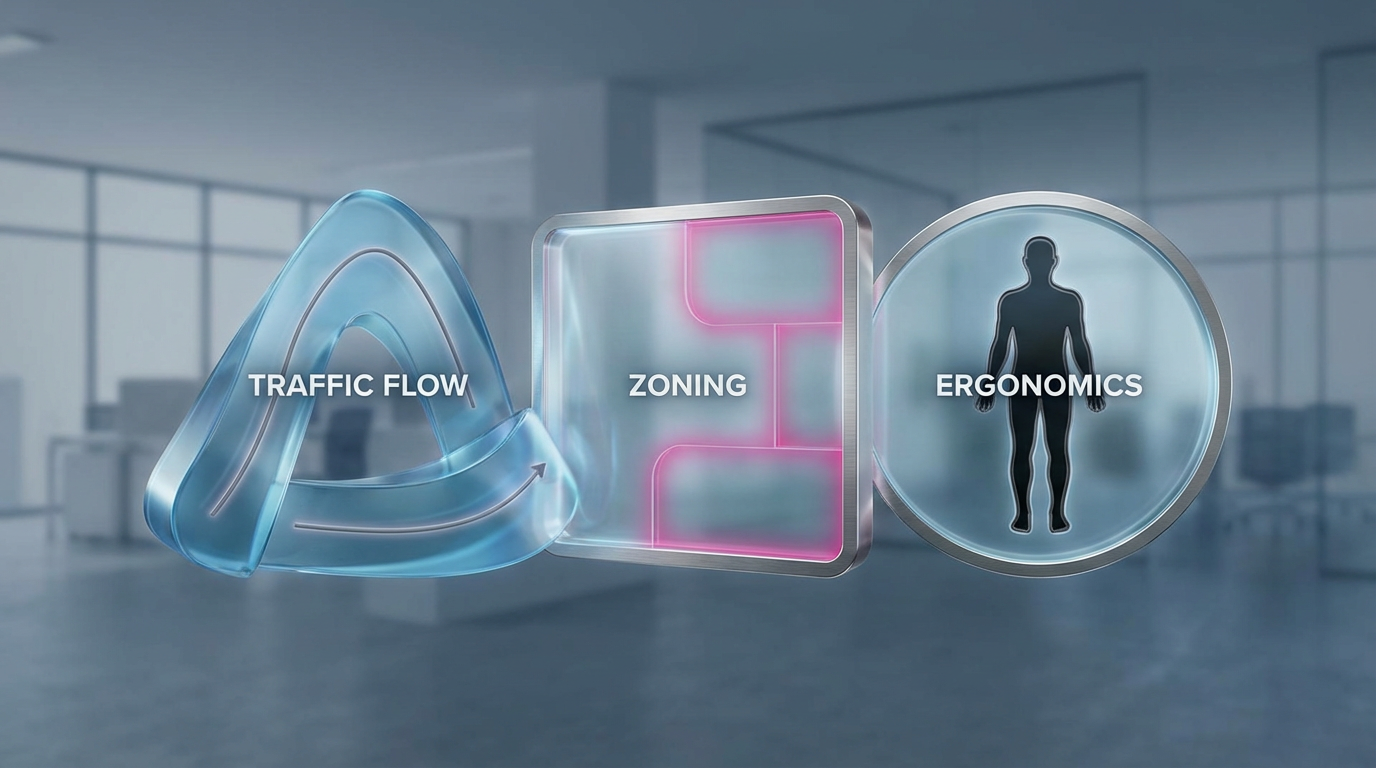
Yes, there are universal principles that apply before you even choose a desk. Getting these fundamentals right from the start is the key to a successful, functional space and helps avoid the most basic furniture layout mistakes. We believe mastering these three pillars is non-negotiable.
1. Traffic Flow & Circulation
The first principle is Traffic Flow, which refers to the way people move through a space. Think of these pathways as the arteries of your building; if they’re blocked or too narrow, everything slows down. Poor circulation creates frustrating bottlenecks, reduces efficiency, and can even pose a safety hazard during an emergency evacuation. A well-planned layout ensures that main routes are clear, wide, and intuitive, allowing for smooth and safe movement for everyone.
2. Zoning for Function
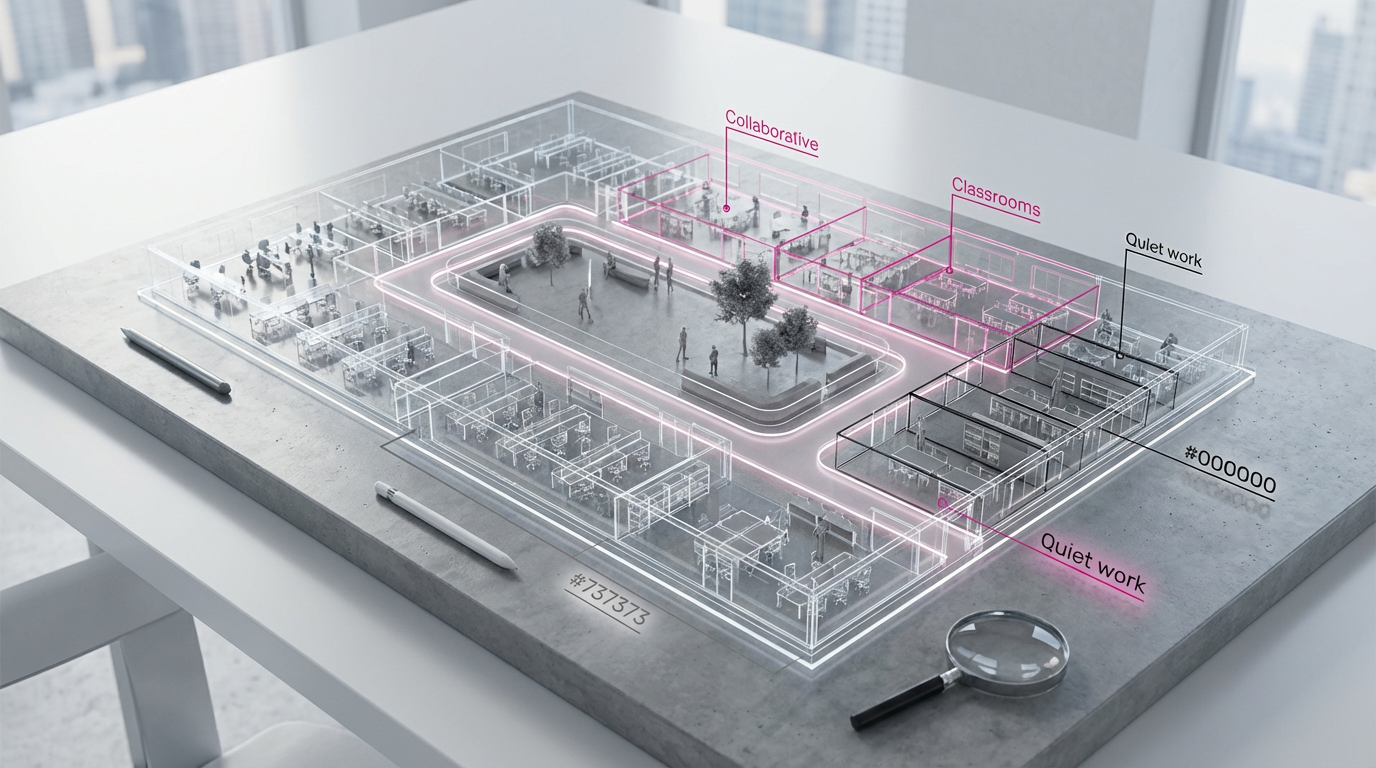
Next is Zoning, the practice of creating dedicated areas for different types of activities. In an office, this means separating loud, collaborative zones from quiet, focused workstations. In a school, it means having distinct areas for group work, individual reading, and direct instruction. A lack of clear zoning is a primary cause of distraction and conflict. As data from the Leesman (2022) global workplace survey consistently shows, high noise levels are one of the biggest complaints in modern offices. Proper zoning directly addresses this issue.
3. Ergonomics & Accessibility
Finally, a layout must be built on the foundation of Ergonomics, the science of designing for optimal human well-being and performance. This goes beyond just buying an adjustable chair. It involves planning sufficient space around workstations and ensuring layouts comply with UK law, such as the Equality Act 2010, to accommodate all users regardless of physical ability. Many ergonomic furniture mistakes begin at this macro planning stage. According to the Health and Safety Executive (HSE) (2023), 473,000 UK workers suffered from work-related musculoskeletal disorders in 2022/23, a statistic that underscores the critical link between layout, furniture, and employee health.
Top 3 Office Furniture Layout Mistakes to Avoid
Yes, modern offices have unique layout challenges, especially in the hybrid working era. For Office Managers, avoiding these common pitfalls is crucial for creating a space that attracts and retains talent. A poor office layout isn’t just an inconvenience; it’s a direct drain on productivity and morale.
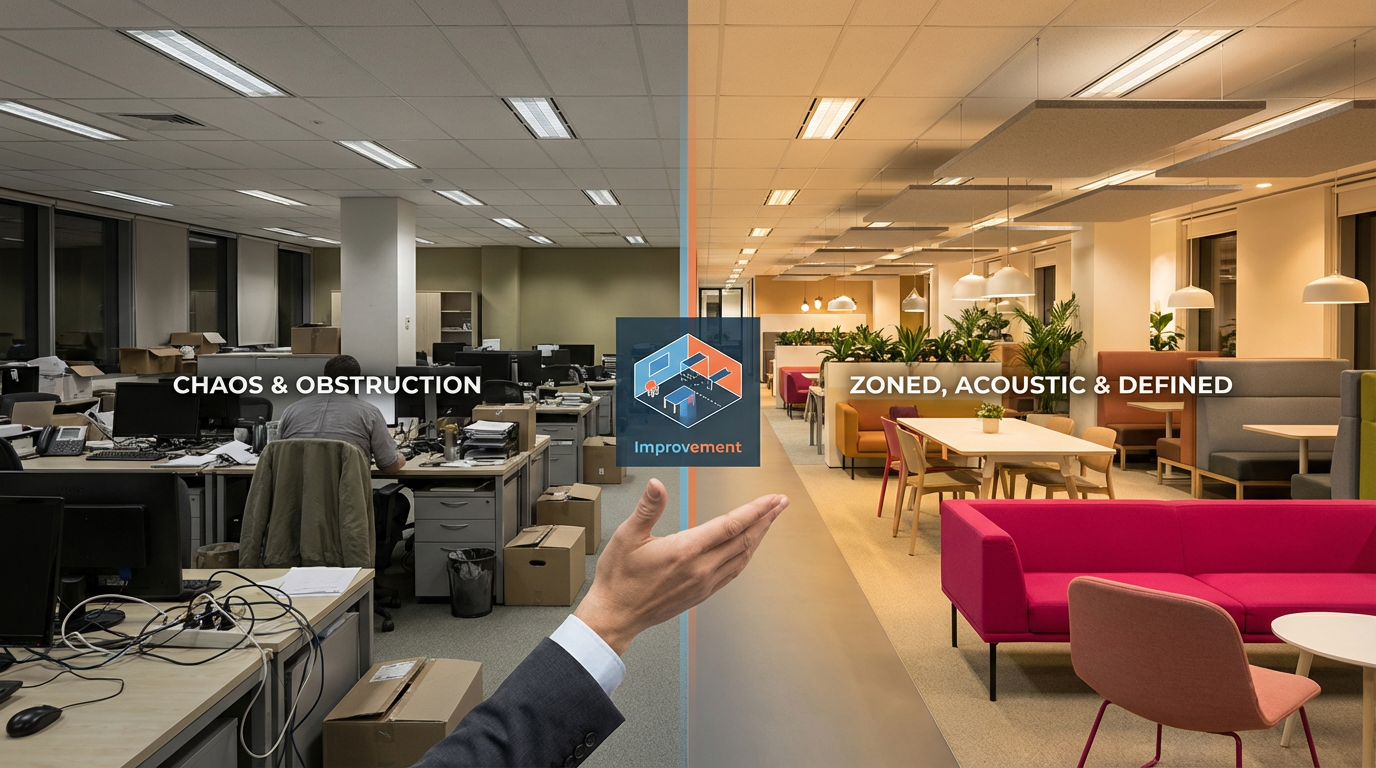
1. The ‘Sea of Desks’ Open-Plan Problem
The most frequent of all office layout mistakes is the poorly executed open-plan office. While intended to foster collaboration, a vast, uniform sea of desks often creates the opposite effect: a noisy, distracting environment where nobody can focus. The key is balance. A successful open-plan design must be supported by acoustic baffling, which are panels or screens designed to absorb sound, and a variety of enclosed spaces. Just as graphic design experts on platforms like modern and effective breakout furniture creates a destination that boosts morale and innovation.
3. Forgetting Hybrid Work Realities
As of 2026, a layout that doesn’t support a flexible workforce is fundamentally flawed. Common mistakes include a lack of hot-desking zones, no private booths for video calls, and insufficient personal storage for non-permanent staff. A hybrid-ready office needs variety. The British Council for Offices (BCO) (2019) guide highlights the need for diverse settings to support different tasks. This means creating a mix of reservable desks, collaborative hubs, and quiet pods to cater to a workforce that isn’t in the office five days a week.
| Layout Type | Key Characteristic | Pros | Cons |
|---|---|---|---|
| Traditional Open-Plan | Large area with uniform rows of desks. | High space efficiency; easy to monitor. | High noise levels; frequent distractions; lack of privacy. |
| Activity-Based Working | A variety of zones for different tasks (focus, collaboration, social). | Empowers employee choice; supports diverse tasks. | Requires clear protocols; can feel chaotic if poorly managed. |
| Cellular Office | Individual, private offices for most staff. | Excellent for focus; high privacy and acoustic control. | Low space efficiency; can create silos; expensive to build. |
| Hybrid-Ready Layout | A mix of hot desks, bookable rooms, and collaborative zones. | Flexible for a fluctuating workforce; cost-effective. | Requires robust booking tech; potential for overcrowding. |
Top 3 School & Classroom Furniture Layout Mistakes
Yes, classroom layouts directly impact learning outcomes and student behaviour. For School Business Managers, understanding common classroom layout mistakes is essential for creating effective educational environments that support both teachers and pupils. The right layout is a powerful teaching tool.
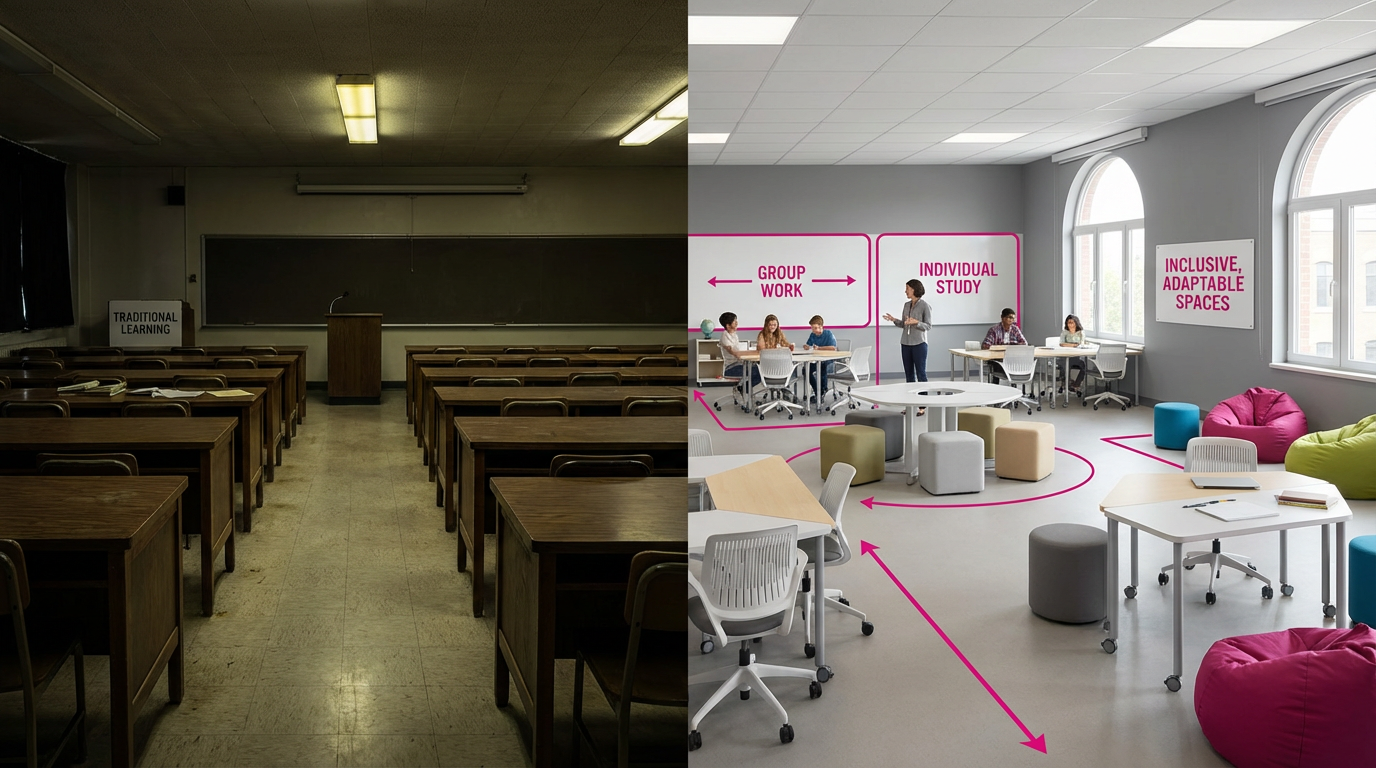
1. Obstructing Teacher Sightlines
The most serious mistake in any classroom is a layout that prevents the teacher from seeing every student clearly. When furniture, storage units, or displays create blind spots, it becomes difficult to manage behaviour, spot a struggling student, or ensure everyone is safe and on task. The Department for Education (DfE) (2014) guidance on school design, whilst non-statutory, implicitly supports layouts that allow for easy supervision. A successful classroom layout provides clear, unobstructed sightlines from any point where the teacher is likely to stand.
2. Using Inflexible, Static Furniture
Relying on heavy, static desks arranged in fixed rows is a relic of outdated teaching methods. This approach stifles modern pedagogy, which often requires group work, peer-to-peer learning, and project-based activities. We strongly advocate for a flexible classroom design. This involves using lightweight, modular tables and chairs that can be quickly and easily reconfigured to suit the lesson. This adaptability empowers teachers to switch between different teaching styles, transforming the room from a lecture hall into a dynamic workshop. Effective school furniture planning prioritises agility.
3. Ignoring Neurodiversity and Special Educational Needs (SEN)
A one-size-fits-all layout fails a significant portion of students. Pupils with different sensory profiles or learning needs, such as those with Autism Spectrum Condition (ASC) or Attention Deficit Hyperactivity Disorder (ADHD), can find a standard classroom overwhelming or under-stimulating. A thoughtful layout incorporates variety. This could mean creating a designated quiet corner with soft seating, providing wobble stools for children who need to move, or using screens to create low-distraction individual workstations. This isn’t a luxury; it’s a core component of inclusive design.
The Overarching Mistake: Neglecting Professional Space Planning
Yes, the single biggest mistake an organisation can make is attempting a significant refurbishment or fit-out without expert input. While a DIY approach might seem like it’s saving money, our 35 years of experience show it often leads to costly rework, compliance failures, and a space that simply doesn’t function as intended. Both office layout mistakes and classroom layout mistakes frequently stem from this initial error.
Professional space planning is an investment, not a cost. A specialist will help you maximise every square metre of your floor plan, ensuring you don’t over- or under-order furniture. They provide a clear roadmap, often in the form of an office refurbishment checklist uk or school project plan, that covers everything from initial needs analysis to final installation. This process involves creating detailed 2D and 3D plans, which allow you to visualise the space and make changes before any physical work begins, “Saving Time & Stress”.
Most importantly, a professional ensures your layout is fully compliant with all relevant UK regulations, including guidelines from the Health and Safety Executive (HSE) and the Department for Education (DfE). This protects your organisation from legal risk and creates a safe environment for everyone. Our “Design To Install We Do It All!” service is built around this principle: expert guidance from start to finish prevents expensive errors and delivers a space that truly works.
Frequently Asked Questions About Furniture Layout Planning
What are the most common furniture layout mistakes?
The most common furniture layout mistakes include blocking pathways, using furniture of the wrong scale, poor ergonomics, and failing to zone spaces for different activities. These errors can negatively impact workflow, safety, and comfort in any environment. Getting these fundamentals right is the first step to a successful design and avoiding more complex issues down the line.
How much space should you leave between furniture?
As a general rule, you should leave a minimum of 90cm (36 inches) for major walkways to ensure accessibility and comfortable movement. For minor pathways, such as between a desk and a wall, aim for at least 75cm. This guidance can vary based on specific building regulations and the intended use of the space, so typically check local requirements.
What is the biggest mistake in classroom layout?
The single biggest mistake is creating a static layout that obstructs the teacher’s view of students and prevents varied teaching methods. A poor layout can create behaviour management issues and hinder collaborative learning, making it one of the most impactful classroom layout mistakes. A well-designed classroom should be flexible and support multiple activities throughout the day.
How does a poor office layout affect productivity?
A poor office layout directly harms productivity through constant distractions, noise pollution, and a lack of private spaces for focused work. It can also lead to physical discomfort from poor ergonomics, which may increase absenteeism. Data shows that an optimised layout which provides a choice of environments can significantly boost employee focus, satisfaction, and overall well-being.
What is the first step in school furniture planning?
The first step is to define the pedagogical goals for the space before selecting any furniture. You must first understand how teachers want to teach and how students need to learn within that environment. This strategic approach informs all subsequent decisions about flexibility, zoning, and furniture types, ensuring the layout truly serves its educational purpose.
Are open-plan offices bad?
Open-plan offices are not inherently bad, but they are often poorly implemented without the necessary supporting spaces. Their success depends on providing a balance of other environments, such as quiet pods, private meeting rooms, and social breakout areas. Without this variety, they can easily become noisy and unproductive for many employees who require focus.
How can I improve my existing furniture layout without buying new furniture?
Start by decluttering the area and then re-zoning the space to group similar activities together. For example, move all collaborative tasks to one corner and ensure main walkways are clear. Sometimes simply reorienting desks to reduce visual distractions can make a significant difference. We typically recommend consulting your team before making major changes to get their input.
What UK regulations apply to office layouts?
The Health and Safety at Work etc. Act 1974 is the primary legislation, supported by more specific regulations. These include the Workplace (Health, Safety and Welfare) Regulations 1992, which covers space, ventilation, and traffic routes, and the Display Screen Equipment (DSE) Regulations for workstation ergonomics. Professional planners ensure full compliance with all current standards.
What are the benefits of a flexible classroom design?
A flexible classroom design promotes student agency, facilitates diverse teaching methods, and better supports both group collaboration and individual work. By offering choice, it can improve engagement, reduce behavioural issues, and better cater to neurodiversity. This approach transforms the classroom from a passive lecture hall into an active, adaptable learning environment.
Does furniture colour affect a room’s layout?
While not a structural layout mistake, poor colour choice can undermine a good layout and how it is perceived. Using different colours can help visually define zones, while light colours can make a small space feel larger. A cohesive colour strategy, as noted by design experts at Bold Colours, should typically complement the functional goals of the layout.
Important Considerations & Professional Guidance
This guide provides general principles for avoiding common layout mistakes. However, every space is unique. The specific dimensions, structural elements like columns or windows, and building regulations of your premises will require a bespoke solution. The advice here should be used as a starting point for planning, not a definitive blueprint for your specific building.
The primary alternative to a fully professional space plan is a DIY approach using online tools or simple trial and error. While this can be suitable for minor adjustments in a small space, it carries significant risks for larger projects. Our experience shows it often leads to unforeseen costs, compliance issues with bodies like the Health and Safety Executive (HSE), and suboptimal space utilisation that a professional would have identified early on.
We strongly recommend consulting a space planning expert for any significant refurbishment or new fit-out. A professional can provide 2D and 3D CAD drawings, ensure compliance with all UK regulations (backed by our industry-recognised certifications), and help you select furniture that offers an effective long-term value, including access to Bulk Buy Discounts. This investment prevents costly errors and ensures your project’s success from day one. You can also explore flexible payment options with us, such as setting up Credit Accounts Or Pay Flexibly.
From Clutter to Clarity: Your Next Steps
Ultimately, avoiding common furniture layout mistakes is about shifting from a reactive to a strategic mindset. By prioritising traffic flow, ergonomics, and functional zoning, you create an environment that actively supports your organisation’s goals. Whether in a bustling office or a dynamic classroom, a well-planned layout is the foundation for productivity, well-being, and success. Our business is Rated Excellent On Trustpilot because we help clients achieve this clarity.
At Costcutters UK, our team has spent over 35 years helping schools and businesses across the country get their space right the first time. If you’re ready to transform your environment and avoid these pitfalls, we invite you to request a free, no-obligation space planning consultation with our experts today.
References
- Health and Safety Executive (HSE). (2023). Work-related musculoskeletal disorders statistics in Great Britain, 2023. – Annual Statistical Report. Reports that 473,000 workers suffered from a work-related musculoskeletal disorder in 2022/23, highlighting the critical importance of workplace ergonomics.
- Department for Education (DfE). (2014). Building Bulletin 103: Area guidelines for mainstream schools. – Government Design Guidance. Provides non-statutory guidance on space standards for schools, emphasizing the need for flexibility and efficient layouts to support modern teaching.
- British Council for Offices (BCO). (2019). Guide to Specification. – Industry Best Practice Guide. Outlines best practices for office design, including recommendations for space allocation, occupancy density, and amenities that support employee well-being.
- Leesman. (2022). The Leesman Index: The Workplace Experience Revolution. – Global Workplace Survey Data. Data from millions of employees shows that ‘noise levels’ and ‘desk’ are consistently among the most important and least satisfactory elements of the workplace experience.
- Toast Design Services. (2023). 10 common design mistakes and how to avoid them. – Design Agency Blog Post. Analysis of common graphic design errors, such as poor hierarchy and visual clutter, which have direct parallels in physical space planning.
- Bold Colours. (2022). Common Design Mistakes To Avoid. – Marketing Agency Insight. Discusses how colour and composition choices impact user perception, reinforcing the idea that a layout’s visual elements should support its functional goals.
Conclusion
From Clutter to Clarity: Your Next Steps
In summary, avoiding common furniture layout mistakes is about shifting from a reactive to a strategic mindset. By prioritising traffic flow, ergonomics, and functional zoning, you can create an environment that actively supports your organisation’s goals. Whether in a bustling office or a dynamic classroom, a well-planned layout is the foundation for productivity, well-being, and success.
At Costcutters UK, our team has spent over 35 years helping schools and businesses across the country get their space right the first time. If you’re ready to transform your environment and avoid these pitfalls, we invite you to request a free, no-obligation space planning consultation with our experts today.