The Ultimate Guide to School Furniture Procurement: Checklists & Tools
🎯 Key Takeaway
Effective school furniture procurement is a strategic process involving detailed needs analysis, reliable budget planning, strict UK compliance verification, and careful supplier evaluation to ensure long-term value, safety, and suitability. This comprehensive approach moves beyond simple purchasing to create learning environments that are both inspiring and compliant. By calculating the Total Cost of Ownership (TCO) and using detailed checklists, schools can prevent costly mistakes and secure furniture that supports student wellbeing and educational outcomes for years to come.
For any School Business Manager, a major furniture refresh can feel like a monumental task. As of Q3 2026, the complexity of balancing budgets, meeting compliance standards, and satisfying diverse user needs has rarely been greater. A poorly planned school furniture procurement project risks more than just budget overruns; it can lead to non-compliant, unsafe environments and furniture that fails to support modern teaching methods. This is not just a shopping trip. Effective education furniture procurement requires a strategic toolkit. This guide provides that toolkit, moving you from a simple shopping list to a phased, stress-free process that may help value and safety.
Written by: The Cost Cutters UK Content Team | Reviewed by: Editorial Team, 35+ Years Experience; Rated Excellent On Trustpilot
Last updated: 19 September 2026
ℹ️ Transparency Disclosure: This article explores the school furniture procurement process based on our 35+ years of industry experience and analysis of UK government guidelines. Our goal is to empower schools to make an effective possible decisions. Some links may connect to our specialised services, which we believe offer excellent value. All information is verified for accuracy by our editorial team.
Phase 1: Strategic Planning for Your School Furniture Procurement
The most critical step in any successful school furniture procurement project is a thorough needs analysis conducted well before you even think about catalogues. This foundational phase ensures that every pound spent directly supports your school’s educational goals and operational requirements. It involves forming a dedicated committee, auditing your current assets, and defining clear objectives. Our experience suggests that rushing this stage is the single biggest cause of project failure, leading to wasted funds and unsuitable equipment.
A successful school furniture procurement process starts with people. We recommend forming a small committee that includes not just the School Business Manager but also teaching staff representatives and, crucially, the Special Educational Needs Coordinator (SENCO). This group should audit all existing furniture, identifying items that are broken, non-compliant, or no longer fit for purpose. From there, you can define your pedagogical goals. Do you need furniture that supports collaborative group work, or traditional front-of-class teaching? The answers will shape your entire project.
Once needs are defined, the focus shifts to the budget. Here, it is vital to look beyond the initial price tag and consider the Total Cost of Ownership (TCO). TCO is a financial estimate that includes the initial purchase price plus all direct and indirect costs, such as delivery, installation, maintenance, and eventual disposal. Factoring this in from the start prevents unexpected expenses later. For a deeper dive, review our guide on analysing the total cost of ownership. A realistic budget must also account for the disposal of old items and include a 10-15% contingency fund. Given that the UK Office Furniture market alone is a multi-billion-pound industry, as reported by Statista (2024), it’s clear that these are significant investments that demand careful financial planning.
Why UK Compliance and Safety Cannot Be Ignored
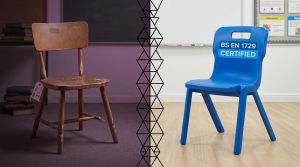
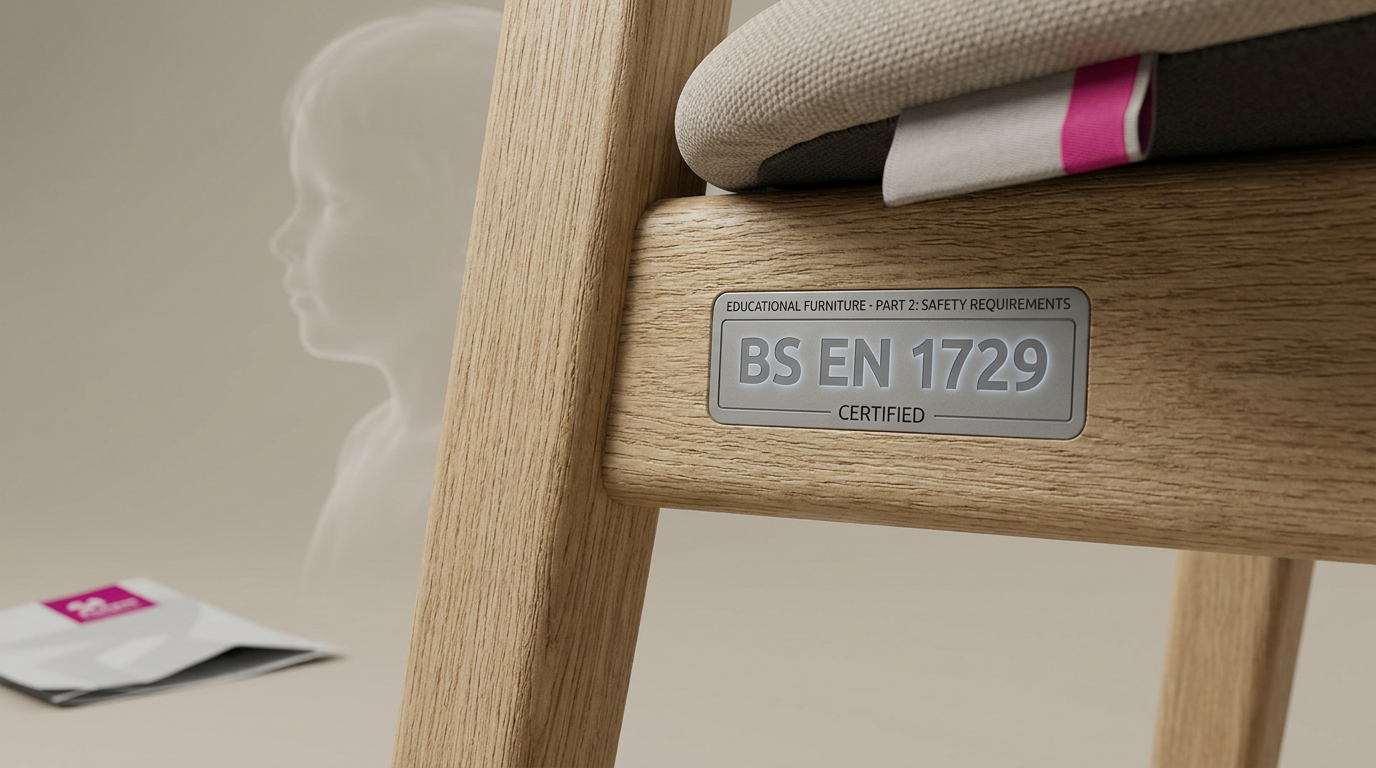
Yes, adhering to UK compliance standards for school furniture is a legal and moral obligation for every educational institution. It is not an optional extra. The primary standard governing this is BS EN 1729. This British and European standard is specifically designed to ensure that furniture used in educational settings is safe, durable, and ergonomically appropriate for children of different age groups. Ignoring these standards exposes the school to legal liability and, more importantly, risks the health and wellbeing of its pupils.
The Health and Safety Executive (HSE), the UK’s national regulator for workplace health and safety, provides extensive guidance on ergonomics. While much of its official literature, like the guidance on Display Screen Equipment, is aimed at adults, the underlying principles are directly applicable to children. Poorly designed seating can contribute to musculoskeletal issues, a problem highlighted by the European Agency for Safety and Health at Work (EU-OSHA), which identifies poor workstation design as a primary risk factor.
BS EN 1729 is split into two key parts:
- Part 1: Functional Dimensions. This part dictates the correct size, height, and shape of chairs and tables for different age groups, ensuring proper posture and comfort.
- Part 2: Safety Requirements and Test Methods. This part covers strength, stability, and durability. Furniture must pass rigorous tests to prove it can withstand the demanding school environment.
For a complete breakdown, see our definitive BS EN 1729 guide. Furthermore, the Department for Education (DfE) (2024) statutory framework for the Early Years Foundation Stage (EYFS) explicitly states that all premises, furniture, and equipment must be safe and suitable. This includes making specific provisions for pupils with Special Educational Needs and Disabilities (SEND), which involves selecting inclusive and often specialised furniture. When you’re choosing ergonomic school furniture, looking for BS EN 1729 certification is your primary assurance of compliance.
Phase 2: The Ultimate UK School Furniture Checklists
A comprehensive school furniture checklist is best organised by specific zones within the school, as each area has unique functional and compliance requirements. Simply listing ‘tables and chairs’ is insufficient. A detailed, area-specific approach prevents critical omissions, ensures you cater to all user needs, and helps build an accurate budget. For example, furniture for an EYFS setting prioritises safety, low heights, and opportunities for messy play, whereas a sixth-form common room requires durable soft seating and study-focused furniture.
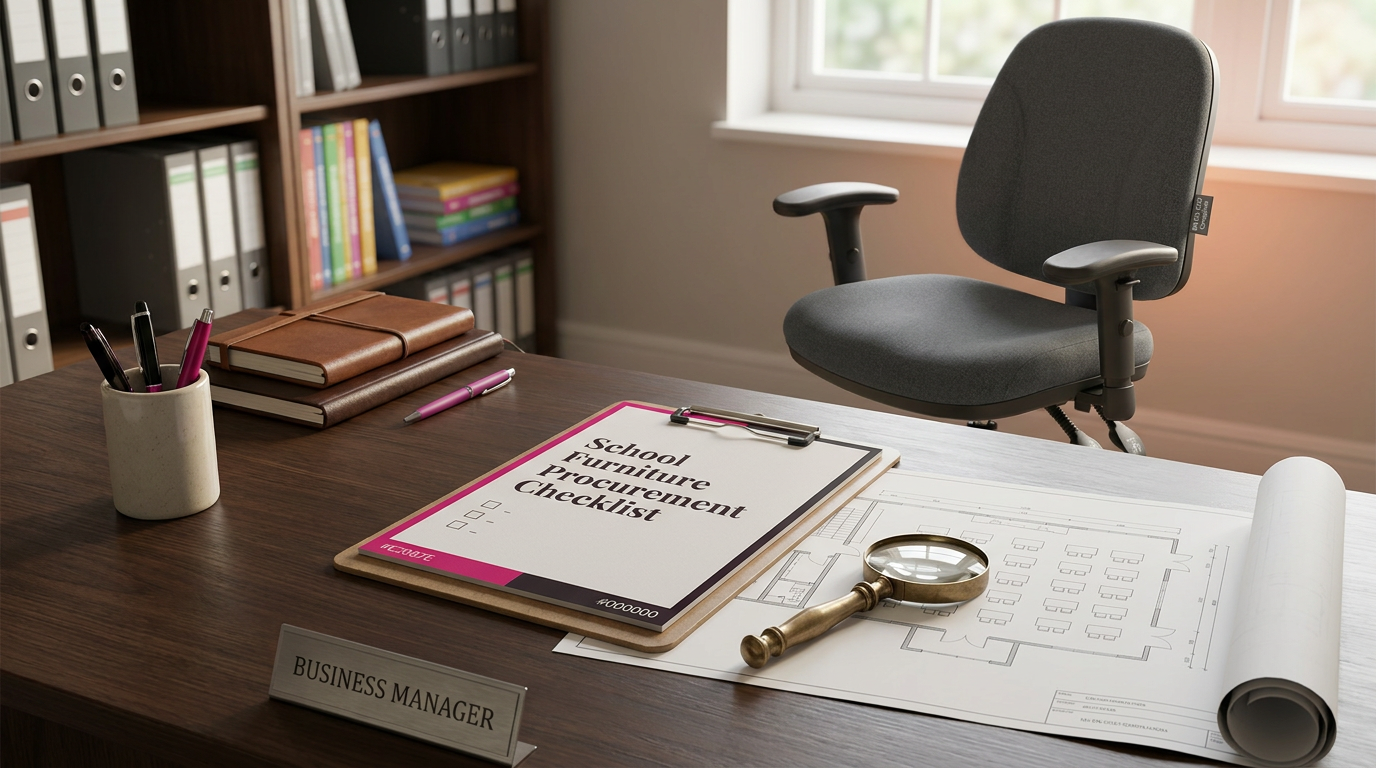
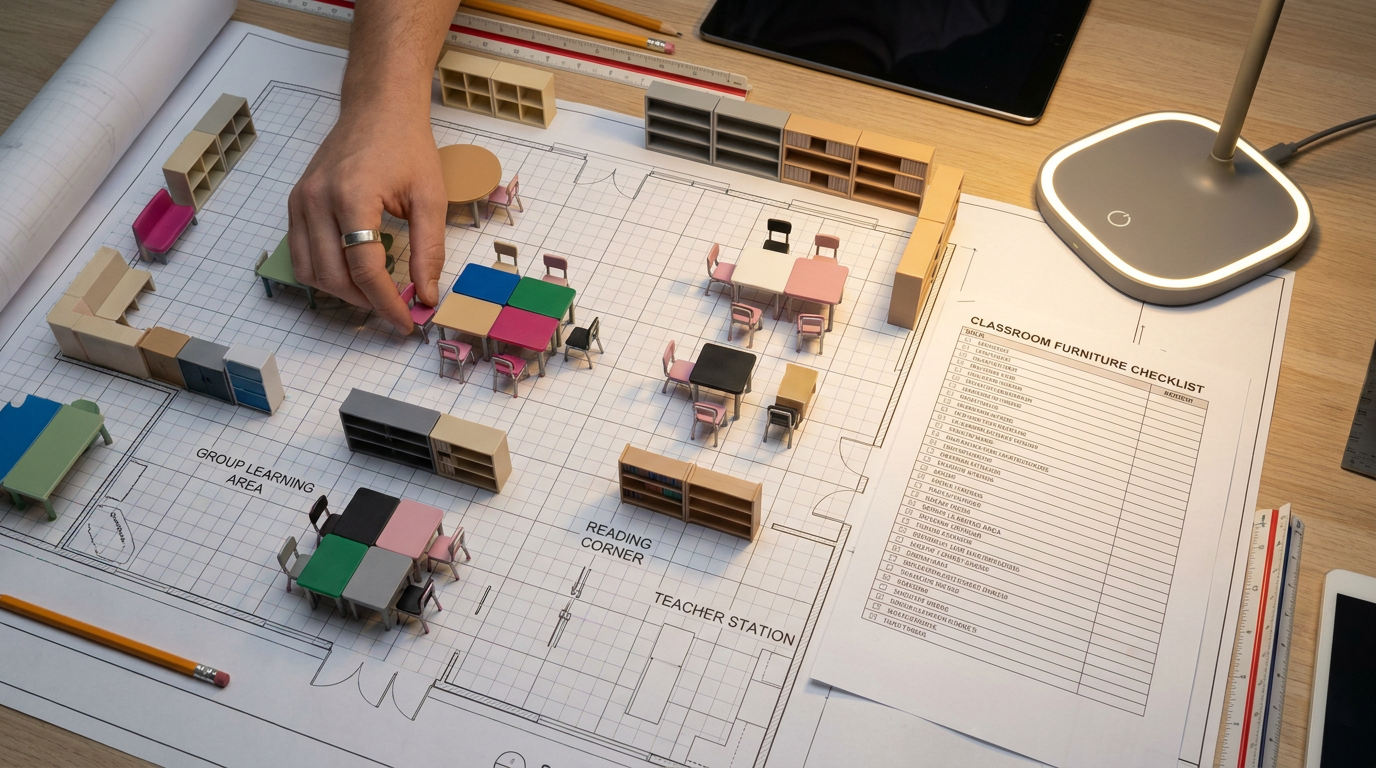
Using a structured checklist is fundamental to a smooth procurement process. It acts as a definitive record of requirements agreed upon by your project committee and serves as a clear brief for potential suppliers. The table below provides a template for your own classroom furniture checklist and beyond, covering the essential considerations for different parts of a typical UK school. We believe this tool is indispensable for “Saving Time & Stress” during the planning phase.
| School Area / Key Stage | Essential Furniture Items | Key Considerations | Compliance Note |
|---|---|---|---|
| EYFS & Key Stage 1 | Height-appropriate tables & chairs, floor cushions, storage trays, sand/water tables, easels, book browsers. | Rounded corners, easy-to-clean surfaces, lightweight for flexibility, bright and engaging colours. | Must meet BS EN 1729 size marks 1-3. All items must be reliable and stable to prevent tipping. |
| Key Stage 2 Classroom | Height-appropriate tables & chairs, teacher desk, storage cupboards, whiteboards, bookcases. | Durability (fully welded frames), stackability for space-saving, compatibility with IT equipment. | Must meet BS EN 1729 size marks 4-6. Chairs should offer good lumbar support. |
| Science Laboratory | Trespa or Iroko workbenches, high stools, lockable chemical storage, mobile demonstration trolley. | Chemical resistance, durability, gas/water tap integration, non-slip surfaces for stools. | Stools and workbenches must be of compatible heights and extremely stable. |
| Library / Resource Centre | Shelving (static & mobile), study carrels, soft seating, library tables and chairs, issue desk. | Weight capacity of shelving, comfort for prolonged use, quiet-zone acoustics, accessibility for all users. | Shelving must be securely fixed to walls or have a stable base to prevent toppling. |
| Staff Room / PPA Room | Soft seating (sofas/tubs), coffee tables, meeting table and chairs, kitchen units, personal lockers. | Comfort and relaxation, durability for high traffic, professional aesthetic, adequate secure storage. | All upholstered furniture should meet UK fire regulations for contract use (CRIB 5). |
| Canteen / Dining Hall | Folding or stacking tables, benches or stacking chairs, tray return units, water stations. | Hygiene (easy-to-clean surfaces), durability, efficient storage, speed of setup and breakdown. | Surfaces should be non-porous. Furniture should be reliable enough to handle daily high-volume use. |
Phase 3: Selecting Suppliers for School Furniture Procurement
To find the right partner for your project, you should look for specialist school furniture suppliers UK who offer a well-supported by research track record, comprehensive service, and fully certified products. A good supplier is more than a retailer; they are a project partner who can provide expert advice and support throughout the entire school furniture procurement process. Their value lies not just in the products they sell but in the services they offer, such as free space planning, 3D visualisations, and full project management, from design to installation.
Evaluating Potential Suppliers
When vetting suppliers, we recommend asking a specific set of questions to gauge their expertise and reliability. A credible supplier will welcome this scrutiny. One key indicator of quality is membership of the British Educational Suppliers Association (BESA). According to BESA’s Code of Practice, members must ensure products are fit for their intended educational purpose, offering you an extra layer of assurance.
Key Questions to Ask Suppliers:
- Can you provide case studies and references from similar school projects?
- Are all your recommended products certified to BS EN 1729?
- What may help or warranties do you offer on your furniture?
- Do you offer a “Design To Install We Do It All!” service, including space planning and rubbish removal?
- What are your typical lead times, and how do you manage delivery schedules?
- Do you offer Bulk Buy Discounts or flexible payment options like Credit Accounts Or Pay Flexibly?
##### Hypothetical Case Study: A Multi-Academy Trust Refresh
- Challenge: A Multi-Academy Trust (MAT) with three primary schools needed to refurbish 15 classrooms for the new academic year. Their challenge was standardising quality and compliance across all sites while managing a tight budget of £90,000 and an immovable deadline.
- Solution: The MAT partnered with a specialist supplier who conducted a full audit and provided a consolidated procurement plan. They selected BS EN 1729 compliant furniture with a 10-year guarantee and arranged a phased delivery and installation schedule across all three schools during the summer holidays.
- Results: The project was completed one week ahead of schedule and 5% under budget, thanks to bulk buy discounts. All classrooms were equipped with durable, ergonomic furniture, leading to a 90% reduction in furniture-related maintenance requests in the first term.
- Key Insight: Centralising procurement with a single, experienced partner streamlined communication, maximised purchasing power, and ensured consistent quality and compliance across the entire trust.
Managing the Project Timeline
Effective project management is crucial, especially regarding logistics. An effective-planned procurement can be derailed by a poorly managed delivery. Work closely with your chosen supplier to create a detailed timeline, scheduling deliveries and installation for periods of low school activity, such as holidays or half-terms. Clear communication is essential. Confirm site access, unloading points, and the installation team’s requirements well in advance. A professional supplier will manage this for you, coordinating their teams to ensure minimal disruption to the school’s operation, truly “Saving Time & Stress” for your staff.
Important Considerations
This guide provides a comprehensive framework for school furniture procurement. However, every school’s needs, building layout, and budget are unique. The checklists and advice should be adapted to your specific context, particularly concerning the requirements of your student population, including those with SEND, and your pedagogical approach. The principles remain the same, but the application must be tailored.
The primary alternative to using a specialised procurement partner is to manage the entire process in-house. This can sometimes appear cheaper initially but carries significant risks. It places a heavy administrative burden on staff, increases the risk of ordering non-compliant or unsuitable items, and requires coordinating multiple suppliers for delivery and installation, which can lead to costly delays and unforeseen expenses.
For large-scale projects, such as a new build, a whole-school refurbishment, or furnishing a new block, we strongly recommend consulting an education furniture specialist. An expert partner can provide invaluable support with space planning, 3D visualisations, compliance assurance, and full project management. This mitigates risk and ensures an effective possible outcome for your investment, delivering a safe and inspiring learning environment on time and on budget.
Begin Your Stress-Free Procurement Journey
a successful school furniture procurement project hinges on moving beyond a simple shopping list to a strategic, phased approach. By focusing on diligent planning, prioritising UK safety compliance like BS EN 1729, and using detailed checklists, you can create inspiring learning environments that are safe, ergonomic, and built to last. This methodical education furniture procurement process ensures you achieve an effective long-term value for your school’s budget and are Rated Excellent On Trustpilot.
At Cost Cutters UK, we’ve partnered with School Business Managers for over 35 years to simplify this exact process. Our team of specialists can help you navigate every stage, from initial space planning to final installation, as seen in projects like our recent primary school transformation. If you are planning a project, get in touch for a free space plan and no-obligation quote to see how we can help.
Frequently Asked Questions
What is school furniture procurement?
School furniture procurement is the complete process a school or trust follows to specify, budget for, purchase, and install new furniture. It extends beyond simple ordering to include strategic planning, needs analysis, compliance checks against standards like BS EN 1729, and thorough supplier vetting. A well-managed process ensures the school achieves an effective long-term value, safety, and suitability for its educational environment, making it a critical aspect of school business management.
What is the essential furniture for a modern UK classroom?
Essential furniture includes height-appropriate tables and ergonomic chairs that comply with BS EN 1729, a teacher’s desk, adequate storage, and a whiteboard or interactive display. Increasingly, flexible items like trapezoidal or height-adjustable tables are becoming standard to support collaborative and dynamic learning styles. All items must be chosen based on the specific key stage and pupil age range to ensure they are both safe and effective learning tools.
How does a secondary school furniture checklist differ from a primary one?
A secondary school checklist features larger furniture sizes to comply with BS EN 1729 for older students and includes more specialised items. For example, it will specify furniture for science labs, IT suites, and design technology workshops, which have unique durability and functional requirements. A primary classroom furniture checklist focuses more on flexibility, safety features like rounded corners, and furniture that supports play-based learning.
Why is BS EN 1729 so important for school chairs?
This standard is crucial because it ensures school chairs are ergonomically designed for a child’s size, promoting good posture and preventing long-term health issues. It also may help the chair has passed rigorous stability and durability tests, making it safe for the demanding school environment. Choosing compliant chairs is a direct investment in both student wellbeing and the school’s budget, as they are built to last.
How do I create a budget for a furniture project?
Start by auditing your current inventory and getting quotes for your effective list, but a reliable budget must also include VAT, delivery, installation, and disposal of old furniture. We strongly advise adding a 10-15% contingency fund to cover any unforeseen issues or costs. This approach ensures you are calculating the Total Cost of Ownership (TCO), not just the upfront price, which prevents nasty financial surprises down the line.
What should I look for in a school furniture supplier?
Look for a supplier with extensive experience in the UK education sector who can provide case studies and testimonials from other schools. They should offer long may help, hold relevant certifications (like BESA membership), and provide services beyond sales, such as free space planning and project management. A good supplier acts as a partner, helping you maximise your budget and achieve your goals.
Should I choose wooden or plastic school furniture?
The choice depends on your priorities, as both materials have distinct advantages when compliant with safety standards. Plastic chairs are often lighter, stackable, and available in bright colours, making them effective for flexible primary classrooms. By contrast, wooden furniture offers a traditional aesthetic and exceptional durability, though it may have a higher initial cost. Our guide to Wooden vs Plastic School Furniture offers a detailed comparison.
How long should school furniture last?
With proper use, high-quality, compliant school furniture should provide excellent service for 10-15 years or even longer. Longevity depends on the quality of materials (e.g., thick gauge steel frames), the manufacturing process (e.g., fully welded joints), and whether it has been tested to BS EN 1729 durability standards. Cheap, non-compliant alternatives often represent a false economy due to their much shorter lifespan.
Can I buy office furniture for a school staff room?
Yes, for a staff-only area, high-quality office or contract furniture is perfectly suitable as it’s designed for heavy daily use by adults. However, it’s critical to remember that office furniture must rarely be used for pupils. It will not meet the specific ergonomic dimensions or pass the safety tests required by the BS EN 1729 standard for children, making it both unsuitable and non-compliant for any student-facing environment.
What are the first steps in a school furniture project?
The very first step is to form a small project team, including teaching staff and the SENCO, to conduct a thorough needs analysis. Your next actions should be to audit your existing furniture to see what can be kept or repurposed, and then to establish a clear, all-inclusive budget and a realistic timeline. Ideally, you should schedule the main delivery and installation work for school holiday periods to minimise disruption.
References
- Health and Safety Executive (HSE) – Government Guidance. Provides the legal framework and practical advice for workstation ergonomics under UK law, relevant to both staff and, by principle, student seating.
- European Agency for Safety and Health at Work (EU-OSHA) – International Body Research. Highlights poor workstation design as a primary risk factor for musculoskeletal disorders, reinforcing the need for ergonomic furniture.
- Department for Education (EYFS Framework) – Government Statutory Framework (2024). Mandates that premises, furniture, and equipment in Early Years settings must be safe, suitable, and promote learning and development.
- British Educational Suppliers Association (BESA) – Professional Organisation Code of Practice. BESA’s code requires members to ensure products are fit for purpose in an educational setting, providing a mark of quality for schools.
- World Health Organization (WHO) – International Body Guidelines. Recommends limiting sedentary behaviour, which informs the design of modern learning spaces that encourage movement and flexible seating.
- Statista – Market Research Data (2024). Reports that revenue in the UK Office Furniture market is projected to be £1.81bn, indicating the significant scale of the commercial furniture sector.
- Cost Cutters UK – Industry Checklist Example. Provides a practical example of a classroom furniture checklist, demonstrating an area-by-area approach to procurement planning.
- Timeless School Furniture – Industry Checklist Example. Offers another perspective on building a school furniture checklist, reinforcing the importance of detailed planning before purchasing.
- Office Line – Procurement Process Guide. Outlines a five-step checklist for purchasing school furniture, emphasising supplier evaluation and post-purchase considerations.

Conclusion
Begin Your Stress-Free Procurement Journey
In summary, successful school furniture procurement is a project that hinges on moving beyond a simple shopping list to a strategic, phased approach. This commitment to a detailed education furniture procurement process—focusing on diligent planning, prioritising UK safety compliance, and using detailed checklists—allows you to create inspiring learning environments that are safe, ergonomic, and built to last. This method ensures you achieve the best long-term value for your school’s budget.
As one of the UK’s leading school furniture suppliers, Costcutters UK has partnered with School Business Managers for over 35 years to simplify this process. Our team of specialists can help you navigate every stage, from initial space planning to final installation