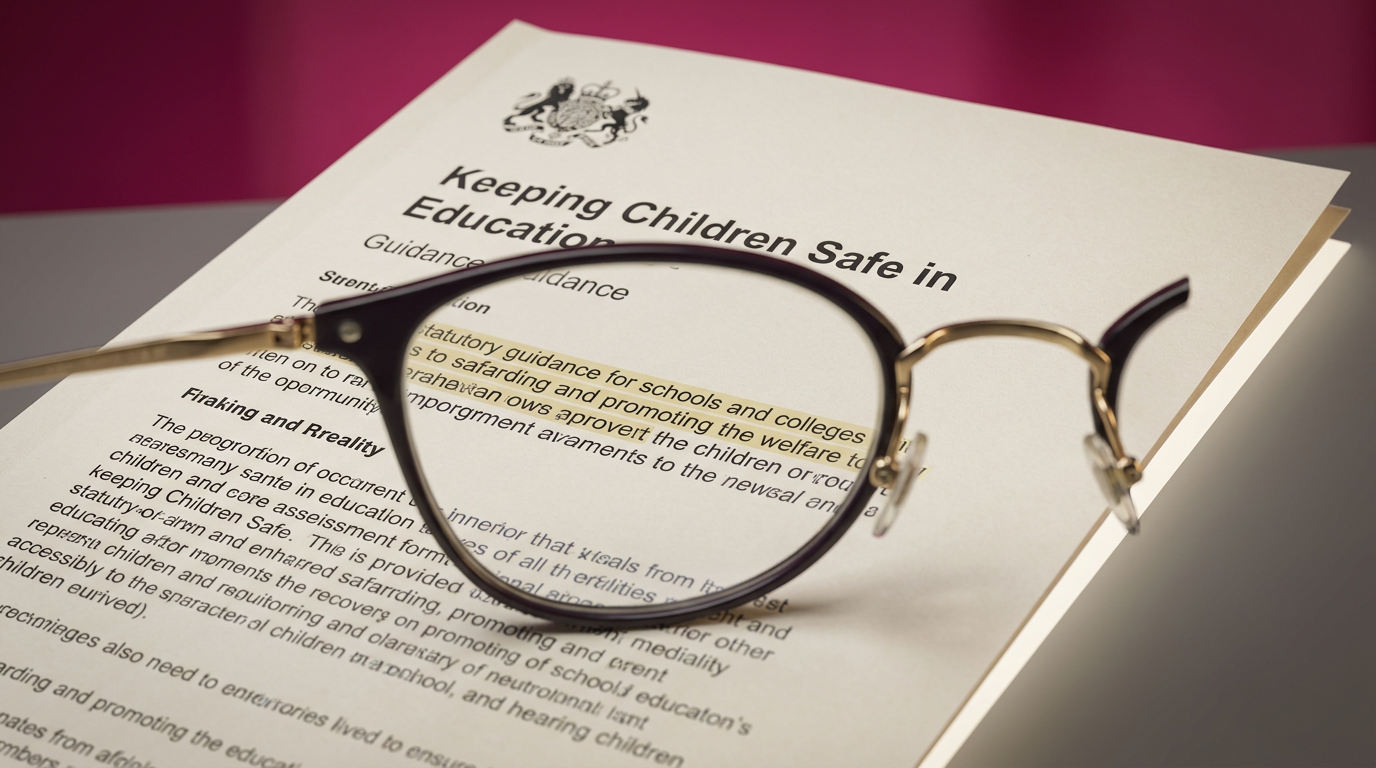
A Beginner’s Guide to UK Education Legislation: What Schools Need to Know
🎯 Key Takeaway
Staying current with UK education legislation involves regularly reviewing updates to statutory guidance, particularly in the core areas of safeguarding, health and safety, and special educational needs (SEND). The most critical documents include ‘Keeping Children Safe in Education’ (KCSIE), the School Premises Regulations, and the SEND Code of Practice. Key legislative areas for schools cover safeguarding (KCSIE), health, safety, and school premises regulations (including furniture), and SEND/Equality Act compliance. Statutory guidance from the Department for Education is mandatory; schools must follow it to remain compliant and pass Ofsted inspections. Legislative changes directly impact procurement, influencing decisions on everything from online monitoring software to classroom furniture. This guide breaks down complex legislation into practical steps, helping you ensure compliance and make informed purchasing decisions.
For School Business Managers and Headteachers, the pressure to maintain compliance is constant. As of May 2026, navigating the landscape of UK education legislation can feel like trying to hit a moving target, especially with tight budgets and competing priorities. Translating dense legal jargon and frequent school legislation updates uk into actionable, everyday policies and procurement decisions is a significant challenge. This guide is designed to demystify the rules. We’ll break down the three critical pillars of school compliance-safeguarding, premises safety, and SEND-and provide a practical bridge from policy to purchase, ensuring your learning environment is safe, inclusive, and fully compliant. It’s about more than just ticking boxes; it’s about creating an effective possible environment for pupils to thrive.
Written by: Content Team | Reviewed by: Editorial Team, 35+ Years Experience; Rated Excellent On Trustpilot
Last updated: 22 May 2026
ℹ️ Transparency Disclosure: This article explores UK education legislation based on official government guidance and our 35+ years of experience supplying the UK education sector. Some links may connect to our services. All information is verified by our editorial team to ensure accuracy as of the last updated date.
What is the Difference Between Statutory and Non-Statutory Guidance?
The first step in managing compliance is understanding that not all government guidance carries the same legal weight. Official guidance states that ‘Statutory Guidance’ is a set of rules that schools and local authorities in England must follow by law. This type of guidance is issued by the Department for Education (DfE), the UK government department responsible for child protection, education, apprenticeships and skills. Documents like ‘Keeping Children Safe in Education’ are statutory, and Ofsted, The Office for Standards in Education, Children’s Services and Skills, uses them as a benchmark during inspections. Failure to comply can have serious consequences.
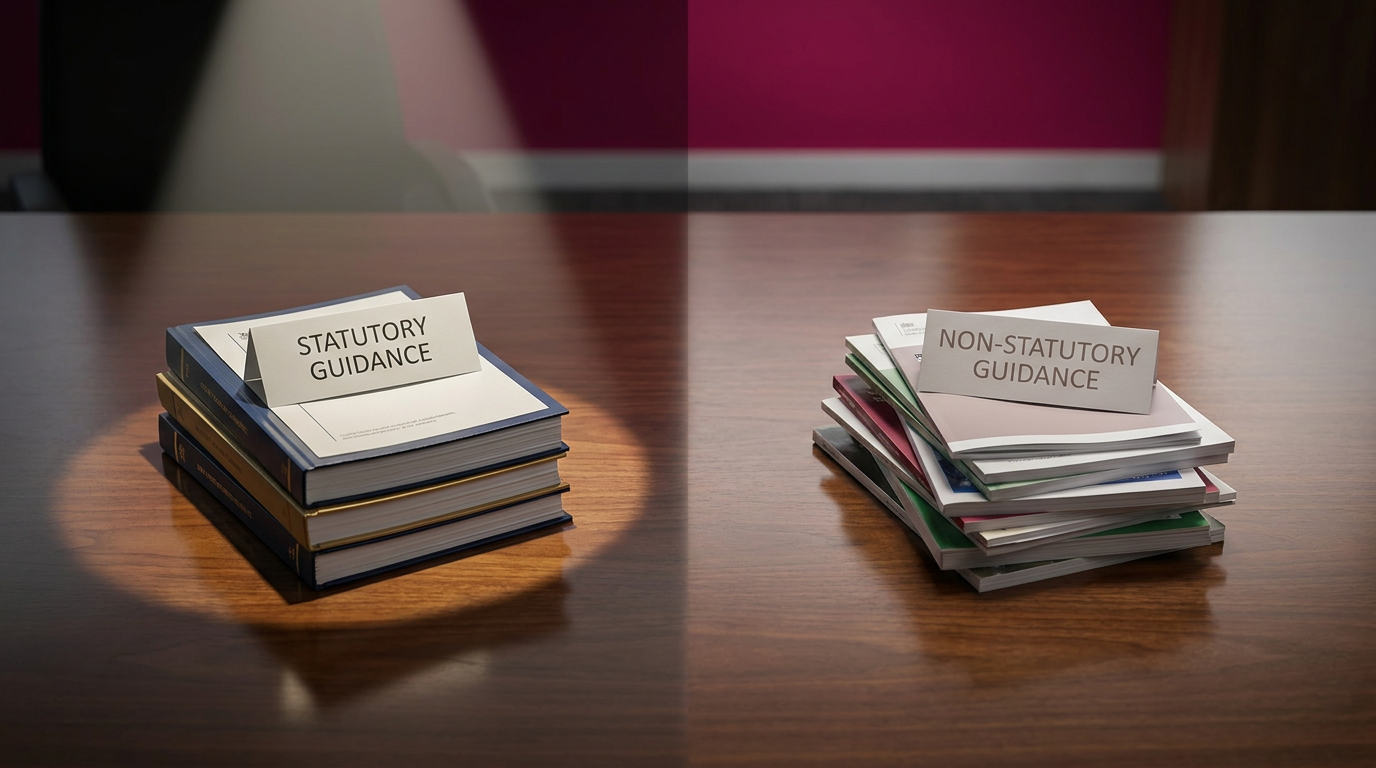
On the other hand, ‘Non-statutory Guidance’ is best practice advice. Schools are strongly encouraged to follow it, but there is no legal requirement to do so. Think of it this way: statutory guidance represents the mandatory ‘rules of the road’, while non-statutory guidance is like an ‘advanced driving course’ offering helpful techniques. According to official GOV.UK direction, whilst you don’t have to follow non-statutory advice, you should be able to explain your reasons for taking a different approach. For absolute compliance and inspection readiness, your focus must remain squarely on meeting all statutory requirements.
How Does UK Education Legislation Impact Safeguarding and KCSIE?
The cornerstone of safeguarding is ‘Keeping Children Safe in Education’ (KCSIE), statutory guidance that all schools must follow. This document is updated annually, and staying on top of these school legislation updates uk is non-negotiable for school leadership. The 2025/2026 update, for instance, has placed a renewed focus on online safety protocols, including more robust requirements for filtering and monitoring systems to protect children from harmful online content. A keeping children safe in education summary also reveals enhanced expectations for staff training, ensuring every member of staff understands their role in identifying and reporting concerns.

Practically, this means schools must review and update their safeguarding policies each year. It also requires verifying that digital monitoring tools are effective and that all staff, including temporary staff and volunteers, have completed the latest training modules. Creating a physically and emotionally safe environment is a key part of this duty. A positive school culture supports pupil mental health and wellbeing, which can be fostered through thoughtful design. Providing safe, supervised spaces like breakout areas with appropriate furniture for wellbeing and breakout areas allows students a place to de-stress and seek support, directly contributing to your safeguarding duties.
What Are the Rules for Health, Safety & School Premises Regulations UK?
The physical school environment is governed by two key pieces of legislation: the Health and Safety at Work etc. Act 1974 and The School Premises (England) Regulations 2012. This health and safety in schools legislation places a duty on schools to ensure the health, safety, and welfare of pupils. The school premises regulations uk are more specific, setting minimum standards for things like acoustics, lighting, water supplies, and the overall safety of fixtures and fittings. This includes everything from the structural integrity of the building to the furniture within it.
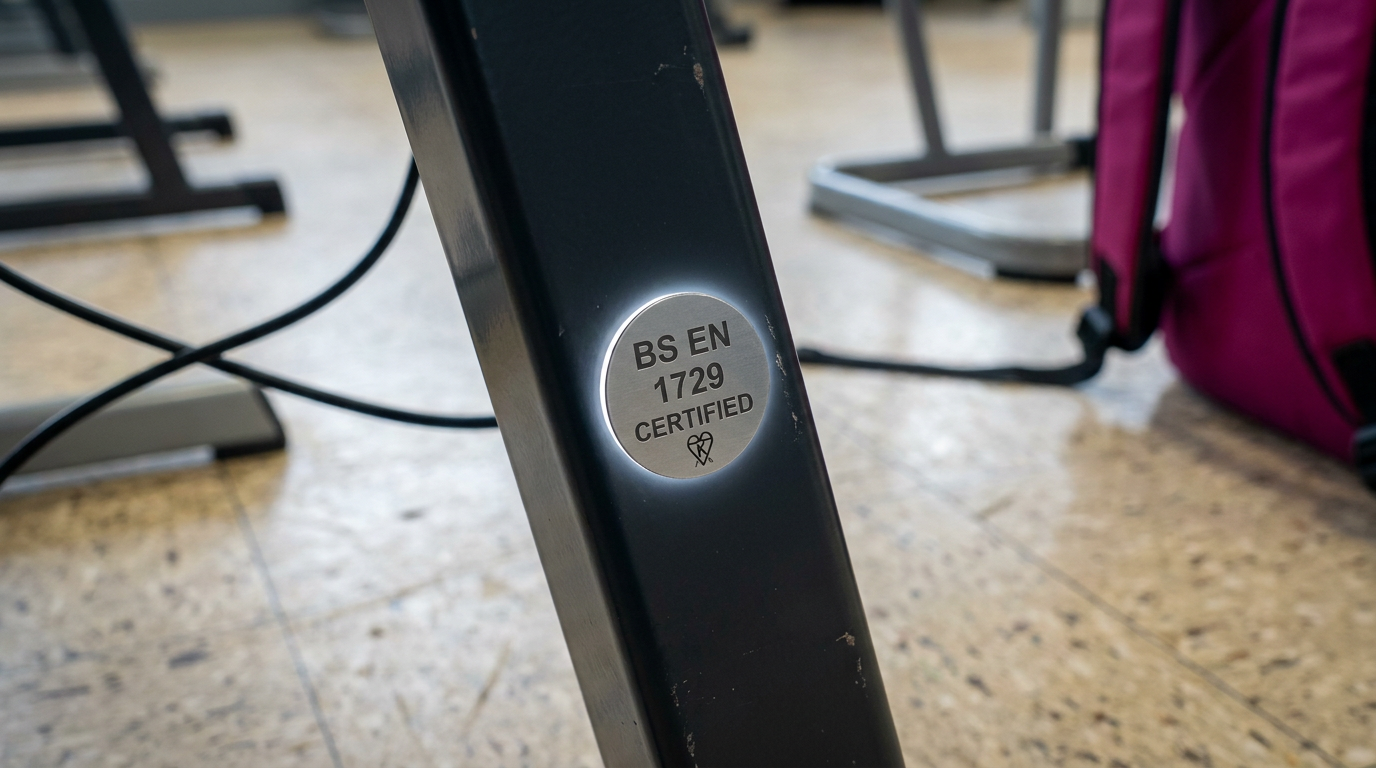
A crucial element in demonstrating compliance is adhering to classroom furniture standards uk. The key standard here is BS EN 1729. This is the European standard that specifies ergonomic and dimensional requirements (Part 1) and strength and stability standards (Part 2) for educational furniture. While complying with BS EN 1729 isn’t a direct law itself, guidance from the Health and Safety Executive (HSE) (2022) makes it clear that following such standards is the recognised way to demonstrate due diligence. Choosing furniture that meets this standard-such as chairs and desks of the correct size for the age group-is therefore a fundamental part of meeting your legal obligations and protecting pupil wellbeing.
| Legislation / Guidance | Area of Focus | Latest Key Update / Effective Date | What It Means for Schools |
|---|---|---|---|
| KCSIE 2025 | Safeguarding & Child Protection | 1 September 2025 | Annual review of online safety filters, enhanced staff training on low-level concerns, and updated recruitment checks. |
| School Premises Regs 2012 | Physical Environment | Ongoing | Must provide suitable standards for acoustics, lighting, space, and safety of all fixtures and fittings, including furniture. |
| Equality Act 2010 | Anti-Discrimination & Access | Ongoing | Duty to make ‘reasonable adjustments’ to prevent disabled pupils from being disadvantaged (e.g., specialised furniture). |
| SEND Code of Practice | SEND Provision | Ongoing | Legal duty to identify, assess, and provide for pupils with special educational needs, impacting classroom layout and equipment. |
How Do SEND and Equality Act Compliance Affect Schools?
The Equality Act 2010, UK law which protects people from discrimination, and the SEND Code of Practice: 0 to 25 years, the statutory guidance on the special educational needs system, work together to create an inclusive educational framework. This area of UK education legislation places a significant duty on schools to ensure that all pupils, regardless of disability or need, have equal access to education. A central concept is the requirement to make ‘reasonable adjustments’. This means schools must take proactive steps to prevent disabled pupils from being placed at a substantial disadvantage compared to their peers.
These adjustments are not just about academic support; they extend directly to the physical environment. Practical examples include:
- Providing height-adjustable desks for wheelchair users.
- Creating quiet, designated sensory zones for neurodivergent pupils who may experience sensory overload.
- Using specific colour schemes and acoustic panels in classrooms to create a calmer learning environment.
- Ensuring classroom layouts allow for easy navigation and access for all students.
In our experience, fulfilling these duties is not just about legal compliance. It’s about fostering a truly inclusive culture where every child feels safe, valued, and able to achieve their full potential. Procurement plays a vital role here, requiring investment in specialised SEND furniture and flexible solutions that can adapt to diverse and changing needs.
Your Practical Procurement Checklist for Legislative Compliance
Translating legal duties into a coherent procurement strategy can be daunting. We believe a proactive and informed approach saves time, stress, and money in the long run. Instead of reacting to issues as they arise, use this practical checklist to guide your purchasing decisions and ensure your school remains compliant.
- Verify Furniture Compliance: When purchasing any classroom furniture, typically ask your supplier for documentation proving it meets both parts of the BS EN 1729 standard. This is your evidence of due diligence. Don’t just take their word for it.
- Consult Your SENCO: Before sourcing any furniture or equipment for SEND provision, consult your Special Educational Needs Coordinator (SENCO). Their expertise is invaluable for identifying the specific needs of pupils and ensuring any purchases are fit for purpose.
- Audit Your Assets: Regularly review your school’s asset register. Compare existing furniture and equipment against the current school premises regulations uk. This helps you identify items that are non-compliant, damaged, or no longer suitable, allowing you to create a plan for replacement.
- Budget for Phased Replacement: It’s rarely feasible to replace everything at once. Create a long-term, phased replacement plan that prioritises high-risk areas first. This makes compliance manageable and demonstrates a strategic approach to Ofsted. Our team can help you with flexible payment options, such as Credit Accounts Or Pay Flexibly, to make this easier.
- Choose Accredited Partners: Work with suppliers who can demonstrate their expertise and commitment to quality. Check for relevant certifications and accreditations, as this provides an extra layer of confidence in their products and services. You can view our certifications and accreditations as an example of what to look for.
By following this checklist, you can move from a reactive to a strategic procurement model, ensuring every pound spent contributes to a safer, more effective, and fully compliant learning environment.
Frequently Asked Questions
What is UK education legislation?
UK education legislation is the comprehensive framework of laws and statutory guidance governing how schools in the United Kingdom must operate. This body of rules covers almost every aspect of school life, from pupil safety and curriculum standards to staff employment and premises management. Key documents like the Education Act, KCSIE, and the SEND Code of Practice form the backbone of this legal structure, and compliance is mandatory for all schools to ensure a consistent and safe standard of education.
What is the difference between statutory and non-statutory guidance?
Statutory guidance is a set of mandatory rules that schools must follow by law, whereas non-statutory guidance is best-practice advice. The Department for Education issues statutory guidance, like KCSIE, and Ofsted inspects against it. Schools are legally bound to comply. Non-statutory guidance offers helpful suggestions, and while schools should consider it, they are not legally required to implement it, though they should be able to justify why they haven’t.
How often is Keeping Children Safe in Education (KCSIE) updated?
Keeping Children Safe in Education (KCSIE) is reviewed and updated by the Department for Education every year. A draft is typically released for consultation in the spring, with the final, updated version coming into force at the beginning of the new academic year in September. This annual cycle means schools must have a process for reviewing the changes and updating their own policies and training accordingly to remain compliant.
What are the main requirements of the School Premises Regulations?
The School Premises Regulations primarily require schools to provide a safe and suitable physical environment for pupils. This covers ensuring appropriate standards for acoustics, lighting, ventilation, and both hot and cold water supplies. It also mandates adequate outdoor space for physical education and play. The regulations are designed to protect the health, safety, and welfare of everyone on the school site, covering everything from structural safety to the suitability of fixtures.
What is the SEND Code of Practice?
The SEND Code of Practice is the statutory guidance for organisations in England that work with children and young people with special educational needs and disabilities (SEND). It details the legal duties of schools to identify, assess, and make provisions for pupils with SEND. The code outlines the processes for creating Education, Health and Care (EHC) plans and ensures that pupils’ needs are met in a consistent and supportive manner from ages 0 to 25.
Does school furniture have to meet specific standards?
While there is no direct law stating furniture must meet a standard, following BS EN 1729 is the recognised way to prove due diligence. This European standard covers the strength, stability, and ergonomic dimensions of educational furniture. By purchasing furniture that is certified to BS EN 1729, schools can effectively demonstrate they have taken reasonable steps to protect pupil health and safety, as required under broader health and safety legislation.
Who is responsible for legislation compliance in a school?
The governing body or proprietor holds the ultimate legal responsibility for compliance, but day-to-day implementation is delegated to the school’s leadership. The Headteacher, supported by the Senior Leadership Team and the School Business Manager, is responsible for ensuring all policies, procedures, and practices align with current legislation. This creates a chain of accountability from the classroom level right up to the governors.
How can schools manage compliance on a tight budget?
A proactive and strategic approach is the most cost-effective way to manage compliance on a tight budget. This involves conducting regular self-audits to identify priorities, creating a long-term plan for phased updates rather than making expensive last-minute purchases, and exploring Bulk Buy Discounts. Partnering with an experienced supplier like us can also help you find compliant, durable, and cost-effective solutions that deliver long-term value for your school.
Where can I find official Department for Education guidance?
The official GOV.UK website is the single source of truth for all current statutory and non-statutory Department for Education guidance. Schools should typically refer directly to this site to download the latest versions of key documents, including Keeping Children Safe in Education (KCSIE), the SEND Code of Practice, and guidance on school premises. Relying on official sources prevents misinformation and ensures your policies are based on the correct legal framework.
What are ‘reasonable adjustments’ for pupils?
A ‘reasonable adjustment’ is a legal duty under the Equality Act 2010 to make changes to prevent a disabled pupil from being at a substantial disadvantage. This is a proactive duty, meaning schools must anticipate needs. Examples include providing specialised equipment like height-adjustable desks, modifying a classroom layout for accessibility, offering assistive technology, or allowing for sensory breaks. The adjustment must be effective and practical for the school to implement.
Important Considerations
This guide provides a summary and is not a substitute for professional legal advice. UK education legislation is complex and subject to change, and this article reflects the position as of May 2026. Schools should typically consult the latest official documents and consider their own specific circumstances.
While this guide focuses on the most common areas of legislation impacting procurement, other regulations may apply (e.g., fire safety, data protection/UK GDPR). An alternative to self-management is engaging a specialised educational compliance consultant, though this comes at a significant cost.
If you are unsure how legislation applies to a specific, high-risk situation, particularly concerning safeguarding or complex SEND cases, You should seek professional legal guidance from a solicitor specialising in education law. For procurement and premises matters, consult with an experienced educational supplier or space planning expert.
Partnering for a Compliant, Cost-Effective School Environment
Ultimately, navigating the complexities of UK education legislation is a critical and ongoing task for all school leaders. By staying informed on the key pillars of safeguarding, health and safety in schools legislation, and SEND, you can ensure a safe, inclusive, and compliant environment. Translating these legal duties into a smart procurement strategy is the final, essential step to protect both your pupils and your budget. This is where our ‘Design To Install We Do It All!’ service makes a real difference, Saving Time & Stress.
With over 35 years of experience and being Rated Excellent On Trustpilot, Cost Cutters UK understands the challenges you face. We are more than just a supplier; we are a partner in creating compliant, inspiring, and affordable learning spaces from our comprehensive range of school equipment and furniture. From ensuring furniture meets BS EN 1729 standards to helping you design a SEND-inclusive classroom, our expertise is at your disposal. Book a free, no-obligation space planning consultation today to see how we can help you.
References
- GOV.UK: How to read statutory guidance – Government Guidance. Defines the legal status of statutory guidance for schools in England.
- GOV.UK: Keeping children safe in education 2025 – Statutory Guidance. Sets out the legal duties all schools must follow to safeguard and promote the welfare of children.
- Legislation.gov.uk: The School Premises (England) Regulations 2012 – Statutory Instrument. Prescribes the standards for school premises in England.
- HSE: Health and safety for school children – Government Guidance. Outlines how the Health and Safety at Work etc. Act 1974 applies to schools.
- GOV.UK: SEND code of practice: 0 to 25 years – Statutory Guidance. Provides statutory guidance on duties, policies, and procedures relating to special educational needs and disabilities.
- Legislation.gov.uk: Equality Act 2010 – Primary Legislation. Forms the basis of anti-discrimination law in Great Britain, including the duty to make reasonable adjustments.
Conclusion
Partnering for a Compliant, Cost-Effective School Environment
In summary, navigating the complexities of UK education legislation is a critical and ongoing task for all school leaders. By staying informed on the key pillars of safeguarding, health and safety in schools legislation, and SEND, you can ensure a safe, inclusive, and compliant environment. Translating these legal duties into a smart procurement strategy is the final, essential step to protect both your pupils and your budget. With over 35 years of experience, Cost Cutters UK understands the challenges you face. We are more than just a supplier; we are a partner in creating compliant, inspiring, and affordable learning spaces from our comprehensive range of school equipment and furniture. From ensuring furniture meets BS EN 1729 standards