Beginner’s Guide to School Tables: Essential Types & Terminology for UK Schools
🎯 Key Takeaway
Selecting the right school tables involves understanding how table shape, material, and size directly impact learning environments, budgets, and compliance with UK safety standards. Table shape directly influences pedagogy; trapezoidal and circular tables encourage collaboration, whilst rectangular tables suit traditional layouts. Material choice is critical for longevity; high-pressure laminate tops with durable Polyurethane (PU) edging typically offer an effective long-term value against daily wear. Finally, compliance with the BS EN 1729 standard is essential for ensuring the correct ergonomic height and safety for pupils across all key stages. This guide provides the knowledge for making informed, compliant, and cost-effective procurement decisions.
Choosing the right school tables is an investment that goes far beyond simple classroom furnishing. For School Business Managers and Headteachers, this decision is a critical component of shaping the learning environment, safeguarding pupil wellbeing, and managing the school’s long-term budget. The sheer volume of options, coupled with complex school furniture terminology, can make procurement a daunting task. As of October 2026, getting it wrong can lead to costly replacements, non-compliance, and furniture that fails to support modern teaching methods. This authoritative guide demystifies the entire process. We will cover everything from material durability and ergonomic standards to matching table types with pedagogical goals, helping you select quality classroom tables UK schools can rely on for years.
👤 Written by: Content Team
Reviewed by: Costcutters UK Editorial Team, Industry Specialists with 35+ Years Experience; Rated Excellent On Trustpilot
Last updated: 15 October 2026
ℹ️ Transparency Disclosure: This article explores the selection criteria for school tables based on our 35+ years of industry experience and analysis of UK and European safety standards. Our goal is to provide clear, actionable advice. Some links may connect to our product and service pages. All information is verified by our editorial team to ensure accuracy. Costcutters UK is a trusted partner to thousands of educational institutions across the country.
Decoding the Jargon: A Glossary of Essential School Table Terminology
Understanding the language used by furniture suppliers is the first step to making a confident purchase. This glossary defines the core terms you’ll encounter, helping you compare products accurately and avoid common pitfalls. Knowing this school furniture terminology is key to assessing quality.
- High-Pressure Laminate (HPL) is a highly durable surface material created by fusing multiple layers of paper with resin under intense heat and pressure. It’s the gold standard for school table tops due to its superior resistance to scratches, heat, and impact.
- Medium-Density Fibreboard (MDF) refers to an engineered wood product made by breaking down wood fibres and combining them with wax and resin. It creates a dense, smooth, and stable core for laminate tops, superior to cheaper particleboard.
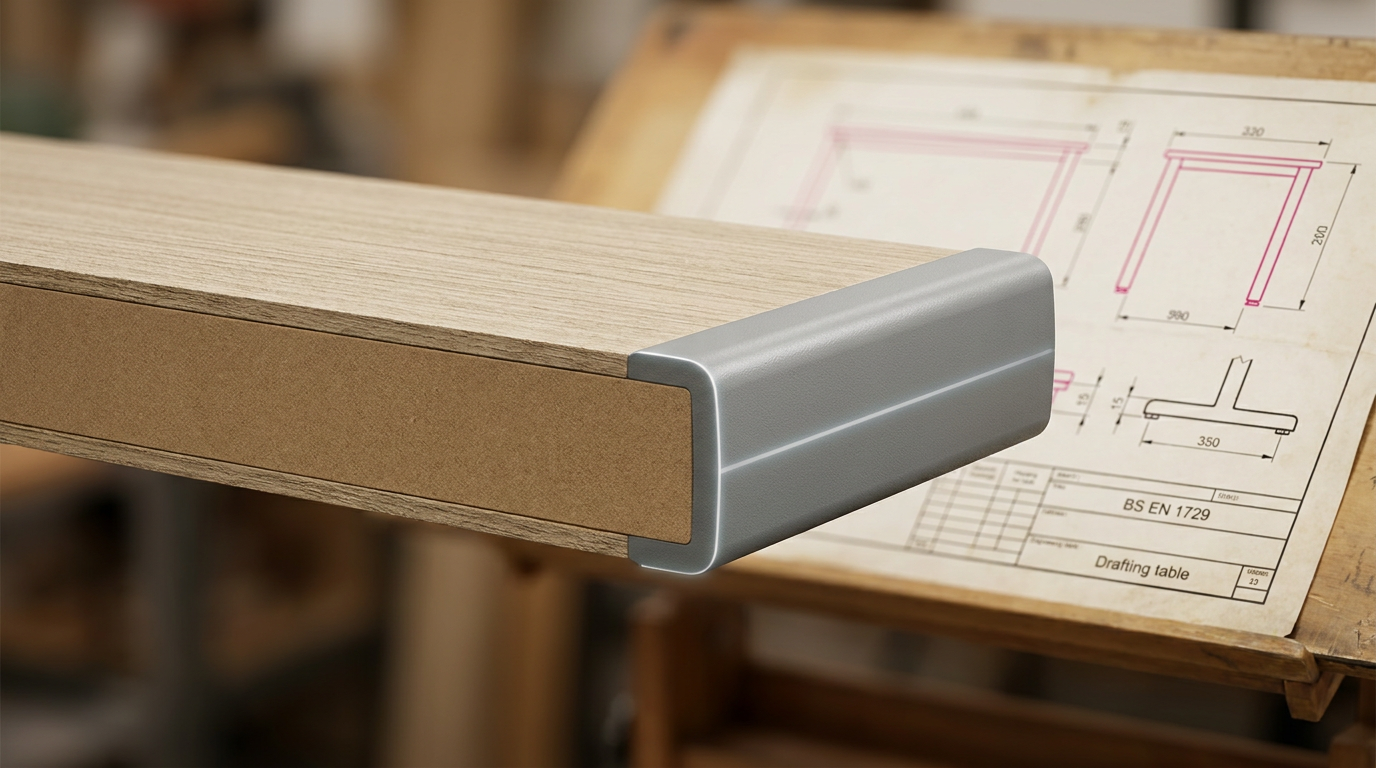
- PU (Polyurethane) Edge is a cast, high-impact resin applied as a liquid to the edge of a tabletop, where it cures to form a smooth, waterproof, and tamper-proof seal. In our experience, it’s the most durable edging available.
- ABS (Acrylonitrile Butadiene Styrene) Edge is a tough, rigid plastic strip that is glued to the edge of a tabletop. While very durable and impact-resistant, the bonded seam can be a point of failure if subjected to moisture or persistent picking.
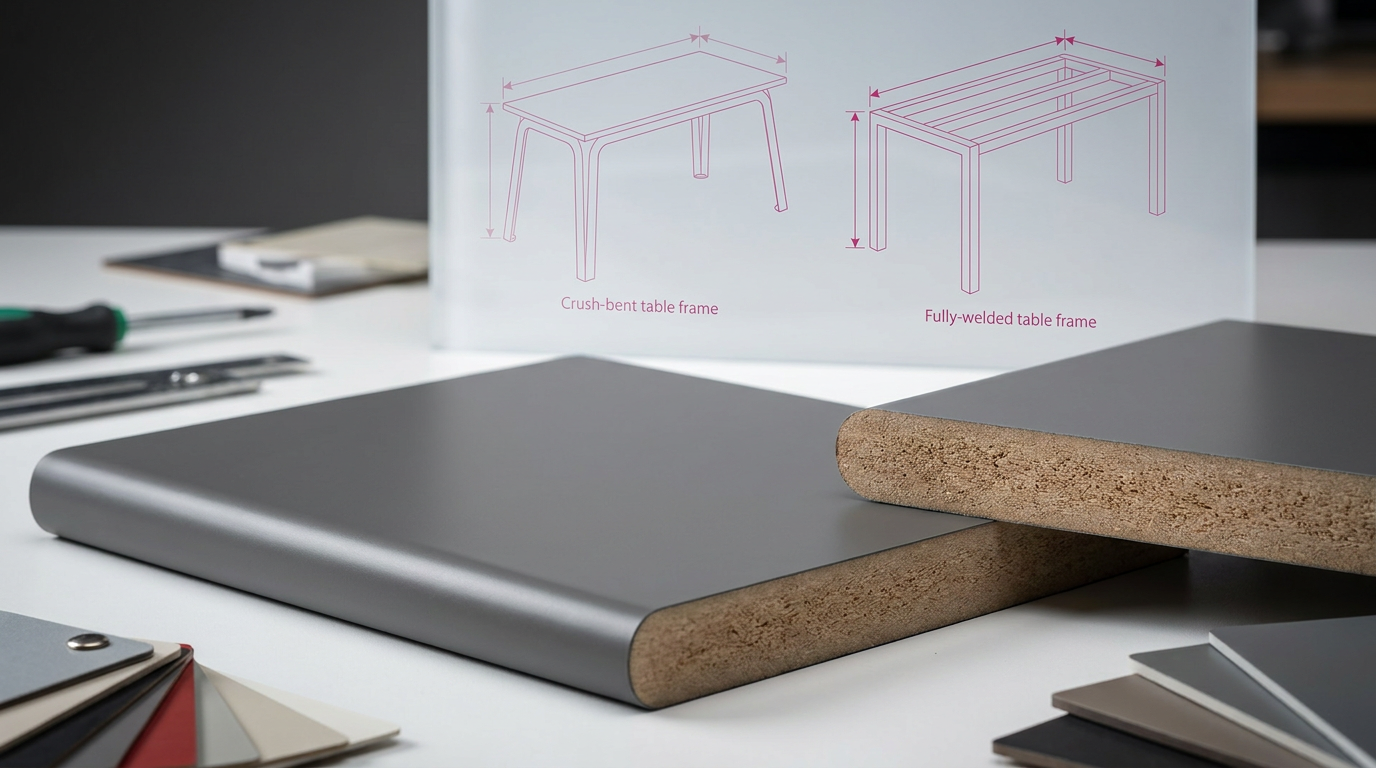
- Crush Bent Frame is a type of table frame manufactured by bending a single piece of steel tubing to form the legs. This design allows tables to be stacked, making them effective for multi-purpose halls.
- Fully Welded Frame describes a table frame where the legs and subframe are welded together into a single, rigid unit. This construction offers maximum strength and stability but means the tables are not stackable.
What Are the Core Types of School Tables? Matching Shape to Function
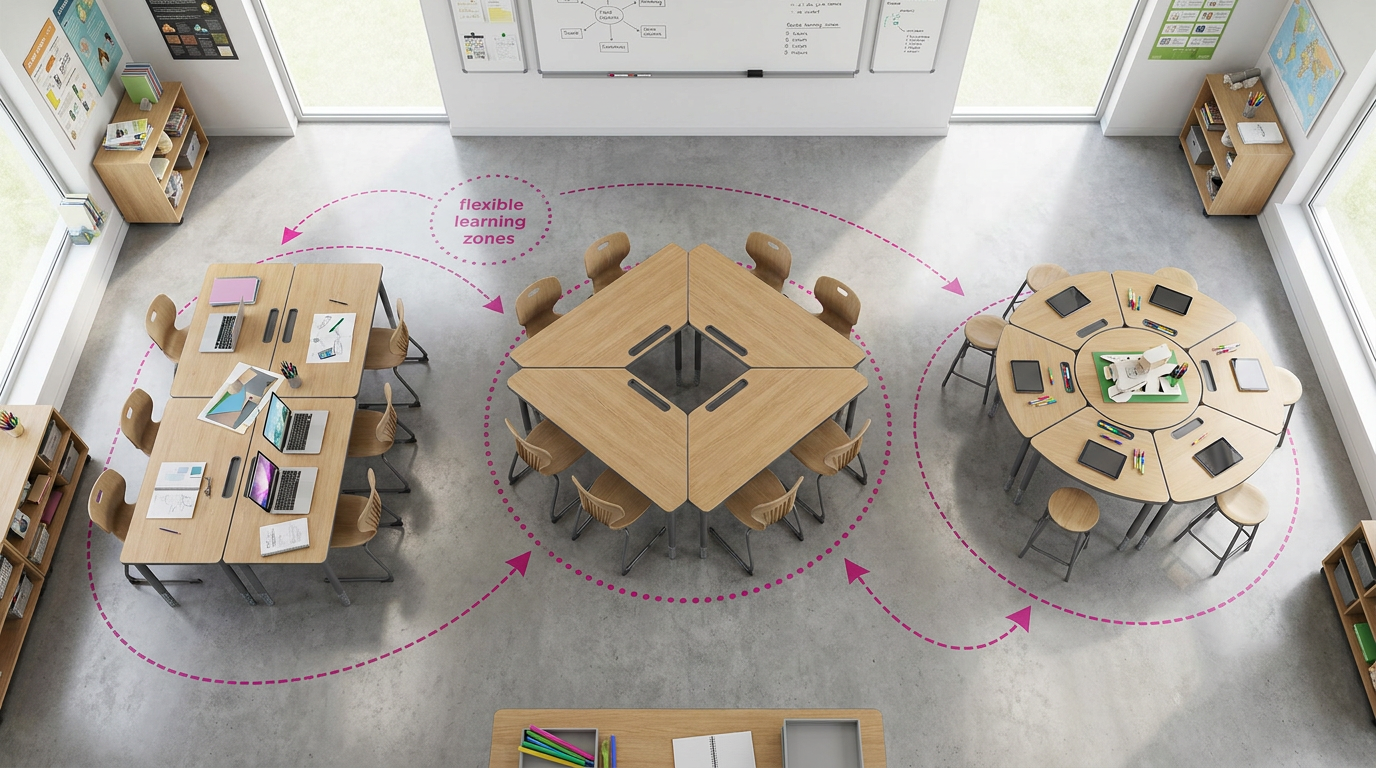
The shape of a school table is not merely an aesthetic choice; it fundamentally influences classroom management, interaction, and learning activities. Selecting the right school table types allows you to create flexible and effective learning zones that align with your school’s pedagogical approach. Modern teaching practices, which often favour collaborative work, are better supported by specific table shapes.
- Rectangular & Square Tables: These are the traditional workhorses of the classroom. They are effective for individual work, examinations, and front-facing instruction. Their straight edges allow for efficient use of floor space when arranged in rows or against walls.
- Circular & Semi-Circular Tables: well-suited for group discussions, collaborative projects, and teacher-led activities in Early Years Foundation Stage (EYFS) and primary settings. Their curved design ensures no child is at the ‘head’ of the table, promoting a more inclusive and interactive environment.
- Trapezoidal & Crescent Tables: These are the most versatile shapes for creating flexible learning spaces. They can be used individually, in pairs, or clustered together into hexagonal or circular configurations for group work. This adaptability is invaluable for modern, dynamic classrooms.
Our experience shows that a mix of shapes often provides an effective solution, allowing educators to reconfigure a room quickly. This flexibility is key to Saving Time & Stress when adapting to different lesson plans.
How Do You Choose Durable School Tables Based on Materials?
Choosing durable school tables is one of the most effective ways to maximise your budget and reduce long-term costs. A table’s longevity is determined by the quality of its top, edge, and frame. Focusing on these three components ensures you are investing in furniture that can withstand the rigours of a busy school environment.
The tabletop is the most critical element. While solid wood has a traditional appeal, a High-Pressure Laminate (HPL) surface bonded to a dense MDF core is the superior choice for most educational settings. According to the British Educational Suppliers Association (BESA), whose members are bound by a Code of Practice, furniture must be fit for purpose, and HPL meets this requirement by providing exceptional resistance to wear, scratches, and heat.
The edge of the table is its most vulnerable point. A sprayed-on PU edge is the most reliable option as it is smooth, water-impermeable, and almost impossible for pupils to pick at. Cheaper PVC or T-mould edgings have seams that can trap dirt and be peeled away, leading to premature failure.
Finally, inspect the frame. A fully welded steel frame offers the greatest strength and is effective for high-impact environments like science labs. For multi-purpose spaces, a crush-bent frame offers a good balance of durability and stackability. A powder-coated finish provides a tough, chip-resistant layer of protection that will outlast simple painted finishes. While the initial outlay may be higher, choosing durable components significantly lowers the total cost of ownership.
Hypothetical Case Study: A Primary School’s Furniture Overhaul
- Challenge: A multi-academy trust was spending an average of £15,000 annually across three of its primary schools to replace classroom tables with damaged tops and peeling edges, impacting budgets and creating a poor learning environment.
- Solution: We implemented a phased replacement programme, specifying tables with 18mm MDF cores, HPL tops, and hard-wearing, cast PU edging. The trust was able to use our Bulk Buy Discounts to stay within budget.
- Results: After two years, requests for replacement tables dropped by over 90%. The trust reported an estimated saving of £25,000 in replacement and repair costs over the period, and teachers noted an improved classroom aesthetic.
- Key Insight: Focusing on total cost of ownership by investing in durable materials like HPL and PU edging provides far greater long-term value than choosing the cheapest upfront option.
What Are the UK Sizing and Safety Standards (BS EN 1729)?
Compliance with BS EN 1729 is the most important factor when procuring furniture for UK schools. This is the European and British standard that specifies the functional dimensions and safety requirements for chairs and tables in educational institutions. It is not just guidance; it’s a critical framework for ensuring pupil wellbeing and protecting the school from liability. Adhering to these UK safety standards for school tables is non-negotiable.
The standard is split into two key parts:
- BS EN 1729 Part 1: Functional Dimensions. This part deals with ergonomics. It specifies the correct table heights, chair heights, and dimensions for different age groups to ensure good posture and comfort. Following this school table height guide helps prevent musculoskeletal issues, which the European Agency for Safety and Health at Work (EU-OSHA) identifies as a major health risk. Getting the size right is fundamental to creating a comfortable learning environment where pupils can concentrate.
- BS EN 1729 Part 2: Safety Requirements and Test Methods. This part ensures the furniture is structurally safe and stable. Tables are subjected to rigorous testing for strength, stability, and durability to ensure they can withstand the demands of a school environment without tipping over or breaking.
When buying, typically look for a clear declaration of compliance from the supplier. At Cost Cutters UK, we ensure our educational furniture meets these exacting standards, a cornerstone of our “Design To Install We Do It All!” service.
BS EN 1729 Size Guide for Tables & Chairs
| Size Mark | Colour Code | Recommended Age Range (Years) | Chair Seat Height (mm) | Table Height (mm) |
|---|---|---|---|---|
| 1 | Orange | 3 – 4 | 260 | 460 |
| 2 | Violet | 4 – 6 | 310 | 530 |
| 3 | Yellow | 6 – 8 | 350 | 590 |
| 4 | Red | 8 – 11 | 380 | 640 |
| 5 | Green | 11 – 14 | 430 | 710 |
| 6 | Blue | 14+ | 460 | 760 |
Important Considerations: Beyond the Basics
This guide provides a framework for selecting standard school tables. However, it does not cover specialised furniture for science labs, IT suites, or art rooms, which have unique requirements for chemical resistance, cable management, or surface durability. The recommendations are general and should be adapted to your specific classroom layout, pupil demographics, and teaching objectives. For instance, choosing durable school tables is typically important, but the definition of ‘durable’ changes when chemical resistance is a factor.
Whilst this guide focuses on traditional tables, schools should also consider alternative classroom furniture. Standing desks, wobble stools, and floor cushions can complement standard tables to create a more dynamic and inclusive learning environment, particularly in EYFS and KS1 settings. These options, like multi-functional nursery furniture, can help address sedentary behaviour as highlighted by the World Health Organization (WHO) (2020) in their global health guidelines. It’s about creating a blended environment.
For large-scale procurement, a full classroom refurbishment, or navigating complex room layouts, we strongly recommend professional guidance. A furniture specialist can provide a free space plan and 3D visuals to ensure optimal traffic flow, capacity, and use of space. This expert consultation can prevent costly purchasing errors and ensure the final result meets your school’s specific needs, embodying our “Design To Install We Do It All!” philosophy.
Frequently Asked Questions About Buying School Tables
What are school tables?
School tables are specialised furniture designed specifically for educational environments, built to withstand heavy use. Unlike domestic tables, they must meet strict durability, safety, and ergonomic standards to be fit for purpose. In the UK, this means complying with regulations like BS EN 1729 to ensure they are the correct size and structurally sound for pupils, making them a safe and long-lasting investment for schools.
How do I choose the right height for school tables?
You should choose the height based on the age of the pupils, following the BS EN 1729 school table height guide. This standard uses a ‘Size Mark’ system, which corresponds to specific age groups and links a recommended table height to a matching chair height. For example, a Size Mark 3 is for 6-8 year olds and requires a 590mm high table. Typically match the table and chair Size Marks.
What is the most durable material for a classroom table top?
A high-pressure laminate (HPL) surface bonded to a high-density MDF core is the most durable option for the vast majority of UK classrooms. This combination offers superior resistance to scratches, heat, water, and general wear and tear. It provides an effective long-term value and is far more resilient than cheaper materials like Melamine Faced Chipboard (MFC), making it the standard for quality educational furniture.
Are stackable tables a good idea for schools?
Yes, stackable tables with crush-bent or Z-frames are an excellent choice for multi-purpose spaces like school halls, canteens, or flexible classrooms. Their primary benefit is efficient storage, allowing you to reclaim floor space quickly and easily. However, for dedicated classrooms where stacking isn’t needed, a fully-welded frame typically offers slightly greater rigidity and stability over the long term.
What’s the difference between a PU edge and an ABS edge?
A PU (polyurethane) edge is a smooth, cast moulding, whereas an ABS edge is a glued-on plastic strip. The main advantage of PU is that it’s completely impervious to water and has no seam, making it extremely difficult to damage or pick at. While ABS is also a very hard-wearing material, the bonded seam can be a potential weak point over time, especially if exposed to moisture.
How much should I budget for new school tables?
The cost can vary significantly, from around £40 for a basic primary table to over £150 for a specialised science or craft bench. The price depends on size, tabletop material, edge type, and frame construction. We advise schools to focus on the total cost of ownership; a slightly more expensive but durable table will almost typically be cheaper in the long run than a basic model that needs replacing sooner.
What are the best school table types for collaborative work?
Trapezoidal, circular, semi-circular, and flower-shaped tables are an effective options for fostering collaborative learning. Their shapes allow pupils to sit in small groups and face each other, which encourages communication and teamwork. Many of these school table types are designed to be tessellated, allowing you to create larger working pods for bigger projects, offering great flexibility for modern teaching styles.
How can I check if a table is compliant with UK standards?
You should typically check the product specification for a clear statement of compliance with ‘BS EN 1729 Parts 1 & 2’. Reputable UK suppliers, especially members of the British Educational Suppliers Association (BESA), will provide this information clearly on their website or in their catalogues. If in doubt, do not hesitate to ask the supplier for a certificate of compliance before purchasing.
Are height-adjustable tables worth the extra cost?
Height-adjustable tables can be a very worthwhile investment for specific applications, such as for pupils with special educational needs (SEN) or in shared resource areas. They offer excellent flexibility, as one table can be used by pupils of different ages or to accommodate wheelchair users. While the upfront cost is higher, their versatility can make them a smart, long-term addition to your school’s furniture inventory.
What is the typical warranty on classroom tables in the UK?
A typical warranty for quality classroom tables in the UK ranges from 5 to 10 years for the frame and 2 to 5 years for the tabletop. This variation depends on the materials used. A longer warranty is a strong indicator of the manufacturer’s confidence in the product’s durability and construction. Typically confirm the specific warranty details before making a purchase decision.
Making a Smart, Compliant Choice for Your School
Choosing the right school tables is a crucial decision that impacts pupil comfort, classroom management, and your school’s long-term budget. By focusing on compliant sizing with the BS EN 1729 guide, selecting durable materials like HPL tops with PU edging, and matching table shapes to pedagogical goals, you can ensure a successful investment. This informed approach moves beyond price alone to prioritise safety, ergonomics, and value, which is a core part of an effective your overall school furniture procurement strategy.
At Cost Cutters UK, we’ve helped schools across the country make these important decisions for over 35 years, and we’re Rated Excellent On Trustpilot for our service. Our team understands the unique pressures of school procurement and offers flexible payment options, including Credit Accounts Or Pay Flexibly. If you need help planning your next project or require a large quantity of furniture, request a free space plan and quote from our experts today.
References
- Health and Safety Executive (HSE) – UK Government Guidance. Provides legal requirements and practical advice for workstation ergonomics under the DSE Regulations 1992, applicable to staff and older students.
- European Agency for Safety and health at Work (EU-OSHA) – EU Research Body. Highlights poor workstation design as a key risk factor for musculoskeletal disorders (MSDs), reinforcing the need for correct ergonomic furniture in schools.
- Department for Education (EYFS Framework) – UK Government Statutory Framework. Mandates that premises, environment, and equipment in Early Years settings must be safe and suitable for their purpose.
- British Educational Suppliers Association (BESA) – Professional Organisation Code of Practice. Requires member suppliers to ensure products are fit for purpose, safe in use, and of a quality appropriate for the educational environment.
- World Health Organization (WHO) – Global Health Guidelines (2020). Recommends limiting sedentary time and promoting physical activity, which supports the use of flexible and varied furniture in schools.
- Statista – Market Research Data (2024). Projects UK office furniture market revenue at £1.80bn, illustrating the scale of furniture procurement by organisations.
- UK Educational Furniture – Industry Guide. Provides practical advice on applying the BS EN 1729 standard for matching table and chair heights to student age groups.
- Edu-Quip – Supplier Buying Guide. Offers a commercial perspective on selecting appropriate tables and chairs, covering materials and shapes for different classroom needs.
- Rosehill Furniture – Supplier Buying Guide. Details the various types of school tables available and their effective use cases, from traditional rectangular to flexible modular designs.
Conclusion
Making a Smart, Compliant Choice for Your School
In summary, school tables are a foundational investment that significantly impacts pupil comfort, classroom effectiveness, and your school’s long-term budget. By focusing on compliant sizing according to the BS EN 1729 guide, selecting durable materials like HPL tops with resilient PU edging, and matching table shapes to your pedagogical goals, you can secure a successful, lasting purchase. This informed approach prioritises safety, ergonomics, and overall value, moving beyond initial price alone.
At Costcutters UK, we have over 35 years of experience helping schools across the country make these important decisions. Our team understands the unique pressures of school procurement and is dedicated to finding the right solutions for your needs. If you need help planning your next project or require a large quantity of furniture, request a free space plan and quote from our experts today.