Essential Tools for School Table Maintenance: A UK Guide
🎯 Key Takeaway
Effective school table maintenance is a scheduled programme of cleaning, inspection, and repair designed to ensure pupil safety, extend furniture lifespan, and significantly reduce long-term costs for UK schools. A proactive maintenance schedule prevents minor issues like wobbly legs from becoming costly structural failures. Using the correct, pH-neutral cleaning agents for specific surfaces like laminate or wood prevents damage and preserves appearance. Regular school furniture safety checks are essential for complying with UK regulations, including BS EN 1729 and Health and Safety Executive (HSE) guidelines, making maintenance a critical operational task. This guide provides the checklists and practical instructions UK School Business Managers need to implement a successful maintenance programme.
In the face of intense budget pressures across the UK education sector, effective school table maintenance emerges not as a chore, but as a powerful financial strategy. A proactive approach to classroom table maintenance extends the life of these valuable assets, ensures a safe and conducive learning environment, and crucially, prevents the need for expensive, unplanned emergency replacements. It’s a core part of asset management that pays dividends. As of Q3 2026, with schools focused on maximising every pound, a reliable maintenance plan is more important than ever. This guide covers the essential tools, a practical schedule, common repairs, and the vital UK compliance checks you need to know. For those whose furniture is beyond repair, consider our guide on choosing the right new school tables.
Written by: Cost Cutters UK Content Team | Reviewed by: Editorial Team, 35+ Years Experience; Rated Excellent On Trustpilot
Last updated: 15 September 2026
ℹ️ Transparency Disclosure: This article explores best practices for school table maintenance based on over 35 years of industry experience and our analysis of UK safety regulations. Our goal is to provide authoritative, practical advice. Some links may connect to our services or recommended products that we believe offer excellent value. All information is verified by our editorial team for accuracy. Cost Cutters UK is a trusted supplier to the UK education sector, something reflected in being Rated Excellent On Trustpilot.
The Essential School Table Maintenance Toolkit: A Checklist
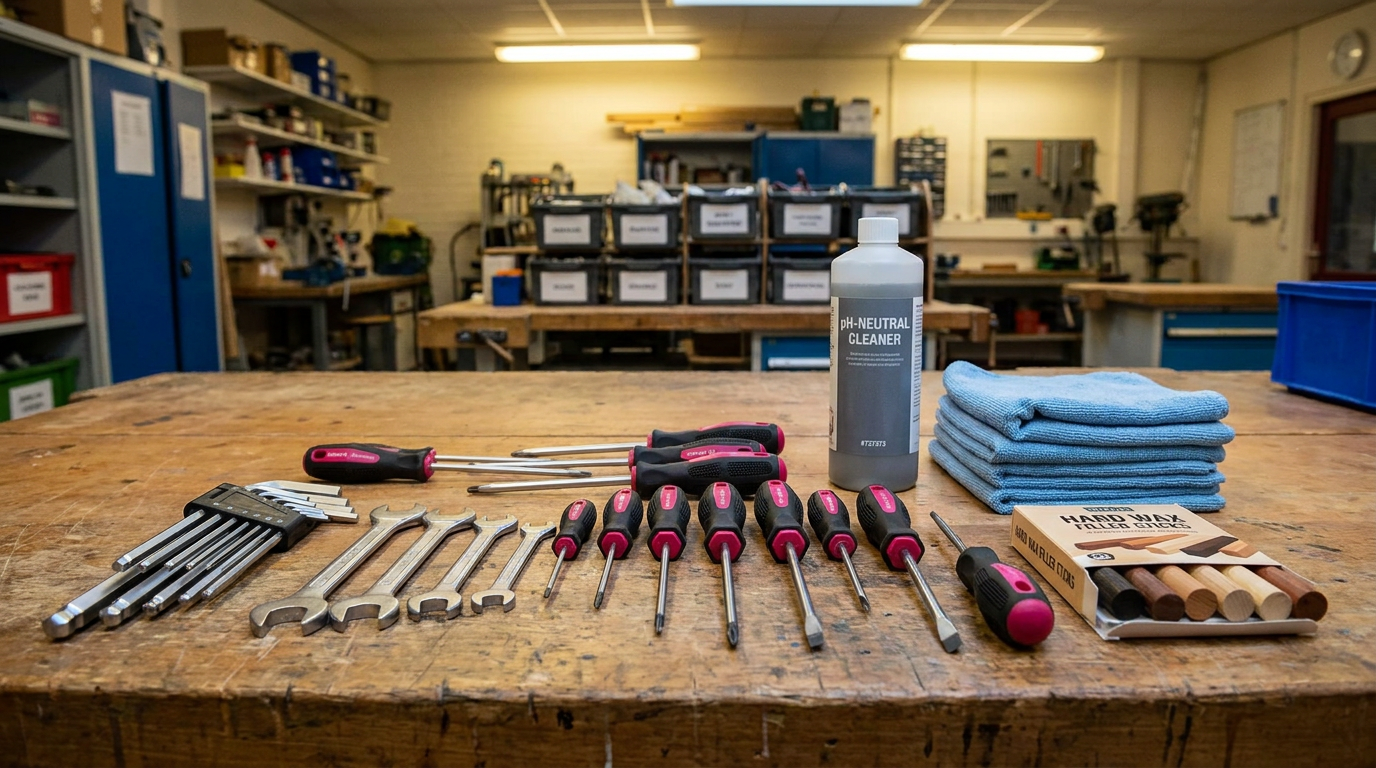
Building an effective maintenance toolkit doesn’t require a huge investment. In our experience, having the right tools organised and accessible is the key to efficient classroom table maintenance. This simple checklist covers the essentials for cleaning, inspection, and minor repairs, allowing your site team to tackle most common issues swiftly. We recommend investing in durable, good-quality tools, as they will withstand the demands of a busy school environment far better than cheaper alternatives, ultimately offering better value.
| Task Category | Specific Task | Recommended Tool/Product | Recommended Frequency |
|---|---|---|---|
| Cleaning | Daily surface wipe-down | pH-neutral multi-surface spray & microfibre cloths | Daily |
| Cleaning | Stubborn mark/graffiti removal | Isopropyl alcohol or specialist graffiti remover | As needed |
| Inspection | Checking frame and leg fixings | Set of Allen keys & adjustable spanners | Weekly / Half-Termly |
| Repair | Tightening loose components | Screwdriver set (Pozi & flathead) & socket set | As needed |
| Repair | Fixing chipped laminate/MDF edges | Colour-matched hard wax filler sticks & smoothing tool | As needed |
Developing a Practical School Table Maintenance Schedule
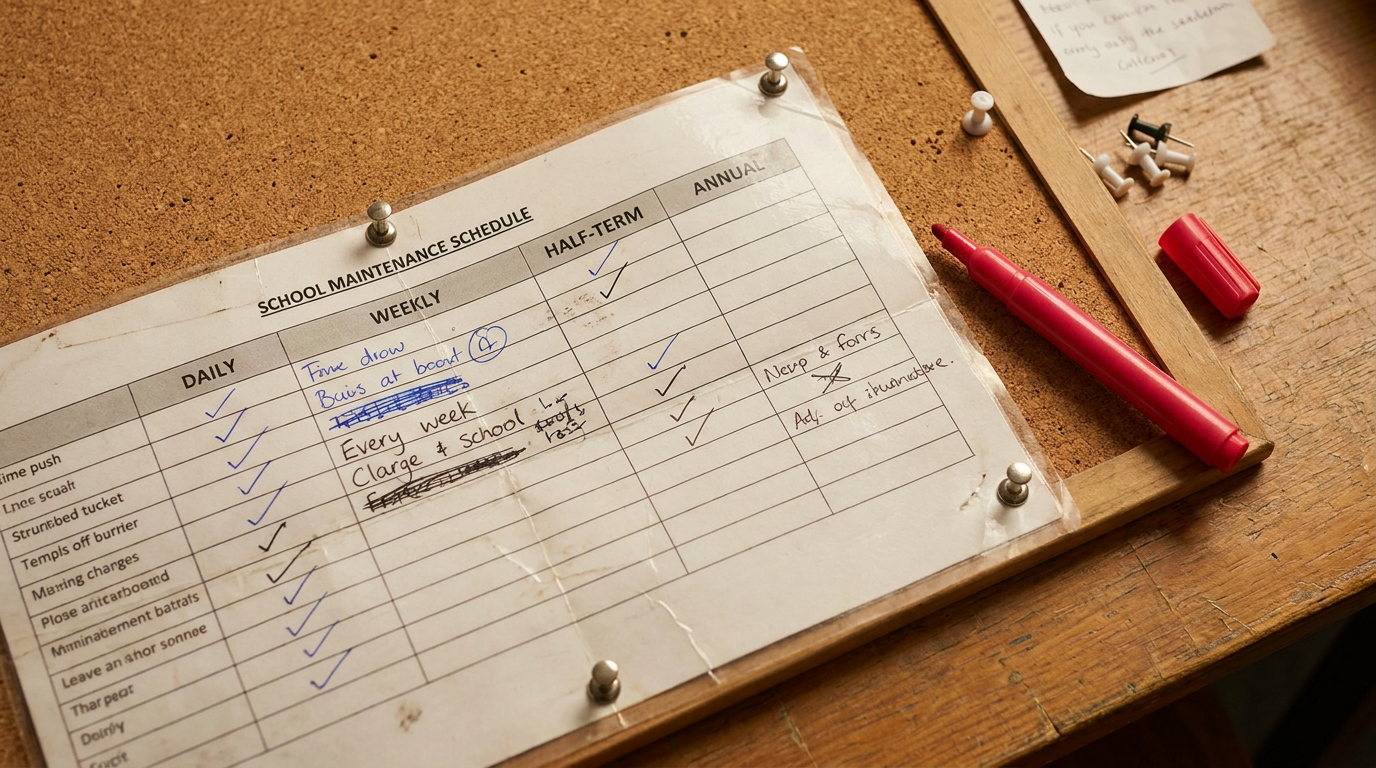
A practical school table maintenance schedule is a structured plan that divides tasks into daily, weekly, half-termly, and annual actions, aligning with the rhythm of the UK school year. This proactive approach prevents the accumulation of small faults that can lead to major failures. By integrating routine checks into the daily life of the school, you make maintenance manageable and highly effective, ultimately Saving Time & Stress for site managers and teaching staff.
Daily & Weekly Cleaning Routines
The foundation of any good maintenance programme is consistent cleaning. Staff should know how to clean school tables correctly to avoid damaging them.
- Daily: At the end of each day, tables should be cleared and wiped down with a microfibre cloth and a pH-neutral cleaning spray. This removes dirt, dust, and germs, and prevents build-up. Spills should be cleaned immediately.
- Weekly: Site staff should perform a quick visual inspection of tables in high-use areas. This involves checking for any obvious wobbles, new graffiti, or visible damage to edges and surfaces that may need attention.
Half-Term and End-of-Term Deep Cleans
These scheduled breaks are the well-suited opportunity for more intensive work without disrupting learning. The Department for Education’s (DfE) statutory framework for early years highlights that equipment must be “properly maintained,” and these deep cleans are a key part of demonstrating compliance [3].
- Deep Cleaning: Thoroughly clean all surfaces, including the undersides and frames, removing chewing gum and stubborn marks.
- Inspection: Systematically check every table, tightening any loose bolts or screws identified during weekly checks. This is the single most effective task for preventing wobbly tables.
Annual Structural Inspection
The summer holiday provides the effective window for a comprehensive annual inspection. This is where you assess the entire stock of tables and plan for the year ahead. This process aligns with the principles of the British Educational Suppliers Association (BESA), whose members commit to providing products that are fit for purpose and meet high safety standards [4]. A thorough inspection ensures your furniture continues to meet these standards throughout its life. It also supports the broader health goals outlined by the World Health Organization (WHO) by ensuring furniture remains ergonomic and supportive [5].
How to Fix Common Problems in School Table Maintenance
Most common school table issues can be resolved quickly and in-house with the right tools and knowledge, preventing minor annoyances from becoming safety hazards. By addressing problems like wobbly legs or chipped edges promptly, you extend the furniture’s lifespan and uphold a safe environment, a key principle highlighted by the European Agency for Safety and Health at Work (EU-OSHA) which links well-maintained equipment to reduced physical risks [2]. As specialists in school furniture repair UK, we’ve seen how these small fixes deliver significant long-term value.
Step-by-Step: Tightening a Wobbly Leg
A wobbly table is distracting and a potential safety risk. We’ll be honest – it’s also the most common maintenance job you’ll face. Luckily, it’s usually a simple fix.
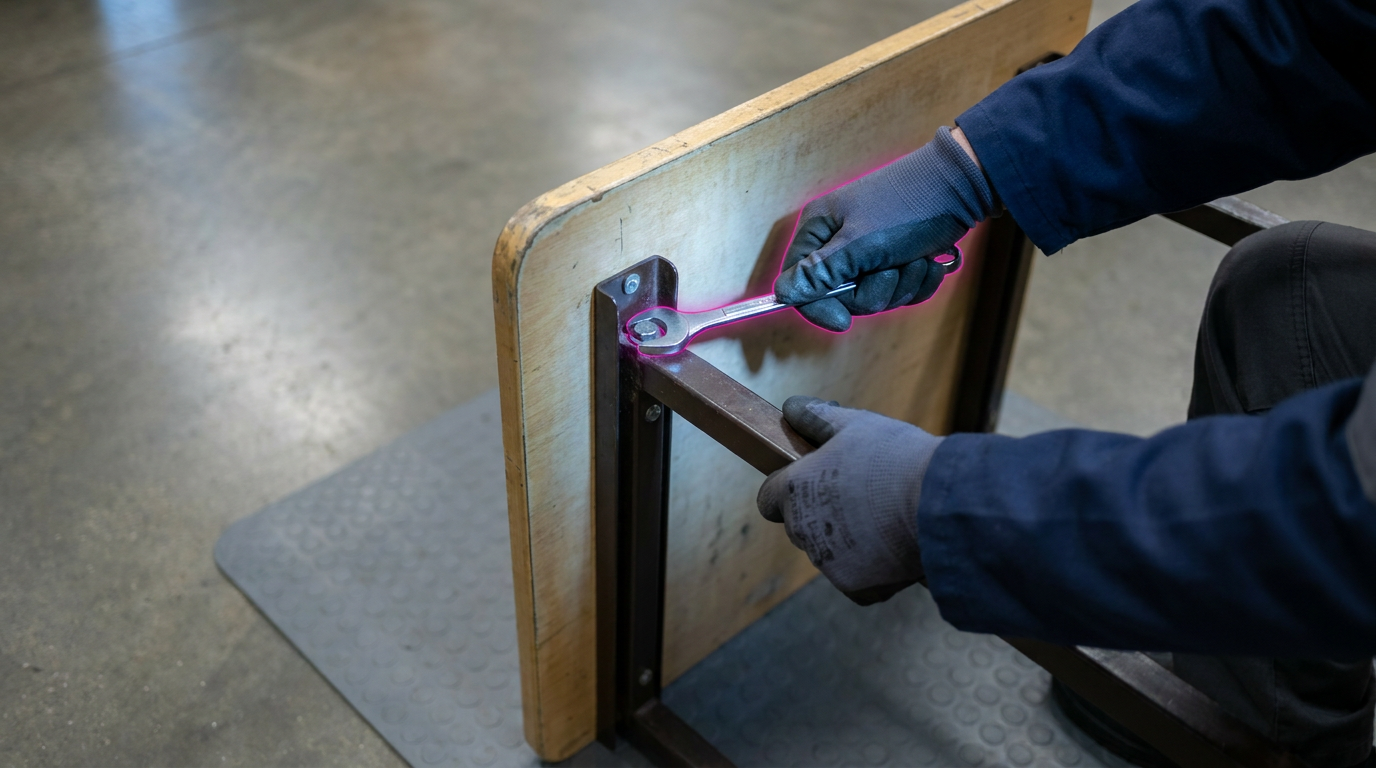
- Isolate and Identify: Take the table out of service and turn it upside down. Wiggle each leg to identify which fixings are loose. They are typically where the leg frame connects to the tabletop.
- Select the Tool: Choose the correct size of Allen key, spanner, or screwdriver for the bolt or screw. Using the wrong tool can strip the head, making future adjustments difficult.
- Tighten Securely: Tighten the fixing until it is firm. Avoid overtightening, as this can damage the wood or strip the screw thread.
- Test: Turn the table upright and apply pressure to test its stability. If it still wobbles, check for other loose fixings or potential structural damage.
Guide: Minor Repairs for Chipped Laminate or MDF Edges
Chipped edges look unsightly and can create sharp points or snag clothing. High-Pressure Laminate (HPL), a durable material made of resin-impregnated paper layers fused under high heat and pressure, is common on school tables but its edges can still be vulnerable.
- For Minor Chips: Clean the area of any dust or debris. Use a colour-matched hard wax or laminate repair paste, forcing it into the chip. Use a small plastic scraper to smooth the filler so it is flush with the surface. Once dry, it creates a safe, durable repair.
- For Damaged Edge Banding: If the plastic or wood edge trim (the banding) is peeling away, it can sometimes be re-glued using a strong contact adhesive. If the banding is broken, you may need to source a replacement strip.
Hypothetical Case Study: Northwood Academy
- Challenge: The academy’s site manager was spending over 10 hours a month on reactive repairs for wobbly tables across 25 classrooms. Several tables were taken out of service each term, creating a budget strain for replacements.
- Solution: We advised them to implement a proactive maintenance schedule. During a half-term break, the site team dedicated one day to tightening the leg fixings on all 300+ tables using proper spanners and Allen keys.
- Results: In-class table failures dropped by over 90% in the following term. They successfully returned 20 tables to service that were previously deemed unusable, avoiding a replacement cost of approximately £2,400.
- Key Insight: Shifting from a reactive “firefighting” approach to a scheduled, preventative maintenance blitz proved far more efficient and delivered significant cost savings.
UK Safety & Compliance: A Non-Negotiable Check
Proper maintenance is a fundamental requirement for legal compliance in UK schools, directly impacting pupil and staff safety. The Health and Safety Executive (HSE), Great Britain’s national regulator for workplace safety, makes it clear that all work equipment must be maintained in a safe condition [1]. This legal duty means that school furniture safety checks are not optional; they are a core part of a school’s risk management strategy.
The key standard to be aware of is BS EN 1729. BS EN 1729 is the European standard that specifies the functional dimensions, strength, and stability requirements for furniture used in educational institutions. While it primarily applies to new furniture, its principles form a benchmark for ongoing safety. A maintenance programme should ensure tables continue to meet these stability and safety criteria. For a deeper dive, review our guide on UK safety standards for school tables.
Your school furniture safety checks should include:
- Stability Test: The table should not rock or wobble on a flat surface.
- Sharp Edge & Splinter Check: Run a hand along all edges, corners, and undersides to check for sharp points or splinters that could cause injury.
- Structural Integrity: Visually inspect welds on metal frames for any cracks. Check that the tabletop is securely fixed to the frame.
- Component Security: Ensure all nuts, bolts, and screws are present and tight.
The Strategic Decision: When to Repair vs. Replace
The decision to repair or replace a school table should be a strategic one, balancing short-term costs with long-term value and safety. In our view, a simple rule of thumb is effective: if the estimated cost of a safe, durable repair exceeds 50% of the price of a brand-new, compliant table, replacement is almost typically the more economical choice.
Several factors should inform your decision:
- Safety & Compliance: If a table has a fundamental structural flaw (e.g., a cracked frame) or does not meet current standards like BS EN 1729, it should be replaced. A repair cannot fix inherent instability or poor ergonomic design.
- Cost of Repair: A loose leg is a cheap fix. However, a large, delaminated tabletop that requires a full school desk refurbishment may cost nearly as much as a new unit.
- Lifecycle Cost: Consider the cost of ongoing repairs. A table that needs constant attention drains staff time and resources, making replacement a better investment. Data from Statista (2024) shows the UK office and institutional furniture market is substantial, indicating the scale of investment organisations make; protecting that investment is key.
When you do decide to procure new items, using a comprehensive school furniture checklist ensures you make the right choice.
Important Considerations
This guide provides general advice for common maintenance tasks. The specific materials and construction of your school’s tables may require specialised techniques or products not covered here. Typically consult the manufacturer’s care instructions if they are available, as this provides the most accurate information for your specific assets.
Whilst DIY repair is cost-effective for minor issues, an alternative approach is to engage a professional school furniture maintenance service. These services can perform bulk repairs and refurbishments, which may be more efficient for large-scale issues or for schools without dedicated site staff. This can be particularly useful during summer holidays for a full-site refresh.
For any repairs involving structural integrity, such as a cracked frame weld or severely damaged top, we strongly recommend consulting a professional. Attempting complex repairs without the right expertise can compromise the table’s safety and lead to further liability. In these instances, the risk is not worth the potential saving.
Your Partner in Long-Lasting School Furniture
A strategic approach to school table maintenance is one of the most effective ways to protect your school’s budget and ensure a safe, compliant learning environment. By combining a regular schedule of cleaning and inspection with prompt, effective repairs, you can significantly extend the life of your furniture assets and prevent unnecessary expenditure. This proactive mindset transforms maintenance from a cost centre into a value-preservation activity.
At Costcutters UK, we have over 35 years of experience supplying and advising UK schools on durable, compliant, and easy-to-maintain furniture. We understand the challenges you face. If replacement is your most sensible option, our “Design To Install We Do It All!” service can help. Explore our range or contact our specialists for a free space plan and quote. We offer Bulk Buy Discounts and flexible payment options, including Credit Accounts Or Pay Flexibly, to support your school’s budget. Check out how we helped with a recent primary school furniture renovation to see our work in action.
What are common questions about school table maintenance?
What is school table maintenance?
School table maintenance is a comprehensive programme that includes regular cleaning, safety inspections, and timely repairs. Its purpose is to ensure furniture remains safe, functional, and presentable for as long as possible. This proactive approach is a key part of effective budget management and helps schools meet their legal health and safety obligations.
How often should school tables be deep cleaned?
We recommend a deep clean of all school tables at least once per academic term. The half-term and end-of-term holidays provide the effective opportunity to perform this task without disrupting classes. This should include cleaning frames and undersides, not just the tops, to maintain hygiene and spot potential issues.
What’s the best way to remove graffiti from a school desk?
typically start with the gentlest method, which is typically isopropyl alcohol on a microfibre cloth. This will remove most types of ink without damaging the surface. For more stubborn marks, you may need a specialist non-abrasive graffiti remover, but it’s crucial to test it on a small, hidden area first to ensure it doesn’t harm the finish.
How do I fix a wobbly school table leg?
The vast majority of wobbly legs are caused by loose bolts or screws where the leg frame meets the tabletop. First, turn the table over to safely identify the loose fixing. Then, use the correct size of spanner or Allen key to tighten it firmly. This simple action resolves most stability issues quickly and effectively.
Can I repair a chipped laminate table top?
Yes, minor chips on laminate or MDF tops can often be repaired effectively. You can use a colour-matched hard wax filler stick or a laminate repair paste to fill the damaged area. Once filled and smoothed to be level with the surface, the repair improves the table’s appearance and may reduce any potential sharp edge or snagging hazard.
What are BS EN 1729 standards for school furniture?
BS EN 1729 is the key UK and European standard that specifies the ergonomic and safety requirements for educational furniture. It covers appropriate sizing for different age groups, as well as strength, durability, and stability. Compliance ensures furniture is both safe and supportive of good posture for pupils, making it a critical benchmark for procurement.
Is it cheaper to repair or replace school tables?
It depends entirely on the nature and extent of the damage. Simple repairs like tightening a leg are extremely cost-effective and should typically be the first option. However, if a table has significant structural damage or the repair cost exceeds 50% of a new table’s price, replacement is usually the better long-term financial decision.
What safety checks are required for school furniture in the UK?
UK schools must conduct regular risk assessments, which include furniture safety. Key checks involve testing for stability to ensure tables don’t wobble or tip, checking all surfaces and edges for sharpness or splinters, and verifying that all structural components like frames, legs, and fixings are secure and free from damage or cracks.
What cleaning products are safe for school tables?
You should typically use pH-neutral, non-abrasive cleaning products for daily cleaning. Harsh, abrasive, or highly acidic/alkaline chemicals can permanently damage laminate surfaces and protective coatings. For most situations, a simple solution of mild detergent in water or a designated commercial multi-surface cleaner is both safe and effective.
How can I make our school furniture last longer?
Proactive and consistent care is the key to maximising the lifespan of your furniture. Implement a regular maintenance schedule for cleaning and inspections. More importantly, address minor repairs like loose screws immediately before they can cause more significant damage. This preventative approach is far more effective than waiting for things to break.
References
- Health and Safety Executive (HSE) – Government Guidance. This official source provides the UK legal framework and practical advice for ensuring workplace equipment, including furniture, is safe and compliant with health and safety regulations.
- European Agency for Safety and Health at Work (EU-OSHA) – Intergovernmental Research. EU-OSHA provides Europe-wide research highlighting that poor workstation design and inadequately maintained equipment are major risk factors for musculoskeletal disorders.
- Department for Education (EYFS Framework) – Government Statutory Framework. This document mandates that premises and equipment in early years settings must be safe, suitable for purpose, and properly maintained.
- British Educational Suppliers Association (BESA) – Industry Code of Practice. The BESA code requires members to ensure products sold to schools are ‘fit for their intended purpose’ and meet high safety and quality standards.
- World Health Organization (WHO) – Global Health Guidelines. WHO’s guidelines on physical activity and sedentary behaviour provide the global health basis for ensuring furniture in schools is ergonomic and well-maintained to support wellbeing.
- Statista – Market Research Data (2024). Analysis from Statista shows the UK Office Furniture market revenue is projected at £1.80bn in 2024, illustrating the significant financial scale of furniture investment by UK organisations.
Conclusion
In summary, school table maintenance is a key strategic activity that protects your school’s budget while ensuring a safe, compliant, and effective learning environment. By implementing a consistent schedule of cleaning, inspection, and prompt repairs for minor issues, you can significantly extend the life of your valuable furniture assets, prevent disruptive failures, and avoid unnecessary capital expenditure. This proactive approach transforms maintenance from a reactive chore into a powerful tool for asset management.
At Costcutters UK, we have over 35 years of experience not only supplying durable and compliant furniture but also advising UK schools on best practices for maintenance and repair. While we can support your school furniture repair uk needs with spare parts and advice, we also recognise when replacement is the most economical choice. If your analysis points to