School Furniture Installation: DIY vs. Professional – A UK School’s Guide
🎯 Key Takeaway
Professional school furniture installation is the most reliable choice for educational settings, as it may help safety, regulatory compliance, and long-term durability. While a Do-It-Yourself (DIY) approach might seem to offer initial cost savings, it often introduces significant risks, hidden expenses, and potential liability issues. For any project involving more than a few simple items, a professional service ensures the job is done correctly, efficiently, and safely, protecting both pupils and your investment.
When undertaking a classroom refresh or a full-site refit, the decision between a DIY approach and professional school furniture installation is one of the most critical you’ll make. It’s a choice that directly impacts pupil safety, your budget’s long-term value, and the operational flow of your school. As of September 2026, with increasing focus on ergonomic design and stringent safety standards, getting this decision right has rarely been more important.
This guide provides a direct comparison to help you weigh the true costs and benefits. We will analyse both options across six critical dimensions: total cost, safety, time, quality, liability, and required resources. Our goal is to equip you with the information needed to make a confident, responsible choice that supports a safe and effective learning environment.
Written by: The Cost Cutters UK Team | Reviewed by: Editorial Team, 35+ Years Experience; Rated Excellent On Trustpilot
Last updated: 15 September 2026
ℹ️ Transparency Disclosure: This article is written by the experts at Cost Cutters UK, a company with over 35 years of experience in commercial furniture supply and installation. Our recommendations are based on extensive industry data and hands-on experience with thousands of educational projects. Our goal is to provide clear, practical advice. For transparency, we offer professional installation services, but this guide provides a balanced view to help you make an effective decision for your specific circumstances.
Quick Verdict: Best Approach to School Furniture Installation
⚡ Quick Verdict
For the vast majority of UK schools, Professional Installation is the recommended choice. It may help safety, compliance with standards like BS EN 1729, and quality, mitigating the significant long-term risks and hidden costs associated with DIY. This approach protects your investment and ensures pupil wellbeing.
- Best for DIY: Very small, low-risk projects with simple, non-structural items where in-house staff have well-supported by research expertise and available time.
- Best for Professional Installation for School Furniture: Any project where safety, compliance, durability, and minimal disruption are primary concerns.
School Furniture Installation at a Glance: Side-by-Side Comparison
To make an informed decision, it’s essential to analyse the options across key factors that matter most in a school environment. This table breaks down the differences between a DIY approach and using a professional service for your school furniture installation, focusing on the true costs and responsibilities involved.
| Dimension | DIY | Professional Installation for School Furniture |
|---|---|---|
| Total Cost of Ownership | Low initial outlay, but high risk of hidden costs (staff time, repairs, reduced lifespan). | Higher upfront cost, but lower total cost over time due to durability and fewer repairs. |
| Safety & Compliance | High risk. Non-compliance with BS EN 1729 is likely. School bears full liability for accidents. | likely to support compliance with all UK safety standards. Liability is transferred to the installation company. |
| Time & Disruption | Significant disruption to school operations. Staff are pulled from core duties. Projects often overrun. | Minimal disruption. Teams work efficiently, often outside school hours, to meet tight deadlines. Saving Time & Stress. |
| Quality & Durability | Variable. Incorrect assembly can reduce furniture lifespan by up to 50%. | High. Experts assemble to manufacturer specifications, maximising furniture life and performance. |
| Warranty & Liability | Risk of voiding manufacturer warranties. The school is liable for any injury from faulty assembly. | Full manufacturer warranties are protected. Installers are insured, covering all liability. |
| Required Resources | Requires skilled staff, correct tools, time allocation, and waste disposal management. | None. The professional team provides all tools, labour, and waste removal. Design To Install We Do It All! |
Best for DIY: Small-Scale, Low-Risk Assembly
Best for: Minor, non-critical tasks if your school has the right skills and accepts the associated risks.
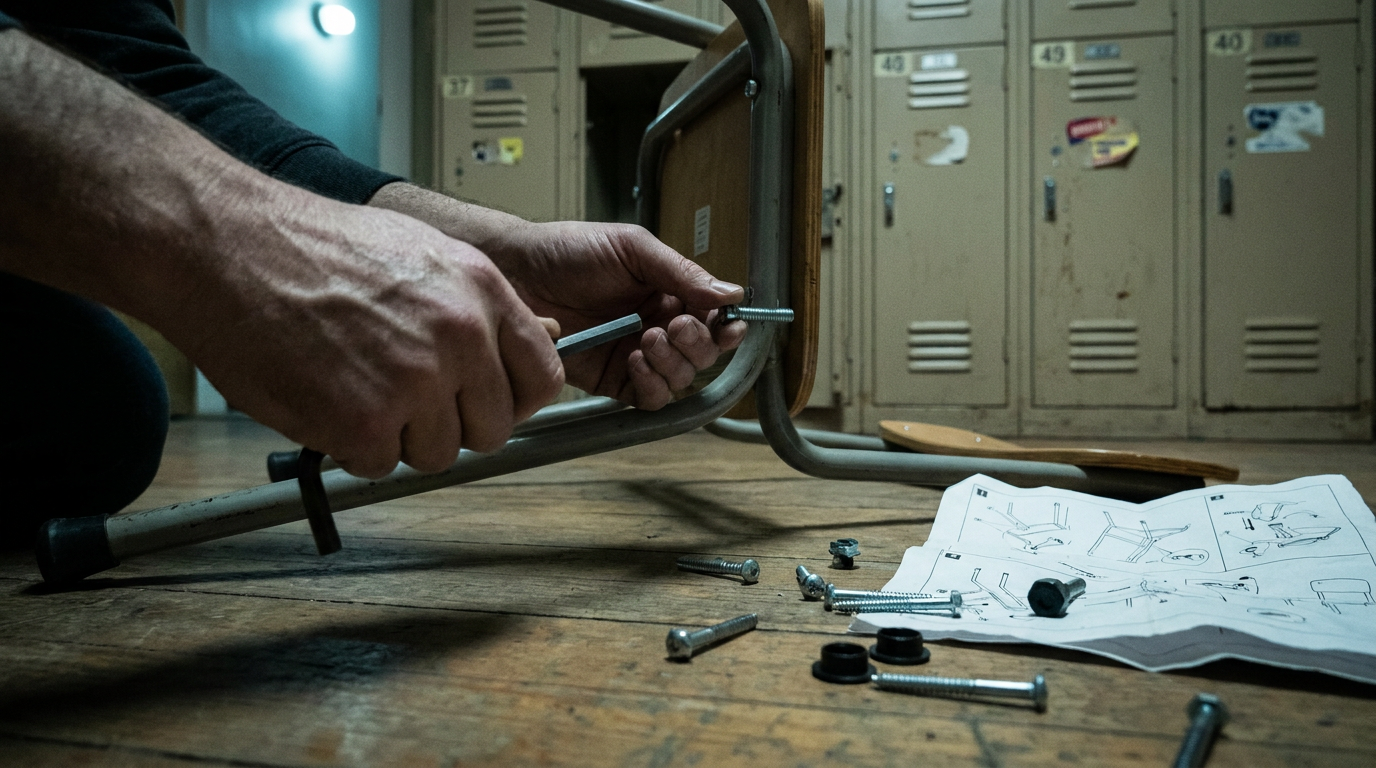
A DIY approach involves using your school’s own staff, such as a caretaker or premises team, to assemble and install new furniture. On the surface, this seems like an effective way to control costs, especially for what might appear to be simple tasks. However, our experience shows this path is filled with potential pitfalls that can cost more in the long run.
Pros:
- Lower Initial Outlay: Avoids the direct invoice cost of a professional installation team.
- Scheduling Flexibility: Simple, non-urgent tasks can be fitted in around other duties.
- Utilises In-House Skills: May be suitable if you have a qualified joiner or highly experienced caretaker on staff.
Cons:
- Significant Liability: The school is solely responsible if a child is injured by incorrectly assembled furniture. The Health and Safety Executive (HSE) places a clear duty of care on employers to ensure a safe environment.
- Voids Warranties: Most furniture manufacturers will void warranties if items are not assembled by certified professionals.
- Hidden Costs: Staff time is not free. The hours your caretaker spends assembling desks are hours they are not spending on other essential maintenance, creating a backlog of work.
- Lack of Specialist Tools: Professional installers have specialised tools to ensure every component is perfectly aligned and tightened, which general maintenance staff may not possess.
- Risk of Damage: Inexperienced assembly often leads to damaged components, reduced furniture lifespan, and an unprofessional finish.
Best for Professional Installation: Ensuring Safety, Compliance & Quality
Best for: Peace of mind, legal compliance, and protecting your furniture investment.
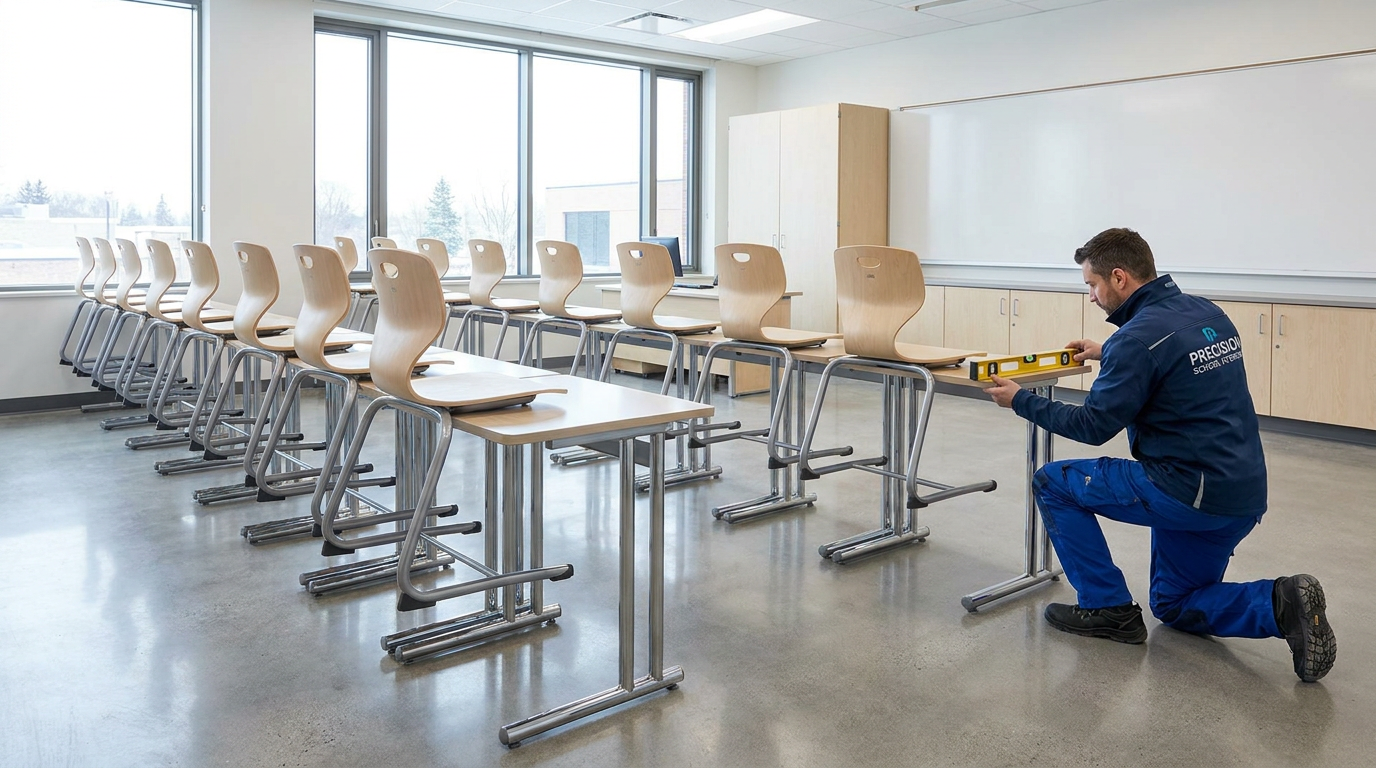
Professional installation is a comprehensive service where a team of trained and insured experts manages the entire process. This includes delivery, unboxing, assembly to manufacturer specifications, placement according to your floor plan, and removal of all packaging. It’s the standard choice for most schools undertaking any significant furniture project.
Pros:
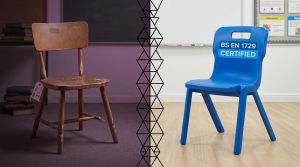
- likely to support Safety & Compliance: Professionals ensure all furniture meets critical UK standards, such as BS EN 1729 compliance for educational furniture, which governs strength, stability, and ergonomics. This is a key part of the safeguarding requirements in the Department for Education’s EYFS Framework.
- Liability Transfer: The installation company is fully insured and assumes all liability for the work. This protects the school from legal and financial risk.
- Maximum Durability: Expert assembly ensures every screw and fixing is correct, maximising the lifespan of your furniture and delivering a better return on investment.
- Efficiency and Speed: A professional team can complete a full classroom furniture installation in a matter of hours, not days, minimising disruption to learning.
- Complete Service: The service includes full clean-up and removal of all cardboard and plastic waste, which can be a huge logistical challenge for schools.
Cons:
- Higher Upfront Cost: There is a clear, itemised cost for the service on the invoice, which can seem higher than the “zero cost” of DIY.
- Scheduling Required: You need to book the installation team in advance, particularly during peak times like school holidays.
When to Choose Each Option
Making the right choice comes down to a clear-eyed assessment of risk versus reward. Here’s a simple decision-making guide.
Choose DIY if…
- You are assembling a single, simple item like a small bookshelf or a single chair.
- Your caretaker is a trained and qualified joiner with specifically allocated time for the task.
- The project is extremely small (1-2 items), and the budget strongly cannot accommodate any external labour costs.
- You are willing to accept full liability for the assembly and the potential voiding of the product warranty.
Choose Professional Installation for School Furniture if…
- You are fitting out one or more classrooms, a library, a staff room, or a dining hall.
- The furniture is ergonomic, height-adjustable, or has complex assembly instructions.
- The project must be completed within a tight school holiday window.
- You need to guarantee compliance with School Furniture Safety: A UK School’s Guide to Compliance & Procurement and protect your warranty.
- You want to ensure the maximum lifespan and durability from your furniture investment.
If safety and liability are a concern in any way, you should typically choose professional installation.
### Case Study: A Tale of Two Primary Schools
Challenge:
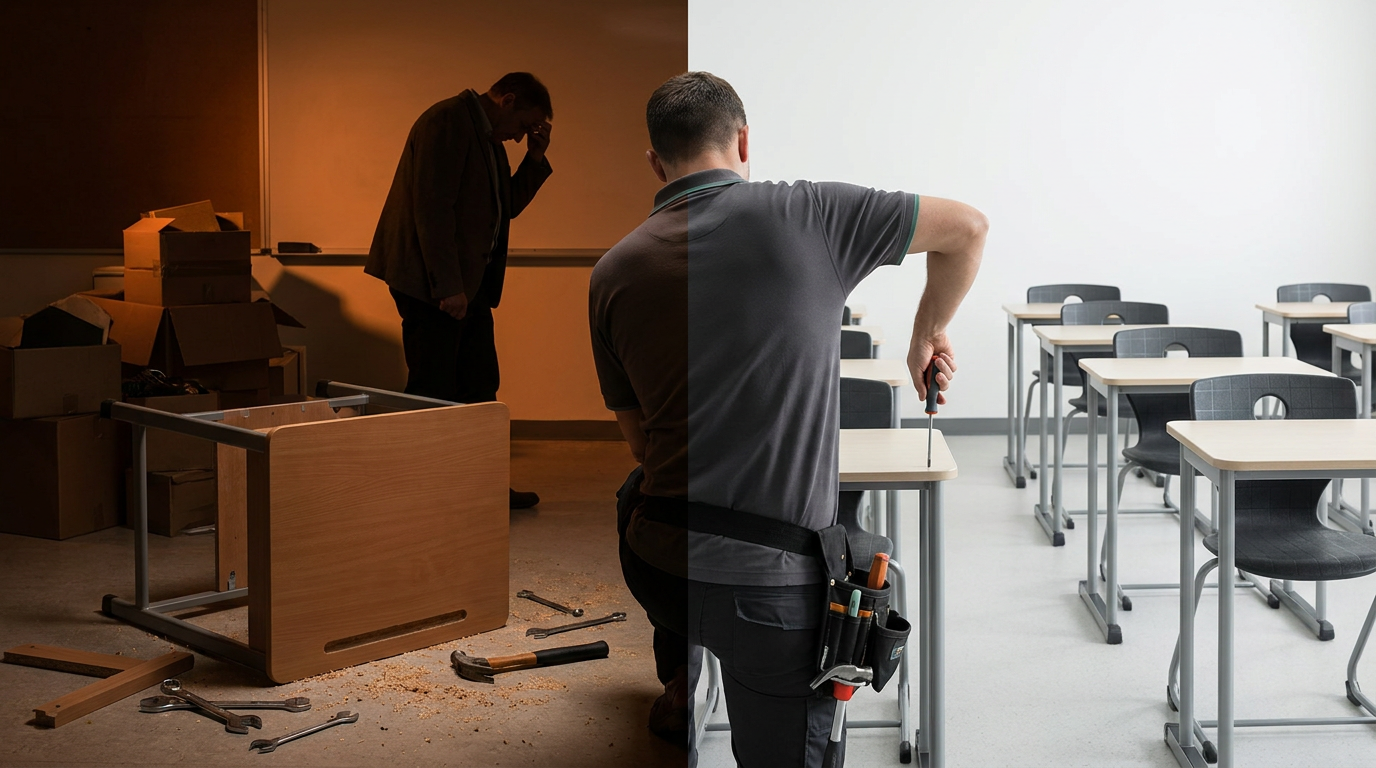
Two similar primary schools each ordered 30 new ergonomic chairs and desks for a Year 4 classroom. School A opted for DIY assembly to save money, tasking their caretaker. School B used our professional installation service.
Solution:
School A’s caretaker spent 25 hours over two weeks assembling the furniture, delaying other maintenance tasks. School B’s installation was completed by our two-person team in just four hours after school one afternoon.
Results:
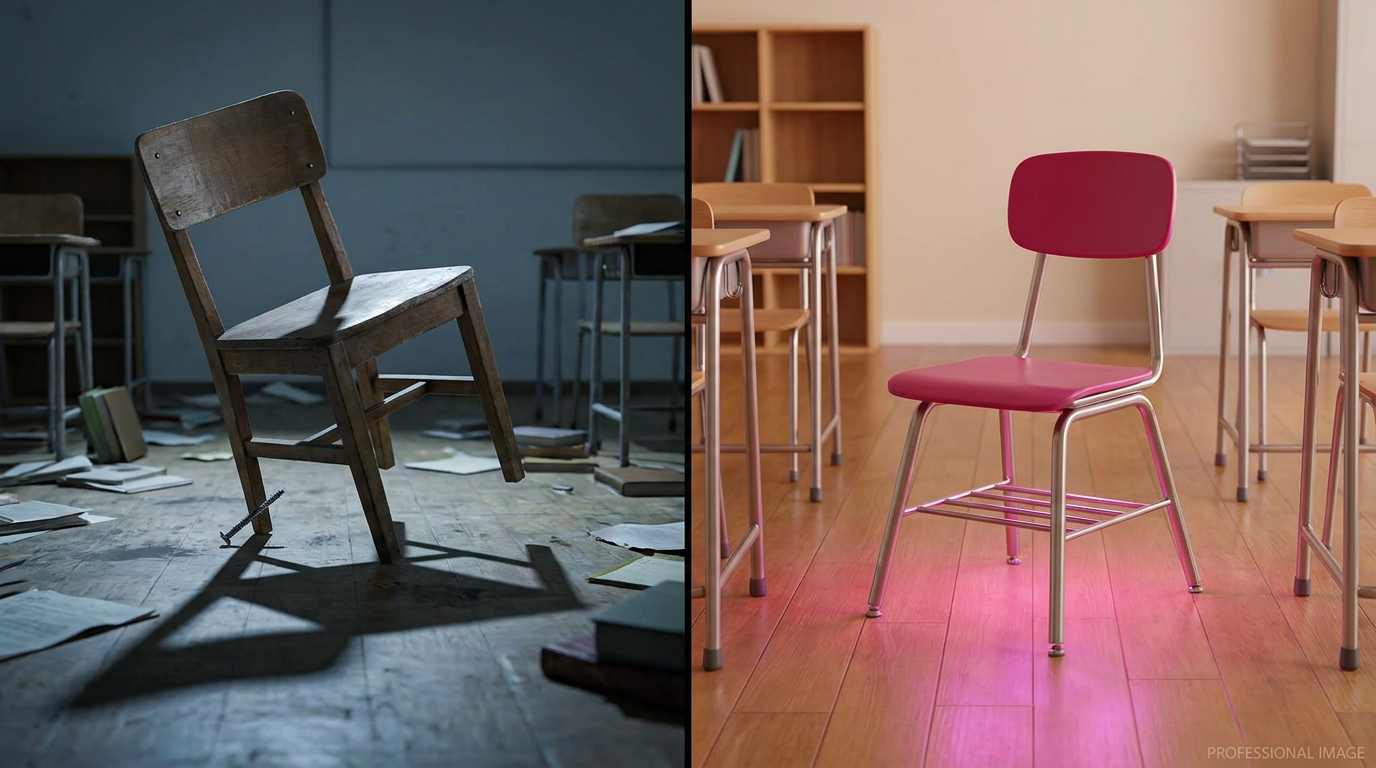
Within six months, School A reported 5 wobbly chairs and 2 desks with uneven surfaces, and their warranty claims were rejected due to improper assembly. The “saved” installation fee was quickly offset by the cost of repairs and replacement. School B had zero issues, with all furniture remaining in well-suited condition.
Key Insight:
The upfront cost of professional installation is an investment in quality and risk mitigation. The hidden costs of DIY – in staff time, reduced product lifespan, and safety risks – almost typically outweigh the initial perceived savings.
Frequently Asked Questions
What is school furniture installation?
Professional school furniture installation is a specialised service that manages the delivery, assembly, and placement of furniture within an educational setting. This process is handled by trained, insured experts who ensure all items are assembled correctly, safely, and in compliance with UK standards like BS EN 1729. It covers everything from a single classroom to a full-school fit-out, including waste removal.
Does DIY school furniture installation really save money?
Initially, it may seem to, but it often leads to higher long-term costs. While you avoid an upfront labour charge, you incur hidden costs like staff wages for non-specialist work, reduced furniture lifespan from incorrect assembly, and potential replacement costs if warranties are voided. A professional job maximises the value of your furniture investment, representing a key part of maximising your school furniture budget.
What are the key safety standards for UK school furniture?
The primary standard is BS EN 1729 Parts 1 & 2, which specifies functional dimensions, strength, stability, and durability for chairs and tables in educational institutions. Compliance ensures furniture is ergonomically appropriate for children and reliable enough for the school environment. Professional installers are experts in meeting these and other relevant Health and Safety Executive (HSE) guidelines.
Can our school staff legally assemble furniture?
Yes, but the school retains full legal liability for their work. Under the Health and Safety at Work etc. Act 1974, the school has a duty of care to ensure the environment is safe for pupils and staff. If a piece of furniture assembled by a staff member fails and is associated with injury, the school could be held liable for negligence.
How much does professional school furniture installation cost in the UK?
Costs typically range from 10% to 15% of the total furniture order value, but this varies based on project complexity, location, and access. Simple assembly in an empty, ground-floor room will cost less than a multi-floor installation with complex items. We provide a clear, fixed quote upfront, and for larger projects, we offer Bulk Buy Discounts to provide greater value.
What are the biggest risks of DIY furniture assembly in a school?
The greatest risks are pupil injury and legal liability. Incorrectly assembled chairs can collapse, and unstable bookcases can tip over, creating serious hazards. Beyond safety, other major risks include voiding expensive manufacturer warranties, significantly reducing the lifespan of the furniture through improper construction, and wasting valuable staff time that should be spent on core maintenance duties.
Do professional furniture installers need DBS checks?
Yes, all reputable installation teams who work on school premises during term time will have staff with enhanced Disclosure and Barring Service (DBS) checks. This is a critical safeguarding measure. At Cost Cutters UK, all our site-based staff are DBS-checked to ensure they can work safely and professionally in any educational environment.
How long does a typical classroom furniture installation take?
A standard classroom of 30 desks and chairs can typically be installed by a professional two-person team in about 3-5 hours. This efficiency is a key advantage, especially when working within tight school holiday schedules. A DIY approach, by contrast, could take a single person several days, causing far more disruption. Planning your school furniture project properly helps streamline this process.
Does improper assembly void the furniture’s warranty?
In most cases, yes, it does. Manufacturers provide warranties on the condition that their products are assembled according to their precise instructions. If a fault develops due to incorrect assembly, the manufacturer is not obligated to honour the warranty. Using a professional service may help that all items are built to specification, protecting your warranty fully.
What is an ‘education furniture fit out’?
An education furniture fit out refers to the complete process of designing, supplying, and installing furniture and equipment for an educational space. This is a more comprehensive project than just installation. It often starts with space planning and design to optimise the learning environment and finishes with the full installation, a service we summarise as ‘Design To Install We Do It All!’.
What are the important considerations?
This guide compares DIY and professional installation based on common school scenarios. However, the data on DIY project failures is often anecdotal, as schools may not formally track the time and repair costs associated with these internal tasks. The cost-benefit analysis relies on extensive industry experience and feedback from clients who have tried both methods. Your school’s specific circumstances, such as having a multi-skilled premises manager with allocated project time, could influence the outcome.
The primary alternatives discussed are a complete DIY approach or a full professional service. A hybrid model exists, where school staff might handle simple items while professionals tackle complex ones. However, this can create confusion over liability and is often less efficient. Another alternative is to purchase pre-assembled furniture, though this typically comes at a significant premium and presents logistical challenges for delivery and placement.
Our recommendation is clear: if you are in any doubt about your team’s capacity, skill, or the compliance requirements of the project, you should consult a professional. We offer free, no-obligation consultations and quotes. This allows you to get an expert opinion on the scope of your project and a fixed price for professional installation, enabling a true cost-benefit analysis against a DIY approach. We also offer flexible payment options, such as Credit Accounts Or Pay Flexibly, to support your budget.
Key Takeaways and Next Steps
while DIY installation may seem tempting for its perceived cost savings, the decision for a school carries significant weight. For any project beyond the most trivial, Professional school furniture installation emerges as the superior choice. It shifts the burden of risk, safety, and compliance from the school to the experts, ensuring a safe learning environment and protecting your long-term investment. By prioritising professional school furniture installation, you are not just buying a service; you are investing in peace of mind, likely to support quality, and the wellbeing of your pupils and staff.
At Cost Cutters UK, we have over 35 years of experience helping schools, colleges, and universities create safe, inspiring, and durable learning environments. Our teams are fully insured, DBS-checked, and experts in their field. We are proud to be Rated Excellent On Trustpilot by hundreds of educational institutions like yours. If you are planning a furniture project, contact us today for a free space plan and a no-obligation quote.
References
- Health and Safety Executive (HSE) (2024). Guidance on Health and Safety (Display Screen Equipment) Regulations 1992.
- Department for Education (2024). Statutory framework for the early years foundation stage, detailing safeguarding and welfare requirements for premises and equipment.
- British Educational Suppliers Association (BESA) (2024). BESA’s Code of Practice, outlining member obligations for product safety and fitness for purpose in education.
- Statista (2024). Data report on the UK Office Furniture market.
- CWJ Floorings (2024). Analysis comparing DIY vs. Professional installation for flooring projects.
- West Park Windows (2024). Article exploring the pros and cons of DIY vs. Professional installation for home improvements.
- Margrav Solar Blog (2024). A comparison guide for DIY vs. Professional solar panel installation in the UK.
- World Health Organization (WHO) (2020). Guidelines on physical activity and sedentary behaviour.
- European Agency for Safety and Health at Work (EU-OSHA) (2024). Research and campaign information on preventing work-related musculoskeletal disorders.
Conclusion
Key Takeaways and Next Steps
In summary, while DIY installation may seem tempting for its perceived cost savings, the decision for a school carries significant weight. For any project beyond the most trivial, Professional Installation for School Furniture emerges as the superior choice. It shifts the burden of risk, safety, and compliance from the school to the experts, ensuring a safe learning environment and protecting your long-term investment. By prioritising professional school furniture installation, you are not just buying a service; you are investing in peace of mind, guaranteed quality, and the wellbeing of your pupils and staff.
Our team of experienced, DBS-checked installers specialises in educational environments. We manage the entire process, from space planning and delivery coordination to assembly and site clearance, ensuring your project is completed on time and with minimal disruption. To guarantee your new furniture is installed safely and correctly, contact us for a no-obligation quote and expert advice on your next project.