When to Upgrade School Furniture: A UK School Business Manager’s Guide
🎯 Key Takeaway
The decision to upgrade school furniture should be triggered by a strategic assessment of safety compliance, pedagogical alignment, and whole-life cost, not just visible wear. This proactive approach supports educational outcomes and ensures budget efficiency. A key insight from our 35+ years of experience is that schools that plan upgrades cyclically avoid emergency spending and achieve better long-term value. This guide provides a comprehensive framework to help you make informed, data-driven decisions for your school’s furniture assets, turning a reactive cost into a strategic investment.
As a School Business Manager, balancing tight budgets against the need for a safe and effective learning environment is a constant challenge. For the decision to upgrade school furniture, it’s often seen as a significant expense that can be deferred. However, this is a complex strategic decision, not just an operational task. The right furniture is fundamental to student wellbeing, concentration, and the successful delivery of modern teaching methods. As of August 2026, the triggers for an upgrade have moved far beyond just a wobbly chair leg; they now encompass safety compliance, pedagogical alignment, and long-term financial sense. This guide provides a step-by-step framework to help you build a justifiable, data-backed case to replace school furniture when the time is right.
Written by: The Cost Cutters UK Content Team | Reviewed by: Industry Specialists, 35+ Years Experience; Rated Excellent On Trustpilot
ℹ️ Transparency Disclosure: This article explores the decision-making process for school furniture upgrades based on UK government regulations, industry best practices, and our 35+ years of experience in educational procurement. Some links may connect to our services. All information is verified by our editorial team.
What Are the 5 Key Triggers to Upgrade School Furniture?
The most effective triggers to upgrade school furniture are based on risk, compliance, and educational need, not just superficial damage. Whilst a broken chair is an obvious reason to act, a proactive approach identifies issues before they become critical failures. In our experience, waiting for visible breakage often means you’re already too late.
Here are five key triggers that demand attention:
- Non-Compliance with Safety Standards: This is the most critical trigger. All educational furniture must meet specific regulations. The primary one is BS EN 1729, the European standard that dictates appropriate strength, stability, and ergonomic dimensions for chairs and tables used in educational institutions. A systematic audit revealing furniture that fails these school furniture safety standards UK is a non-negotiable reason to replace school furniture.
- Mismatch with Current Pedagogy: Teaching has evolved. If your classrooms are still filled with heavy, individual desks facing the front, they may be hindering modern collaborative and flexible teaching styles. A mismatch between your furniture and your school’s educational strategy is a clear sign that an upgrade is needed to support, not obstruct, learning.
- Poor Ergonomics Affecting Student Focus: According to the UK’s Health and Safety Executive (HSE), prolonged poor posture can lead to musculoskeletal issues. For children, using incorrectly sized furniture can cause discomfort, fidgeting, and a significant loss of concentration. If students are using chairs and desks not sized for their age group, it is an educational and welfare issue that furniture upgrades can solve.
- Rising Maintenance Costs: Are your site team spending an increasing amount of time repairing the same items? Track the labour and material costs of repairs. When the cost to maintain old furniture begins to approach a meaningful fraction of replacement cost, it has become uneconomical. This is a powerful argument for your budget proposal.
- Negative Impact on School Perception: First impressions count. Worn, dated, and mismatched furniture can create a negative perception for prospective parents on open days and for inspectors from the Office for Standards in Education, Children’s Services and Skills (Ofsted). Your learning environment is a physical manifestation of your school’s standards.
The Hidden Costs of Delay: Building a Business Case
Delaying a necessary furniture upgrade might seem like a prudent way to manage a tight budget, but this approach often carries significant hidden costs that can outweigh the initial savings. Building a compelling business case for governors or a Multi-Academy Trust (MAT) involves quantifying these “costs of inaction.”
Financial Costs: The most immediate costs are financial. Beyond the rising expense of repairs, old and non-compliant furniture represents a direct liability risk. According to the European Agency for Safety and Health at Work (EU-OSHA), poorly designed workstations are a major risk factor for musculoskeletal disorders (MSDs). An injury to a student or staff member linked to faulty furniture could lead to significant claims. We’ve seen schools face unexpected costs from accidents that a planned upgrade could have prevented. A detailed look at your school’s history can be as revealing as this UK school maintenance programme case study.
Educational Costs: This is perhaps the most damaging hidden cost. Uncomfortable, poorly sized furniture directly impacts a child’s ability to concentrate. Furthermore, rigid furniture prevents teachers from implementing dynamic, flexible learning activities, effectively capping the potential of their teaching strategies. The learning environment becomes a barrier to progress, not an enabler.
Reputational Costs: Your physical environment speaks volumes. Scuffed, broken, and outdated furniture can signal underinvestment and a lack of attention to detail during open days. This can influence parental choice, which in turn affects admissions and funding. Similarly, an Ofsted report commenting negatively on the learning environment can have lasting reputational damage.
Case Study: A Hypothetical Primary School Scenario
– Challenge: A 2-form entry primary school was facing rising repair costs (£3,500 annually) for its 15-year-old classroom chairs and tables. Two minor student incidents related to unstable chairs had been logged, and teachers reported difficulty arranging classrooms for group work.
– Solution: The School Business Manager conducted an audit, identifying 60% of furniture as non-compliant with BS EN 1729. Using our “Design To Install We Do It All!” service, they planned a phased, two-year replacement of furniture for Years 3-6, prioritising the highest-risk items first.
– Results: In the first year, repair costs dropped by 80%. No further safety incidents were reported. Teachers noted a marked improvement in student engagement during collaborative tasks. The total project cost was spread over two financial years, making it manageable.
– Key Insight: Phasing the upgrade and presenting a clear, data-driven case based on risk and educational benefit was key to securing governor approval.
What Is the 4-Step Framework for a School Furniture Upgrade?
A structured framework is an effective way to move from a reactive to a strategic approach for your school furniture upgrade. We recommend this four-step process to create a clear, evidence-based plan that justifies expenditure and ensures an effective outcome for your school. Following a structured process like this is central to The Complete Guide to School Furniture Replacement Projects.
Step 1: Audit & Inventory
Begin by creating a comprehensive inventory of all furniture assets across the school. A simple spreadsheet is well-suited for this. For each item or group of items, log its location, age, general condition (e.g., Good, Fair, Poor, Unsafe), and current purpose. This data provides the objective foundation for all subsequent decisions.
Step 2: Needs Analysis
Consult with the people who use the furniture every day: your teaching staff. What are their pedagogical needs? Do they need furniture that supports collaborative group work, individual quiet study, or quick transitions between activities? This analysis ensures that any decision to replace school furniture is driven by educational requirements, not just maintenance cycles.
Step 3: Compliance Check
With your inventory in hand, conduct a systematic compliance check. The key standard is BS EN 1729, which covers ergonomics and safety. You should also review general guidance from the Health and Safety Executive (HSE) on workplace suitability. Any furniture that is clearly non-compliant or poses a safety risk (e.g., splintering wood, exposed sharp edges, instability) should be red-flagged for immediate action. Checking against school furniture safety standards UK is non-negotiable.
Step 4: Prioritisation Matrix
You can’t replace everything at once. Create a simple prioritisation matrix to score your furniture inventory. Use criteria such as:
- Safety Risk (Score 1-5): How likely is this item to cause an injury? (5 = high risk)
- Educational Impact (Score 1-5): How much does this item hinder modern teaching methods? (5 = major hindrance)
- Condition (Score 1-5): What is the physical state of the item? (5 = very poor/broken)
Total the scores for each furniture group. Those with the highest scores are your top priority for replacement, forming the basis of your procurement plan.
How to Budget and Procure Your New Classroom Furniture
Effective classroom furniture procurement is a core skill for any School Business Manager. Once you have your prioritisation matrix, the next stage is securing funding and choosing the right procurement route. This process can seem daunting, but a methodical approach will yield an effective results.
First, consider your budgeting strategy. A full-scale, whole-school replacement is rarely feasible. Instead, a phased rollout over several financial years is a more manageable approach. You can align these phases with your prioritisation matrix, tackling the highest-risk areas first. Look at leveraging end-of-year underspends or building a reliable capital expenditure (CapEx) bid for the next financial year. Highlighting common school budgeting mistakes to avoid can strengthen your proposal to governors.
Next, explore funding sources. While dedicated school furniture grants are rare, funding is typically accessed via your school’s Devolved Formula Capital (DFC) allocation or by submitting a formal bid to your Local Authority or Multi-Academy Trust (MAT). A strong business case, built using the framework in the previous section, is essential. Clearly link the investment to improved safety, enhanced educational outcomes, and long-term value to maximise your chances of success.
Finally, choose your procurement route. You can source directly from suppliers, but using established UK school furniture procurement frameworks like the Crescent Purchasing Consortium (CPC) or ESPO can offer significant advantages. These frameworks have already vetted suppliers for quality, compliance, and financial stability, Saving Time & Stress. They also offer competitive pricing through collective buying power. At Cost Cutters UK, we are proud to be listed on many of these key frameworks, offering schools a compliant and straightforward purchasing path. Plus, we offer flexible payment options, such as Credit Accounts Or Pay Flexibly, to support your school’s cash flow.
Choosing Future-Proof Furniture: Durability, Ergonomics, and Flexibility
Once you have secured your budget, the focus shifts to selecting the right products. The goal is not just to replace old with new, but to invest in furniture that will serve the school effectively for years to come. To achieve this, you should balance three key pillars: durability, ergonomics, and flexibility.
Durability is about achieving an effective whole-life cost. This means looking beyond the initial price tag to the material quality, construction, and supplier guarantee. Consider the typical school furniture lifespan for different materials. For example, solid wood or heavy-duty steel frames will typically outlast cheaper alternatives, reducing long-term replacement costs. Typically ask for product may help; a 5 or 10-year guarantee is a strong indicator of a manufacturer’s confidence in their product.
Ergonomics is a legal and educational necessity. As mandated by standards like BS EN 1729, furniture must be correctly sized for the age group using it to support healthy posture and concentration. Look for features like height-adjustable chairs and desks that can adapt to different students. According to the World Health Organization (WHO), limiting sedentary behaviour is crucial for health, and comfortable, supportive seating is a key part of managing this in a classroom environment.
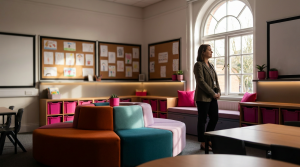
Flexibility is what makes a learning space truly modern. Investing in flexible learning spaces means choosing furniture that can be easily reconfigured. Look for modular tables (e.g., trapezoidal or semi-circular) that can be arranged for group work or individual study, lightweight stackable chairs, and mobile units on castors. This adaptability empowers teachers to use a variety of teaching methods. Exploring modern classroom furniture trends can provide excellent inspiration. Don’t forget storage; well-designed, accessible units are vital to keeping a flexible space tidy and functional. We offer many solutions to help you optimise your classroom storage.
Material Lifespan Comparison
| Material Type | Typical Lifespan (in educational setting) | Key Benefits | Best For |
|---|---|---|---|
| Solid Hardwood | 15-20+ Years | Extremely durable, repairable, classic aesthetic | Libraries, sixth form common rooms, science labs |
| Steel Frame (MDF Top) | 10-15 Years | Strong, cost-effective, wide range of colours/finishes | General classrooms, high-traffic areas |
| High-Pressure Laminate | 10-12 Years | Scratch and heat resistant, easy to clean | Art rooms, science labs, dining halls |
| Moulded Polypropylene | 8-12 Years | Lightweight, ergonomic shapes, vibrant colours, stackable | General classrooms, early years, flexible spaces |
Frequently Asked Questions
What is the best way to upgrade school furniture?
an effective way to upgrade school furniture is through a strategic, phased approach based on a thorough audit of safety, condition, and educational suitability. Instead of a reactive, piecemeal approach, a planned programme allows for better budgeting, minimises disruption, and ensures your investment directly supports the school’s long-term goals. This proactive method is far more cost-effective over the furniture’s lifespan.
What are the key UK safety standards for school furniture?
The primary safety and sizing standard for UK school furniture is BS EN 1729, covering both strength and ergonomics. This standard ensures chairs and tables are of an appropriate size, strength, and stability for children. Additionally, all furniture must adhere to general duties under the Health and Safety at Work etc. Act 1974, and for younger children, equipment must meet the safety requirements of the Early Years Foundation Stage (EYFS) framework.
How can I justify the cost of new furniture to governors or my MAT?
Frame the proposal around long-term value, risk reduction, and educational improvement, not just initial cost. Use your audit data to present a clear business case showing the financial liability of unsafe furniture and the rising cost of repairs. Emphasise how flexible, ergonomic furniture is an investment that enables modern teaching, which in turn helps to improve learning outcomes and supports the school’s development plan.
What is flexible learning space furniture?
Flexible learning space furniture refers to mobile, modular, and multi-purpose items that allow a classroom to be reconfigured quickly for different tasks. Examples include trapezoidal tables for easy grouping, lightweight stackable stools, and tiered seating on castors. This type of furniture is designed to support a dynamic educational environment that includes collaborative work, individual study, and direct instruction all within the same space.
Are there grants available for school furniture in the UK?
Specific grants exclusively for school furniture are exceptionally rare; funding is typically secured through the school’s core capital budget. This usually comes from Devolved Formula Capital (DFC) or by submitting a detailed bid for funds to your Local Authority or Multi-Academy Trust (MAT). A reliable business case that links the furniture upgrade to urgent safety needs or key educational objectives is crucial for securing this type of funding.
When to replace classroom chairs?
You should replace classroom chairs when they fail a safety audit, become uneconomical to repair, or no longer meet the ergonomic needs of your students. Look for signs like structural instability (wobbling), cracks in the frame or shell, and sharp edges. Even if intact, a chair that is the wrong size for the age group using it should be prioritised for replacement to support student health and concentration.
How does classroom furniture directly affect student learning?
Research shows a clear link between the physical classroom environment and student engagement and concentration. Poorly designed, uncomfortable, or broken furniture can be a major source of distraction and discomfort, leading to fidgeting and a loss of focus. Conversely, ergonomic and flexible furniture improves comfort, facilitates collaboration, and empowers teachers to use more dynamic teaching strategies, all of which positively impact learning outcomes.
What should I look for in a school furniture supplier?
Look for a supplier with deep experience in the UK education sector who understands compliance standards like BS EN 1729. A reputable partner should offer services like free space planning, provide detailed quotes with no hidden costs, and manage the entire process from delivery to installation. Checking for accreditation from the British Educational Suppliers Association (BESA) is a strong indicator of quality, reliability, and ethical practice.
How do I dispose of old school furniture responsibly?
Responsible disposal is a key part of any upgrade project; many suppliers offer removal and recycling services. At Cost Cutters UK, this is part of our comprehensive service. Alternatively, you can contact specialist commercial waste recycling companies. For items that are still safe and in usable condition, donating them to local charities or community projects is an excellent sustainable option that should be explored.
When is the best time of year to replace school furniture?
The summer holiday period is overwhelmingly the most popular time for major furniture installations as it minimises disruption to teaching. However, this means it’s also the busiest period for suppliers. To guarantee stock availability and secure an installation slot, we strongly recommend finalising your classroom furniture procurement by the spring term (around Easter) for a summer delivery. Half-term breaks can work well for smaller, single-classroom projects.
Important Considerations
This guide provides a strategic framework based on UK-wide regulations and common best practices. However, specific procurement policies can vary significantly between Local Authorities and Multi-Academy Trusts (MATs), the organisations that run groups of academy schools. Typically consult your internal financial procedures and any MAT-level procurement guidelines before committing to a supplier.
A full-scale upgrade is not typically the only viable option. For schools with severely limited budgets, a ‘repair and refurbish’ programme can be an effective interim step. This involves professionally repairing structural issues and replacing high-wear components like tabletops or chair feet. Whilst this can extend the school furniture lifespan, it’s often a short-term fix and may not address underlying ergonomic or pedagogical shortcomings.
For large-scale projects involving multiple classrooms or an entire school, we strongly recommend seeking professional guidance. A specialist educational furniture supplier can provide free space planning, 3D visualisations, and expert advice to ensure your investment meets compliance, maximises your space, and delivers long-term educational value. This expertise is invaluable in avoiding costly mistakes and is a core part of our service, which is Rated Excellent On Trustpilot.
Making a Strategic Investment in Your Learning Environment
Deciding when to upgrade school furniture is a critical strategic task that directly impacts student wellbeing, educational outcomes, and your school’s budget. By moving from a reactive repair model to a proactive audit and planning framework, you can build a compelling business case for investment. This ensures your learning environments remain safe, compliant, and fit for the purpose of modern education, all while providing excellent value through Bulk Buy Discounts.
At Cost Cutters UK, we have partnered with schools, colleges, and MATs across the country for over 35 years to manage these projects. Our expertise in space planning, procurement, and installation removes the stress from your upgrade. From “Design To Install We Do It All!”, our team is here to help. If you are planning a furniture project, our team can provide a free, no-obligation space plan and quote to help you take the next step.
References
- Health and Safety Executive (HSE) – UK Government Guidance. Provides the legal framework and practical guidance for workstation and seating ergonomics under the DSE Regulations 1992.
- European Agency for Safety and Health at Work (EU-OSHA) – International Body Research. Highlights risk factors for musculoskeletal disorders (MSDs), including prolonged static postures and poorly designed workstations.
- Department for Education (EYFS Framework) – UK Government Statutory Framework. Mandates that premises, furniture, and equipment in early years settings must be safe, suitable, and promote learning.
- British Educational Suppliers Association (BESA) – Professional Organisation Code of Practice. Members must supply goods that are fit for their intended purpose in an educational environment and meet relevant safety standards.
- World Health Organization (WHO) – International Body Guidelines. Recommends limiting sedentary time and breaking up long periods of sitting for all age groups to improve health.
- Statista – Market Research Data (2024). Provides market size and revenue data for the UK furniture industry, contextualising the scale of procurement.
- Castles UK Education – Industry Analysis. Suggests that beyond a 10-15 year lifespan, schools should assess furniture for its suitability for modern teaching methods, not just its physical condition.
- Just for Schools – Supplier Guidance. Recommends a proactive annual review of all furniture as a best practice for identifying replacement needs before they become safety issues.
- Winscombe Furniture – Product Guide (2026). Highlights the trend towards modular and mobile furniture to support flexible learning environments in their 2026 classroom furniture guide.
Conclusion
Making a Strategic Investment in Your Learning Environment
The decision to upgrade school furniture is a critical strategic task that directly impacts student wellbeing, educational outcomes, and your school’s budget. By moving from a reactive repair model to a proactive audit and planning framework, you can build a compelling business case for investment. This ensures your learning environments remain safe, compliant, and fit for the purpose of modern education.
At Costcutters UK, we have partnered with schools, colleges, and MATs across the country for over 35 years to manage these projects. Our expertise in space planning, procurement, and installation removes the stress from your upgrade. If you are planning a furniture project, our team can provide a free, no-obligation space plan and quote to help you take the next step.