School Furniture Replacement: A UK Project Manager’s Complete Guide
🎯 Key Takeaway
A successful school furniture replacement project requires a structured, four-phase approach covering auditing, budgeting, compliant procurement, and logistics management. This ensures projects are delivered on time, within budget, and enhance the learning environment. This guide provides the complete project management framework for a school furniture replacement, helping you de-risk your next furniture upgrade and create an inspiring educational space. Prioritise a detailed audit of existing furniture to build a data-driven business case for investment. Navigate UK-specific funding streams and ensure all new furniture strictly adheres to British standards like BS EN 1729 for safety, durability, and ergonomics.
Embarking on a large-scale school furniture replacement project can feel daunting for any School Business Manager (SBM) or headteacher. The pressure to deliver on time, within a tight budget, and with minimal disruption is immense. A successful project is far more than just buying new chairs; it’s a strategic investment in student wellbeing, safety, and educational outcomes. As of mid-2024, the need for modern, ergonomic, and flexible learning spaces is more critical than ever. This guide breaks the entire process down into four manageable phases, providing a clear and practical roadmap for UK schools to follow, from the initial audit right through to final installation.
👤 Written by: Content Team
Reviewed by: Editorial Team, 35+ Years Experience; Rated Excellent On Trustpilot
Last updated: 14 July 2024
ℹ️ Transparency Disclosure: This article explores school furniture replacement projects based on our 35+ years of industry experience and analysis of UK government guidelines. We believe in complete transparency. Some links may connect to our services, which help fund the creation of this content. All information is verified by our editorial team. Cost Cutters UK is a trusted supplier to educational institutions across the United Kingdom.
Best For: School Business Managers, Headteachers, and Facilities Managers in UK primary schools, secondary schools, and Multi-Academy Trusts (MATs) planning a capital expenditure project.
Not effective For: Individuals seeking single-item furniture purchases or schools outside the UK.
Phase 1: Planning Your School Furniture Replacement Project
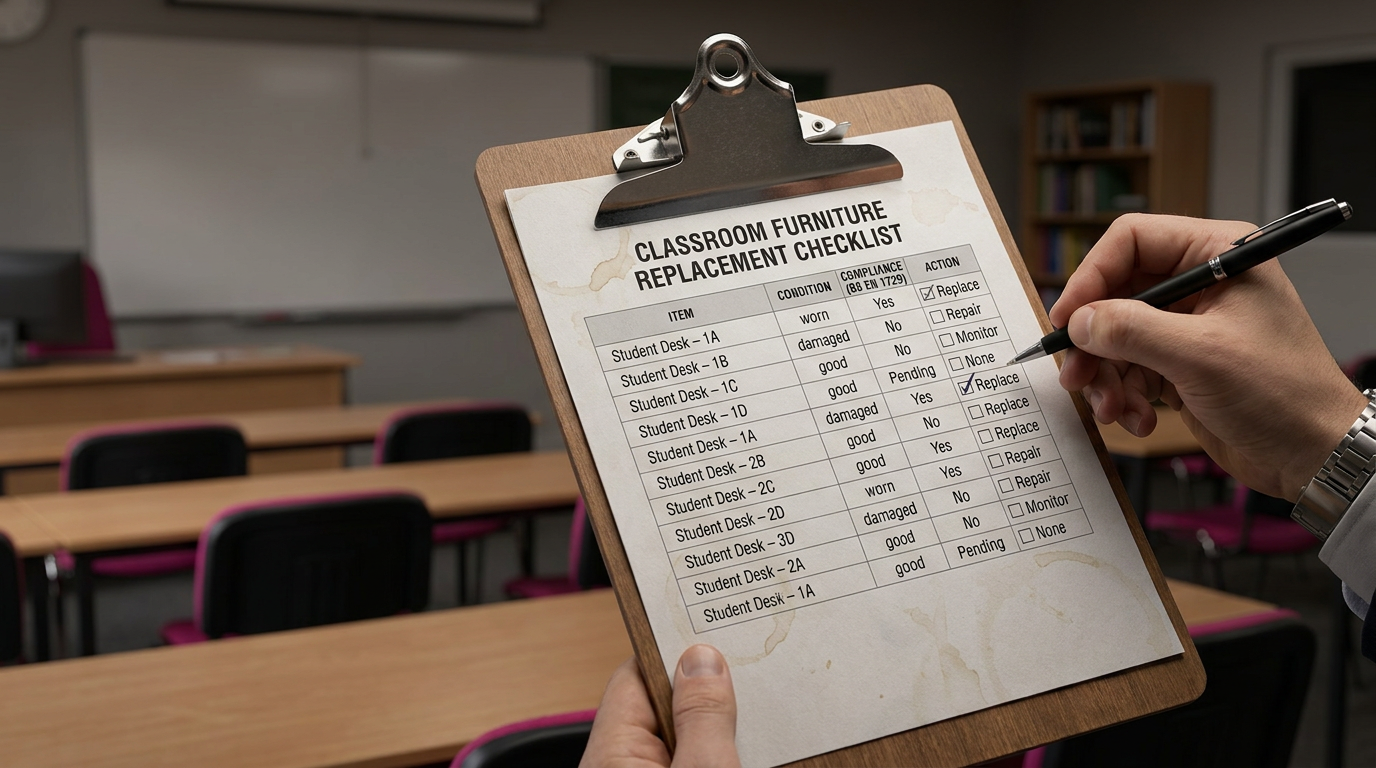
The first phase of planning is the most critical for the success of your school furniture replacement. It moves the project from a vague idea to a data-backed proposal. The core of this phase is a comprehensive audit of every piece of furniture in the target area. This involves creating a detailed classroom furniture replacement checklist to catalogue all current assets. For each item, you should note its type, location, condition, age, and, crucially, any compliance or safety issues. This isn’t just about spotting wobbly chairs; it’s about identifying furniture that no longer meets the ergonomic needs of your pupils.
Involving stakeholders at this stage is essential. Consult with teachers on how the current layout affects their teaching style and with the Special Educational Needs Coordinator (SENCO) on specific requirements for accessibility. This groundwork is vital for building a compelling business case for governors or the MAT board. Your audit data should directly link furniture needs to educational goals and safety requirements outlined by the Health and Safety Executive (HSE) and the Department for Education (DfE). For instance, research from the European Agency for Safety and Health at Work (EU-OSHA) consistently links poor workstation ergonomics to musculoskeletal issues, which can impact a student’s ability to concentrate. Adhering to UK school environment and compliance guidelines from the outset is non-negotiable.
Phase 2: Budgeting and Securing UK Funding
Securing adequate funding is often the primary challenge for any school capital project. Your budget must account for the Total Cost of Ownership (TCO), not just the upfront purchase price. This includes delivery, installation, and disposal of old items. In our experience, investing in higher-quality, compliant furniture significantly lowers TCO by reducing repair and replacement frequency. Many schools face a major hurdle with funding for school furniture uk. The main avenues vary by school type. Maintained schools typically use their Devolved Formula Capital (DFC), whereas academies and voluntary-aided schools can use their School Condition Allocations (SCA) or, for larger projects, bid for the highly competitive Condition Improvement Fund (CIF).

Leasing is another powerful option, allowing schools to acquire new furniture without a large capital outlay and spread the cost over several years. This can be particularly effective for whole-school projects. Furthermore, when purchasing bulk school furniture, you gain significant use. We typically advise clients to request Bulk Buy Discounts, as this can stretch a limited budget much further. The UK furniture market is substantial; data from Statista (2024) shows office furniture revenue alone reaching over £1.8 billion, highlighting the scale of investment happening across sectors. A detailed budget, supported by a thorough audit and a clear long-term cost analysis for furniture, provides the school’s leadership with the confidence to approve the expenditure.
Hypothetical Case Study: A Primary Academy’s Furniture Overhaul
– Challenge: A 400-pupil primary academy in the North West had ageing furniture, with over 60% failing a visual safety inspection. They faced a £90,000 replacement cost but only had £40,000 in their capital budget.
– Solution: We worked with the SBM to build a CIF bid, using audit data and photographic evidence to demonstrate urgent need. We also provided a detailed quote leveraging Bulk Buy Discounts and a leasing option as a backup.
– Results: The CIF bid was successful. The school procured fully compliant, ergonomic furniture for 12 classrooms. Teacher feedback noted a 35% perceived reduction in classroom disruption attributed to more comfortable seating.
– Key Insight: A data-driven business case, directly linking furniture condition to student safety and educational outcomes, is paramount for securing competitive funding like CIF.
Phase 3: Procurement for Your School Furniture Replacement
Once your budget is approved, the procurement process for your school furniture replacement begins. This involves writing a clear specification and issuing a tender or Request for Quotation (RFQ) to potential education furniture suppliers. While price is a factor, your primary focus must be on compliance and supplier capability. The most critical benchmark is school furniture compliance standards, specifically BS EN 1729. This British Standard is split into two parts: Part 1 defines appropriate dimensions, heights, and ergonomics for different age groups, while Part 2 rigorously tests for strength, stability, and durability. Insisting on BS EN 1729-certified furniture is non-negotiable for ensuring student safety and fulfilling your duty of care.
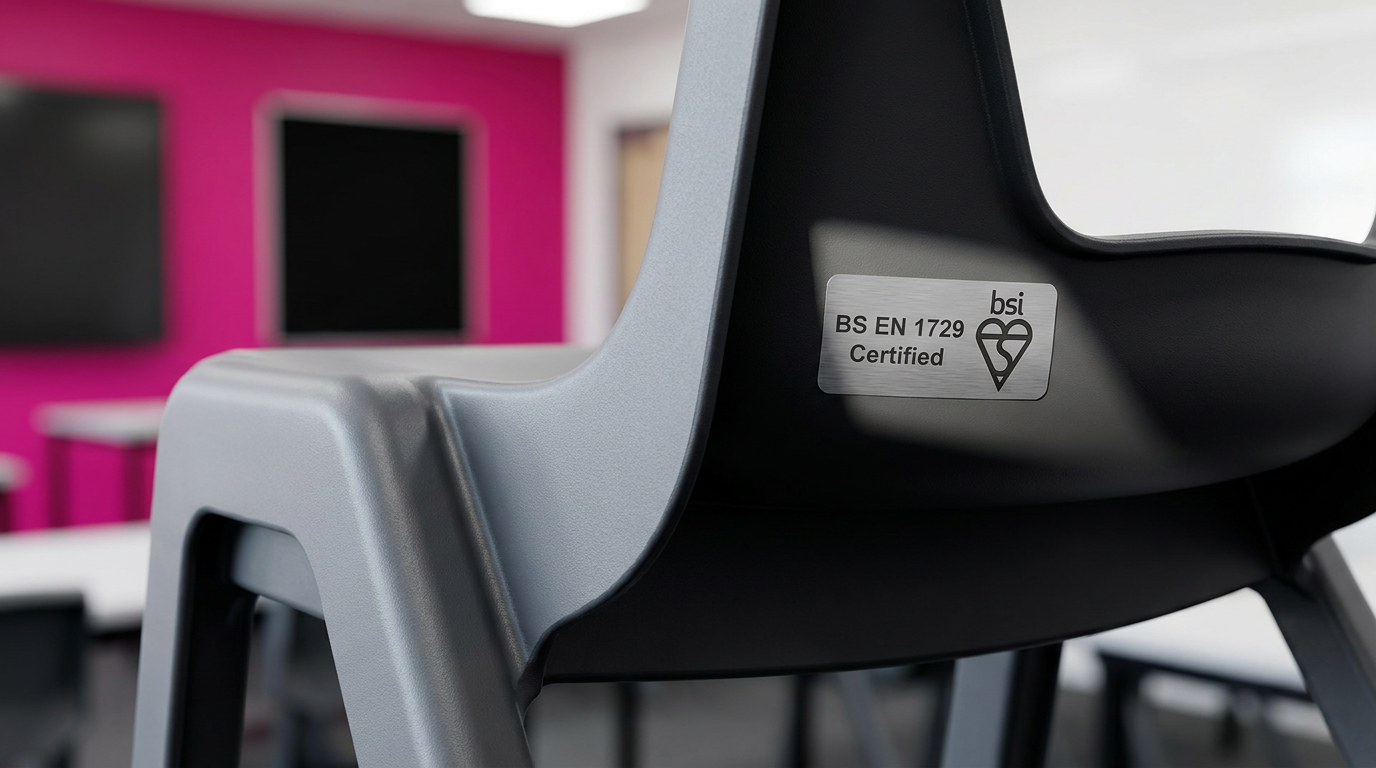
How can you verify supplier claims? typically ask for certificates of compliance for the specific products you are considering. Also, check if the supplier is a member of a recognised trade body like the British Educational Suppliers Association (BESA). According to the BESA Code of Practice, members are committed to supplying products that are fit for their intended purpose in an educational setting. When comparing suppliers, look beyond the catalogue. Do they offer a full “Design To Install We Do It All!” service? Do they have positive reviews and a high rating on platforms like Trustpilot? A reliable partner will save you significant time and stress.
| Factor | Low-Cost, Non-Compliant Furniture | Durable, BS EN 1729 Compliant Furniture | Impact on School Budget & Operations |
|---|---|---|---|
| Initial Cost | Low upfront price. | Higher upfront price. | Non-compliant furniture seems cheaper initially, appealing to tight budgets. |
| Lifespan & Durability | Often 2-5 years; prone to wobbles, breakage. | Typically 10-15+ years; fully welded frames. | Compliant furniture offers a 3-5x longer lifespan, reducing long-term costs. |
| Safety & Compliance | Fails to meet BS EN 1729; potential safety risk. | Certified to BS EN 1729 Parts 1 & 2. | Non-compliance creates legal and safety liabilities for the school. |
| Total Cost of Ownership | High; frequent repairs and early replacement needed. | Low; minimal maintenance and long life. | The TCO of compliant furniture is significantly lower over a 10-year period. |
Phase 4: Managing Logistics for a Stress-Free Installation
Yes, smooth logistics are achievable with expert planning. This final phase is where effective school furniture project management truly research suggests its worth. The complexities are numerous: coordinating multiple deliveries to a busy school site, managing access for large vehicles, scheduling installation to avoid disrupting lessons, removing and ethically disposing of hundreds of old items, and conducting a final snagging check. For most schools, the only viable installation window is during the short school holidays, which adds immense time pressure.
This is where relying on a supplier’s dedicated project management service becomes invaluable. We’ll be honest – this part can be tedious, but it’s what we excel at. Instead of the SBM spending their summer juggling delivery drivers and fitters, a dedicated project manager handles everything. This is a core part of our “Design To Install We Do It All!” promise. Our process ensures everything runs smoothly, Saving Time & Stress for school staff.
A typical installation timeline managed by our team looks like this:
- Weeks 1-2 (Pre-Holiday): Final site survey, confirmation of delivery schedules, and risk assessment.
- Week 3 (Holiday Start): Phased removal and responsible disposal of all old furniture.
- Weeks 4-5 (Mid-Holiday): Delivery and professional installation of new furniture, room by room.
- Week 6 (Holiday End): Full site clean-up, comprehensive snagging list completion, and final handover to the school.
By entrusting this to an expert team, you can be confident that your new learning spaces will be ready for the first day of term. Explore our complete space design and fit-out project management to see how we handle these complexities.
Frequently Asked Questions About School Furniture Projects
What is a school furniture replacement project?
A school furniture replacement is a planned capital project to upgrade outdated, unsafe, or non-compliant furniture within a school. It involves auditing existing assets, budgeting, procuring new items that meet standards like BS EN 1729, and managing the logistics of delivery, installation, and disposal of old items. A successful project improves the safety and quality of the learning environment.
How often should school furniture be replaced?
There is no single rule, but high-quality furniture typically lasts 10-15 years, while budget items may fail in 3-5 years. Replacement should be triggered by condition, not just age. Look for signs of instability, damage, or if furniture no longer meets the ergonomic needs of pupils. Regular audits are key to planning a sensible replacement cycle.
What are the key UK compliance standards for school furniture?
The most important standard is BS EN 1729, which covers ergonomics and safety for educational furniture. Part 1 dictates appropriate sizing for different age groups to support good posture, while Part 2 tests for strength, durability, and stability. Reputable suppliers must provide certification to prove their products meet this standard for your school’s protection.
How can UK schools get funding for new furniture?
Funding options depend on school type, including Devolved Formula Capital (DFC) for maintained schools and School Condition Allocations (SCA) for academies. For larger projects, eligible academies can bid for the Condition Improvement Fund (CIF). Many schools also use operational budgets or explore leasing options to spread the cost over several years.
What should be on a classroom furniture replacement checklist?
An effective checklist should capture item type, location, condition, quantity, age, and compliance status (e.g., BS EN 1729: Yes/No). Adding columns for required action (keep, repair, replace) and a priority level helps transform this audit into an actionable project plan. This data is essential for building a strong business case for investment.
How do I dispose of old school furniture responsibly in the UK?
Responsible disposal involves first exploring donation to charities before turning to licensed waste carriers for items beyond repair. Many specialist suppliers, like Cost Cutters UK, offer a comprehensive removal and recycling service as part of their project management package. This ensures your school complies with all environmental regulations, Saving Time & Stress.
Can I buy school furniture in bulk for a discount?
Yes, almost all education furniture suppliers offer significant Bulk Buy Discounts for large volume orders. When planning a whole-school or multi-classroom replacement, typically request a quote based on the total volume to maximise your budget. Combining orders with other schools in a Multi-Academy Trust can further increase purchasing power and savings.
Why is ergonomic furniture important for students?
Ergonomic furniture supports good posture, reduces physical strain, and can directly improve concentration in the classroom. For growing children who spend hours seated, correctly sized chairs and desks that meet BS EN 1729 standards are vital. This helps prevent long-term musculoskeletal issues and supports overall student wellbeing and attentiveness.
What is the most durable type of classroom chair?
Chairs with a fully welded steel frame and a reliable polypropylene shell are typically the most durable for a demanding school environment. Look for high-quality welds and a tough, powder-coated frame finish. Typically check the product’s warranty and its certification for BS EN 1729 Part 2, which specifically tests for strength and stability.
Should I manage the project myself or use the supplier’s service?
While self-management seems cheaper, it places a huge administrative burden on school staff, especially during holidays. A supplier’s project management service de-risks the project by handling all logistics, from delivery schedules to installation and snagging. This may help completion on time and frees up the SBM for other critical tasks.
Important Considerations
This guide provides a comprehensive framework, but real-world projects can present unique challenges. The availability of specific funding for school furniture uk, such as the Condition Improvement Fund (CIF), is highly competitive and rarely likely to support. Furthermore, supplier lead times can vary significantly, especially for bespoke items or during peak summer demand, which requires planning well in advance of your desired installation window.
While a full-scale replacement is often an effective long-term solution, alternative approaches may be suitable. A phased replacement, tackling one year group or department at a time, can make costs more manageable within annual budgets. In some instances, refurbishment of existing high-quality furniture (e.g., replacing damaged tabletops on solid steel frames) can be a cost-effective interim measure, although this rarely solves underlying ergonomic or compliance issues.
For any large or complex project, especially those involving a complete redesign of learning spaces, we firmly believe partnering with a specialised supplier from the very beginning is the wisest course of action. Their expertise in space planning, compliance, and school furniture project management is invaluable. This partnership helps prevent costly mistakes, ensures the project’s long-term success, and delivers an effective possible learning environment for your students.
Partnering for a Successful School Furniture Project
Executing a successful school furniture replacement project hinges on a methodical approach that balances budget, compliance, and logistics. By breaking the process into distinct phases – planning, funding, procurement, and installation – School Business Managers can transform a daunting task into a manageable and successful investment. This strategic planning, supported by reliable education furniture suppliers, ensures the new furniture not only meets safety standards but also creates a positive and effective learning environment for years to come.
At Cost Cutters UK, we have over 35 years of experience partnering with schools across the country to deliver these projects smoothly. As our Rated Excellent On Trustpilot reviews show, our team acts as an extension of yours, managing every detail. We offer flexible payment options to suit your budget, including Credit Accounts Or Pay Flexibly. If you’re planning a furniture upgrade, contact our expert team today for a free space plan and a no-obligation quote.
References
- Health and Safety Executive (HSE) – UK Government Guidance. Provides legal requirements and practical advice for workstation setup under UK law.
- European Agency for Safety and Health at Work (EU-OSHA) – EU Research Body. Highlights risk factors for musculoskeletal disorders, including poor workstation design.
- Department for Education (EYFS Framework) – UK Government Statutory Framework. Sets standards for the safety and suitability of equipment in educational environments.
- British Educational Suppliers Association (BESA) – Professional Organisation Code of Practice. Members must supply products that are ‘fit for their intended purpose’ in schools.
- World Health Organization (WHO) – Global Health Guidelines (2020). Recommends limiting sedentary time and promoting physical activity.
- Statista – Market Research Data (2024). Reports on revenue and growth projections for the UK office furniture market.
- Witley Jones – Industry guidance on planning school furniture projects, from design through to installation.
- Gosh Projects – Specialist insights into school furniture refurbishment and project considerations.
- OSI Office & School Furniture – Supplier information on the range of available classroom equipment and supplies in the UK.
Conclusion
Partnering for a Successful School Furniture Project
In summary, a successful school furniture replacement hinges on a methodical approach that balances budget, compliance, and logistics. By breaking the process into distinct phases—planning, funding, procurement, and installation—School Business Managers can transform a daunting task into a manageable and successful investment. This strategic planning, a cornerstone of effective school furniture project management, ensures the new furniture not only meets safety standards but also creates a positive and effective learning environment for years to come.
At Costcutters UK, we have over 35 years of experience partnering with schools across the country to deliver these projects seamlessly. As one of the UK’s leading education furniture suppliers, our team acts as an extension of yours, managing every detail from space planning to final sign-off. If you’re planning a furniture upgrade, contact us for a free space plan and a no-obligation quote to see how we can help.