The Complete Guide to Space Design & Fit-Out for UK Businesses
🎯 Key Takeaway
Successful space design and fit-out involves a strategic process of planning, designing, and constructing an interior space to meet the specific functional, regulatory, and aesthetic needs of a UK organisation. This guide provides a comprehensive framework to demystify your next project. You’ll learn the crucial difference between a ‘fit-out’ (new space) and a ‘refurbishment’ (existing space), understand the legal implications of CAT A vs CAT B leases, and follow a structured 5-step process to ensure your project stays on time and within budget. Recognise that costs and compliance requirements vary significantly between corporate offices, schools, and public sector bodies to achieve a transformative result.
Embarking on a commercial refurbishment or new office space planning project can feel overwhelming. The coordination of designers, contractors, and suppliers, all whilst managing budgets and timelines, is a significant undertaking. A professional space design and fit-out process is the solution that transforms this complexity into a streamlined, managed project. With over 35 years of experience delivering for UK organisations, we’ve developed this guide to demystify the journey. It provides a clear, step-by-step framework for business leaders, school bursars, and facilities managers to turn a vision for a new workplace, school, or public building into a functional and inspiring reality. You can also browse our full catalogue of compliant furniture to see the possibilities.
Written by: The Cost Cutters UK Content Team | Reviewed by: Editorial Team, 35+ Years Experience; Rated Excellent On Trustpilot
Last updated: 17 April 2026
ℹ️ Transparency Disclosure
This article explores the process of commercial space design and fit-out in the UK based on over 35 years of industry experience and our analysis of UK building regulations. For full transparency, some links may connect to our services. All information is verified by our editorial team to ensure accuracy. Cost Cutters UK is a leading supplier of educational and commercial furniture, providing a full “Design To Install We Do It All!” service.
What Key Terms Define a UK Fit-Out Project?
Understanding the core terminology is the first step to a successful project. The terms ‘fit-out’ and ‘refurbishment’ are often used interchangeably, but they describe distinct activities with different implications for your budget and timeline. Similarly, grasping the difference between a Category A (CAT A) and Category B (CAT B) fit-out is essential, especially when negotiating commercial leases in the UK.
A commercial refurbishment, a common undertaking for established premises, involves upgrading or reconfiguring an existing, operational space. This could range from a simple cosmetic refresh with new paint and furniture to a complete reconfiguration of the internal layout.
In contrast, a fit-out typically applies to an empty space, often referred to as a ‘shell’, provided by a landlord. The discussion of fit-out vs refurbishment is crucial: one builds from a blank canvas, the other improves what’s already there.
What is a Category A (CAT A) Fit-Out?
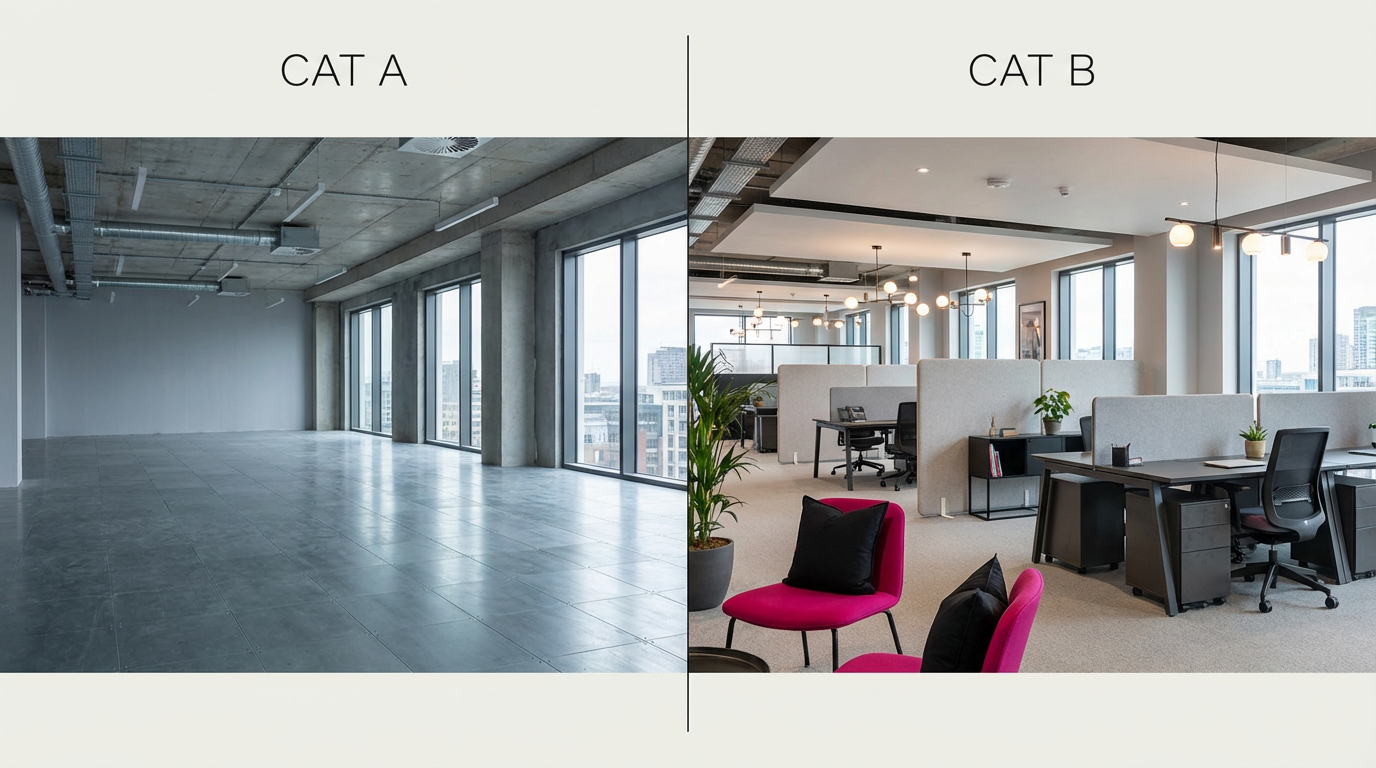
A Category A (CAT A) fit-out, often called the landlord’s fit-out, is the process of creating a basic, functional but empty space. Think of it as the ‘blank canvas’ you lease. It provides the essential infrastructure but none of the bespoke elements that make a space unique to your organisation. This is the standard state in which most commercial properties are let.
Typical inclusions are:
- Raised access flooring
- Suspended ceilings
- Basic mechanical and electrical (M&E) services, like lighting and heating
- Finished internal walls and columns
What is a Category B (CAT B) Fit-Out?
A Category B (CAT B) fit-out is the layer that makes the space yours. It is the tenant’s responsibility and involves installing all the elements needed for your business to operate. This is where your brand, culture, and specific operational needs come to life. The CAT B stage builds upon the CAT A foundation to create a finished, ready-to-use environment. The debate over cat a vs cat b fit out is about responsibility: CAT A is the landlord’s shell, CAT B is the tenant’s home.
This includes:
- Partition walls to create offices and meeting rooms
- Kitchens, tea points, and breakout areas
- Specialist IT and communication infrastructure
- Branding, signage, and decorative finishes
- All furniture, fixtures, and equipment (FF&E)
What is Our 5-Step Process for Space Design and Fit-Out?
To prevent projects from descending into chaos, a structured methodology is essential. At Cost Cutters UK, we’ve refined our process over decades to ensure clarity, accountability, and minimal disruption. Our “Design To Install We Do It All!” philosophy is built around a single point of contact, Saving Time & Stress for our clients. This well-supported by research approach to space design and fit-out ensures every detail is managed from concept to completion.
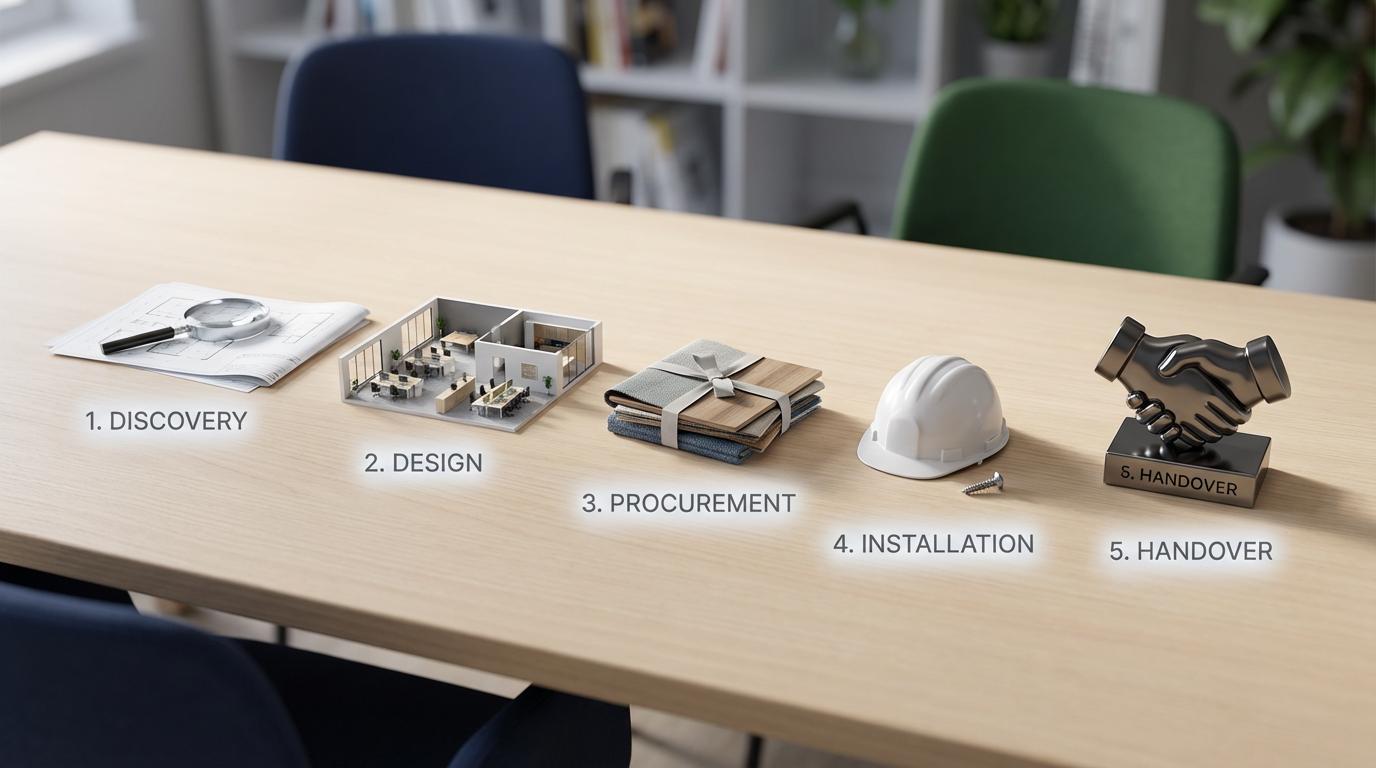
1. Discovery & Strategy
This is the most critical phase. We work with you to understand your objectives, challenges, and vision. We’ll discuss headcount, work styles, IT requirements, budget, and timelines. This stage involves site surveys and detailed consultations to create a comprehensive project brief that forms the foundation for everything that follows.
2. Design & Space Planning
Our design team takes the brief and translates it into a functional and inspiring concept. This involves detailed office space planning, creating 2D layouts and 3D visualisations so you can see exactly how your new space will look and function. We focus on optimising workflow, maximising natural light, and creating an environment that reflects your brand and supports your team.
3. Procurement & Value Engineering
Once the design is approved, we manage the procurement of all materials, furniture, and fittings. Thanks to our significant purchasing power, we can offer Bulk Buy Discounts that provide exceptional value. We also practice value engineering, suggesting alternative materials or methods that can achieve the same aesthetic and functional goals more cost-effectively.
4. Installation & Project Management
Our dedicated project manager oversees all on-site activity. They coordinate our in-house installation teams and specialist trades, ensuring work is completed to the highest standard, on schedule, and in compliance with all UK health and safety regulations. Regular progress updates keep you fully informed without you needing to manage the day-to-day details.
5. Handover & Aftercare
Upon completion, we conduct a thorough walkthrough with you to ensure every detail meets your satisfaction. We hand over all relevant documentation, including warranties and maintenance guides. Our commitment doesn’t end there; we provide robust aftercare to ensure your new space continues to serve you well long into the future.
Sector-Specific Space Design and Fit-Out: Offices, Schools & Public Bodies
A one-size-fits-all approach to space design and fit-out doesn’t work. The requirements for a corporate headquarters are vastly different from those for a primary school or a local council office. Understanding these nuances is key to a successful project.
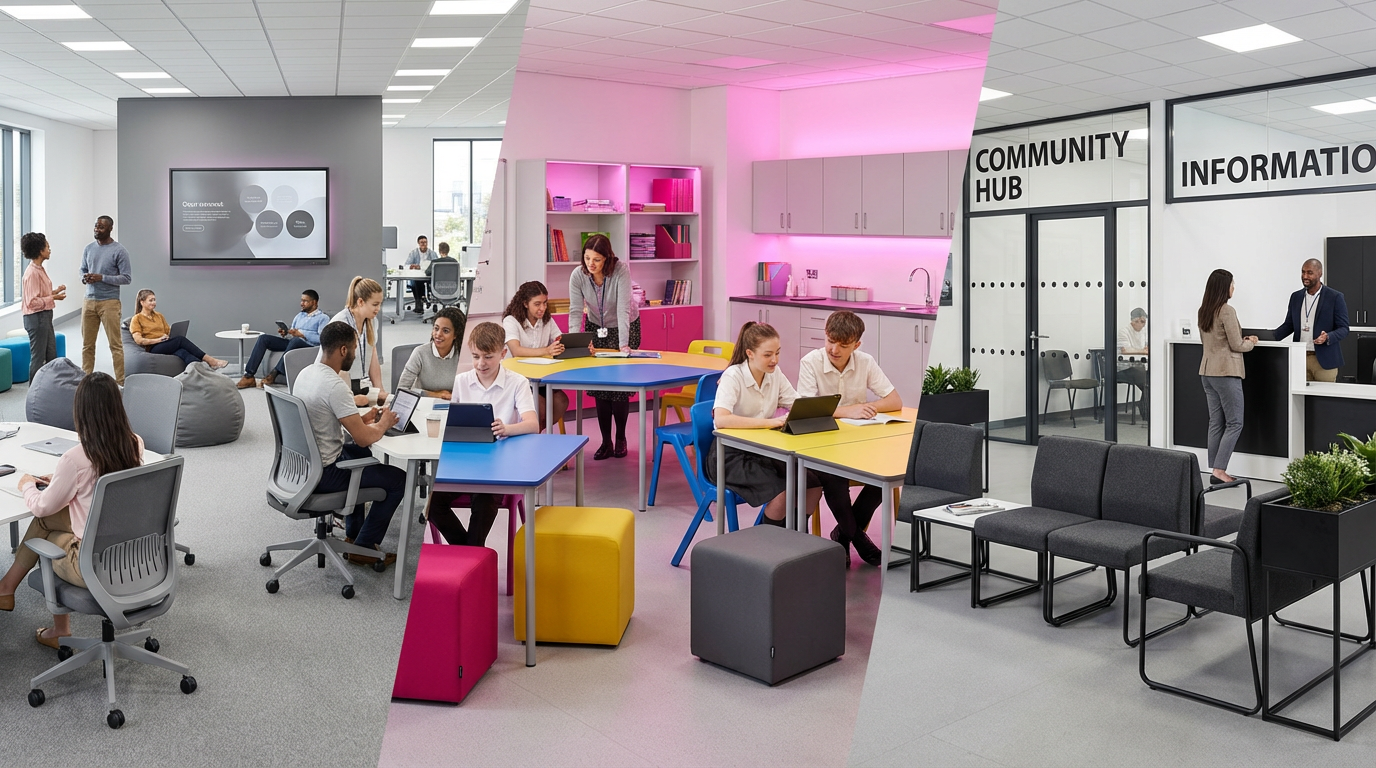
Corporate Offices
The modern office fit-out UK businesses require must support hybrid working and employee well-being. The focus is on creating flexible, collaborative environments that strengthen brand culture and attract top talent. Key considerations include agile workstations, technology-enabled meeting rooms, and high-quality breakout areas with ergonomic breakout furniture to encourage informal interaction and rest.
Hypothetical Case Study: A Midlands Tech Firm
Challenge: A 100-person tech firm was struggling with low office attendance and complaints about a dated, siloed layout. Their existing space couldn’t support their new hybrid working model.
Solution: We implemented a full CAT B fit-out focused on creating collaborative ‘neighbourhoods’ and bookable quiet zones. The project included installing a new kitchen hub and multiple informal meeting pods over a 12-week period.
Results: Office attendance increased by 40% within three months. Employee satisfaction surveys showed a 65% improvement in perceptions of the work environment, and the flexible space allowed them to grow their team by 15% without needing more square footage.
Key Insight: Prioritising a variety of work settings over assigned desks gives employees the autonomy to choose an effective environment for their tasks, boosting both productivity and morale.
Schools and Education
A school refurbishment project is governed by strict regulations. Durability, safety, and value for money are paramount. Furniture and layouts must comply with standards like BS EN 1729 for ergonomics and strength. The design must create effective learning zones, from quiet reading corners to dynamic, collaborative classrooms, all while ensuring clear circulation and robust safeguarding.
Public Sector Bodies
For a public sector fit-out, accountability and accessibility are crucial. Projects must demonstrate clear value for taxpayer money and adhere to public procurement rules. Spaces must be fully compliant with the Equality Act 2010, ensuring equal access for all members of the public and staff. Security, durability, and creating a welcoming yet professional environment are the primary design drivers.
How Should You Budget for a UK Space Design and Fit-Out?
Budgeting for a space design and fit-out project can seem opaque, as costs vary widely depending on the project’s scope and location. A basic refresh will cost significantly less than a full structural CAT B fit-out with complex M&E systems. As a general rule, expect to invest more per square metre in London and the South East compared to other UK regions.
Key cost drivers include:
- Specification Level: The quality of finishes, from flooring to lighting, has a major impact.
- M&E Requirements: Complex data cabling, air conditioning, and bespoke lighting systems will increase costs.
- Furniture: The choice between standard off-the-shelf items and bespoke joinery affects the budget.
- Location: Higher labour and logistics costs in major cities influence the final price.
We help clients maximise their investment through transparent pricing and smart procurement. Our ability to offer Bulk Buy Discounts and flexible payment options, such as Credit Accounts Or Pay Flexibly, makes high-quality projects more accessible.
The table below provides a guide to typical office fit-out costs UK businesses can expect as of April 2026.
| Fit-Out Level | Typical Cost per sq m (London) | Typical Cost per sq m (Rest of UK) | Includes |
|---|---|---|---|
| Basic / Refresh | £600 – £900 | £450 – £750 | New carpet, decoration, standard furniture, minor data alterations. |
| Mid-Range | £900 – £1,800 | £850 – £1,600 | New partitions, standard kitchen, new lighting, mid-range furniture. |
| High-End | £1,800 – £3,000+ | £1,600 – £2,500+ | Bespoke joinery, high-end finishes, complex M&E, wellness rooms. |
| CAT A Plus | £1,200 – £2,000 | £1,000 – £1,700 | Landlord finish with enhanced features like tea points and meeting rooms. |
Source: Internal data and industry analysis from sources like RICS and Morgan Lovell (2024-2025).
How Do You Choose the Right Partner for Your Space Design and Fit-Out?
Selecting the right partner is arguably the most important decision you’ll make. The right team will act as a trusted advisor, managing complexity and delivering on their promises. The wrong one can lead to budget overruns, delays, and endless stress. We believe an effective workplace design specialists offer a seamless, end-to-end service.
When evaluating potential partners for your space design and fit-out, look for this evidence:
- Sector-Specific Experience: Do they have a portfolio of successful projects in your industry (office, education, healthcare)? Ask for case studies and references.
- In-House Capabilities: A firm with its own design, project management, and installation teams offers greater control and accountability than one that subcontracts everything.
- Regulatory Knowledge: They must have a deep understanding of UK Building Regulations, fire safety, and the Construction (Design and Management) Regulations 2015 (CDM).
- Financial Stability: Check their trading history and financial health. You need a partner who will be there to see the project through and honour warranties.
- Accreditations and Trust: Look for independent verification of their quality and reliability. We are proud of our UK industry accreditations and being Rated Excellent On Trustpilot.
With over 35 years of nationwide experience, Cost Cutters UK combines the scale and expertise of a national provider with the dedicated service of a local partner.
Important Considerations
This guide provides general benchmarks and process outlines. Every project is unique, and final costs and timelines can be influenced by unforeseen structural issues, supply chain fluctuations, and specific site conditions. The data presented is based on industry averages as of early 2026 and should be used for initial planning purposes only.
Whilst a full-service design and build approach is often most efficient, alternative models exist. Some organisations may choose to hire an independent architect or designer first, then tender the construction work separately. This can offer more design control but may lead to challenges in communication and accountability between different contractors.
For any project involving structural changes, complex M&E systems, or work on a listed building, You should consult with chartered surveyors, structural engineers, and local authority planning departments early in the process. A reputable fit-out partner can help manage these consultations on your behalf.
Frequently Asked Questions About Space Design and Fit-Out
What is space design and fit-out?
The term space design and fit-out refers to the comprehensive process of transforming an interior commercial space to make it suitable for occupation. This includes everything from initial space planning and interior design to the physical construction and installation of partitions, electrical systems, and furniture. It ensures a space is not only aesthetically pleasing but also functional, compliant, and aligned with an organisation’s operational goals.
What is the difference between a fit-out and a refurbishment?
A fit-out typically applies to a new or empty space, like a shell provided by a landlord, which is then built out for the first time. In contrast, a commercial refurbishment involves upgrading, reconfiguring, or modernising an existing, already-fitted-out space. Essentially, a fit-out builds from a blank canvas, while a refurbishment improves what is already there, making the fit-out vs refurbishment decision key.
What are CAT A and CAT B fit-outs?
A CAT A (Category A) fit-out is the landlord’s basic finish, including essentials like suspended ceilings, raised floors, and basic M&E services. A CAT B (Category B) fit-out is the tenant’s bespoke layer on top, which includes partitions, meeting rooms, kitchens, branding, and furniture to make the space usable for their specific business needs and is a crucial distinction in the cat a vs cat b fit out process.
How much does an office fit-out cost in the UK?
The cost varies significantly based on location, size, and specification, but a mid-range office fit-out in the UK can range from £850 to £1,600 per square metre. Costs are typically higher in London and for projects requiring complex mechanical systems or high-end bespoke finishes. Typically seek a detailed quote for an accurate office fit-out costs UK estimate.
How long does a commercial refurbishment project take?
A typical small to medium commercial refurbishment project can take anywhere from 8 to 16 weeks from design approval to completion. This timeline depends on the project’s complexity, procurement lead times for materials and furniture, and the need for any structural changes. A clear project plan is essential for managing this timeline effectively and avoiding delays.
What regulations apply to a school refurbishment project in the UK?
A school refurbishment project in the UK must adhere to stringent regulations, including the Department for Education (DfE) guidelines and Building Bulletins. Key standards include BS EN 1729 for furniture dimensions and strength, fire safety regulations (Regulatory Reform (Fire Safety) Order 2005), and accessibility requirements under the Equality Act 2010. Health and Safety Executive (HSE) rules also apply.
How do I create a design brief for my office fit-out?
Start by defining your objectives: what problems are you solving or what goals are you trying to achieve? Your brief should include your budget, timeline, number of employees, required work zones (e.g., quiet areas, collaboration hubs), IT needs, and any specific brand or cultural elements you want to incorporate. The more detailed your brief, the better your design partner can meet your needs.
What are the key benefits of professional workplace design?
The primary benefits include improved employee productivity, well-being, and retention by creating a more functional and inspiring environment. Professional design also ensures optimal use of space, compliance with health and safety regulations, and a strengthened brand identity. It can turn your physical space into a valuable strategic asset for your business, delivering a clear return on investment.
Do I need planning permission for an internal office fit-out?
Generally, you do not need planning permission for internal-only fit-out works that do not alter the building’s exterior. However, you will likely need to comply with Building Regulations for aspects like fire safety, ventilation, and structural changes. If your building is listed, you will need Listed Building Consent for almost any alteration, so typically check first.
What should I look for in a workplace design specialist?
Look for a specialist with a strong portfolio of projects in your sector, such as office, education, or healthcare. They should have in-house design and project management capabilities, a clear understanding of UK regulations, and strong client testimonials. A good partner acts as a single point of contact, managing the entire process to reduce stress and ensure a successful outcome.
Your Partner for a Successful UK Workplace Transformation
A successful space design and fit-out project has the power to transform not just your physical environment, but your organisation’s culture and performance. By understanding key terms like CAT A and CAT B, following a structured process, and budgeting realistically, you can handle the complexities and avoid common pitfalls. The key is to tailor the approach to your specific sector, whether it’s a corporate office, a school, or a public-facing service centre.
With over 35 years of experience helping UK businesses, schools, and public sector bodies create exceptional spaces, Cost Cutters UK offers a complete, stress-free solution. Our in-house team handles everything from initial concept to final installation, ensuring your project is delivered on time and on budget. If you’re ready to start your transformation, book a free space planning consultation with our experts today.
References
- RICS: Commercial Property Market Survey – Industry Report. Provides quarterly data on UK commercial property trends, including tenant demand and landlord contributions to fit-outs.
- Health and Safety Executive (HSE): Construction (Design and Management) Regulations 2015 – Regulatory Guidance. Outlines the legal duties for clients, designers, and contractors involved in construction and refurbishment projects in the UK.
- Department for Education: Building Bulletins – Government Guidance. Provides design guidance for school buildings, covering everything from space allocation to environmental standards.
- Morgan Lovell: Office Design & Fit Out – Industry Specialist Insights. Provides reports and cost guides on UK office fit-out trends, informing budget expectations and design possibilities.
- Area: Office Design & Fit Out Specialists – Design & Build Case Studies. Offers insights into completed projects, showcasing modern workplace design principles and execution strategies across the UK.
- Space Solutions: Design & Build Services – Consultancy Papers. Publishes articles on integrating workplace strategy with design, focusing on creating spaces that support business objectives.
Conclusion
Your Partner for a Successful UK Workplace Transformation
In summary, a successful space design and fit-out project has the power to transform not just your physical environment, but your organisation’s culture and performance. By understanding key terms like CAT A and CAT B, following a structured process, and budgeting realistically, you can navigate the complexities and avoid common pitfalls. The key is to tailor the approach to your specific sector, whether it’s a corporate office, a school, or a public-facing service centre.