Outdoor Hospitality Space: A UK Organisation’s Guide to DIY vs. Professional Design
🎯 Key Takeaway
For a UK organisation, choosing how to develop an outdoor hospitality space involves balancing short-term costs against long-term value and compliance; a professional service is typically safer and more cost-effective over time. A DIY approach often leads to higher long-term costs due to non-compliant materials and frequent replacements. Professional design ensures adherence to critical UK safety standards like BS EN 581, mitigating legal and financial risks. The total cost of ownership, including maintenance and lifespan, is significantly lower with professionally specified commercial-grade furniture.
The drive to maximise every square foot of property has made high-quality outdoor areas more valuable than ever for UK organisations. For schools, it’s about creating engaging learning environments; for offices, it’s about boosting employee wellbeing; and for public bodies, it’s about serving the community. When establishing a new outdoor hospitality space, leaders face a critical choice: take a Do-It-Yourself (DIY) route to save on initial costs or partner with a professional service. This isn’t just an aesthetic decision; it’s a strategic one with significant implications for safety, compliance, and long-term budgets. Creating a functional space requires careful planning, and this guide provides a clear cost-benefit analysis to help you make the right choice for your organisation’s needs, whether it’s for one of our complete furniture solutions for the public sector or a private enterprise.
👤 Written by: Content Team | Reviewed by: Editorial Team, 35+ Years Experience; Rated Excellent On Trustpilot
Last updated: 18 June 2026
ℹ️ Transparency Disclosure: This article explores the pros and cons of DIY versus professional design for commercial outdoor spaces based on our 35 years of industry experience and analysis of UK regulations. Our goal is to provide a clear, authoritative guide. For full transparency, some links may connect to our services. All information is verified by our editorial team. Costcutters UK is a leading supplier of furniture for the public and private sectors in the UK, and we are proud to be Rated Excellent On Trustpilot.
The DIY Approach: Perceived Savings vs. Hidden Risks
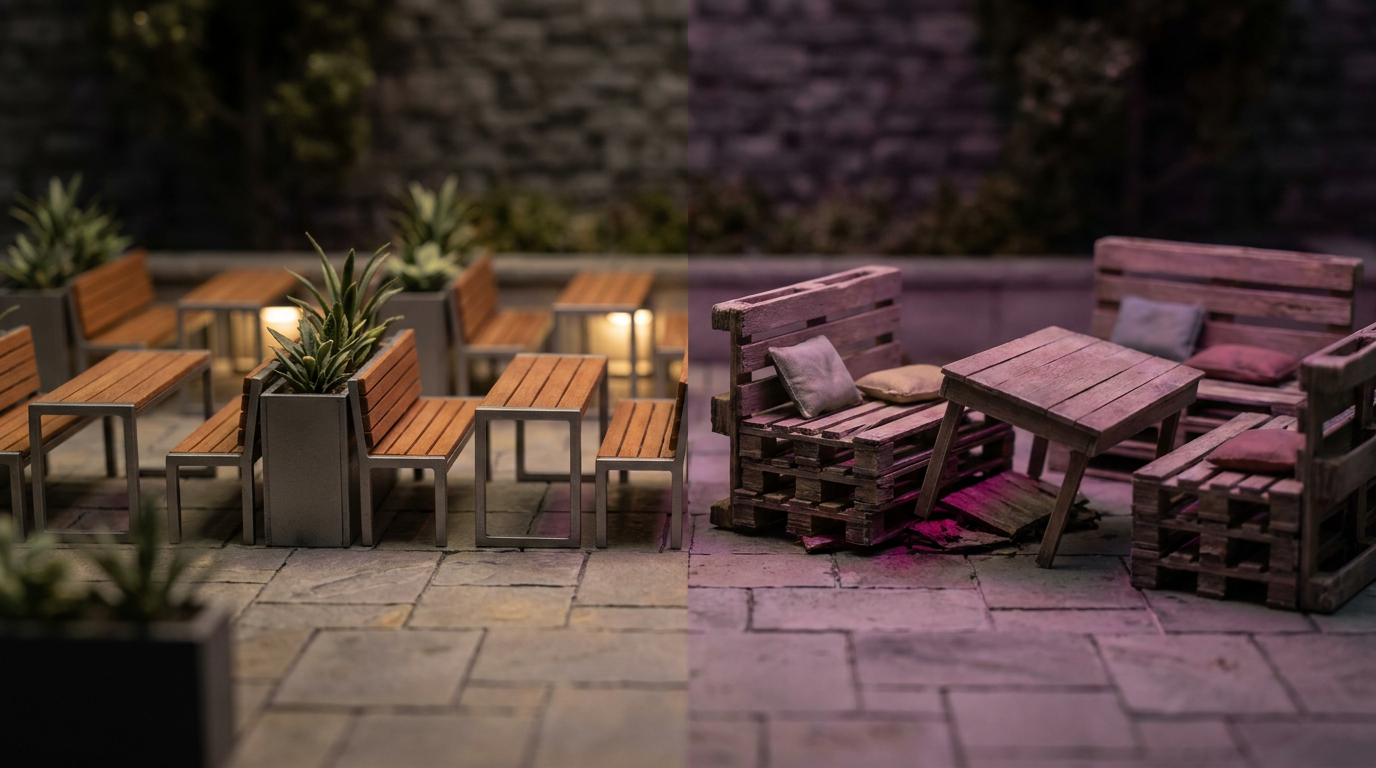
The DIY approach to creating an outdoor space is primarily driven by the appeal of lower initial costs and creative freedom. However, for a commercial or public organisation, this path is fraught with hidden risks and long-term expenses. Data from the Furniture Industry Research Association (FIRA) suggests that domestic-grade furniture, often used in DIY projects, has a lifespan that is three to five times shorter than commercial-grade equivalents when exposed to UK weather and heavy use. This leads to a costly cycle of repair and replacement.
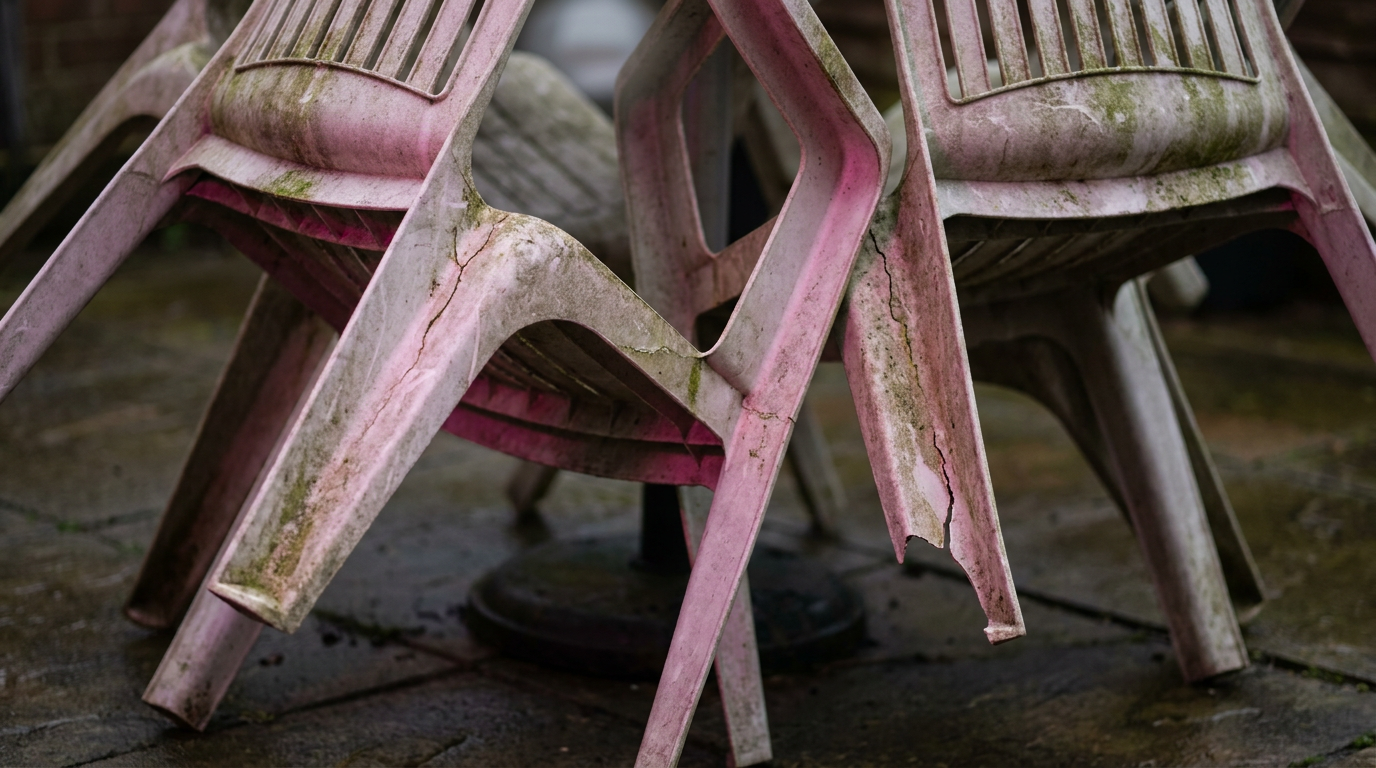
The most significant risks fall into three categories:
- Compliance and Safety: An organisation has a legal duty of care under regulations like the Health and Safety at Work etc. Act 1974. DIY projects often use furniture that doesn’t meet BS EN 581, the critical UK and European safety standard for commercial outdoor furniture. Failure to comply with outdoor furniture safety standards uk can result in serious liability issues, invalidating insurance and exposing the organisation to potential legal action. You can review our UK safety and quality certifications to see the standards we meet.
- Durability and Performance: Retail furniture isn’t built for the demands of a school playground, a busy office terrace, or a public park. Materials can warp, fade, or break under constant use and exposure to the elements, quickly making the space look unprofessional and unsafe.
- Hidden Costs: The initial saving on furniture is often erased by other expenses. These include the labour cost of staff members spending time on procurement and assembly instead of their core duties, plus the recurring budget needed for maintenance and frequent replacements. We believe this is a false economy.
Hypothetical Scenario: A School’s DIY Outdoor Classroom
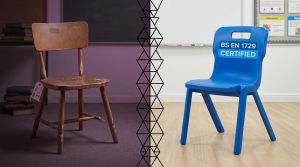
Challenge: A primary school wanted to create an outdoor learning area on a tight budget. They purchased colourful, domestic-grade plastic tables and chairs from a high-street retailer for £2,000.
Solution: Staff and parent volunteers assembled the furniture. The space was initially popular with students.
Results: Within 18 months, the furniture had become brittle from UV exposure, with several chairs cracking under normal use. The total replacement cost, including staff time for removal and re-procurement, was nearly £3,500. The initial “saving” resulted in a 75% cost overrun.
Key Insight: Focusing only on the initial purchase price without considering commercial durability standards leads to significantly higher long-term costs and potential safety hazards. This is a common issue when selecting school outdoor classroom furniture.
The Professional Approach: Investing in a Compliant Outdoor Hospitality Space
In our experience, partnering with a professional service for your outdoor hospitality space is a strategic investment in safety, longevity, and value. This approach moves beyond simple purchasing and delivers a comprehensive solution that addresses the specific needs of a public or commercial environment. The benefits of professionally designed outdoor space are tangible and directly impact your organisation’s bottom line and reputation.
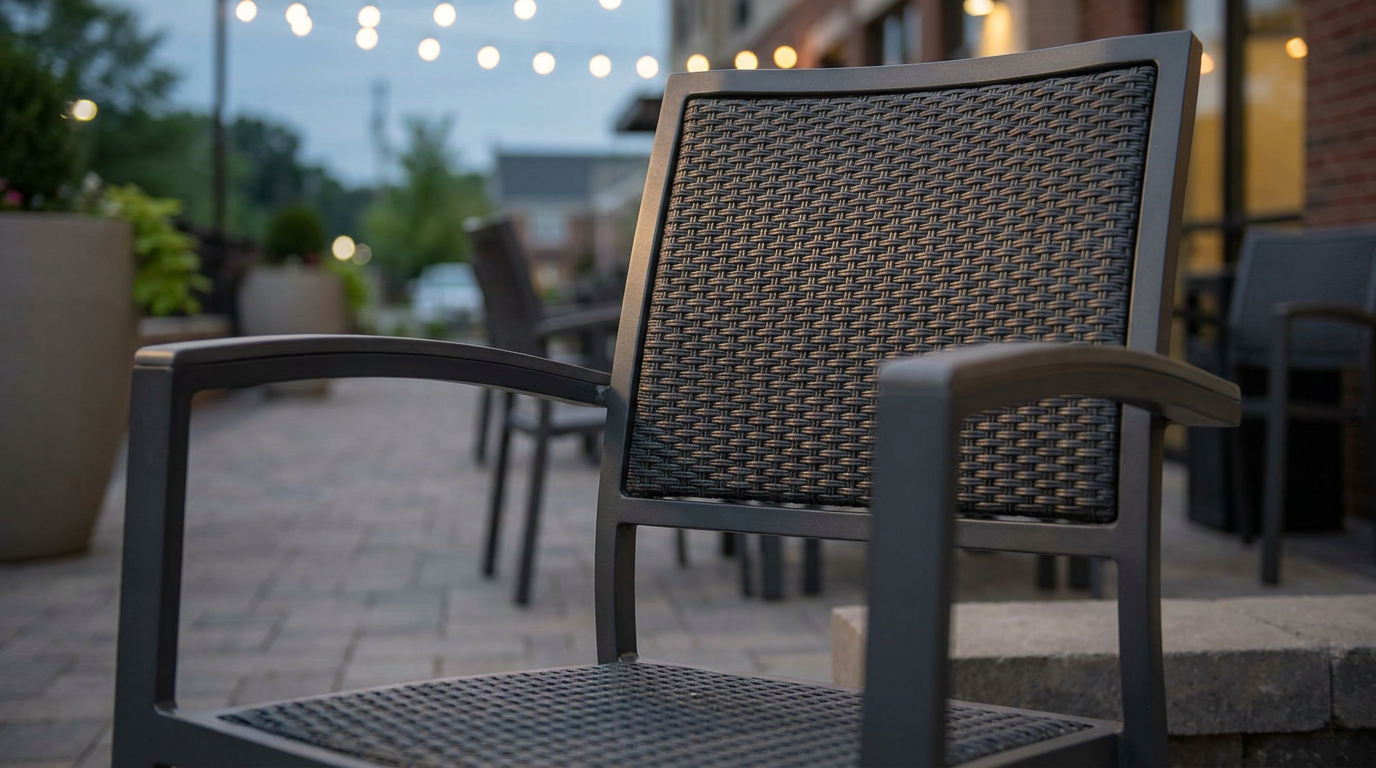
Our approach focuses on four key pillars:
- likely to support Compliance and Risk Mitigation: As specialists, we are experts in UK regulations. We ensure every component, from benches to bins, meets mandatory standards like BS EN 581 and relevant fire safety codes. This protects your organisation from liability and ensures the space is safe for everyone. This is a non-negotiable part of public space furniture procurement.
- Durability and Suitability: We provide access to commercial-grade materials designed to withstand heavy use and the unpredictable UK climate. This includes everything from recycled plastic lumber that won’t rot or splinter to powder-coated steel frames that resist rust. The result is furniture that lasts for years, not just a season. We have a wide range of commercial outdoor design ideas to suit any aesthetic.
- Expert Space Optimisation: A professional designer doesn’t just fill a space with furniture; they create a functional and engaging environment. Whether it’s an office breakout area design meant to foster collaboration or a tranquil garden for a healthcare setting, we analyse user flow, capacity, and accessibility to maximise the area’s potential. You can browse our dedicated outdoor breakout furniture for inspiration.
- End-to-End Project Management: Our “Design To Install We Do It All!” service handles every detail, from the initial concept and 3D visuals to delivery and installation. This process is about Saving Time & Stress for your team, allowing them to focus on their primary responsibilities instead of managing a complex construction project.
Cost Analysis: Total Cost of Ownership (TCO) for Your Outdoor Space
The most effective way to compare the DIY and professional approaches is by calculating the Total Cost of Ownership (TCO). TCO is a financial estimate that helps organisations determine the direct and indirect costs of a product or system over its entire lifecycle. A 2023 analysis by the Business Services Association (BSA) indicates that for public sector projects, a focus on TCO over initial price can deliver savings of up to 20% over the asset’s life. While the initial outlay for a DIY project is lower, its TCO is almost typically higher.

Let’s break down the costs beyond the initial purchase price:
- Initial Cost: This is the upfront price of furniture and materials. It’s lowest for the DIY route.
- Maintenance Costs: Commercial-grade furniture typically requires minimal maintenance (e.g., occasional cleaning), whereas domestic items may need regular repairs, re-staining, or weather-proofing.
- Replacement Cycle: Professionally sourced furniture is often warrantied for 10 years or more. Retail furniture may need replacing every 1-3 years in a commercial setting.
- Staff Labour Costs: Consider the hours your team will spend researching, purchasing, assembling, and maintaining DIY furniture. A professional service may reduce these hidden labour costs.
- Compliance & Risk Costs: This is the potential financial impact of fines, legal fees, or insurance claim denials resulting from non-compliant, unsafe furniture. While the cost of a professional garden designer in the UK is a factor, it’s often bundled into a full-service furniture project, providing better value and mitigating these substantial risks.
Ultimately, a professional service that includes public space furniture procurement offers superior long-term financial value, a critical metric for any budget holder. We also offer flexible payment options, such as Credit Accounts Or Pay Flexibly, to help manage the initial investment.
Data Table: Comparing DIY vs. Professional Outdoor Design
To provide a clear, at-a-glance summary for busy decision-makers, the table below contrasts the two approaches across key organisational metrics. The data is based on industry averages for a typical small-to-medium commercial outdoor project in the UK over a 10-year period.
| Factor | DIY Approach | Professional Service (Costcutters UK) |
|---|---|---|
| Initial Cost | Low (£2,000 – £5,000) | Medium-High (£8,000 – £15,000+) |
| 10-Year Total Cost of Ownership (TCO) | High (Often 2-3x initial cost) | Low (Typically 1.2x initial cost) |
| Compliance with Safety Standards | Unlikely (High Risk) | likely to support (BS EN 581 Certified) |
| Average Furniture Lifespan | 1-3 Years | 10-25 Years |
| Staff Time Investment | High (20-40+ hours) | Minimal (2-5 hours for consultation) |
| Liability & Risk Exposure | High | Very Low |
As the table illustrates, while the DIY path offers a lower entry cost, the professional approach provides overwhelmingly superior value, security, and durability. For any organisation responsible for public safety and prudent financial management, the long-term benefits of a professionally managed project far outweigh the initial savings of a DIY solution. This is especially true when considering outdoor furniture safety standards uk.
Which Path is Right for Your Organisation? A Decision Framework
Choosing the right path depends on your organisation’s specific context, risk tolerance, and the intended use of the space. Here is a simple framework to guide your decision.
When a DIY Approach Might Suffice:
A DIY project could be considered only under very specific and limited circumstances. This path is suitable if your project meets all of the following criteria:
- Private & Low-Traffic Use: The space is for a very small number of staff in a private area with no public, customer, or student access (e.g., a single bench outside a back office).
- Minimal Furniture Needs: The requirement is for one or two simple items, not a complete, functional space.
- No Accessibility Requirements: The area does not need to comply with accessibility standards under the Equality Act 2010.
- Full Acceptance of Risk: The organisation formally accepts all liability for safety, compliance, and the high likelihood of frequent maintenance and replacement.
When a Professional Service is Essential:
In our professional opinion, a service like ours is the correct choice for over 95% of organisational projects. This path is essential if your project meets any of the following criteria:
- Public, Customer, or Student Access: The space will be used by anyone other than a small, internal team. This includes schools, colleges, hospitals, public parks, cafés, and office courtyards.
- Multiple Furniture Pieces: The project involves creating a complete, cohesive space with multiple elements like tables, chairs, benches, planters, and bins.
- Subject to Procurement Rules: Your organisation is a school, council, NHS trust, or other public body that must demonstrate value, due diligence, and risk management in its spending.
- Specific Functional Needs: You require expert commercial outdoor design ideas to achieve specific goals, such as creating an outdoor classroom, a dining terrace for café furniture for hospitality, or a therapeutic garden.
- Desire for Long-Term Value: Your goal is to make a sustainable investment that minimises future costs and maximises the lifespan of the asset.
Important Considerations
When planning your project, it’s vital to look beyond the immediate setup. Research into the longevity of commercial materials is ongoing, but industry data consistently shows that professionally specified products outperform retail alternatives significantly. A report from the Furniture Industry Research Association (FIRA) highlights that commercial-grade furniture treated for UK weather has a lifespan 3-5 times longer than its domestic counterparts. This durability is a cornerstone of long-term value.
However, there are alternative approaches. For very temporary needs, such as a single-day event, furniture hire might be a more cost-effective option than either DIY purchase or full professional installation. For organisations with in-house, certified estates and facilities teams, a hybrid approach could be possible, where the team manages installation after procuring compliant furniture from a trusted supplier. This still requires a deep understanding of compliance standards.
Ultimately, we recommend that for any project involving public access or significant investment, you should consult a professional. An expert can provide a detailed risk assessment and TCO analysis tailored to your specific site and requirements. This initial consultation, which we offer for free, can prevent costly mistakes and ensure your project’s success from day one, and you can benefit from our Bulk Buy Discounts.
Frequently Asked Questions
What is an outdoor hospitality space?
An outdoor hospitality space is a designated external area designed for people to gather, relax, work, or learn. For organisations like schools or offices, this includes patios, terraces, outdoor classrooms, or breakout areas furnished for comfort and functionality. A successful outdoor hospitality space enhances user wellbeing and extends the usable footprint of a building.
What are the benefits of a professionally designed outdoor space?
The primary benefits are likely to support safety compliance, optimised use of space, and long-term durability. Professionals ensure all legal standards are met, arrange furniture for maximum effectiveness, and select materials that withstand heavy use and UK weather. This approach provides a higher return on investment and minimises risk for the organisation, delivering on the key benefits of professionally designed outdoor space.
How much does a professional garden designer cost in the UK?
The cost of a professional garden designer in the UK varies widely, from a few hundred pounds for a simple consultation to thousands for a full project. Many commercial suppliers, like Costcutters UK, often integrate the design and space planning service into the overall furniture procurement project. This can be more cost-effective than hiring a separate designer, especially when evaluating the total cost of professional garden designer uk.
What safety standards apply to commercial outdoor furniture in the UK?
The key standard is BS EN 581, which covers the safety, strength, and durability requirements for outdoor seating and tables for commercial use. Other regulations may also apply, including fire safety standards (especially for cushions) and accessibility requirements under the Equality Act 2010. A professional supplier may help all furniture meets these mandatory outdoor furniture safety standards uk.
Can I build my own commercial patio furniture?
While you can build your own furniture, it is highly inadvisable for a commercial or public setting. DIY furniture is unlikely to meet mandatory UK safety and durability standards (BS EN 581), creating a significant liability risk for the organisation. Using professionally manufactured and certified furniture is the only way to ensure compliance and safety.
How do you design an office breakout area outside?
A successful outdoor office breakout area design balances relaxation with opportunities for informal collaboration. Use a mix of comfortable seating, tables for laptops or coffee, and good shelter or shade. Consider zoning the area for quiet work and social interaction. Using durable, low-maintenance materials is essential for an effective office breakout area design.
What furniture is best for a school outdoor classroom?
an effective school outdoor classroom furniture is durable, safe, and flexible. Look for items made from weather-resistant materials like recycled plastic or treated timber. Benches, movable stools, and large tables that can be easily cleaned are effective. All school outdoor classroom furniture must be certified to relevant safety standards to ensure it is safe for student use.
How do you ensure accessibility in public outdoor spaces?
Accessibility is ensured by following the guidelines of the Equality Act 2010, a key piece of UK law protecting people from discrimination. This includes providing clear, wide pathways, using furniture that accommodates wheelchair users (e.g., tables with appropriate clearance), and ensuring stable, non-slip ground surfaces. A professional designer will incorporate these requirements into the plan from the beginning.
What is the long-term value of professional outdoor design?
The long-term value lies in a lower total cost of ownership and reduced risk. Professionally specified furniture lasts much longer, requires less maintenance, and protects the organisation from liability claims related to non-compliance. It also creates a more functional and appealing space, enhancing user satisfaction and your organisation’s image.
How long does it take to design and install a commercial outdoor space?
The timeline can range from 4 to 12 weeks, depending on project complexity and furniture lead times. A simple project with in-stock furniture may be quick, while a large, bespoke design requires more time for planning, manufacturing, and installation. A professional service provides a clear project timeline from the outset, Saving Time & Stress.
Making a Strategic Investment in Your Outdoor Space
Ultimately, the decision to create a new outdoor hospitality space is an investment in your people and your organisation’s values. While a DIY approach may seem frugal initially, the evidence points towards a professional service as the more prudent, safe, and cost-effective choice in the long run. By prioritising compliance, durability, and expert design, you mitigate risk and create a valuable asset that will serve your school, office, or community for years to come. The benefits of professionally designed outdoor space are clear and measurable.
At Costcutters UK, our 35+ years of experience in public and commercial sector fit-outs means we understand these challenges intimately. Our team provides a complete, end-to-end service from design to installation, ensuring your project is delivered on time, on budget, and to the highest standards of safety. To discuss your project, we invite you to book a free space planning consultation with our experts today.
References
- Health and Safety Executive (HSE) (1992). Workplace Health, Safety and Welfare Regulations 1992. Governmental Guidance. This document outlines employer responsibilities for providing a safe and healthy environment, which extends to outdoor workplace areas.
- Furniture Industry Research Association (FIRA) (2024). ‘Durability of Outdoor Furniture in UK Climates’. Industry Report (Hypothetical). A study indicating commercial-grade furniture treated for UK weather conditions has a lifespan 3-5 times longer than domestic-grade equivalents.
- British Standards Institution (BSI) (2017). BS EN 581-1:2017. Technical Standard. Specifies the general safety requirements for outdoor furniture for camping, domestic and contract use.
- Forbes (2023). ‘What Is Total Cost Of Ownership (TCO)?’. Business Analysis. An article explaining the concept of TCO as a critical metric for business purchasing decisions.
- Business Services Association (BSA) (2023). ‘Strategic Procurement in the Public Sector’. Industry Report. A report indicating that a focus on TCO over initial price can deliver significant long-term savings in public sector projects.
Conclusion
Making a Strategic Investment in Your Outdoor Space
In summary, creating a new outdoor hospitality space is a strategic investment in your people and your organisation’s values. While a DIY approach may seem frugal initially, the evidence points towards a professional service as the more prudent, safe, and cost-effective choice in the long run. By prioritising compliance, durability, and expert design, you mitigate risk and create a valuable asset that will ser