Office Decluttering Strategies: A UK Manager’s Guide to Boosting Productivity & Well-being
🎯 Key Takeaway
Effective office decluttering strategies involve a systematic approach that combines physical sorting, digital organisation, and smart storage to reduce distractions and boost workplace efficiency. Research and our experience confirm that a tidy office is a productive office. This approach isn’t just about cleaning; it’s a management tool for enhancing performance.
• Clutter significantly increases cognitive load and stress, directly impacting employee productivity and well-being.
• Successful implementation requires a manager-led, phased approach with clear communication and team buy-in.
• Cost-effective office storage solutions, from mobile pedestals to high-density shelving, are key to maintaining long-term organisation.
An overflowing inbox, desks piled high with paper, and a constant search for that one missing file – sound familiar? This daily chaos isn’t just frustrating; it’s a silent drain on your business. Lost time, mounting stress, and decreased morale are the hidden costs of a cluttered workspace. To declutter your office for productivity, you need more than a one-off spring clean. You need effective office decluttering strategies. These strategies are a powerful management tool, transforming your office from a source of stress into a hub of efficiency and well-being, because a tidy office is a productive office.
As of June 2026, many UK businesses are re-evaluating their physical spaces to maximise value. This guide provides our complete manager’s playbook, built on 35+ years of experience. We’ll explore the science behind clutter, a 5-step framework for action, smart storage solutions, and crucial UK compliance considerations.
Written by: The Cost Cutters UK Content Team | Reviewed by: Our Office Space Planning Specialists, with 35+ Years Experience and Rated Excellent On Trustpilot
ℹ️ Transparency Disclosure: This article explores office decluttering strategies based on our extensive industry experience in UK office and educational space planning. For transparency, some links may connect to our relevant services, such as our office storage solutions. All information is verified by our team for accuracy as of the date of publication.
Why is a Tidy Office a Productive Office? The Science Behind Clutter
A tidy office directly boosts productivity by clearing the way for focus and reducing mental fatigue. The human brain has a limited processing capacity. When your visual field is filled with disorganised items, each one competes for your attention, whether you consciously realise it or not. This constant, low-level distraction creates a significant cognitive load, leaving less mental energy for important tasks. It’s not a matter of personal preference; it’s a matter of neuroscience.

Research from the Princeton University Neuroscience Institute (2011) indicates this, finding in their academic study that multiple visual stimuli reduce the processing capacity of the brain’s visual cortex. This means that physical clutter in your surroundings can directly lead to:
- Increased Stress: A chaotic environment can trigger the release of cortisol, the stress hormone.
- Reduced Focus: Your brain has to work harder to filter out irrelevant information, making it difficult to concentrate on the task at hand.
- Wasted Time: The simple act of searching for misplaced documents or supplies adds up, chipping away at productive hours.
- Negative Morale: A messy, disorganised office can feel overwhelming and demotivating for employees.
A report from Fellowes on workplace wellness supports this, showing a significant percentage of office workers feel clutter negatively impacts their productivity. Therefore, implementing a plan to declutter your office for productivity isn’t just about aesthetics; it’s a direct intervention to improve cognitive function and business output.
How Should Managers Implement Office Decluttering Strategies?
The most effective way to implement office decluttering strategies is through a manager-led, structured change management process, not as a top-down decree. Success hinges on getting your team to see decluttering not as a chore, but as a shared project for a better work environment. It’s about ‘Saving Time & Stress’ for everyone.
Based on our experience helping hundreds of UK businesses, we recommend this playbook:
- Secure Buy-In: Start by presenting the business case to leadership. Use data on productivity loss and employee stress. Then, talk to your team. Explain the ‘what’s in it for them’ – less frustration, a calmer environment, and more time to focus on what matters.
- Set Clear Goals & a Timeline: Don’t just say ‘let’s get tidy’. Define what success looks like. For example: “By the end of Q3, we will implement a clean-desk policy and reduce physical document storage by 50%.” Break the project into manageable phases.
- Communicate the Plan: Hold a kickoff meeting. Explain the timeline, the process (like the 5S framework below), and the resources available. Answer questions and address concerns upfront.
- Lead by Example & Provide Resources: Your desk should be the first to be decluttered. Ensure the team has everything they need: allocated time on their calendars, boxes, recycling bins, shredders, and clear guidance on what to do with different types of items.
- Manage Resistance & Celebrate: Some people have a strong attachment to their ‘stuff’. Be empathetic but firm about the new standards. Acknowledge progress and celebrate milestones – a team lunch after the ‘big sort’ day can work wonders for morale. According to Harvard Business Review analysis, empowering employees during change is critical.
### Case Study: A Typical UK SME Scenario
Challenge: A 40-person marketing agency in Leeds was struggling with project delays. Their office was filled with old project samples, desks were covered in paperwork, and the single storage cupboard was a chaotic mess. Finding client documents was taking, on average, 15-20 minutes per request.
Solution: The office manager initiated a ‘Tidy Friday’ programme. For two hours every Friday for a month, teams worked together to tackle one zone at a time using the 5S method. We helped them select and install new lockable team cupboards and personal under-desk pedestals.
Results: The agency eliminated three old filing cabinets of outdated materials. Time spent searching for items was reduced to virtually zero. A follow-up survey showed a 25% increase in staff reporting their work environment as ‘positive and motivating’.
Key Insight: Making decluttering a scheduled, collaborative team activity – rather than an individual burden – was the key to its success and sustainability.
A 5-Step Framework: Practical Office Decluttering Strategies
an effective approach to a large-scale decluttering project is to use a well-supported by research system. The 5S Methodology is a framework originating from Japan that provides a clear, step-by-step process for creating and maintaining an organised workplace. It’s the most practical answer for managers wondering how to declutter an office.
The Lean Enterprise Institute’s resources on 5S detail this powerful system. We’ve adapted it into a simple workplace decluttering checklist:
1. Sort (Seiri)
The first step is to ruthlessly separate the necessary from the unnecessary. Go through every item in a designated area – a desk, a cupboard, a whole room – and categorise it.
- Action: Create three zones: Keep, Donate/Recycle/Shred, and Relocate.
- Tip: If you haven’t used an item in the last 6-12 months (and it’s not a critical archive document), it likely needs to go.
2. Set in Order (Seiton)
This is the “a place for everything, and everything in its place” phase. Now that you only have essential items, you need to organise them for maximum efficiency.
- Action: Store items used daily within arm’s reach. Items used weekly can be in drawers or nearby cupboards. Items used monthly or less can go into archival storage.
- Tip: Use labels liberally on shelves, drawers, and boxes. This is one of the most effective desk organisation tips for work.
3. Shine (Seiso)
With all the clutter gone, it’s time for a thorough clean. This isn’t just about hygiene; it’s about inspecting the area and equipment for any maintenance needs.
- Action: Wipe down all surfaces, clean equipment, and report any faulty items (flickering lights, broken chairs).
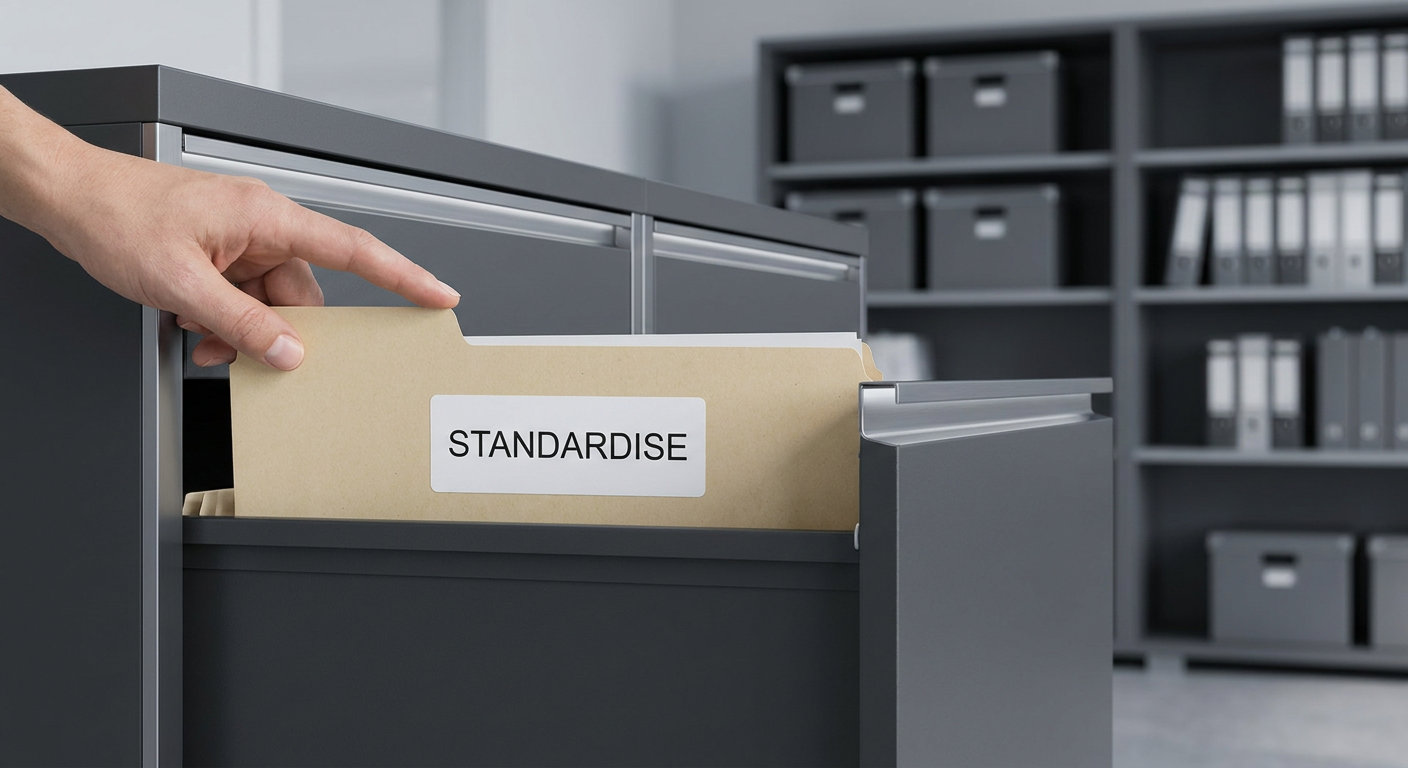
4. Standardise (Seiketsu)
How do you stop the clutter from returning? You create new standards. This is where you formalise the rules that will keep the space organised.
- Action: Develop a ‘Clean Desk Policy’. Create a clear labelling system for all files. Document the process for ordering new supplies to avoid over-stocking.
5. Sustain (Shitsuke)
This is the most challenging step: making it a habit. The goal is to embed these new behaviours into the company culture.
- Action: Schedule a 10-minute team tidy-up every Friday afternoon. Add ‘5S checks’ to departmental audits. A sustained effort is what truly makes the difference.
What Are an effective Smart & Budget-Conscious Office Storage Solutions?
Proper office storage solutions are the backbone of any successful decluttering initiative; without them, clutter is almost certain to return. The key is to choose furniture that is not only functional but also budget-conscious and suited to your specific needs. We typically advise clients to think in zones: personal, team, and archival. You can make significant improvements without a huge budget by selecting versatile pieces and taking advantage of Bulk Buy Discounts.
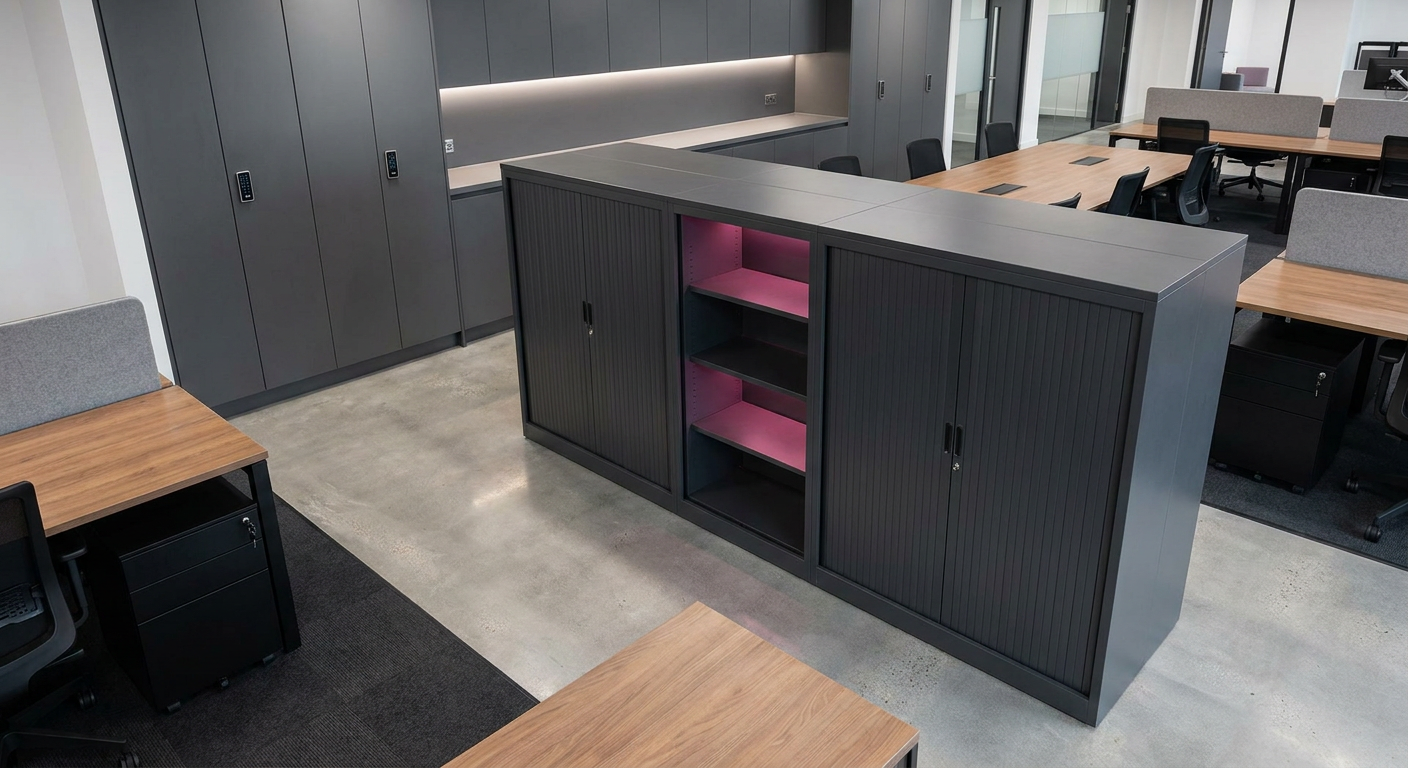
Here’s a comparison of common solutions based on our internal sales data and customer feedback:
| Storage Solution | Best For | Typical Cost Range (per unit) | Key Benefit |
|---|---|---|---|
| Under-Desk Mobile Pedestals | Personal storage for individual staff; keeping desks clear. | £80 – £200 | Provides secure, accessible storage without using desk space. Mobile for flexible office layouts. |
| Lockable Metal Cupboards | Team-level storage for stationery, shared files, and equipment. | £150 – £400 | Secures sensitive materials and centralises resources, reducing duplicate purchasing. |
| Tambour Door Units | High-traffic corridors and areas with limited space. | £250 – £600 | Doors slide into the unit, requiring no extra space to open. Effective for narrow walkways. |
| High-Density Mobile Shelving | Archival storage for documents that must be kept long-term. | £1,500+ (per system) | Maximises storage capacity in a small footprint by eliminating fixed aisles. |
When selecting furniture, look for multi-purpose items. For example, a low-level cupboard can also act as a room divider or a surface for printers. Our team can help you find the most cost-effective office organisation ideas UK businesses favour, and we offer flexible payment options like Credit Accounts Or Pay Flexibly to make investment easier.
Beyond the Desk: Decluttering Communal & Specialised Areas
A comprehensive decluttering plan goes beyond individual desks. Communal areas are often the worst offenders for clutter and can significantly impact staff morale and visitor impressions. Here are some specific office organisation ideas UK managers can implement for these overlooked zones.
- Reception & Welcome Area: This is your company’s first impression. Keep surfaces clear of everything except essential items. Use concealed storage for deliveries and hide cables neatly. A well-organised reception, as noted by the Reception and Office Management Institute, projects professionalism and efficiency.
- Kitchen & Breakout Areas: Clutter here isn’t just messy; it’s a hygiene risk. Implement a clear rota for cleaning the microwave and fridge. Provide ample, clearly labelled bins for recycling and general waste. Consider installing modular breakout furniture with built-in storage to keep the space tidy and relaxing.
- Stationery & Storage Cupboards: These can quickly descend into chaos. The solution is inventory control. Decant bulk items into smaller, labelled containers. Create a ‘shopping list’ on the inside of the door so people can note when an item is running low, preventing both shortages and over-ordering.
- Meeting Rooms: A messy meeting room creates a poor start to any collaboration. Use cable tidies to manage projector and power leads. Ensure there’s a designated spot for pens, flip chart paper, and remote controls. A simple rule: leave the room in the state you’d wish to find it in.
Ensuring UK Compliance: Decluttering for Safety & Data Protection
Effective decluttering is not merely a matter of tidiness; it’s a critical component of business compliance in the UK. Failing to manage physical clutter can expose your organisation to significant legal and financial risks related to both safety and data security.
First, there’s health and safety. According to the Health and Safety Executive (HSE) UK, slips, trips, and falls are the most common cause of major workplace injuries. Their official guidance states that good housekeeping is a primary preventative measure. This includes keeping walkways and fire escape routes clear of boxes, trailing cables, and other obstructions. Proper office storage solutions are a key part of your legal duty of care to employees and visitors.
Second, data protection is paramount. Under the General Data Protection Regulation (GDPR), the UK law on data privacy, you have a legal obligation to protect personal data. The Information Commissioner’s Office (ICO) UK makes it clear that this applies to physical documents as much as digital files. A messy office with sensitive papers left on desks is a data breach waiting to happen. Implementing a clean desk policy, using lockable storage for sensitive files, and having a secure shredding process are essential organisational measures required by law. At Cost Cutters UK, we provide a wide range of accredited and compliant furniture solutions to help you meet these standards.
Important Considerations
While the strategies outlined here are based on established organisational principles and workplace psychology, their effectiveness can vary. The success of a decluttering programme is highly dependent on company culture, individual habits, and sustained management support. The statistics cited represent averages and may not directly reflect the outcomes in every unique office environment.
The 5S methodology is just one of several popular organisational systems. Alternatives include the KonMari method, which focuses on items that ‘spark joy’, or creating a completely bespoke system tailored to your team’s specific workflow. For digital clutter, some organisations prefer a single cloud-based platform over multiple apps. We recommend evaluating these alternatives For your specific needs.
For a large-scale office transformation, or if you are dealing with complex compliance requirements and space limitations, we advise consulting a professional. An office space planning specialist can conduct a full audit of your workspace, recommend the most efficient layouts, and specify furniture that maximises both storage and productivity. This ensures you get an effective return on your investment. “Design To Install We Do It All!” is our promise for a reason.
Frequently Asked Questions
What are office decluttering strategies?
Effective office decluttering strategies combine the 5S methodology (Sort, Set, Shine, Standardise, Sustain) with a clear plan for both physical and digital files. This provides a structured approach for lasting change rather than just a one-off tidy. An effective strategy will ultimately depend on your specific office size, culture, and workflow, but this framework is a powerful starting point for any UK business.
How does a tidy office improve productivity?
A tidy office directly boosts productivity by reducing visual distractions and minimising the time employees spend searching for items. This allows for greater focus on core tasks, lowers cognitive load, and reduces stress. Sustained productivity gains do, however, require ongoing organisational habits to prevent clutter from returning and undoing the benefits of the initial effort.
How often should you declutter your office?
A major decluttering project should be undertaken annually, with smaller, weekly or daily tidies built into routines to maintain order. For example, a 15-minute ‘desk sweep’ every Friday can prevent clutter from accumulating throughout the week. The effective frequency may depend on your industry and the volume of paper or materials your team handles daily.
What is an effective way to organise office paperwork?
an effective system uses a ‘touch it once’ principle combined with a simple filing structure: Action, Archive, and Bin. Immediately decide what to do with a document to prevent piles from forming on desks. For many businesses, we also recommend considering a policy to scan documents where possible, significantly reducing the amount of physical paper that needs to be managed.
How do I get my team on board with decluttering?
Gain team buy-in by clearly communicating the benefits to them, such as reduced stress and an easier, more efficient workday. Involve them in the planning process and provide the necessary time and tools so it doesn’t feel like an extra burden. We’ll be honest – leading by example and tidying your own space first is the most powerful tool a manager has.
What are some good desk organisation tips for work?
Key desk organisation tips include using vertical space with monitor stands, employing drawer dividers, and keeping only essential items within arm’s reach. A dedicated tray for incoming documents can also prevent new paper from creating immediate clutter. The goal is to create a system that is personal and intuitive enough for you to maintain it easily.
Are there any apps that can help with office decluttering?
While physical decluttering is manual, apps like Evernote or Microsoft OneNote are excellent for decluttering information by digitising notes and documents. Task management apps like Trello or Asana can help organise workflow and reduce reliance on paper to-do lists. The key is that the app is only as good as the habit of consistently using it.
What do I do with old office electronics?
Old office electronics must be disposed of according to the Waste Electrical and Electronic Equipment (WEEE) regulations in the UK. rarely throw them in general waste, as this is illegal and harmful to the environment. You should typically use a licensed disposal service that can provide a certificate of destruction, guaranteeing secure data removal from hard drives.
How can I declutter my computer’s desktop?
Declutter a digital desktop by creating a logical folder structure, deleting shortcuts you don’t use, and setting a neutral, clean wallpaper. Aim to have fewer than ten icons on your main screen to minimise visual distraction. A weekly five-minute digital clean-up is as important as a physical one for maintaining focus and efficiency throughout the week.
What are the most essential office storage solutions?
The most essential office storage solutions include personal under-desk pedestals, shared lockable cupboards for team resources, and appropriate filing cabinets for archival. These three items form the foundation of an organised office. The specific needs and quantities will vary based on your office size and function, but nearly every business benefits from this core trio.
Transform Your Workspace with Costcutters UK
Implementing strategic office decluttering strategies is a powerful investment in your organisation’s productivity, compliance, and employee well-being. By moving from reactive tidying to a proactive, structured system, you create an environment where your team can focus, collaborate, and thrive. A clear space fosters a clear mind, leading to tangible improvements in business performance and a more positive workplace culture.
At Cost Cutters UK, we have over 35 years of experience helping UK businesses, schools, and public sector organisations create efficient and inspiring spaces. From a single filing cabinet to a complete office redesign, our team is ready to help. Explore our extensive range of office storage furniture or book a free, no-obligation space planning consultation to start your transformation today.
References
- Princeton University Neuroscience Institute – Academic Study (2011). This study found that multiple stimuli in the visual field compete for neural representation, reducing the processing capacity of the visual cortex.
- Fellowes Workplace Wellness Trend Report – Industry Report. This report surveyed office workers and found a significant percentage feel that clutter negatively affects their productivity and mental state.
- Harvard Business Review – ‘Leading Change’ – Business Journal Articles. A collection of articles and analyses concluding that successful change management initiatives require a clear vision, strong communication, and empowerment of employees.
- Lean Enterprise Institute – ‘5S’ – Educational Resource. This resource defines the 5S system as a methodology for organising, cleaning, developing, and sustaining a productive work environment.
- Costcutters UK Internal Data – Proprietary Data (2024). This is based on our analysis of sales data and customer requirements for UK office storage solutions over the last 12 months.
- Reception and Office Management Institute – Industry Body Guidance. This organisation provides best-practice guidance, noting the reception area is a critical touchpoint that shapes visitor and client perceptions.
- Health and Safety Executive (HSE) UK – Governmental Guidance. HSE regulations state that good housekeeping is a primary factor in preventing slips, trips, and falls in UK workplaces.
- Information Commissioner’s Office (ICO) UK – Regulatory Guidance. The ICO’s guide to GDPR specifies that organisations must have appropriate technical and organisational measures to protect personal data, including physical security.
Conclusion
Transform Your Workspace with Costcutters UK
In summary, office decluttering strategies are a powerful investment in your organisation’s productivity, compliance, and employee well-being. By moving from reactive tidying to a proactive, structured system—guided by a consistent workplace decluttering checklist—you create an environment where your team can focus, collaborate, and thrive. A clear space fosters a clear mind, leading to tangible improvements in business performance.
At Costcutters UK, we have over 35 years of experience helping UK businesses, schools, and public sector organisations create efficient and inspiring spaces. From a single filing cabinet to a complete office redesign, our team is ready to help. Explore our extensive range of office storage furniture or book a free, no-obligation space planning consultation to start your transformation.