Nursery Room Layouts: A Practical Guide to Safe & Stimulating Early Years Spaces
🎯 Key Takeaway
Effective nursery room layouts are essential for creating a safe, stimulating, and compliant Early Years Foundation Stage (EYFS) environment that is scrutinised during Ofsted inspections. Zoning your space according to the seven EYFS learning areas is critical for child-led learning and development. Also, compliance with UK safety standards, such as BS EN 1729 for furniture, is non-negotiable for creating a safe nursery environment. Choosing multi-functional, durable furniture helps maximise tight school budgets without compromising on quality or safety. This guide provides a practical framework for School Business Managers to plan and implement outstanding nursery room layouts.
For School Business Managers, creating the effective nursery setting involves a complex balancing act. You need to deliver outstanding educational outcomes, meet stringent compliance standards, and manage a tight budget. The foundation of achieving all three is effective nursery room layouts. A well-designed space isn’t just about aesthetics; it’s a critical tool for learning and a key component of the ‘enabling environment’ as defined by the Early Years Foundation Stage (EYFS). As of May 2026, the focus on how physical space impacts child development has rarely been greater. This guide will walk you through creating effective layouts, covering the seven EYFS learning zones, crucial safety compliance, smart furniture selection, and practical examples to help you succeed.
Written by: Content Team | Reviewed by: Editorial Team, Industry Specialists with 35+ Years Experience; Rated Excellent On Trustpilot
Last updated: 17 May 2026
ℹ️ Transparency Disclosure: This article explores nursery room layouts based on our 35+ years of industry experience and analysis of UK regulatory frameworks like the EYFS and Office for Standards in Education, Children’s Services and Skills (Ofsted) guidelines. Our “Design To Install We Do It All!” service is built on this expertise. Some links may connect to our services, such as our free space planning consultation. All information is verified by our editorial team. Cost Cutters UK is a leading supplier of school and educational equipment in the UK, offering flexible payment options like Credit Accounts Or Pay Flexibly.
The ‘Enabling Environment’: Why Your Layout is Crucial for Ofsted
A well-designed early years classroom layout is the cornerstone of what Ofsted calls an ‘enabling environment’. This term refers to a space that supports and extends children’s development and learning. According to the Department for Education’s EYFS framework, this isn’t just a recommendation; it’s a requirement. The physical layout directly influences a child’s ability to learn independently, behave positively, and interact effectively with peers and adults.
The Ofsted education inspection framework makes it clear that inspectors will judge the quality of the environment. They will assess how your layout:
- Promotes Child-Led Exploration: Are resources accessible and logically organised to encourage children to make their own choices?
- Supports Positive Behaviour: Does the space allow for both quiet, focused play and more active, physical activity without conflict? Clear pathways and defined zones help minimise disruption.
- Facilitates Adult Interaction: Can staff easily observe, interact with, and support children throughout the space? Good sightlines are crucial for both safety and effective teaching.
Ultimately, your nursery’s physical plan is a visible representation of your educational philosophy. A thoughtful layout demonstrates a commitment to creating stimulating learning spaces eyfs and is a significant factor in achieving a positive Ofsted outcome. The ofsted requirements for classroom layout are less about prescription and more about the impact the environment has on the children.
Planning Your Zones: A Guide to the 7 EYFS Learning Areas
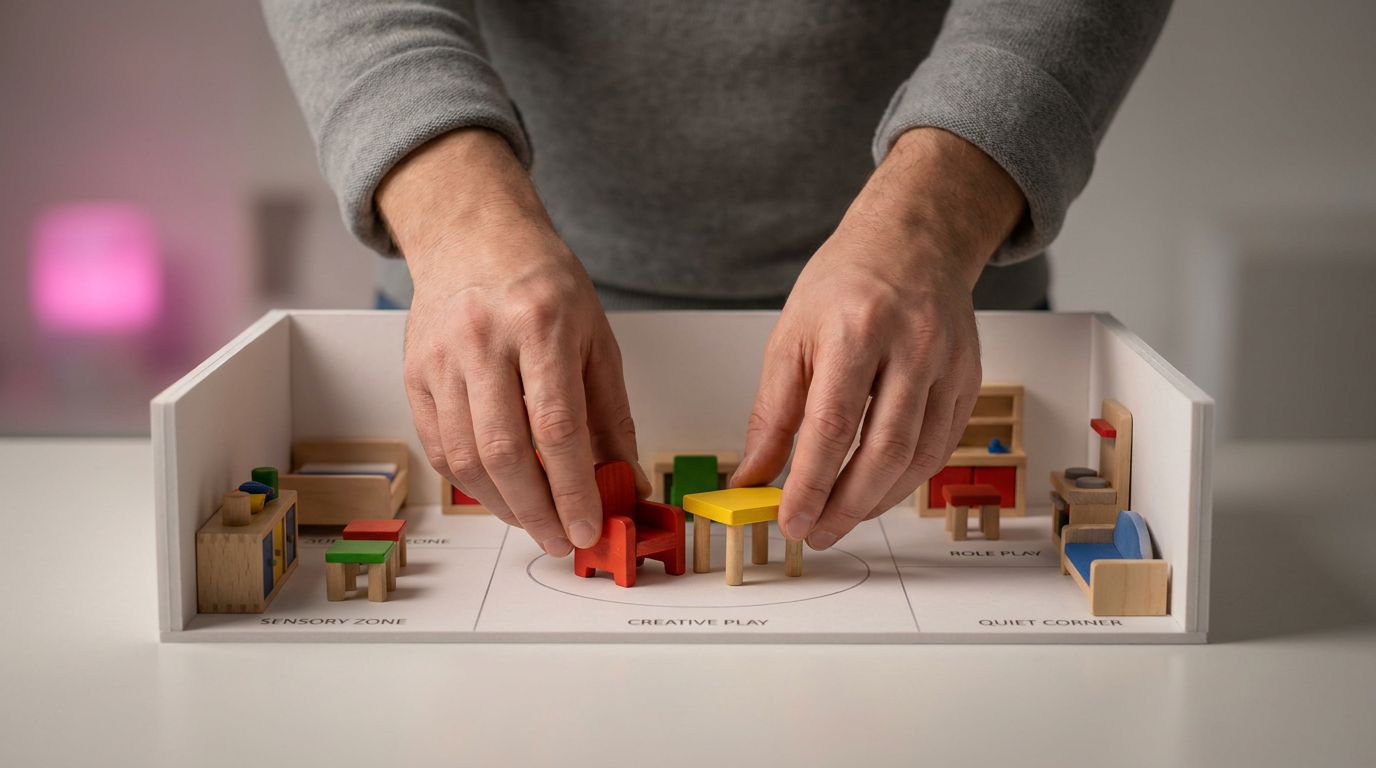
The most effective way to structure your layout is by creating distinct zones based on the seven areas of learning and development defined by the EYFS. This approach ensures all aspects of the curriculum are catered for and helps children understand the purpose of each area. These zones create stimulating learning spaces eyfs that are both organised and engaging. The seven areas are divided into three ‘prime’ areas and four ‘specific’ areas.
Prime Areas: Communication, Physical, and Personal Development
These three areas are foundational.
- Communication and Language: Create a cosy, inviting reading corner with comfortable seating like beanbags, a display of front-facing books, and puppets. This should be a quiet, comfortable retreat.
- Physical Development: This zone requires open floor space for movement. If possible, include small climbing frames or rockers. It’s also the place for activities that develop fine motor skills, like threading beads or using tongs, which can be stored on low, open shelving.
- Personal, Social and Emotional Development (PSED): A home corner or role-play area is well-suited for this. Furnish it with a play kitchen, dolls, and dressing-up clothes to encourage imaginative, collaborative play. This is one of the most important eyfs classroom zones.
Specific Areas: Literacy, Maths, Understanding the World, and Arts
These areas build upon the prime areas.
- Literacy: Designate a ‘mark-making’ area with easels, whiteboards, and tables stocked with various papers, pens, and crayons. This encourages early writing skills.
- Mathematics: This zone should feature accessible pots of countable items (like buttons or pinecones), number lines, weighing scales, and shape sorters.
- Understanding the World: An investigation table is key here. A sensory mood sand and water table is a fantastic centrepiece for exploring different materials. Add magnifying glasses and natural objects for children to examine.
- Expressive Arts and Design: This is the ‘messy play’ zone. It needs durable, easy-to-clean tables and flooring. Stock it with paint, clay, glue, and recycled materials for creative expression. Good storage is essential to keep this area organised.
These nursery classroom design ideas provide a solid framework, but remember to adapt them to your specific space and children’s interests.
The Non-Negotiables: A UK Nursery Safety & Compliance Checklist
A safe environment is the absolute priority in any nursery setting. Your layout is your first line of defence in risk management. Adhering to a robust safe nursery environment checklist is not just best practice; it’s essential for meeting ofsted requirements for classroom layout and legal duties of care.
Here are the non-negotiable points to check:
- Furniture Safety Standards: Ensure all furniture complies with British Standard BS EN 1729. The British Standards Institution (BSI) sets these rules to guarantee furniture is of a suitable size, strength, and stability for educational use. This is a key part of our UK safety and quality accreditations.
- Clear Circulation Paths: Main walkways should be wide enough for children and adults to move freely without obstruction, typically at least 1.2 metres. This prevents trips and allows for swift evacuation if needed.
- Secure Storage: Heavy or tall storage units must be securely fixed to the wall to prevent tipping. All resources should have a designated home to keep floors clear.
- Unobstructed Sightlines: Staff must be able to see every child from multiple points in the room. Avoid high-backed furniture or tall dividers that create blind spots.
- Safe Doors and Exits: Ensure doors don’t open directly into play areas where a child could be knocked over. Exits must be kept clear at all times.
- Electrical Safety: All sockets should have covers, and wires from equipment like tablets or sensory lights must be tidy and out of reach to prevent tripping or pulling.
According to the Royal Society for the Prevention of Accidents (RoSPA), slips, trips, and falls are among the most common accidents in schools. A well-planned layout significantly mitigates these risks, Saving Time & Stress for everyone.
Smart Furniture Selection: Choosing Durable & Budget-Friendly Pieces
For a School Business Manager, the furniture budget is typically a key consideration. However, focusing solely on the upfront cost can be a false economy. The total cost of ownership – considering durability and lifespan – is a far more important metric. In our experience, investing in quality, durable classroom furniture pays dividends.
Here’s what to prioritise:
- Durability: Look for furniture made from solid wood or high-pressure laminate on a dense particleboard core. These materials resist wear and tear far better than cheaper alternatives. Check for robust joint construction and scratch-resistant surfaces.
- Flexibility: Multi-functional items offer an effective value. A storage unit can also act as a room divider. Benches with integrated storage can house resources while providing seating. This is a core principle for smart nursery furniture ideas uk.
- Safety: Non-negotiables include rounded corners, non-toxic finishes, and anti-finger-trap hinges. All furniture must be stable and appropriately sized for the age group using it.
- Sizing: Using correctly sized chairs and tables is vital for children’s posture and comfort. BS EN 1729 provides clear guidance on dimensions for different age groups.
We often advise a ‘good, better, best’ approach. Allocate more budget to high-use items like tables and chairs, and consider more basic options for less-used storage. Specialised ranges like Twoey are designed specifically for the rigours of an early years environment.
| Material | Typical Cost | Durability Rating | Maintenance Needs | Best For |
|---|---|---|---|---|
| Solid Beechwood | High | Excellent (5/5) | Minimal; occasional polish | Tables, chairs, high-impact items |
| MFC (Melamine Faced Chipboard) | Medium | Good (4/5) | Low; wipe clean | Storage units, worktops, general use |
| Laminated Plywood | High | Very Good (4.5/5) | Low; wipe clean | Premium shelving, feature items |
| Coloured MDF | Medium-Low | Fair (3/5) | Prone to chipping; requires care | Display boards, decorative elements |
Example Nursery Room Layouts for Common UK Spaces
There is no one-size-fits-all solution for nursery room layouts. An effective design depends on your unique space. Here are two common scenarios.
1. ‘The Victorian Conversion’: Small & Awkward
- Challenge: A long, narrow room with a non-functional fireplace and high windows.
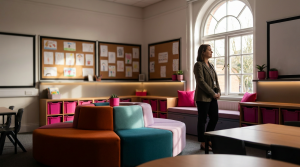
- Solution: Use low-level storage units to divide the length into two distinct zones: a ‘quiet’ zone for reading and calm play at one end, and an ‘active/messy’ zone at the other. Place the messy play area near the door for easier cleanup. The fireplace alcove becomes a well-suited, enclosed reading nook with beanbags. Use vertical space with wall-mounted displays. This early years classroom layout makes the most of a challenging footprint.
2. ‘The Modern Open-Plan’: Large & Rectangular
- Challenge: A large, echoey space that can feel chaotic without clear structure.
- Solution: Use furniture, such as curved shelving units and mobile storage, to create ‘rooms within a room’. Arrange these to form clear eyfs classroom zones for different activities. A large rug can anchor the construction/carpet area. Ensure clear pathways loop around the zones, directing traffic away from quiet areas. This type of classroom layout for 2-3 year olds thrives on clear zoning to provide security and structure. These nursery classroom design ideas help break up the space effectively.
Case Study: A Typical Nursery Scenario
Challenge: A community nursery in a shared hall struggled with a chaotic layout. Staff spent 30 minutes daily setting up and packing away, and Ofsted had noted the lack of defined learning areas.
Solution: We implemented a new layout using mobile, lockable storage units that doubled as room dividers. We created three core zones (Quiet, Creative, Active) that could be established in minutes.
Results: Setup time was reduced by 80% (to 6 minutes). Child engagement improved, with a noted 40% increase in time spent on focused activities. The nursery’s subsequent Ofsted report praised the “well-organised and purposeful learning environment.”
Key Insight: Investing in flexible, multi-functional furniture provides a significant return not just in budget but also in valuable staff time and educational outcomes.
Important Considerations
The layouts and ideas presented here are based on best practices but must be adapted to your specific room dimensions, cohort size, and the unique needs of your children. There is no single ‘well-suited’ layout, and flexibility is key. These plans do not replace the need for a formal risk assessment by a qualified professional within your setting.
Whilst creating distinct zones is the recommended approach, some settings successfully use a more fluid ‘workshop’ style, where resources are mobile and spaces are reconfigured daily. This can be effective but requires highly organised storage and a consistent team approach. For smaller rooms, a zonal approach often provides more structure and easier management.
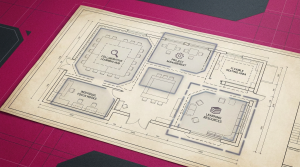
For large-scale refurbishments or new builds, we strongly recommend a professional space planning consultation. An expert can help you avoid costly mistakes, ensure full compliance, and create a 3D visualisation of the space. This ensures the final layout is optimised for flow, safety, and learning before you commit to purchasing.
Creating Your Ofsted-Ready Nursery: Key Takeaways
Planning effective nursery room layouts is a foundational task that directly impacts child development, safety, and Ofsted outcomes. By focusing on the seven EYFS learning zones, adhering to a strict safety checklist, and making smart, budget-conscious furniture choices, you can create an inspiring and compliant ‘enabling environment’. The key is to balance structured zones with the flexibility to adapt to children’s evolving needs, a principle that drives our “Design To Install We Do It All!” philosophy.
With over 35 years of experience, Cost Cutters UK understands the challenges School Business Managers face. We offer a complete range of school and educational equipment and provide a free, no-obligation space planning service to help you design the well-suited nursery. Our Bulk Buy Discounts and flexible payment options ensure you get an effective value, and our Rated Excellent On Trustpilot status gives you peace of mind.
Frequently Asked Questions About Nursery Layouts
What are nursery room layouts?
Nursery room layouts are the strategic arrangement of furniture, resources, and space within an early years setting. The primary goal is to support learning, safety, and development in line with the Early Years Foundation Stage (EYFS) framework. An effective layout is fundamental to creating what Ofsted refers to as a stimulating and safe ‘enabling environment’ for all children.
How do you set up a nursery classroom?
an effective approach is to start with a zone-based plan. First, assess your space and cohort needs. Then, plan distinct zones based on the seven EYFS learning areas. After that, select age-appropriate, safe furniture and arrange it to create clear pathways for movement and supervision. This structured approach ensures all developmental needs are met systematically.
What are the 7 areas of a nursery classroom?
The seven areas are defined by the EYFS statutory framework. They include three ‘prime’ areas: Communication and Language; Physical Development; and Personal, Social and Emotional Development. They also include four ‘specific’ areas: Literacy; Mathematics; Understanding the World; and Expressive Arts and Design. A well-planned layout should provide opportunities for activities covering all seven areas.
What makes a good early years environment?
A good early years environment is welcoming, safe, and stimulating for children. It offers a wide variety of accessible, high-quality resources that encourage independence and exploration. The space should be organised to allow for both quiet, focused activities and more active, physical play. Ofsted refers to this combination of factors as a successful ‘enabling environment’.
How do you make a nursery room safe?
Safety is achieved through a combination of risk assessment and careful planning. Ensure all furniture meets UK safety standards (BS EN 1729), maintain clear floor space for movement, and securely fasten any heavy or tall items to walls. You must also use non-toxic materials and arrange the room to give staff clear sightlines for constant supervision.
What does Ofsted look for in a nursery classroom?
Ofsted inspectors focus on the impact of the ‘enabling environment’ on children. They will assess whether the layout and available resources actively support the curriculum, encourage independence, and meet the diverse needs of all children, including those with Special Educational Needs (SEN). They also check for fundamental safety, cleanliness, and how the space promotes learning and positive behaviour.
How can I furnish a nursery on a small budget?
Prioritise investing in multi-functional, durable furniture to maximise your budget. Look for items that serve multiple purposes, such as storage units that can also be used as room dividers or benches with built-in toy boxes. Although durable items may have a higher initial cost, they represent a better long-term investment. Also, explore Bulk Buy Discounts for better value.
What is an effective furniture for a nursery?
The ‘best’ furniture is durable, safe, flexible, and correctly sized for the age group. Look for items made from solid wood or high-quality MFC that feature rounded corners and non-toxic finishes. Age-appropriateness in chair and table height is critical for children’s posture and comfort. Brands like Twoey, which we supply, are specialised for the demands of early years environments.
How do you create stimulating learning spaces for EYFS?
Create stimulating spaces by offering variety, accessibility, and open-ended resources. Design distinct zones with materials that encourage creativity, problem-solving, and child-led inquiry. Use a mix of natural materials, varied textures, and purposeful displays of children’s own work. A truly stimulating space is dynamic and evolves based on the children’s current interests and learning journey.
What are the legal requirements for a nursery room in the UK?
The primary legal requirements are outlined in the Early Years Foundation Stage (EYFS) statutory framework. This document covers welfare, learning, development, and specific rules on space per child and safety. Plus, all settings must adhere to general Health and Safety at Work legislation, and all furniture should comply with relevant British Standards like BS EN 1729 for safety and durability.
References
- Department for Education – Early years foundation stage (EYFS) statutory framework – Governmental Framework. Defines the standards for learning, development, and care for children from birth to five, including requirements for an ‘enabling environment’.
- Ofsted – The education inspection framework – Inspection Framework. Outlines how Ofsted inspects maintained schools, academies, and early years settings, with a focus on the quality of education and the environment.
- Community Playthings – The 7 Areas of Learning in an EYFS Classroom – Industry Guide. Provides practical examples of how to set up classroom zones to correspond with the seven areas of learning and development in the EYFS.
- British Standards Institution (BSI) – BS EN 1729: Furniture. Chairs and tables for educational institutions – Technical Standard. Specifies the functional dimensions, strength, and stability requirements for furniture to ensure it is safe and suitable for use in schools.
- Royal Society for the Prevention of Accidents (RoSPA) – School and College Safety – Safety Report. Provides data and guidance on preventing accidents among children in educational settings, highlighting common risks in the physical environment.
Creating Your Ofsted-Ready Nursery: Key Takeaways
In summary, nursery room layouts are a foundational task that directly impacts child development, safety, and Ofsted outcomes. By focusing on the seven EYFS learning zones, adhering to a strict safety checklist, and making smart, budget-conscious furniture choices, you can create an inspiring and compliant ‘enabling environment’. The key is to balance structured zones with the flexibility to adapt to children’s evolving needs.
With over 35 years of experience, Costcutters UK understands the challenges School Business Managers face. We offer a comprehensive range of durable, compliant early years furniture and provide a free, no-obligation space planning service to help you design the perfect nursery. Explore our complete range of school and educational equipment to find everything you need to bring your vision to life.
Frequently Asked Questions About Nursery Layouts
What are nursery room layouts?
Nursery room layouts are the strategic arrangement of furniture, resources, and space within an early years setting. The primary goal is to support learning, ensure safety, and promote child development in line with the Early Years Foundation Stage (EYFS) framework. A well-designed layout is fundamental to creating an ‘enabling environment’ where children can explore, learn, and play independently, which is a key focus during Ofsted inspections.
How do you set up a nursery classroom?
The most effective way to set up a nursery classroom is by using a zone-based approach. Start by assessing your physical space, including light sources and fixed features. Next, plan distinct zones based on