Exam Season Setup: A Guide to Creating Optimal Learning Environments
🎯 Key Takeaway
An effective exam season setup involves the meticulous organisation of the physical environment, including furniture, lighting, and acoustics, to create conditions that maximise student concentration and ensure regulatory compliance. This setup is a critical component in providing a fair opportunity for all candidates to demonstrate their knowledge. By systematically addressing furniture, environment, and logistics, educational institutions can significantly reduce student anxiety and administrative burdens, leading to a smoother and more successful examination period for everyone involved.
The high-stakes nature of exam season places immense pressure on students and staff alike. Whilst much focus is rightly placed on revision and academic preparation, the physical environment in which exams are held is a critical, controllable factor that directly impacts student success. A proper exam season setup goes far beyond simply placing desks in a hall; it’s a strategic process of creating an optimal learning environment that promotes fairness, integrity, and deep concentration. This comprehensive guide provides a detailed framework for exams officers and facilities managers, covering the essential pillars of a successful setup: furniture selection and layout, environmental optimisation, logistical planning, and inclusive provisions for all students. As of June 2026, these principles represent best practice for UK educational institutions.
Written by: Costcutters UK Content Team
Reviewed by: Costcutters UK Editorial Team, Specialists in Educational Furniture & Space Planning with 35+ Years Experience; Rated Excellent On Trustpilot
Last updated: 15 June 2026
ℹ️ Transparency Disclosure: This article explores best practices for setting up exam environments based on our 35+ years of industry experience and analysis of educational regulations. We are committed to providing accurate, practical advice for UK schools. For full transparency, some links may connect to our specialised furniture services. All information is verified by our editorial team to ensure accuracy and relevance.
The Foundation of Your Exam Season Setup: Selecting and Arranging Furniture
The choice and arrangement of furniture are the absolute foundation of a successful exam environment. The primary goal is to provide each student with a stable, comfortable, and isolated space that minimises distractions and prevents malpractice. This starts with selecting the right exam hall furniture. Desks should be sturdy and large enough to accommodate exam papers and writing materials without feeling cramped. Chairs must be equally robust; wobbly furniture is a significant and unnecessary distraction.
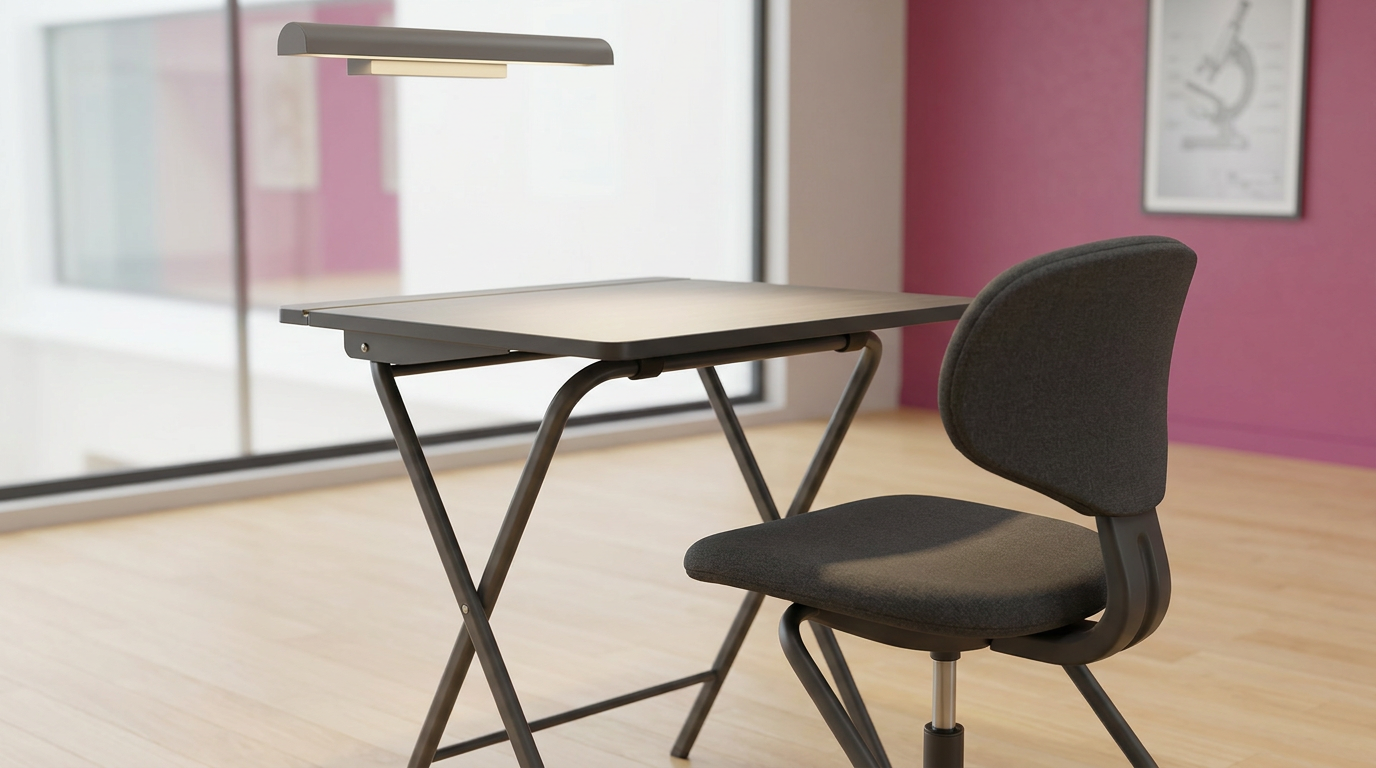
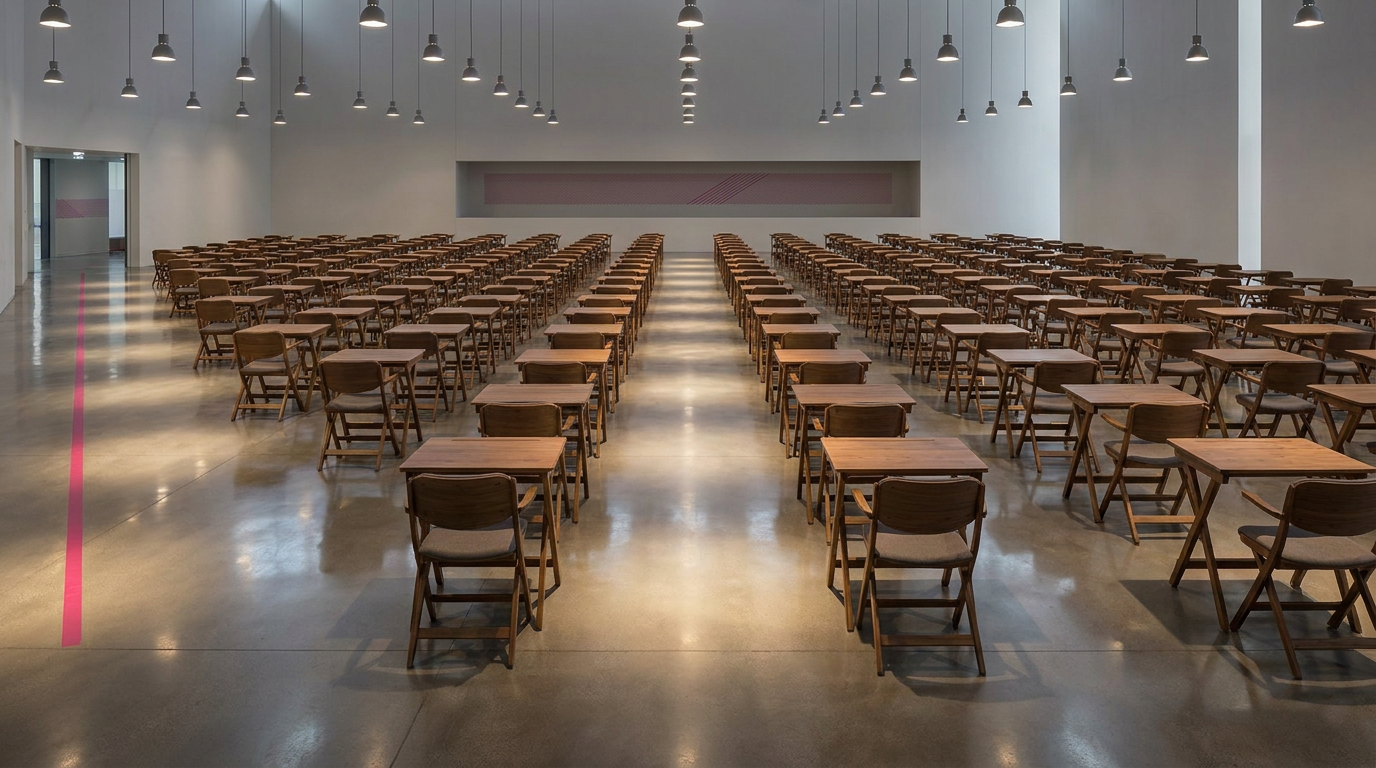
In our experience, investing in quality ergonomic student chairs pays dividends. Research indicates that proper ergonomic support can reduce physical discomfort, which in turn helps students maintain focus during long exams. Also, the layout is governed by strict rules. The Joint Council for Qualifications (JCQ), which is the UK’s regulatory body for public examinations, provides clear guidelines. According to the latest JCQ instructions, the minimum distance for exam desk spacing regulations UK is 1.25 metres, measured from the centre of one candidate’s working area to the centre of the next. This spacing must be maintained in all directions.
Mapping this out is crucial. We recommend using floor plans to scale before moving a single desk, which is a key part of our “Design To Install We Do It All!” service, Saving Time & Stress for exams officers. Folding exam desks offer excellent flexibility for multi-purpose halls, allowing for quick setup and breakdown. For permanent exam centres, static desks might provide greater long-term stability.
| Desk Type | Key Features | Best For | Considerations |
|---|---|---|---|
| Traditional Folding Exam Desk | Single unit, lightweight, foldable frame. | Multi-purpose halls, temporary setups, easy storage. | Can be less stable than static options; requires individual setup. |
| Static Single Exam Desk | Heavy-duty frame, fixed position, highly durable. | Dedicated exam halls, long-term installations. | Less flexible for reconfiguring space; higher initial cost. |
| Tilt-Top Exam Desk | Angled work surface, often with a pen groove. | Art, design, or technical drawing exams. | Not suitable for all standard written exams; can be more expensive. |
| Bench Desking Clusters | Multi-user units, e.g., the Adapt four-seater back to back bench desk. | IT-based exams, with privacy screens installed. | Requires careful spacing to meet JCQ rules; needs power management. |
Case Study: A Secondary Academy Scenario
- Challenge: A secondary academy was struggling to fit 200 students into its multi-purpose sports hall while adhering to the 1.25m rule. Their existing bulky desks made layout difficult, causing setup to take two days and creating significant pre-exam stress.
- Solution: We implemented a space plan using lightweight, standard-sized folding exam desks. A colour-coded grid system was marked on the floor for precise placement, and trolleys were supplied for efficient transport and storage.
- Results: The academy was able to comfortably accommodate 220 students, a 10% increase in capacity. Setup time was reduced by 75% to just half a day.
- Key Insight: The right choice of furniture combined with a clear logistical plan is more critical for efficiency than the sheer size of the hall.
Optimising Environmental Factors for Concentration
Environmental conditions have a well-supported by research and significant impact on cognitive performance. Creating an optimal learning environment involves managing three key factors: lighting, noise, and temperature. Ignoring these can introduce distractions that unfairly penalise students. Research from the University of Salford (2015) in their ‘Clever Classrooms’ report found that well-designed physical learning environments can boost student progress by up to 16% in a single year, with these factors being central.
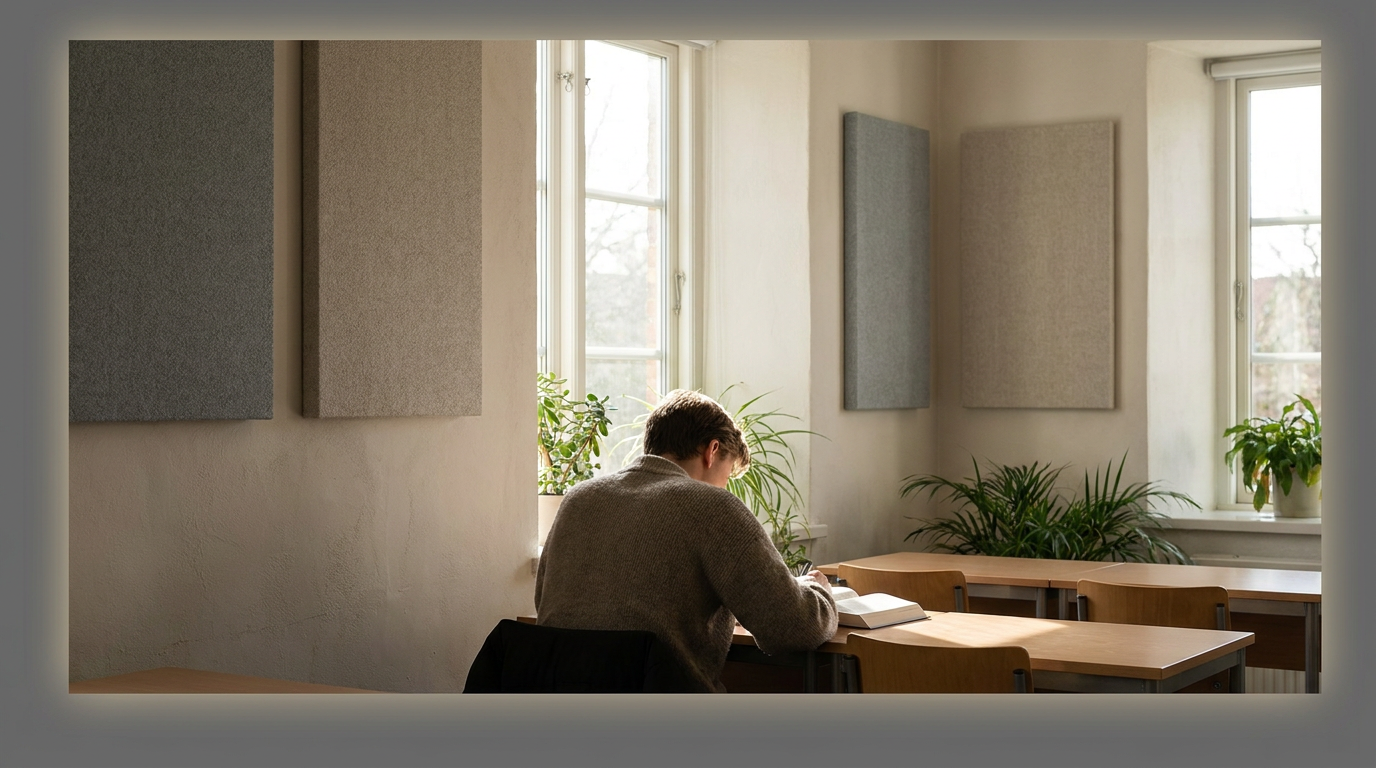
Lighting: The effective is bright, consistent, and non-glare illumination across every desk. A study in the Journal of Environmental Psychology (2017) found that access to natural light can improve test scores by 5-14%. Therefore, maximise daylight where possible but supplement it with high-frequency artificial lighting to avoid shadows and ensure uniformity. Before any exam, check for and replace any flickering bulbs.
Noise: Unwanted noise is a major disruptor. The World Health Organization (WHO) (2018) recommends background noise in schools should not exceed 35 decibels during learning activities. Choose rooms away from playgrounds, busy roads, or canteens. Post ‘Quiet Please – Exam in Progress’ signs on all nearby doors. For halls with poor classroom acoustics, temporary acoustic panels or screens can absorb ambient sound. Invigilators should also wear soft-soled shoes to minimise footstep noise.
Temperature: A room that is too hot or too cold is incredibly distracting. Most studies indicate a target range of 18-21°C is effective for concentration. Ensure the room has good ventilation, either natural or mechanical, and that the temperature can be maintained consistently throughout the exam period.
Logistical Excellence: Signage, Storage, and Student Flow
Smooth logistics are essential for reducing student stress and ensuring every exam starts securely and on time. A calm, organised process sets a positive tone and allows candidates to focus on the task ahead, not on navigating a confusing building. A survey by the charity YoungMinds (2022) found that 80% of young people felt the pandemic had worsened their mental health, with exam pressure being a major trigger; a chaotic pre-exam experience only adds to this burden.
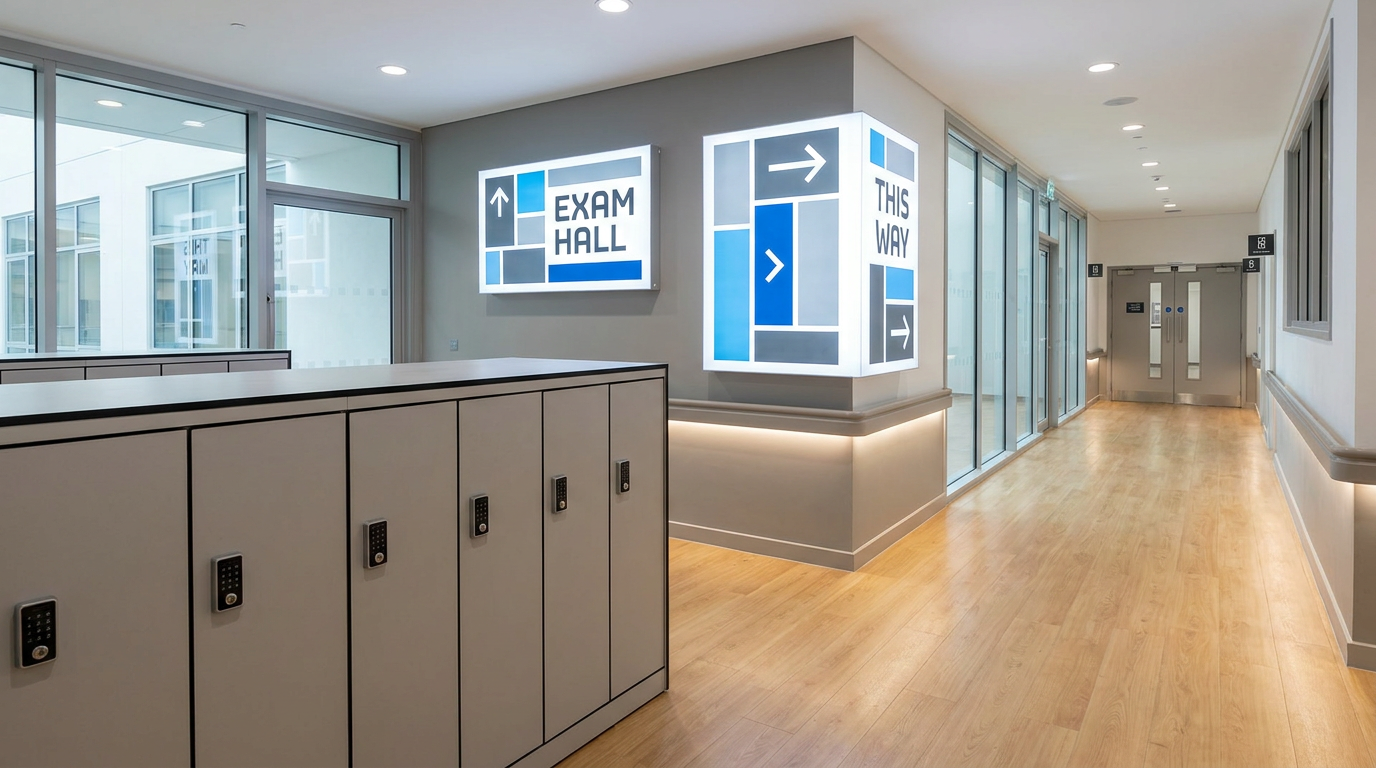
First, clear signage is non-negotiable. Use large, easy-to-read signs to direct students from the school entrance to waiting areas, exam halls, and toilets. Display candidate lists and seating plans in a logical place where they can be viewed without causing a bottleneck.
Second, you must have a clear policy for bags and mobile phones. To maintain exam integrity, these items are prohibited at the desk. The most effective method is to provide secure storage solutions such as a manned cloakroom or lockers away from the examination hall. This removes temptation and liability.
Finally, manage the flow of students into and out of the hall. Have a clear system for registration and seating students row by row. This prevents congestion and last-minute panic. A well-drilled team of invigilators who provide clear, calm instructions is invaluable here. This meticulous planning is key to Saving Time & Stress for everyone involved.
Ensuring Accessibility and Inclusivity for All Students
Providing appropriate arrangements for students with Special Educational Needs (SEN) and disabilities is a regulatory requirement and a fundamental aspect of ensuring fairness. An inclusive exam season setup means that every student has the tools and environment they need to demonstrate their knowledge without being disadvantaged by their disability. The approach must be proactive, not reactive.
Common SEN student exam arrangements include providing a separate, quieter room for those who are easily distracted or who require a reader, scribe, or prompter. These smaller venues must still adhere to all JCQ regulations. Other students may be granted extra time or supervised rest breaks, which requires precise timekeeping and management by invigilators.
Furniture plays a crucial role. Some students may require a height-adjustable desk, a specialised ergonomic chair for postural support, a footrest, or a privacy screen to minimise visual distraction. It’s vital that these requirements are identified well in advance through the formal access arrangements process. The equipment should be set up and tested before the exam day to prevent any last-minute technical issues or discomfort. The positioning of these students is also a key consideration; they should be placed where they are not disturbed by the main flow of candidates but can still be invigilated effectively.
Frequently Asked Questions About Exam Season Setup
What is an exam season setup?
An exam season setup is the complete process of preparing a physical space to conduct formal examinations. This involves the strategic arrangement of furniture, control of environmental factors like light and noise, and implementation of logistical procedures. The goal is to create a fair, secure, and stress-free experience for all students, fully compliant with regulatory standards such as those from the JCQ.
What are the UK regulations for exam desk spacing?
The Joint Council for Qualifications (JCQ) mandates a minimum distance of 1.25 metres between the centres of each candidate’s desk. This measurement applies in all directions (front, back, and sides) to prevent malpractice and provide adequate personal space. It’s crucial to consult the latest official JCQ guidelines before each exam season, as these exam desk spacing regulations UK can be updated.
How can I reduce noise in an exam hall?
To reduce noise, start by selecting a room away from busy corridors, playgrounds, or external traffic. Use “Quiet Please – Exam in Progress” signs on all doors leading to the area. Inside the hall, address sources of noise like rattling windows or fans, and ask invigilators to wear soft-soled shoes. For spaces with poor classroom acoustics, temporary sound-absorbing panels can be an effective solution.
What is an effective type of lighting for an exam?
an effective lighting for an exam environment is bright, uniform, and does not cause glare on papers or screens. A blend of natural daylight supplemented by high-frequency fluorescent or LED lighting is often effective. You must ensure there are no flickering bulbs and that every desk, from the centre to the corners of the room, is equally and adequately well-lit to prevent eye strain.
What furniture is best for long exams?
For long exams, you should prioritise ergonomic student chairs that support good posture and reduce fidgeting. These should be paired with a sturdy, non-wobble desk that provides ample space for all necessary papers and writing materials. This combination of a comfortable chair and a stable, spacious desk is key to minimising physical discomfort and helping students maintain focus over several hours.
How do I accommodate SEN students during exams?
Accommodation involves implementing pre-agreed SEN student exam arrangements based on individual needs. This could mean providing a separate, smaller room, a reader or scribe, or specialised equipment like a laptop or coloured overlay. It may also involve specific furniture, such as a height-adjustable desk or an ergonomic chair. All arrangements must be set up and tested in advance of the exam.
What should be displayed in an exam room?
Every exam room must have a large, reliable clock that is clearly visible to all candidates. You are also required by JCQ to display the centre number, subject title, paper number, and the official start and finish times of the exam. Also, official JCQ posters detailing exam conduct rules and unauthorised items must be prominently displayed for all candidates to see.
How can we manage student anxiety on exam day?
A calm, organised environment is one of the most effective tools for managing student anxiety. This can be achieved with clear signage, friendly and efficient invigilators, and a quiet, orderly waiting area. Ensuring the process for entering the hall, storing belongings, and finding seats is smooth and predictable can significantly reduce stress and help students feel more in control on the day.
Where should students store their bags and phones?
Bags, phones, and all other unauthorised items must be stored securely away from the exam desks. an effective practice is to provide a managed, secure area outside the exam hall, such as a manned cloakroom or a bank of dedicated lockers. This approach is the most effective way to minimise security risks and remove any temptation for students to access prohibited items.
What’s the effective temperature for an exam room?
Most research suggests an effective temperature range for optimal cognitive performance is between 18°C and 21°C. A room that is either too hot or too cold can become a major distraction and may negatively impact students’ ability to concentrate. You should ensure the room has adequate ventilation and that the temperature can be reasonably controlled throughout the exam.
Important Considerations
This guide provides a general framework based on established best practices and UK regulations. However, every educational institution faces unique constraints, including building layouts, multi-purpose hall schedules, and budget limitations. The optimal solution for one school may not be directly transferable to another. A site-specific assessment is often required to address these variables effectively, which is why we offer services like our Bulk Buy Discounts and options to open Credit Accounts Or Pay Flexibly.
While this guide focuses on traditional setups, alternative approaches are emerging, particularly for digital examinations. According to a 2023 report from Ofqual, there is a growing trend towards on-screen assessments. These may involve specialised IT suites with bench desking and privacy screens, which require different considerations for power management, network security, and on-screen invigilation software. These setups can offer efficiency but demand significant upfront investment and technical expertise.
For complex projects, such as outfitting a new exam hall or refurbishing a large multi-use space, we recommend professional guidance. A space planning consultation can help you navigate regulatory requirements, maximise your hall’s capacity, and select the most cost-effective and durable furniture for your specific needs. This expert input ensures a successful exam season setup for years to come.
Achieving a Seamless Exam Season Setup
Ultimately, a successful exam season setup is a cornerstone of academic assessment, directly influencing student performance and institutional integrity. By focusing on the three core pillars – appropriate furniture and layout, an optimised physical environment, and streamlined logistics – schools can create a setting that is fair, secure, and conducive to concentration. This proactive approach minimises stress for students and staff alike, allowing candidates to perform at their best while upholding the highest standards of exam conduct.
With over 35 years of experience and being Rated Excellent On Trustpilot, Cost Cutters UK has helped countless schools, colleges, and academies create effective examination environments that meet all our Certifications & Accreditations. Our “Design To Install We Do It All!” promise means we handle every detail. If you are planning for the next exam season and need expert advice on space planning or exam hall furniture, our team is here to help. Book a free, no-obligation space planning consultation to ensure your setup meets all requirements.
References
- Joint Council for Qualifications (JCQ) – Regulatory Guidance (2025-2026). Provides the official ‘Instructions for Conducting Examinations’ in the UK, including regulations on desk spacing, invigilation, and materials.
- The Impact of Classroom Design on Pupil Learning – University of Salford Study (2015). The ‘Clever Classrooms’ report, based on a study of 153 classrooms, found that well-designed primary school classrooms can boost children’s learning progress by up to 16% in a single year.
- Schools: Health and well-being of children – World Health Organization Report (2018). This report provides guidelines on environmental health in schools, recommending that background noise levels should not exceed 35 dB during teaching sessions to facilitate clear communication and concentration.
- Worsening mental health and wellbeing in young people – YoungMinds Survey (2022). A survey of over 2,000 young people found that 80% felt the pandemic had made their mental health worse, with exam pressure cited as a major contributing factor.
- Guide to on-screen assessment – Ofqual Report (2023). The UK’s examinations regulator provides guidance and reports on the growing trend towards digital and on-screen assessments in qualifications like Functional Skills.
Achieving a Seamless Exam Season Setup
In summary, an effective exam season setup is a cornerstone of academic assessment, directly influencing student performance and institutional integrity. By focusing on the three core pillars—appropriate furniture and layout, an optimised physical environment, and streamlined logistics—schools can create a setting that is fair, secure, and conducive to concentration. This proactive approach minimises stress for students and staff alike, allowing candidates to perform at their best.
With over 35 years of experience, Costcutters UK has helped countless schools, colleges, and academies create effective examination environments, backed by our industry Certifications & Accreditations. If you are planning for the next exam season and need expert advice on space planning or furniture selection, our team is here to help. Book a free, no-obligation space planning consultation to ensure your setup meets all requirements.
Frequently Asked Questions About Exam Season Setup
Q1: What is an exam season setup?
An effective exam season setup is the comprehensive process of preparing a physical space for conducting formal examinations. This includes the strategic arrangement of furniture, control of environmental factors like light and noise, and implementation of logistical procedures to ensure a fair, secure, and stress-free experience for all students, in line with regulatory standards like those from the JCQ.
Q2: What are the UK regulations for exam desk spacing?
The Joint Council for Qualifications (JCQ) mandates a minimum distance of 1.25 metres between the centres of desks for each candidate in all directions. This regulation, a key part of the UK’s exam desk spacing regulations