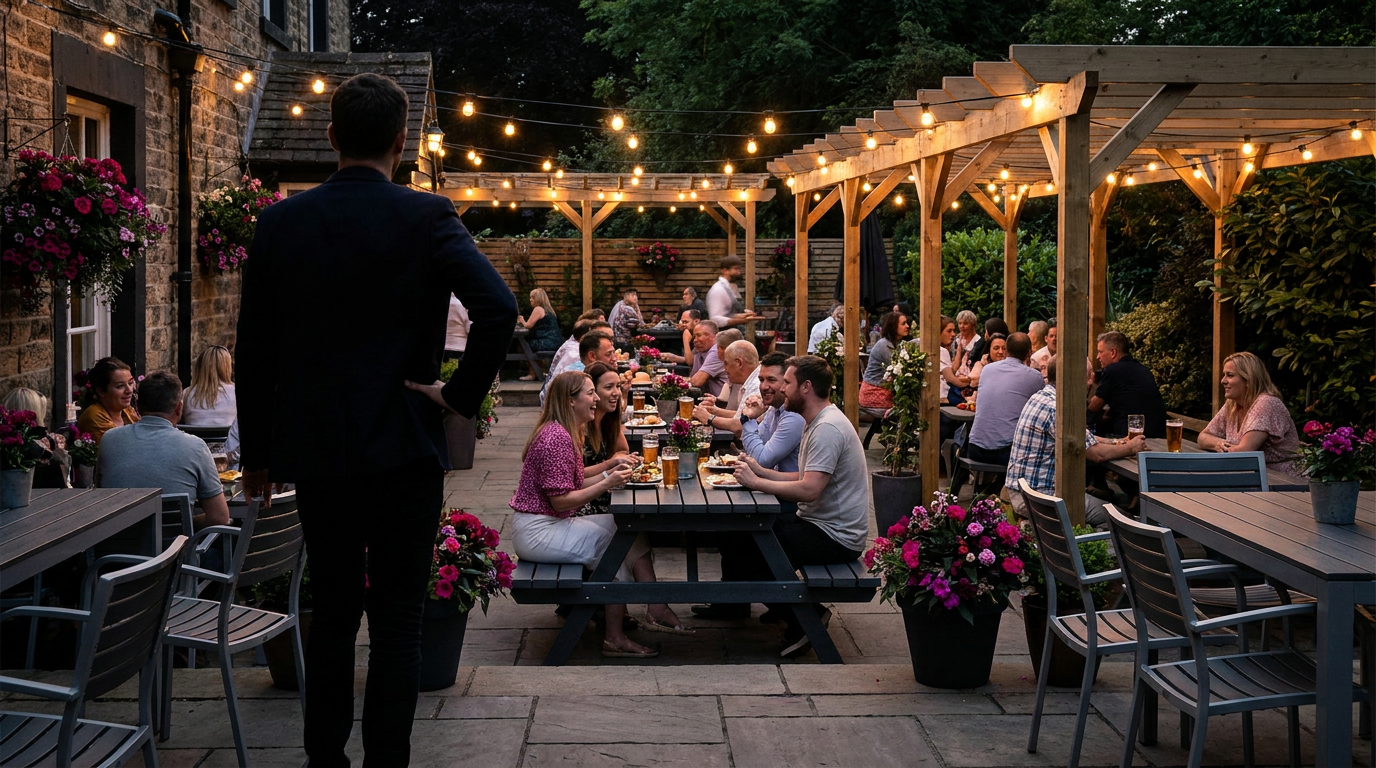
Case Study Example: How a UK Pub Transformed Its Garden & Grew Revenue
🎯 Key Takeaway
This article provides a detailed case study example demonstrating how a fictional pub, ‘The Family Arms’, transformed its outdoor space using a structured approach to document the project’s success. A well-crafted case study clearly outlines the initial challenge, the implemented solution, and, most importantly, the measurable results. For instance, the ‘Family Arms’ project increased its customer capacity by 40 covers and boosted midweek revenue by an impressive 60%. By following a clear format, you can make your own business successes more compelling for marketing, internal reporting, and strategic planning.
Proving the value of a significant investment is a universal business challenge. A well-constructed case study example is one of the most powerful tools to achieve this, turning a project’s outcomes into a compelling story of success. As of mid-2024, many businesses are looking for tangible proof before committing to expenditure. This article moves beyond theory by deconstructing a realistic business case study example: the transformation of ‘The Family Arms’ pub garden. We will break down every stage, from problem to profit, providing you with a clear template to document and prove the value of your own commercial projects.
👤 Written by: Content Team | Reviewed by: Editorial Team, 35+ Years Experience; Rated Excellent On Trustpilot
Last updated: 31 July 2024
ℹ️ Transparency Disclosure: This article explores the structure of a business case study using a project example based on our extensive experience in commercial fit-outs. In the spirit of full disclosure, some links may connect to our services. All information is verified by our editorial team for accuracy. Cost Cutters UK is a trusted supplier for businesses and public sector organisations across the UK, known for our “Design To Install We Do It All!” service.
What Is a Business Case Study (and Why Does It Matter)?
A business case study is a detailed, evidence-based story of how a customer or organisation solved a problem using a particular product or service. According to the academic resource platform ScienceDirect (2024), a case study is an in-depth investigation of a single individual, group, or event. In a business context, this translates to documenting a project from start to finish. The core case study definition involves presenting a real-world scenario to demonstrate value and build credibility.

This is more than just a customer testimonial. As explained by Scribbr (2023) in their methods guide, effective case studies blend qualitative insights with quantitative data. This structure matters for three key reasons:
- Marketing: It builds trust with potential clients by providing real-world proof of your capabilities.
- Sales: It equips your sales team with a powerful tool to overcome objections and demonstrate return on investment.
- Strategy: It helps your own organisation analyse successes, document best practices, and refine future projects.
With UK commercial investments being substantial-for instance, the office furniture market alone is valued at over £1.8 billion according to Statista (2024) data-justifying expenditure with clear data is essential. A strong case study is the definitive tool for doing so.
How to Structure a Case Study: The 5 Core Components
To create a compelling narrative, you must know how to structure a case study effectively. In our experience, the most successful examples follow a clear, logical progression that guides the reader through the project’s journey. We recommend a five-part structure that is simple to follow and powerful in its storytelling capacity. We’ll use this exact framework for ‘The Family Arms’ example in the next section, so you can see it in action.
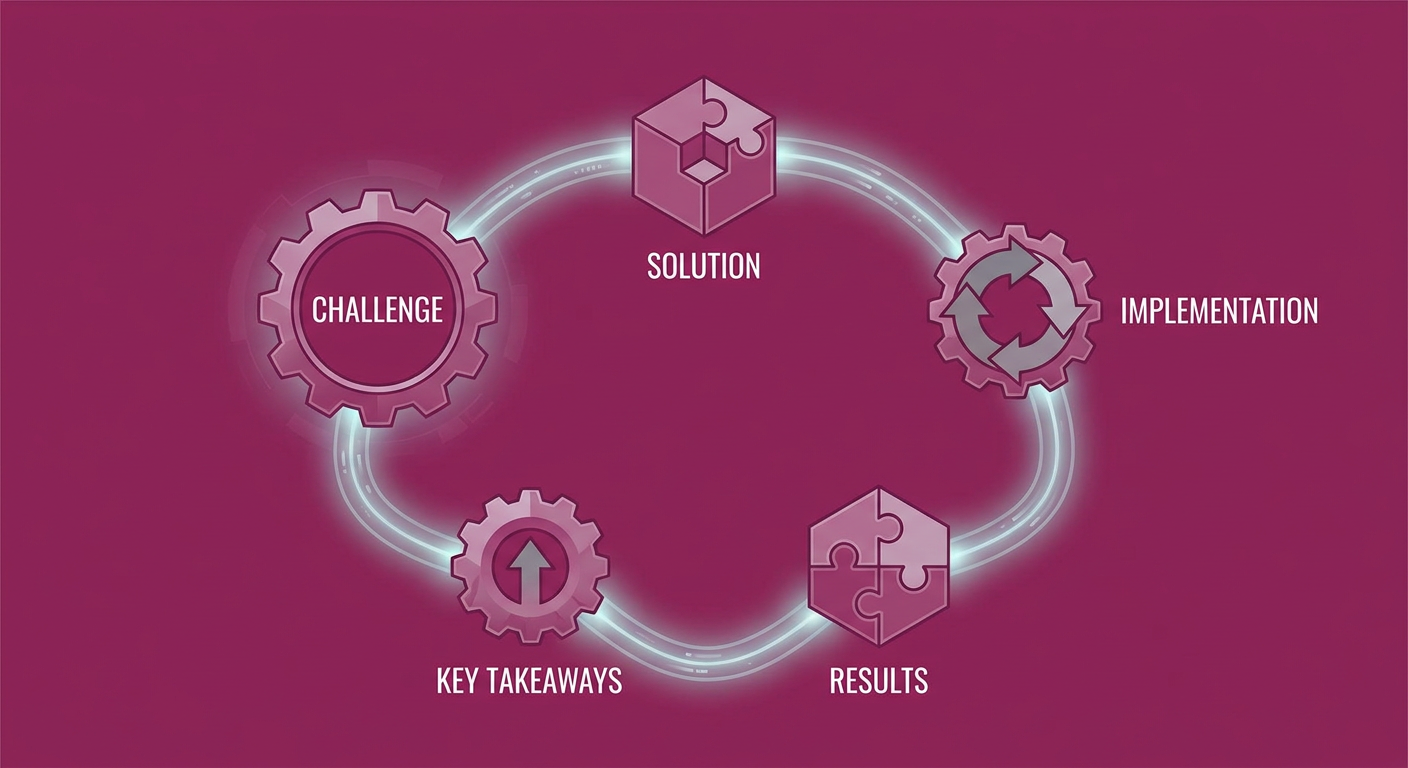
1. The Challenge: Defining the Problem
This section sets the scene. It must clearly outline the specific problems the business was facing before the project began. Use quantifiable data where possible, such as lost revenue, customer complaints, or operational inefficiencies. A well-defined challenge creates the tension that makes the solution more impactful.
2. The Solution: Outlining the Strategy
Here, you detail the specific products, services, or strategies that were chosen to address the challenge. This isn’t just a list of items. It’s an explanation of why these particular solutions were selected. This part demonstrates strategic thinking and expertise.
3. The Implementation: The Project in Action
This component describes the process of putting the solution into practice. It should cover the timeline, key project management milestones, and any challenges that were overcome. It highlights efficiency, expertise, and your ability to deliver, “Saving Time & Stress” for the client.
4. The Results: Measuring the Impact
This is the heart of the case study. It presents the quantifiable outcomes of the project. Focus on metrics like increased revenue, cost savings, customer growth, and, critically, the Return on Investment (ROI). A data table is highly effective here.
5. Key Takeaways: Lessons for Others
Finally, this section summarises the core lessons learned from the project. What insights can other businesses apply to their own situations? This transforms the case study from a simple story into a valuable piece of educational content.
Case Study Example: The ‘Family Arms’ Pub Garden Transformation
Here, we apply the five-component structure to a realistic business case study example. This project demonstrates how a strategic investment in commercial furniture can deliver a significant, measurable return for a hospitality venue.
The Challenge: An Unprofitable and Unsafe Outdoor Space
The Family Arms, a traditional UK pub, had a large but severely underutilised garden. The existing furniture consisted of old, splintering wooden benches that were a potential safety hazard, creating risks that contravene principles outlined by the Health and Safety Executive (HSE). This not only posed a liability risk but also deterred families. Furthermore, the space was completely exposed to the elements, rendering it unusable during poor weather and costing the pub an estimated 30% of potential revenue during the crucial summer months. For a comprehensive overview of your responsibilities, our Safety First: A Comprehensive Guide for UK Businesses is an essential resource.
The Solution: A Strategic Fit-Out with All-Weather Furniture
Our proposal was a strategic pub furniture project designed to address all key challenges simultaneously. We recommended a mix of furniture after careful analysis of choosing the right materials. This included:
- Recycled Plastic Picnic Tables: Chosen for their exceptional durability, low maintenance, and weather resistance. They eliminated the safety risk of splinters and reduced long-term upkeep costs.
- Stackable Aluminium Chairs and Tables: Selected to provide flexibility. The lightweight design allows staff to easily reconfigure the layout for different group sizes or events.
This new layout immediately increased the garden’s potential capacity from just 20 to 60 covers, effectively tripling its revenue-generating potential.
The Implementation: A 3-Day Turnaround
We understand that for a pub, downtime means lost revenue. Therefore, the project was executed with maximum efficiency over just three days:
- Day 1: Site clearance and removal of old, unsafe furniture.
- Day 2: Delivery and assembly of all new recycled plastic and aluminium furniture.
- Day 3: Strategic placement according to the pre-agreed layout plan and a final safety inspection.
This rapid turnaround ensured the pub was fully operational for the lucrative weekend trade.
‘The Costcutters UK team were incredibly efficient. The entire pub furniture project was completed in three days, and we were ready for the weekend rush. “Design To Install We Do It All!” isn’t just a slogan; it’s exactly what they delivered.’ – Jane Doe, Owner, The Family Arms.
The Results: A 60% Revenue Boost and Rapid ROI
The impact of the transformation was both immediate and substantial. The total project cost, including all furniture and installation, was £15,000. By tracking performance post-installation, we were able to demonstrate a clear and rapid return. The process of calculating the return on investment is crucial for any business.
| Metric | Before Transformation | After Transformation | Impact |
|---|---|---|---|
| Outdoor Seating Capacity | 20 Covers | 60 Covers | +200% |
| Average Midweek Revenue (Apr-Sep) | £900 / week | £1,440 / week | +60% |
| Customer Safety Complaints | 2-3 per month | 0 per month | -100% |
| Staff Time on Maintenance | 4 hours / week | <1 hour / week | -75% |
The increased weekly revenue of £540 meant the pub achieved a full Return on Investment (ROI), which is a metric that measures the profitability of an investment, in just under seven months. This was supported by improved customer reviews online, specifically praising the new ‘family-friendly’ and ‘comfortable’ garden.
TL;DR: A £15k investment in durable, flexible outdoor furniture tripled seating capacity, boosted midweek revenue by 60%, and paid for itself in under seven months.
Key Lessons for Your Hospitality Business
The success of The Family Arms pub furniture project offers several actionable lessons for any hospitality business looking to improve its outdoor space. Our experience suggests focussing on these key areas.
- Invest in Durability Over Initial Cost: The choice of recycled plastic, while potentially having a higher upfront cost than cheap wood, drastically cut long-term maintenance and replacement expenditure. This focus on total cost of ownership is a smarter financial strategy.
- Design for Flexibility and Maximum Use: Incorporating stackable, lightweight furniture allows the space to be easily adapted for private parties, live music events, or different dining configurations. A flexible space is a profitable space. This is a core tenet of our guide to pub garden design.
- Safety Is a Marketable Feature: Moving from splintering benches to compliant, sturdy furniture did more than just satisfy HSE principles. It became a selling point, attracting families and earning positive reviews, which directly contributed to increased footfall and revenue.
- Measure Everything to Prove Value: The Family Arms could only confirm its success because it had baseline data. Before starting any project, track key metrics like weekly revenue, customer numbers, and even staff time spent on tasks. This data is essential for calculating ROI and creating your own powerful case study.
Important Considerations and Next Steps
While this case study provides a strong template, it’s important to acknowledge its context. The specific results achieved by ‘The Family Arms’ were influenced by its location, customer base, and initial state. Your venue’s outcomes will depend on your unique circumstances, so this example should be seen as a framework for success, not a guarantee of identical figures. Be sure to avoid these common mistakes to avoid when planning your project.
Alternative approaches could also be considered. For example, a business might prioritise landscaping, install permanent outdoor heating solutions, or build a fully covered pergola. These options involve different cost structures, planning requirements, and operational considerations compared to the furniture-led strategy detailed here. Each has its own merits depending on the primary business goal.
For any significant commercial refurbishment, we strongly recommend a professional consultation. An expert can perform a detailed site survey, help you navigate complex safety regulations, and develop a space plan that maximises your return. This ensures your investment is not only safe and compliant but also perfectly tailored to your business objectives. We offer flexible payment options, such as Credit Accounts Or Pay Flexibly, to make this process easier.
Start Your Own Transformation Story
This detailed case study example of ‘The Family Arms’ highlights how a structured, data-driven approach to a commercial furniture project can generate a significant and measurable return on investment. By clearly defining the challenge, implementing a targeted solution, and meticulously tracking the results, any business can create a powerful narrative of its success, which is invaluable for future growth and marketing.
At Cost Cutters UK, we specialise in helping businesses transform their commercial spaces with durable, compliant, and cost-effective furniture solutions. We are proud of our service, which is Rated Excellent On Trustpilot. If this business case study example has inspired you to think about your own venue’s potential, contact our expert team today for a free space plan and quote. Let’s start writing your success story together.
Frequently Asked Questions
What is a case study and example?
A case study is an in-depth analysis of a specific instance or project to demonstrate a particular outcome. This article’s breakdown of ‘The Family Arms’ pub garden transformation is a practical case study example. It moves beyond theory to show how a real-world problem was identified, a solution was implemented, and the positive results were measured, providing a clear and verifiable story of success for other businesses to learn from.
What are the 5 components of a case study?
The five core components are the Challenge, Solution, Implementation, Results, and Key Takeaways. The Challenge defines the initial problem. The Solution outlines the strategy used to fix it. Implementation describes the project in action. The Results section provides measurable data on the outcome, like ROI. Finally, Key Takeaways offer actionable lessons for the reader, which is essential for a useful study.
What are the 5 types of case studies?
Five common types of case studies are Illustrative, Exploratory, Cumulative, Critical Instance, and Explanatory. Illustrative studies (like our pub example) describe a situation. Exploratory studies investigate a topic. Cumulative studies synthesise data from past studies. Critical Instance studies examine a unique case with wider implications. Explanatory studies seek to explain ‘how’ or ‘why’ something happened, often looking at causal links.
Which is the best example of a case study?
an effective example of a case study is one that tells a clear, convincing story backed by verifiable data. A strong business case study example, such as the pub transformation detailed here, is effective because it combines a relatable problem with a logical solution and a quantifiable return on investment. It’s not just about a happy customer; it’s about proving tangible business value in a structured and credible way.
What are the 4 types of case studies?
A common framework identifies four main types: descriptive, exploratory, explanatory, and intrinsic. A descriptive case study paints a detailed picture of a subject. An exploratory one is used to inform a larger investigation. An explanatory case study, as the name suggests, seeks to explain a phenomenon. An intrinsic case study focuses on understanding a unique case for its own sake, not for wider generalisation.
How do I write my case study?
Start by gathering all relevant ‘before’ and ‘after’ data to form the core of your narrative. Once you have your metrics (e.g., costs, revenue, efficiency), structure your story using the five-component model: Challenge, Solution, Implementation, Results, and Takeaways. Weave in qualitative details like quotes to make the data more relatable. Focus on telling a clear story of transformation from problem to profitable outcome.
How do I structure a case study?
We recommend using the classic problem-solution-result format for maximum clarity and impact. Begin by clearly outlining the initial challenge the business faced. Then, detail the specific solution that was implemented to address that problem. Conclude with the specific, measurable results that were achieved, such as revenue growth, cost savings, or improved customer satisfaction, to prove the project’s success.
Is a case study qualitative or quantitative?
The most effective business case studies are a powerful mix of both qualitative and quantitative data. Quantitative data, such as revenue figures and ROI percentages, provides the hard proof of success. Qualitative data, like customer testimonials or descriptions of improved safety, adds the human context and emotional impact that makes the story compelling and memorable. Using both strengthens your argument significantly.
What is the difference between an article and a case study?
An article can cover a broad topic, whereas a case study is a deep, focused analysis of a single, specific subject. For example, an article might discuss ‘Trends in Hospitality’, while a case study analyses how one specific pub successfully implemented one specific trend. A case study’s purpose is to provide detailed evidence and lessons from that single instance, making it a form of micro-analysis.
What are the 7 major types of research?
Seven major research methodologies include experimental, survey, correlational, ethnographic, historical, action research, and case study research. Each method serves a different purpose. Experimental research tests a hypothesis, surveys gather data from large groups, and correlational research looks for relationships between variables. The case study method is recognised as a valid approach for in-depth, real-world investigation of a specific phenomenon.
References
- Adobe – Guide (2024). Provides a comprehensive overview of what a case study is, its purpose, and formatting guidelines.
- Health and Safety Executive (HSE) – Government Guidance. Details legal requirements and best practices for safety in UK hospitality settings, covering premises and equipment.
- Scribbr – Research Methods Guide (2023). Offers a detailed definition of case studies, outlining different types and their application in academic and professional research.
- ScienceDirect – Overview (2024). An academic resource providing a scholarly definition and context for case study methodology across various disciplines.
- Statista – Office Furniture – United Kingdom – Market Research Data (2024). Reports on the revenue and scale of the commercial furniture market in the UK.
Conclusion
Start Your Own Transformation Story
In summary, this detailed case study example of ‘The Family Arms’ demonstrates how a structured approach to a pub furniture project can yield a significant and measurable return on investment. As a business case study example, it proves that by clearly defining the challenge, implementing a targeted solution, and tracking the results, any business can create a powerful narrative of its success.
At Costcutters UK, we specialise in helping businesses like yours transform their spaces with durable, compliant, and cost-effective furniture. If the story of ‘The Family Arms’ has inspired you, contact our team for a free space plan and quote to begin your own success story.